
Ever wonder why everyone suddenly wants the same trainers, or...
 Economics1 views·Na-update Jun 9, 2026·5 mga pahina
Key Factors Influencing Consumer Demand
1 / 5
1
of 5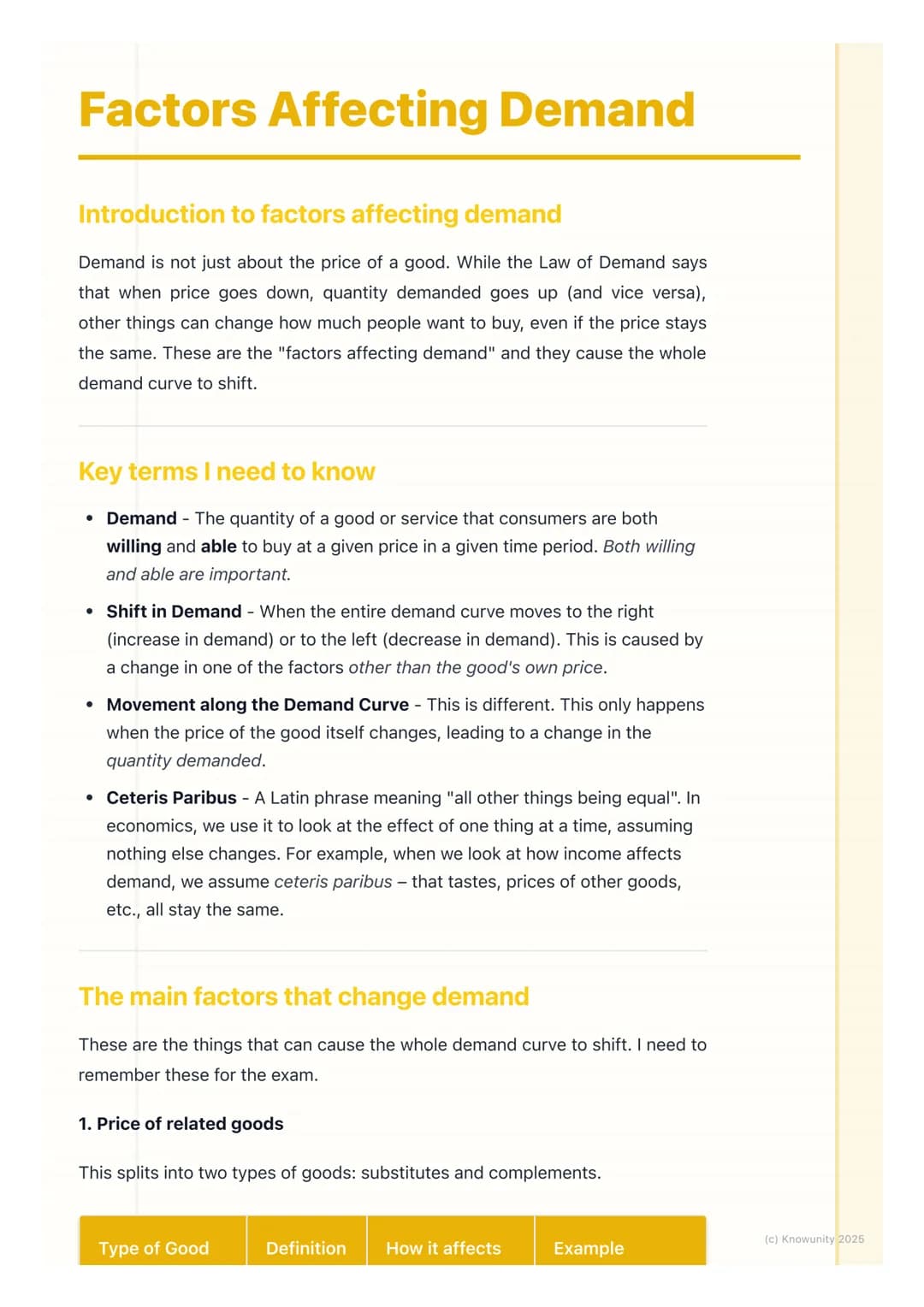
Understanding Demand Basics
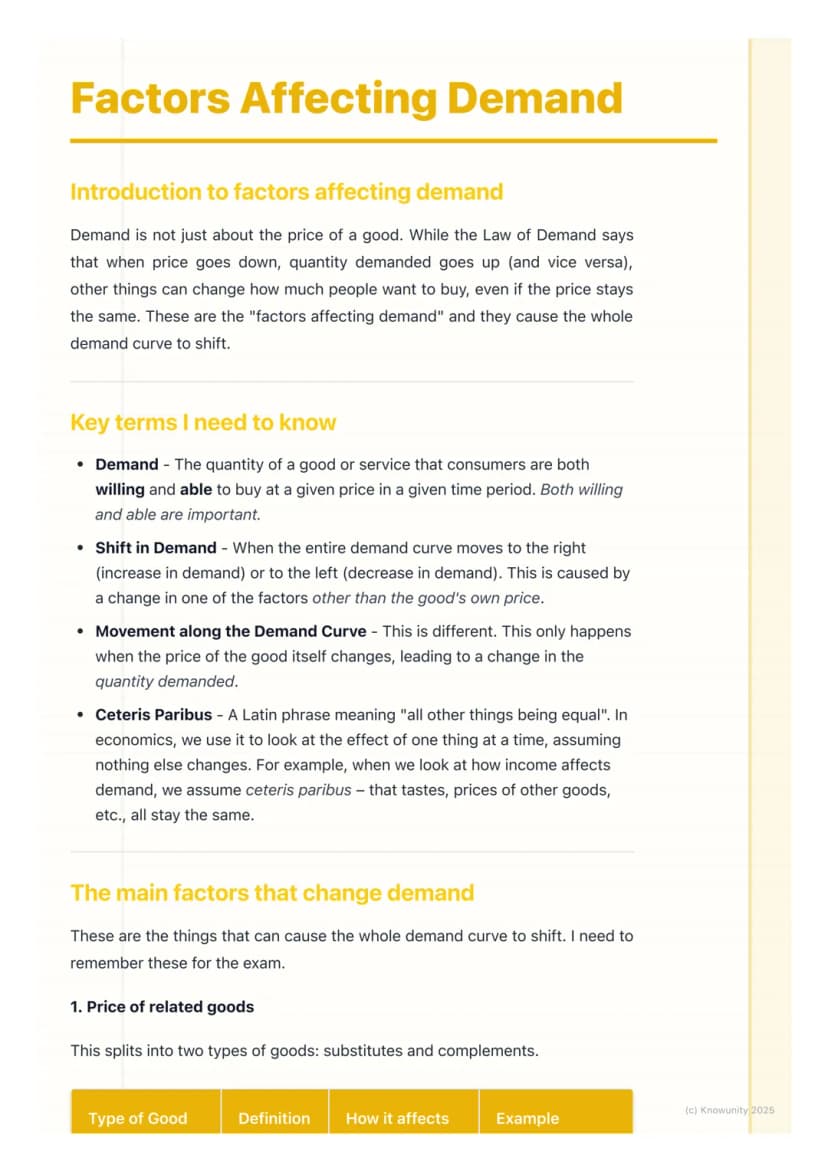
Demand isn't just about price - it's about how willing and able people are to buy something at a given price. Think of it like this: you might want the latest iPhone, but if you can't afford it, there's no actual demand from you.
The Law of Demand tells us that when prices drop, people generally buy more (and vice versa). But here's where it gets interesting - sometimes demand changes even when the price stays exactly the same.
When something other than price affects how much people want to buy, the entire demand curve shifts. This is completely different from just moving along the curve when price changes. Understanding this difference will save you marks in exams!
Key Tip: Remember ceteris paribus - "all other things being equal". Economists use this to study one factor at a time, assuming everything else stays constant.
2
of 5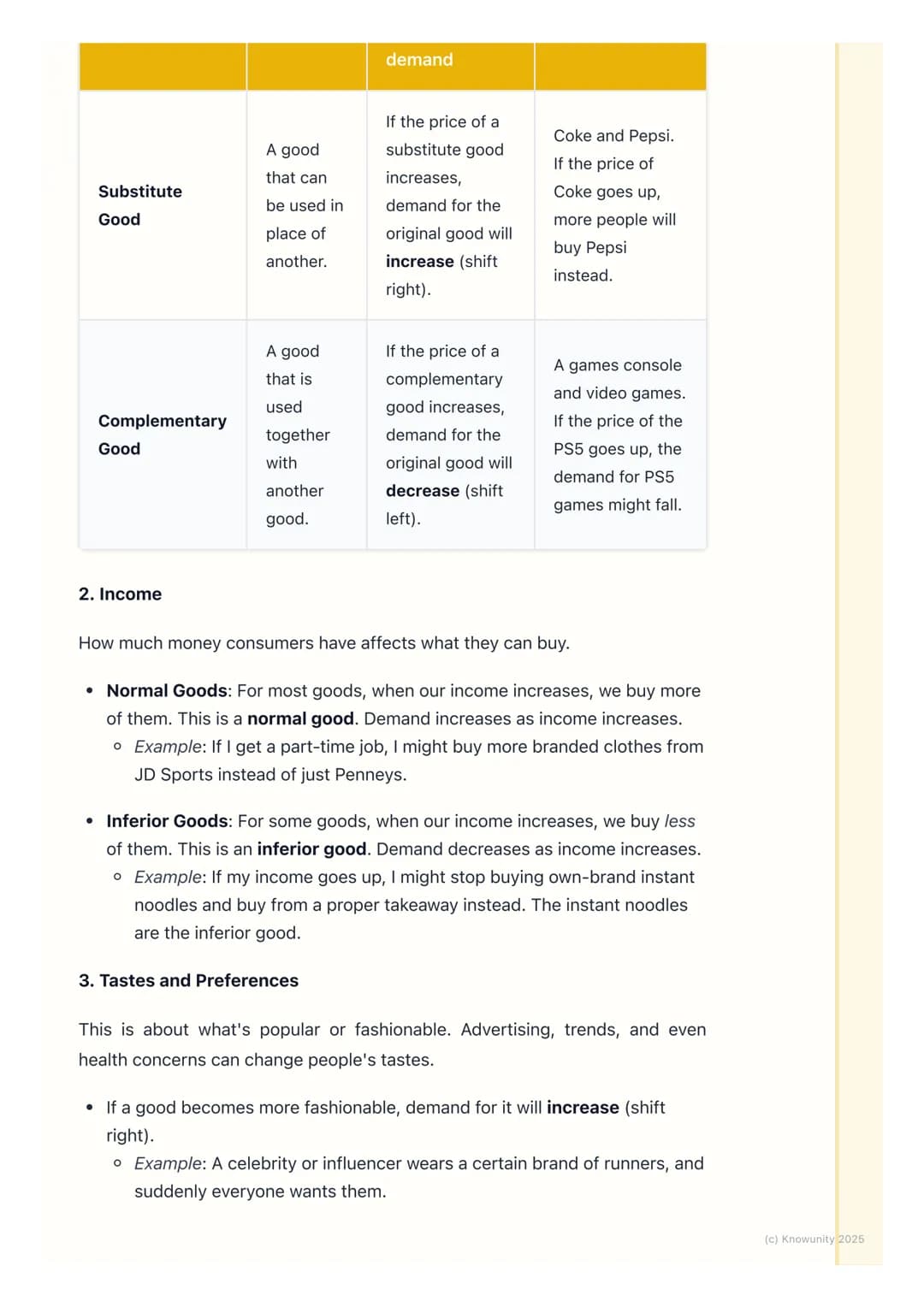
Related Goods: Substitutes and Complements
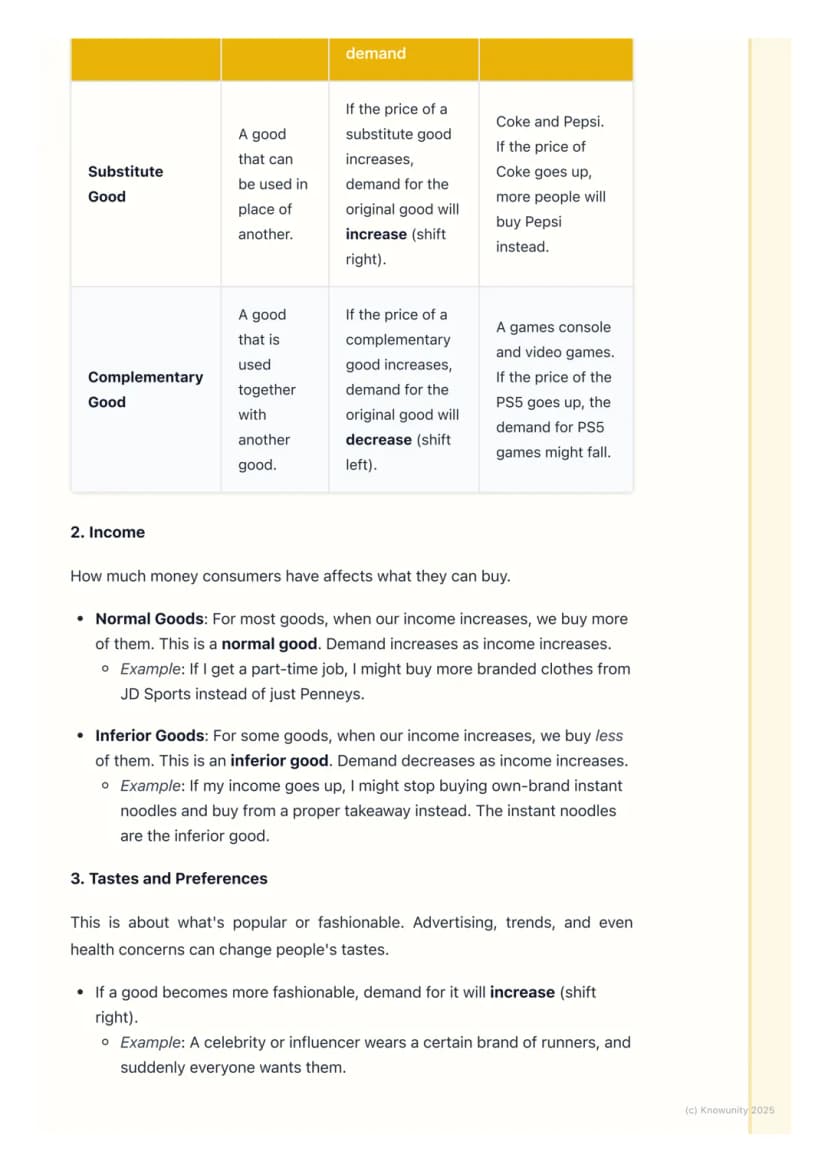
Substitute goods can replace each other - like Coke and Pepsi, or Netflix and Disney+. When Coke's price jumps up, suddenly Pepsi looks more attractive, so demand for Pepsi increases even though its price hasn't changed.
Complementary goods work together - think gaming consoles and games, or cars and petrol. If PlayStation 5 prices soar, fewer people buy the console, which means fewer people need PS5 games. So demand for games drops too.
This is dead useful for understanding real-world scenarios. When petrol prices spike, demand for fuel-efficient cars goes up whilst demand for gas-guzzling SUVs falls.
Quick Check: If two goods are substitutes and one gets more expensive, demand for the other increases. If they're complements and one gets pricier, demand for the other decreases.
3
of 5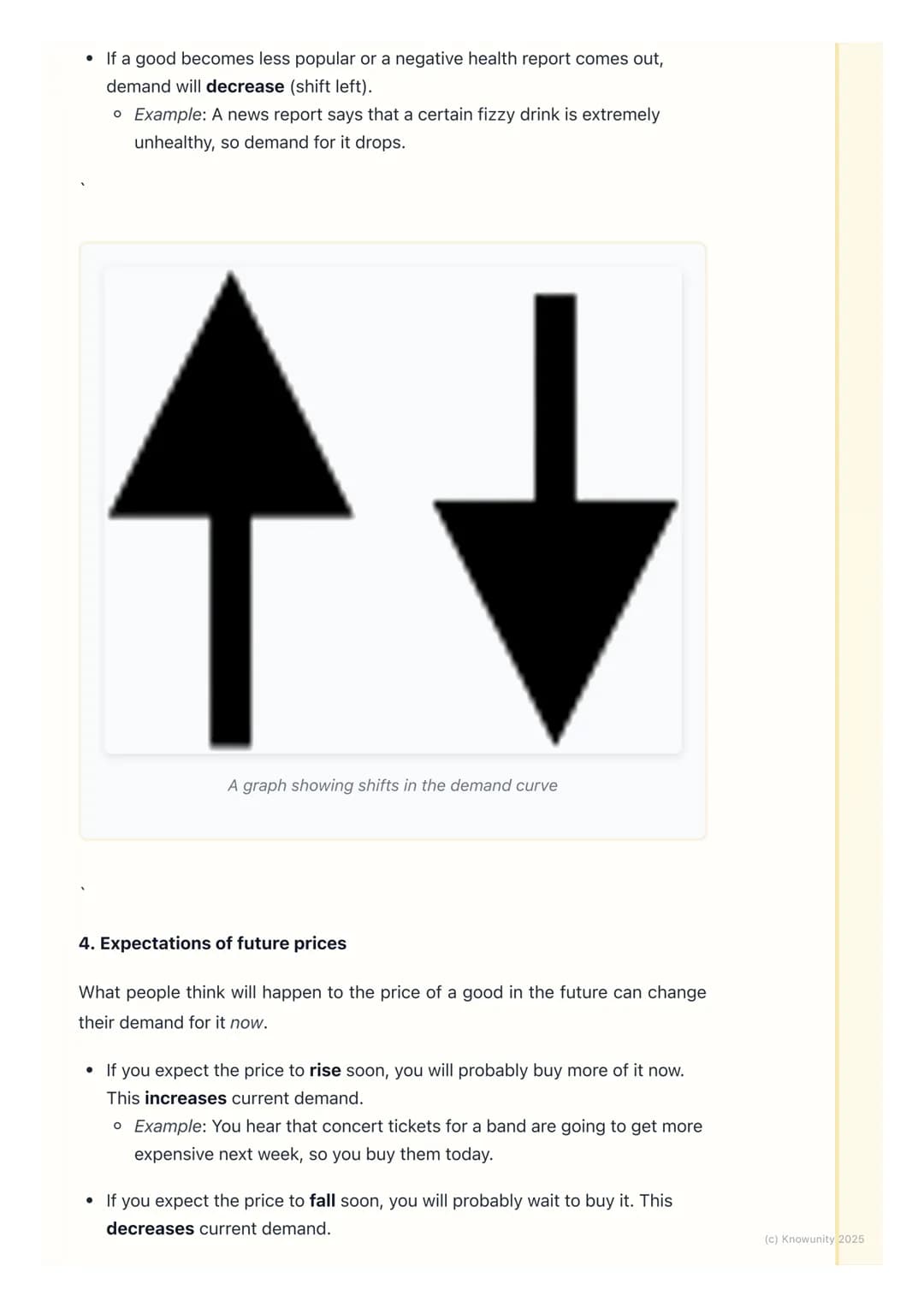
Income Effects: Normal vs Inferior Goods
Your income massively affects what you buy, but not all goods react the same way. Normal goods are things you buy more of when you get richer - branded clothes, restaurant meals, or the latest tech.
Inferior goods work backwards - when your income rises, you actually buy less of them. Think own-brand instant noodles or second-hand clothes. Once you can afford better alternatives, you ditch the cheap stuff.
This explains why Penneys might see less demand during economic booms whilst Brown Thomas sees more. People trade up when they've got extra cash flowing in.
Real Example: Getting a part-time job means you might stop buying supermarket own-brand everything and start choosing branded products instead.
4
of 5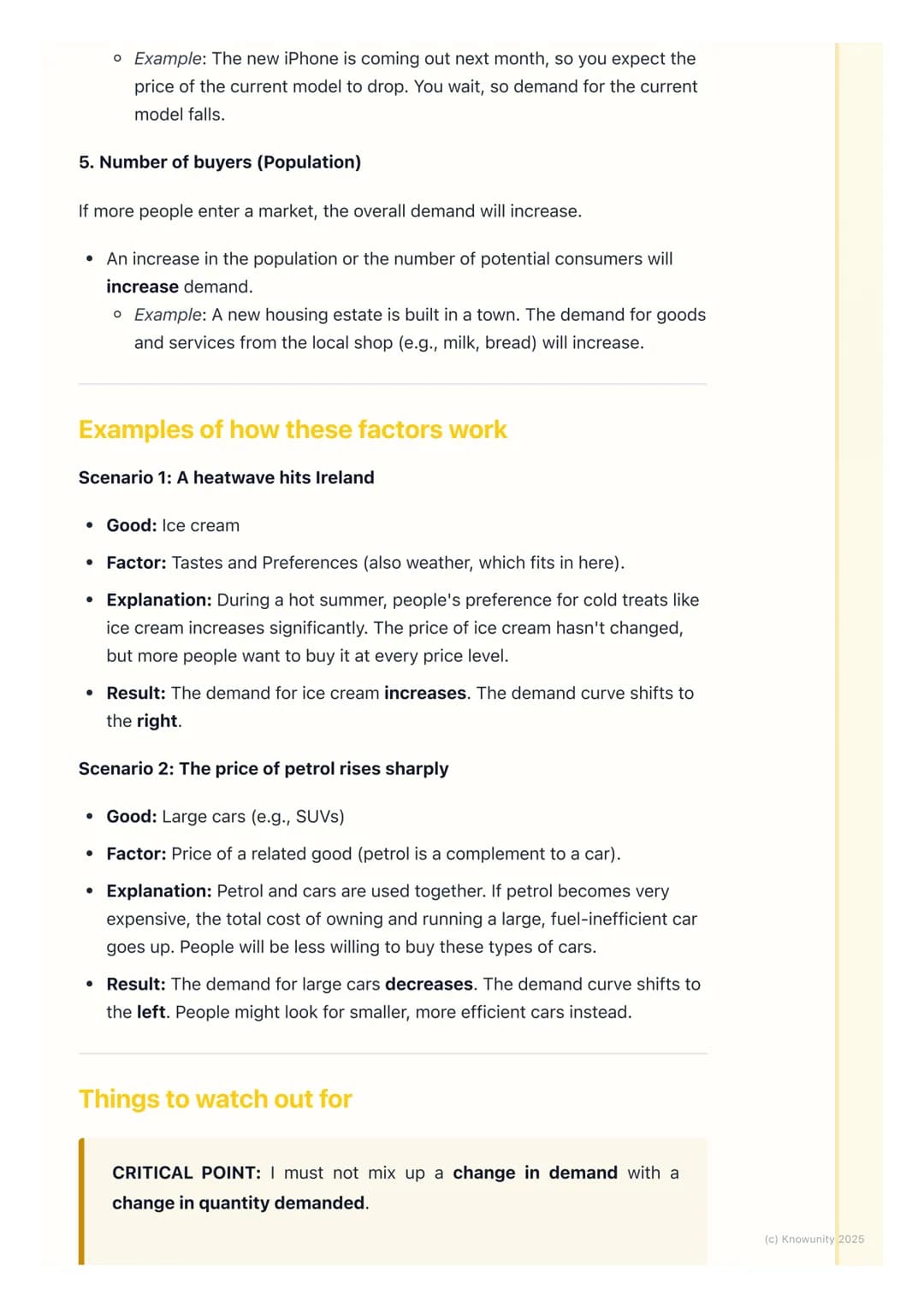
Tastes, Expectations, and Population Changes
Tastes and preferences drive massive demand shifts. One TikTok trend can make certain trainers explode in popularity overnight. Celebrity endorsements, health scares, or just changing fashions all shift demand curves dramatically.
Future price expectations create interesting behaviour. If you think concert tickets will cost more next week, you'll buy them now - increasing current demand. But if you expect phone prices to drop when the new model launches, you'll wait.
Population changes are straightforward but powerful. More people in an area means higher demand for local services. New housing estates boost demand for everything from groceries to hairdressers.
Exam Alert: Don't confuse a movement along the demand curve (price change only) with a shift of the entire curve (caused by these factors).
5
of 5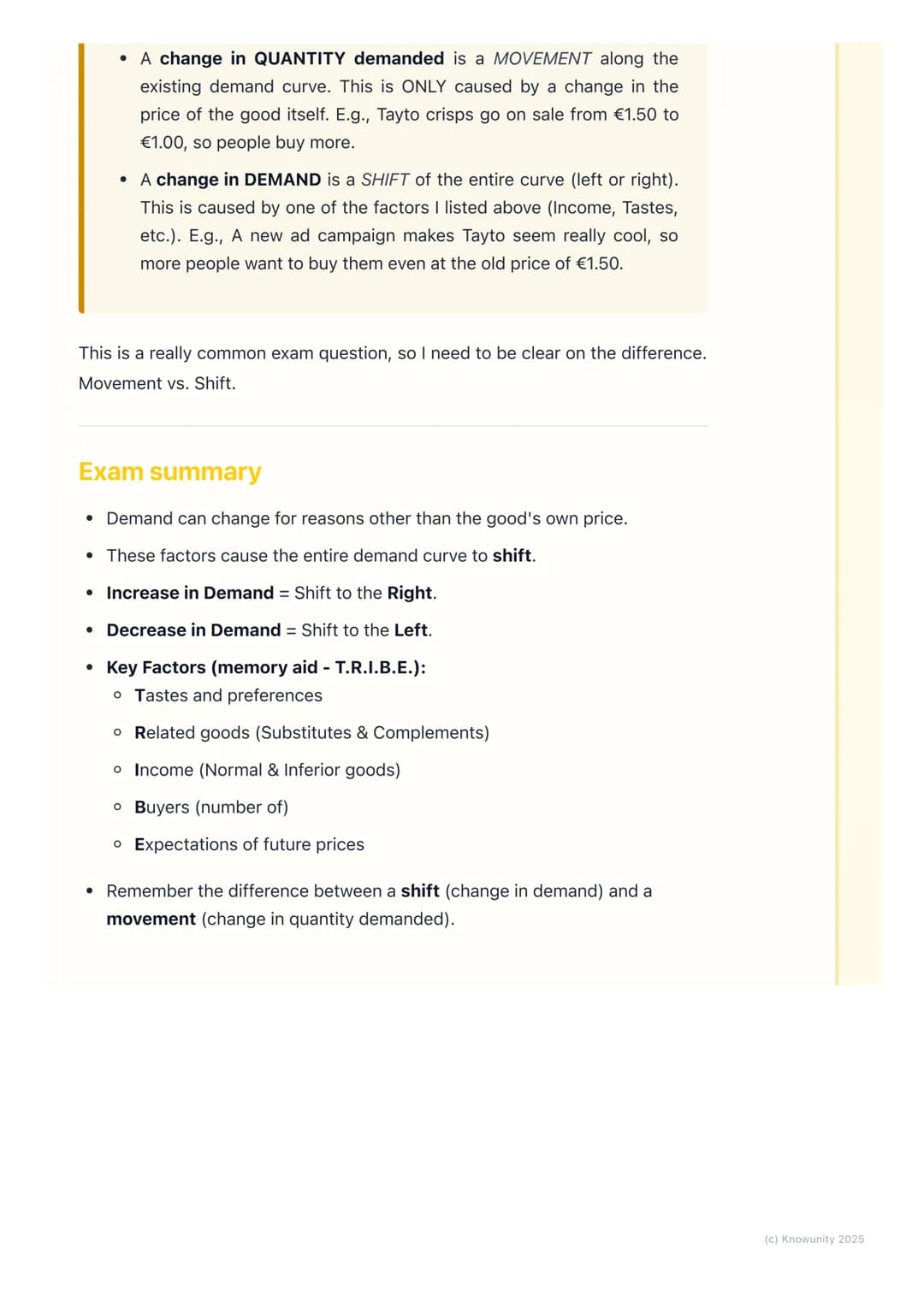
Putting It All Together
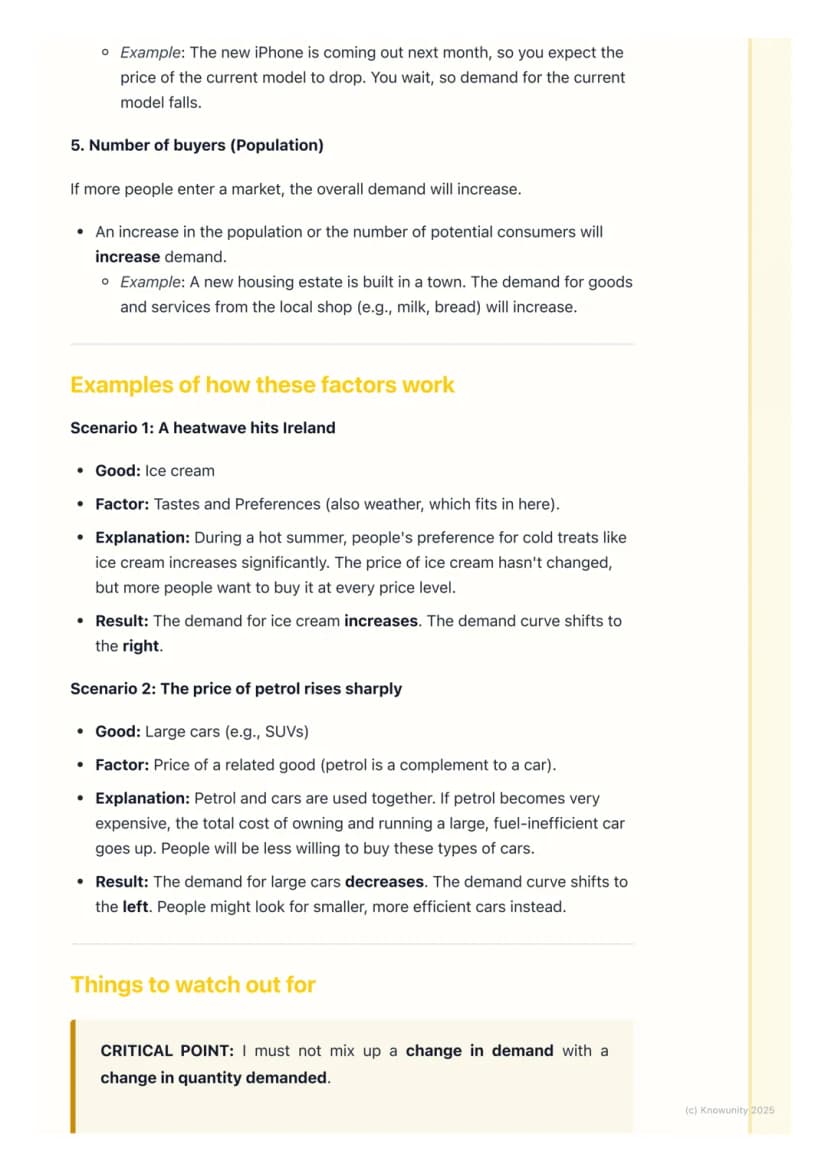
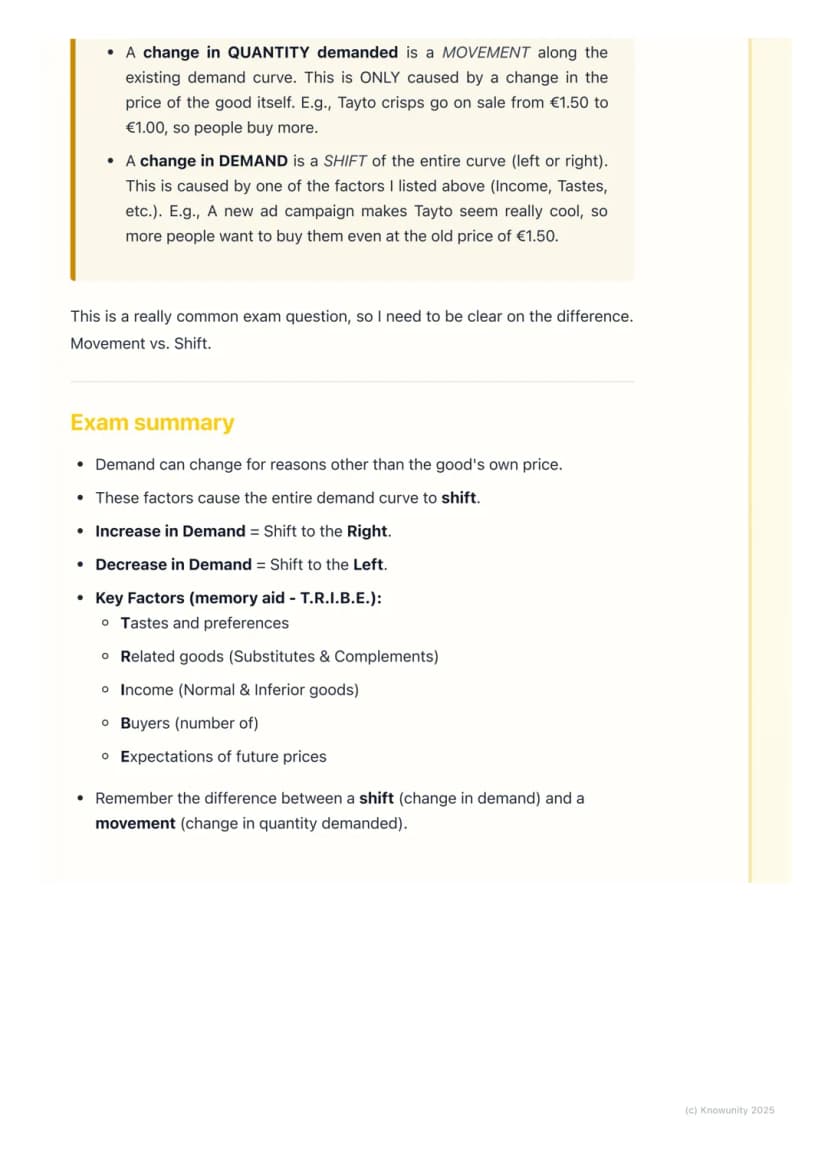
Here's your memory aid for exam success: T.R.I.B.E covers the main demand shifters - Tastes, Related goods, Income, Buyers (population), and Expectations of future prices.
Rightward shifts mean increased demand (more people want the good at every price level). Leftward shifts mean decreased demand (fewer people want it at every price level). The price itself hasn't changed - something else has influenced consumer behaviour.
Master the difference between demand changes and quantity demanded changes. This distinction appears in virtually every economics exam and catches loads of students out.
Exam Success: Practice identifying whether scenarios cause movements along the curve (price changes) or shifts of the entire curve (other factors). This skill will boost your marks significantly.
Akala namin hindi mo na itatanong...
Ano ang Knowunity AI companion?
Ang aming AI Companion ay isang AI tool na nakatuon sa mga estudyante na nag-aalok ng higit pa sa mga sagot lang. Binuo mula sa milyong Knowunity resources, nagbibigay ito ng may-kaugnayang impormasyon, personalized na study plans, quizzes, at content direkta sa chat, na umaangkop sa iyong sariling learning journey.
Saan ko mada-download ang Knowunity app?
Maaari mong i-download ang app mula sa Google Play Store at Apple App Store.
Talaga bang libre ang Knowunity?
Tama 'yan! Mag-enjoy sa libreng access sa mga study content, makipag-connect sa kapwa mga estudyante, at kumuha ng instant na tulong – lahat nasa iyong daliri lang.
Hindi mo mahanap ang hinahanap mo? Tuklasin ang iba pang mga asignatura.
Gustong-gusto kami ng mga estudyante — at magiging ganoon ka rin.
4.6/5App Store
4.7/5Google Play
Napakadaling gamitin at maganda ang disenyo ng app. Nahanap ko lahat ng hinahanap ko hanggang ngayon at natuto ako ng marami mula sa mga presentasyon! Tiyak na gagamitin ko ang app para sa isang takdang-aralin sa klase! At siyempre, nakakatulong din ito bilang inspirasyon.
Stefan Sgumagamit ng iOS
Sobrang ganda talaga ng app na ito. Maraming mga study notes at tulong [...]. Ang problemang subject ko ay Pranses, halimbawa, at ang app ay may maraming options para tumulong. Salamat sa app na ito, bumuti ang Pranses ko. Irerekumenda ko ito sa lahat.
Samantha KlichAndroid user
Wow, talagang namangha ako. Sinubukan ko lang ang app dahil nakita ko itong ina-advertise nang maraming beses at sobrang nagulat ako. Ang app na ito ang TULONG na gusto mo para sa paaralan at higit sa lahat, nag-aalok ito ng maraming bagay, tulad ng workouts at fact sheets, na SOBRANG nakatulong sa akin.
AnnaiOS user
Economics1 views·Na-update Jun 9, 2026·5 mga pahinaKey Factors Influencing Consumer Demand
Ever wonder why everyone suddenly wants the same trainers, or why nobody buys certain sweets anymore? It's not just about price - loads of other factors can change how much people want to buy something. Understanding these demand shifters is...
1
of 5
Mag-sign up para makita ang content. Libre ito!
- Access sa lahat ng dokumento
- Pagbutihin ang iyong mga grado
- Sumali sa milyong mga estudyante
Understanding Demand Basics
Demand isn't just about price - it's about how willing and able people are to buy something at a given price. Think of it like this: you might want the latest iPhone, but if you can't afford it, there's no actual demand from you.
The Law of Demand tells us that when prices drop, people generally buy more (and vice versa). But here's where it gets interesting - sometimes demand changes even when the price stays exactly the same.
When something other than price affects how much people want to buy, the entire demand curve shifts. This is completely different from just moving along the curve when price changes. Understanding this difference will save you marks in exams!
Key Tip: Remember ceteris paribus - "all other things being equal". Economists use this to study one factor at a time, assuming everything else stays constant.
2
of 5Mag-sign up para makita ang content. Libre ito!
- Access sa lahat ng dokumento
- Pagbutihin ang iyong mga grado
- Sumali sa milyong mga estudyante
Related Goods: Substitutes and Complements
Substitute goods can replace each other - like Coke and Pepsi, or Netflix and Disney+. When Coke's price jumps up, suddenly Pepsi looks more attractive, so demand for Pepsi increases even though its price hasn't changed.
Complementary goods work together - think gaming consoles and games, or cars and petrol. If PlayStation 5 prices soar, fewer people buy the console, which means fewer people need PS5 games. So demand for games drops too.
This is dead useful for understanding real-world scenarios. When petrol prices spike, demand for fuel-efficient cars goes up whilst demand for gas-guzzling SUVs falls.
Quick Check: If two goods are substitutes and one gets more expensive, demand for the other increases. If they're complements and one gets pricier, demand for the other decreases.
3
of 5Mag-sign up para makita ang content. Libre ito!
- Access sa lahat ng dokumento
- Pagbutihin ang iyong mga grado
- Sumali sa milyong mga estudyante
Income Effects: Normal vs Inferior Goods
Your income massively affects what you buy, but not all goods react the same way. Normal goods are things you buy more of when you get richer - branded clothes, restaurant meals, or the latest tech.
Inferior goods work backwards - when your income rises, you actually buy less of them. Think own-brand instant noodles or second-hand clothes. Once you can afford better alternatives, you ditch the cheap stuff.
This explains why Penneys might see less demand during economic booms whilst Brown Thomas sees more. People trade up when they've got extra cash flowing in.
Real Example: Getting a part-time job means you might stop buying supermarket own-brand everything and start choosing branded products instead.
4
of 5Mag-sign up para makita ang content. Libre ito!
- Access sa lahat ng dokumento
- Pagbutihin ang iyong mga grado
- Sumali sa milyong mga estudyante
Tastes, Expectations, and Population Changes
Tastes and preferences drive massive demand shifts. One TikTok trend can make certain trainers explode in popularity overnight. Celebrity endorsements, health scares, or just changing fashions all shift demand curves dramatically.
Future price expectations create interesting behaviour. If you think concert tickets will cost more next week, you'll buy them now - increasing current demand. But if you expect phone prices to drop when the new model launches, you'll wait.
Population changes are straightforward but powerful. More people in an area means higher demand for local services. New housing estates boost demand for everything from groceries to hairdressers.
Exam Alert: Don't confuse a movement along the demand curve (price change only) with a shift of the entire curve (caused by these factors).
5
of 5Mag-sign up para makita ang content. Libre ito!
- Access sa lahat ng dokumento
- Pagbutihin ang iyong mga grado
- Sumali sa milyong mga estudyante
Putting It All Together
Here's your memory aid for exam success: T.R.I.B.E covers the main demand shifters - Tastes, Related goods, Income, Buyers (population), and Expectations of future prices.
Rightward shifts mean increased demand (more people want the good at every price level). Leftward shifts mean decreased demand (fewer people want it at every price level). The price itself hasn't changed - something else has influenced consumer behaviour.
Master the difference between demand changes and quantity demanded changes. This distinction appears in virtually every economics exam and catches loads of students out.
Exam Success: Practice identifying whether scenarios cause movements along the curve (price changes) or shifts of the entire curve (other factors). This skill will boost your marks significantly.
Akala namin hindi mo na itatanong...
Ano ang Knowunity AI companion?
Ang aming AI Companion ay isang AI tool na nakatuon sa mga estudyante na nag-aalok ng higit pa sa mga sagot lang. Binuo mula sa milyong Knowunity resources, nagbibigay ito ng may-kaugnayang impormasyon, personalized na study plans, quizzes, at content direkta sa chat, na umaangkop sa iyong sariling learning journey.
Saan ko mada-download ang Knowunity app?
Maaari mong i-download ang app mula sa Google Play Store at Apple App Store.
Talaga bang libre ang Knowunity?
Tama 'yan! Mag-enjoy sa libreng access sa mga study content, makipag-connect sa kapwa mga estudyante, at kumuha ng instant na tulong – lahat nasa iyong daliri lang.
Hindi mo mahanap ang hinahanap mo? Tuklasin ang iba pang mga asignatura.
Gustong-gusto kami ng mga estudyante — at magiging ganoon ka rin.
4.6/5App Store
4.7/5Google Play
Napakadaling gamitin at maganda ang disenyo ng app. Nahanap ko lahat ng hinahanap ko hanggang ngayon at natuto ako ng marami mula sa mga presentasyon! Tiyak na gagamitin ko ang app para sa isang takdang-aralin sa klase! At siyempre, nakakatulong din ito bilang inspirasyon.
Stefan Sgumagamit ng iOS
Sobrang ganda talaga ng app na ito. Maraming mga study notes at tulong [...]. Ang problemang subject ko ay Pranses, halimbawa, at ang app ay may maraming options para tumulong. Salamat sa app na ito, bumuti ang Pranses ko. Irerekumenda ko ito sa lahat.
Samantha KlichAndroid user
Wow, talagang namangha ako. Sinubukan ko lang ang app dahil nakita ko itong ina-advertise nang maraming beses at sobrang nagulat ako. Ang app na ito ang TULONG na gusto mo para sa paaralan at higit sa lahat, nag-aalok ito ng maraming bagay, tulad ng workouts at fact sheets, na SOBRANG nakatulong sa akin.
AnnaiOS user