
Ever wondered what makes salt different from the rock it...
 Earth Science775 views·Na-update Jun 10, 2026·29 mga pahina
Grade 12 Earth and Life Science Presentation

NghtArnold Knight@nghtarnoldknigh



1 / 29
1
of 29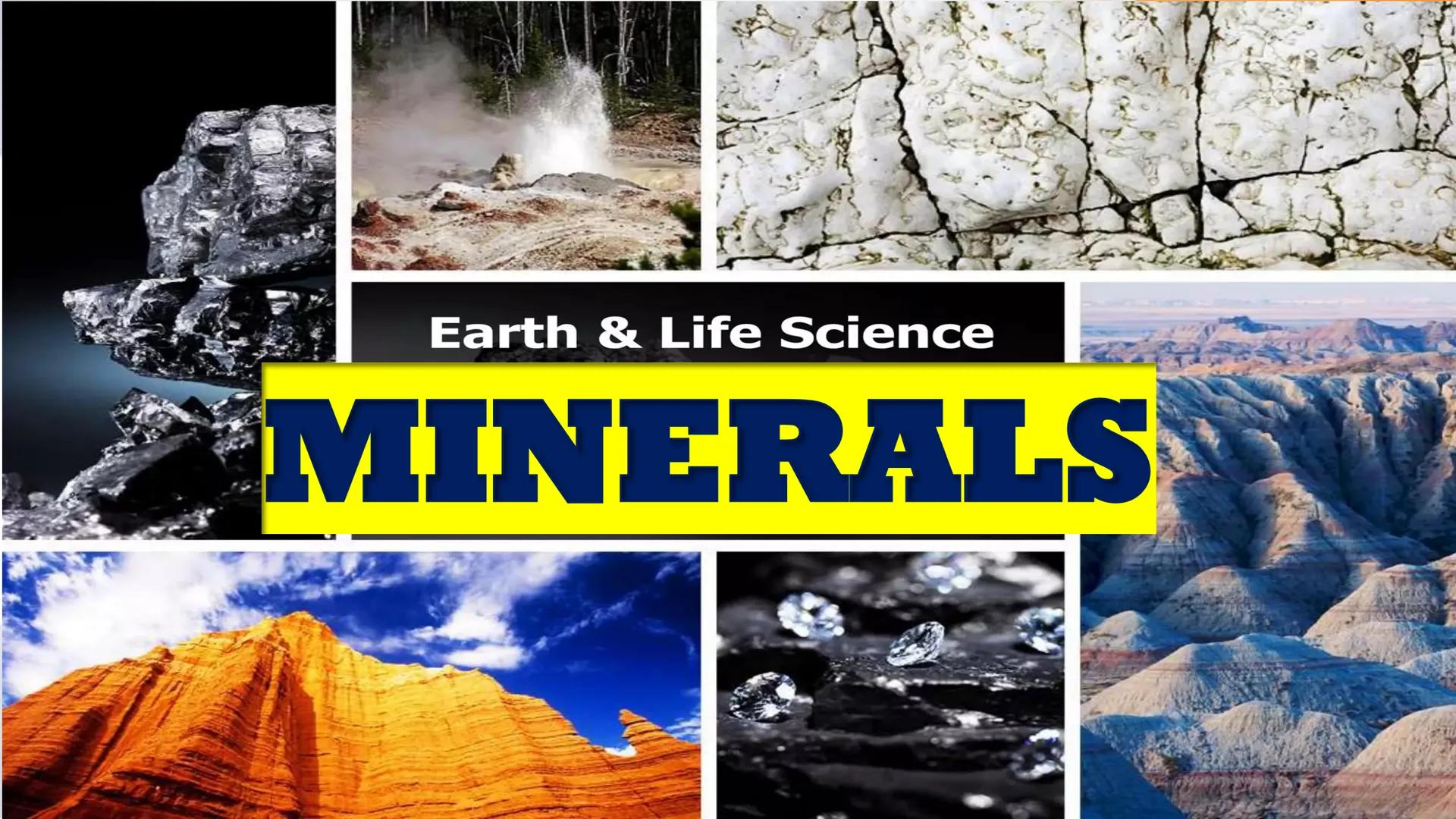
Earth & Life Science: Minerals
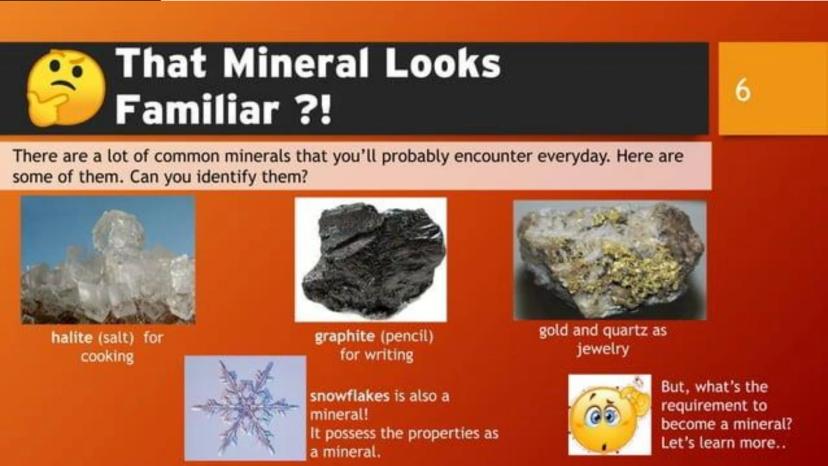
Think about the salt you use for cooking, the graphite in your pencil, or even the gold in jewelry - these are all minerals that play huge roles in our daily lives. Minerals are literally the building blocks of our planet's solid parts and provide us with countless valuable resources.
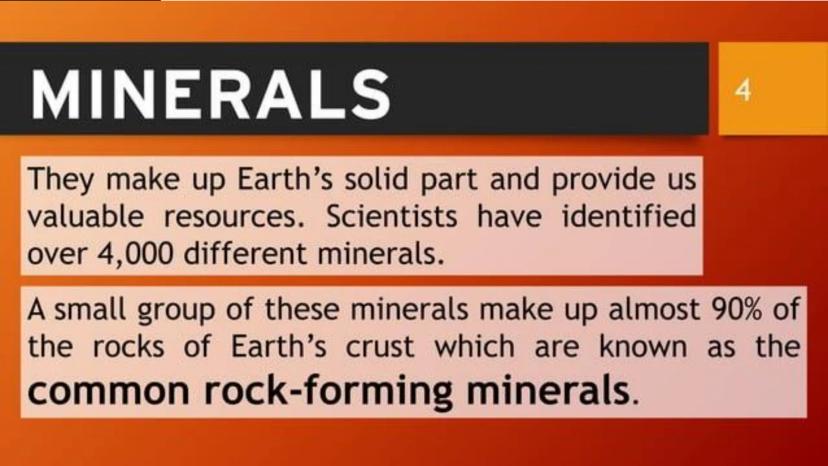
Scientists have discovered over 4,000 different minerals, but here's the cool part: just a small group of these makes up almost 90% of Earth's crust rocks. These are called common rock-forming minerals, and they're the foundation of everything solid around you.
Quick Fact: Even snowflakes count as minerals because they meet all the scientific requirements!
2
of 29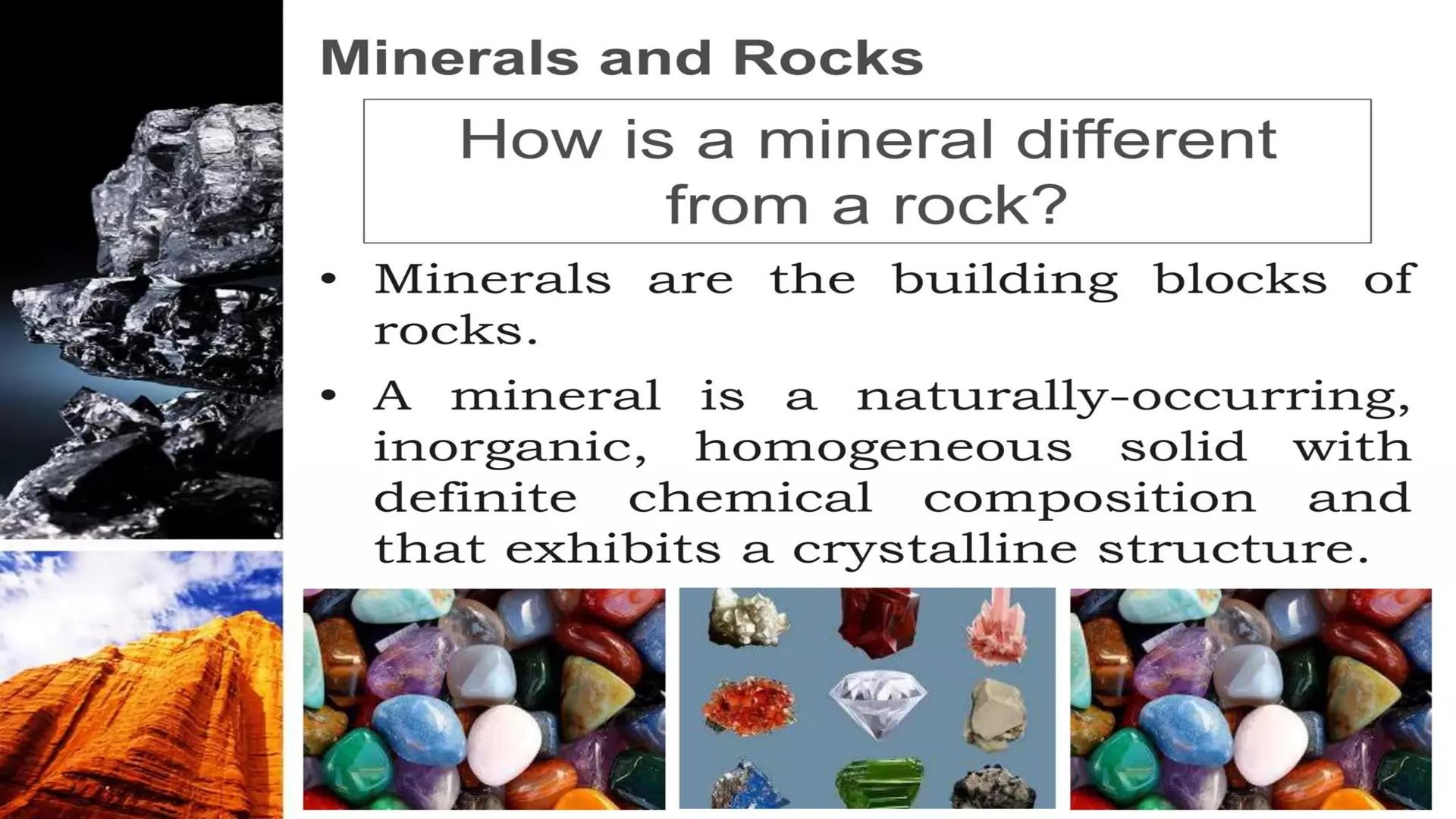
Minerals vs. Rocks: What's the Difference?
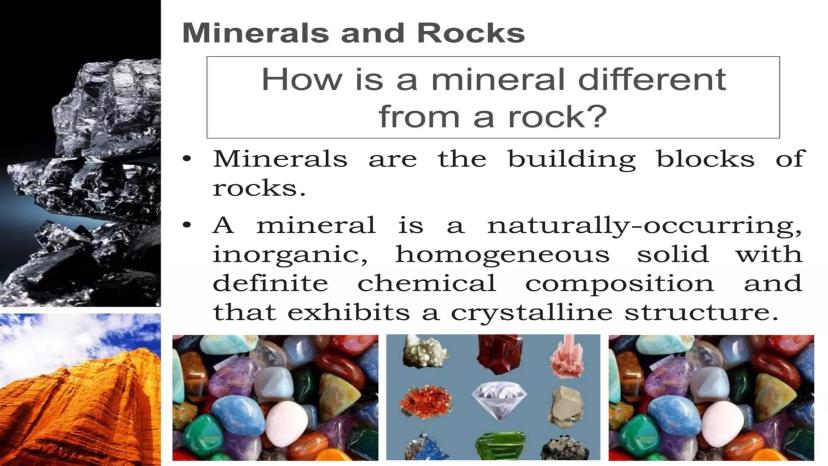
Here's something that might surprise you: minerals are the building blocks of rocks. It's like how LEGO blocks combine to make bigger structures - individual minerals combine to form rocks.
A mineral has a very specific definition in science. It must be naturally-occurring, inorganic, homogeneous (the same throughout), have a definite chemical composition, and show a crystalline structure. Think of it as nature's perfectly organized chemistry set.
This means that while your table salt (halite) and pencil graphite are minerals, things like coal aren't - because coal comes from once-living plants. The distinction is all about how and from what they're made.
Remember This: If humans made it or it came from something that was once alive, it's not a mineral!
3
of 29
Meet the Mineral Scientists
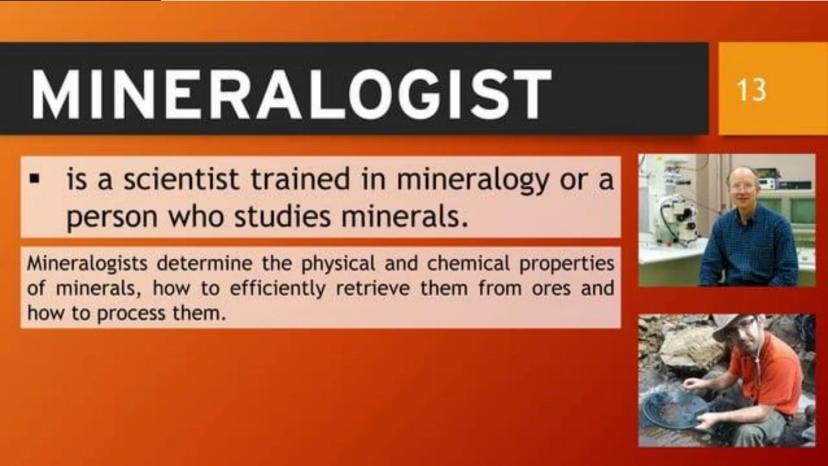
Mineralogy is the scientific study of minerals and all their properties - both chemical and physical. It's a specialized branch of geology that digs deep into how minerals form, where they're found, and how we can use them.
Mineralogists are the scientists who dedicate their careers to understanding these fascinating materials. They figure out what minerals are made of, determine the best ways to extract them from ores, and develop methods to process them for our use.
These scientists are basically mineral detectives, solving puzzles about Earth's building blocks and finding new ways to make them useful for society.
Career Insight: Mineralogists work everywhere from mining companies to jewelry design, making it a field with diverse opportunities!
4
of 29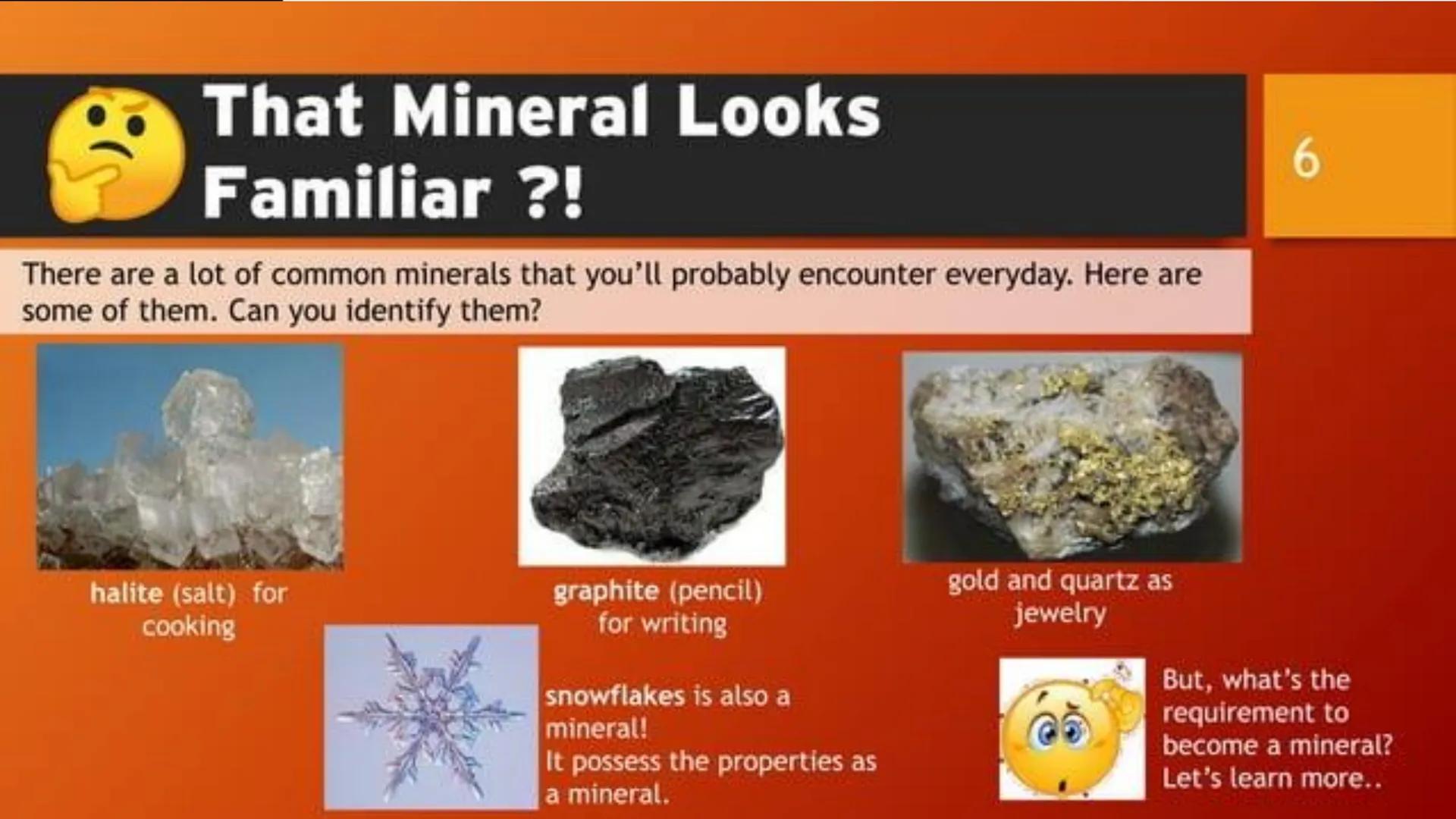
Characteristic #1: Naturally-Occurring
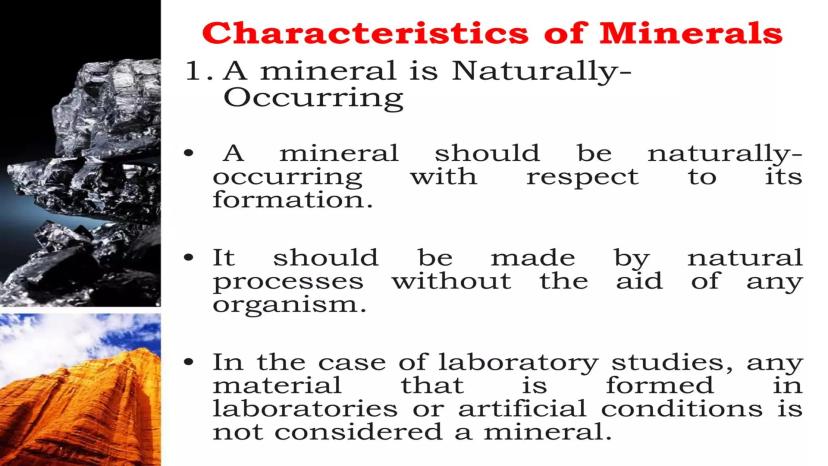
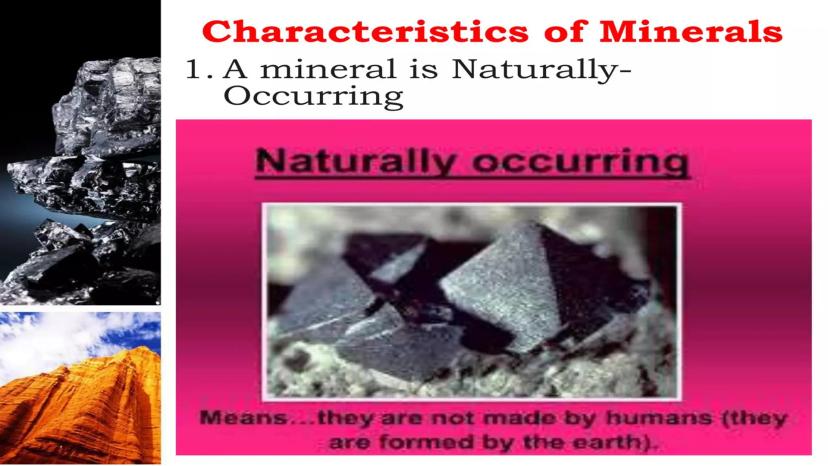
The first rule of being a mineral is simple: nature has to make it, not humans. This means minerals form through natural processes without any help from living organisms or laboratory conditions.
So even if scientists can create diamond-like materials in labs, those artificial versions don't count as true minerals. Only the ones formed by Earth's natural forces make the cut.
This characteristic immediately rules out anything synthetic or human-made, keeping the definition focused on Earth's natural chemistry at work.
Think About It: This is why synthetic gems, even if chemically identical to natural ones, aren't considered true minerals by scientists.
5
of 29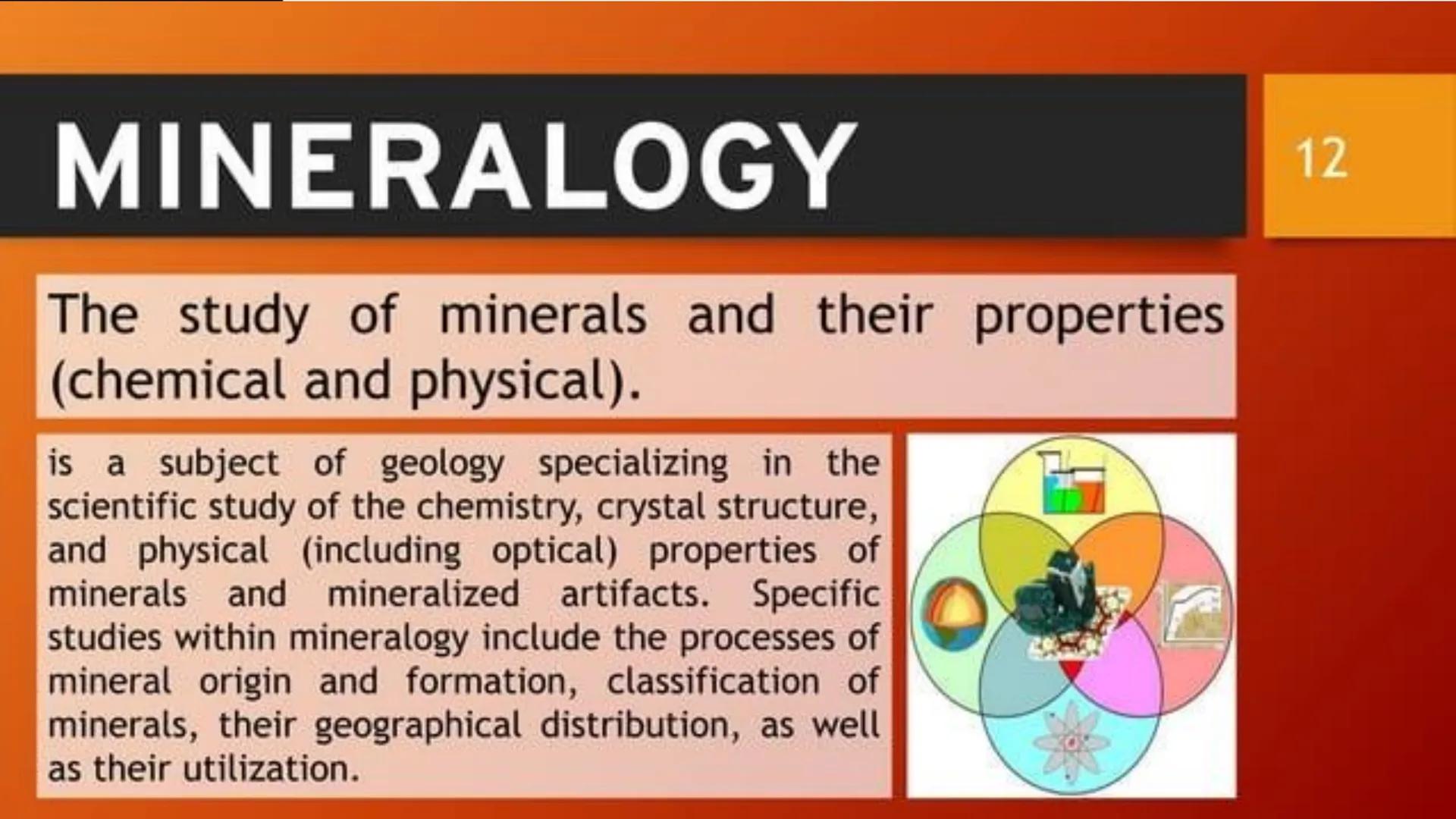
Characteristic #2: Inorganic
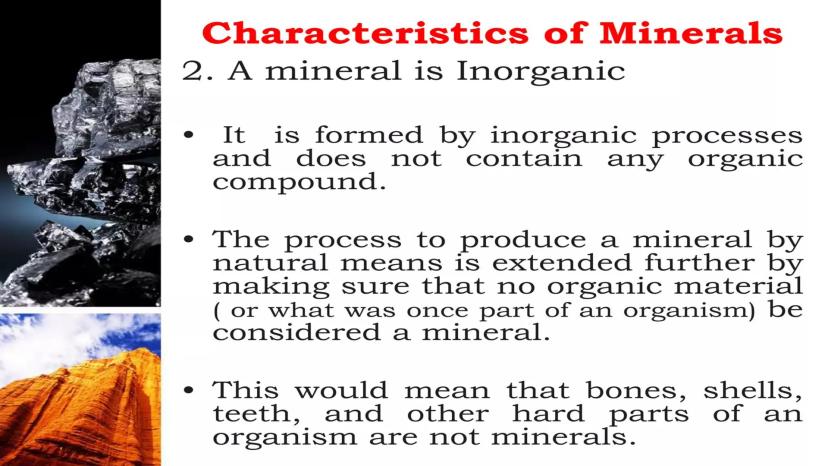
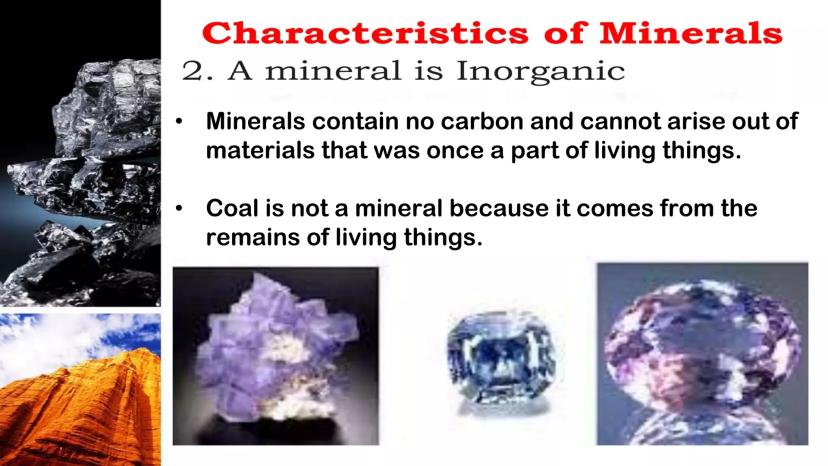
Here's where it gets interesting: minerals must be inorganic, meaning they can't contain carbon from living things or be made from materials that were once part of organisms.
This rule eliminates bones, shells, teeth, and other hard parts of living things from being classified as minerals. It also means coal isn't a mineral because it formed from ancient plant remains.
The inorganic requirement ensures that minerals represent pure geological processes rather than biological ones. It's nature's chemistry lab at work, not life's biology lab.
Key Exception: Some minerals do contain carbon, but only if it wasn't derived from living organisms - like diamond, which forms deep in Earth's mantle.
6
of 29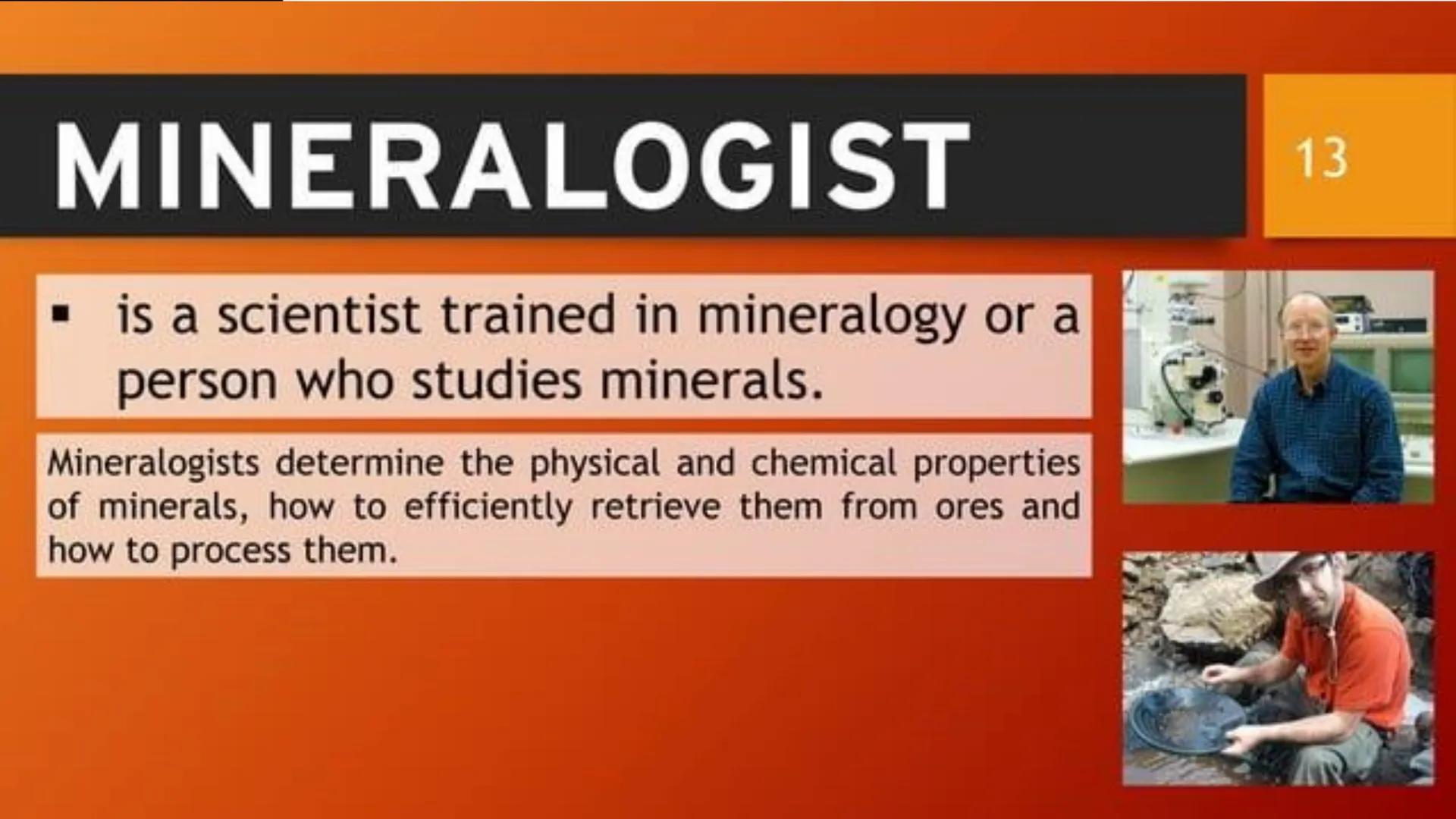
7
of 29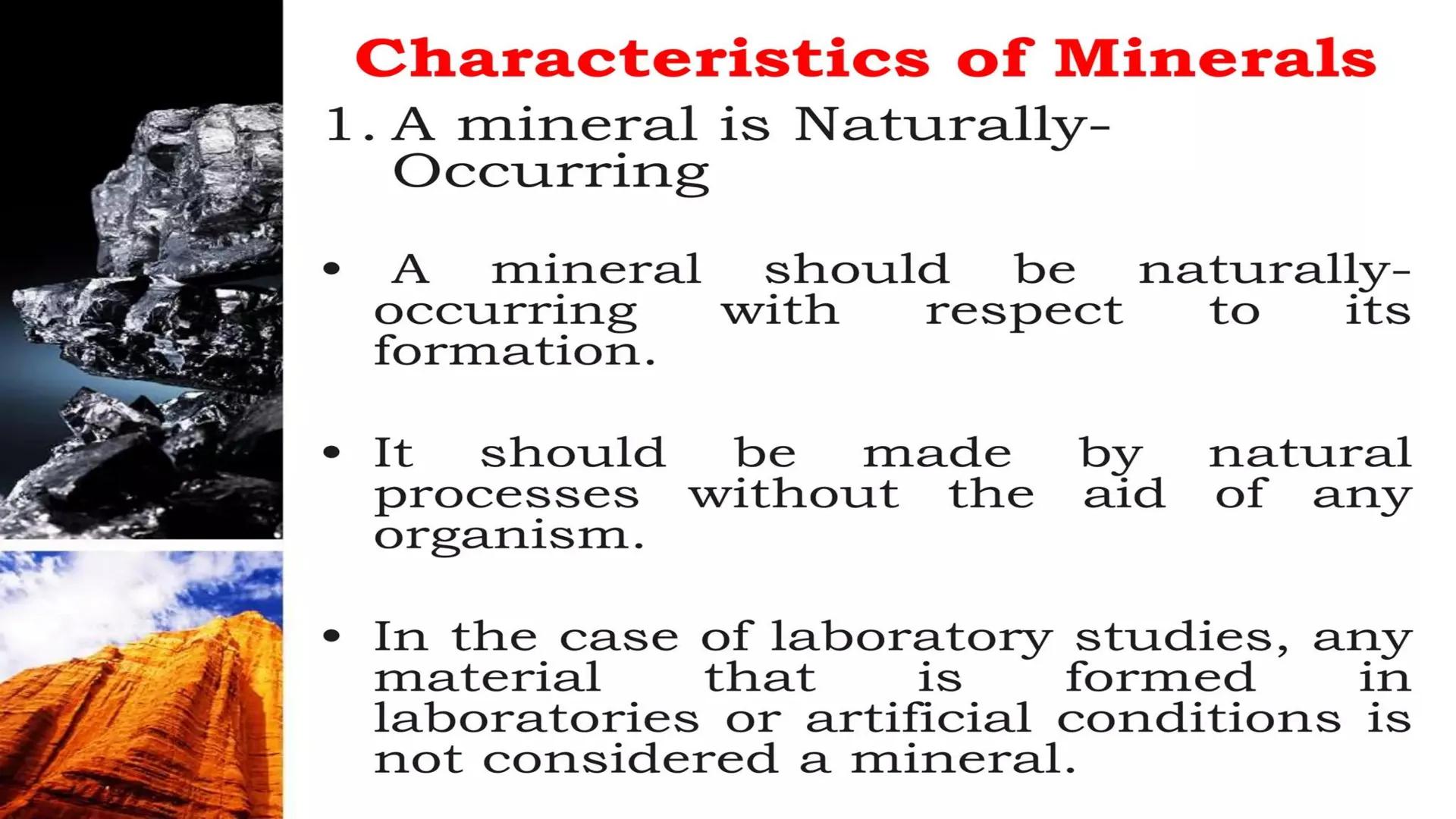
8
of 29
9
of 29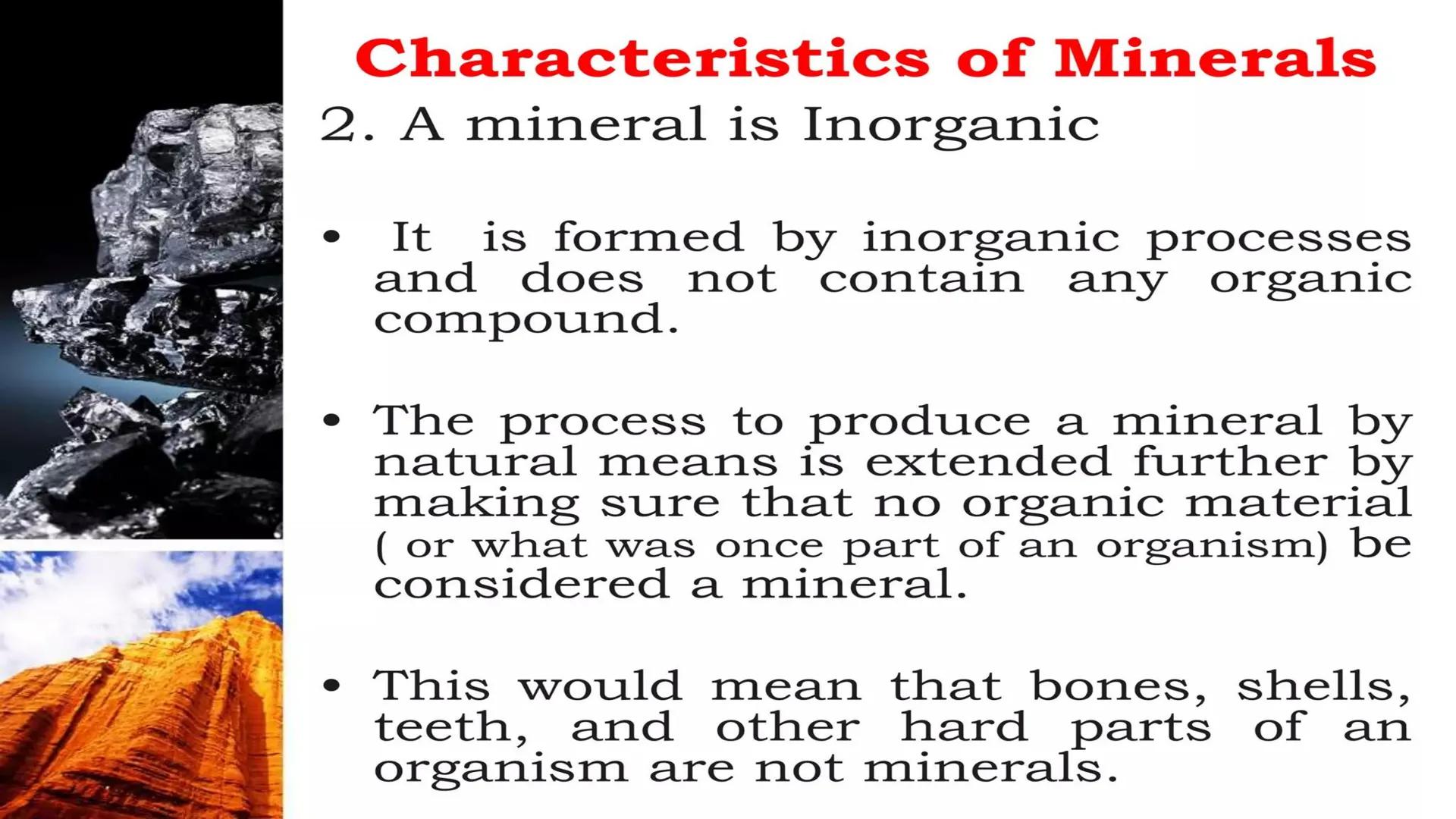
10
of 29
11
of 29
12
of 29
13
of 29
14
of 29
15
of 29
16
of 29
17
of 29
18
of 29
19
of 29
20
of 29
21
of 29
22
of 29
23
of 29
24
of 29
25
of 29
26
of 29
27
of 29
28
of 29
29
of 29
Akala namin hindi mo na itatanong...
Ano ang Knowunity AI companion?
Ang aming AI Companion ay isang AI tool na nakatuon sa mga estudyante na nag-aalok ng higit pa sa mga sagot lang. Binuo mula sa milyong Knowunity resources, nagbibigay ito ng may-kaugnayang impormasyon, personalized na study plans, quizzes, at content direkta sa chat, na umaangkop sa iyong sariling learning journey.
Saan ko mada-download ang Knowunity app?
Maaari mong i-download ang app mula sa Google Play Store at Apple App Store.
Talaga bang libre ang Knowunity?
Tama 'yan! Mag-enjoy sa libreng access sa mga study content, makipag-connect sa kapwa mga estudyante, at kumuha ng instant na tulong – lahat nasa iyong daliri lang.
Pinaka-sikat na nilalaman sa Earth Science
9Pinaka-sikat na nilalaman
9Hindi mo mahanap ang hinahanap mo? Tuklasin ang iba pang mga asignatura.
Gustong-gusto kami ng mga estudyante — at magiging ganoon ka rin.
4.6/5App Store
4.7/5Google Play
Napakadaling gamitin at maganda ang disenyo ng app. Nahanap ko lahat ng hinahanap ko hanggang ngayon at natuto ako ng marami mula sa mga presentasyon! Tiyak na gagamitin ko ang app para sa isang takdang-aralin sa klase! At siyempre, nakakatulong din ito bilang inspirasyon.
Stefan Sgumagamit ng iOS
Sobrang ganda talaga ng app na ito. Maraming mga study notes at tulong [...]. Ang problemang subject ko ay Pranses, halimbawa, at ang app ay may maraming options para tumulong. Salamat sa app na ito, bumuti ang Pranses ko. Irerekumenda ko ito sa lahat.
Samantha KlichAndroid user
Wow, talagang namangha ako. Sinubukan ko lang ang app dahil nakita ko itong ina-advertise nang maraming beses at sobrang nagulat ako. Ang app na ito ang TULONG na gusto mo para sa paaralan at higit sa lahat, nag-aalok ito ng maraming bagay, tulad ng workouts at fact sheets, na SOBRANG nakatulong sa akin.
AnnaiOS user
Earth Science775 views·Na-update Jun 10, 2026·29 mga pahinaGrade 12 Earth and Life Science Presentation
NghtArnold Knight@nghtarnoldknigh
Ever wondered what makes salt different from the rock it comes from, or why your pencil graphite is actually a mineral? Understanding minerals is key to grasping how our planet works and where everyday materials come from.
1
of 29
Mag-sign up para makita ang content. Libre ito!
- Access sa lahat ng dokumento
- Pagbutihin ang iyong mga grado
- Sumali sa milyong mga estudyante
Earth & Life Science: Minerals
Think about the salt you use for cooking, the graphite in your pencil, or even the gold in jewelry - these are all minerals that play huge roles in our daily lives. Minerals are literally the building blocks of our planet's solid parts and provide us with countless valuable resources.
Scientists have discovered over 4,000 different minerals, but here's the cool part: just a small group of these makes up almost 90% of Earth's crust rocks. These are called common rock-forming minerals, and they're the foundation of everything solid around you.
Quick Fact: Even snowflakes count as minerals because they meet all the scientific requirements!
2
of 29Mag-sign up para makita ang content. Libre ito!
- Access sa lahat ng dokumento
- Pagbutihin ang iyong mga grado
- Sumali sa milyong mga estudyante
Minerals vs. Rocks: What's the Difference?
Here's something that might surprise you: minerals are the building blocks of rocks. It's like how LEGO blocks combine to make bigger structures - individual minerals combine to form rocks.
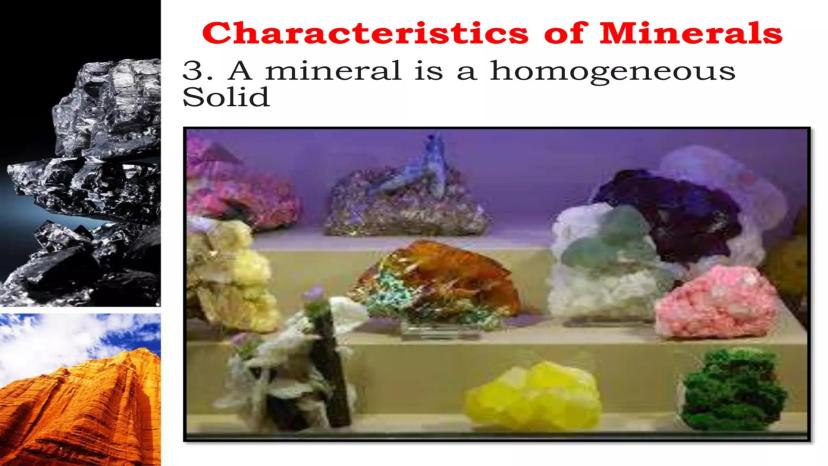
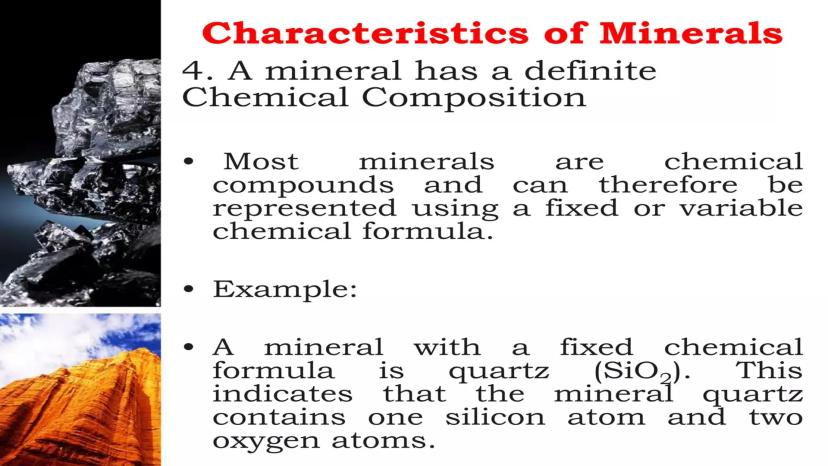
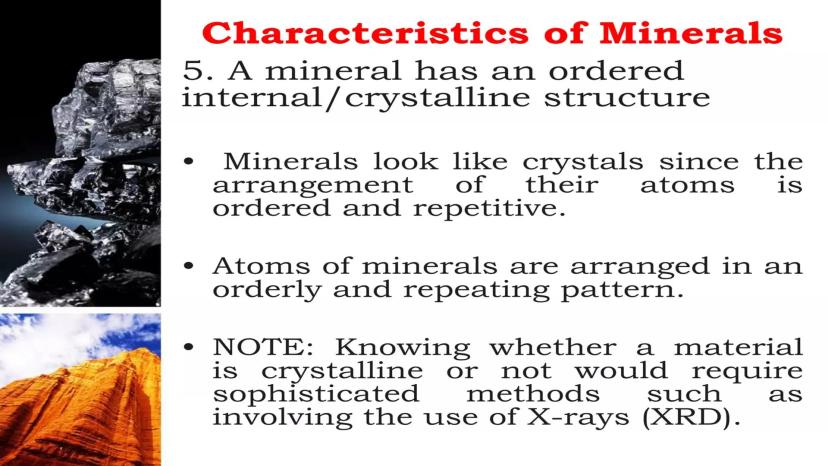
A mineral has a very specific definition in science. It must be naturally-occurring, inorganic, homogeneous (the same throughout), have a definite chemical composition, and show a crystalline structure. Think of it as nature's perfectly organized chemistry set.
This means that while your table salt (halite) and pencil graphite are minerals, things like coal aren't - because coal comes from once-living plants. The distinction is all about how and from what they're made.
Remember This: If humans made it or it came from something that was once alive, it's not a mineral!
3
of 29Mag-sign up para makita ang content. Libre ito!
- Access sa lahat ng dokumento
- Pagbutihin ang iyong mga grado
- Sumali sa milyong mga estudyante
Meet the Mineral Scientists
Mineralogy is the scientific study of minerals and all their properties - both chemical and physical. It's a specialized branch of geology that digs deep into how minerals form, where they're found, and how we can use them.
Mineralogists are the scientists who dedicate their careers to understanding these fascinating materials. They figure out what minerals are made of, determine the best ways to extract them from ores, and develop methods to process them for our use.
These scientists are basically mineral detectives, solving puzzles about Earth's building blocks and finding new ways to make them useful for society.
Career Insight: Mineralogists work everywhere from mining companies to jewelry design, making it a field with diverse opportunities!
4
of 29Mag-sign up para makita ang content. Libre ito!
- Access sa lahat ng dokumento
- Pagbutihin ang iyong mga grado
- Sumali sa milyong mga estudyante
Characteristic #1: Naturally-Occurring
The first rule of being a mineral is simple: nature has to make it, not humans. This means minerals form through natural processes without any help from living organisms or laboratory conditions.
So even if scientists can create diamond-like materials in labs, those artificial versions don't count as true minerals. Only the ones formed by Earth's natural forces make the cut.
This characteristic immediately rules out anything synthetic or human-made, keeping the definition focused on Earth's natural chemistry at work.
Think About It: This is why synthetic gems, even if chemically identical to natural ones, aren't considered true minerals by scientists.
5
of 29Mag-sign up para makita ang content. Libre ito!
- Access sa lahat ng dokumento
- Pagbutihin ang iyong mga grado
- Sumali sa milyong mga estudyante
Characteristic #2: Inorganic
Here's where it gets interesting: minerals must be inorganic, meaning they can't contain carbon from living things or be made from materials that were once part of organisms.
This rule eliminates bones, shells, teeth, and other hard parts of living things from being classified as minerals. It also means coal isn't a mineral because it formed from ancient plant remains.
The inorganic requirement ensures that minerals represent pure geological processes rather than biological ones. It's nature's chemistry lab at work, not life's biology lab.
Key Exception: Some minerals do contain carbon, but only if it wasn't derived from living organisms - like diamond, which forms deep in Earth's mantle.
6
of 29Mag-sign up para makita ang content. Libre ito!
- Access sa lahat ng dokumento
- Pagbutihin ang iyong mga grado
- Sumali sa milyong mga estudyante
7
of 29Mag-sign up para makita ang content. Libre ito!
- Access sa lahat ng dokumento
- Pagbutihin ang iyong mga grado
- Sumali sa milyong mga estudyante
8
of 29Mag-sign up para makita ang content. Libre ito!
- Access sa lahat ng dokumento
- Pagbutihin ang iyong mga grado
- Sumali sa milyong mga estudyante
9
of 29Mag-sign up para makita ang content. Libre ito!
- Access sa lahat ng dokumento
- Pagbutihin ang iyong mga grado
- Sumali sa milyong mga estudyante
10
of 29Mag-sign up para makita ang content. Libre ito!
- Access sa lahat ng dokumento
- Pagbutihin ang iyong mga grado
- Sumali sa milyong mga estudyante
11
of 29Mag-sign up para makita ang content. Libre ito!
- Access sa lahat ng dokumento
- Pagbutihin ang iyong mga grado
- Sumali sa milyong mga estudyante
12
of 29Mag-sign up para makita ang content. Libre ito!
- Access sa lahat ng dokumento
- Pagbutihin ang iyong mga grado
- Sumali sa milyong mga estudyante
13
of 29Mag-sign up para makita ang content. Libre ito!
- Access sa lahat ng dokumento
- Pagbutihin ang iyong mga grado
- Sumali sa milyong mga estudyante
14
of 29Mag-sign up para makita ang content. Libre ito!
- Access sa lahat ng dokumento
- Pagbutihin ang iyong mga grado
- Sumali sa milyong mga estudyante
15
of 29Mag-sign up para makita ang content. Libre ito!
- Access sa lahat ng dokumento
- Pagbutihin ang iyong mga grado
- Sumali sa milyong mga estudyante
16
of 29Mag-sign up para makita ang content. Libre ito!
- Access sa lahat ng dokumento
- Pagbutihin ang iyong mga grado
- Sumali sa milyong mga estudyante
17
of 29Mag-sign up para makita ang content. Libre ito!
- Access sa lahat ng dokumento
- Pagbutihin ang iyong mga grado
- Sumali sa milyong mga estudyante
18
of 29Mag-sign up para makita ang content. Libre ito!
- Access sa lahat ng dokumento
- Pagbutihin ang iyong mga grado
- Sumali sa milyong mga estudyante
19
of 29Mag-sign up para makita ang content. Libre ito!
- Access sa lahat ng dokumento
- Pagbutihin ang iyong mga grado
- Sumali sa milyong mga estudyante
20
of 29Mag-sign up para makita ang content. Libre ito!
- Access sa lahat ng dokumento
- Pagbutihin ang iyong mga grado
- Sumali sa milyong mga estudyante
21
of 29Mag-sign up para makita ang content. Libre ito!
- Access sa lahat ng dokumento
- Pagbutihin ang iyong mga grado
- Sumali sa milyong mga estudyante
22
of 29Mag-sign up para makita ang content. Libre ito!
- Access sa lahat ng dokumento
- Pagbutihin ang iyong mga grado
- Sumali sa milyong mga estudyante
23
of 29Mag-sign up para makita ang content. Libre ito!
- Access sa lahat ng dokumento
- Pagbutihin ang iyong mga grado
- Sumali sa milyong mga estudyante
24
of 29Mag-sign up para makita ang content. Libre ito!
- Access sa lahat ng dokumento
- Pagbutihin ang iyong mga grado
- Sumali sa milyong mga estudyante
25
of 29Mag-sign up para makita ang content. Libre ito!
- Access sa lahat ng dokumento
- Pagbutihin ang iyong mga grado
- Sumali sa milyong mga estudyante
26
of 29Mag-sign up para makita ang content. Libre ito!
- Access sa lahat ng dokumento
- Pagbutihin ang iyong mga grado
- Sumali sa milyong mga estudyante
27
of 29Mag-sign up para makita ang content. Libre ito!
- Access sa lahat ng dokumento
- Pagbutihin ang iyong mga grado
- Sumali sa milyong mga estudyante
28
of 29Mag-sign up para makita ang content. Libre ito!
- Access sa lahat ng dokumento
- Pagbutihin ang iyong mga grado
- Sumali sa milyong mga estudyante
29
of 29Mag-sign up para makita ang content. Libre ito!
- Access sa lahat ng dokumento
- Pagbutihin ang iyong mga grado
- Sumali sa milyong mga estudyante
Akala namin hindi mo na itatanong...
Ano ang Knowunity AI companion?
Ang aming AI Companion ay isang AI tool na nakatuon sa mga estudyante na nag-aalok ng higit pa sa mga sagot lang. Binuo mula sa milyong Knowunity resources, nagbibigay ito ng may-kaugnayang impormasyon, personalized na study plans, quizzes, at content direkta sa chat, na umaangkop sa iyong sariling learning journey.
Saan ko mada-download ang Knowunity app?
Maaari mong i-download ang app mula sa Google Play Store at Apple App Store.
Talaga bang libre ang Knowunity?
Tama 'yan! Mag-enjoy sa libreng access sa mga study content, makipag-connect sa kapwa mga estudyante, at kumuha ng instant na tulong – lahat nasa iyong daliri lang.
Pinaka-sikat na nilalaman sa Earth Science
9Pinaka-sikat na nilalaman
9Hindi mo mahanap ang hinahanap mo? Tuklasin ang iba pang mga asignatura.
Gustong-gusto kami ng mga estudyante — at magiging ganoon ka rin.
4.6/5App Store
4.7/5Google Play
Napakadaling gamitin at maganda ang disenyo ng app. Nahanap ko lahat ng hinahanap ko hanggang ngayon at natuto ako ng marami mula sa mga presentasyon! Tiyak na gagamitin ko ang app para sa isang takdang-aralin sa klase! At siyempre, nakakatulong din ito bilang inspirasyon.
Stefan Sgumagamit ng iOS
Sobrang ganda talaga ng app na ito. Maraming mga study notes at tulong [...]. Ang problemang subject ko ay Pranses, halimbawa, at ang app ay may maraming options para tumulong. Salamat sa app na ito, bumuti ang Pranses ko. Irerekumenda ko ito sa lahat.
Samantha KlichAndroid user
Wow, talagang namangha ako. Sinubukan ko lang ang app dahil nakita ko itong ina-advertise nang maraming beses at sobrang nagulat ako. Ang app na ito ang TULONG na gusto mo para sa paaralan at higit sa lahat, nag-aalok ito ng maraming bagay, tulad ng workouts at fact sheets, na SOBRANG nakatulong sa akin.
AnnaiOS user