
Ever wonder how your iPhone gets from raw materials to... Ipakita pa
 Business Studies7 views·Na-update Jun 3, 2026·5 mga pahina
Exploring the Sectors of Economic Activity
1 / 5
1
of 5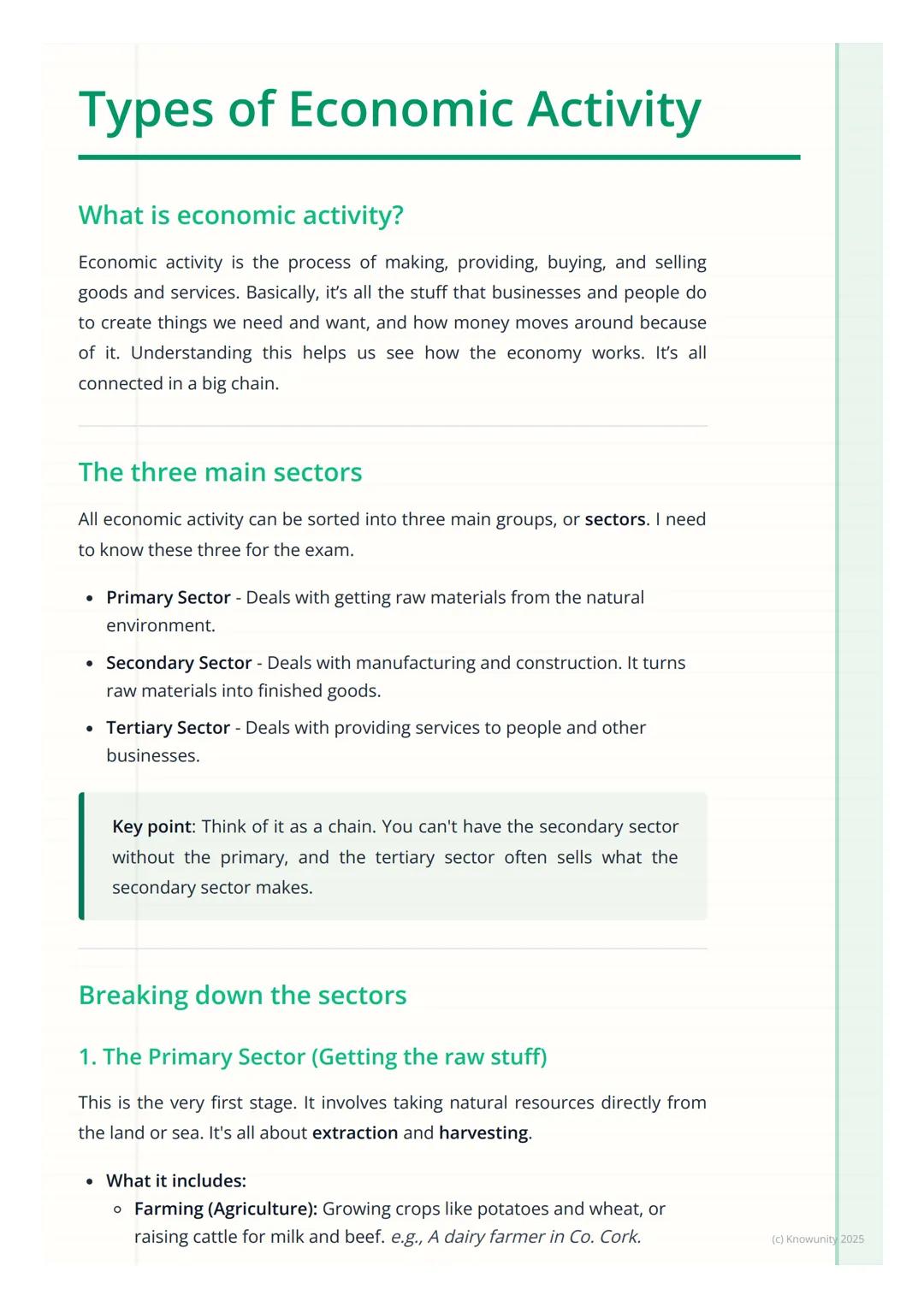
What is Economic Activity?
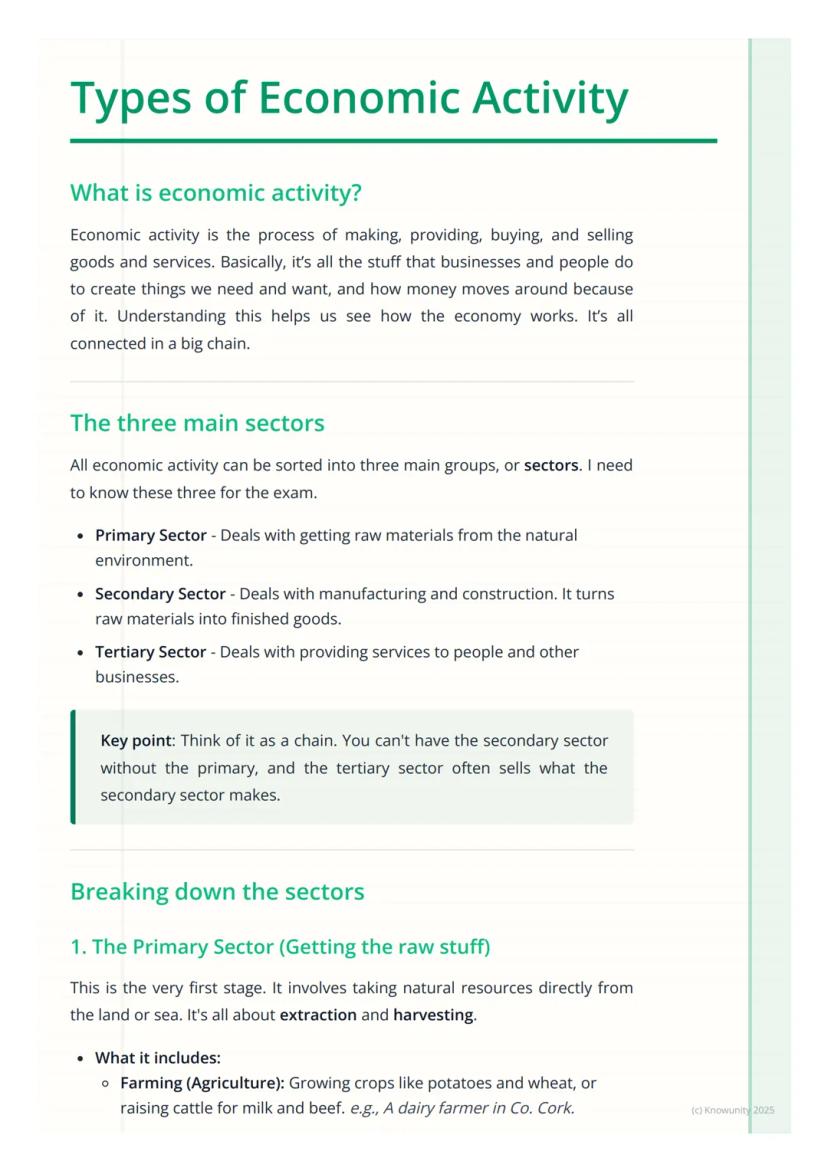
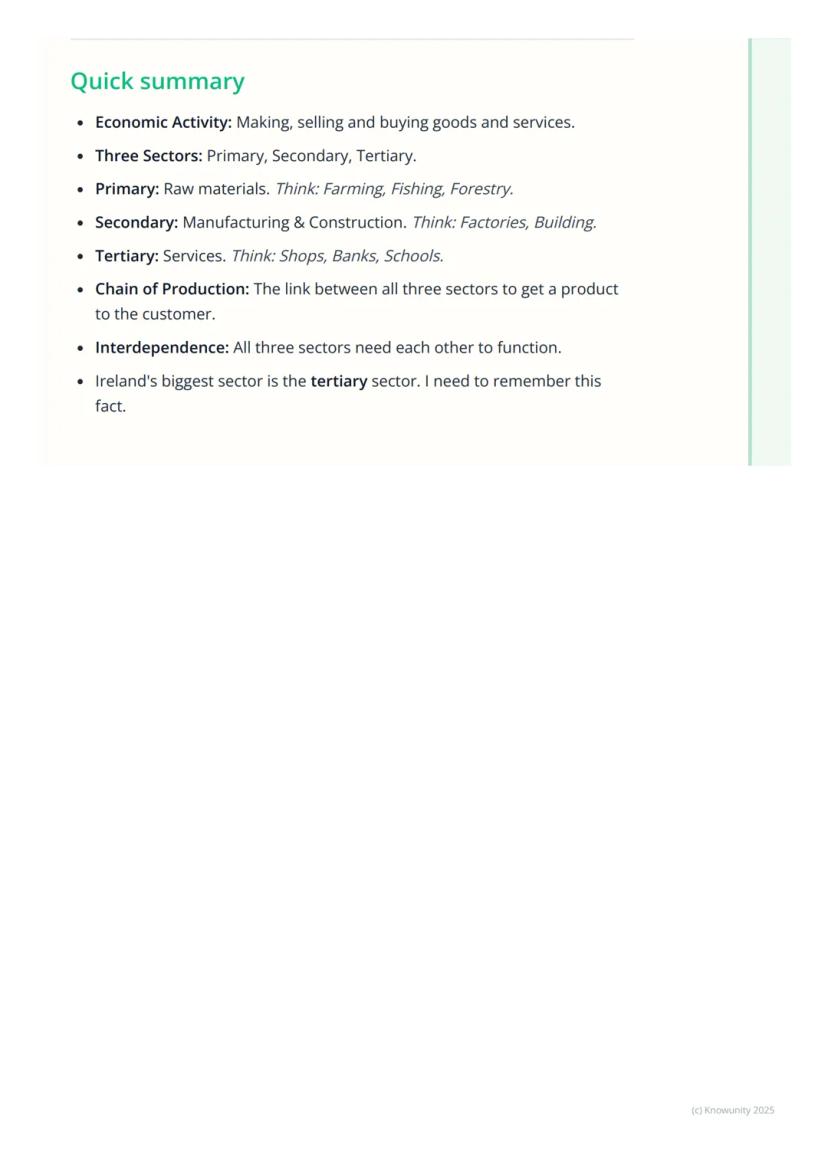
Think of economic activity as everything people and businesses do to create stuff we need and want - from growing food to building houses to running shops. It's basically how money moves around the economy and how we get all the things that make our lives work.
All this activity gets sorted into three main sectors: Primary, Secondary, and Tertiary. Here's the thing - they're all connected like links in a chain. You literally can't have one without the others.
Primary Sector deals with getting raw materials straight from nature. Secondary Sector takes those materials and turns them into finished products. Tertiary Sector provides services to people and businesses.
Key Point: Ireland's economy relies heavily on all three sectors working together - no single sector can survive on its own!
2
of 5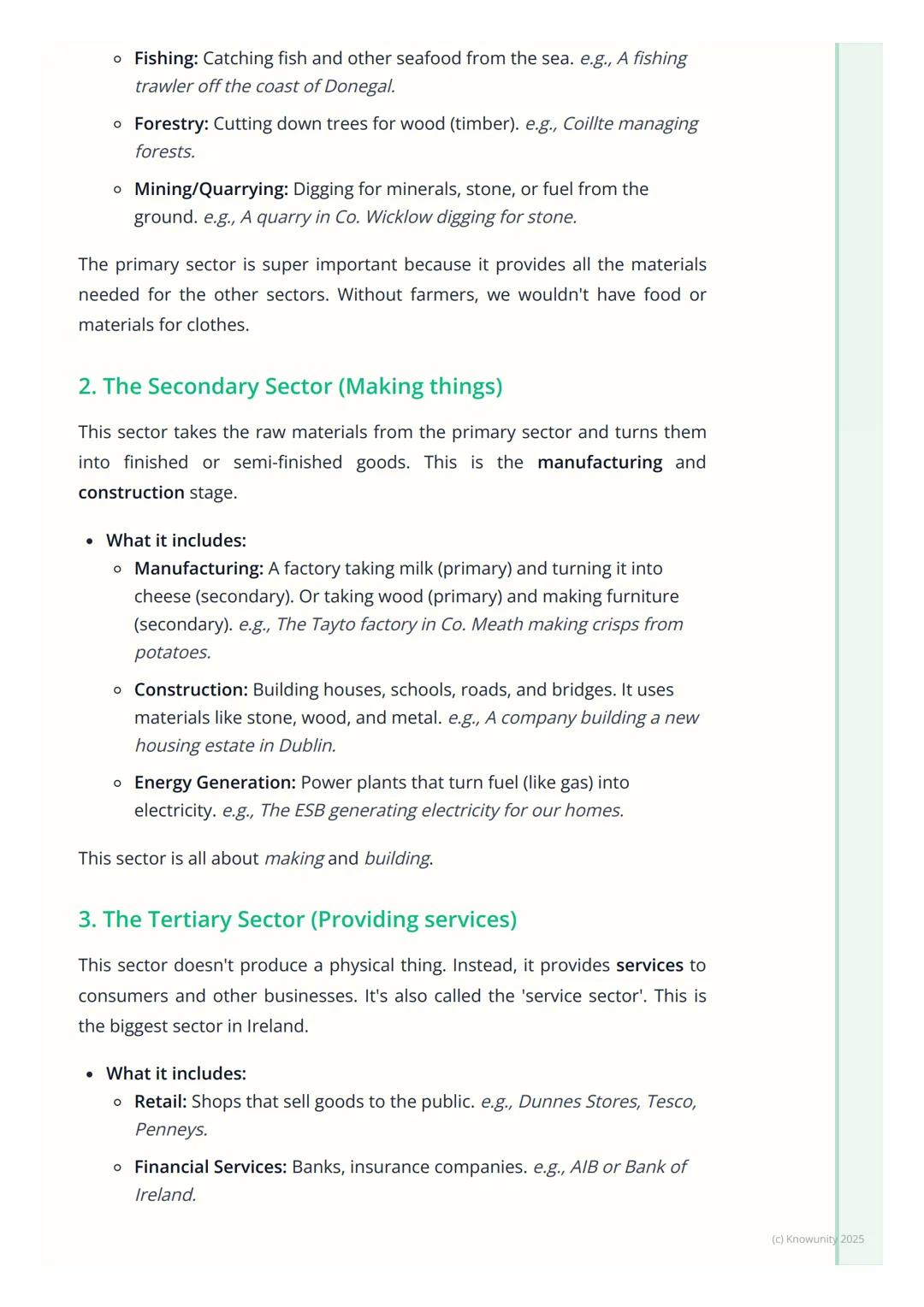
Primary Sector - Getting the Raw Stuff
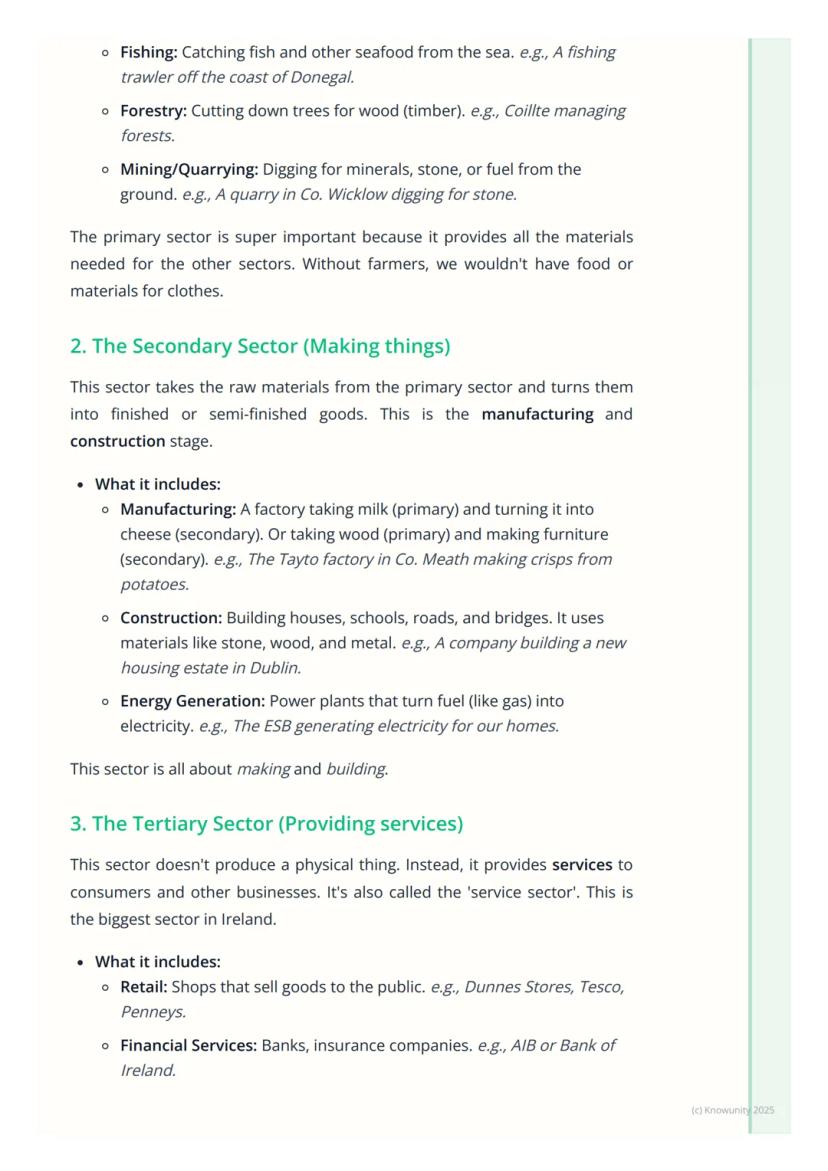
The Primary Sector is where it all begins - extracting natural resources directly from the land or sea. Think farmers, fishers, and anyone who digs stuff up from the ground.
This includes farming (like dairy farmers in Cork growing crops or raising cattle), fishing (trawlers off Donegal's coast), forestry (Coillte managing Ireland's forests), and mining/quarrying (stone quarries in Wicklow).
Without the primary sector, literally nothing else would exist. No food, no materials for clothes, no wood for furniture - you get the idea.
Remember: Primary = getting stuff straight from nature, no processing involved yet!
3
of 5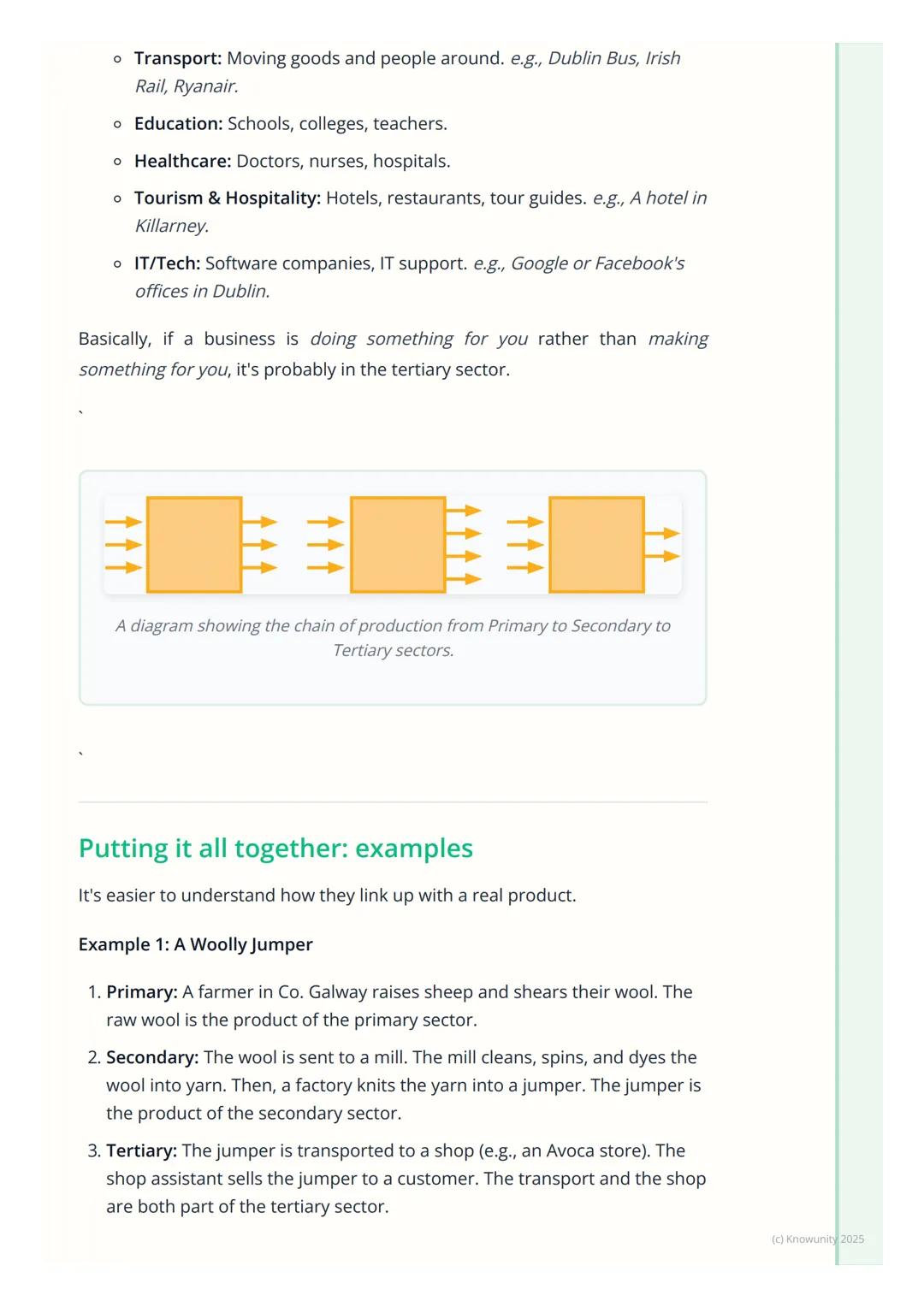
Secondary Sector - Making Things
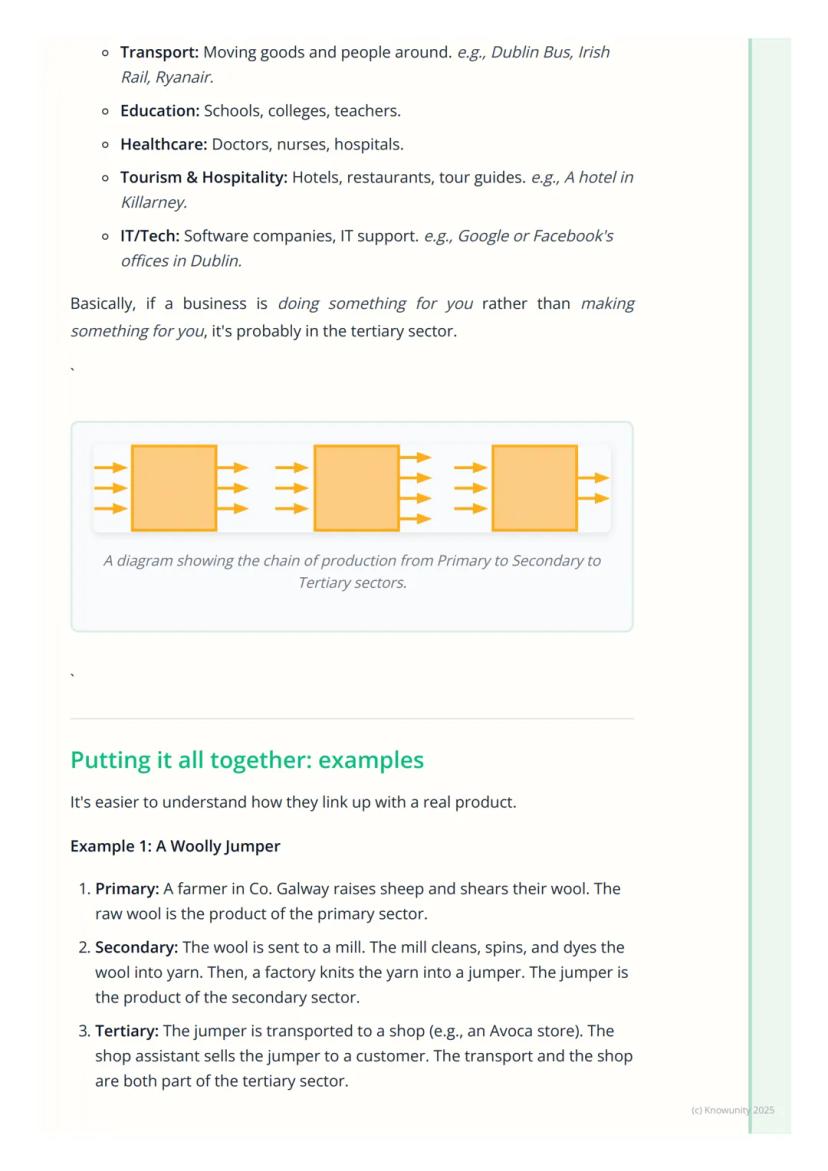
The Secondary Sector takes those raw materials and transforms them into actual products people can use. This is all about manufacturing and construction.
Manufacturing means factories turning milk into cheese, wood into furniture, or potatoes into Tayto crisps in Meath. Construction covers building houses, schools, and roads using materials like stone and timber.
Energy generation also fits here - power plants turning fuel into electricity for your home. Basically, if someone's making or building something physical, it's secondary sector.
Quick Check: Secondary = turning raw materials into finished products that people actually want to buy!
4
of 5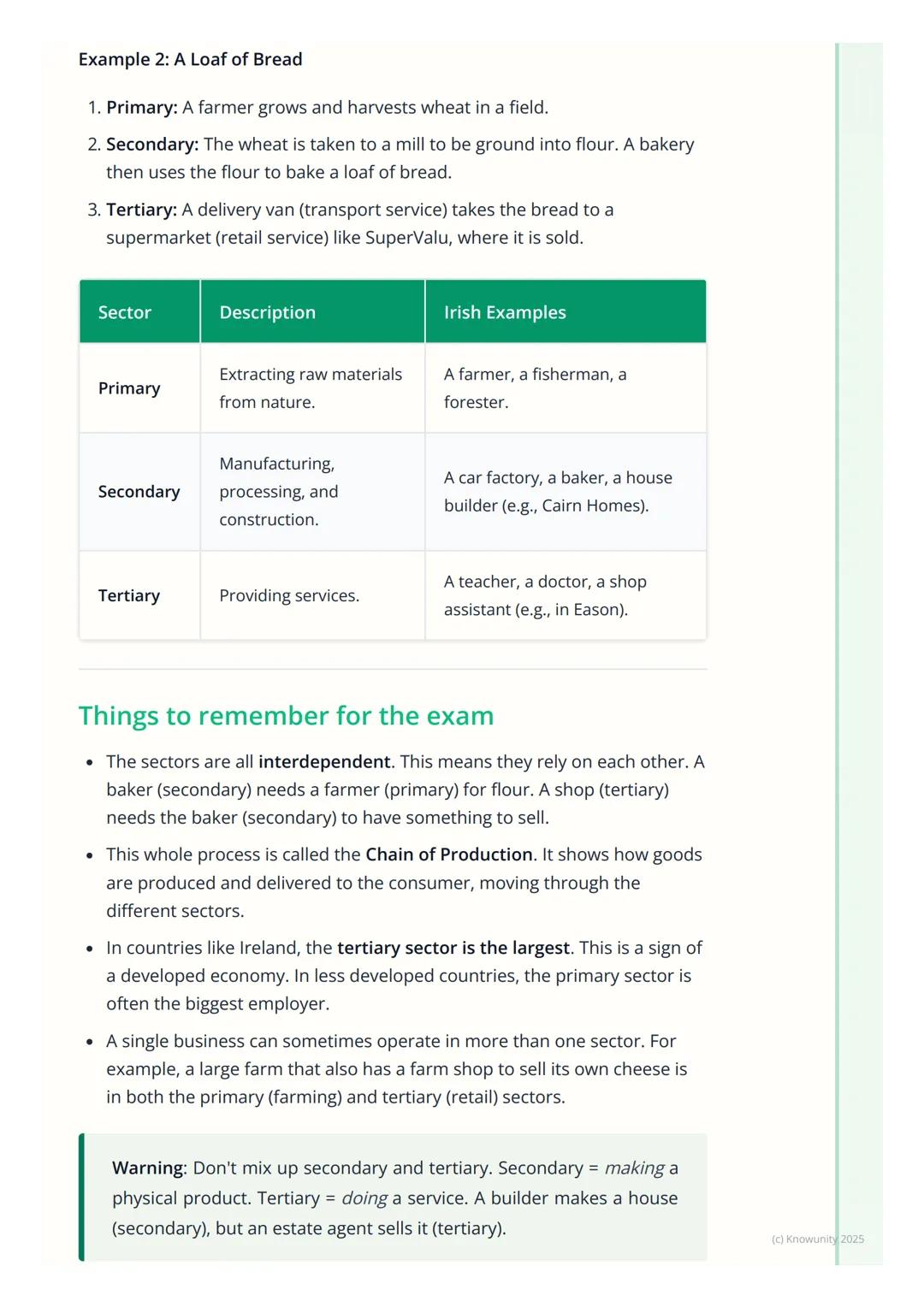
Tertiary Sector - Providing Services
The Tertiary Sector doesn't make physical things - it provides services to people and businesses. This is actually Ireland's biggest sector, which shows we're a developed economy.
This includes retail (Dunnes Stores, Tesco), financial services (AIB, Bank of Ireland), transport (Dublin Bus, Ryanair), education (schools and teachers), healthcare (doctors and hospitals), and tourism (hotels in Killarney).
If a business is doing something for you rather than making something for you, it's probably tertiary sector. Ireland's economy massively depends on this sector.
Pro Tip: If you can't physically hold what the business produces, it's likely a tertiary sector service!
5
of 5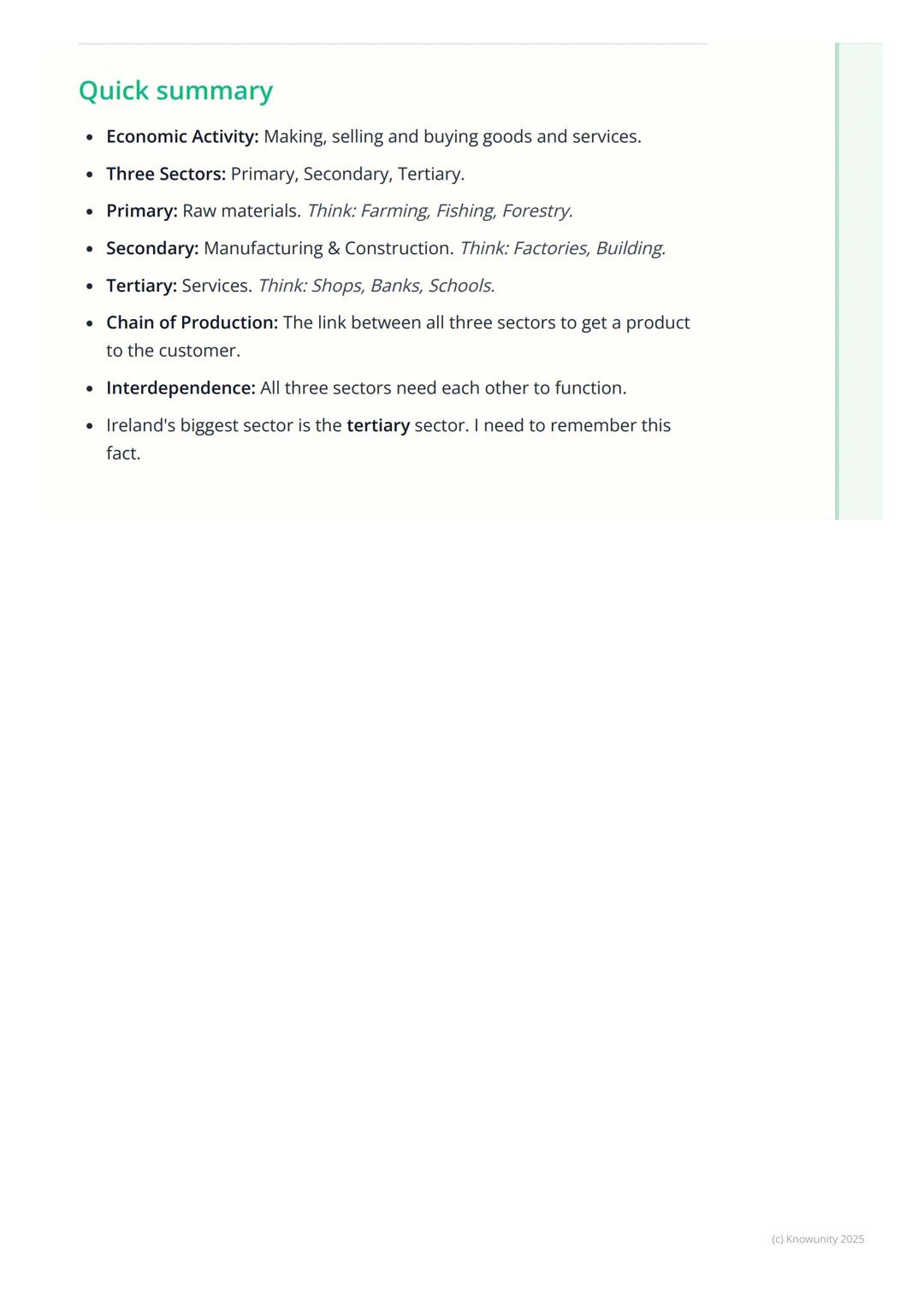
The Chain of Production
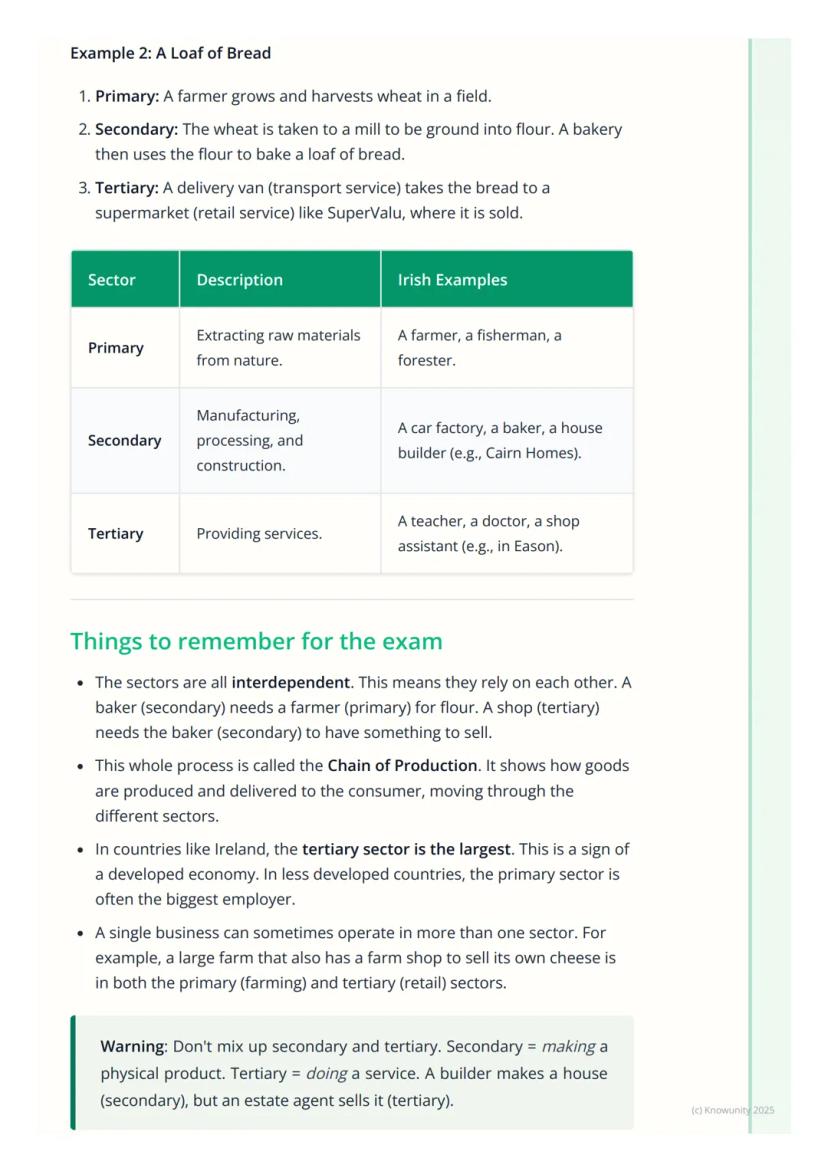
Here's how it all connects with real examples. Take a woolly jumper: farmers raise sheep (primary), mills turn wool into yarn and knit jumpers (secondary), then Avoca stores sell them to customers (tertiary).
Or a loaf of bread: farmers grow wheat (primary), mills grind flour and bakeries make bread (secondary), SuperValu sells it (tertiary). Each sector depends on the others - this is called interdependence.
The Chain of Production shows how products move through all three sectors to reach consumers. In Ireland, tertiary is biggest, but we still need primary and secondary to function.
Exam Alert: Remember that all sectors are interdependent - they absolutely cannot work without each other!
Akala namin hindi mo na itatanong...
Ano ang Knowunity AI companion?
Ang aming AI Companion ay isang AI tool na nakatuon sa mga estudyante na nag-aalok ng higit pa sa mga sagot lang. Binuo mula sa milyong Knowunity resources, nagbibigay ito ng may-kaugnayang impormasyon, personalized na study plans, quizzes, at content direkta sa chat, na umaangkop sa iyong sariling learning journey.
Saan ko mada-download ang Knowunity app?
Maaari mong i-download ang app mula sa Google Play Store at Apple App Store.
Talaga bang libre ang Knowunity?
Tama 'yan! Mag-enjoy sa libreng access sa mga study content, makipag-connect sa kapwa mga estudyante, at kumuha ng instant na tulong – lahat nasa iyong daliri lang.
Pinaka-sikat na nilalaman sa Business Studies
1Pinaka-sikat na nilalaman
9Hindi mo mahanap ang hinahanap mo? Tuklasin ang iba pang mga asignatura.
Gustong-gusto kami ng mga estudyante — at magiging ganoon ka rin.
4.6/5App Store
4.7/5Google Play
Napakadaling gamitin at maganda ang disenyo ng app. Nahanap ko lahat ng hinahanap ko hanggang ngayon at natuto ako ng marami mula sa mga presentasyon! Tiyak na gagamitin ko ang app para sa isang takdang-aralin sa klase! At siyempre, nakakatulong din ito bilang inspirasyon.
Stefan Sgumagamit ng iOS
Sobrang ganda talaga ng app na ito. Maraming mga study notes at tulong [...]. Ang problemang subject ko ay Pranses, halimbawa, at ang app ay may maraming options para tumulong. Salamat sa app na ito, bumuti ang Pranses ko. Irerekumenda ko ito sa lahat.
Samantha KlichAndroid user
Wow, talagang namangha ako. Sinubukan ko lang ang app dahil nakita ko itong ina-advertise nang maraming beses at sobrang nagulat ako. Ang app na ito ang TULONG na gusto mo para sa paaralan at higit sa lahat, nag-aalok ito ng maraming bagay, tulad ng workouts at fact sheets, na SOBRANG nakatulong sa akin.
AnnaiOS user
Business Studies7 views·Na-update Jun 3, 2026·5 mga pahinaExploring the Sectors of Economic Activity
Ever wonder how your iPhone gets from raw materials to your pocket, or why some countries focus more on farming whilst others are all about services? Economic activity is basically all the making, buying, and selling that happens around us... Ipakita pa
1
of 5Mag-sign up para makita ang content. Libre ito!
- Access sa lahat ng dokumento
- Pagbutihin ang iyong mga grado
- Sumali sa milyong mga estudyante
What is Economic Activity?
Think of economic activity as everything people and businesses do to create stuff we need and want - from growing food to building houses to running shops. It's basically how money moves around the economy and how we get all the things that make our lives work.
All this activity gets sorted into three main sectors: Primary, Secondary, and Tertiary. Here's the thing - they're all connected like links in a chain. You literally can't have one without the others.
Primary Sector deals with getting raw materials straight from nature. Secondary Sector takes those materials and turns them into finished products. Tertiary Sector provides services to people and businesses.
Key Point: Ireland's economy relies heavily on all three sectors working together - no single sector can survive on its own!
2
of 5Mag-sign up para makita ang content. Libre ito!
- Access sa lahat ng dokumento
- Pagbutihin ang iyong mga grado
- Sumali sa milyong mga estudyante
Primary Sector - Getting the Raw Stuff
The Primary Sector is where it all begins - extracting natural resources directly from the land or sea. Think farmers, fishers, and anyone who digs stuff up from the ground.
This includes farming (like dairy farmers in Cork growing crops or raising cattle), fishing (trawlers off Donegal's coast), forestry (Coillte managing Ireland's forests), and mining/quarrying (stone quarries in Wicklow).
Without the primary sector, literally nothing else would exist. No food, no materials for clothes, no wood for furniture - you get the idea.
Remember: Primary = getting stuff straight from nature, no processing involved yet!
3
of 5Mag-sign up para makita ang content. Libre ito!
- Access sa lahat ng dokumento
- Pagbutihin ang iyong mga grado
- Sumali sa milyong mga estudyante
Secondary Sector - Making Things
The Secondary Sector takes those raw materials and transforms them into actual products people can use. This is all about manufacturing and construction.
Manufacturing means factories turning milk into cheese, wood into furniture, or potatoes into Tayto crisps in Meath. Construction covers building houses, schools, and roads using materials like stone and timber.
Energy generation also fits here - power plants turning fuel into electricity for your home. Basically, if someone's making or building something physical, it's secondary sector.
Quick Check: Secondary = turning raw materials into finished products that people actually want to buy!
4
of 5Mag-sign up para makita ang content. Libre ito!
- Access sa lahat ng dokumento
- Pagbutihin ang iyong mga grado
- Sumali sa milyong mga estudyante
Tertiary Sector - Providing Services
The Tertiary Sector doesn't make physical things - it provides services to people and businesses. This is actually Ireland's biggest sector, which shows we're a developed economy.
This includes retail (Dunnes Stores, Tesco), financial services (AIB, Bank of Ireland), transport (Dublin Bus, Ryanair), education (schools and teachers), healthcare (doctors and hospitals), and tourism (hotels in Killarney).
If a business is doing something for you rather than making something for you, it's probably tertiary sector. Ireland's economy massively depends on this sector.
Pro Tip: If you can't physically hold what the business produces, it's likely a tertiary sector service!
5
of 5Mag-sign up para makita ang content. Libre ito!
- Access sa lahat ng dokumento
- Pagbutihin ang iyong mga grado
- Sumali sa milyong mga estudyante
The Chain of Production
Here's how it all connects with real examples. Take a woolly jumper: farmers raise sheep (primary), mills turn wool into yarn and knit jumpers (secondary), then Avoca stores sell them to customers (tertiary).
Or a loaf of bread: farmers grow wheat (primary), mills grind flour and bakeries make bread (secondary), SuperValu sells it (tertiary). Each sector depends on the others - this is called interdependence.
The Chain of Production shows how products move through all three sectors to reach consumers. In Ireland, tertiary is biggest, but we still need primary and secondary to function.
Exam Alert: Remember that all sectors are interdependent - they absolutely cannot work without each other!
Akala namin hindi mo na itatanong...
Ano ang Knowunity AI companion?
Ang aming AI Companion ay isang AI tool na nakatuon sa mga estudyante na nag-aalok ng higit pa sa mga sagot lang. Binuo mula sa milyong Knowunity resources, nagbibigay ito ng may-kaugnayang impormasyon, personalized na study plans, quizzes, at content direkta sa chat, na umaangkop sa iyong sariling learning journey.
Saan ko mada-download ang Knowunity app?
Maaari mong i-download ang app mula sa Google Play Store at Apple App Store.
Talaga bang libre ang Knowunity?
Tama 'yan! Mag-enjoy sa libreng access sa mga study content, makipag-connect sa kapwa mga estudyante, at kumuha ng instant na tulong – lahat nasa iyong daliri lang.
Pinaka-sikat na nilalaman sa Business Studies
1Pinaka-sikat na nilalaman
9Hindi mo mahanap ang hinahanap mo? Tuklasin ang iba pang mga asignatura.
Gustong-gusto kami ng mga estudyante — at magiging ganoon ka rin.
4.6/5App Store
4.7/5Google Play
Napakadaling gamitin at maganda ang disenyo ng app. Nahanap ko lahat ng hinahanap ko hanggang ngayon at natuto ako ng marami mula sa mga presentasyon! Tiyak na gagamitin ko ang app para sa isang takdang-aralin sa klase! At siyempre, nakakatulong din ito bilang inspirasyon.
Stefan Sgumagamit ng iOS
Sobrang ganda talaga ng app na ito. Maraming mga study notes at tulong [...]. Ang problemang subject ko ay Pranses, halimbawa, at ang app ay may maraming options para tumulong. Salamat sa app na ito, bumuti ang Pranses ko. Irerekumenda ko ito sa lahat.
Samantha KlichAndroid user
Wow, talagang namangha ako. Sinubukan ko lang ang app dahil nakita ko itong ina-advertise nang maraming beses at sobrang nagulat ako. Ang app na ito ang TULONG na gusto mo para sa paaralan at higit sa lahat, nag-aalok ito ng maraming bagay, tulad ng workouts at fact sheets, na SOBRANG nakatulong sa akin.
AnnaiOS user