
Ever wondered what makes plants so different from animals? It...
 Biology8 views·Na-update Jun 4, 2026·6 mga pahina
Understanding Plant Cells: Key Structures and Differences
1 / 6
1
of 6
Introduction to Plant Cells
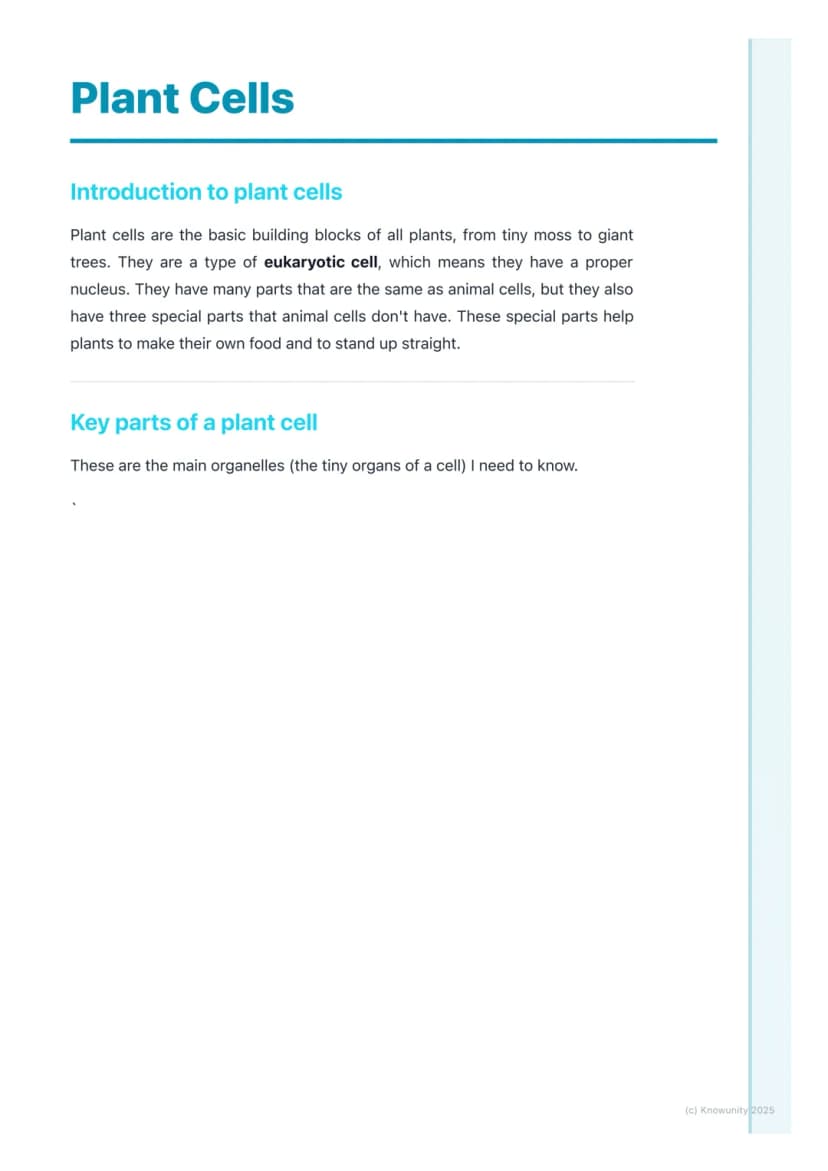
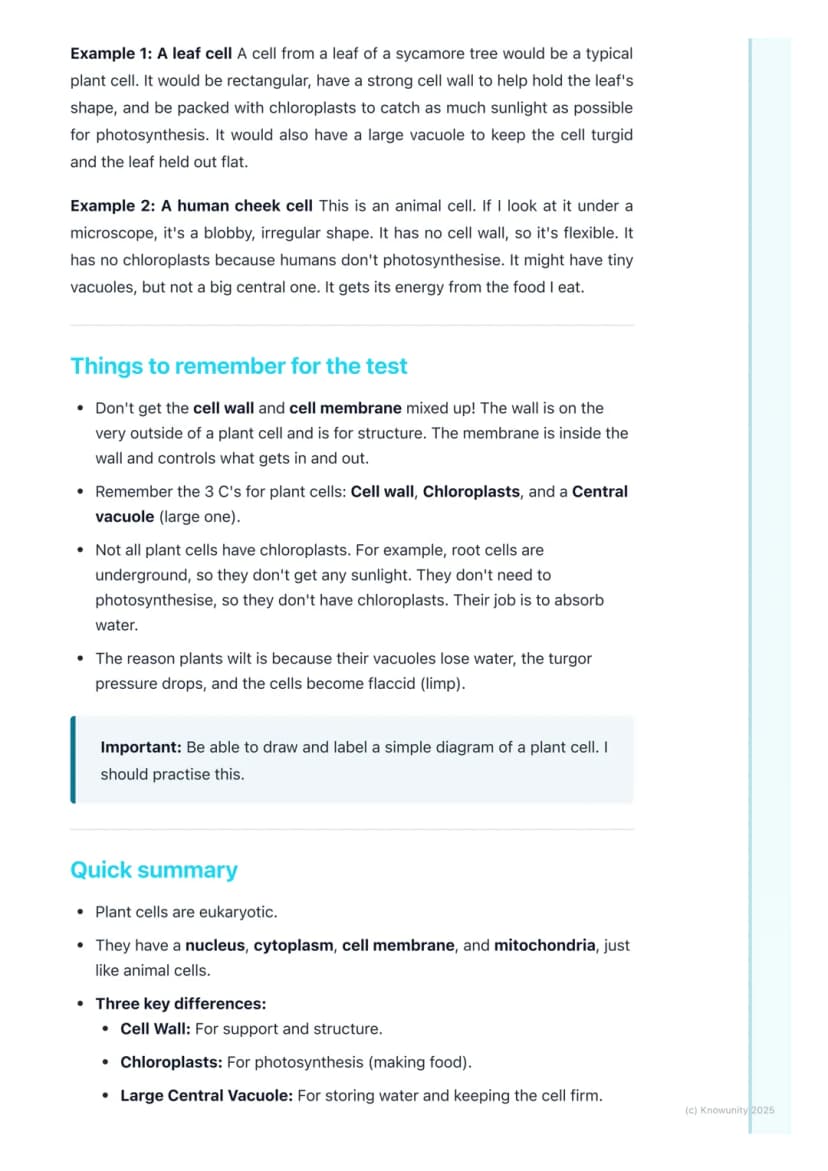
Plant cells are eukaryotic cells, which simply means they have a proper control centre called a nucleus. What makes them special is that they've got three unique parts that animal cells don't have.
These three special features are what allow plants to create their own food and stay upright without needing a skeleton. Think of them as the plant's superpowers!
Quick Tip: Remember the 3 C's for plant cells - Cell wall, Chloroplasts, and Central vacuole (the large one)!
2
of 6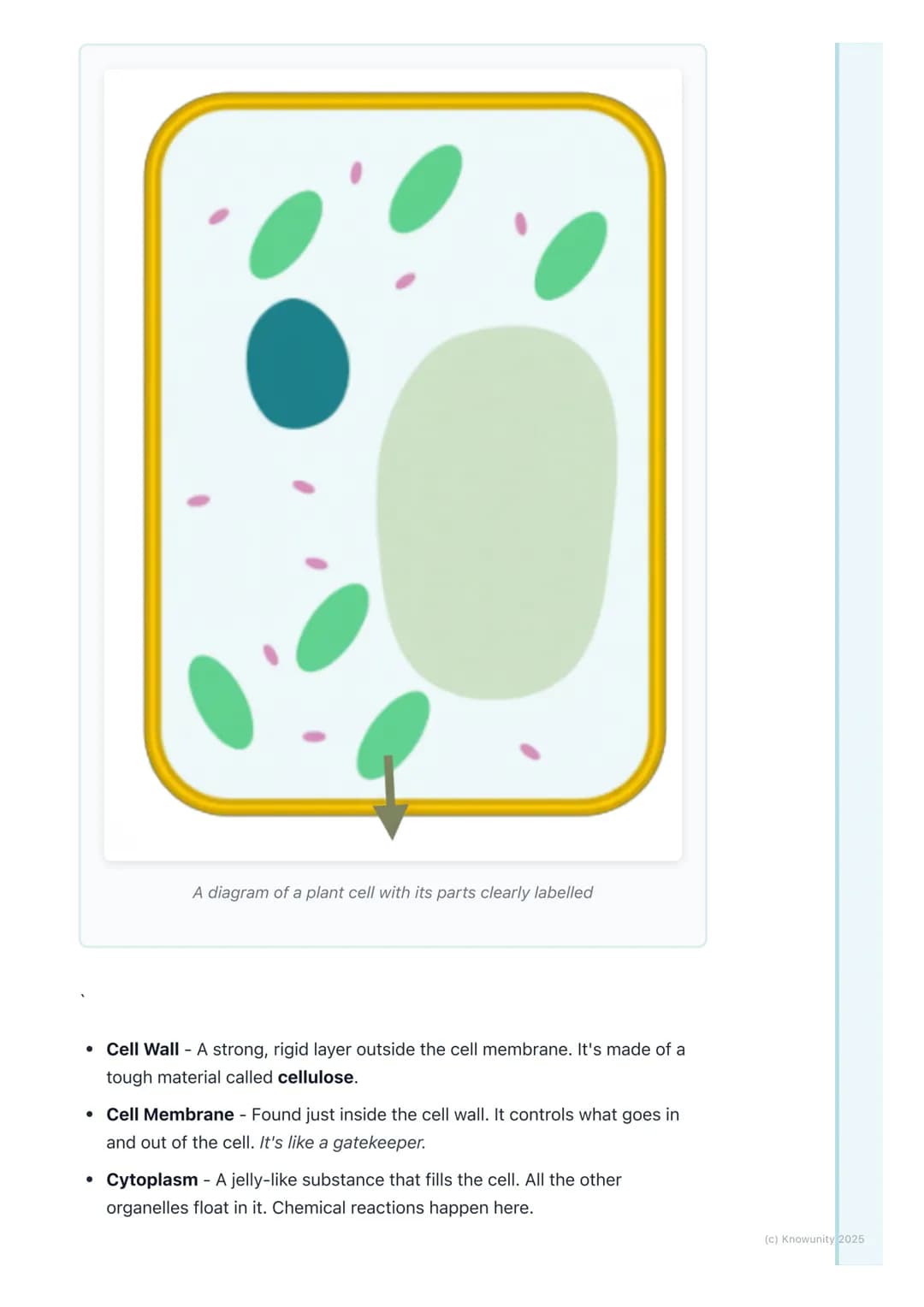
Key Parts of a Plant Cell
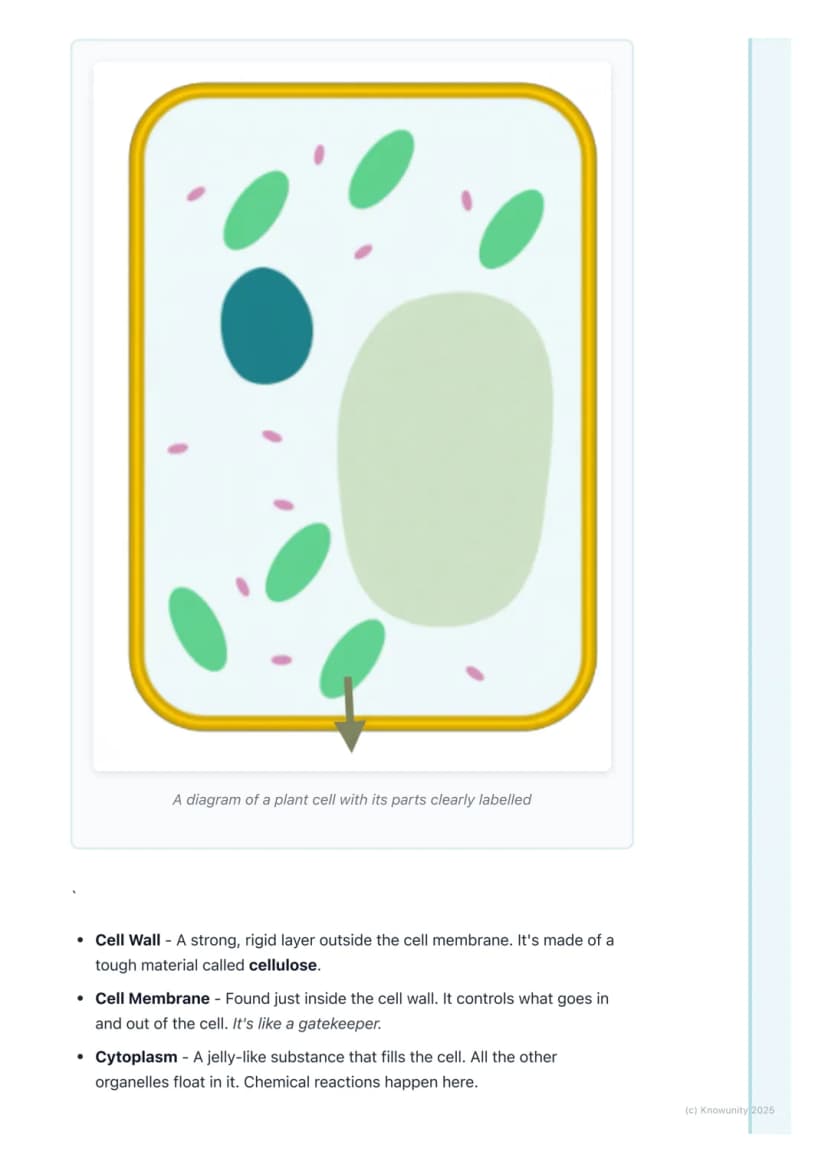
The cell wall is like a tough outer shell made of cellulose that sits outside the cell membrane. It's the plant's armour, providing structure and protection.
Inside, you'll find the cell membrane acting like a bouncer at a club - it decides what gets in and out of the cell. The cytoplasm is the jelly-like substance where all the cell's chemical reactions happen.
The nucleus is the boss of the cell, containing DNA with all the instructions. This is exactly the same job it does in your own cells!
Remember: Don't mix up the cell wall and cell membrane - the wall is on the very outside for structure, the membrane is inside for control!
3
of 6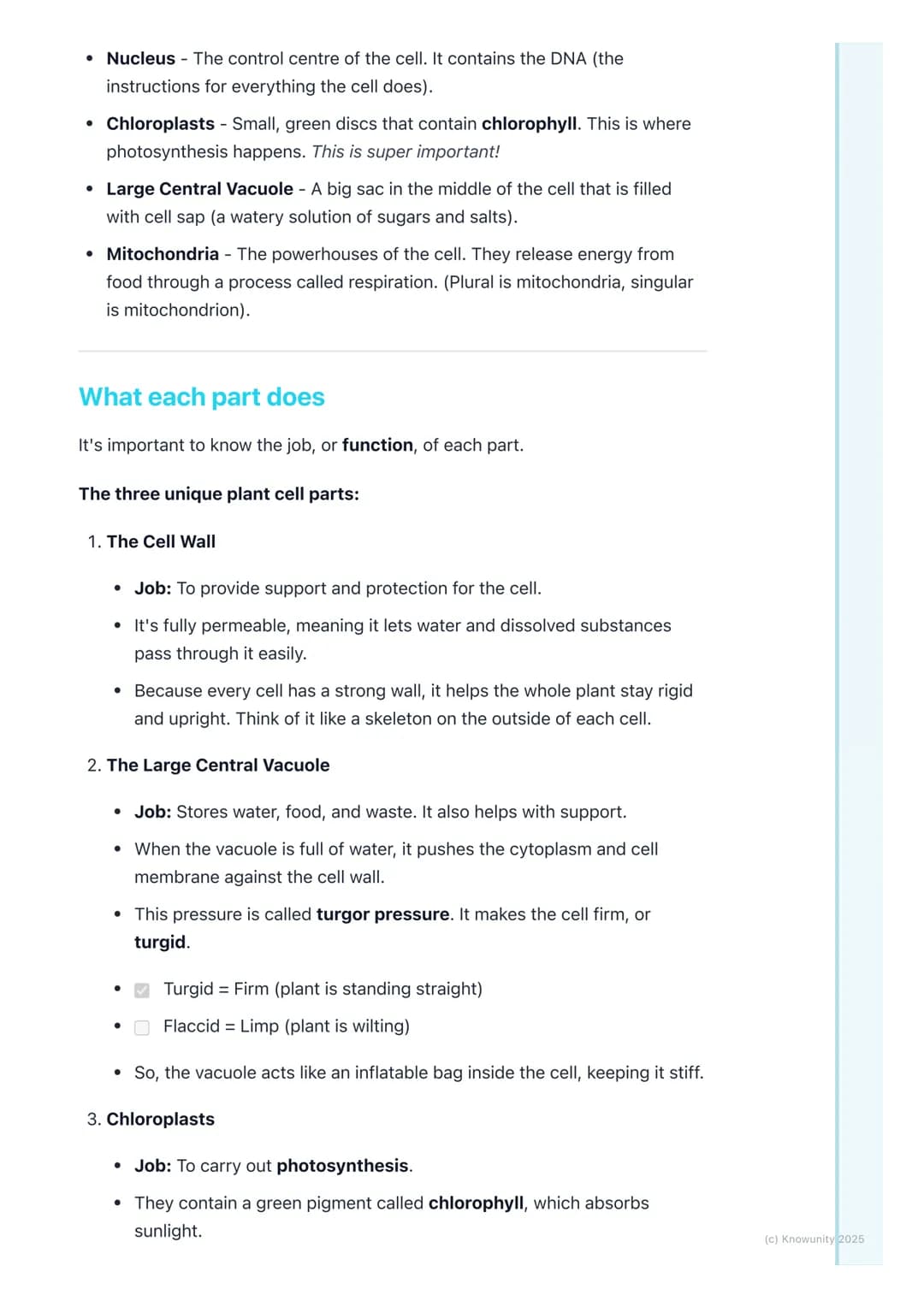
The Three Special Plant Parts
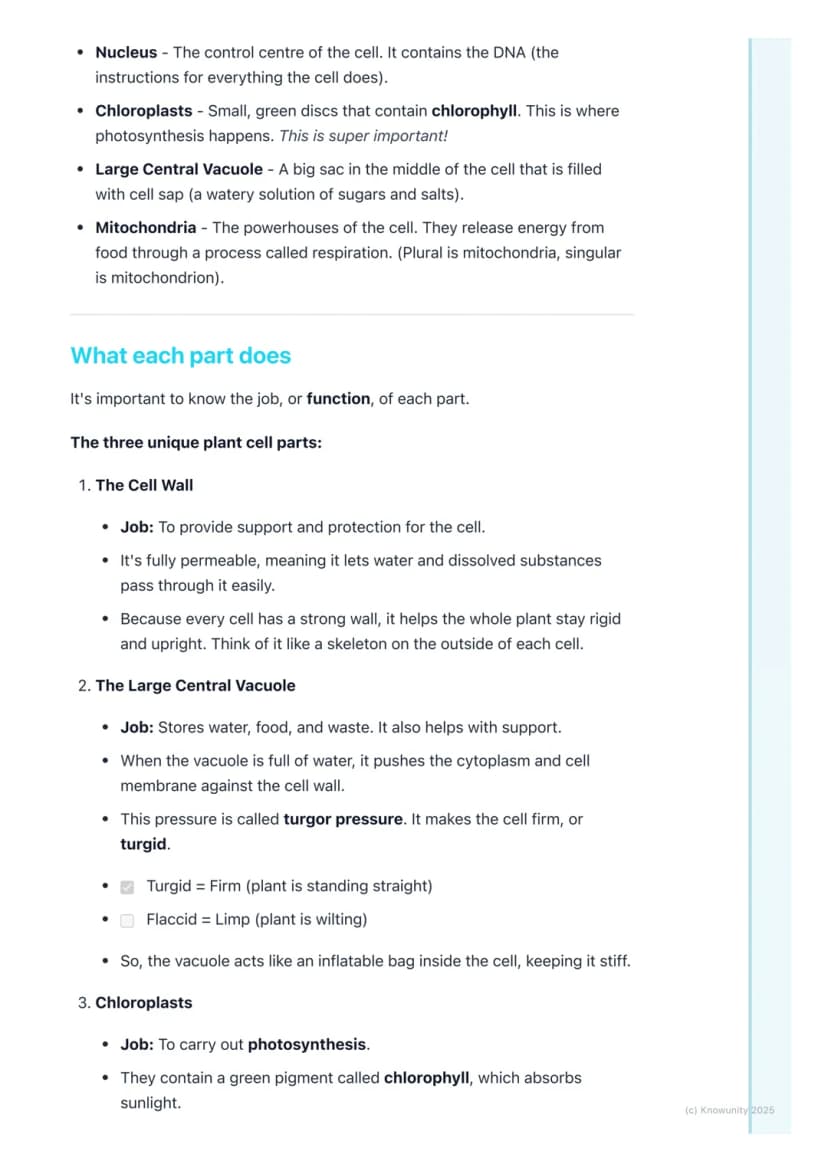
Chloroplasts are tiny green discs packed with chlorophyll that capture sunlight for photosynthesis. This is why plants are green and why they're called 'producers' in food chains.
The large central vacuole is like a water balloon inside the cell. When it's full, it creates turgor pressure that pushes against the cell wall, keeping the plant firm and upright.
Mitochondria are the powerhouses that release energy from food through respiration - just like in animal cells. Plants need energy too, even though they make their own food!
Key Concept: When plants wilt, it's because their vacuoles lose water and can't maintain turgor pressure anymore!
4
of 6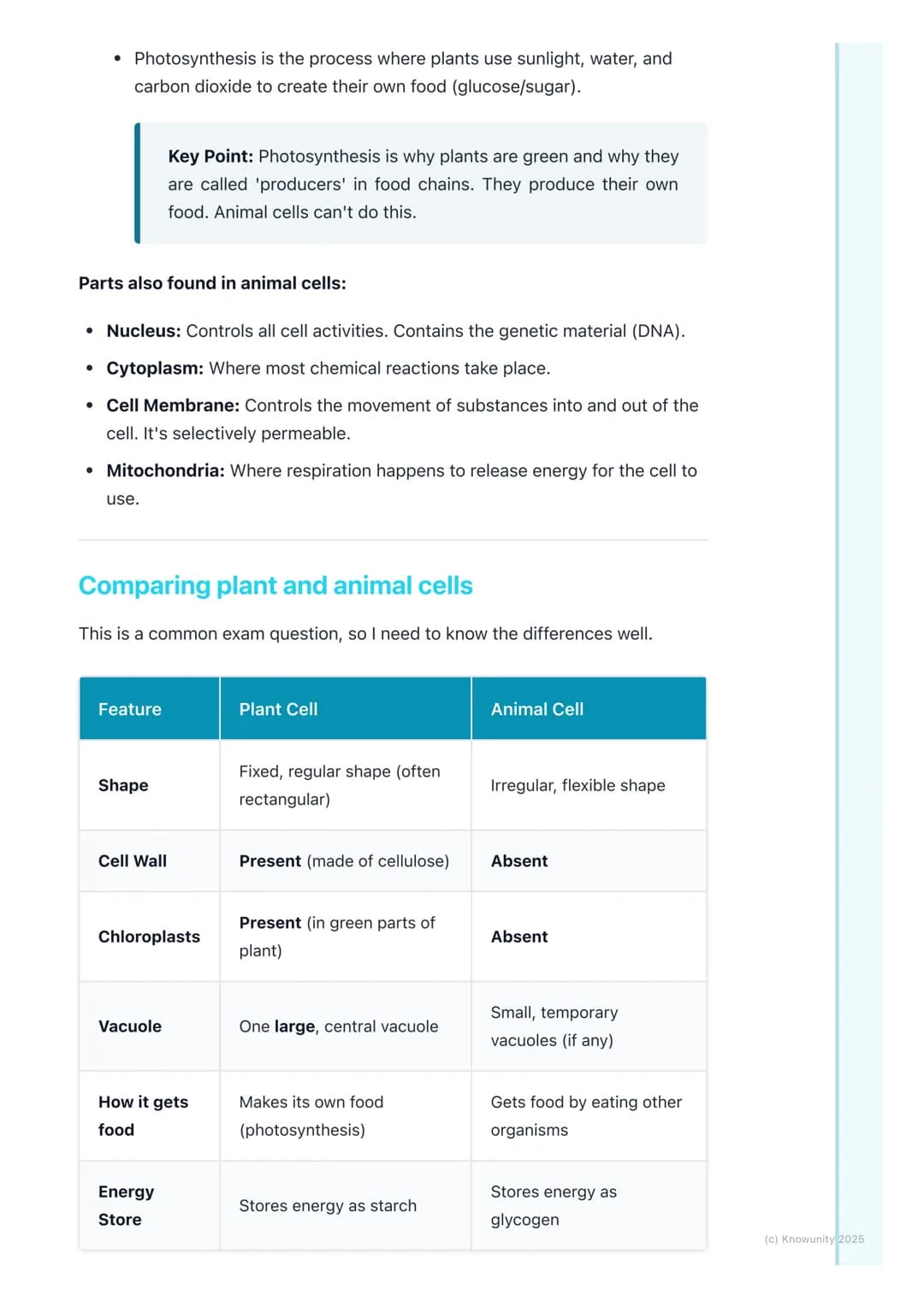
Comparing Plant and Animal Cells
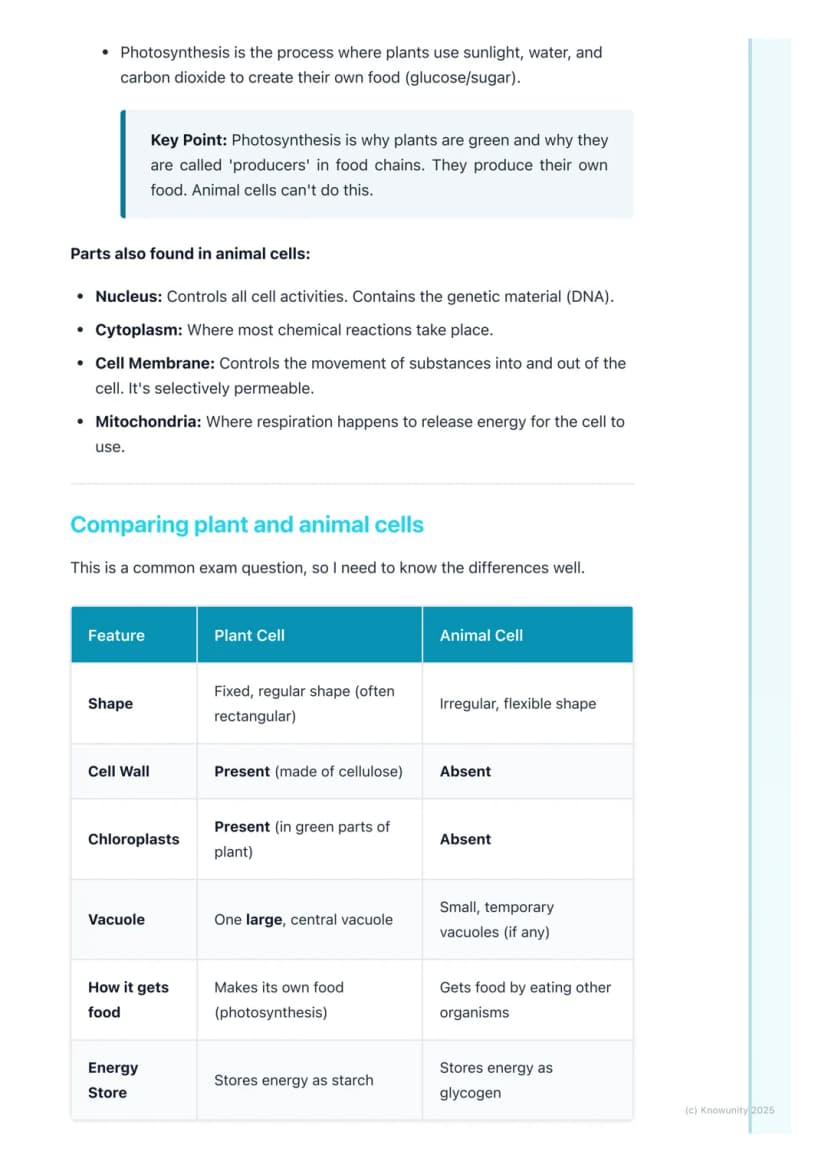
Plant cells have a fixed, rectangular shape thanks to their rigid cell wall, while animal cells are blobby and flexible. This structural difference is huge!
The biggest difference is how they get food. Plants perform photosynthesis in their chloroplasts to make glucose, whilst animals (like us) have to eat other organisms for energy.
Plants store energy as starch, but animals store it as glycogen. Plant cells also have one massive vacuole, whilst animal cells might have tiny temporary ones or none at all.
Exam Tip: A leaf cell will be packed with chloroplasts for maximum sunlight capture, but root cells won't have any since they're underground!
5
of 6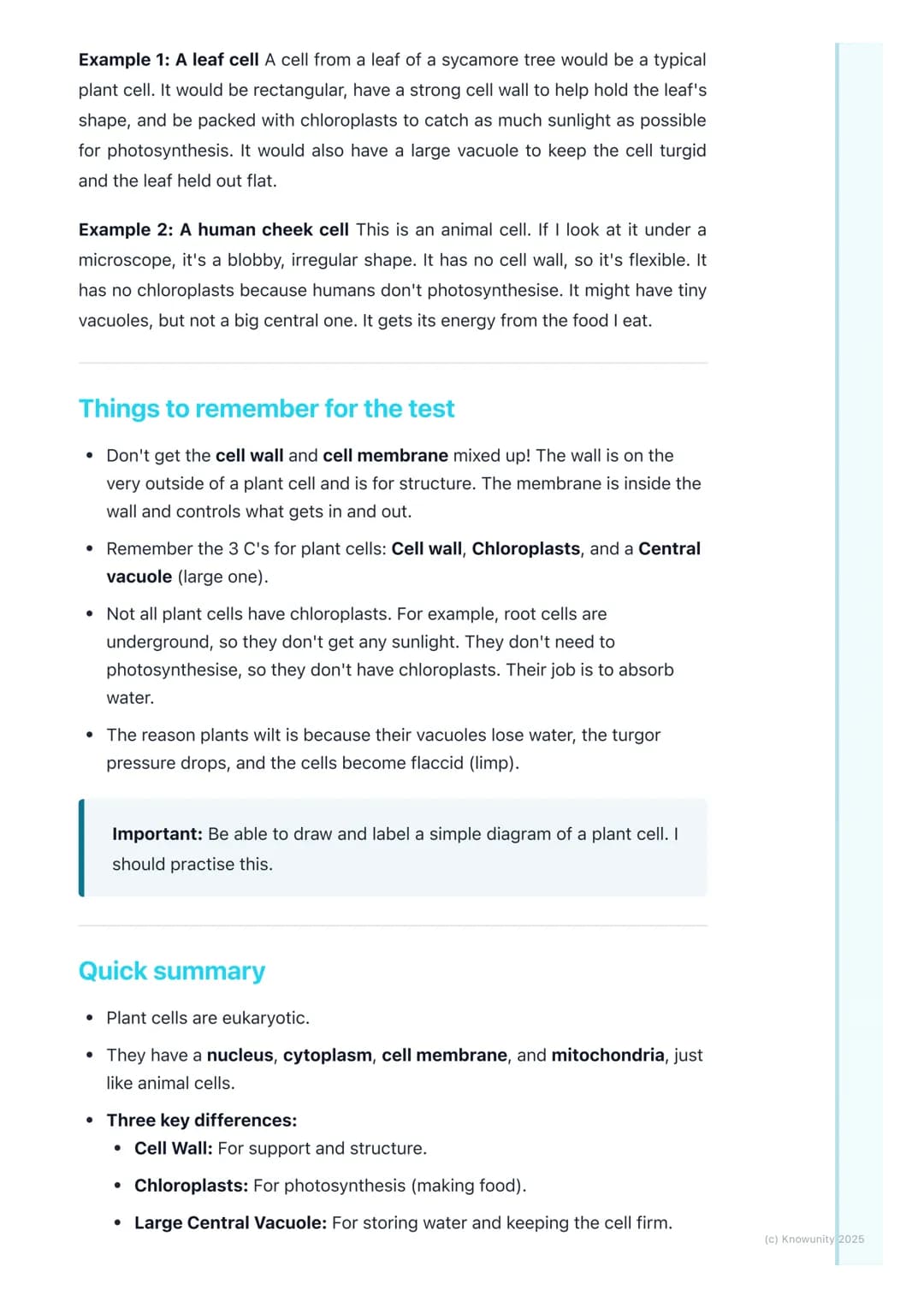
Functions and Examples
A leaf cell from a tree is the perfect example - rectangular, strong cell wall, loads of chloroplasts, and a big vacuole to keep the leaf flat and rigid for catching sunlight.
Compare this to a human cheek cell - irregular shape, no cell wall (so it's flexible), no chloroplasts (we can't photosynthesise!), and it gets energy from the food we eat.
The three unique plant features work together brilliantly: the cell wall provides structure, chloroplasts make food from sunlight, and the central vacuole maintains turgor pressure to prevent wilting.
Practice Point: Make sure you can draw and label a simple plant cell diagram - this often comes up in tests!
6
of 6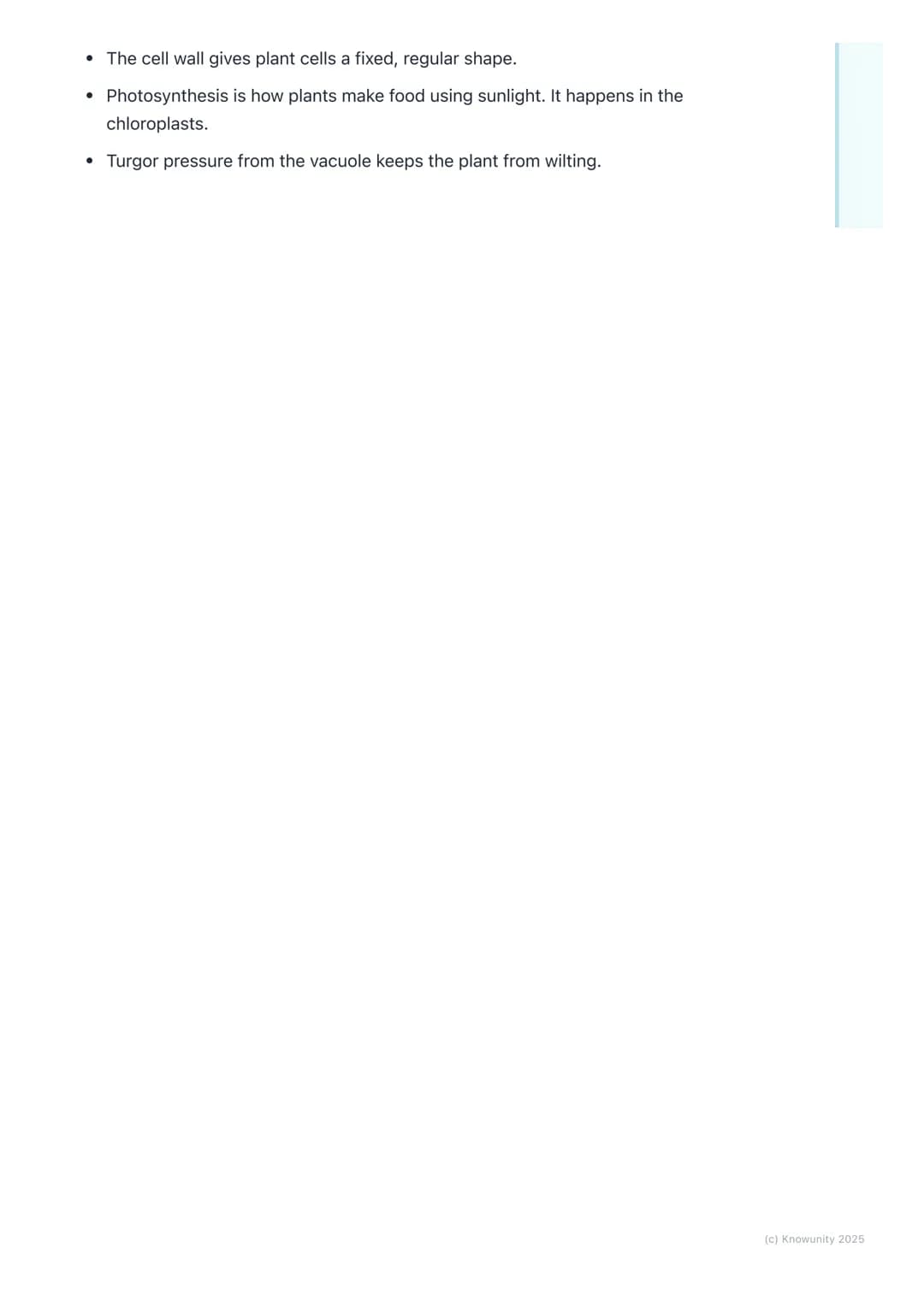
Quick Summary
Plant cells are eukaryotic with the same basic parts as animal cells - nucleus, cytoplasm, cell membrane, and mitochondria. The three key differences make all the difference though!
Cell walls give plants their fixed shape and structural support. Chloroplasts allow photosynthesis to happen, making plants the producers of ecosystems. The large central vacuole stores water and maintains turgor pressure.
When you see a plant standing tall and green, you're seeing these cellular superpowers in action. No wonder plants have been so successful on Earth!
Final Reminder: Not all plant cells have chloroplasts - root cells don't need them since they're underground and can't photosynthesise!
Akala namin hindi mo na itatanong...
Ano ang Knowunity AI companion?
Ang aming AI Companion ay isang AI tool na nakatuon sa mga estudyante na nag-aalok ng higit pa sa mga sagot lang. Binuo mula sa milyong Knowunity resources, nagbibigay ito ng may-kaugnayang impormasyon, personalized na study plans, quizzes, at content direkta sa chat, na umaangkop sa iyong sariling learning journey.
Saan ko mada-download ang Knowunity app?
Maaari mong i-download ang app mula sa Google Play Store at Apple App Store.
Talaga bang libre ang Knowunity?
Tama 'yan! Mag-enjoy sa libreng access sa mga study content, makipag-connect sa kapwa mga estudyante, at kumuha ng instant na tulong – lahat nasa iyong daliri lang.
Pinaka-sikat na nilalaman sa Biology
7Pinaka-sikat na nilalaman
9Hindi mo mahanap ang hinahanap mo? Tuklasin ang iba pang mga asignatura.
Gustong-gusto kami ng mga estudyante — at magiging ganoon ka rin.
4.6/5App Store
4.7/5Google Play
Napakadaling gamitin at maganda ang disenyo ng app. Nahanap ko lahat ng hinahanap ko hanggang ngayon at natuto ako ng marami mula sa mga presentasyon! Tiyak na gagamitin ko ang app para sa isang takdang-aralin sa klase! At siyempre, nakakatulong din ito bilang inspirasyon.
Stefan Sgumagamit ng iOS
Sobrang ganda talaga ng app na ito. Maraming mga study notes at tulong [...]. Ang problemang subject ko ay Pranses, halimbawa, at ang app ay may maraming options para tumulong. Salamat sa app na ito, bumuti ang Pranses ko. Irerekumenda ko ito sa lahat.
Samantha KlichAndroid user
Wow, talagang namangha ako. Sinubukan ko lang ang app dahil nakita ko itong ina-advertise nang maraming beses at sobrang nagulat ako. Ang app na ito ang TULONG na gusto mo para sa paaralan at higit sa lahat, nag-aalok ito ng maraming bagay, tulad ng workouts at fact sheets, na SOBRANG nakatulong sa akin.
AnnaiOS user
Biology8 views·Na-update Jun 4, 2026·6 mga pahinaUnderstanding Plant Cells: Key Structures and Differences
Ever wondered what makes plants so different from animals? It all comes down to their cells! Plant cells are the tiny building blocks that help plants make their own food and stand tall without bones.
1
of 6
Mag-sign up para makita ang content. Libre ito!
- Access sa lahat ng dokumento
- Pagbutihin ang iyong mga grado
- Sumali sa milyong mga estudyante
Introduction to Plant Cells
Plant cells are eukaryotic cells, which simply means they have a proper control centre called a nucleus. What makes them special is that they've got three unique parts that animal cells don't have.
These three special features are what allow plants to create their own food and stay upright without needing a skeleton. Think of them as the plant's superpowers!
Quick Tip: Remember the 3 C's for plant cells - Cell wall, Chloroplasts, and Central vacuole (the large one)!
2
of 6Mag-sign up para makita ang content. Libre ito!
- Access sa lahat ng dokumento
- Pagbutihin ang iyong mga grado
- Sumali sa milyong mga estudyante
Key Parts of a Plant Cell
The cell wall is like a tough outer shell made of cellulose that sits outside the cell membrane. It's the plant's armour, providing structure and protection.
Inside, you'll find the cell membrane acting like a bouncer at a club - it decides what gets in and out of the cell. The cytoplasm is the jelly-like substance where all the cell's chemical reactions happen.
The nucleus is the boss of the cell, containing DNA with all the instructions. This is exactly the same job it does in your own cells!
Remember: Don't mix up the cell wall and cell membrane - the wall is on the very outside for structure, the membrane is inside for control!
3
of 6Mag-sign up para makita ang content. Libre ito!
- Access sa lahat ng dokumento
- Pagbutihin ang iyong mga grado
- Sumali sa milyong mga estudyante
The Three Special Plant Parts
Chloroplasts are tiny green discs packed with chlorophyll that capture sunlight for photosynthesis. This is why plants are green and why they're called 'producers' in food chains.
The large central vacuole is like a water balloon inside the cell. When it's full, it creates turgor pressure that pushes against the cell wall, keeping the plant firm and upright.
Mitochondria are the powerhouses that release energy from food through respiration - just like in animal cells. Plants need energy too, even though they make their own food!
Key Concept: When plants wilt, it's because their vacuoles lose water and can't maintain turgor pressure anymore!
4
of 6Mag-sign up para makita ang content. Libre ito!
- Access sa lahat ng dokumento
- Pagbutihin ang iyong mga grado
- Sumali sa milyong mga estudyante
Comparing Plant and Animal Cells
Plant cells have a fixed, rectangular shape thanks to their rigid cell wall, while animal cells are blobby and flexible. This structural difference is huge!
The biggest difference is how they get food. Plants perform photosynthesis in their chloroplasts to make glucose, whilst animals (like us) have to eat other organisms for energy.
Plants store energy as starch, but animals store it as glycogen. Plant cells also have one massive vacuole, whilst animal cells might have tiny temporary ones or none at all.
Exam Tip: A leaf cell will be packed with chloroplasts for maximum sunlight capture, but root cells won't have any since they're underground!
5
of 6Mag-sign up para makita ang content. Libre ito!
- Access sa lahat ng dokumento
- Pagbutihin ang iyong mga grado
- Sumali sa milyong mga estudyante
Functions and Examples
A leaf cell from a tree is the perfect example - rectangular, strong cell wall, loads of chloroplasts, and a big vacuole to keep the leaf flat and rigid for catching sunlight.
Compare this to a human cheek cell - irregular shape, no cell wall (so it's flexible), no chloroplasts (we can't photosynthesise!), and it gets energy from the food we eat.
The three unique plant features work together brilliantly: the cell wall provides structure, chloroplasts make food from sunlight, and the central vacuole maintains turgor pressure to prevent wilting.
Practice Point: Make sure you can draw and label a simple plant cell diagram - this often comes up in tests!
6
of 6Mag-sign up para makita ang content. Libre ito!
- Access sa lahat ng dokumento
- Pagbutihin ang iyong mga grado
- Sumali sa milyong mga estudyante
Quick Summary
Plant cells are eukaryotic with the same basic parts as animal cells - nucleus, cytoplasm, cell membrane, and mitochondria. The three key differences make all the difference though!
Cell walls give plants their fixed shape and structural support. Chloroplasts allow photosynthesis to happen, making plants the producers of ecosystems. The large central vacuole stores water and maintains turgor pressure.
When you see a plant standing tall and green, you're seeing these cellular superpowers in action. No wonder plants have been so successful on Earth!
Final Reminder: Not all plant cells have chloroplasts - root cells don't need them since they're underground and can't photosynthesise!
Akala namin hindi mo na itatanong...
Ano ang Knowunity AI companion?
Ang aming AI Companion ay isang AI tool na nakatuon sa mga estudyante na nag-aalok ng higit pa sa mga sagot lang. Binuo mula sa milyong Knowunity resources, nagbibigay ito ng may-kaugnayang impormasyon, personalized na study plans, quizzes, at content direkta sa chat, na umaangkop sa iyong sariling learning journey.
Saan ko mada-download ang Knowunity app?
Maaari mong i-download ang app mula sa Google Play Store at Apple App Store.
Talaga bang libre ang Knowunity?
Tama 'yan! Mag-enjoy sa libreng access sa mga study content, makipag-connect sa kapwa mga estudyante, at kumuha ng instant na tulong – lahat nasa iyong daliri lang.
Pinaka-sikat na nilalaman sa Biology
7Pinaka-sikat na nilalaman
9Hindi mo mahanap ang hinahanap mo? Tuklasin ang iba pang mga asignatura.
Gustong-gusto kami ng mga estudyante — at magiging ganoon ka rin.
4.6/5App Store
4.7/5Google Play
Napakadaling gamitin at maganda ang disenyo ng app. Nahanap ko lahat ng hinahanap ko hanggang ngayon at natuto ako ng marami mula sa mga presentasyon! Tiyak na gagamitin ko ang app para sa isang takdang-aralin sa klase! At siyempre, nakakatulong din ito bilang inspirasyon.
Stefan Sgumagamit ng iOS
Sobrang ganda talaga ng app na ito. Maraming mga study notes at tulong [...]. Ang problemang subject ko ay Pranses, halimbawa, at ang app ay may maraming options para tumulong. Salamat sa app na ito, bumuti ang Pranses ko. Irerekumenda ko ito sa lahat.
Samantha KlichAndroid user
Wow, talagang namangha ako. Sinubukan ko lang ang app dahil nakita ko itong ina-advertise nang maraming beses at sobrang nagulat ako. Ang app na ito ang TULONG na gusto mo para sa paaralan at higit sa lahat, nag-aalok ito ng maraming bagay, tulad ng workouts at fact sheets, na SOBRANG nakatulong sa akin.
AnnaiOS user