
Silage and hay making are essential farming practices in Ireland...
 Agricultural Science1 views·Na-update Jun 8, 2026·5 mga pahina
Mastering Silage and Hay Making Techniques
1 / 5
1
of 5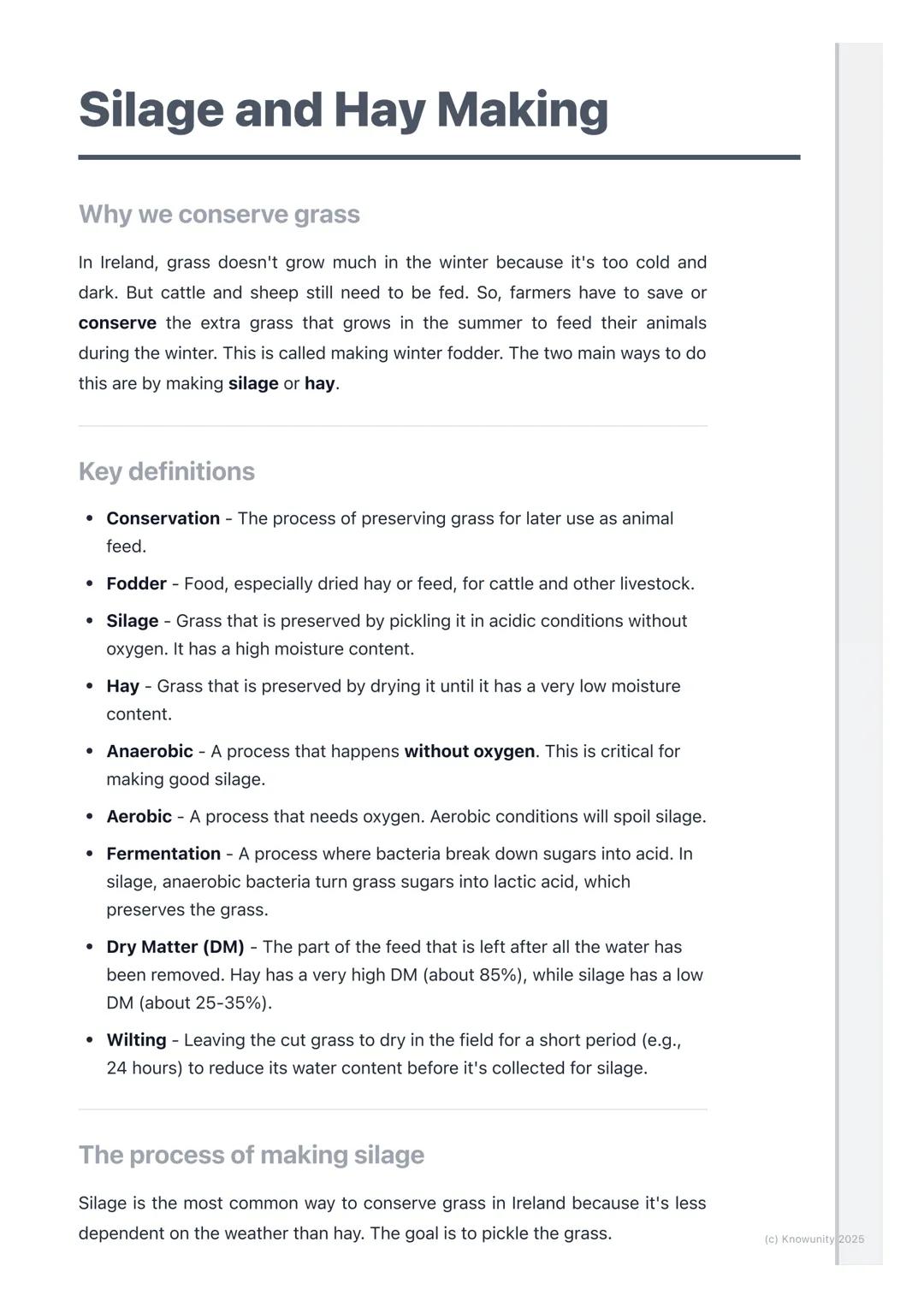
Why We Conserve Grass & Key Definitions
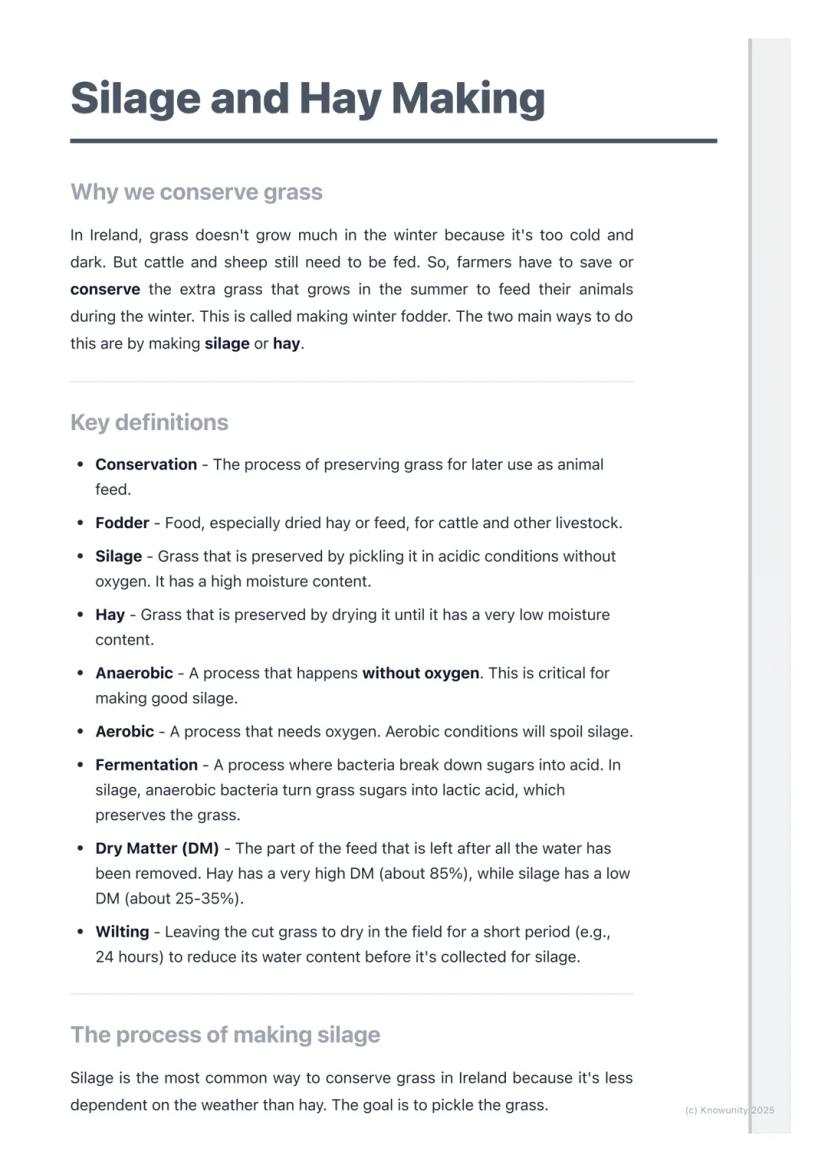
In Ireland, winter's cold and dark conditions halt grass growth, but livestock still need feeding. Farmers solve this problem by conserving summer grass to create winter fodder through two main methods: silage and hay making.
Conservation is the process of preserving grass for later use as animal feed. Silage involves pickling grass in acidic, oxygen-free conditions while maintaining high moisture content. Hay preservation works by drying grass until it has very low moisture content.
Some important terms to understand include anaerobic processes and aerobic conditions . Fermentation occurs when bacteria break down sugars into acid, specifically when anaerobic bacteria convert grass sugars to lactic acid that preserves the grass.
Remember this! Silage is the most common conservation method in Ireland because it's less dependent on good weather than hay making.
2
of 5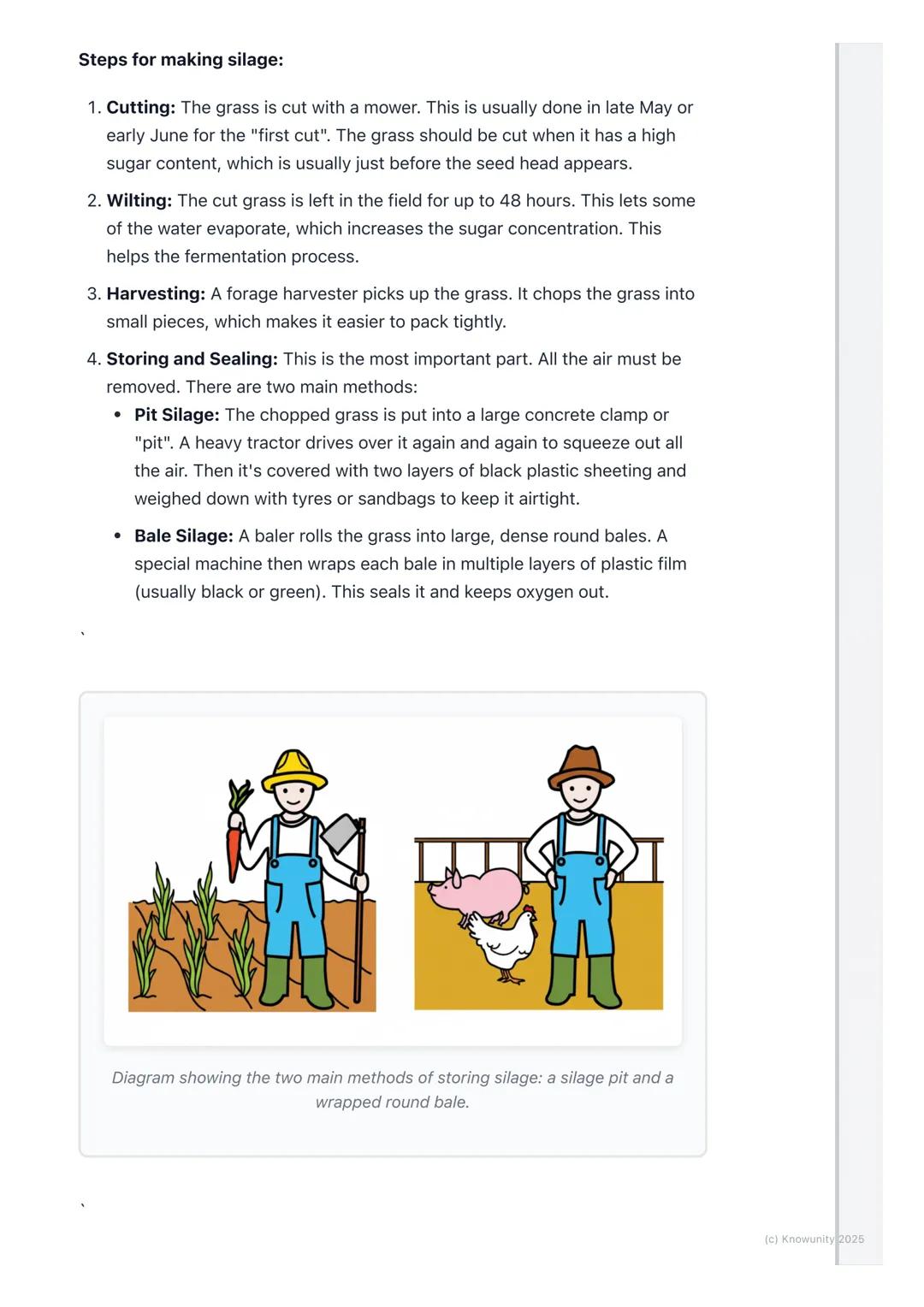
The Process of Making Silage
Making silage involves five key steps that transform fresh grass into preserved winter feed. First comes cutting - typically done in late May or early June when sugar content peaks, just before seed heads appear.
Next is wilting, where cut grass remains in the field for up to 48 hours. This allows some water to evaporate, increasing sugar concentration and supporting better fermentation later on.
The harvesting stage uses a forage harvester to collect and chop the grass into small pieces for easier compacting. Then comes the most critical stage - storing and sealing. This can be done through pit silage (packed into concrete clamps and covered with plastic sheeting) or bale silage (compressed into round bales wrapped in multiple layers of plastic film).
You've got two main storage methods:
- Pit silage: Grass is compacted by tractors in a concrete pit, then sealed with plastic and weighted down
- Bale silage: Individual bales are tightly wrapped in plastic film to maintain an airtight seal
Key point: Success depends entirely on excluding oxygen - if air gets in, your silage will spoil!
3
of 5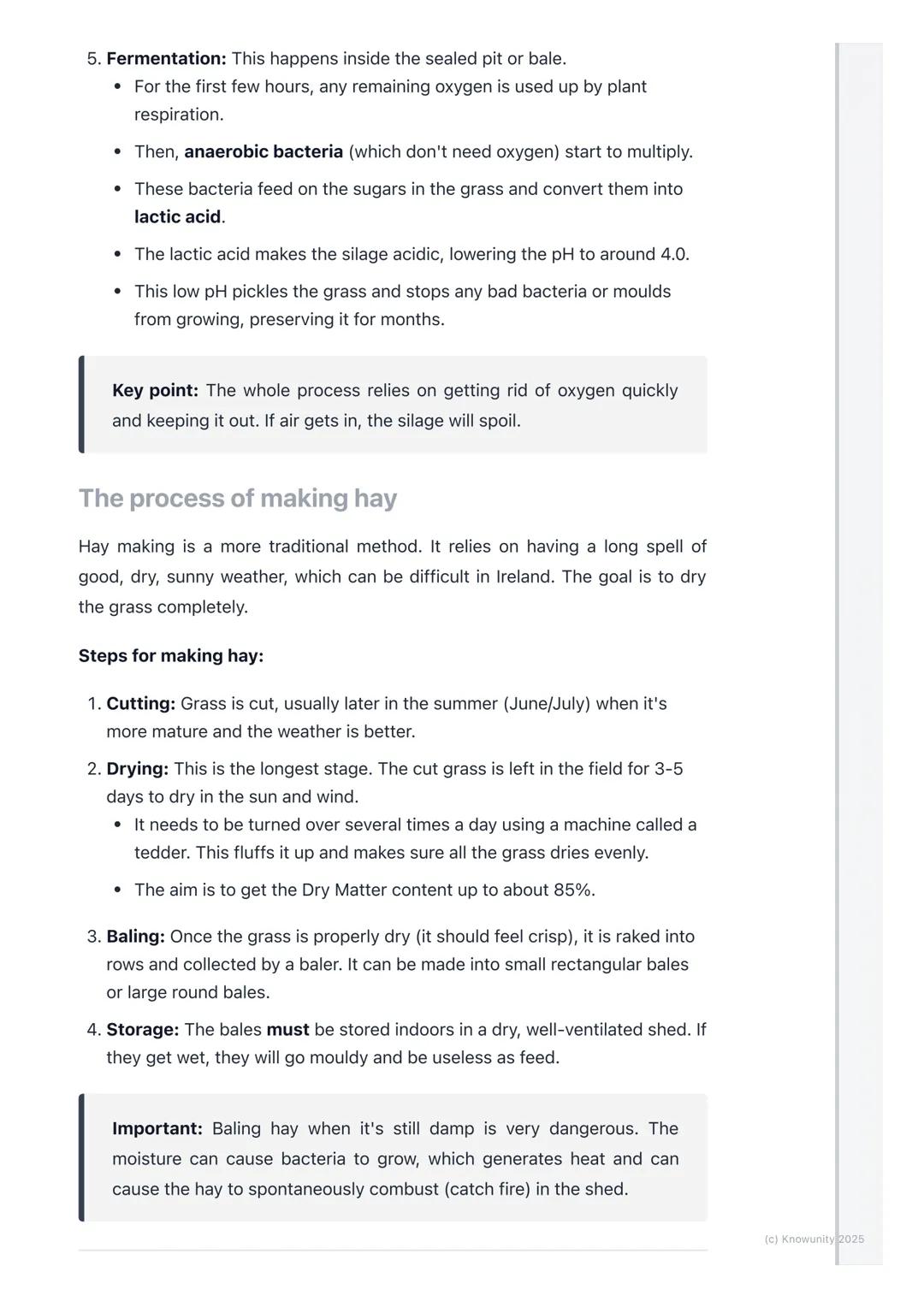
Fermentation and Hay Making
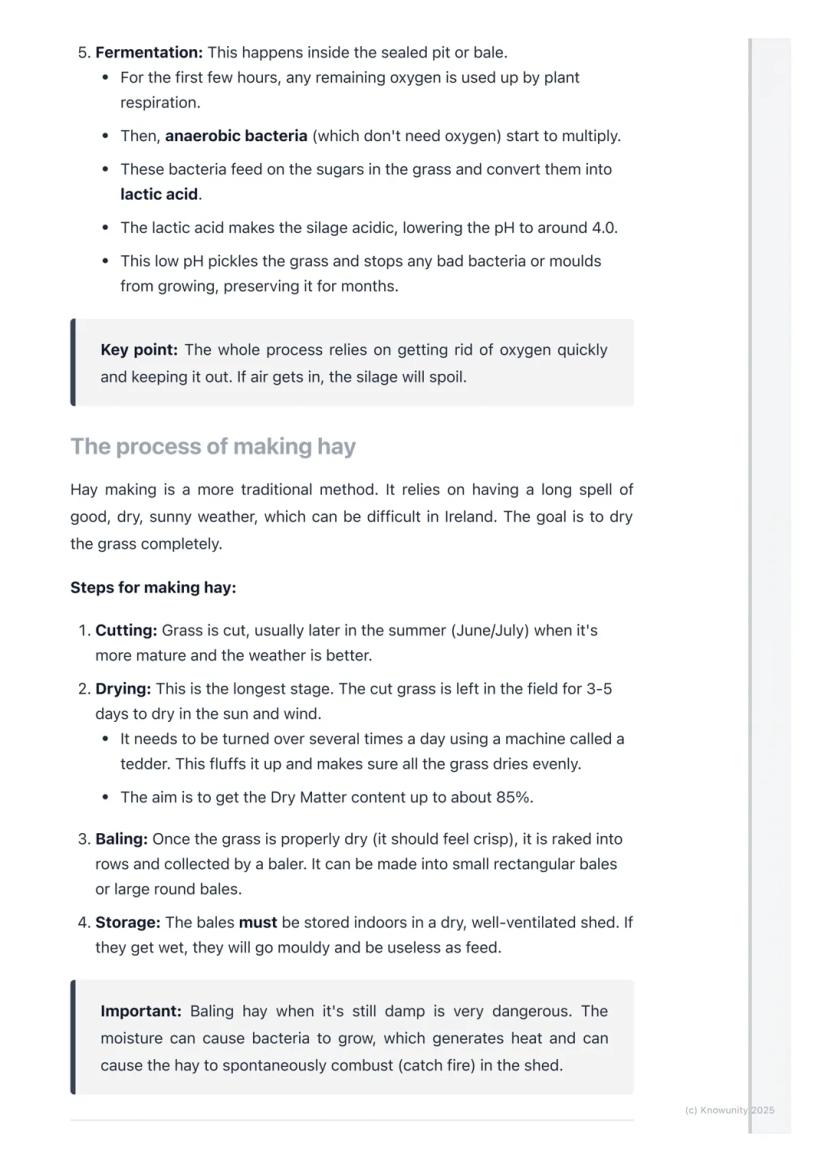
The magic of silage happens during fermentation. Initially, any remaining oxygen is consumed by plant respiration. Then anaerobic bacteria multiply, converting grass sugars into lactic acid, which lowers the pH to around 4.0. This acidic environment effectively pickles the grass, preventing harmful bacteria and mould growth for months.
Hay making is a more traditional method requiring longer periods of dry, sunny weather. The process begins with cutting grass in June/July when it's more mature. The critical drying stage follows, with grass left in the field for 3-5 days while being turned regularly using a tedder to ensure even drying until it reaches about 85% dry matter content.
Once properly dried, hay is raked into rows for baling into rectangular or round bales. Finally, bales must be properly stored in dry, well-ventilated sheds to prevent mould.
Warning! Never bale damp hay - it can cause bacteria to grow, generate heat, and potentially lead to spontaneous combustion in storage sheds.
4
of 5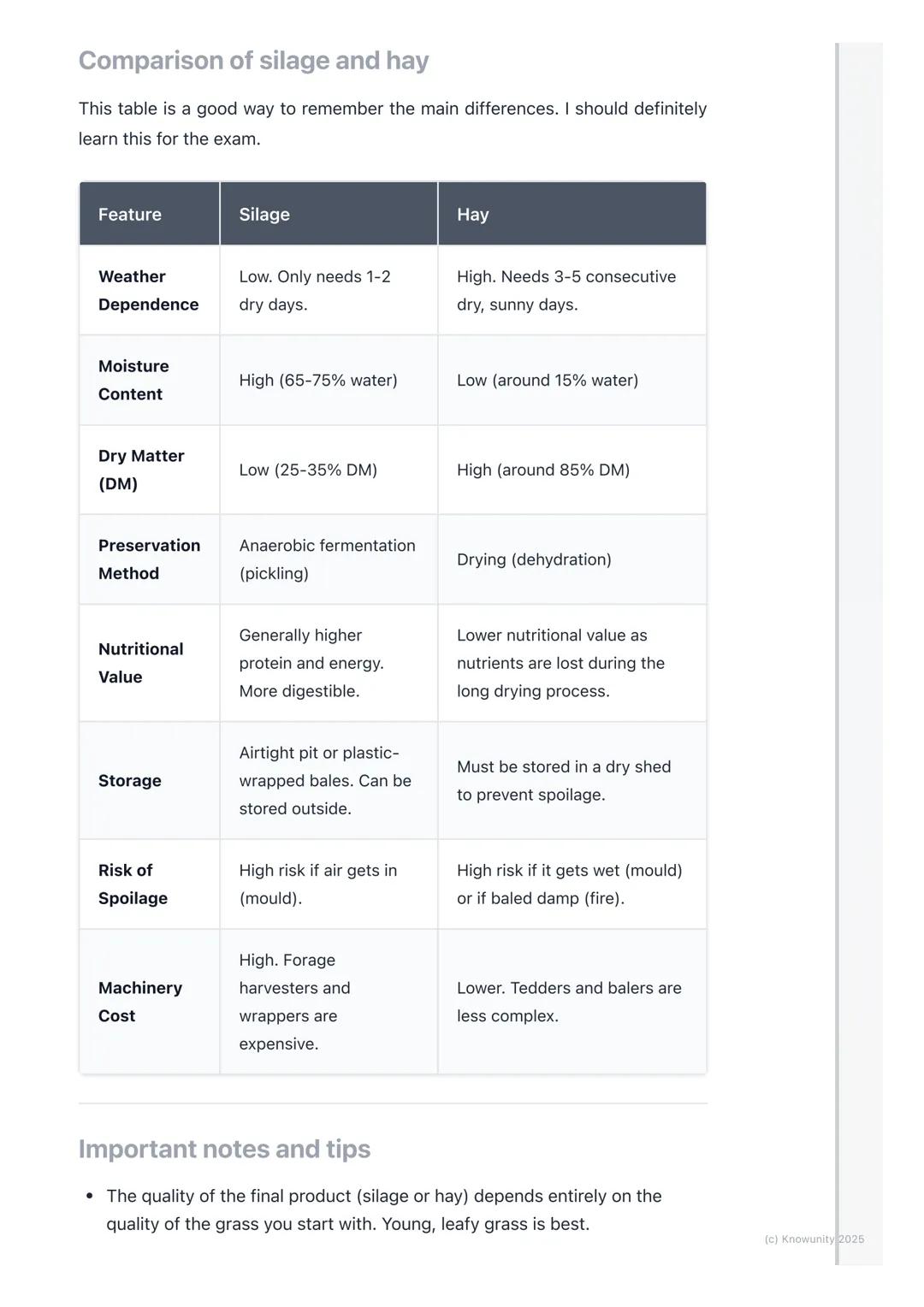
Comparing Silage and Hay
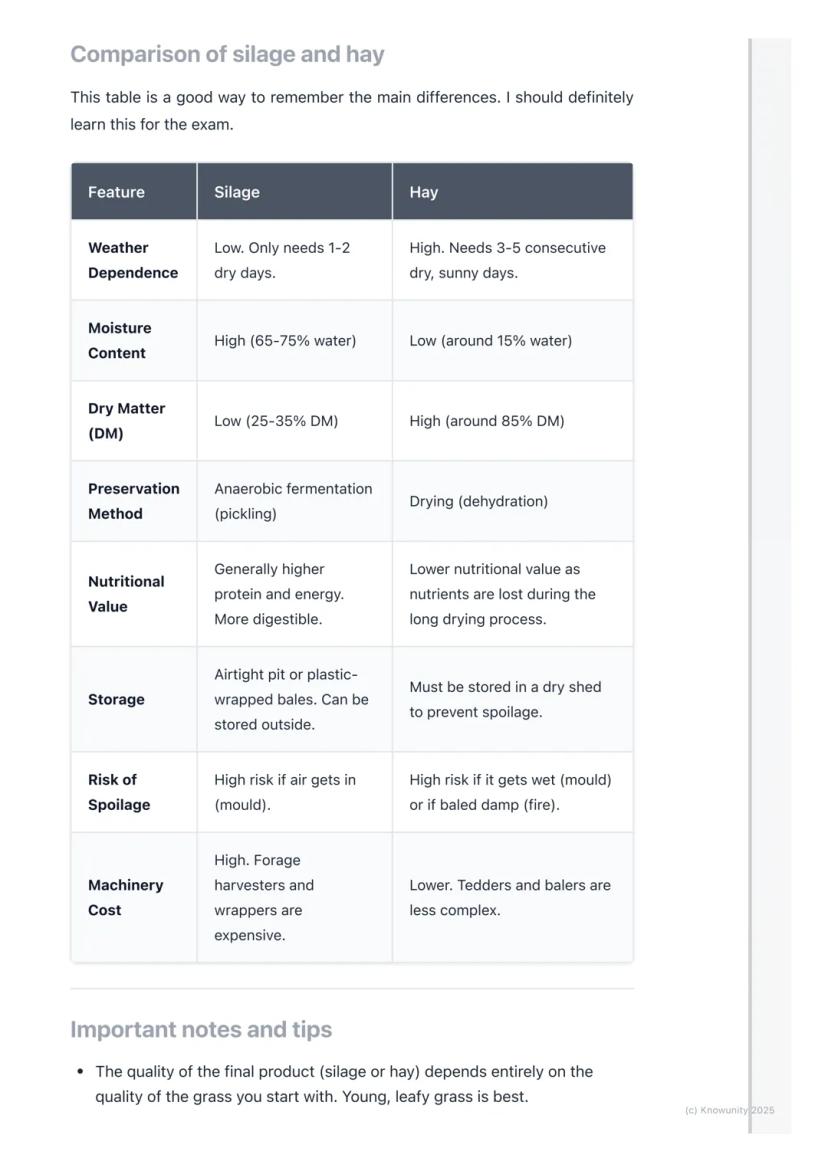
Understanding the differences between silage and hay helps you choose the right conservation method for your farm. Silage has lower weather dependence, needing only 1-2 dry days, while hay requires 3-5 consecutive dry, sunny days.
The preservation methods differ fundamentally - silage relies on anaerobic fermentation (pickling) while hay depends on drying (dehydration). This affects their composition, with silage maintaining high moisture content compared to hay's low moisture (around 15% water).
Nutritionally, silage generally offers higher protein and energy content and is more digestible. However, silage requires more expensive machinery like forage harvesters and wrappers. Storage requirements also differ significantly - silage needs airtight conditions (pit or wrapped bales) while hay must be kept in dry sheds.
Exam tip: Learn the comparison table thoroughly as it clearly summarizes the key differences between silage and hay - a likely exam question!
5
of 5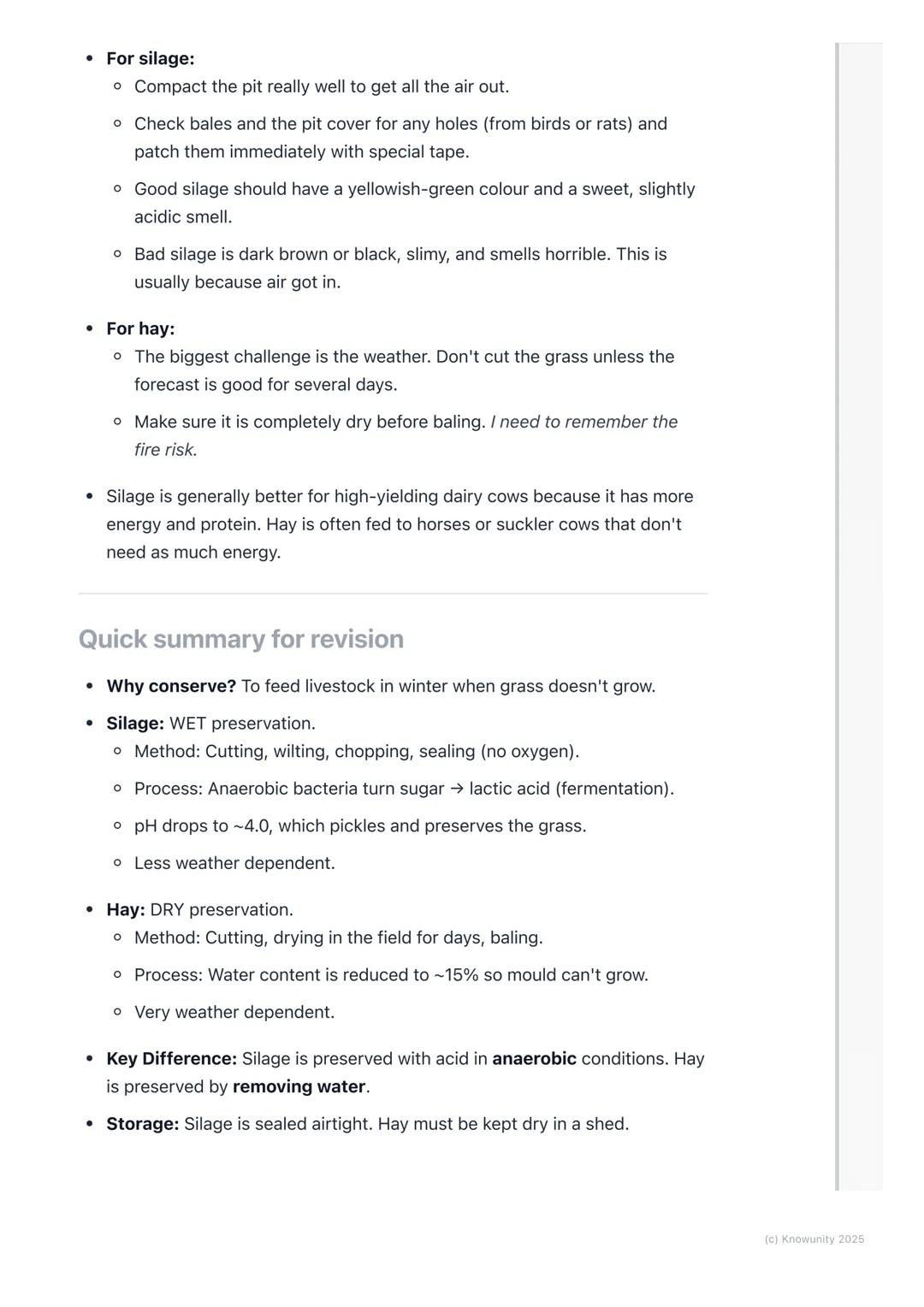
Important Notes and Quick Revision
The quality of your preserved feed depends entirely on the grass quality you start with. For the best results, young leafy grass produces superior silage and hay.
When making silage, ensure you compact pit silage thoroughly to remove all air and regularly check for holes in your plastic coverings. Good silage has a yellowish-green colour with a sweet, slightly acidic smell, while bad silage (where air entered) turns dark brown or black with a horrible odour.
For hay making, timing is everything - only cut when the weather forecast promises several consecutive dry days. Always ensure hay is completely dry before baling to avoid dangerous fire risks in storage.
Remember these key points for revision:
- Silage is WET preservation using anaerobic fermentation to create lactic acid
- Hay is DRY preservation by removing water content to about 15%
- Silage needs airtight conditions while hay must be kept dry
- Silage generally suits high-yielding dairy cows, while hay works well for horses and suckler cows
Quick test: Can you explain why silage fermentation is described as anaerobic and what would happen if oxygen entered the system?
Akala namin hindi mo na itatanong...
Ano ang Knowunity AI companion?
Ang aming AI Companion ay isang AI tool na nakatuon sa mga estudyante na nag-aalok ng higit pa sa mga sagot lang. Binuo mula sa milyong Knowunity resources, nagbibigay ito ng may-kaugnayang impormasyon, personalized na study plans, quizzes, at content direkta sa chat, na umaangkop sa iyong sariling learning journey.
Saan ko mada-download ang Knowunity app?
Maaari mong i-download ang app mula sa Google Play Store at Apple App Store.
Talaga bang libre ang Knowunity?
Tama 'yan! Mag-enjoy sa libreng access sa mga study content, makipag-connect sa kapwa mga estudyante, at kumuha ng instant na tulong – lahat nasa iyong daliri lang.
Pinaka-sikat na nilalaman
9 Irish
IrishIrish oral questions and answers
Questions and answers for the leaving cert oral
5th Year4264
 English
Key Quotes : Sive
Key Quotes and explanations: Sive
6th Year2842
IrishIrish oral questions
Outline of oral questions
5th Year2055
IrishIníon- le hÁine Durkin
Aine Durkin’s poem, Iníon: Themes & summary
5th Year850
IrishIrish poetry 2027
Iníon + Dínit an Bhróin
5th Year1133
IrishLC HL notes- Iníon (poem)
Includes poem in English and Irish, theme, key words & phrases
5th Year2284
EnglishCultural Context : Shawshank Redemption : Sive : Small Things Like These
Comparative Study : Cultural Context : Shawshank Redemption, Sive and Small Things Like These
6th Year1430
IrishMo Ghrá-sa (Idir Lúibíní)
Notes on mo ghrá-sa
5th Year380
IrishAn Gaeilge Aiste
Irish Language essay
6th Year1320
Hindi mo mahanap ang hinahanap mo? Tuklasin ang iba pang mga asignatura.
Gustong-gusto kami ng mga estudyante — at magiging ganoon ka rin.
4.6/5App Store
4.7/5Google Play
Napakadaling gamitin at maganda ang disenyo ng app. Nahanap ko lahat ng hinahanap ko hanggang ngayon at natuto ako ng marami mula sa mga presentasyon! Tiyak na gagamitin ko ang app para sa isang takdang-aralin sa klase! At siyempre, nakakatulong din ito bilang inspirasyon.
Stefan Sgumagamit ng iOS
Sobrang ganda talaga ng app na ito. Maraming mga study notes at tulong [...]. Ang problemang subject ko ay Pranses, halimbawa, at ang app ay may maraming options para tumulong. Salamat sa app na ito, bumuti ang Pranses ko. Irerekumenda ko ito sa lahat.
Samantha KlichAndroid user
Wow, talagang namangha ako. Sinubukan ko lang ang app dahil nakita ko itong ina-advertise nang maraming beses at sobrang nagulat ako. Ang app na ito ang TULONG na gusto mo para sa paaralan at higit sa lahat, nag-aalok ito ng maraming bagay, tulad ng workouts at fact sheets, na SOBRANG nakatulong sa akin.
AnnaiOS user
Agricultural Science1 views·Na-update Jun 8, 2026·5 mga pahinaMastering Silage and Hay Making Techniques
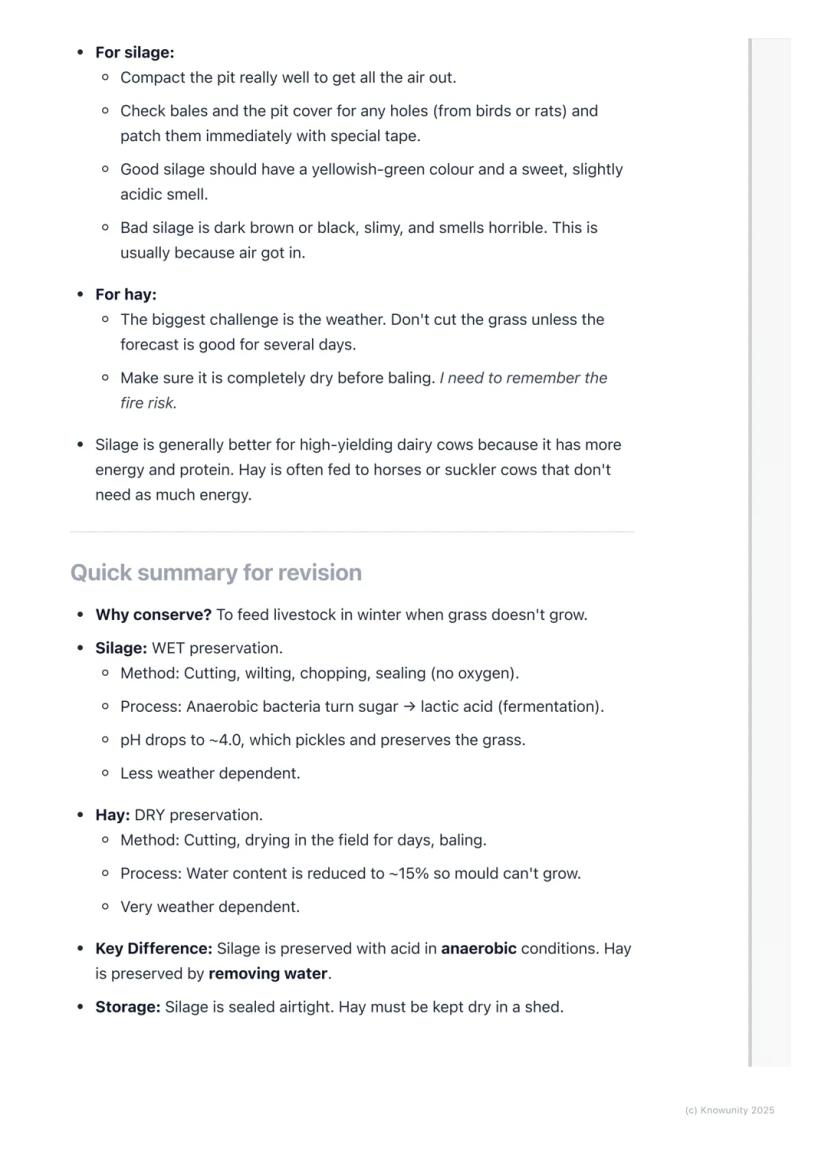
Silage and hay making are essential farming practices in Ireland that allow animals to be fed during winter when grass growth slows down. These conservation methods ensure cattle and sheep receive adequate nutrition year-round by preserving the excess grass that...
1
of 5
Mag-sign up para makita ang content. Libre ito!
- Access sa lahat ng dokumento
- Pagbutihin ang iyong mga grado
- Sumali sa milyong mga estudyante
Why We Conserve Grass & Key Definitions
In Ireland, winter's cold and dark conditions halt grass growth, but livestock still need feeding. Farmers solve this problem by conserving summer grass to create winter fodder through two main methods: silage and hay making.
Conservation is the process of preserving grass for later use as animal feed. Silage involves pickling grass in acidic, oxygen-free conditions while maintaining high moisture content. Hay preservation works by drying grass until it has very low moisture content.
Some important terms to understand include anaerobic processes and aerobic conditions . Fermentation occurs when bacteria break down sugars into acid, specifically when anaerobic bacteria convert grass sugars to lactic acid that preserves the grass.
Remember this! Silage is the most common conservation method in Ireland because it's less dependent on good weather than hay making.
2
of 5Mag-sign up para makita ang content. Libre ito!
- Access sa lahat ng dokumento
- Pagbutihin ang iyong mga grado
- Sumali sa milyong mga estudyante
The Process of Making Silage
Making silage involves five key steps that transform fresh grass into preserved winter feed. First comes cutting - typically done in late May or early June when sugar content peaks, just before seed heads appear.
Next is wilting, where cut grass remains in the field for up to 48 hours. This allows some water to evaporate, increasing sugar concentration and supporting better fermentation later on.
The harvesting stage uses a forage harvester to collect and chop the grass into small pieces for easier compacting. Then comes the most critical stage - storing and sealing. This can be done through pit silage (packed into concrete clamps and covered with plastic sheeting) or bale silage (compressed into round bales wrapped in multiple layers of plastic film).
You've got two main storage methods:
- Pit silage: Grass is compacted by tractors in a concrete pit, then sealed with plastic and weighted down
- Bale silage: Individual bales are tightly wrapped in plastic film to maintain an airtight seal
Key point: Success depends entirely on excluding oxygen - if air gets in, your silage will spoil!
3
of 5Mag-sign up para makita ang content. Libre ito!
- Access sa lahat ng dokumento
- Pagbutihin ang iyong mga grado
- Sumali sa milyong mga estudyante
Fermentation and Hay Making
The magic of silage happens during fermentation. Initially, any remaining oxygen is consumed by plant respiration. Then anaerobic bacteria multiply, converting grass sugars into lactic acid, which lowers the pH to around 4.0. This acidic environment effectively pickles the grass, preventing harmful bacteria and mould growth for months.
Hay making is a more traditional method requiring longer periods of dry, sunny weather. The process begins with cutting grass in June/July when it's more mature. The critical drying stage follows, with grass left in the field for 3-5 days while being turned regularly using a tedder to ensure even drying until it reaches about 85% dry matter content.
Once properly dried, hay is raked into rows for baling into rectangular or round bales. Finally, bales must be properly stored in dry, well-ventilated sheds to prevent mould.
Warning! Never bale damp hay - it can cause bacteria to grow, generate heat, and potentially lead to spontaneous combustion in storage sheds.
4
of 5Mag-sign up para makita ang content. Libre ito!
- Access sa lahat ng dokumento
- Pagbutihin ang iyong mga grado
- Sumali sa milyong mga estudyante
Comparing Silage and Hay
Understanding the differences between silage and hay helps you choose the right conservation method for your farm. Silage has lower weather dependence, needing only 1-2 dry days, while hay requires 3-5 consecutive dry, sunny days.
The preservation methods differ fundamentally - silage relies on anaerobic fermentation (pickling) while hay depends on drying (dehydration). This affects their composition, with silage maintaining high moisture content compared to hay's low moisture (around 15% water).
Nutritionally, silage generally offers higher protein and energy content and is more digestible. However, silage requires more expensive machinery like forage harvesters and wrappers. Storage requirements also differ significantly - silage needs airtight conditions (pit or wrapped bales) while hay must be kept in dry sheds.
Exam tip: Learn the comparison table thoroughly as it clearly summarizes the key differences between silage and hay - a likely exam question!
5
of 5Mag-sign up para makita ang content. Libre ito!
- Access sa lahat ng dokumento
- Pagbutihin ang iyong mga grado
- Sumali sa milyong mga estudyante
Important Notes and Quick Revision
The quality of your preserved feed depends entirely on the grass quality you start with. For the best results, young leafy grass produces superior silage and hay.
When making silage, ensure you compact pit silage thoroughly to remove all air and regularly check for holes in your plastic coverings. Good silage has a yellowish-green colour with a sweet, slightly acidic smell, while bad silage (where air entered) turns dark brown or black with a horrible odour.
For hay making, timing is everything - only cut when the weather forecast promises several consecutive dry days. Always ensure hay is completely dry before baling to avoid dangerous fire risks in storage.
Remember these key points for revision:
- Silage is WET preservation using anaerobic fermentation to create lactic acid
- Hay is DRY preservation by removing water content to about 15%
- Silage needs airtight conditions while hay must be kept dry
- Silage generally suits high-yielding dairy cows, while hay works well for horses and suckler cows
Quick test: Can you explain why silage fermentation is described as anaerobic and what would happen if oxygen entered the system?
Akala namin hindi mo na itatanong...
Ano ang Knowunity AI companion?
Ang aming AI Companion ay isang AI tool na nakatuon sa mga estudyante na nag-aalok ng higit pa sa mga sagot lang. Binuo mula sa milyong Knowunity resources, nagbibigay ito ng may-kaugnayang impormasyon, personalized na study plans, quizzes, at content direkta sa chat, na umaangkop sa iyong sariling learning journey.
Saan ko mada-download ang Knowunity app?
Maaari mong i-download ang app mula sa Google Play Store at Apple App Store.
Talaga bang libre ang Knowunity?
Tama 'yan! Mag-enjoy sa libreng access sa mga study content, makipag-connect sa kapwa mga estudyante, at kumuha ng instant na tulong – lahat nasa iyong daliri lang.
Pinaka-sikat na nilalaman
9IrishIrish oral questions and answers
Questions and answers for the leaving cert oral
5th Year4264
EnglishKey Quotes : Sive
Key Quotes and explanations: Sive
6th Year2842
IrishIrish oral questions
Outline of oral questions
5th Year2055
IrishIníon- le hÁine Durkin
Aine Durkin’s poem, Iníon: Themes & summary
5th Year850
IrishIrish poetry 2027
Iníon + Dínit an Bhróin
5th Year1133
IrishLC HL notes- Iníon (poem)
Includes poem in English and Irish, theme, key words & phrases
5th Year2284
EnglishCultural Context : Shawshank Redemption : Sive : Small Things Like These
Comparative Study : Cultural Context : Shawshank Redemption, Sive and Small Things Like These
6th Year1430
IrishMo Ghrá-sa (Idir Lúibíní)
Notes on mo ghrá-sa
5th Year380
IrishAn Gaeilge Aiste
Irish Language essay
6th Year1320
Hindi mo mahanap ang hinahanap mo? Tuklasin ang iba pang mga asignatura.
Gustong-gusto kami ng mga estudyante — at magiging ganoon ka rin.
4.6/5App Store
4.7/5Google Play
Napakadaling gamitin at maganda ang disenyo ng app. Nahanap ko lahat ng hinahanap ko hanggang ngayon at natuto ako ng marami mula sa mga presentasyon! Tiyak na gagamitin ko ang app para sa isang takdang-aralin sa klase! At siyempre, nakakatulong din ito bilang inspirasyon.
Stefan Sgumagamit ng iOS
Sobrang ganda talaga ng app na ito. Maraming mga study notes at tulong [...]. Ang problemang subject ko ay Pranses, halimbawa, at ang app ay may maraming options para tumulong. Salamat sa app na ito, bumuti ang Pranses ko. Irerekumenda ko ito sa lahat.
Samantha KlichAndroid user
Wow, talagang namangha ako. Sinubukan ko lang ang app dahil nakita ko itong ina-advertise nang maraming beses at sobrang nagulat ako. Ang app na ito ang TULONG na gusto mo para sa paaralan at higit sa lahat, nag-aalok ito ng maraming bagay, tulad ng workouts at fact sheets, na SOBRANG nakatulong sa akin.
AnnaiOS user