
Ever wondered how different beliefs shape the way people see... Ipakita pa
 World Religion
 Science
 Iba pa
 Filipino
 Econ
EconMag-sign up para makita ang contentLibre ito!
Access sa lahat ng dokumento
Pagbutihin ang iyong mga grado
Sumali sa milyong mga estudyante
Knowunity AI
Higit pa
Mga Asignatura
Triangle Congruence and Similarity Theorems
Triangle Properties and Classification
Linear Equations and Graphs
Geometric Angle Relationships
Trigonometric Functions and Identities
Equation Solving Techniques
Circle Geometry Fundamentals
Division Operations and Methods
Basic Differentiation Rules
Exponent and Logarithm Properties
Ipakita lahat ng paksa
Human Organ Systems
Reproductive Cell Cycles
Biological Sciences Subdisciplines
Cellular Energy Metabolism
Autotrophic Energy Processes
Inheritance Patterns and Principles
Biomolecular Structure and Organization
Cell Cycle and Division Mechanics
Cellular Organization and Development
Biological Structural Organization
Ipakita lahat ng paksa
Chemical Sciences and Applications
Atomic Structure and Composition
Molecular Electron Structure Representation
Atomic Electron Behavior
Matter Properties and Water
Mole Concept and Calculations
Gas Laws and Behavior
Periodic Table Organization
Chemical Thermodynamics Fundamentals
Chemical Bond Types and Properties
Ipakita lahat ng paksa
European Renaissance and Enlightenment
European Cultural Movements 800-1920
American Revolution Era 1763-1797
American Civil War 1861-1865
Global Imperial Systems
Mongol and Chinese Dynasties
U.S. Presidents and World Leaders
Historical Sources and Documentation
World Wars Era and Impact
World Religious Systems
Ipakita lahat ng paksa
Classic and Contemporary Novels
Literary Character Analysis
Rhetorical Theory and Practice
Classic Literary Narratives
Reading Analysis and Interpretation
Narrative Structure and Techniques
English Language Components
Influential English-Language Authors
Basic Sentence Structure
Narrative Voice and Perspective
Ipakita lahat ng paksa
1,662
•
Na-update Mar 13, 2026
•
maye cee
@chili_n_c
Ever wondered how different beliefs shape the way people see... Ipakita pa
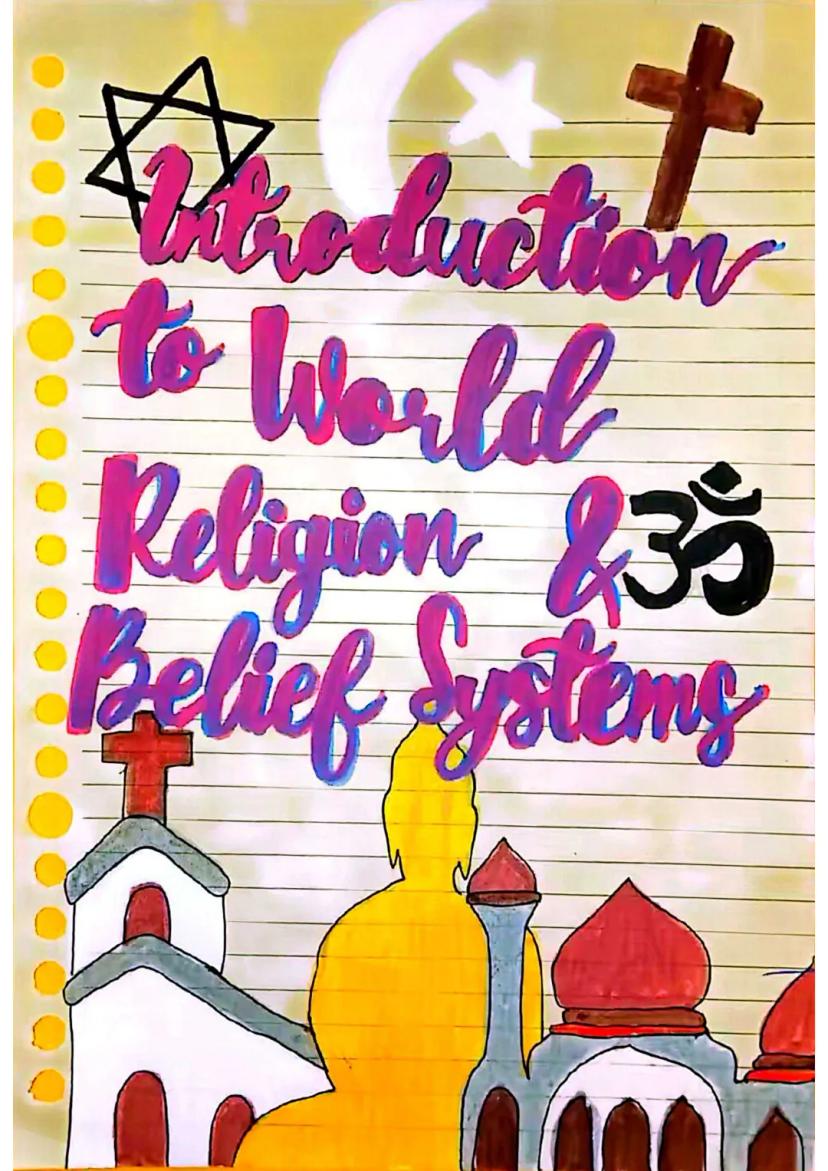
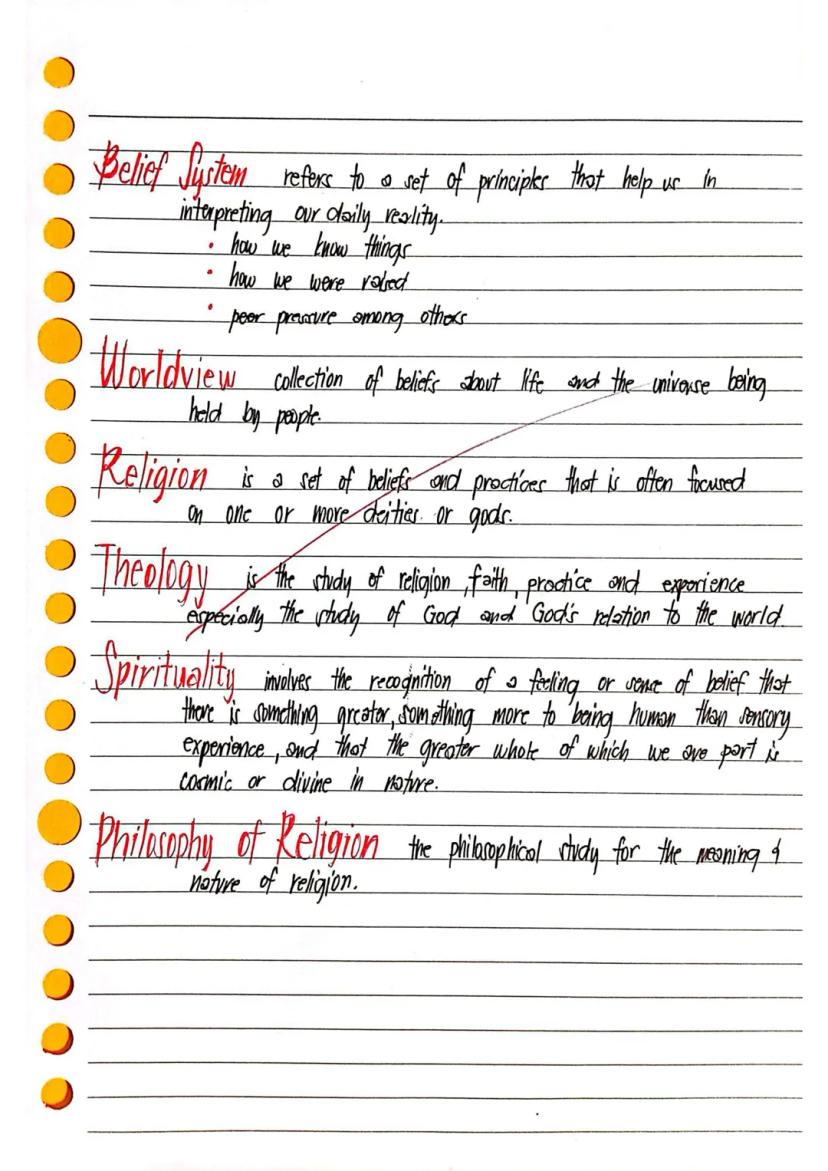
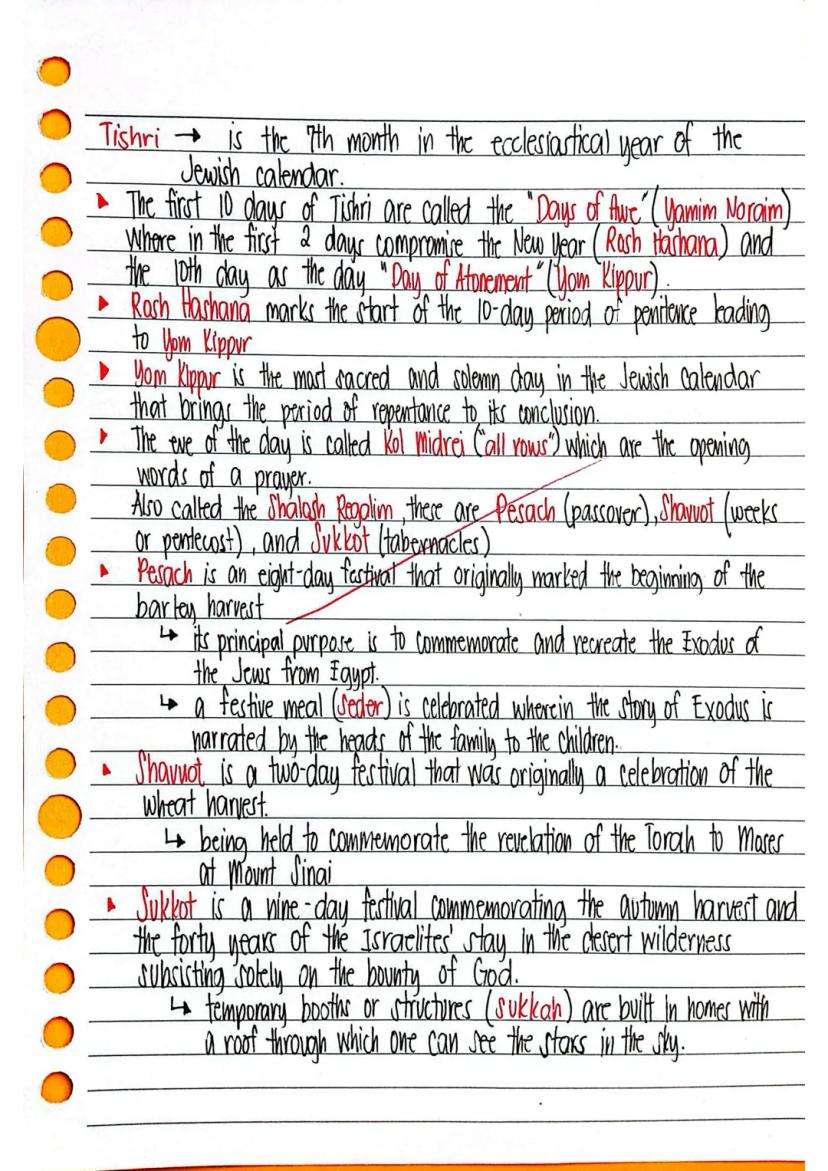
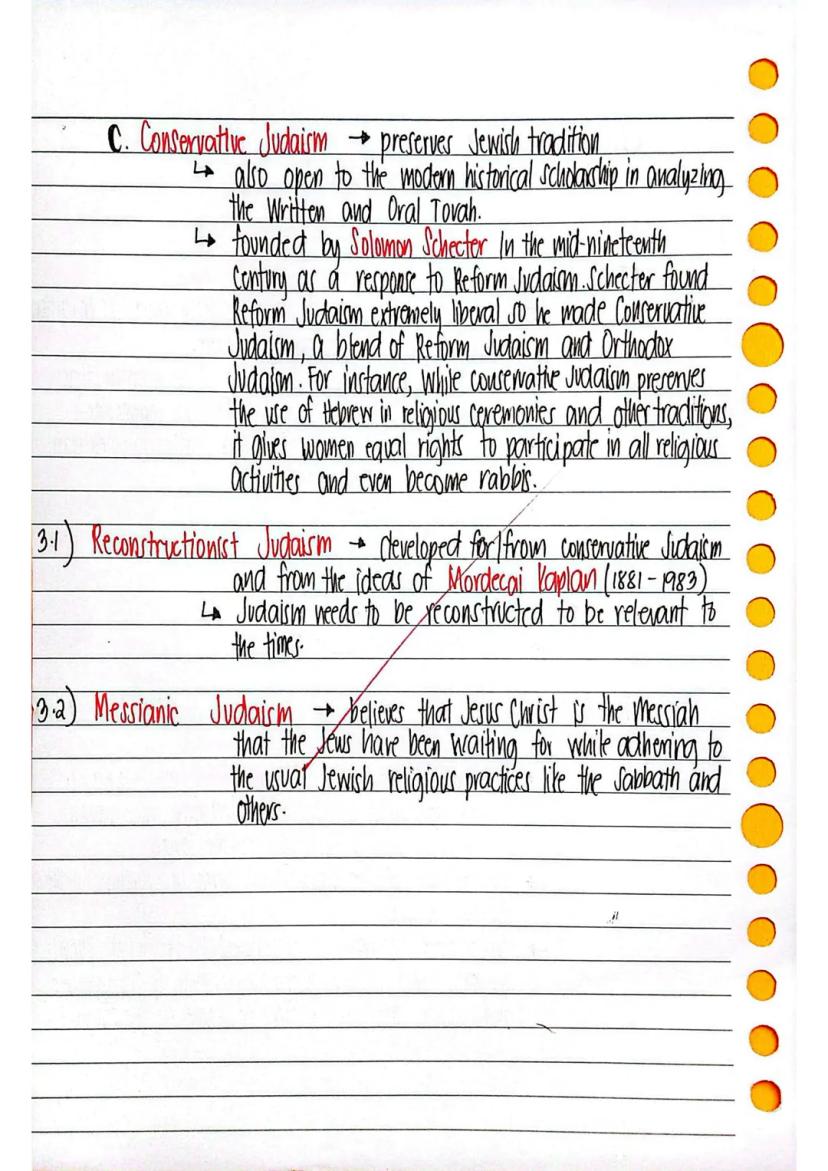
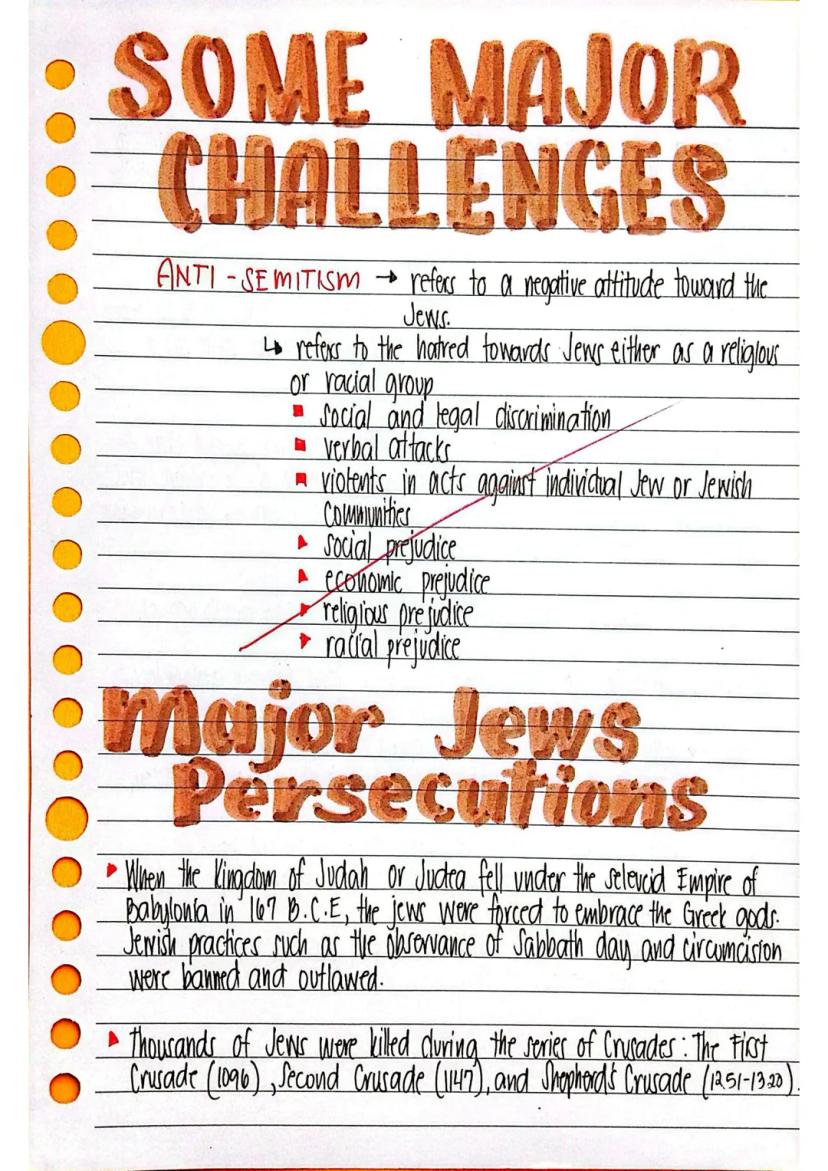
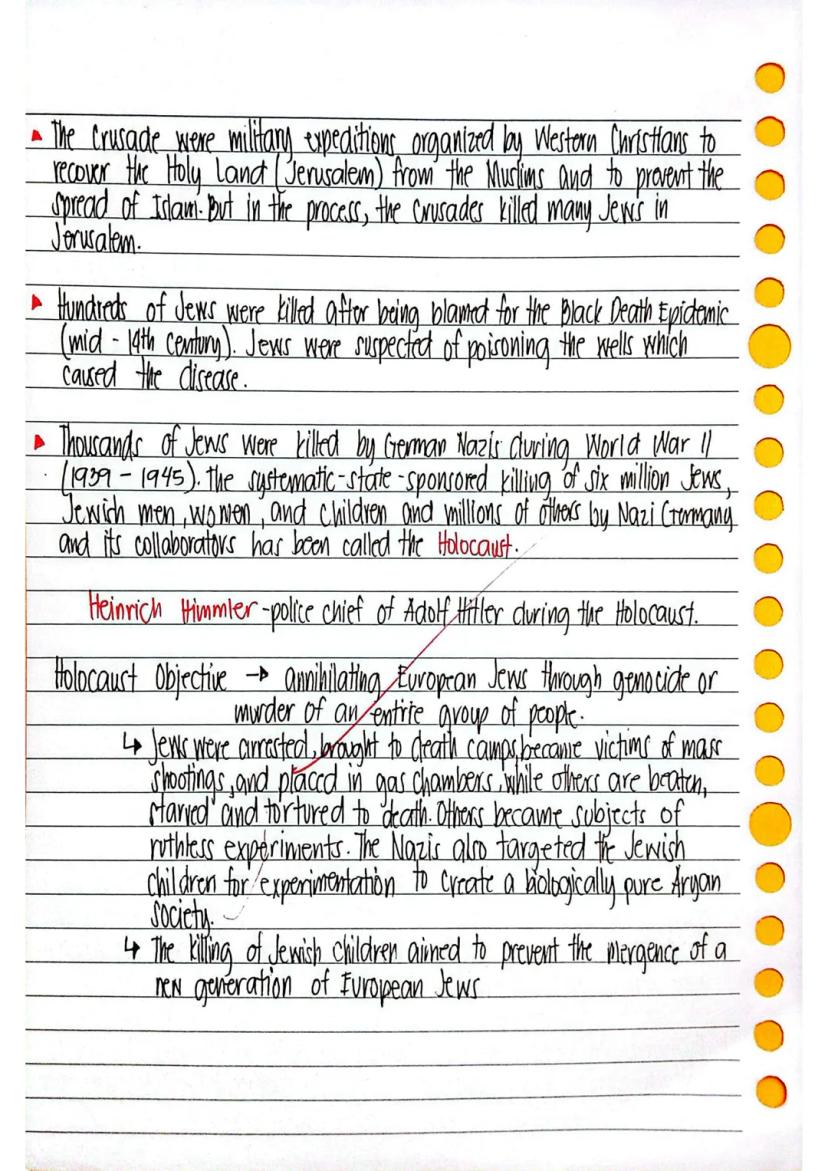
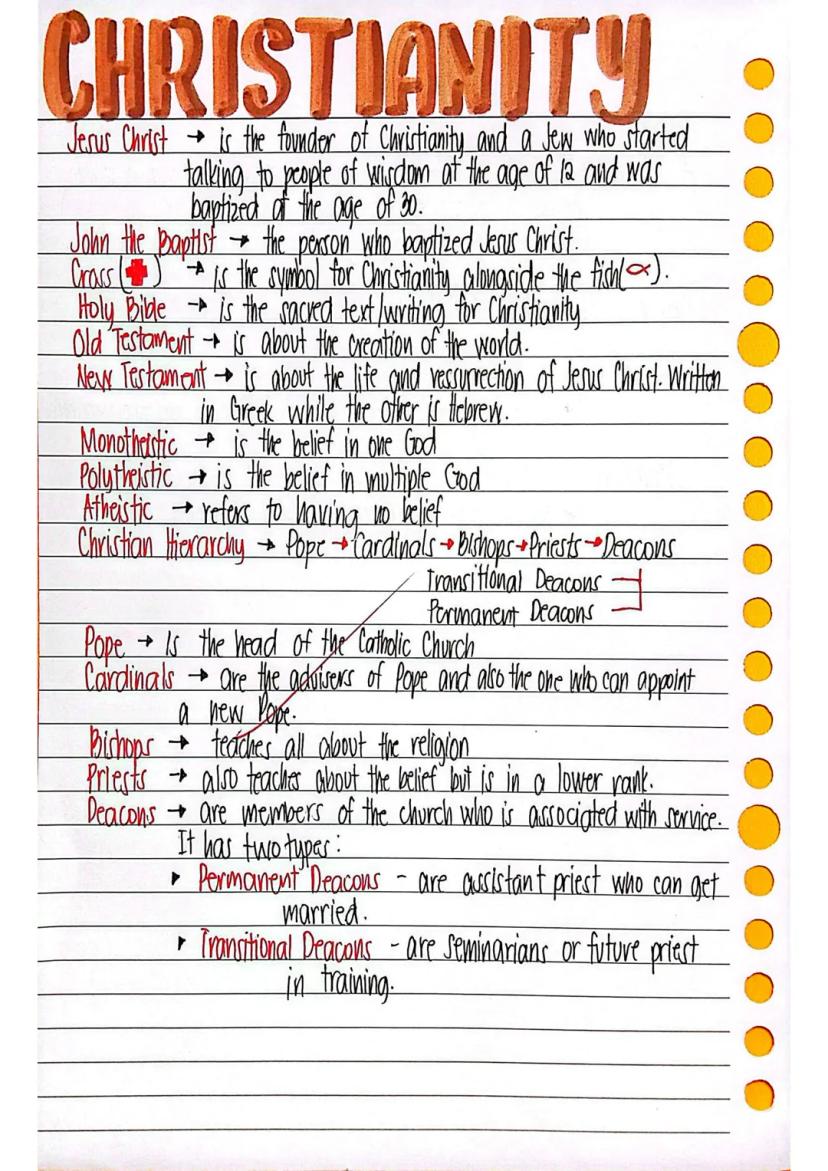
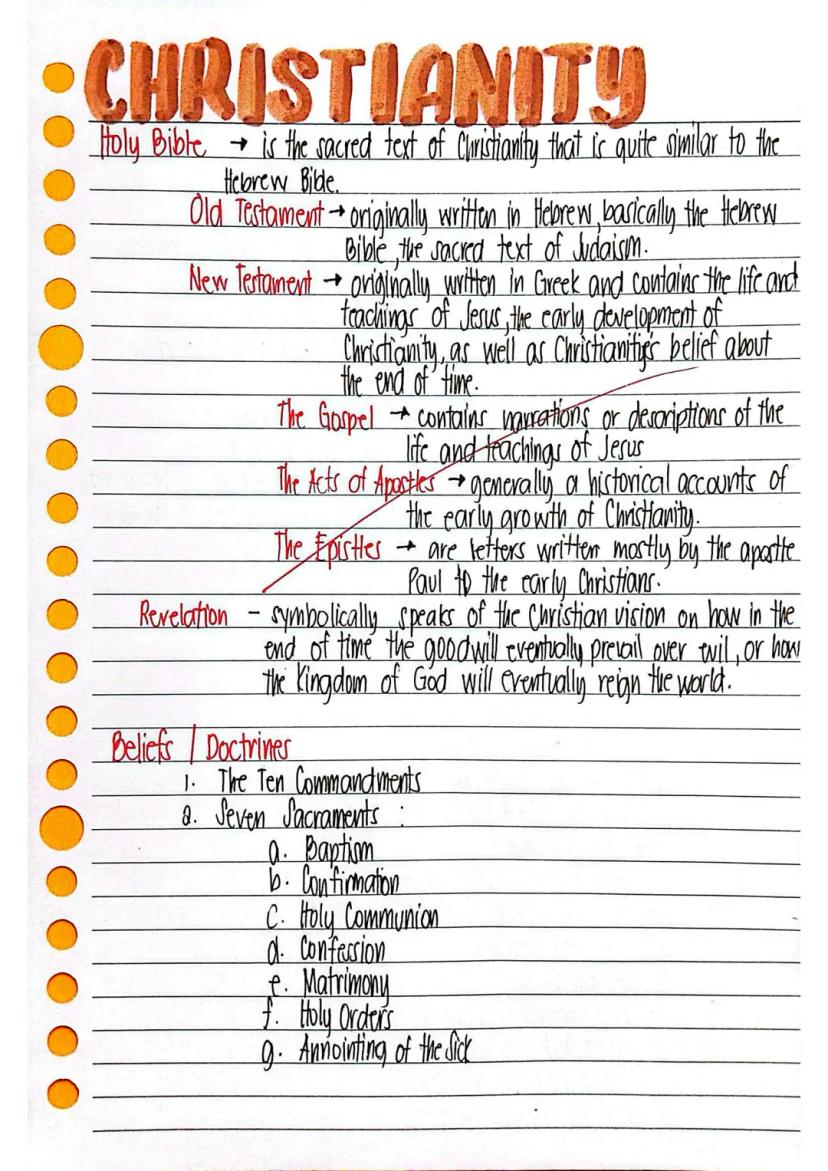
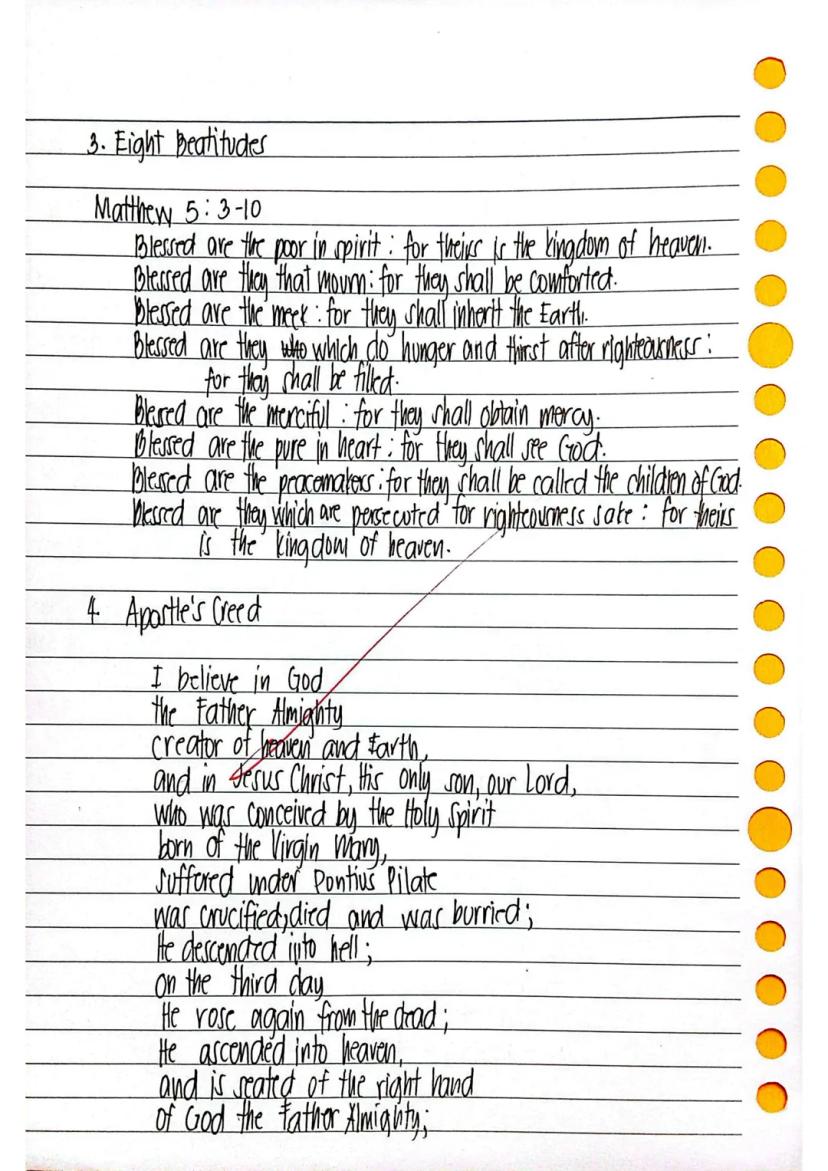
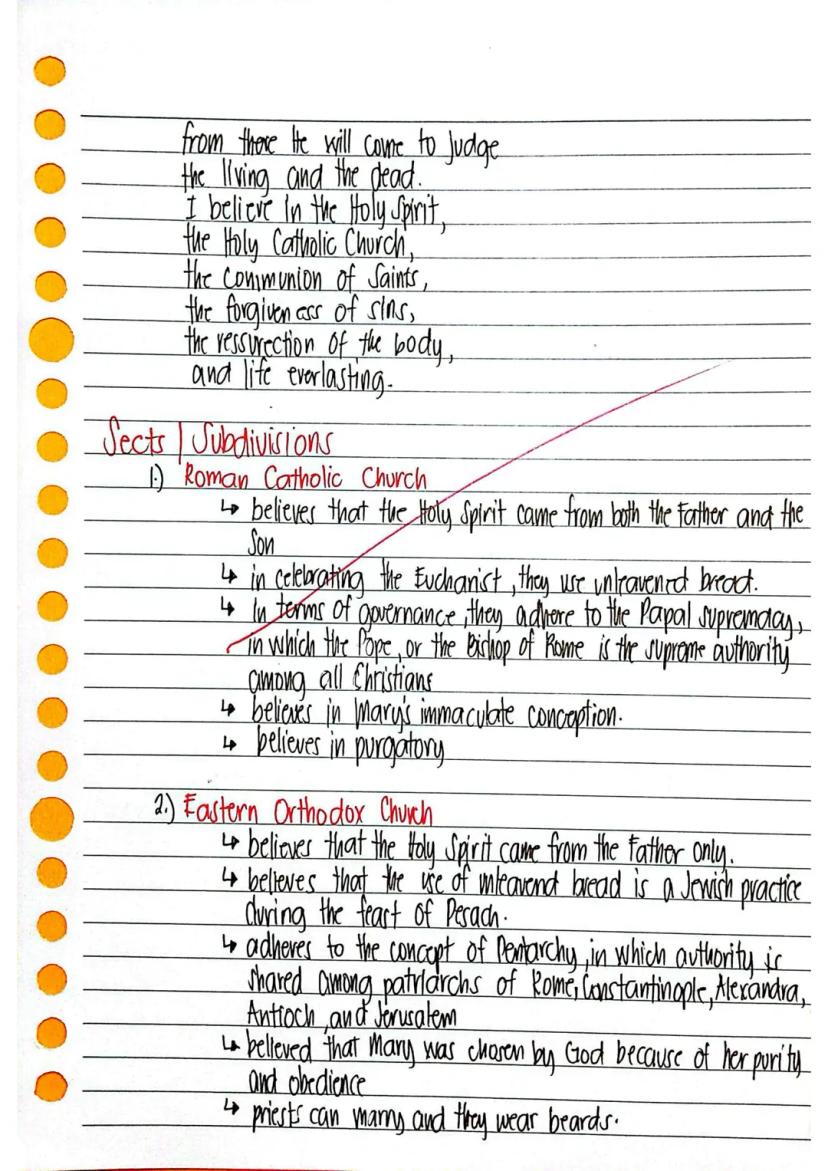
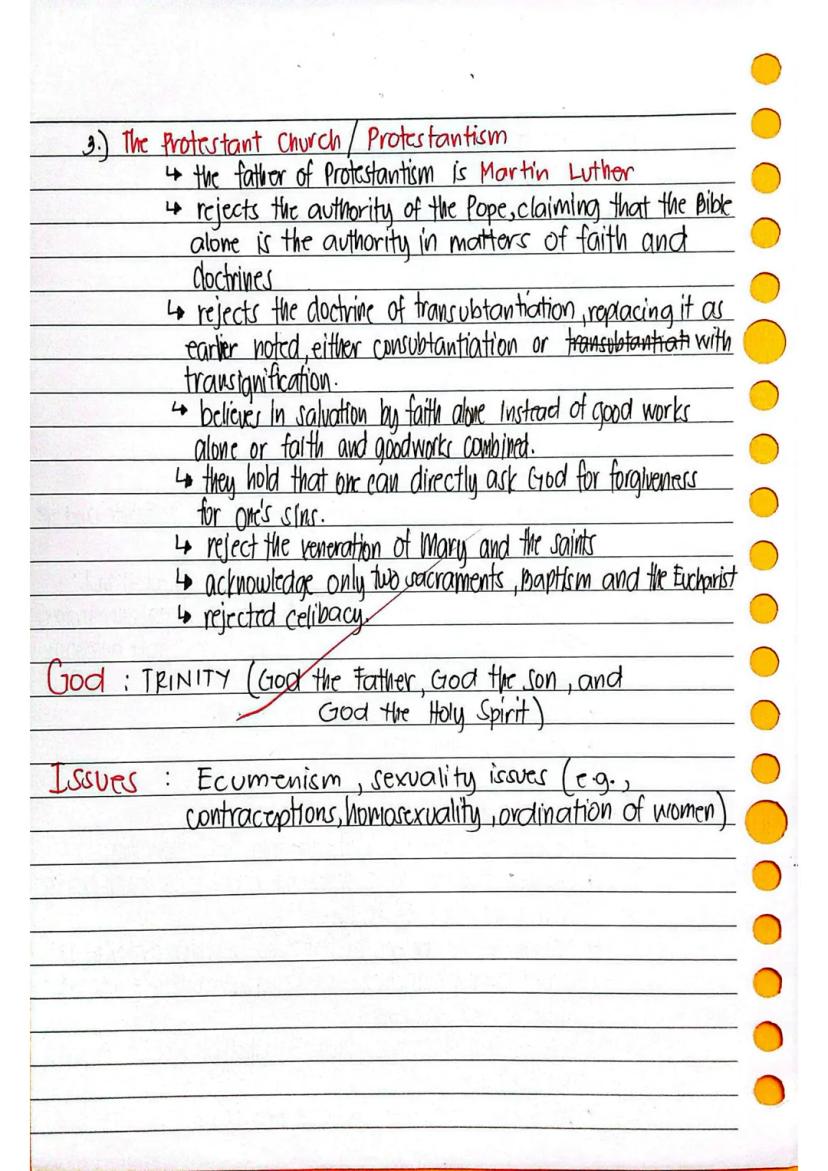
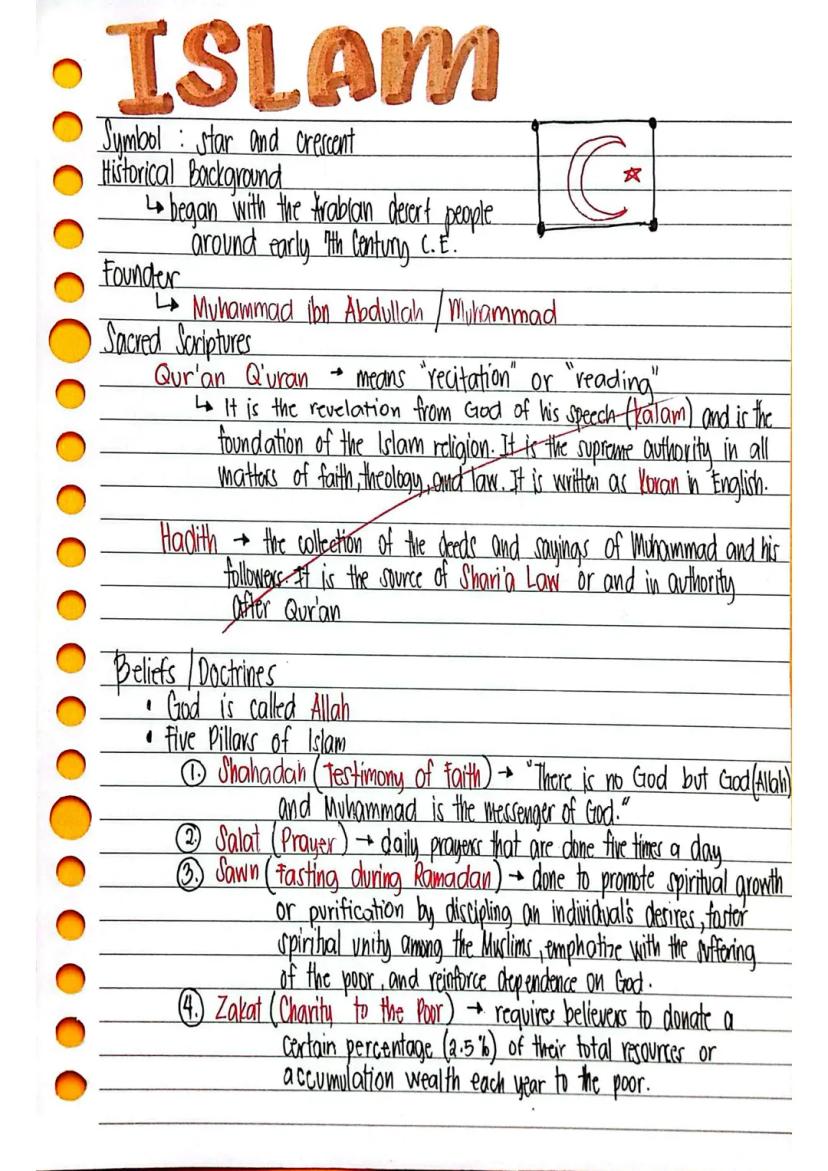
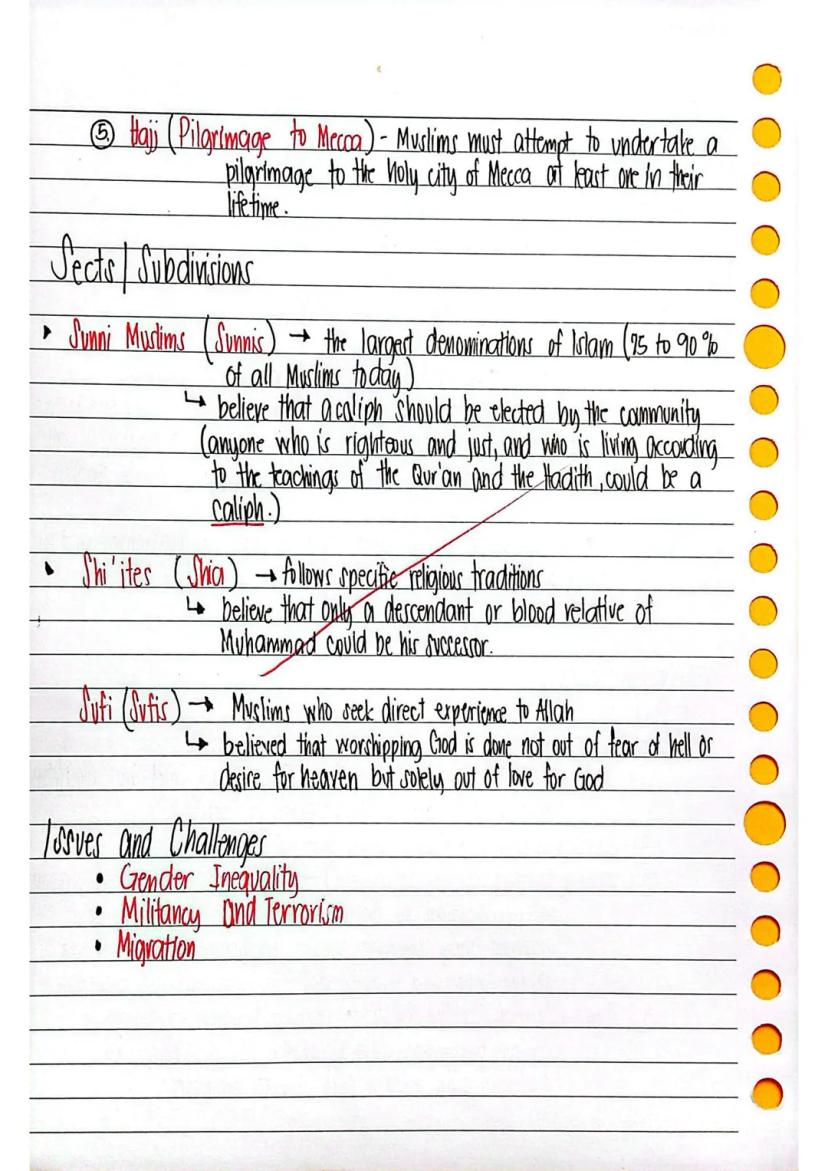
Understanding how people make sense of life starts with grasping some key concepts that might seem similar but are actually quite different. These terms will pop up constantly in your studies, so getting them straight now will make everything else click into place.
A belief system is basically your personal guidebook for understanding reality - it's shaped by how you were raised, what you've learned, and even peer pressure. Your worldview is the bigger picture - it's your collection of beliefs about life and the universe that helps you make sense of everything around you.
Religion takes this a step further by focusing on deities or gods, complete with specific practices and rituals. When scholars want to study these religions academically, that's called theology - think of it as the science of understanding God and how the divine relates to our world.
Quick Tip: Think of belief systems as your mental map, worldview as your compass, and religion as your detailed guidebook with specific rules and practices.
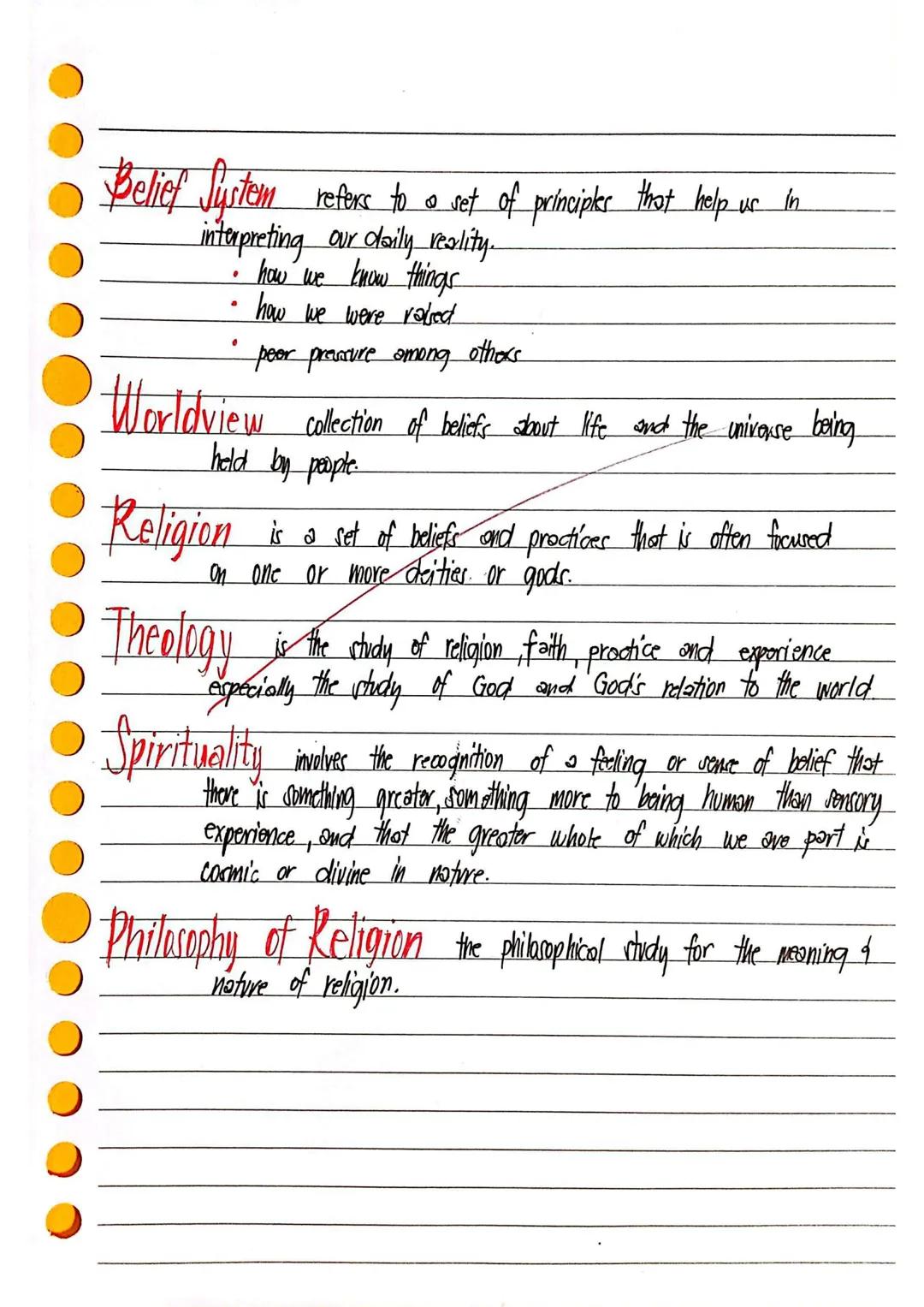
Spirituality is about recognizing there's something bigger than just our physical experience - whether you call it cosmic, divine, or just "the universe." It's that feeling that we're part of something greater than ourselves.
The philosophy of religion approaches these topics from a more academic angle, asking deep questions about the meaning and nature of religious beliefs without necessarily believing in them personally.
These concepts work together to help us understand how people interpret their daily reality. Whether someone follows a specific religion, considers themselves spiritual, or approaches these topics philosophically, they're all trying to answer the same basic human questions about purpose, meaning, and our place in the world.
Remember: You don't have to be religious to study religion - many scholars approach these topics from purely academic perspectives.
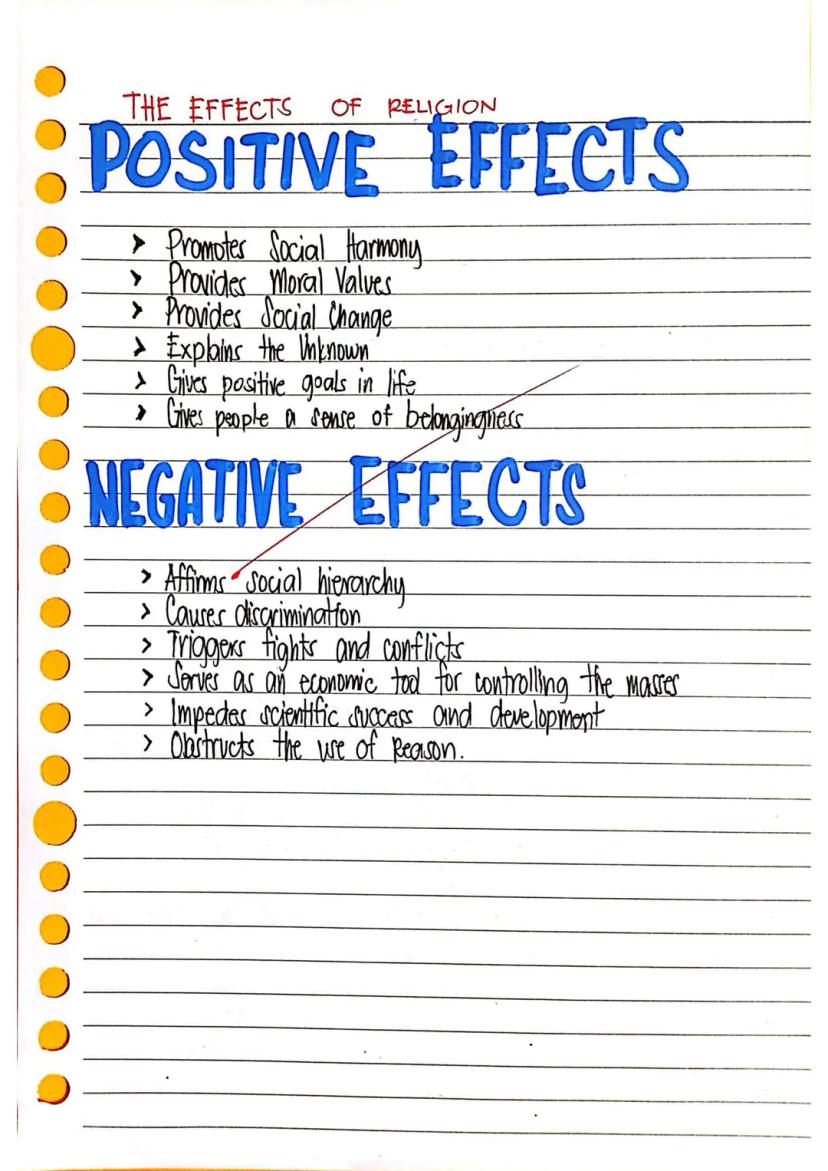
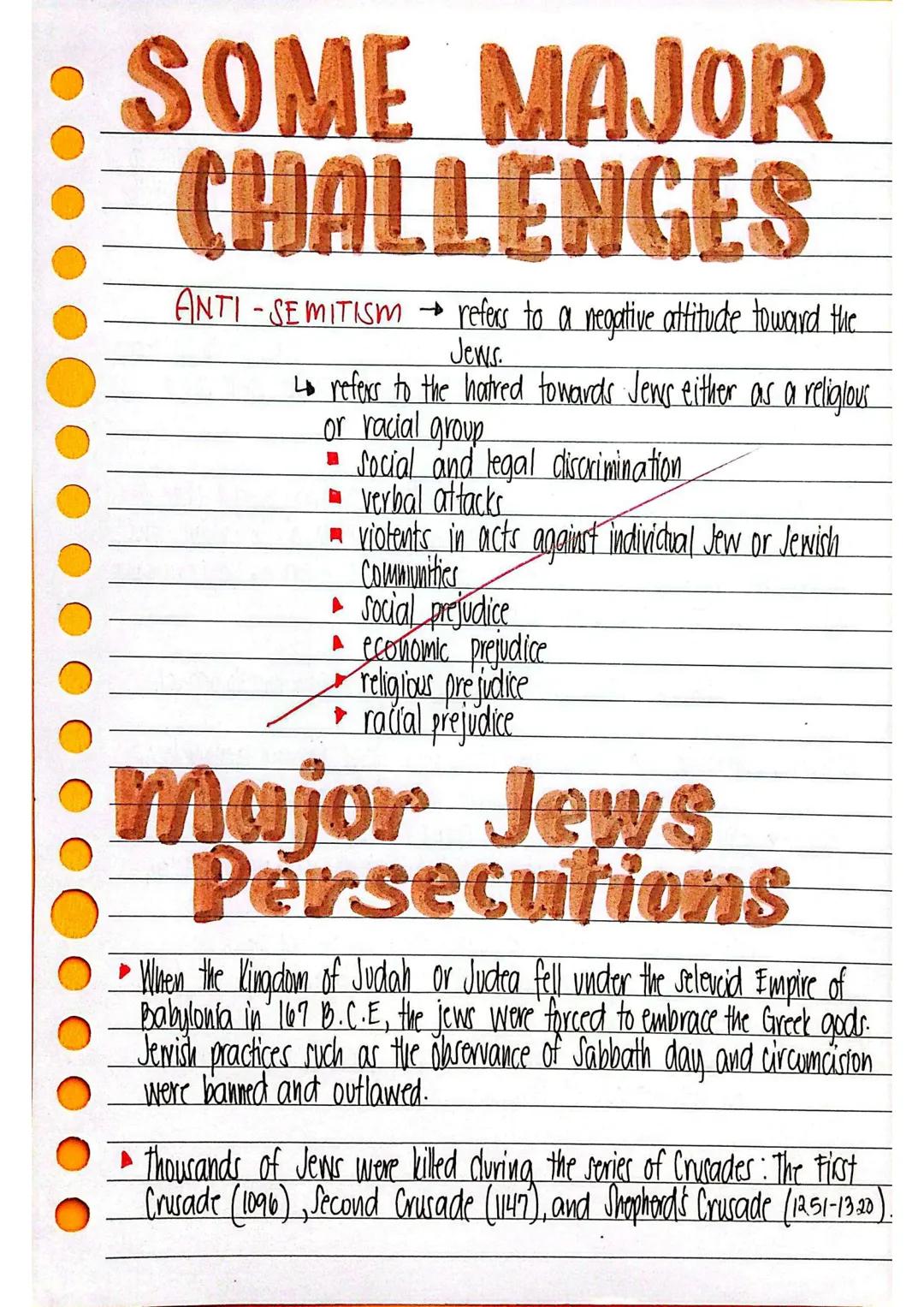
Religion isn't just about personal beliefs - it has real, measurable impacts on society that can be both incredibly positive and deeply problematic. Understanding these effects helps explain why religious conflicts make headlines and why faith remains such a powerful force in human civilization.
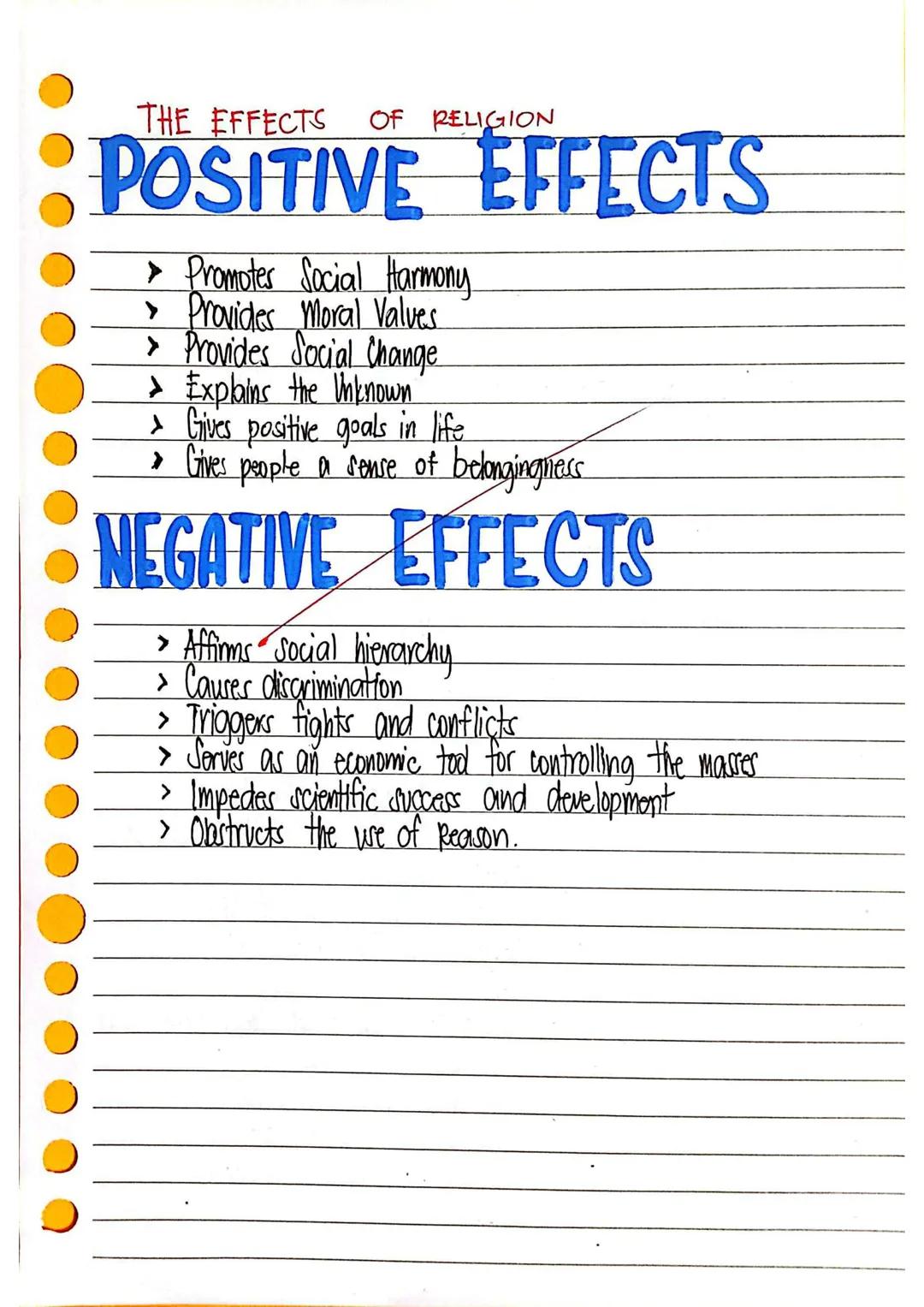
Positive effects include promoting social harmony by bringing communities together and providing moral values that guide ethical behavior. Religion often drives social change movements (think civil rights), explains mysteries that science can't yet answer, and gives people positive life goals plus a strong sense of belonging.
On the flip side, negative effects can be just as powerful. Religion sometimes affirms unfair social hierarchies, causes discrimination against certain groups, and triggers serious conflicts between different faiths. It can also be used as a tool to control masses economically, slow down scientific progress, and discourage critical thinking.
Critical Thinking: Most religions have both positive and negative impacts - the key is learning to analyze these effects objectively rather than dismissing or accepting everything blindly.
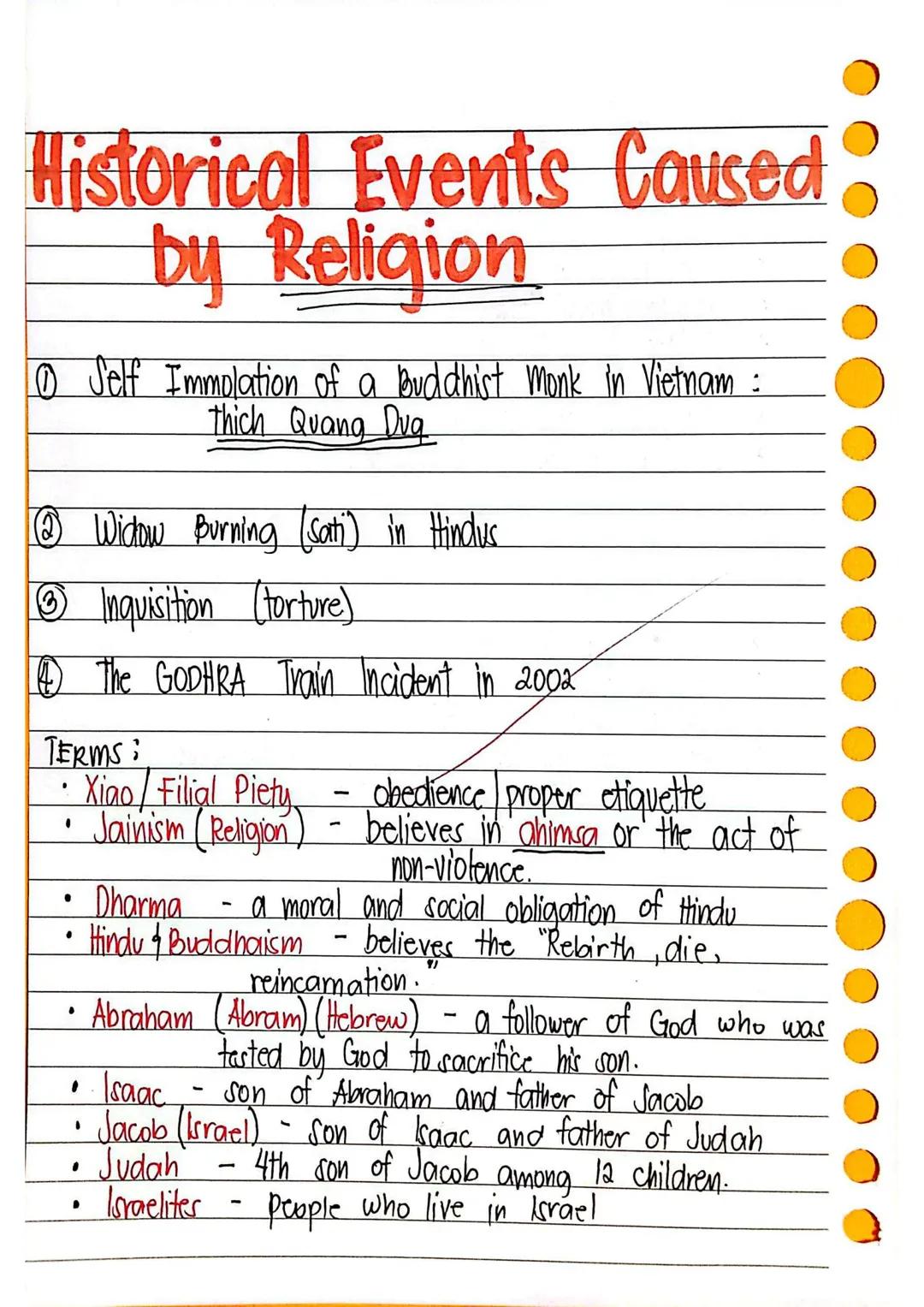
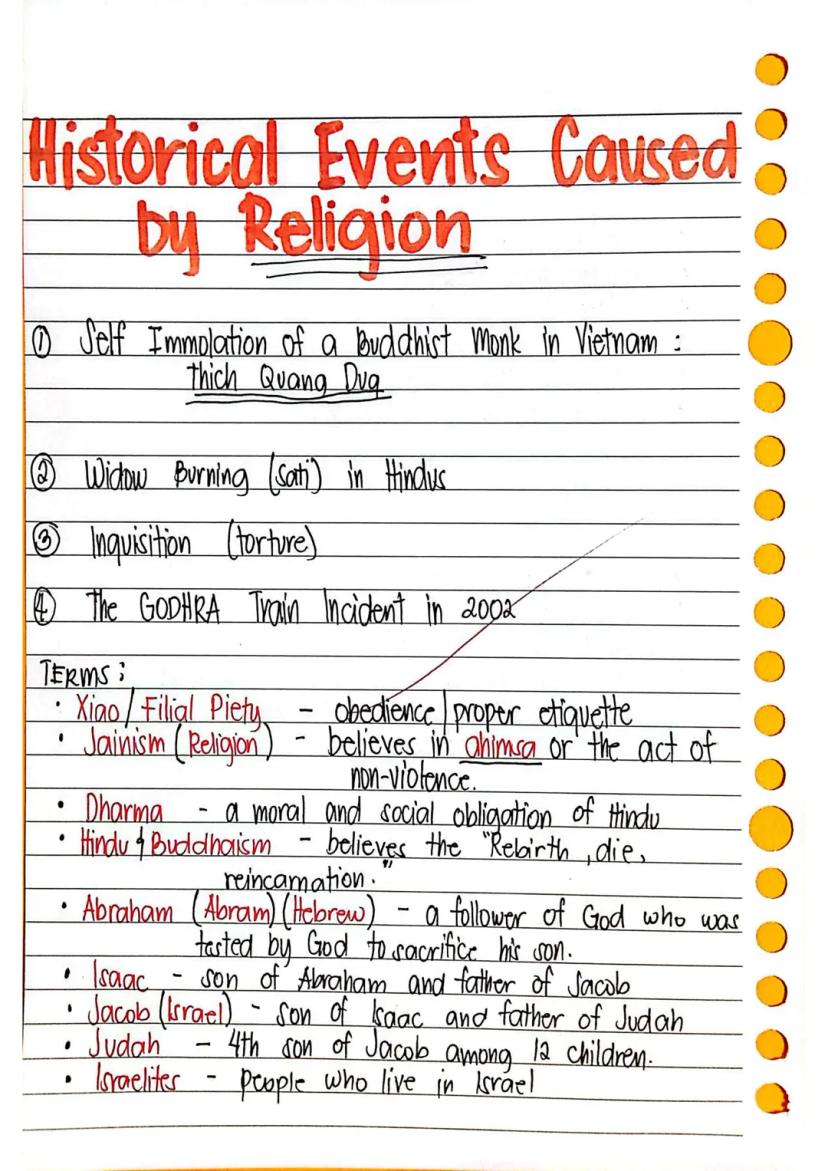
Religious beliefs have sparked some of history's most dramatic and tragic events. The self-immolation of Buddhist monk Thich Quang Duc in Vietnam, widow burning (sati) in Hindu traditions, various Inquisition tortures, and the Godhra Train Incident in 2002 all show how deeply religious convictions can drive human behavior - sometimes to extreme lengths.
Several important religious concepts will keep appearing in your studies. Xiao (filial piety) emphasizes obedience and proper etiquette in relationships. Jainism centers on ahimsa - the principle of non-violence toward all living beings. Dharma represents moral and social obligations in Hinduism.
The concept of rebirth and reincarnation appears in both Hinduism and Buddhism, while key biblical figures like Abraham (tested by God to sacrifice his son), Isaac (Abraham's son), Jacob (later called Israel), and Judah (one of Jacob's twelve sons) form the foundation of Jewish, Christian, and Islamic traditions.
Study Tip: These historical examples aren't just memorization - they show how religious beliefs translate into real-world actions and consequences.
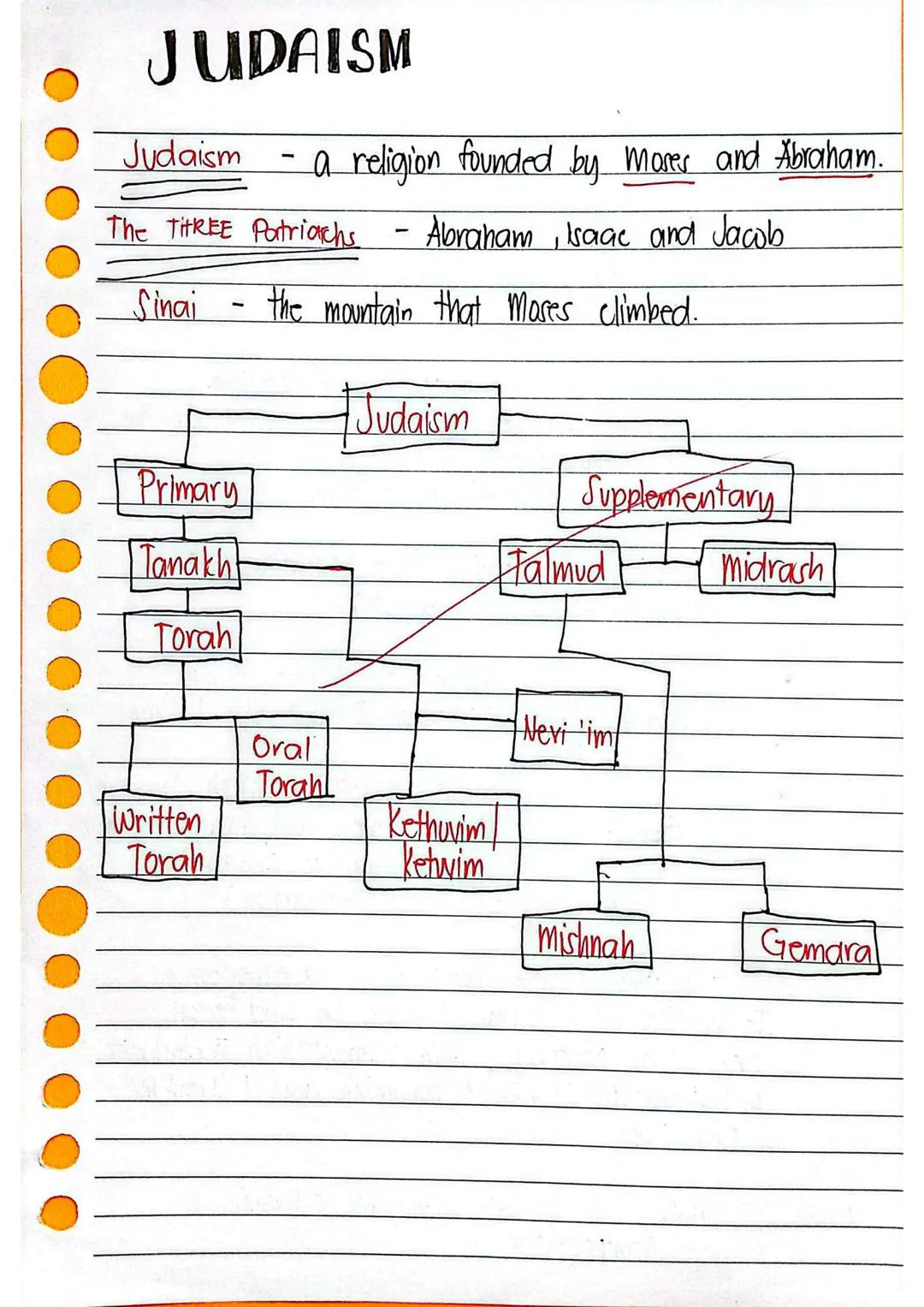
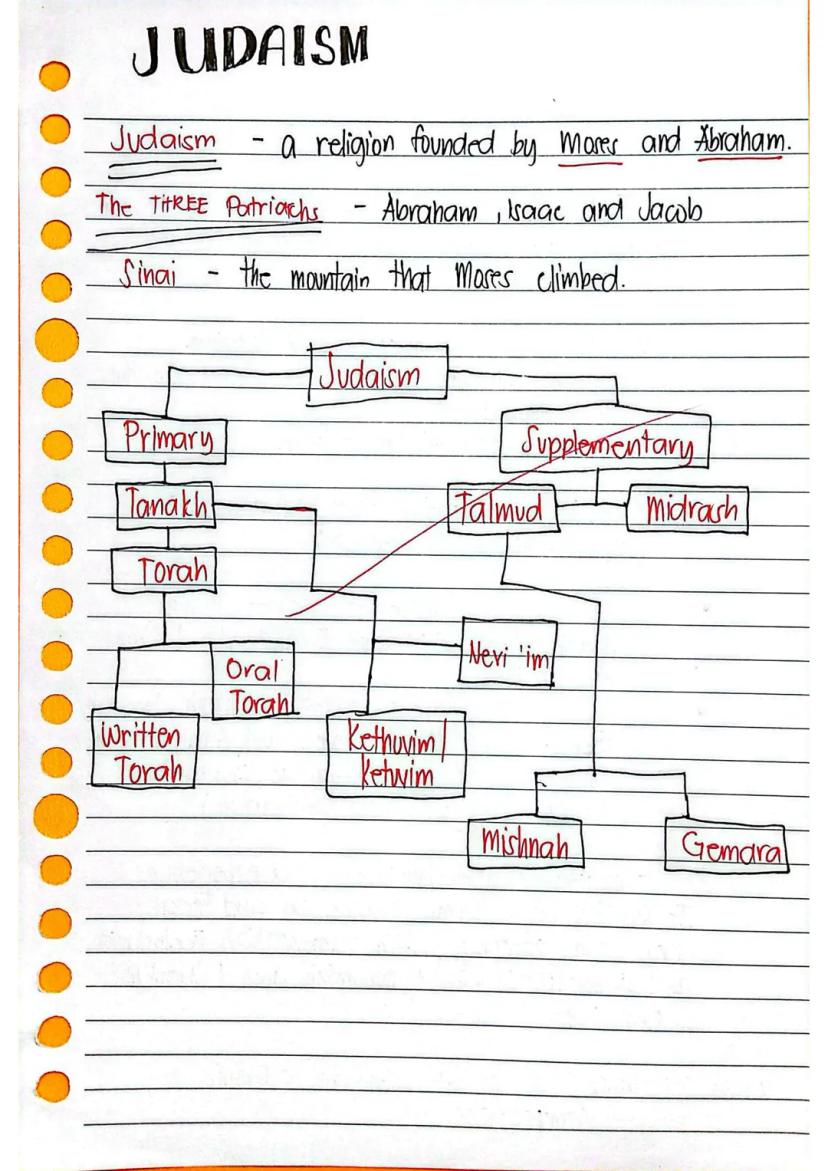
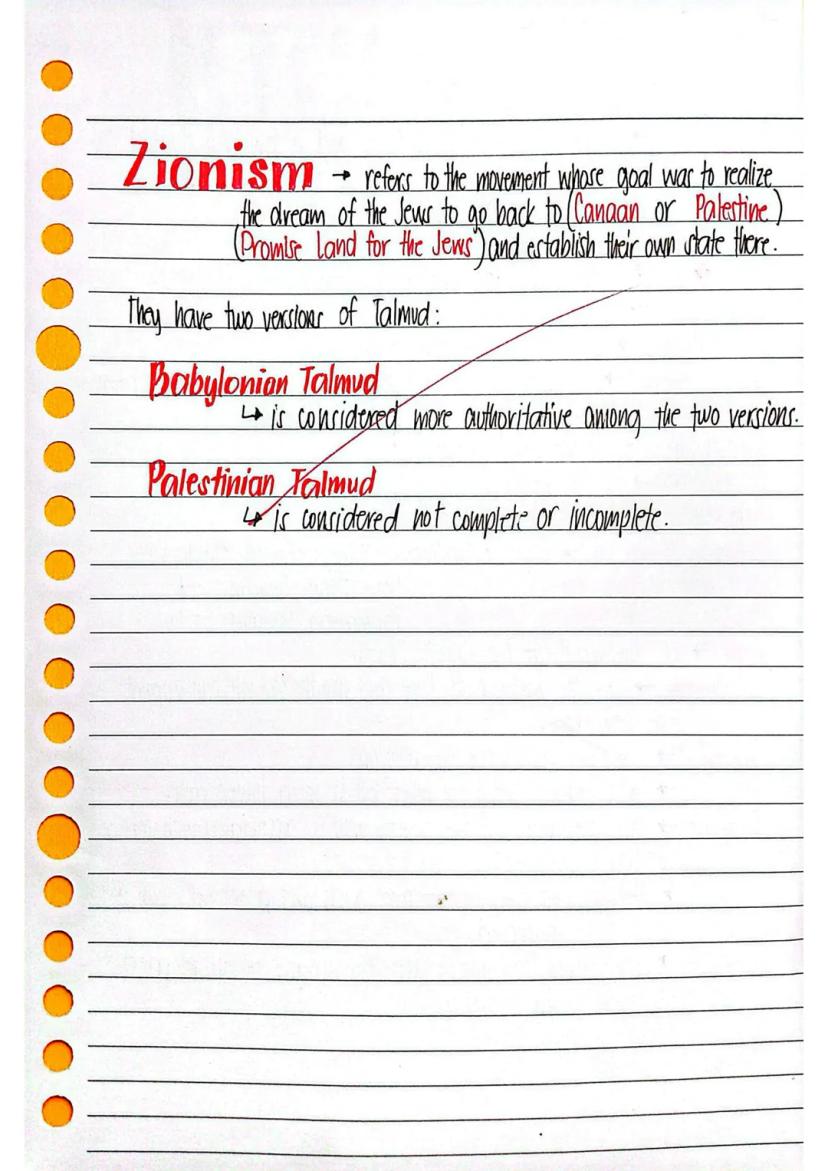
Judaism, founded by Moses and Abraham, traces its lineage through three patriarchs: Abraham, Isaac, and Jacob. This ancient faith centers around Mount Sinai, where Moses received divine revelation that would shape Jewish law and practice for millennia.
Jewish sacred texts follow a clear hierarchy. The primary texts include the Tanakh (Hebrew Bible), which contains the Torah (both written and oral versions). The written Torah includes 613 rules called Mitzvot plus the famous Ten Commandments, while the oral Torah represents verbal traditions passed down through generations.
Supplementary texts provide additional guidance and interpretation. The Talmud combines the Mishnah and Gemara for rabbinic interpretation, while Midrash explores deeper meanings. The Tanakh also includes Nevi'im (prophetic materials) and Kethuvim (wisdom literature like Psalms and Proverbs).
Memory Trick: Think of Torah as the constitution, Talmud as the legal commentary, and Midrash as the philosophical discussions that help interpret everything.
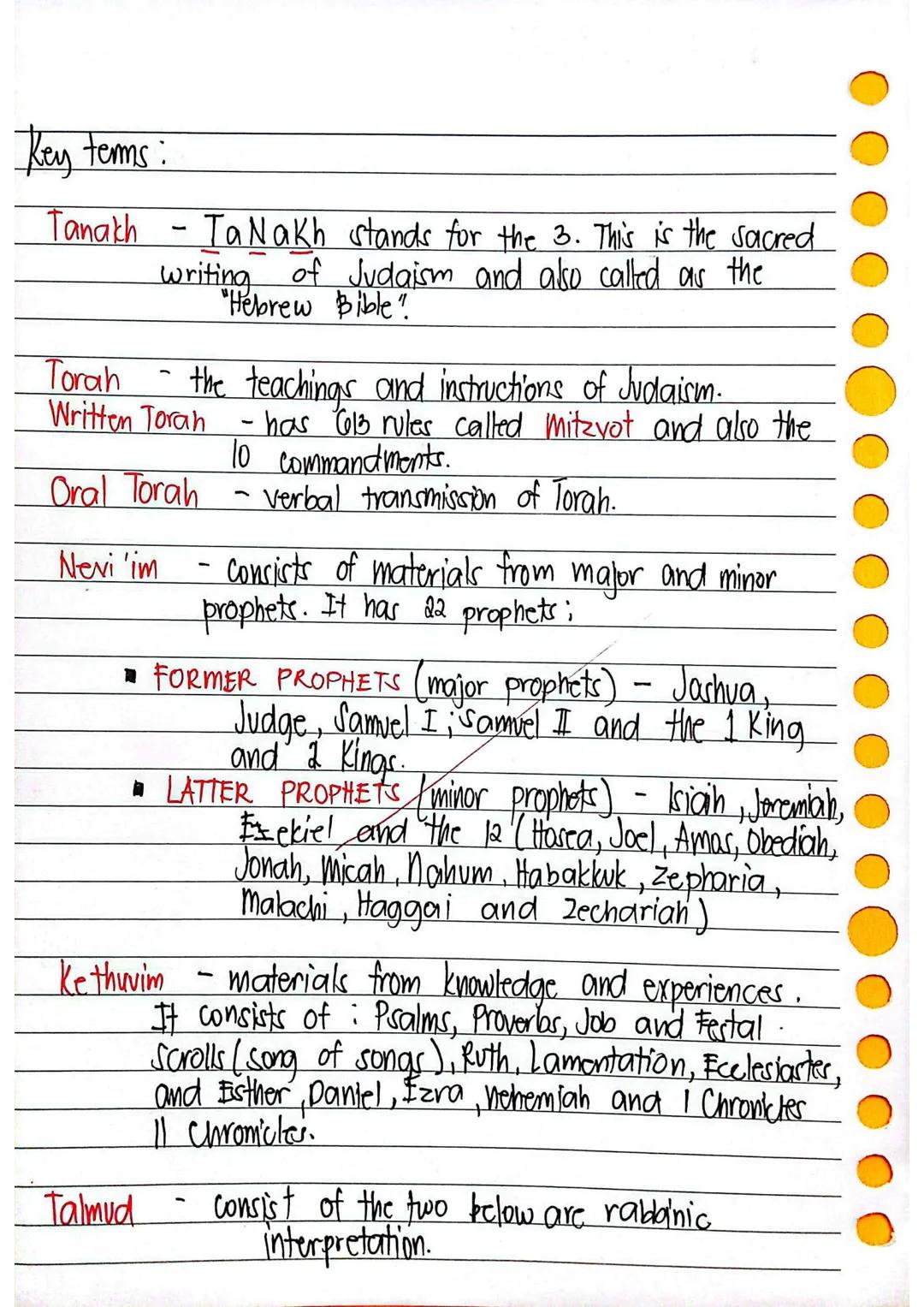
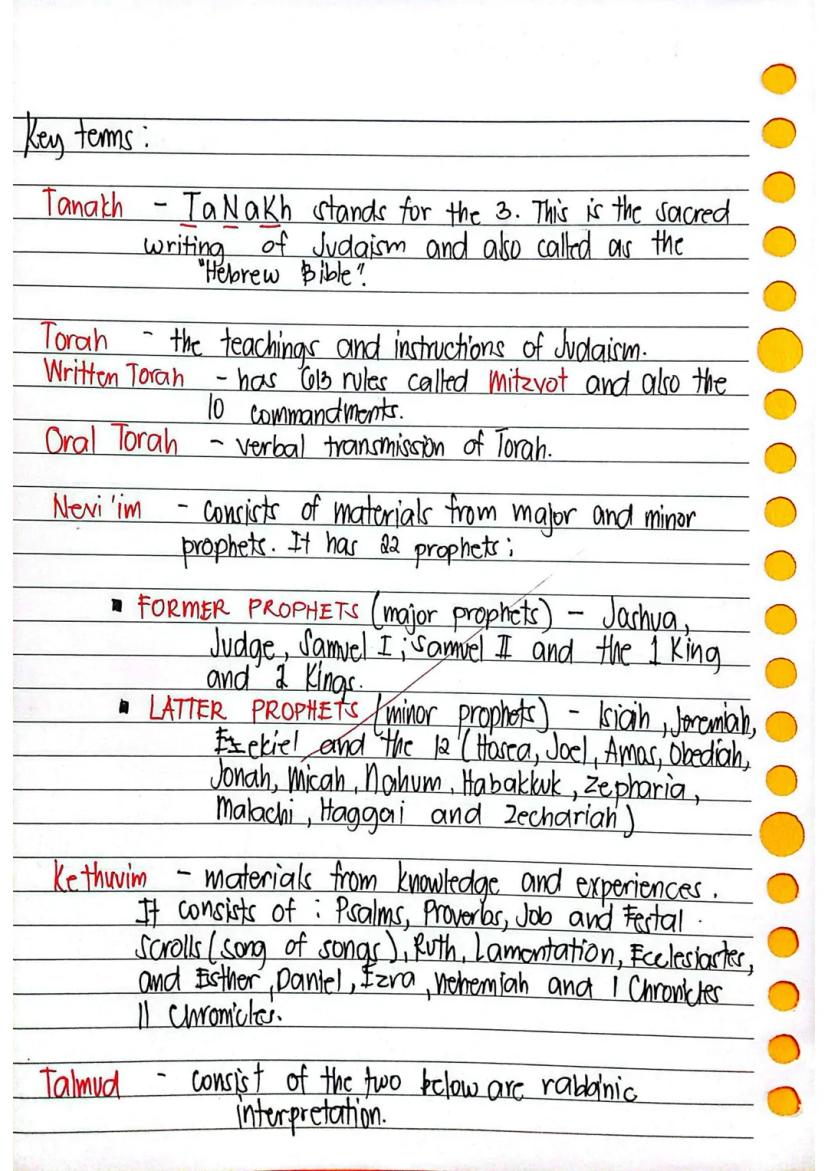
The Tanakh gets its name from three sections: Torah (teachings), Nevi'im (prophets), and Kethuvim (writings) - it's basically the Hebrew Bible. The Torah contains Judaism's core teachings and instructions, split between written rules (including 613 Mitzvot and the Ten Commandments) and oral traditions passed down verbally.
Nevi'im includes materials from 22 prophets, divided into former prophets (major ones like Joshua, Judges, Samuel, and Kings) and latter prophets (minor ones including Isaiah, Jeremiah, Ezekiel, and twelve others like Hosea, Joel, and Malachi). These prophetic books contain guidance, warnings, and predictions about Israel's future.
Kethuvim consists of wisdom literature and historical accounts including Psalms, Proverbs, Job, and the Festal Scrolls (Song of Songs, Ruth, Lamentations, Ecclesiastes, Esther), plus Daniel, Ezra, Nehemiah, and Chronicles. The Talmud provides rabbinic interpretation through Mishnah (oral Torah) and Gemara (legal commentaries).
Quick Reference: The five books of Moses (Genesis, Exodus, Leviticus, Numbers, Deuteronomy) form the Pentateuch - the historical foundation of Jewish people and beliefs.
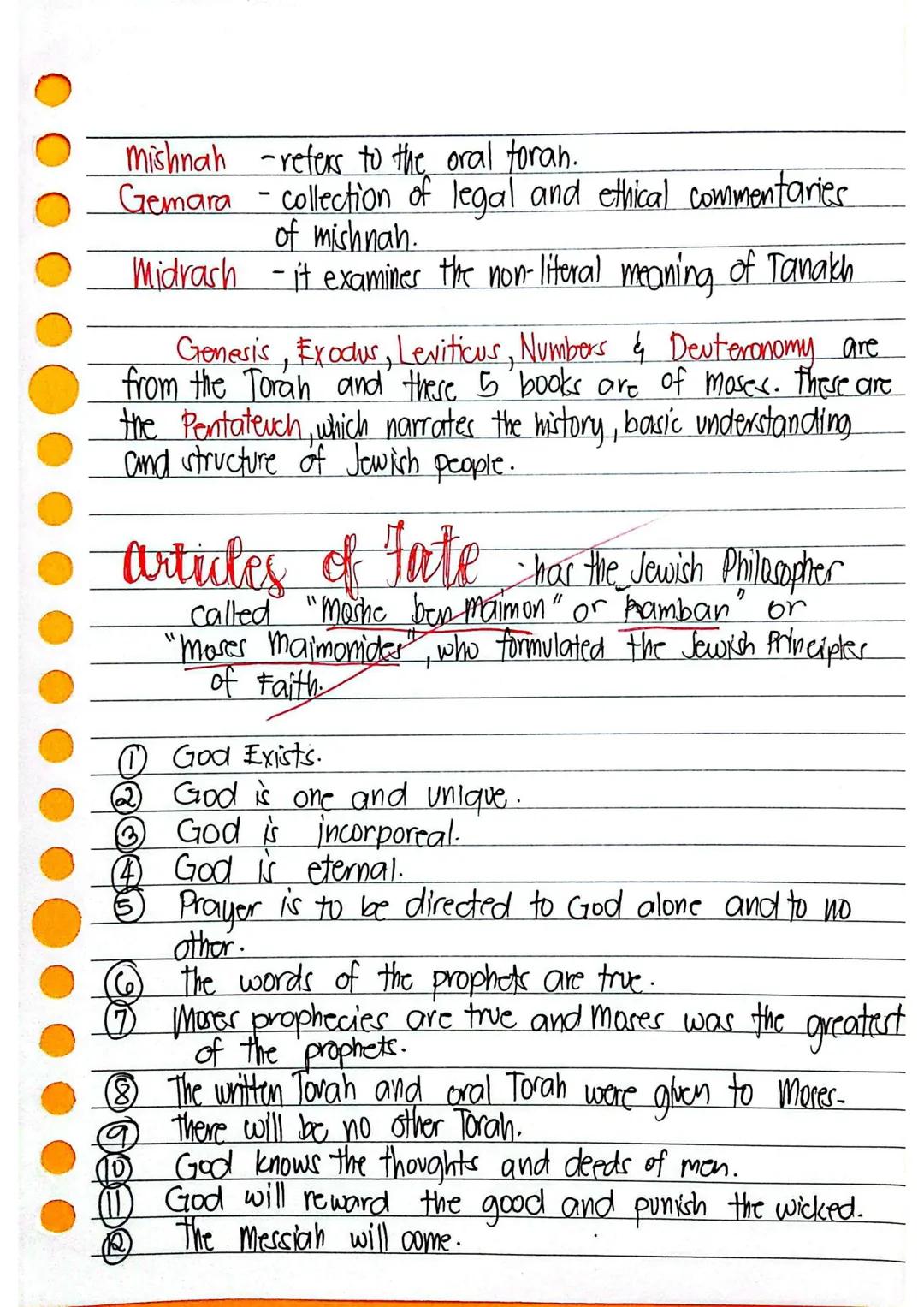
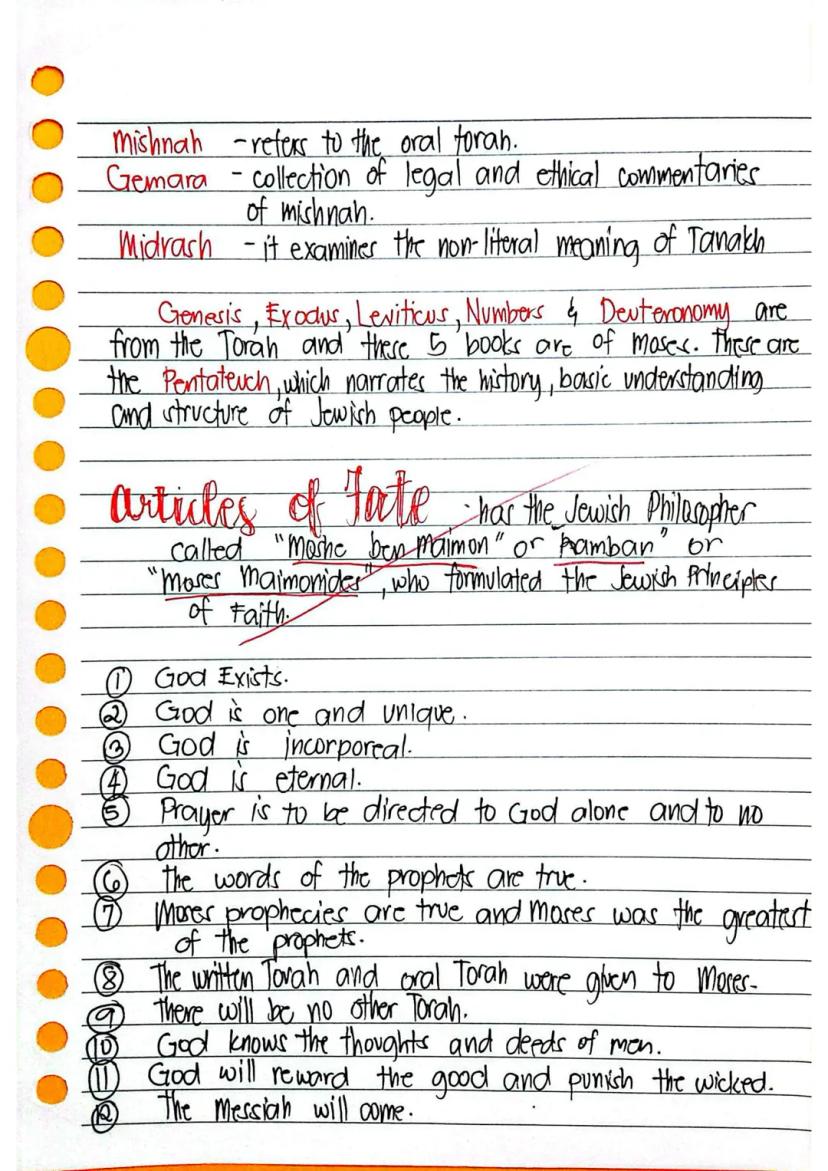
Jewish philosopher Moses Maimonides (also called Moshe ben Maimon or Rambam) created thirteen core principles that define Jewish faith. These articles of faith cover everything from God's existence and uniqueness to prophecy and resurrection.
The first five principles establish God's nature: God exists, is one and unique, has no physical form, is eternal, and deserves exclusive worship. The next four focus on prophecy: prophets speak truth, Moses was the greatest prophet, both written and oral Torah came through Moses, and no new Torah will come.
The final four principles deal with divine justice and the future: God knows all human thoughts and actions, rewards good and punishes evil, the Messiah will come, and the dead will be resurrected. These beliefs form the theological backbone of Jewish faith.
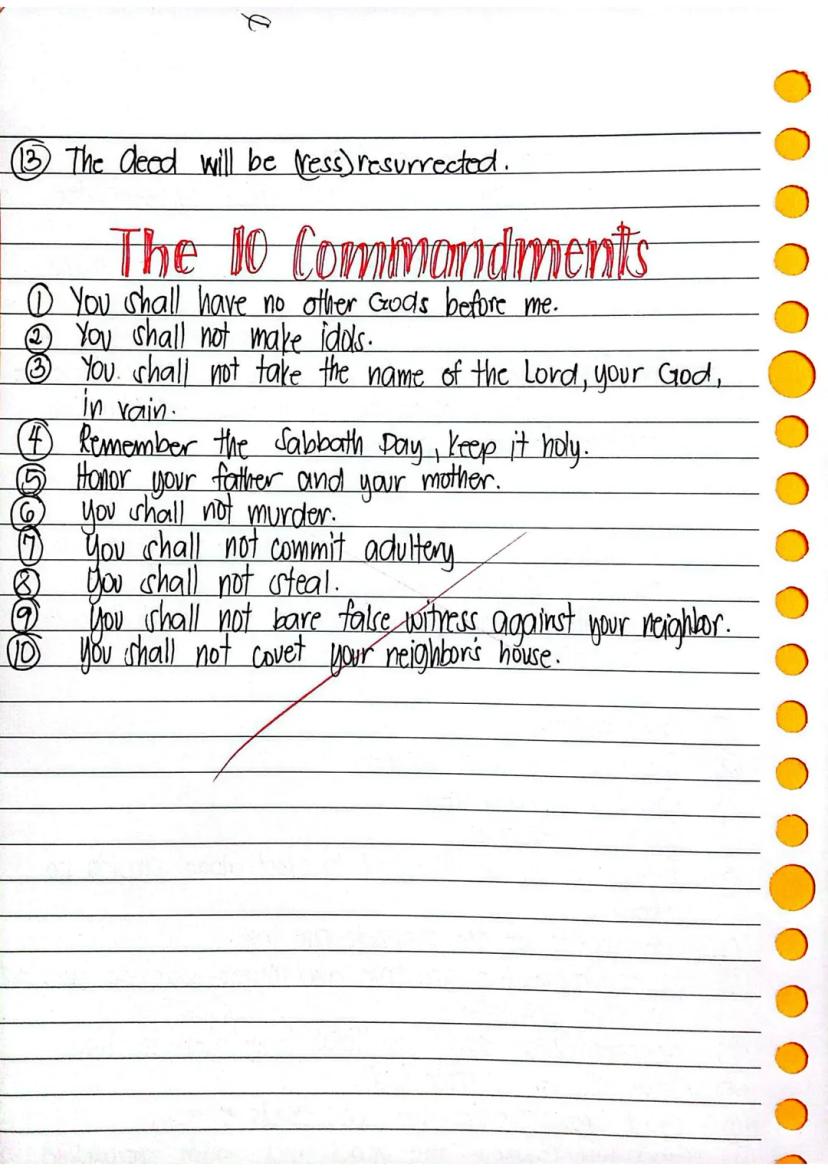
The Ten Commandments provide practical moral guidance: worship only God, avoid idols, don't misuse God's name, keep Sabbath holy, honor parents, don't murder, don't commit adultery, don't steal, don't lie about others, and don't covet what others have.
Test Prep: Maimonides' thirteen principles and the Ten Commandments are frequently tested - they represent core Jewish beliefs and ethics respectively.
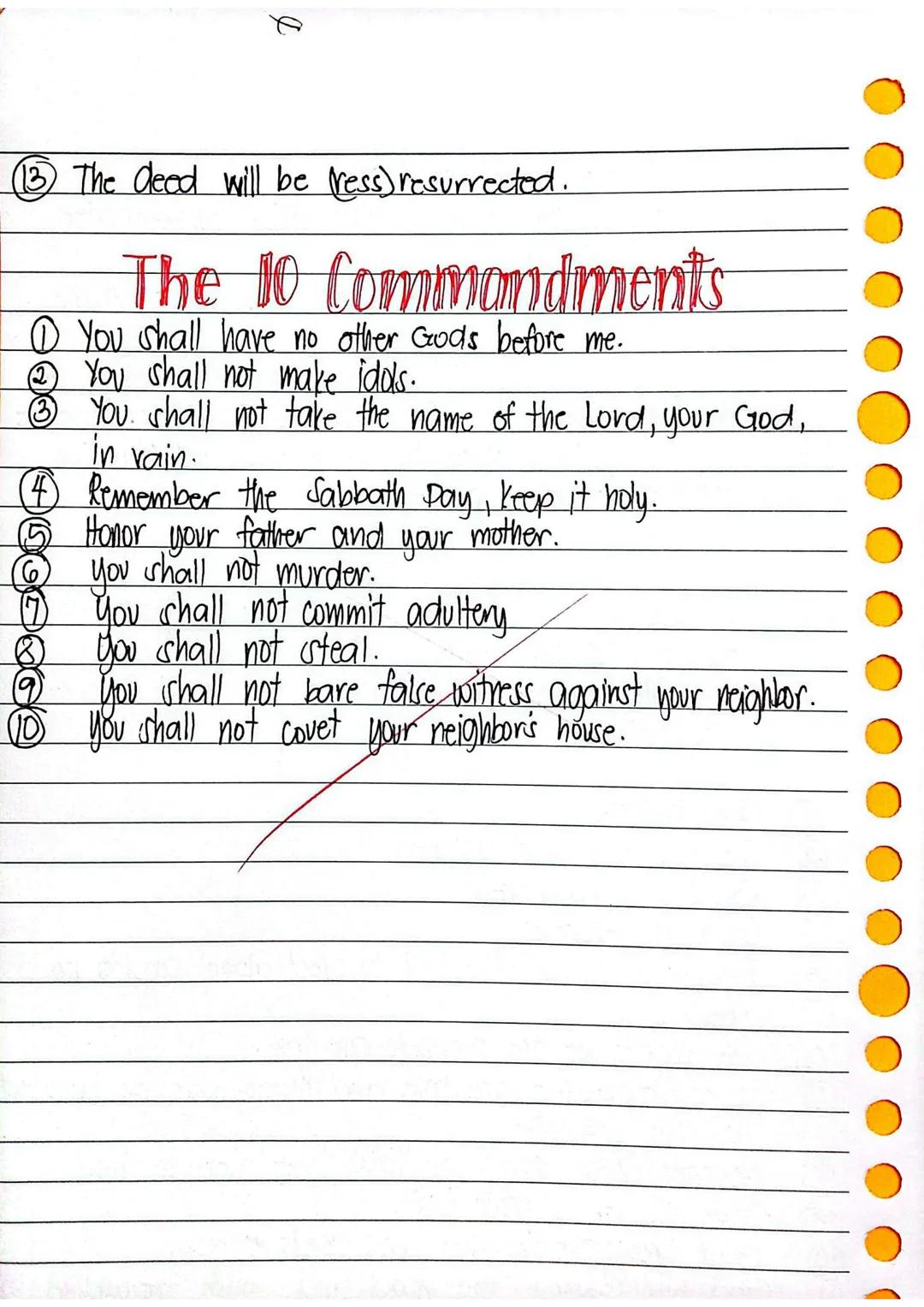
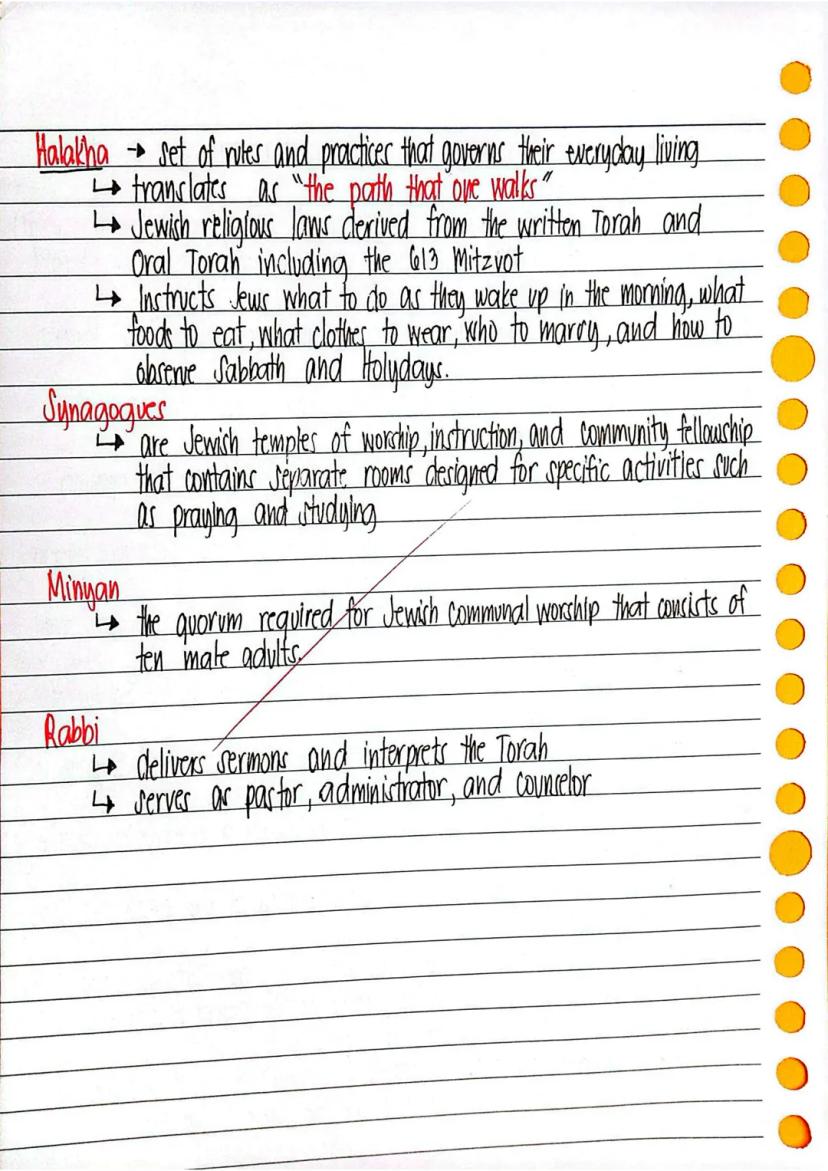
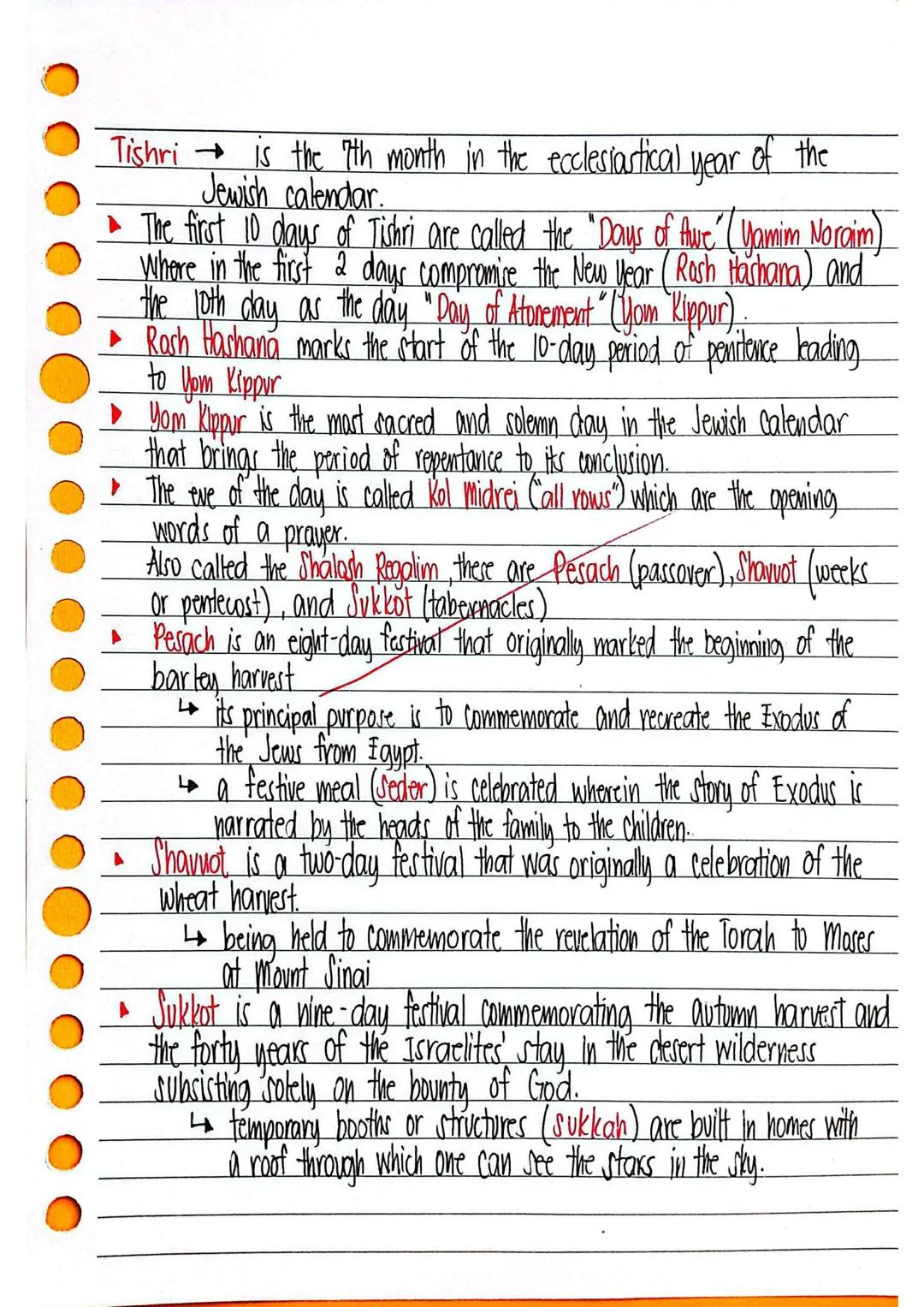
Halakha literally means "the path that one walks" - it's the comprehensive set of rules governing every aspect of Jewish daily life. These Jewish religious laws come from both written and oral Torah, including all 613 Mitzvot, and they're incredibly detailed about practical matters.
Halakha tells observant Jews what to do from the moment they wake up: what foods to eat (kosher laws), what clothes to wear, who they can marry, and how to properly observe Sabbath and holy days. It's not just about big spiritual questions - it covers the mundane details of daily existence.
Synagogues serve as Jewish temples where people worship, learn, and build community together. They contain separate rooms designed for specific activities like praying and studying. A minyan (quorum of ten male adults) is required for communal worship, while a rabbi delivers sermons, interprets Torah, and serves as pastor, administrator, and counselor.
Cultural Note: Halakha shows how Judaism integrates faith into every aspect of life rather than keeping religion separate from daily activities.
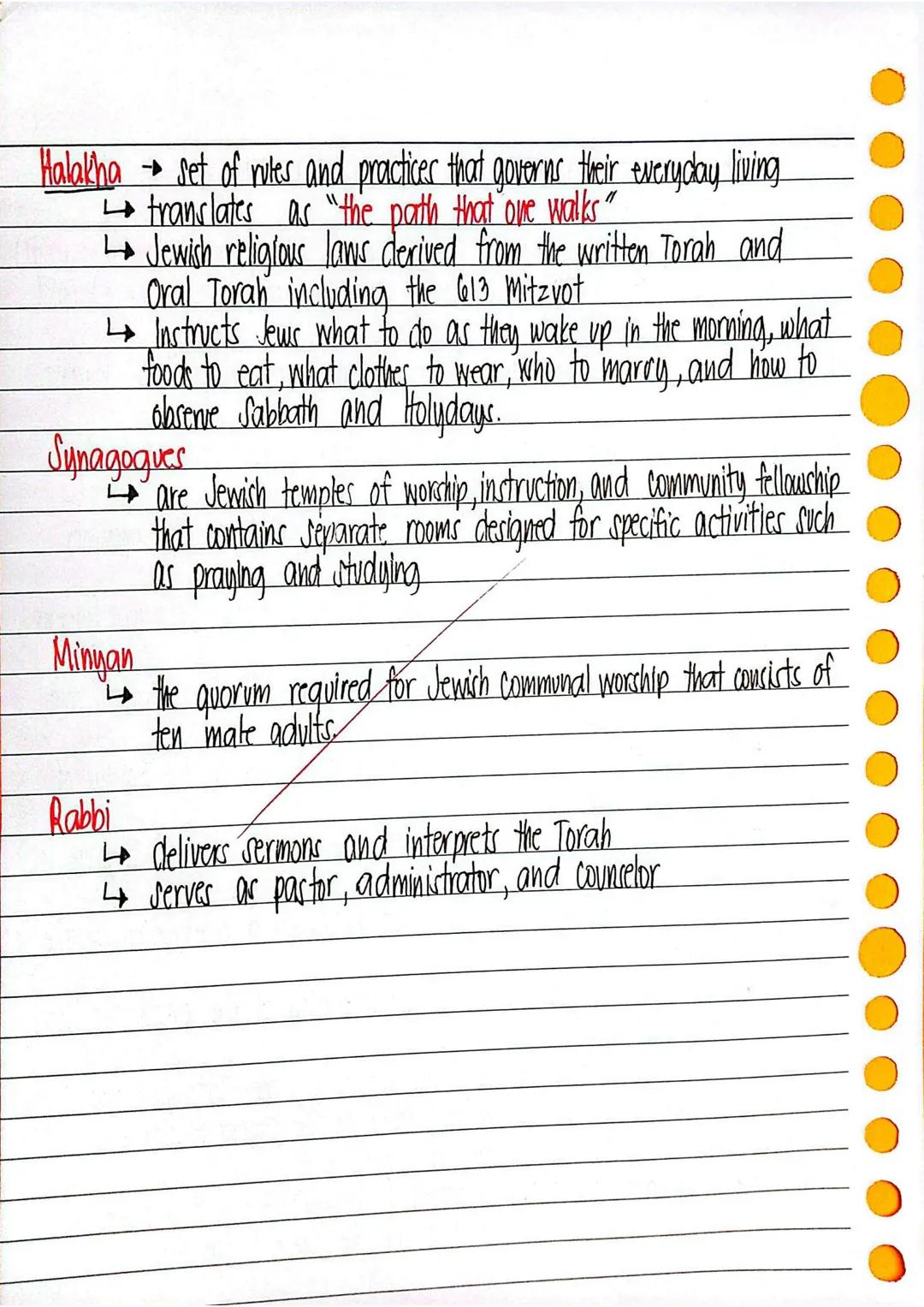
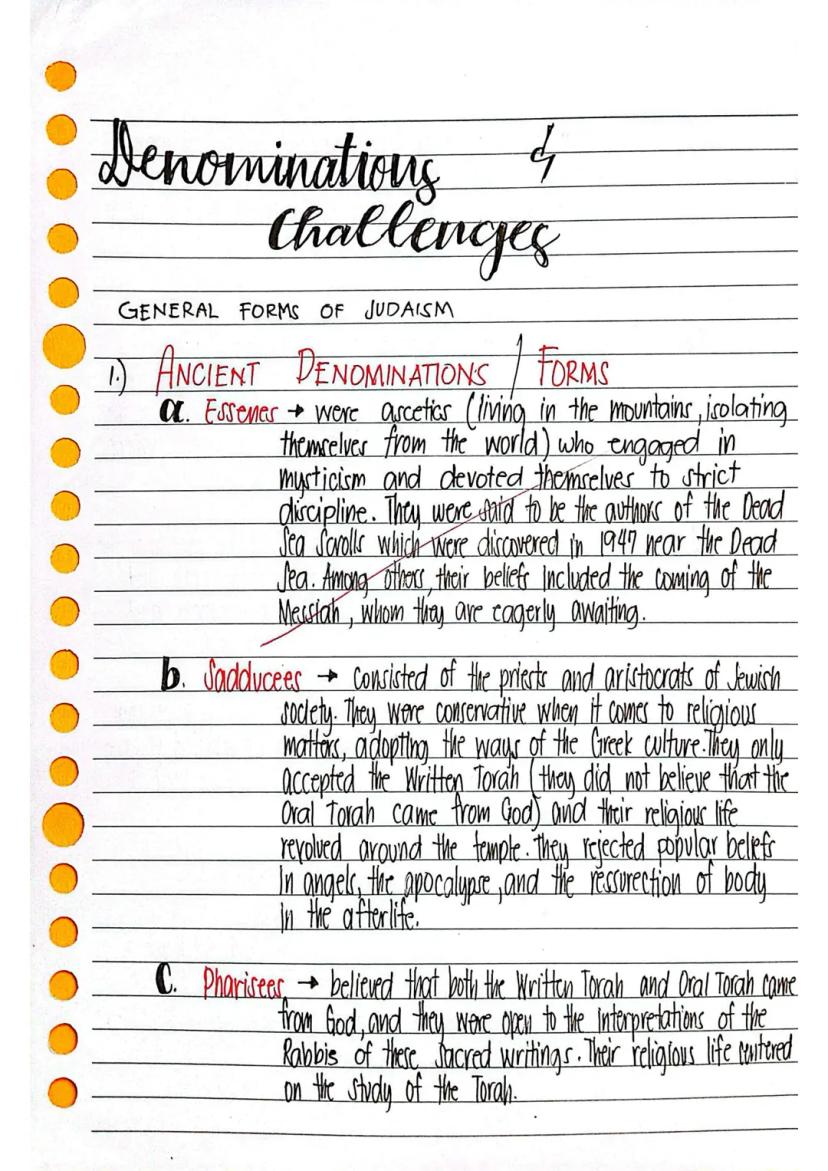
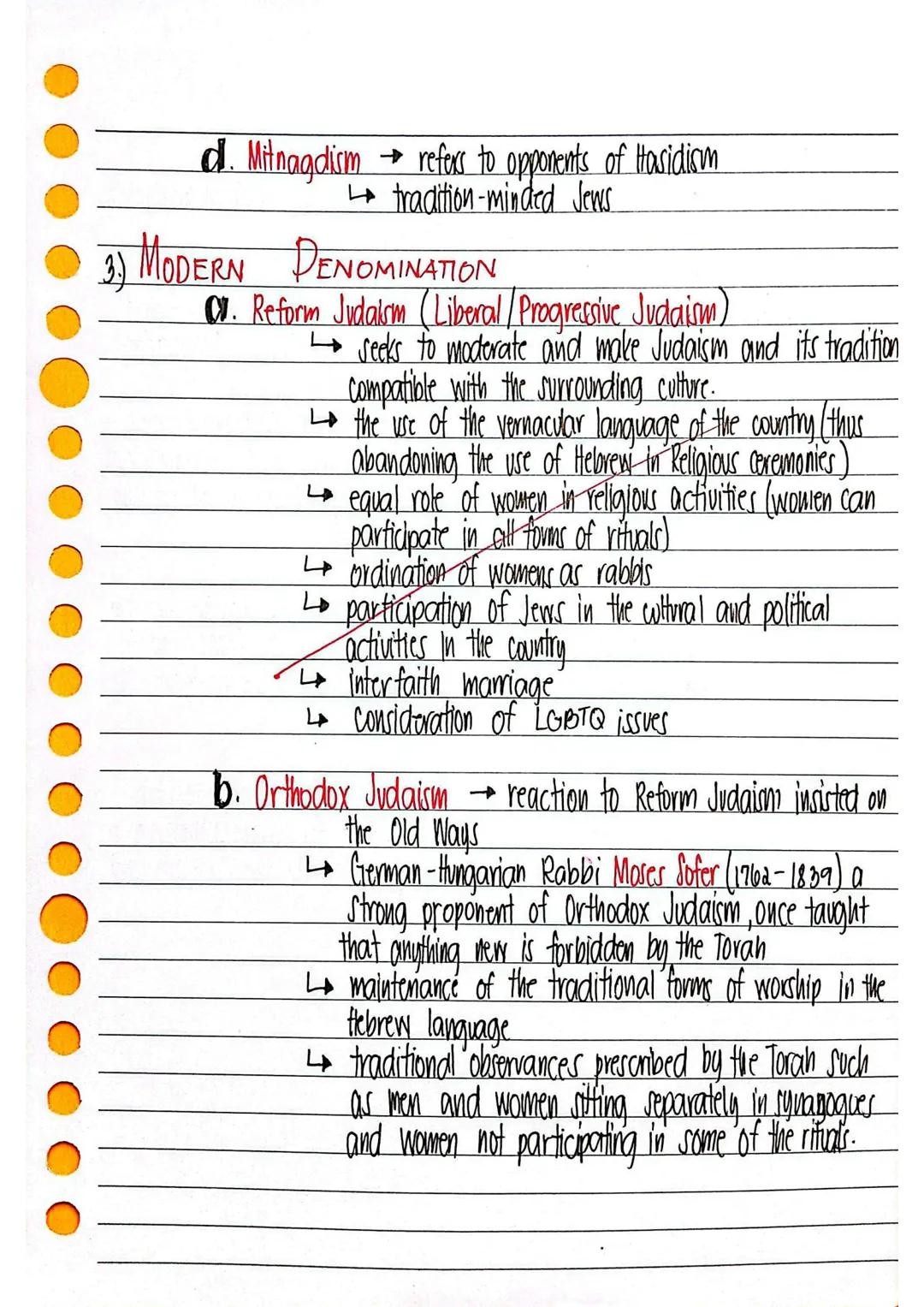
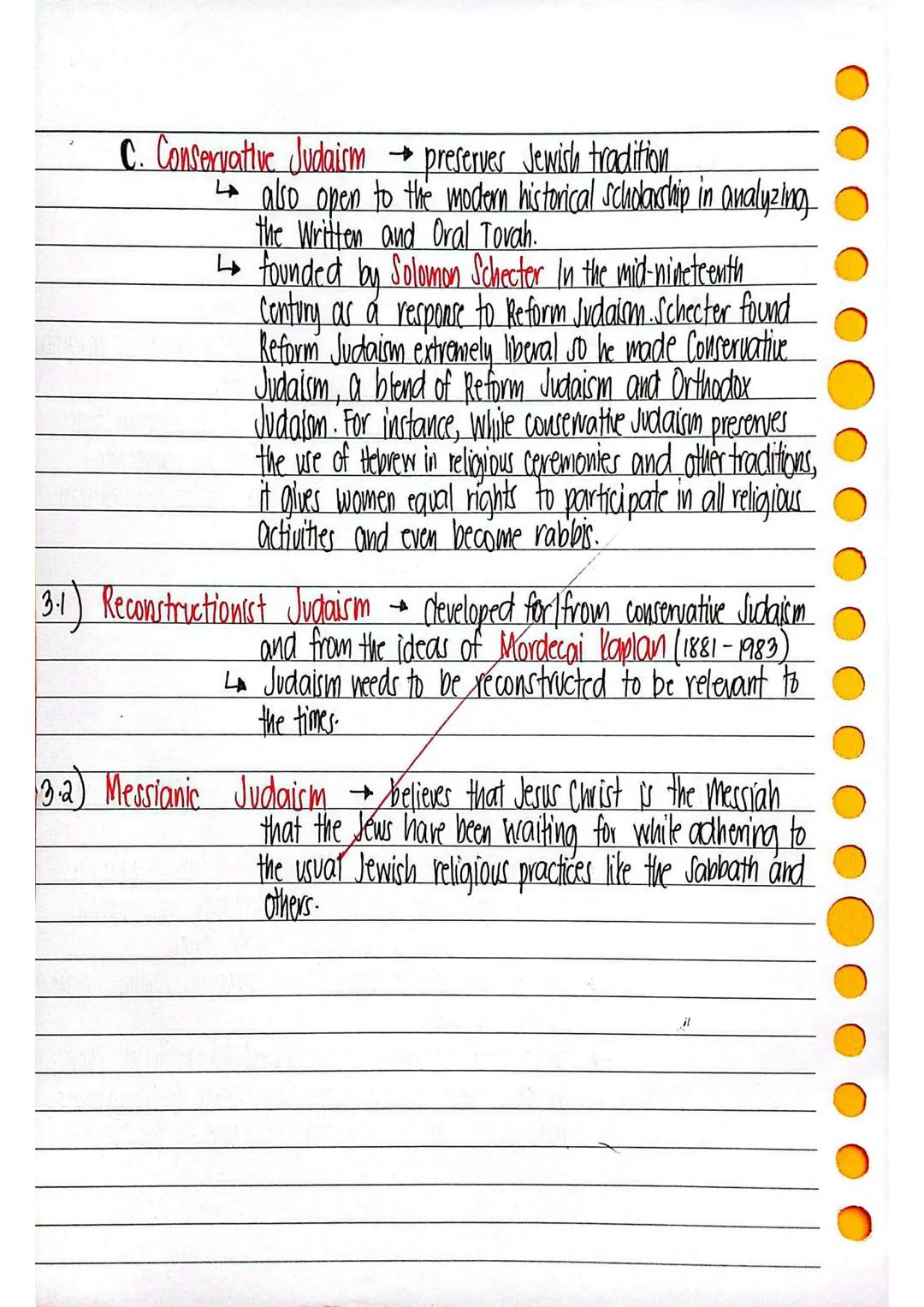
Judaism wasn't always unified - ancient times saw three major groups with very different approaches to faith and practice. Understanding these ancient denominations helps explain how Jewish thought developed and why different interpretations emerged.
Essenes were basically religious hermits who lived in mountains, isolating themselves from society to focus on mysticism and strict spiritual discipline. They're famous for possibly writing the Dead Sea Scrolls discovered in 1947, and they eagerly awaited the coming Messiah while living ascetic lifestyles.
Sadducees represented the wealthy, conservative establishment - priests and aristocrats who adopted Greek cultural ways. They only accepted the written Torah (rejecting oral traditions) and centered their religious life around temple worship. Notably, they rejected popular beliefs about angels, the apocalypse, and bodily resurrection.
Pharisees took a more flexible approach, accepting both written and oral Torah as divine and welcoming rabbinical interpretations of sacred writings. Their religious life focused on Torah study rather than just temple rituals, making them more accessible to ordinary people.
Historical Impact: These ancient divisions set the stage for later Jewish denominations and influenced how different groups interpret religious authority and practice today.
Ang aming AI Companion ay isang AI tool na nakatuon sa mga estudyante na nag-aalok ng higit pa sa mga sagot lang. Binuo mula sa milyong Knowunity resources, nagbibigay ito ng may-kaugnayang impormasyon, personalized na study plans, quizzes, at content direkta sa chat, na umaangkop sa iyong sariling learning journey.
Maaari mong i-download ang app mula sa Google Play Store at Apple App Store.
Tama 'yan! Mag-enjoy sa libreng access sa mga study content, makipag-connect sa kapwa mga estudyante, at kumuha ng instant na tulong – lahat nasa iyong daliri lang.
App Store
Google Play
Napakadaling gamitin at maganda ang disenyo ng app. Nahanap ko lahat ng hinahanap ko hanggang ngayon at natuto ako ng marami mula sa mga presentasyon! Tiyak na gagamitin ko ang app para sa isang takdang-aralin sa klase! At siyempre, nakakatulong din ito bilang inspirasyon.
Stefan S
gumagamit ng iOS
Sobrang ganda talaga ng app na ito. Maraming mga study notes at tulong [...]. Ang problemang subject ko ay Pranses, halimbawa, at ang app ay may maraming options para tumulong. Salamat sa app na ito, bumuti ang Pranses ko. Irerekumenda ko ito sa lahat.
Samantha Klich
Android user
Wow, talagang namangha ako. Sinubukan ko lang ang app dahil nakita ko itong ina-advertise nang maraming beses at sobrang nagulat ako. Ang app na ito ang TULONG na gusto mo para sa paaralan at higit sa lahat, nag-aalok ito ng maraming bagay, tulad ng workouts at fact sheets, na SOBRANG nakatulong sa akin.
Anna
iOS user
Pinakamagandang app sa mundo! walang masabi dahil sobrang ganda nito
Thomas R
iOS user
Napakaganda talaga. Nakakapag-review ako ng 10x mas mabuti, itong app ay mabilis na 10/10. Lubos kong inirerekomenda ito sa lahat. Pwede akong manood at maghanap ng notes. Pwede kong i-save ang mga ito sa subject folder. Pwede kong i-review anumang oras kapag bumalik ako. Kung hindi mo pa nasubukan ang app na ito, marami kang nawawala.
Basil
Android user
Ang app na ito ay nagpapalakas ng loob ko sa paghahanda sa exams, hindi lang dahil sa pagpapataas ng aking kumpiyansa sa sarili sa pamamagitan ng mga feature na nagpapahintulot sa iyo na makipag-connect sa iba at mabawasan ang pakiramdam na nag-iisa, kundi pati na rin sa paraan na nakatuon ang app sa pagpapagaan ng iyong pakiramdam. Madali itong i-navigate, masaya gamitin, at nakakatulong sa sinumang nahihirapan sa kahit anong paraan.
David K
iOS user
Sobrang galing ng app! Ilalagay ko lang ang paksa sa search bar at makakakuha na ako ng sagot kaagad. Hindi ko kailangang manood ng 10 YouTube videos para maintindihan ang isang bagay, kaya nakakatipid ako ng oras. Lubos na inirerekomenda!
Sudenaz Ocak
Android user
Sa paaralan, napakahina ko sa math pero salamat sa app, mas mahusay na ako ngayon. Lubos akong nagpapasalamat na ginawa niyo ang app na ito.
Greenlight Bonnie
Android user
napakareliable na app para tumulong at palawakin ang iyong mga ideya sa Math, English at iba pang mga related na paksa sa iyong mga gawain. gamitin mo ang app na ito kung nahihirapan ka sa mga area, susi ito para diyan. sana nag-review na ako dati. at libre rin ito kaya huwag mag-alala tungkol diyan.
Rohan U
Android user
Alam kong maraming apps gumagamit ng fake accounts para mapataas ang kanilang reviews pero ang app na ito ay deserve lahat ng papuri. Dati nakakakuha ako ng 4 sa aking English exams at ngayon nakakuha ako ng grade 7. Hindi ko pa alam ang app na ito tatlong araw bago ang exam at nakatulong ito ng SOBRA. Pakisuyong maniwala sa akin at gamitin ito dahil sigurado akong makikita mo rin ang mga pagbabago.
Xander S
iOS user
ANG MGA quiz AT flashcard SOBRANG HELPFUL AT I LOVE TALAGA SI Knowunity AI. PARANG CHATGPT LANG PERO MAS MATALINO!! NAKATULONG DIN SA MGA MASCARA PROBLEMS KO!! PATI NA RIN SA MGA TUNAY KONG subject! SYEMPRE 😍😁😲🤑💗✨🎀😮
Elisha
iOS user
Grabe talaga ang app na to. Sobrang nakakaboring sakin ang pagreview pero ginagawa ng app na to na sobrang dali mag-organize ng lahat at pwede mong tanungin ang libreng ai para subukin ang sarili mo kaya sobrang buti at madali mong ma-upload ang sarili mong mga bagay. highly recommend bilang isang taong nagte-take ng mocks ngayon
Paul T
iOS user
Napakadaling gamitin at maganda ang disenyo ng app. Nahanap ko lahat ng hinahanap ko hanggang ngayon at natuto ako ng marami mula sa mga presentasyon! Tiyak na gagamitin ko ang app para sa isang takdang-aralin sa klase! At siyempre, nakakatulong din ito bilang inspirasyon.
Stefan S
gumagamit ng iOS
Sobrang ganda talaga ng app na ito. Maraming mga study notes at tulong [...]. Ang problemang subject ko ay Pranses, halimbawa, at ang app ay may maraming options para tumulong. Salamat sa app na ito, bumuti ang Pranses ko. Irerekumenda ko ito sa lahat.
Samantha Klich
Android user
Wow, talagang namangha ako. Sinubukan ko lang ang app dahil nakita ko itong ina-advertise nang maraming beses at sobrang nagulat ako. Ang app na ito ang TULONG na gusto mo para sa paaralan at higit sa lahat, nag-aalok ito ng maraming bagay, tulad ng workouts at fact sheets, na SOBRANG nakatulong sa akin.
Anna
iOS user
Pinakamagandang app sa mundo! walang masabi dahil sobrang ganda nito
Thomas R
iOS user
Napakaganda talaga. Nakakapag-review ako ng 10x mas mabuti, itong app ay mabilis na 10/10. Lubos kong inirerekomenda ito sa lahat. Pwede akong manood at maghanap ng notes. Pwede kong i-save ang mga ito sa subject folder. Pwede kong i-review anumang oras kapag bumalik ako. Kung hindi mo pa nasubukan ang app na ito, marami kang nawawala.
Basil
Android user
Ang app na ito ay nagpapalakas ng loob ko sa paghahanda sa exams, hindi lang dahil sa pagpapataas ng aking kumpiyansa sa sarili sa pamamagitan ng mga feature na nagpapahintulot sa iyo na makipag-connect sa iba at mabawasan ang pakiramdam na nag-iisa, kundi pati na rin sa paraan na nakatuon ang app sa pagpapagaan ng iyong pakiramdam. Madali itong i-navigate, masaya gamitin, at nakakatulong sa sinumang nahihirapan sa kahit anong paraan.
David K
iOS user
Sobrang galing ng app! Ilalagay ko lang ang paksa sa search bar at makakakuha na ako ng sagot kaagad. Hindi ko kailangang manood ng 10 YouTube videos para maintindihan ang isang bagay, kaya nakakatipid ako ng oras. Lubos na inirerekomenda!
Sudenaz Ocak
Android user
Sa paaralan, napakahina ko sa math pero salamat sa app, mas mahusay na ako ngayon. Lubos akong nagpapasalamat na ginawa niyo ang app na ito.
Greenlight Bonnie
Android user
napakareliable na app para tumulong at palawakin ang iyong mga ideya sa Math, English at iba pang mga related na paksa sa iyong mga gawain. gamitin mo ang app na ito kung nahihirapan ka sa mga area, susi ito para diyan. sana nag-review na ako dati. at libre rin ito kaya huwag mag-alala tungkol diyan.
Rohan U
Android user
Alam kong maraming apps gumagamit ng fake accounts para mapataas ang kanilang reviews pero ang app na ito ay deserve lahat ng papuri. Dati nakakakuha ako ng 4 sa aking English exams at ngayon nakakuha ako ng grade 7. Hindi ko pa alam ang app na ito tatlong araw bago ang exam at nakatulong ito ng SOBRA. Pakisuyong maniwala sa akin at gamitin ito dahil sigurado akong makikita mo rin ang mga pagbabago.
Xander S
iOS user
ANG MGA quiz AT flashcard SOBRANG HELPFUL AT I LOVE TALAGA SI Knowunity AI. PARANG CHATGPT LANG PERO MAS MATALINO!! NAKATULONG DIN SA MGA MASCARA PROBLEMS KO!! PATI NA RIN SA MGA TUNAY KONG subject! SYEMPRE 😍😁😲🤑💗✨🎀😮
Elisha
iOS user
Grabe talaga ang app na to. Sobrang nakakaboring sakin ang pagreview pero ginagawa ng app na to na sobrang dali mag-organize ng lahat at pwede mong tanungin ang libreng ai para subukin ang sarili mo kaya sobrang buti at madali mong ma-upload ang sarili mong mga bagay. highly recommend bilang isang taong nagte-take ng mocks ngayon
Paul T
iOS user
maye cee
@chili_n_c
Ever wondered how different beliefs shape the way people see the world? World religion and belief systems explores how various faiths and philosophies influence billions of people's daily lives, decisions, and understanding of existence.
Access sa lahat ng dokumento
Pagbutihin ang iyong mga grado
Sumali sa milyong mga estudyante
Understanding how people make sense of life starts with grasping some key concepts that might seem similar but are actually quite different. These terms will pop up constantly in your studies, so getting them straight now will make everything else click into place.
A belief system is basically your personal guidebook for understanding reality - it's shaped by how you were raised, what you've learned, and even peer pressure. Your worldview is the bigger picture - it's your collection of beliefs about life and the universe that helps you make sense of everything around you.
Religion takes this a step further by focusing on deities or gods, complete with specific practices and rituals. When scholars want to study these religions academically, that's called theology - think of it as the science of understanding God and how the divine relates to our world.
Quick Tip: Think of belief systems as your mental map, worldview as your compass, and religion as your detailed guidebook with specific rules and practices.
Access sa lahat ng dokumento
Pagbutihin ang iyong mga grado
Sumali sa milyong mga estudyante
Spirituality is about recognizing there's something bigger than just our physical experience - whether you call it cosmic, divine, or just "the universe." It's that feeling that we're part of something greater than ourselves.
The philosophy of religion approaches these topics from a more academic angle, asking deep questions about the meaning and nature of religious beliefs without necessarily believing in them personally.
These concepts work together to help us understand how people interpret their daily reality. Whether someone follows a specific religion, considers themselves spiritual, or approaches these topics philosophically, they're all trying to answer the same basic human questions about purpose, meaning, and our place in the world.
Remember: You don't have to be religious to study religion - many scholars approach these topics from purely academic perspectives.
Access sa lahat ng dokumento
Pagbutihin ang iyong mga grado
Sumali sa milyong mga estudyante
Religion isn't just about personal beliefs - it has real, measurable impacts on society that can be both incredibly positive and deeply problematic. Understanding these effects helps explain why religious conflicts make headlines and why faith remains such a powerful force in human civilization.
Positive effects include promoting social harmony by bringing communities together and providing moral values that guide ethical behavior. Religion often drives social change movements (think civil rights), explains mysteries that science can't yet answer, and gives people positive life goals plus a strong sense of belonging.
On the flip side, negative effects can be just as powerful. Religion sometimes affirms unfair social hierarchies, causes discrimination against certain groups, and triggers serious conflicts between different faiths. It can also be used as a tool to control masses economically, slow down scientific progress, and discourage critical thinking.
Critical Thinking: Most religions have both positive and negative impacts - the key is learning to analyze these effects objectively rather than dismissing or accepting everything blindly.
Access sa lahat ng dokumento
Pagbutihin ang iyong mga grado
Sumali sa milyong mga estudyante
Religious beliefs have sparked some of history's most dramatic and tragic events. The self-immolation of Buddhist monk Thich Quang Duc in Vietnam, widow burning (sati) in Hindu traditions, various Inquisition tortures, and the Godhra Train Incident in 2002 all show how deeply religious convictions can drive human behavior - sometimes to extreme lengths.
Several important religious concepts will keep appearing in your studies. Xiao (filial piety) emphasizes obedience and proper etiquette in relationships. Jainism centers on ahimsa - the principle of non-violence toward all living beings. Dharma represents moral and social obligations in Hinduism.
The concept of rebirth and reincarnation appears in both Hinduism and Buddhism, while key biblical figures like Abraham (tested by God to sacrifice his son), Isaac (Abraham's son), Jacob (later called Israel), and Judah (one of Jacob's twelve sons) form the foundation of Jewish, Christian, and Islamic traditions.
Study Tip: These historical examples aren't just memorization - they show how religious beliefs translate into real-world actions and consequences.
Access sa lahat ng dokumento
Pagbutihin ang iyong mga grado
Sumali sa milyong mga estudyante
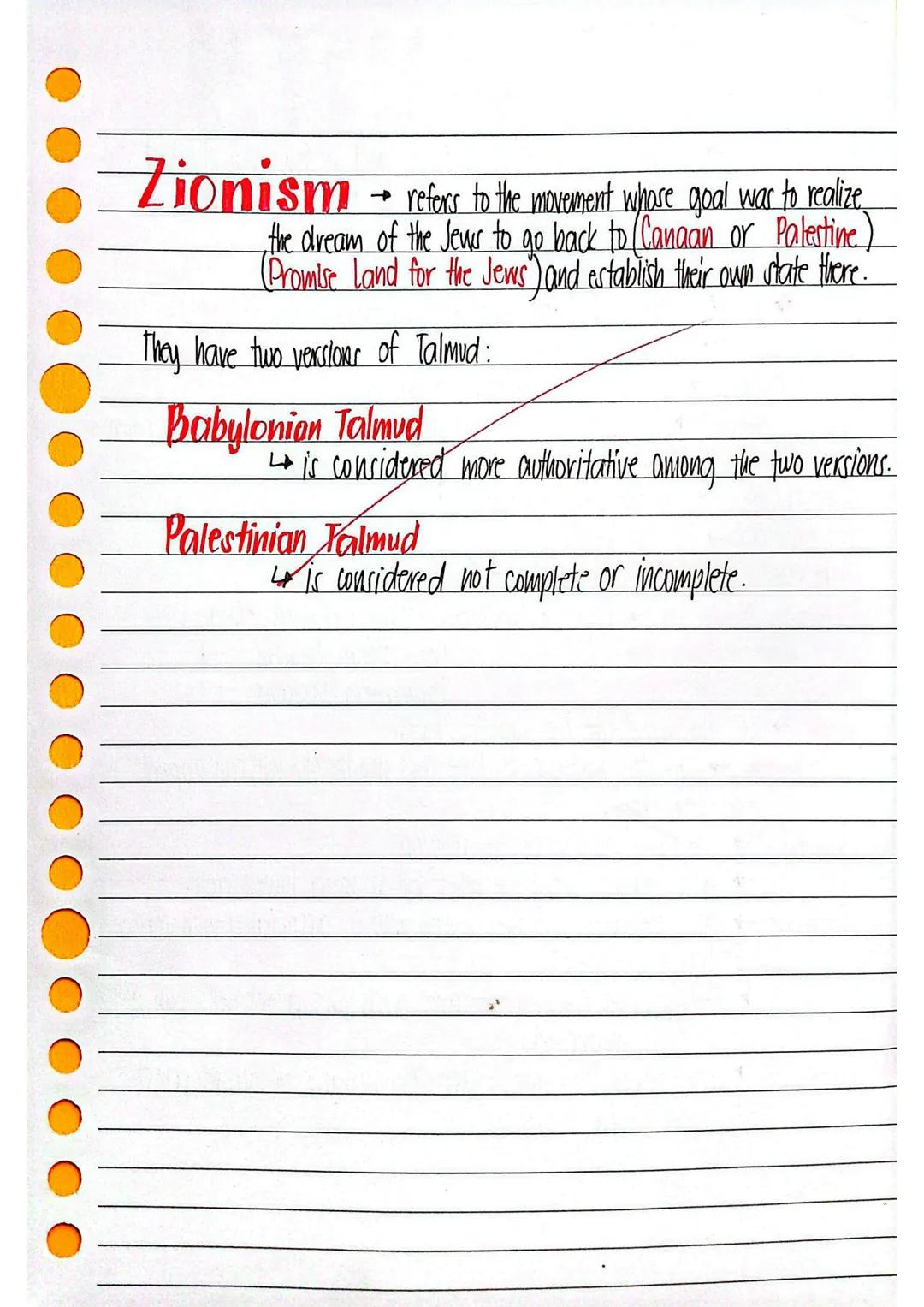
Judaism, founded by Moses and Abraham, traces its lineage through three patriarchs: Abraham, Isaac, and Jacob. This ancient faith centers around Mount Sinai, where Moses received divine revelation that would shape Jewish law and practice for millennia.
Jewish sacred texts follow a clear hierarchy. The primary texts include the Tanakh (Hebrew Bible), which contains the Torah (both written and oral versions). The written Torah includes 613 rules called Mitzvot plus the famous Ten Commandments, while the oral Torah represents verbal traditions passed down through generations.
Supplementary texts provide additional guidance and interpretation. The Talmud combines the Mishnah and Gemara for rabbinic interpretation, while Midrash explores deeper meanings. The Tanakh also includes Nevi'im (prophetic materials) and Kethuvim (wisdom literature like Psalms and Proverbs).
Memory Trick: Think of Torah as the constitution, Talmud as the legal commentary, and Midrash as the philosophical discussions that help interpret everything.
Access sa lahat ng dokumento
Pagbutihin ang iyong mga grado
Sumali sa milyong mga estudyante
The Tanakh gets its name from three sections: Torah (teachings), Nevi'im (prophets), and Kethuvim (writings) - it's basically the Hebrew Bible. The Torah contains Judaism's core teachings and instructions, split between written rules (including 613 Mitzvot and the Ten Commandments) and oral traditions passed down verbally.
Nevi'im includes materials from 22 prophets, divided into former prophets (major ones like Joshua, Judges, Samuel, and Kings) and latter prophets (minor ones including Isaiah, Jeremiah, Ezekiel, and twelve others like Hosea, Joel, and Malachi). These prophetic books contain guidance, warnings, and predictions about Israel's future.
Kethuvim consists of wisdom literature and historical accounts including Psalms, Proverbs, Job, and the Festal Scrolls (Song of Songs, Ruth, Lamentations, Ecclesiastes, Esther), plus Daniel, Ezra, Nehemiah, and Chronicles. The Talmud provides rabbinic interpretation through Mishnah (oral Torah) and Gemara (legal commentaries).
Quick Reference: The five books of Moses (Genesis, Exodus, Leviticus, Numbers, Deuteronomy) form the Pentateuch - the historical foundation of Jewish people and beliefs.
Access sa lahat ng dokumento
Pagbutihin ang iyong mga grado
Sumali sa milyong mga estudyante
Jewish philosopher Moses Maimonides (also called Moshe ben Maimon or Rambam) created thirteen core principles that define Jewish faith. These articles of faith cover everything from God's existence and uniqueness to prophecy and resurrection.
The first five principles establish God's nature: God exists, is one and unique, has no physical form, is eternal, and deserves exclusive worship. The next four focus on prophecy: prophets speak truth, Moses was the greatest prophet, both written and oral Torah came through Moses, and no new Torah will come.
The final four principles deal with divine justice and the future: God knows all human thoughts and actions, rewards good and punishes evil, the Messiah will come, and the dead will be resurrected. These beliefs form the theological backbone of Jewish faith.
The Ten Commandments provide practical moral guidance: worship only God, avoid idols, don't misuse God's name, keep Sabbath holy, honor parents, don't murder, don't commit adultery, don't steal, don't lie about others, and don't covet what others have.
Test Prep: Maimonides' thirteen principles and the Ten Commandments are frequently tested - they represent core Jewish beliefs and ethics respectively.
Access sa lahat ng dokumento
Pagbutihin ang iyong mga grado
Sumali sa milyong mga estudyante
Halakha literally means "the path that one walks" - it's the comprehensive set of rules governing every aspect of Jewish daily life. These Jewish religious laws come from both written and oral Torah, including all 613 Mitzvot, and they're incredibly detailed about practical matters.
Halakha tells observant Jews what to do from the moment they wake up: what foods to eat (kosher laws), what clothes to wear, who they can marry, and how to properly observe Sabbath and holy days. It's not just about big spiritual questions - it covers the mundane details of daily existence.
Synagogues serve as Jewish temples where people worship, learn, and build community together. They contain separate rooms designed for specific activities like praying and studying. A minyan (quorum of ten male adults) is required for communal worship, while a rabbi delivers sermons, interprets Torah, and serves as pastor, administrator, and counselor.
Cultural Note: Halakha shows how Judaism integrates faith into every aspect of life rather than keeping religion separate from daily activities.
Access sa lahat ng dokumento
Pagbutihin ang iyong mga grado
Sumali sa milyong mga estudyante
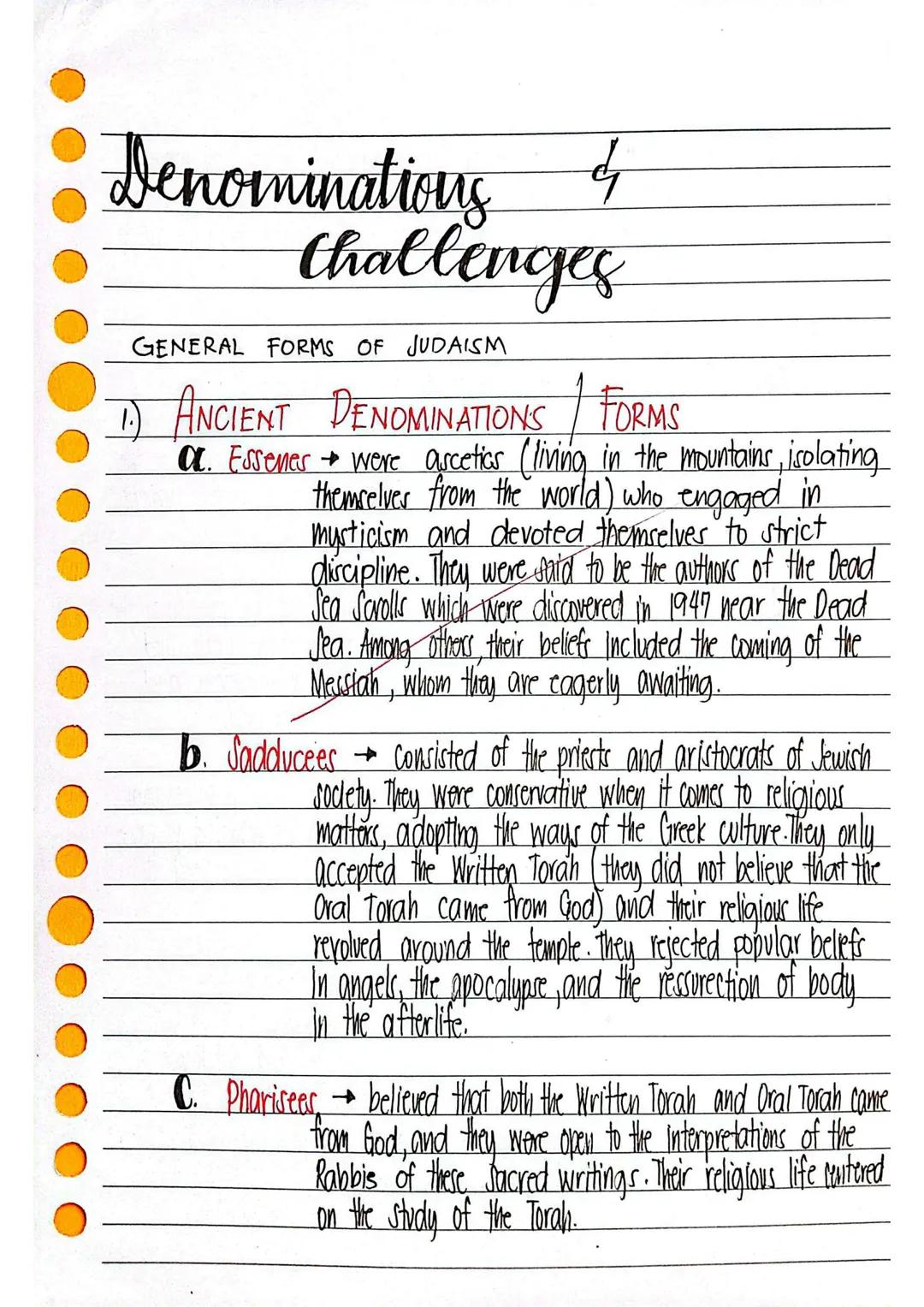
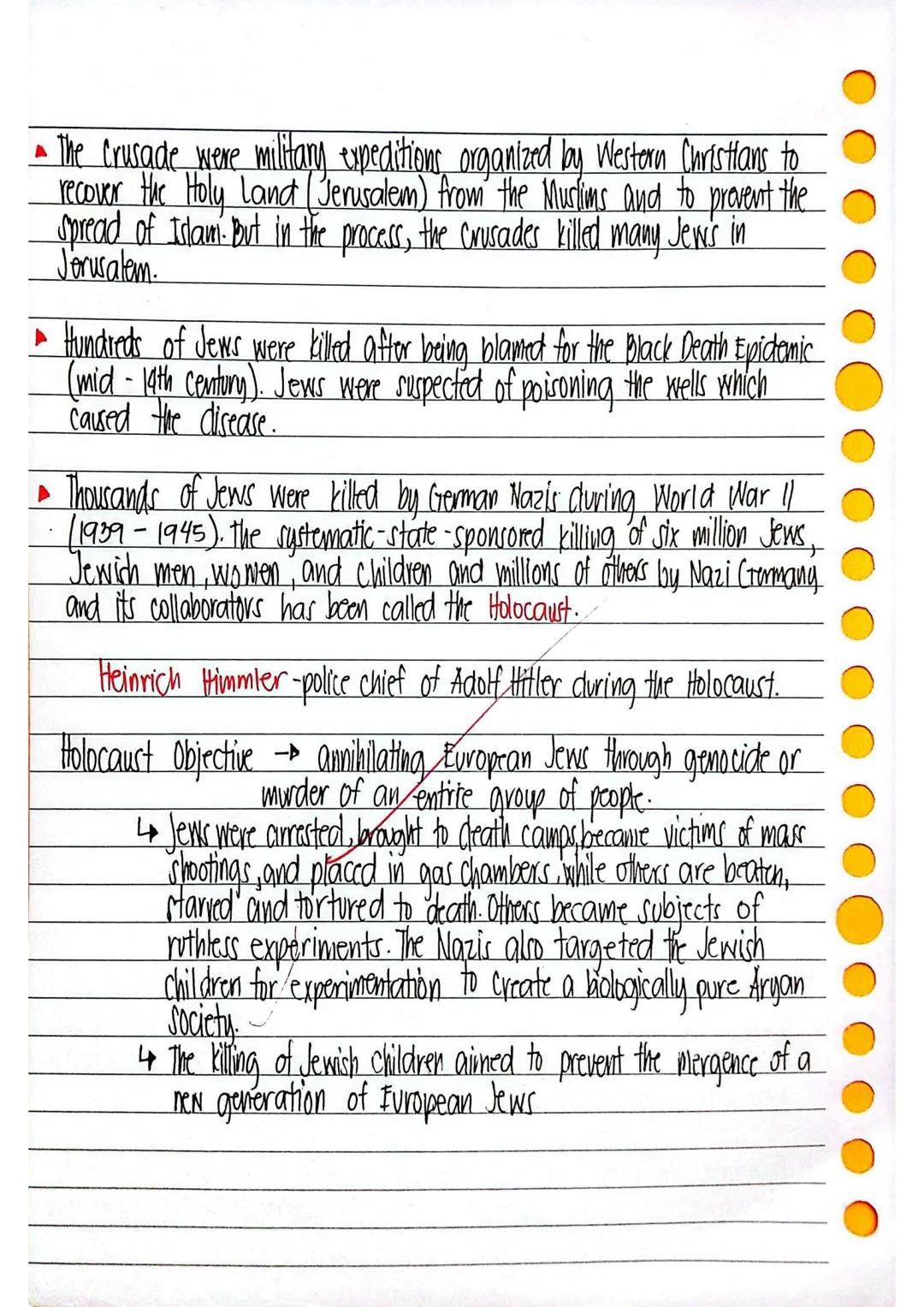
Judaism wasn't always unified - ancient times saw three major groups with very different approaches to faith and practice. Understanding these ancient denominations helps explain how Jewish thought developed and why different interpretations emerged.
Essenes were basically religious hermits who lived in mountains, isolating themselves from society to focus on mysticism and strict spiritual discipline. They're famous for possibly writing the Dead Sea Scrolls discovered in 1947, and they eagerly awaited the coming Messiah while living ascetic lifestyles.
Sadducees represented the wealthy, conservative establishment - priests and aristocrats who adopted Greek cultural ways. They only accepted the written Torah (rejecting oral traditions) and centered their religious life around temple worship. Notably, they rejected popular beliefs about angels, the apocalypse, and bodily resurrection.
Pharisees took a more flexible approach, accepting both written and oral Torah as divine and welcoming rabbinical interpretations of sacred writings. Their religious life focused on Torah study rather than just temple rituals, making them more accessible to ordinary people.
Historical Impact: These ancient divisions set the stage for later Jewish denominations and influenced how different groups interpret religious authority and practice today.
Access sa lahat ng dokumento
Pagbutihin ang iyong mga grado
Sumali sa milyong mga estudyante
Access sa lahat ng dokumento
Pagbutihin ang iyong mga grado
Sumali sa milyong mga estudyante
Access sa lahat ng dokumento
Pagbutihin ang iyong mga grado
Sumali sa milyong mga estudyante
Access sa lahat ng dokumento
Pagbutihin ang iyong mga grado
Sumali sa milyong mga estudyante
Access sa lahat ng dokumento
Pagbutihin ang iyong mga grado
Sumali sa milyong mga estudyante
Access sa lahat ng dokumento
Pagbutihin ang iyong mga grado
Sumali sa milyong mga estudyante
Access sa lahat ng dokumento
Pagbutihin ang iyong mga grado
Sumali sa milyong mga estudyante
Access sa lahat ng dokumento
Pagbutihin ang iyong mga grado
Sumali sa milyong mga estudyante
Access sa lahat ng dokumento
Pagbutihin ang iyong mga grado
Sumali sa milyong mga estudyante
Access sa lahat ng dokumento
Pagbutihin ang iyong mga grado
Sumali sa milyong mga estudyante
Access sa lahat ng dokumento
Pagbutihin ang iyong mga grado
Sumali sa milyong mga estudyante
Access sa lahat ng dokumento
Pagbutihin ang iyong mga grado
Sumali sa milyong mga estudyante
Access sa lahat ng dokumento
Pagbutihin ang iyong mga grado
Sumali sa milyong mga estudyante
Access sa lahat ng dokumento
Pagbutihin ang iyong mga grado
Sumali sa milyong mga estudyante
Access sa lahat ng dokumento
Pagbutihin ang iyong mga grado
Sumali sa milyong mga estudyante
Access sa lahat ng dokumento
Pagbutihin ang iyong mga grado
Sumali sa milyong mga estudyante
Ang aming AI Companion ay isang AI tool na nakatuon sa mga estudyante na nag-aalok ng higit pa sa mga sagot lang. Binuo mula sa milyong Knowunity resources, nagbibigay ito ng may-kaugnayang impormasyon, personalized na study plans, quizzes, at content direkta sa chat, na umaangkop sa iyong sariling learning journey.
Maaari mong i-download ang app mula sa Google Play Store at Apple App Store.
Tama 'yan! Mag-enjoy sa libreng access sa mga study content, makipag-connect sa kapwa mga estudyante, at kumuha ng instant na tulong – lahat nasa iyong daliri lang.
26
Smart Tools NEW
I-transform ang note na ito sa: ✓ 50+ Practice Questions ✓ Interactive Flashcards ✓ Full Mock Exam ✓ Essay Outlines
App Store
Google Play
Napakadaling gamitin at maganda ang disenyo ng app. Nahanap ko lahat ng hinahanap ko hanggang ngayon at natuto ako ng marami mula sa mga presentasyon! Tiyak na gagamitin ko ang app para sa isang takdang-aralin sa klase! At siyempre, nakakatulong din ito bilang inspirasyon.
Stefan S
gumagamit ng iOS
Sobrang ganda talaga ng app na ito. Maraming mga study notes at tulong [...]. Ang problemang subject ko ay Pranses, halimbawa, at ang app ay may maraming options para tumulong. Salamat sa app na ito, bumuti ang Pranses ko. Irerekumenda ko ito sa lahat.
Samantha Klich
Android user
Wow, talagang namangha ako. Sinubukan ko lang ang app dahil nakita ko itong ina-advertise nang maraming beses at sobrang nagulat ako. Ang app na ito ang TULONG na gusto mo para sa paaralan at higit sa lahat, nag-aalok ito ng maraming bagay, tulad ng workouts at fact sheets, na SOBRANG nakatulong sa akin.
Anna
iOS user
Pinakamagandang app sa mundo! walang masabi dahil sobrang ganda nito
Thomas R
iOS user
Napakaganda talaga. Nakakapag-review ako ng 10x mas mabuti, itong app ay mabilis na 10/10. Lubos kong inirerekomenda ito sa lahat. Pwede akong manood at maghanap ng notes. Pwede kong i-save ang mga ito sa subject folder. Pwede kong i-review anumang oras kapag bumalik ako. Kung hindi mo pa nasubukan ang app na ito, marami kang nawawala.
Basil
Android user
Ang app na ito ay nagpapalakas ng loob ko sa paghahanda sa exams, hindi lang dahil sa pagpapataas ng aking kumpiyansa sa sarili sa pamamagitan ng mga feature na nagpapahintulot sa iyo na makipag-connect sa iba at mabawasan ang pakiramdam na nag-iisa, kundi pati na rin sa paraan na nakatuon ang app sa pagpapagaan ng iyong pakiramdam. Madali itong i-navigate, masaya gamitin, at nakakatulong sa sinumang nahihirapan sa kahit anong paraan.
David K
iOS user
Sobrang galing ng app! Ilalagay ko lang ang paksa sa search bar at makakakuha na ako ng sagot kaagad. Hindi ko kailangang manood ng 10 YouTube videos para maintindihan ang isang bagay, kaya nakakatipid ako ng oras. Lubos na inirerekomenda!
Sudenaz Ocak
Android user
Sa paaralan, napakahina ko sa math pero salamat sa app, mas mahusay na ako ngayon. Lubos akong nagpapasalamat na ginawa niyo ang app na ito.
Greenlight Bonnie
Android user
napakareliable na app para tumulong at palawakin ang iyong mga ideya sa Math, English at iba pang mga related na paksa sa iyong mga gawain. gamitin mo ang app na ito kung nahihirapan ka sa mga area, susi ito para diyan. sana nag-review na ako dati. at libre rin ito kaya huwag mag-alala tungkol diyan.
Rohan U
Android user
Alam kong maraming apps gumagamit ng fake accounts para mapataas ang kanilang reviews pero ang app na ito ay deserve lahat ng papuri. Dati nakakakuha ako ng 4 sa aking English exams at ngayon nakakuha ako ng grade 7. Hindi ko pa alam ang app na ito tatlong araw bago ang exam at nakatulong ito ng SOBRA. Pakisuyong maniwala sa akin at gamitin ito dahil sigurado akong makikita mo rin ang mga pagbabago.
Xander S
iOS user
ANG MGA quiz AT flashcard SOBRANG HELPFUL AT I LOVE TALAGA SI Knowunity AI. PARANG CHATGPT LANG PERO MAS MATALINO!! NAKATULONG DIN SA MGA MASCARA PROBLEMS KO!! PATI NA RIN SA MGA TUNAY KONG subject! SYEMPRE 😍😁😲🤑💗✨🎀😮
Elisha
iOS user
Grabe talaga ang app na to. Sobrang nakakaboring sakin ang pagreview pero ginagawa ng app na to na sobrang dali mag-organize ng lahat at pwede mong tanungin ang libreng ai para subukin ang sarili mo kaya sobrang buti at madali mong ma-upload ang sarili mong mga bagay. highly recommend bilang isang taong nagte-take ng mocks ngayon
Paul T
iOS user
Napakadaling gamitin at maganda ang disenyo ng app. Nahanap ko lahat ng hinahanap ko hanggang ngayon at natuto ako ng marami mula sa mga presentasyon! Tiyak na gagamitin ko ang app para sa isang takdang-aralin sa klase! At siyempre, nakakatulong din ito bilang inspirasyon.
Stefan S
gumagamit ng iOS
Sobrang ganda talaga ng app na ito. Maraming mga study notes at tulong [...]. Ang problemang subject ko ay Pranses, halimbawa, at ang app ay may maraming options para tumulong. Salamat sa app na ito, bumuti ang Pranses ko. Irerekumenda ko ito sa lahat.
Samantha Klich
Android user
Wow, talagang namangha ako. Sinubukan ko lang ang app dahil nakita ko itong ina-advertise nang maraming beses at sobrang nagulat ako. Ang app na ito ang TULONG na gusto mo para sa paaralan at higit sa lahat, nag-aalok ito ng maraming bagay, tulad ng workouts at fact sheets, na SOBRANG nakatulong sa akin.
Anna
iOS user
Pinakamagandang app sa mundo! walang masabi dahil sobrang ganda nito
Thomas R
iOS user
Napakaganda talaga. Nakakapag-review ako ng 10x mas mabuti, itong app ay mabilis na 10/10. Lubos kong inirerekomenda ito sa lahat. Pwede akong manood at maghanap ng notes. Pwede kong i-save ang mga ito sa subject folder. Pwede kong i-review anumang oras kapag bumalik ako. Kung hindi mo pa nasubukan ang app na ito, marami kang nawawala.
Basil
Android user
Ang app na ito ay nagpapalakas ng loob ko sa paghahanda sa exams, hindi lang dahil sa pagpapataas ng aking kumpiyansa sa sarili sa pamamagitan ng mga feature na nagpapahintulot sa iyo na makipag-connect sa iba at mabawasan ang pakiramdam na nag-iisa, kundi pati na rin sa paraan na nakatuon ang app sa pagpapagaan ng iyong pakiramdam. Madali itong i-navigate, masaya gamitin, at nakakatulong sa sinumang nahihirapan sa kahit anong paraan.
David K
iOS user
Sobrang galing ng app! Ilalagay ko lang ang paksa sa search bar at makakakuha na ako ng sagot kaagad. Hindi ko kailangang manood ng 10 YouTube videos para maintindihan ang isang bagay, kaya nakakatipid ako ng oras. Lubos na inirerekomenda!
Sudenaz Ocak
Android user
Sa paaralan, napakahina ko sa math pero salamat sa app, mas mahusay na ako ngayon. Lubos akong nagpapasalamat na ginawa niyo ang app na ito.
Greenlight Bonnie
Android user
napakareliable na app para tumulong at palawakin ang iyong mga ideya sa Math, English at iba pang mga related na paksa sa iyong mga gawain. gamitin mo ang app na ito kung nahihirapan ka sa mga area, susi ito para diyan. sana nag-review na ako dati. at libre rin ito kaya huwag mag-alala tungkol diyan.
Rohan U
Android user
Alam kong maraming apps gumagamit ng fake accounts para mapataas ang kanilang reviews pero ang app na ito ay deserve lahat ng papuri. Dati nakakakuha ako ng 4 sa aking English exams at ngayon nakakuha ako ng grade 7. Hindi ko pa alam ang app na ito tatlong araw bago ang exam at nakatulong ito ng SOBRA. Pakisuyong maniwala sa akin at gamitin ito dahil sigurado akong makikita mo rin ang mga pagbabago.
Xander S
iOS user
ANG MGA quiz AT flashcard SOBRANG HELPFUL AT I LOVE TALAGA SI Knowunity AI. PARANG CHATGPT LANG PERO MAS MATALINO!! NAKATULONG DIN SA MGA MASCARA PROBLEMS KO!! PATI NA RIN SA MGA TUNAY KONG subject! SYEMPRE 😍😁😲🤑💗✨🎀😮
Elisha
iOS user
Grabe talaga ang app na to. Sobrang nakakaboring sakin ang pagreview pero ginagawa ng app na to na sobrang dali mag-organize ng lahat at pwede mong tanungin ang libreng ai para subukin ang sarili mo kaya sobrang buti at madali mong ma-upload ang sarili mong mga bagay. highly recommend bilang isang taong nagte-take ng mocks ngayon
Paul T
iOS user