The Three Pillars of Persuasion
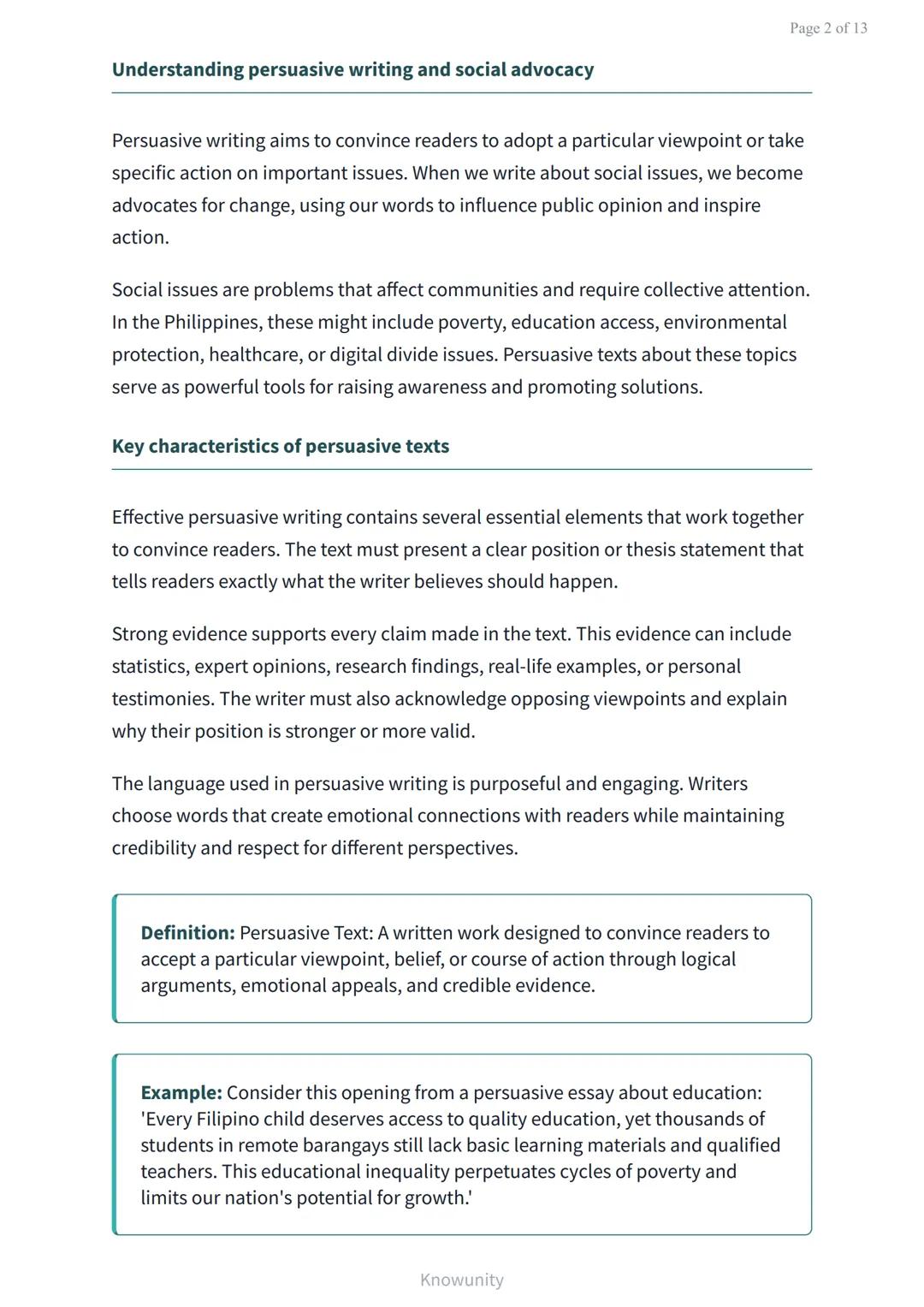
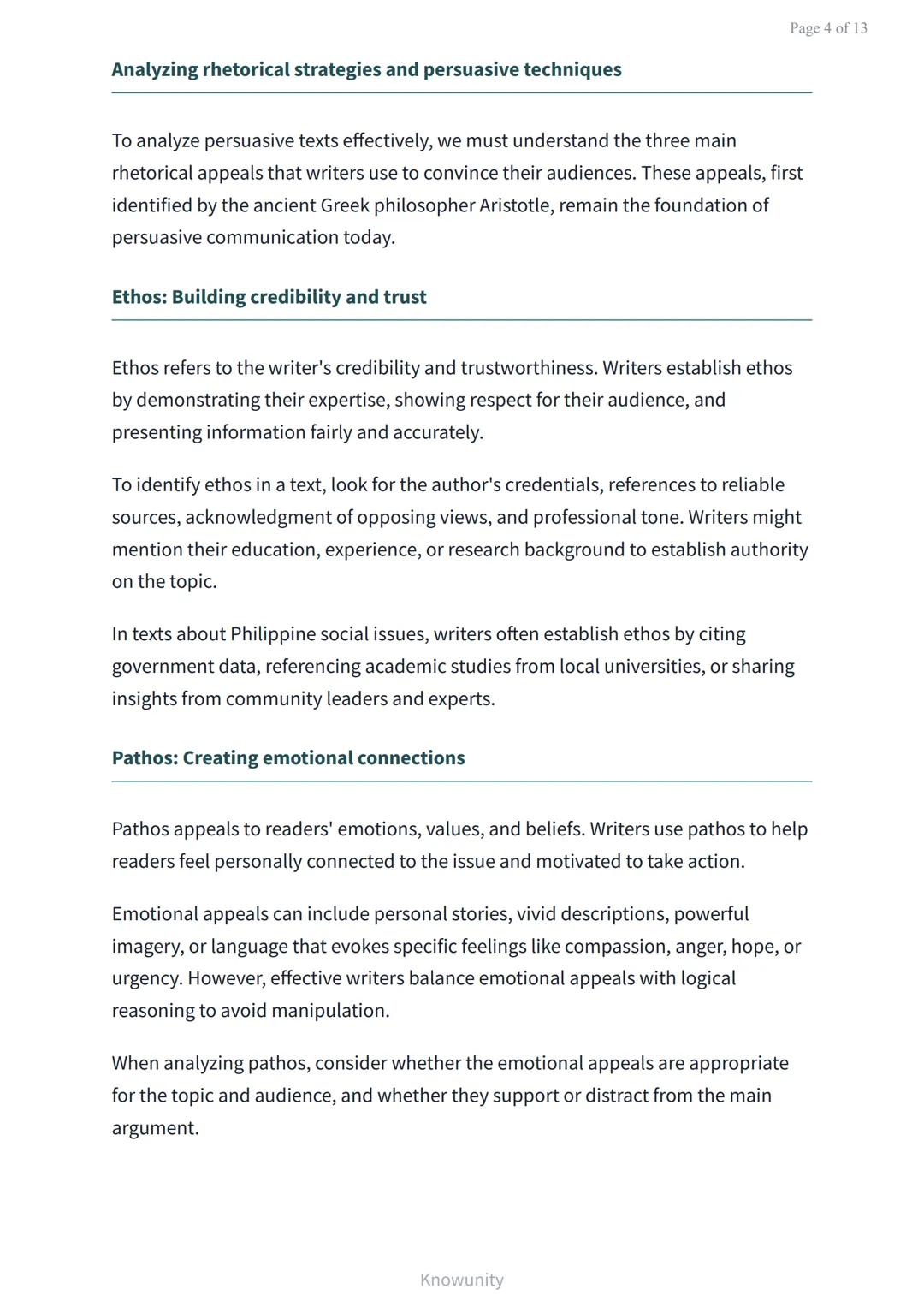
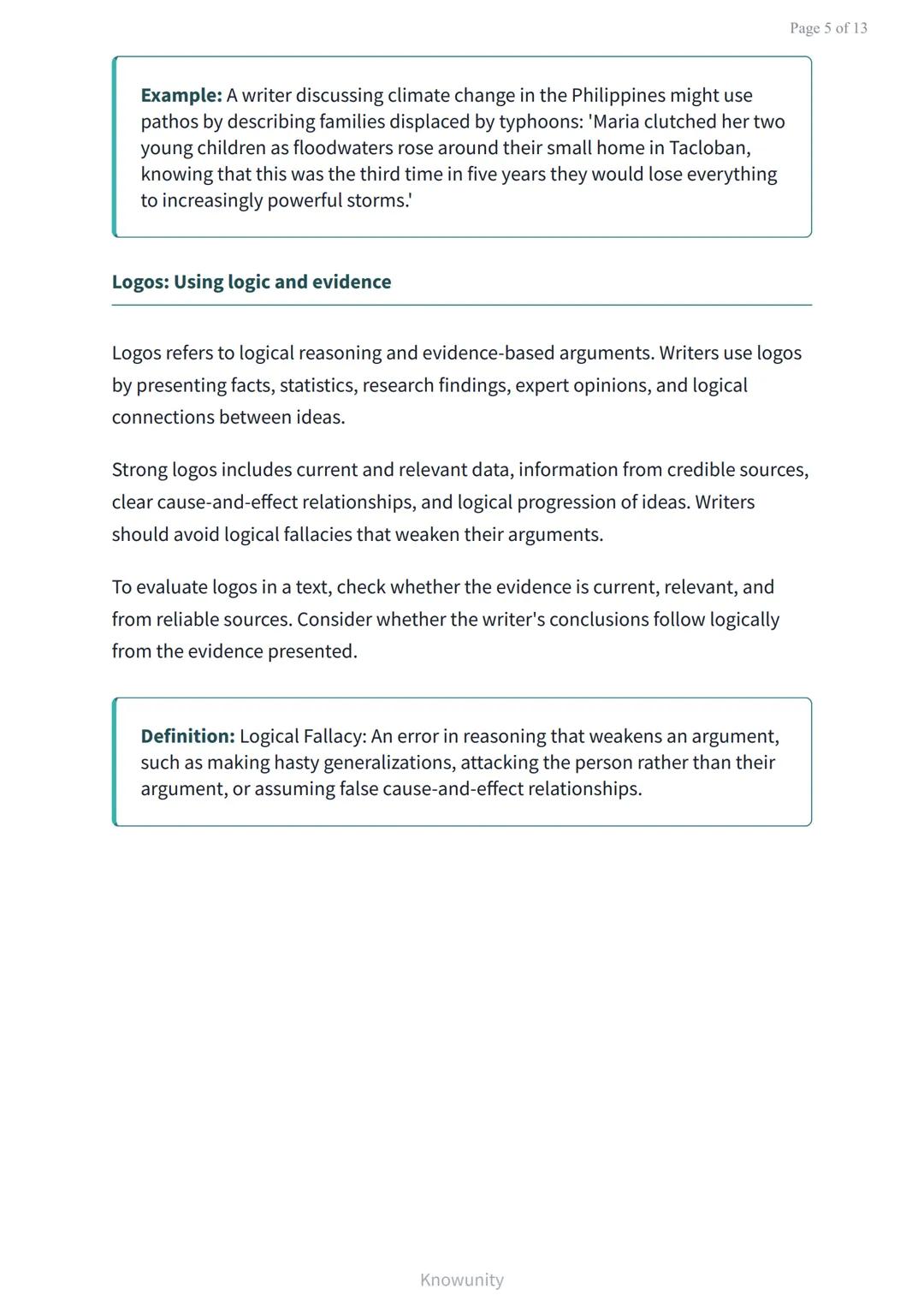
Here's where things get interesting - every persuasive text uses three main techniques to win over readers. These rhetorical appeals have been convincing people for thousands of years, and they still work today.
Ethos is all about proving you're trustworthy and know what you're talking about. You build this by showing your research, mentioning credible sources, and treating opposing views fairly. If readers don't trust you, they won't believe your arguments.
Pathos connects with readers' emotions and values. This might mean sharing personal stories, using vivid descriptions, or choosing words that make people feel something. But be careful - overdoing the emotional stuff can backfire and make you look manipulative.
Logos is your logical reasoning and evidence. This includes statistics, research findings, expert opinions, and clear connections between causes and effects. Your conclusions need to follow logically from your evidence, or readers will spot the gaps.
Pro Strategy: The most persuasive texts blend all three appeals naturally - you're not just presenting facts (logos), you're doing it in a trustworthy way (ethos) that helps readers care about the issue (pathos).



 GenMath
 Reading & Writing Skills
 Science
 Econ
Econ Iba pa
 Filipino