Finding Range of Functions
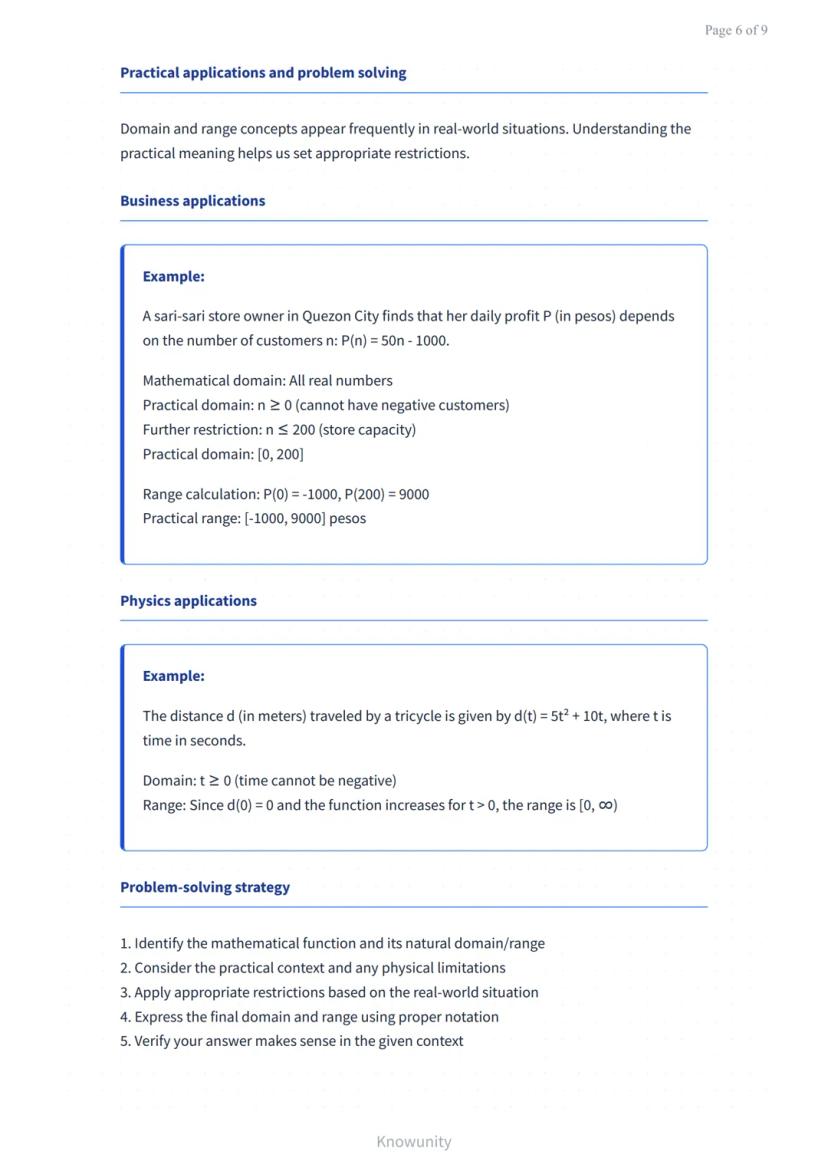
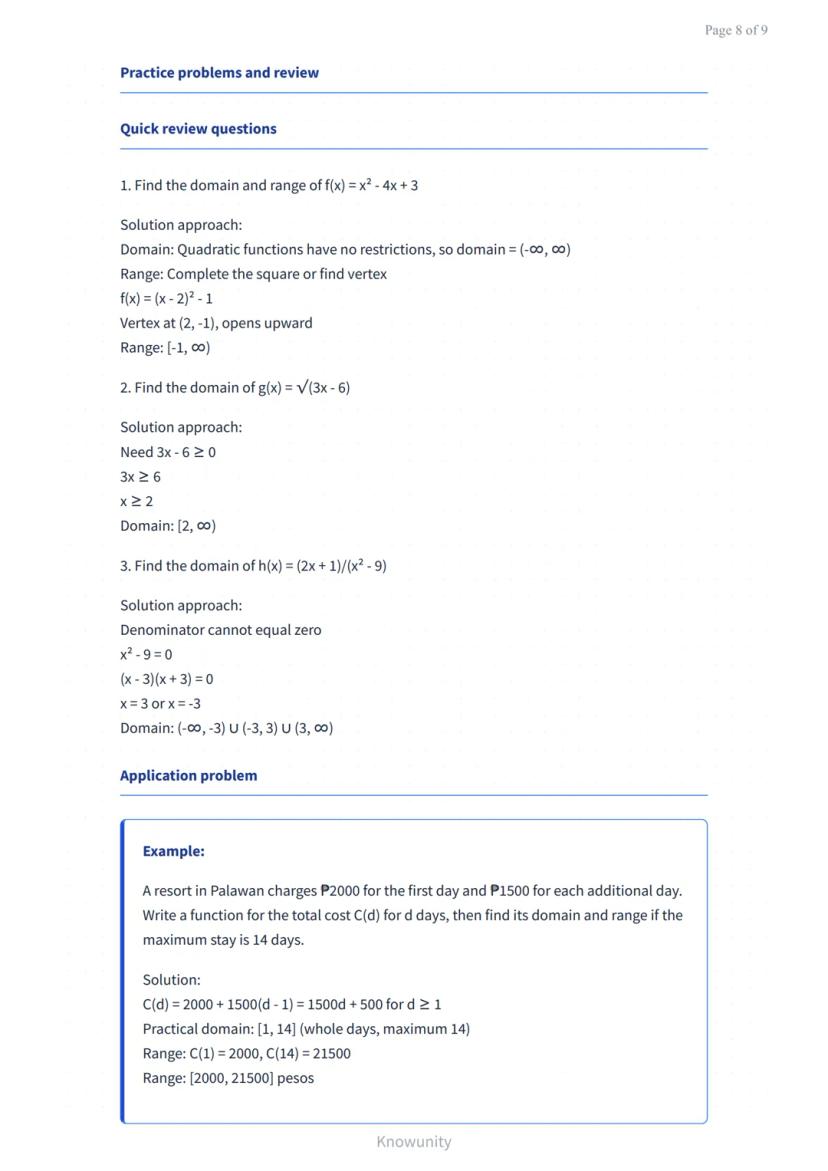
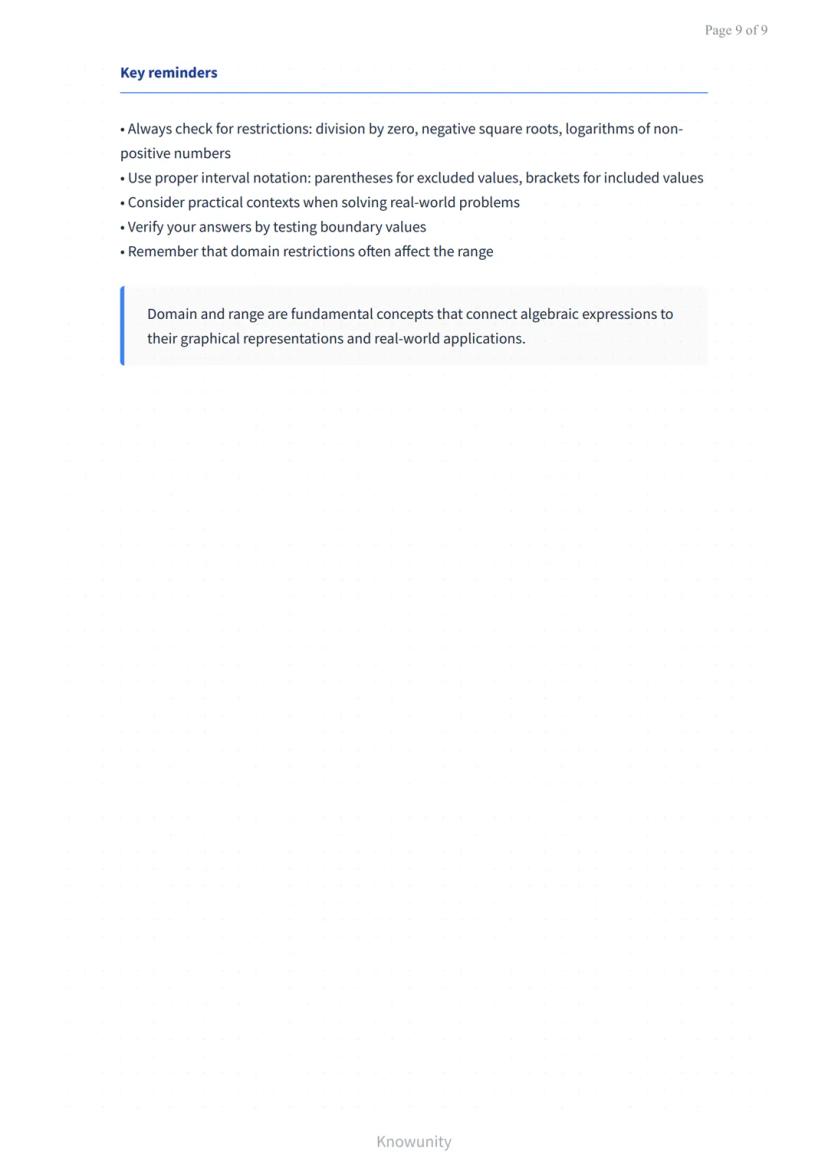
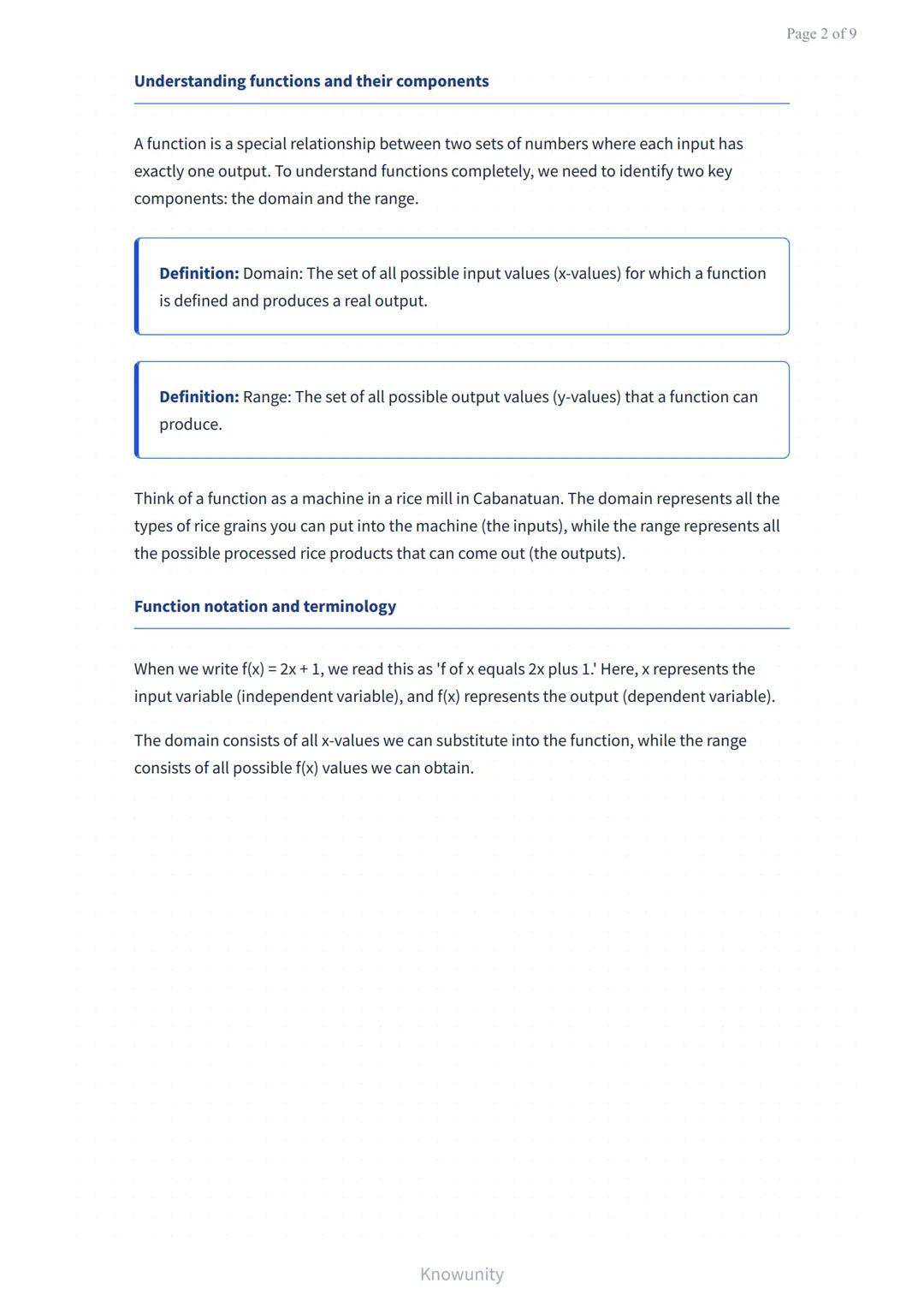
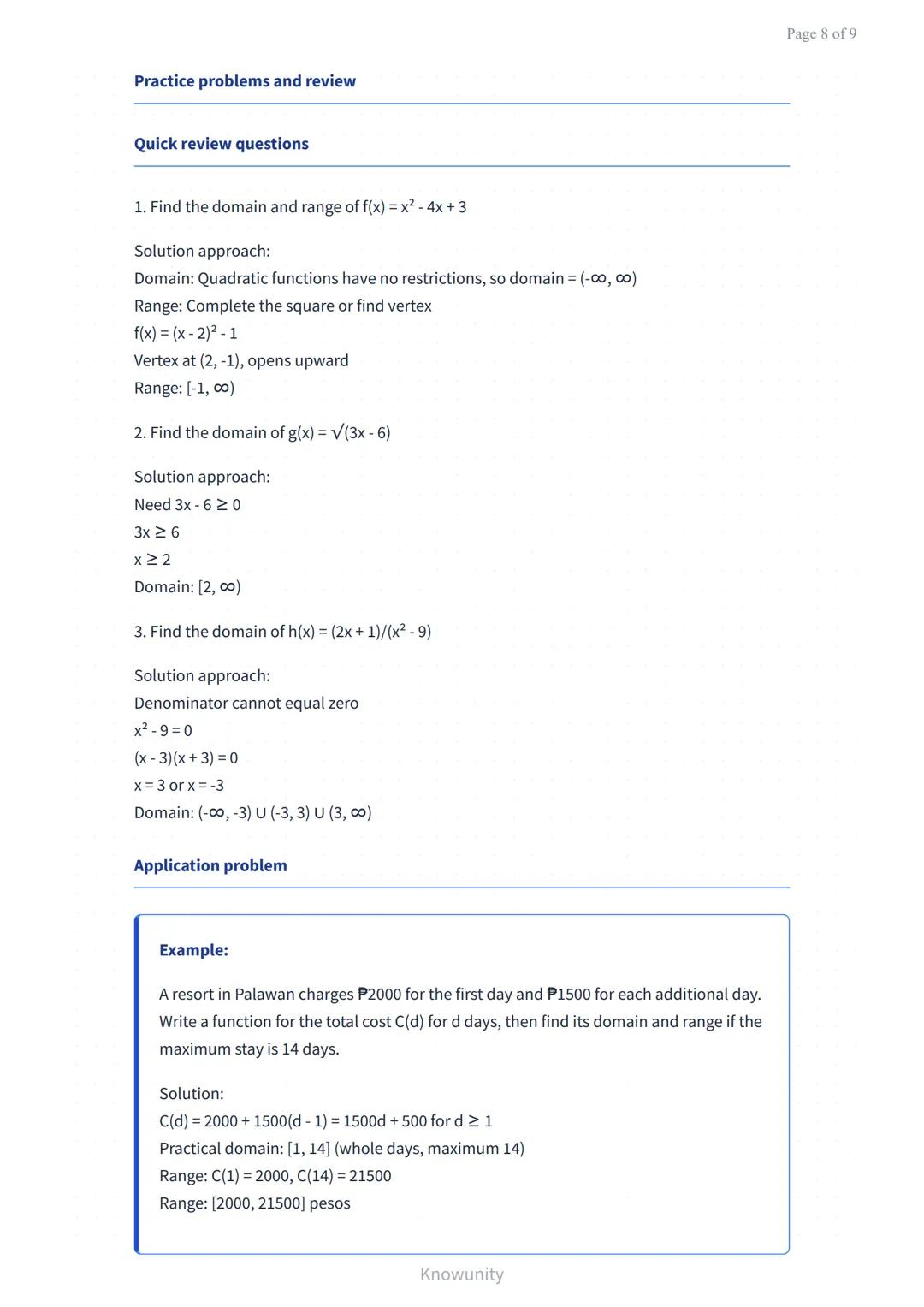
Finding range means figuring out all possible y-values your function can produce. This requires understanding how the function behaves across its entire domain.
Linear functions with unrestricted domains have a range of all real numbers (-∞, ∞) because the line goes on forever. But if your domain is limited, your range shrinks too - like a fare function that starts at £12 and only goes up.
Quadratic functions are trickier because they're U-shaped. The key is finding the vertex using f(x) = ax−h² + k. If a > 0 (opens upward), range is k,∞).Ifa<0(opensdownward),rangeis(−∞,k.
Square root functions like f(x) = √x−h + k produce outputs starting from k and going up, so range is k,∞).Addanegativesigninfront,andyouflipitto(−∞,k.
Visual Trick: Imagine tracing the function with your finger - the range covers every y-value your finger touches.





 Practical Research
 Iba pa
 BasCal
 Pre-Cal
 GenMath
 Science
 Econ
Econ Social Studies