Mga Asignatura

SchoolGPT

Careers

Buksan ang App

Mga Asignatura

21st Century Skills Notes for Grade 12

12

1

S

sam โ‹†๐™šโ‚ŠหšโŠนโ™ก

12/9/2025

Social Studies

21st Century Notes G12

554

โ€ข

Dis 9, 2025

โ€ข

7 mga pahina

21st Century Skills Notes for Grade 12

S

sam โ‹†๐™šโ‚ŠหšโŠนโ™ก

@samantha.badiola_

Dive into the rich tapestry of Philippine literature as it... Ipakita pa

Page 1
Page 2
Page 3
Page 4
Page 5
Page 6
Page 7
1 / 7
21ST Century literature from the
philippines and the world
LESSON 1: GEOGRAPHIC, LINGUISTIC AND ETHNIC DIMENSIONS OF PHILIPPINE LITERARY
FRO

The Evolution of Philippine Literature

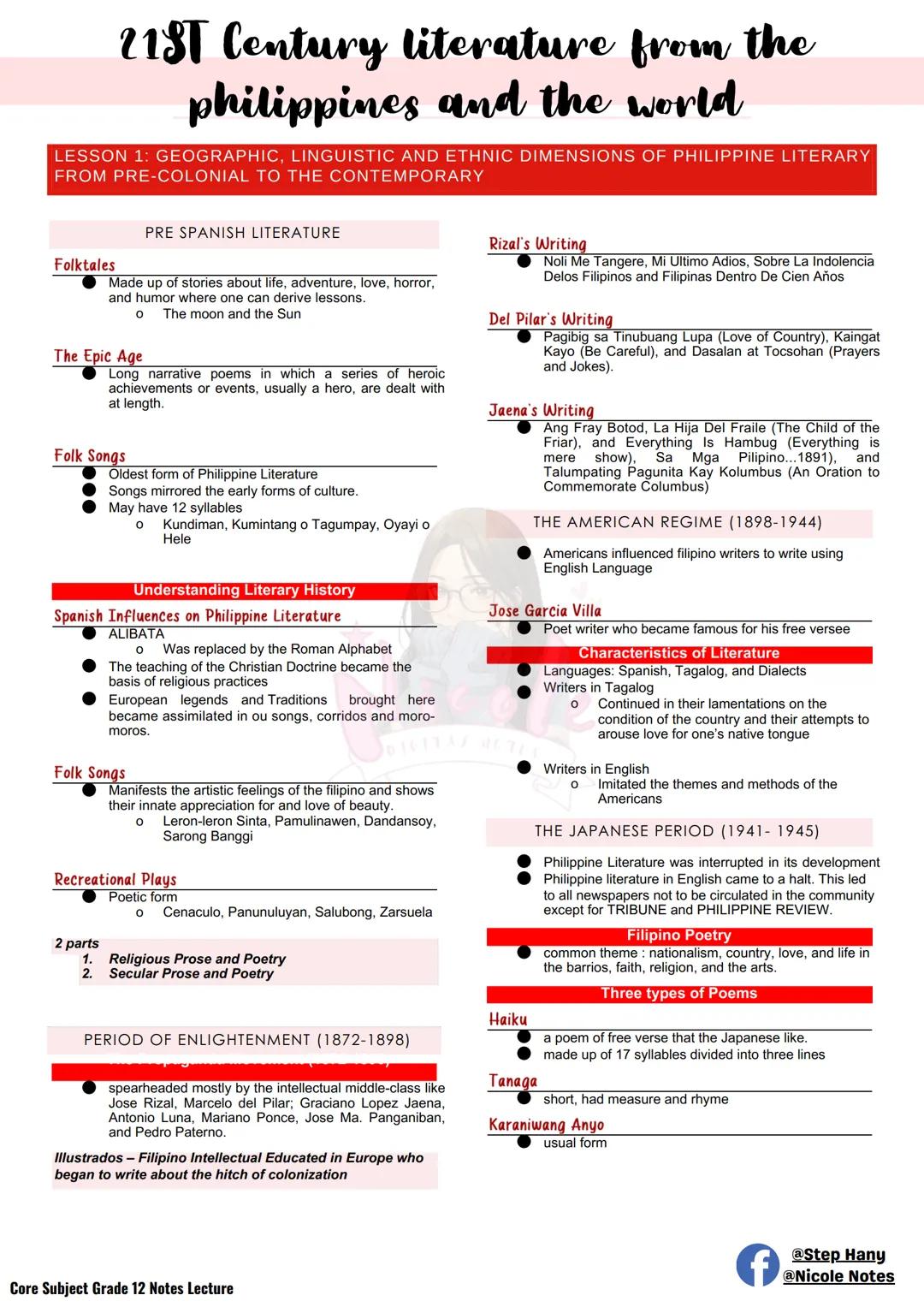
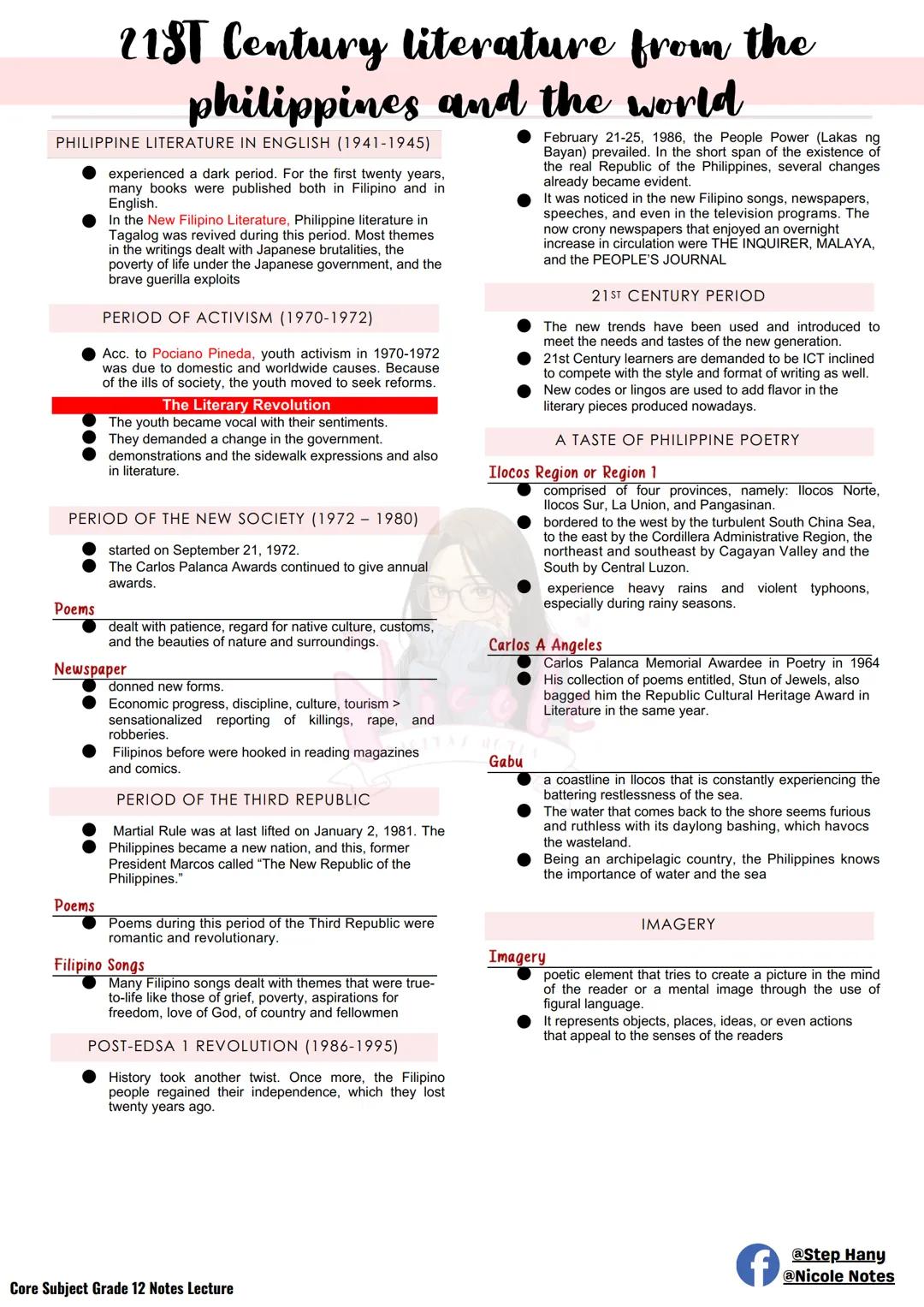
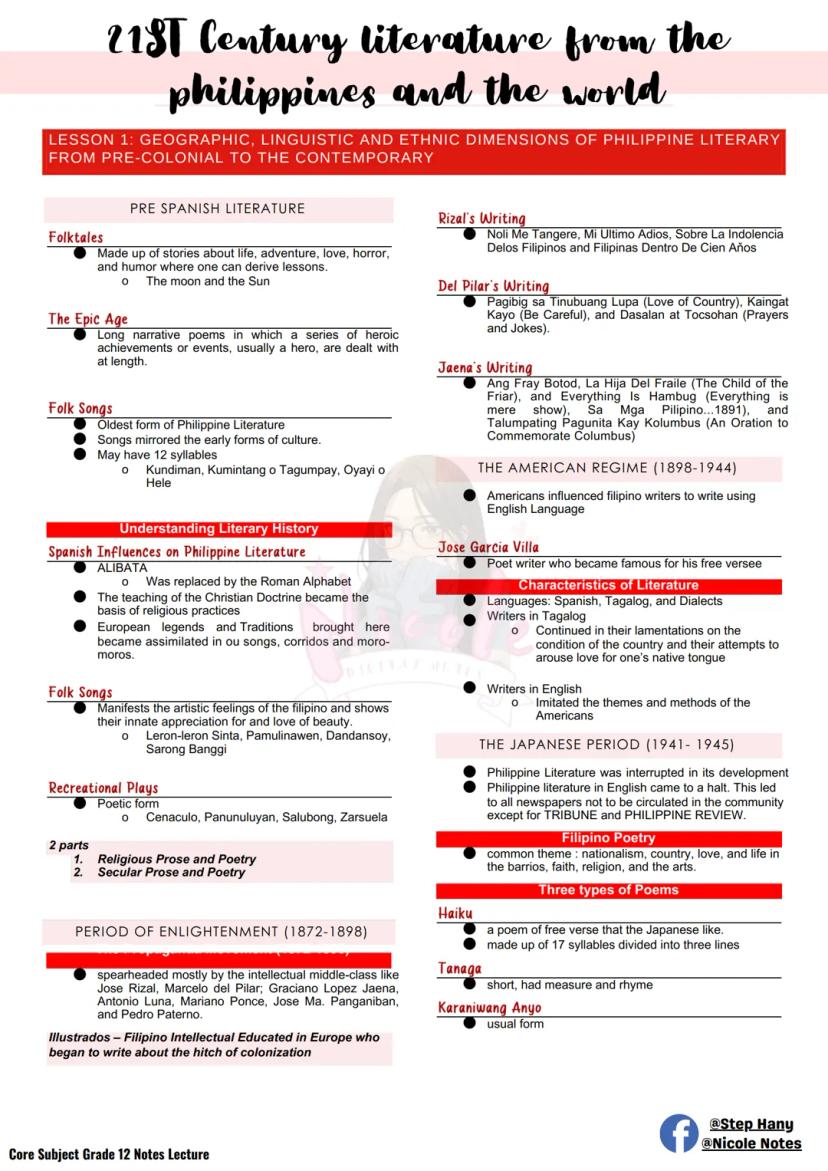
Philippine literature began long before colonizers arrived, with folktales and folk songs serving as vessels for cultural values and life lessons. The Epic Age produced lengthy narrative poems centered on heroes, reflecting societal ideals and cultural identity.

When the Spanish arrived, our literary landscape transformed dramatically. The Alibata writing system was replaced by the Roman alphabet, while Christian teachings became embedded in literary works. During this period, literature divided into religious and secular forms, with recreational plays like Zarsuela becoming popular cultural expressions.

The Period of Enlightenment (1872-1898) marked a turning point as educated Filipinos called Illustrados began challenging colonial rule through their writings. Key figures included Jose Rizal with his revolutionary novels like "Noli Me Tangere," and Marcelo del Pilar with patriotic works such as "Pagibig sa Tinubuang Lupa."

Did you know? During the American period (1898-1944), Filipino writers were encouraged to write in English, creating a parallel literary tradition alongside works in Tagalog and regional languages. This dual-language development continues to influence Filipino literary expression today.

The Japanese occupation (1941-1945) disrupted literary development, with only government-approved publications allowed. Despite these restrictions, Filipino poetry flourished in three forms: Haiku (17 syllables in three lines), Tanaga (short poems with measure and rhyme), and Karaniwang Anyo (usual form).

21ST Century literature from the
philippines and the world
LESSON 1: GEOGRAPHIC, LINGUISTIC AND ETHNIC DIMENSIONS OF PHILIPPINE LITERARY
FRO

Philippine Literature Through Political Changes

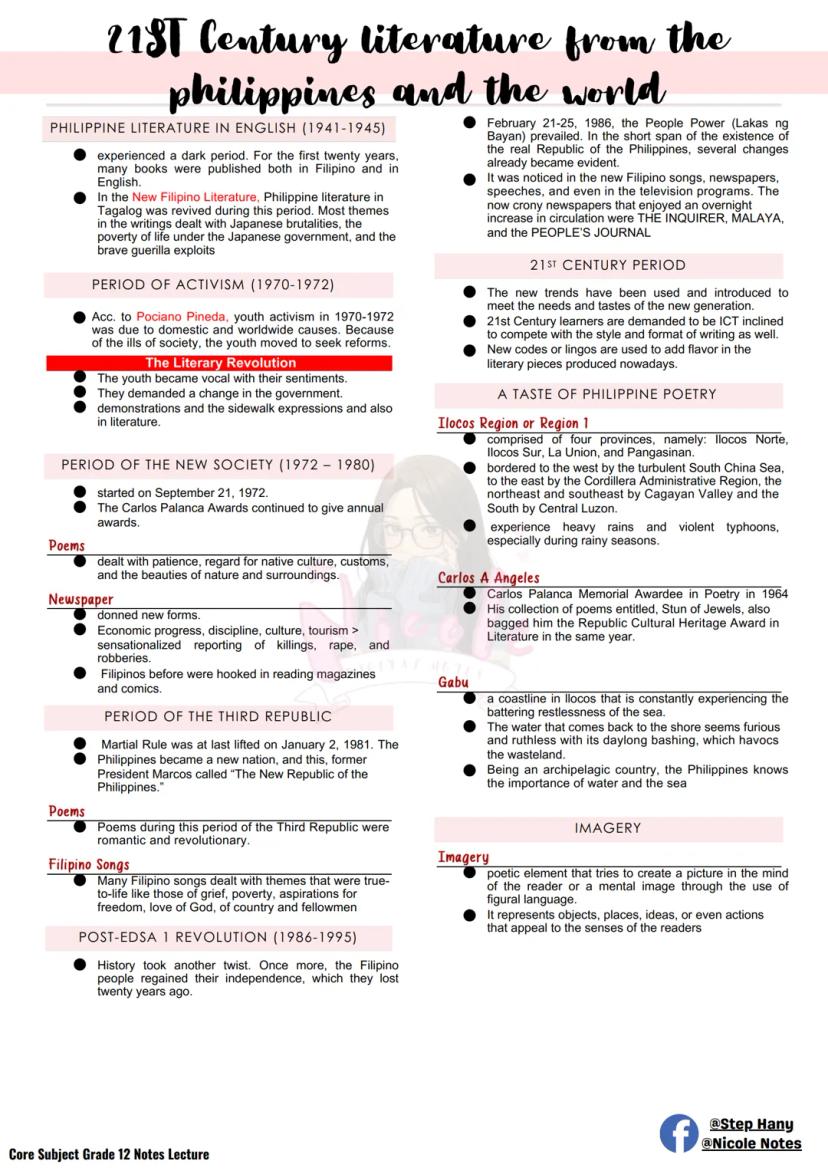
The Period of Activism (1970-1972) saw literature becoming a powerful vehicle for expressing social and political dissent. Young writers demanded government reforms, making their voices heard through demonstrations, sidewalk expressions, and revolutionary literature that challenged the status quo.

When Martial Law began in 1972, Philippine literature adapted to new constraints. During this "New Society" period (1972-1980), poems shifted toward themes of patience, native culture, and natural beauty. Newspapers transformed too, focusing on economic progress and tourism rather than crime reporting. Despite restrictions, the Carlos Palanca Awards continued recognizing literary excellence annually.

The Third Republic period following the lifting of Martial Law in 1981 brought both romantic and revolutionary themes to poetry. Filipino songs from this era dealt with authentic human experiencesโ€”grief, poverty, aspirations for freedom, and love of country.

Remember this: Each political period in Philippine history created its own literary response, showing how Filipino writers have consistently used literature as a tool for expression, resistance, and cultural preservation.

The People Power Revolution (1986) marked another literary turning point, with publications like The Inquirer and Malaya gaining popularity. These newspapers reflected the nation's newfound freedom and democratic aspirations, demonstrating how Philippine literature continues to evolve alongside the country's political journey.

21ST Century literature from the
philippines and the world
LESSON 1: GEOGRAPHIC, LINGUISTIC AND ETHNIC DIMENSIONS OF PHILIPPINE LITERARY
FRO

Literary Techniques and 21st Century Genres

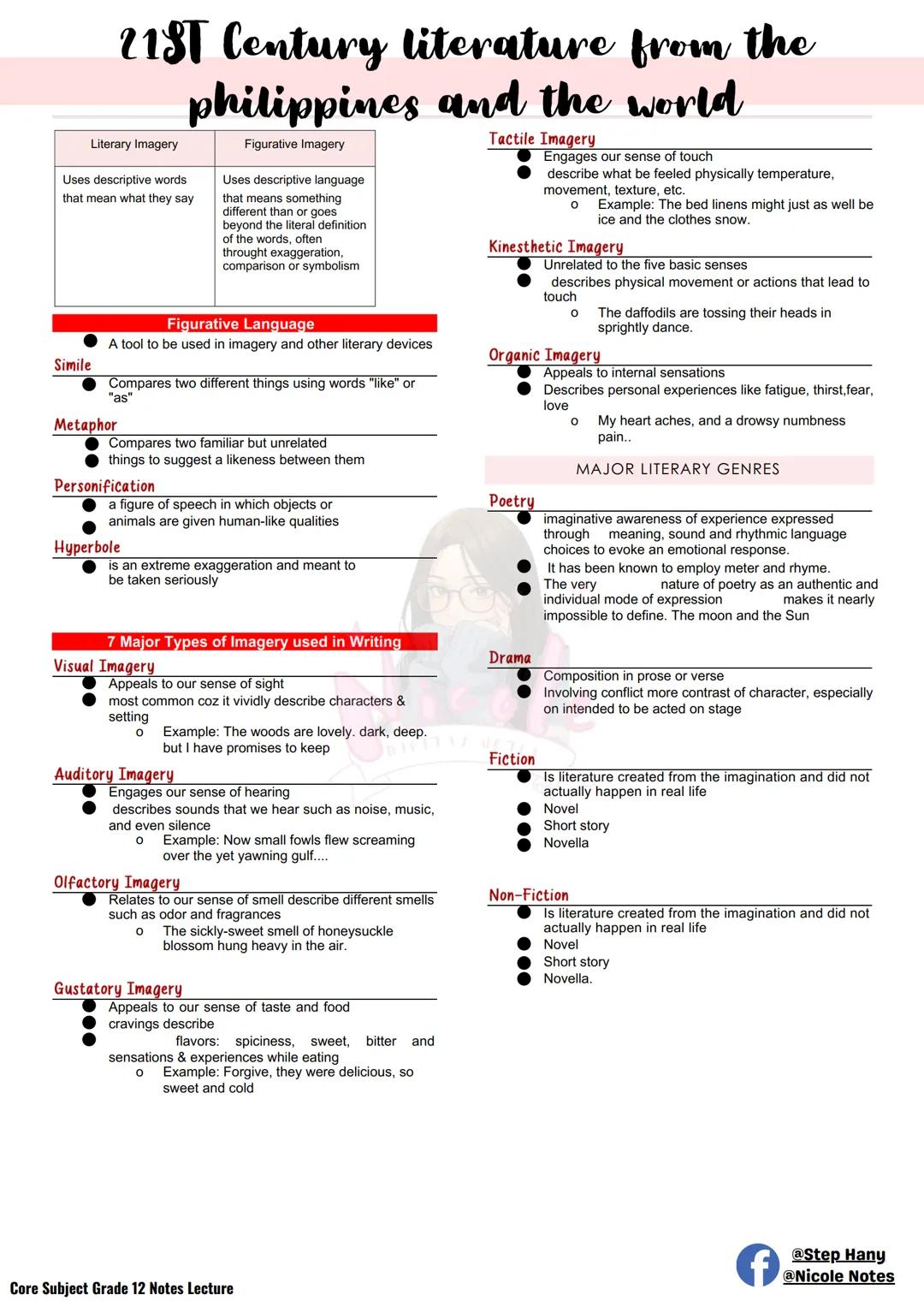
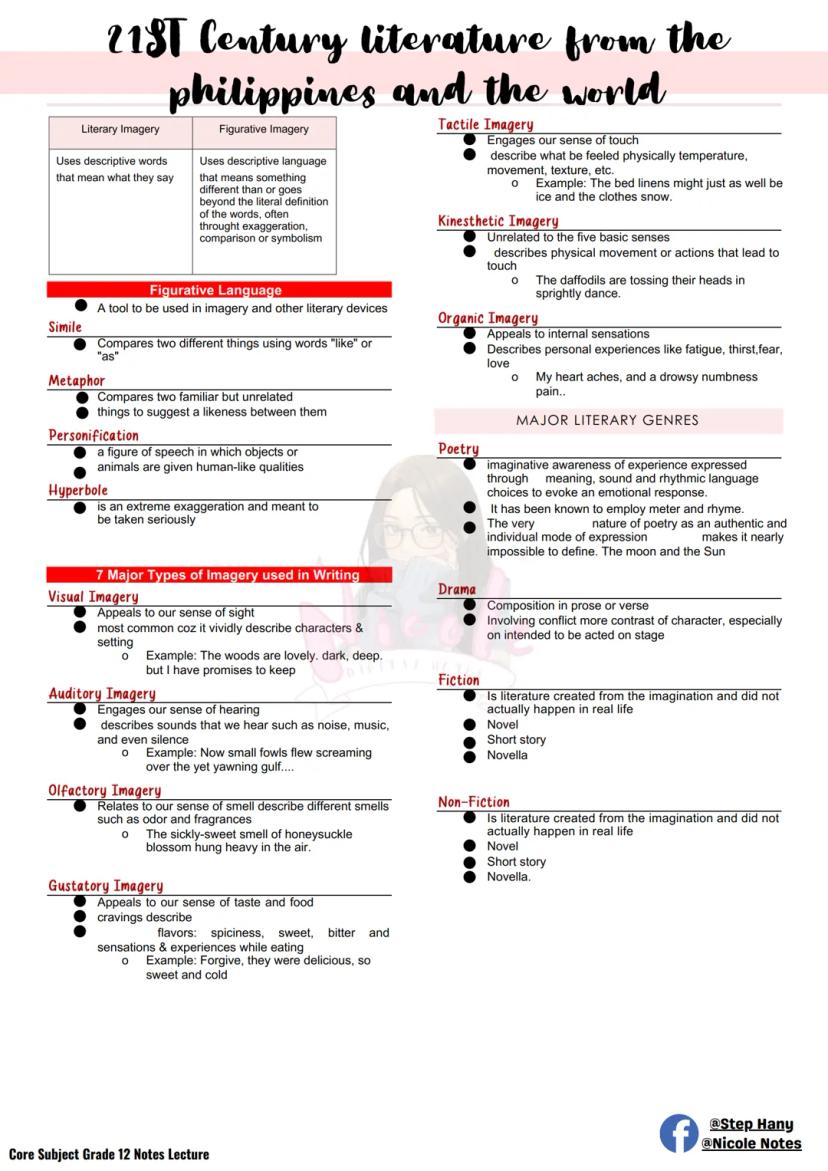
Imagery stands as a powerful element in Filipino literature, creating mental pictures through descriptive language. Writers use seven major types of imagery to engage readers' senses: visual (sight), auditory (sound), olfactory (smell), gustatory (taste), tactile (touch), kinesthetic (movement), and organic (internal sensations).

Filipino writers employ two main approaches to imagery. Literal imagery uses words that mean exactly what they say, while figurative imagery creates meaning beyond literal definitions through techniques like:

  • Similes that compare using "like" or "as"
  • Metaphors that suggest likeness between unrelated things
  • Personification that gives human qualities to objects or animals
  • Hyperbole that uses extreme exaggeration

Modern Filipino literature embraces traditional literary genres while adding contemporary innovations. Poetry continues as an expressive art form using rhythmic language to evoke emotion. Drama presents conflicts meant for stage performance, while fiction encompasses novels, short stories and novellas.

Pro tip: When analyzing Filipino literature, look for how imagery connects to cultural context. Filipino writers often use sensory descriptions that reflect the archipelagic nature of the Philippines, as seen in poems about coastlines and seas.

Understanding these literary techniques helps you appreciate how Filipino writers craft meaningful works that reflect their cultural identity while engaging with universal human experiences.

21ST Century literature from the
philippines and the world
LESSON 1: GEOGRAPHIC, LINGUISTIC AND ETHNIC DIMENSIONS OF PHILIPPINE LITERARY
FRO

Modern Literary Forms and Context

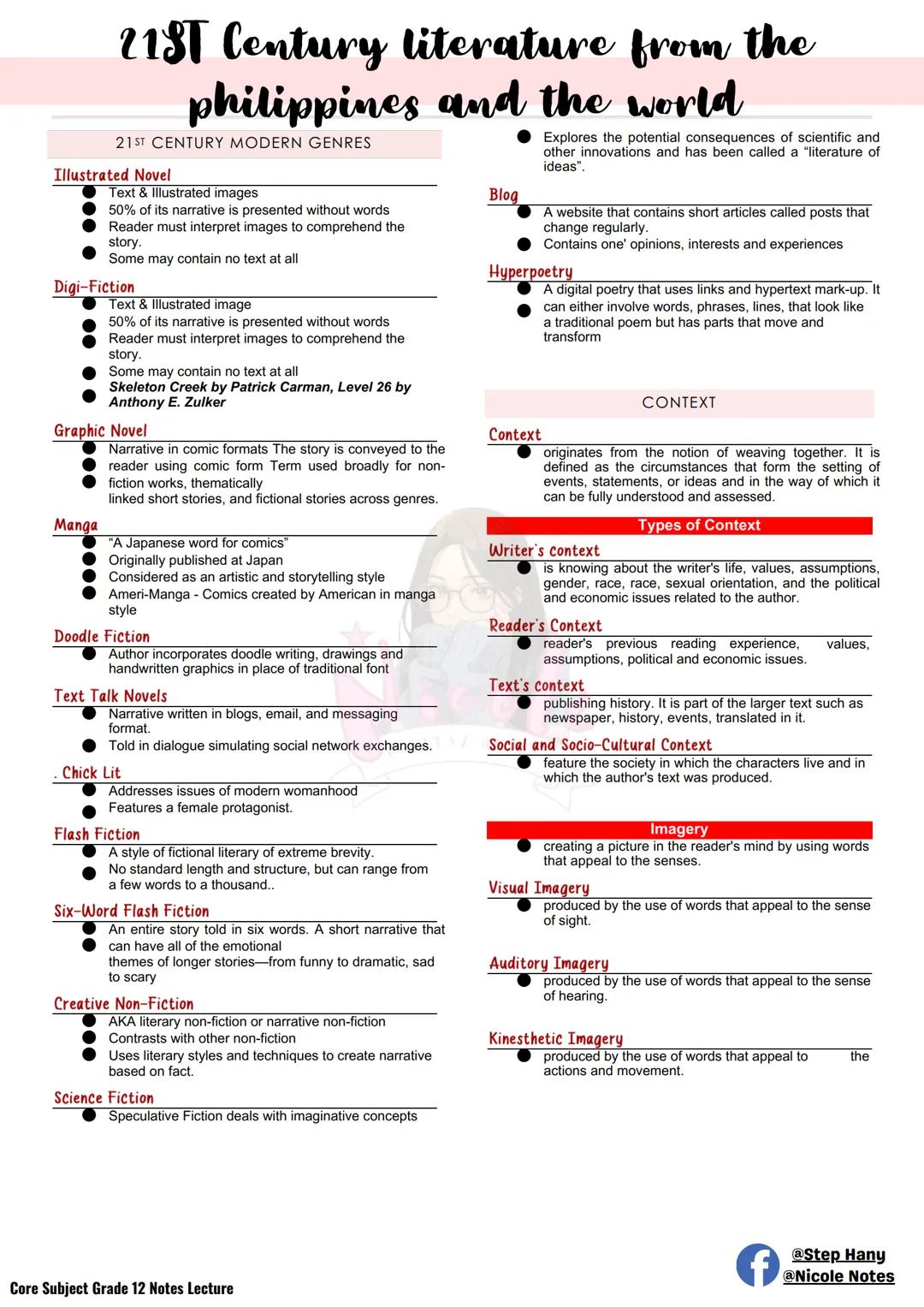
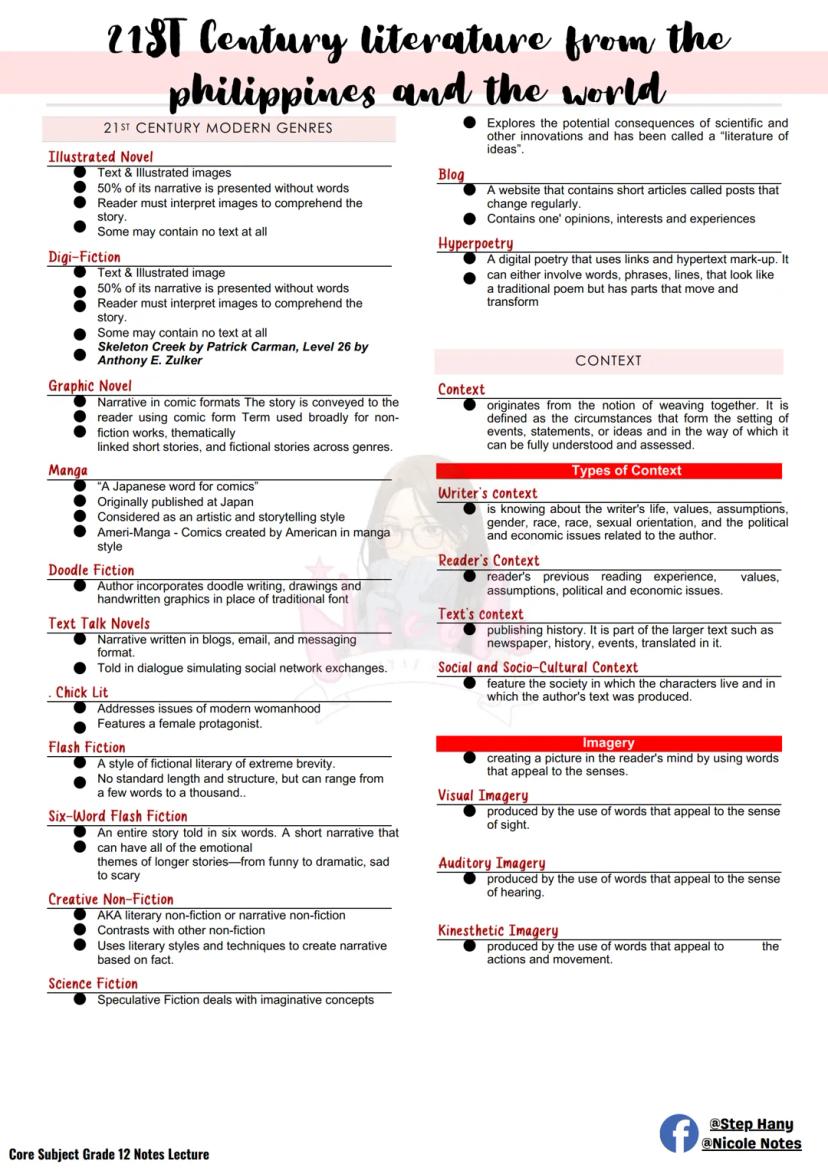
The 21st century has transformed Philippine literature with exciting new formats. Illustrated novels blend text with images, requiring readers to interpret both for full understanding. Digi-fiction takes this further by incorporating digital elements like videos or websites as part of the storytelling experience, seen in works like "Skeleton Creek" by Patrick Carman.

Graphic novels tell complete stories through comic formats, while mangaโ€”originally Japanese comicsโ€”has influenced Filipino artists to create their own "Ameri-manga" style. For shorter attention spans, flash fiction delivers complete narratives in extremely brief forms, sometimes as short as six words!

Digital communication has inspired text talk novels written in blog, email, or messaging formats, while creative non-fiction applies literary techniques to factual narratives. Filipino writers also explore science fiction that examines potential consequences of scientific innovations, and hyperpoetry that uses digital links to create transformative verse.

Understanding context is essential when reading Filipino literature. Context includes:

  • Writer's context: The author's life experiences, values, and political environment
  • Reader's context: Your own previous reading experiences and values
  • Text's context: The publishing history and larger cultural background
  • Social context: The society in which both characters and author exist

Important insight: The context of Filipino literature often reflects the complex colonial history of the Philippines. When reading Filipino works, consider how Spanish, American, and Japanese influences might have shaped the writer's perspective.

These modern literary forms give Filipino writers new tools to express their unique cultural perspectives while connecting with global audiences through innovative storytelling techniques.

21ST Century literature from the
philippines and the world
LESSON 1: GEOGRAPHIC, LINGUISTIC AND ETHNIC DIMENSIONS OF PHILIPPINE LITERARY
FRO

Multimedia and Literary Analysis

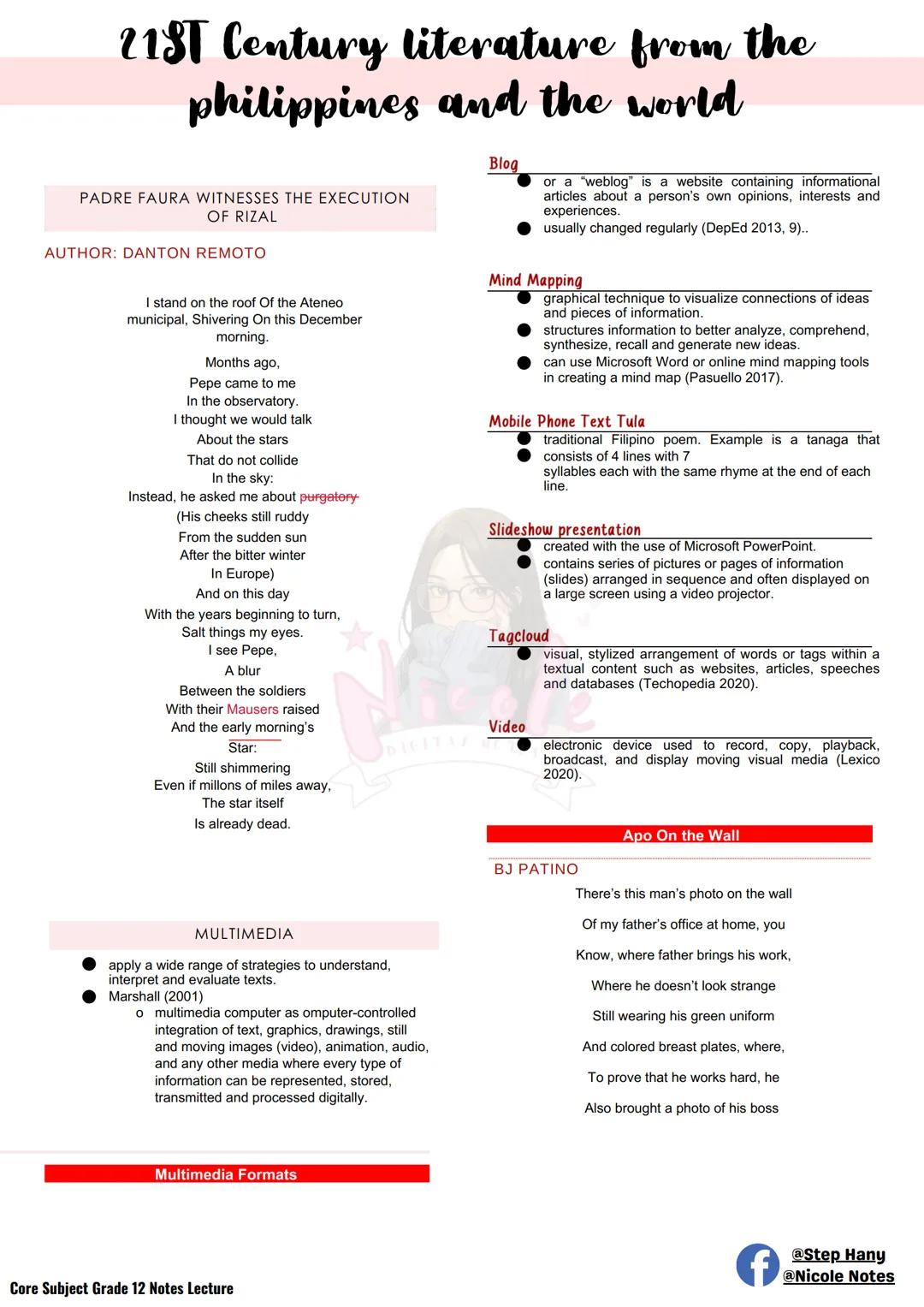
Today's Filipino literature extends beyond traditional text into diverse multimedia formats. These digital tools offer new ways to create and share literary works that combine various elements like text, graphics, video, and audio into integrated experiences.

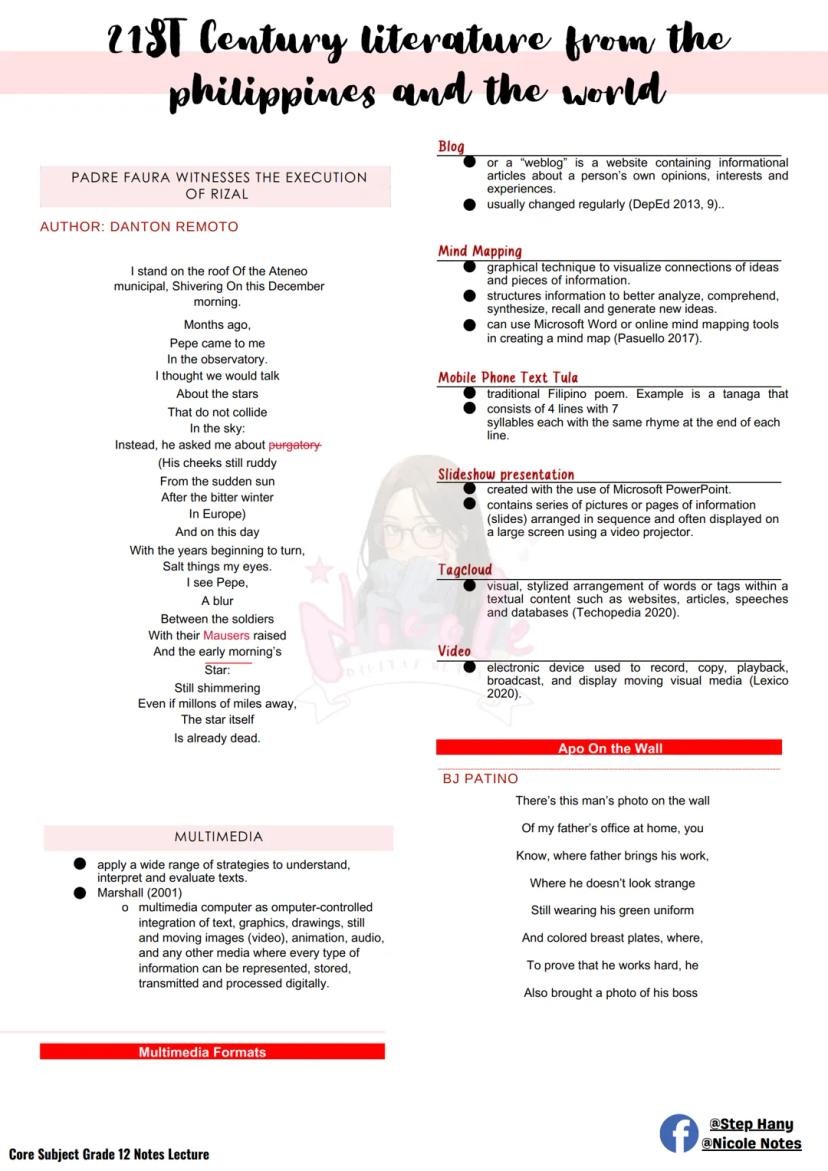
Danton Remoto's poem "Padre Faura Witnesses the Execution of Rizal" might be presented through a slideshow presentation with visual elements enhancing the powerful imagery of Rizal's execution. The line "Salt things my eyes" becomes more impactful when paired with relevant visuals that emphasize the emotional weight.

Filipino writers now regularly publish through blogs where they share opinions and experiences with instant global reach. Some create mobile phone text tulaโ€”traditional Filipino poems like the tanaga with its four seven-syllable linesโ€”adapted for digital platforms. Visual representations like tagclouds arrange words to emphasize key themes, while videos capture performances of spoken word poetry.

When analyzing multimedia Filipino literature, use mind mapping to visualize connections between different elements. This graphical technique helps you comprehend how text, visuals, and audio work together to create meaning in complex works.

Try this approach: When examining Filipino multimedia literature, consider how traditional themes like national identity, colonial history, or family relationships are transformed when presented through new technology platforms.

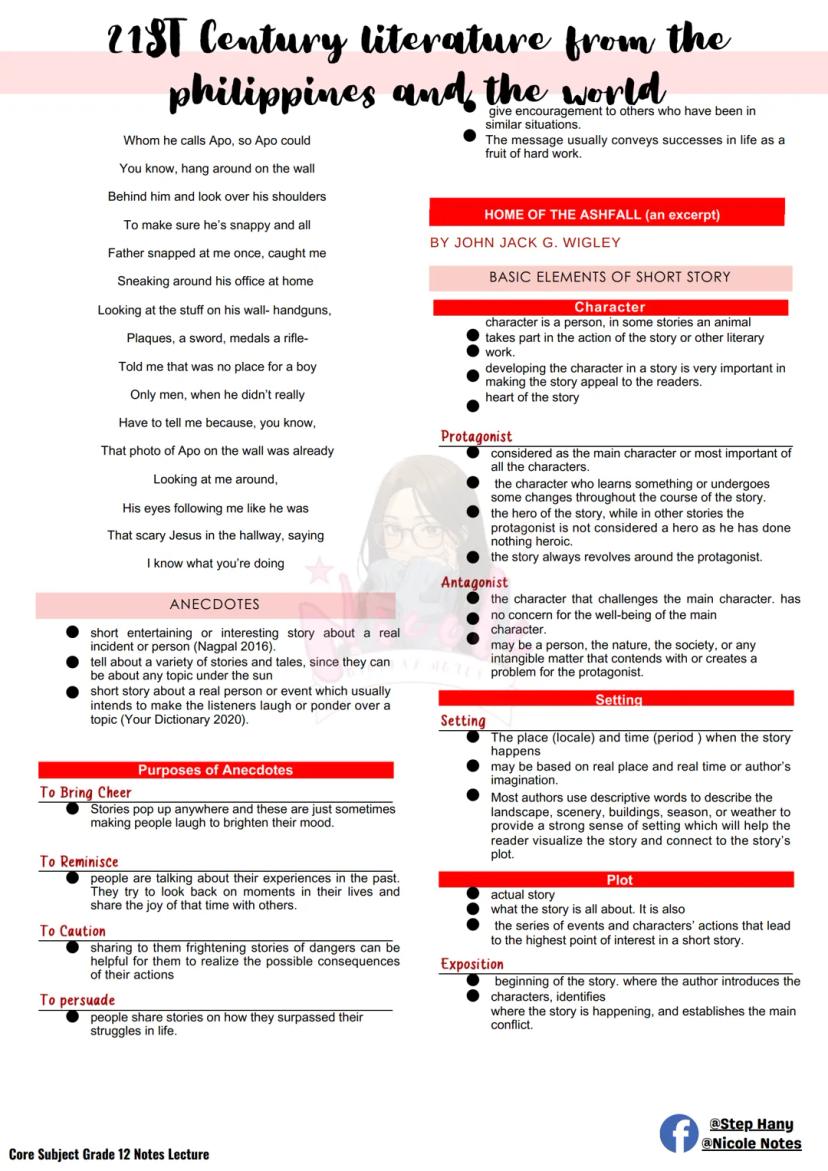
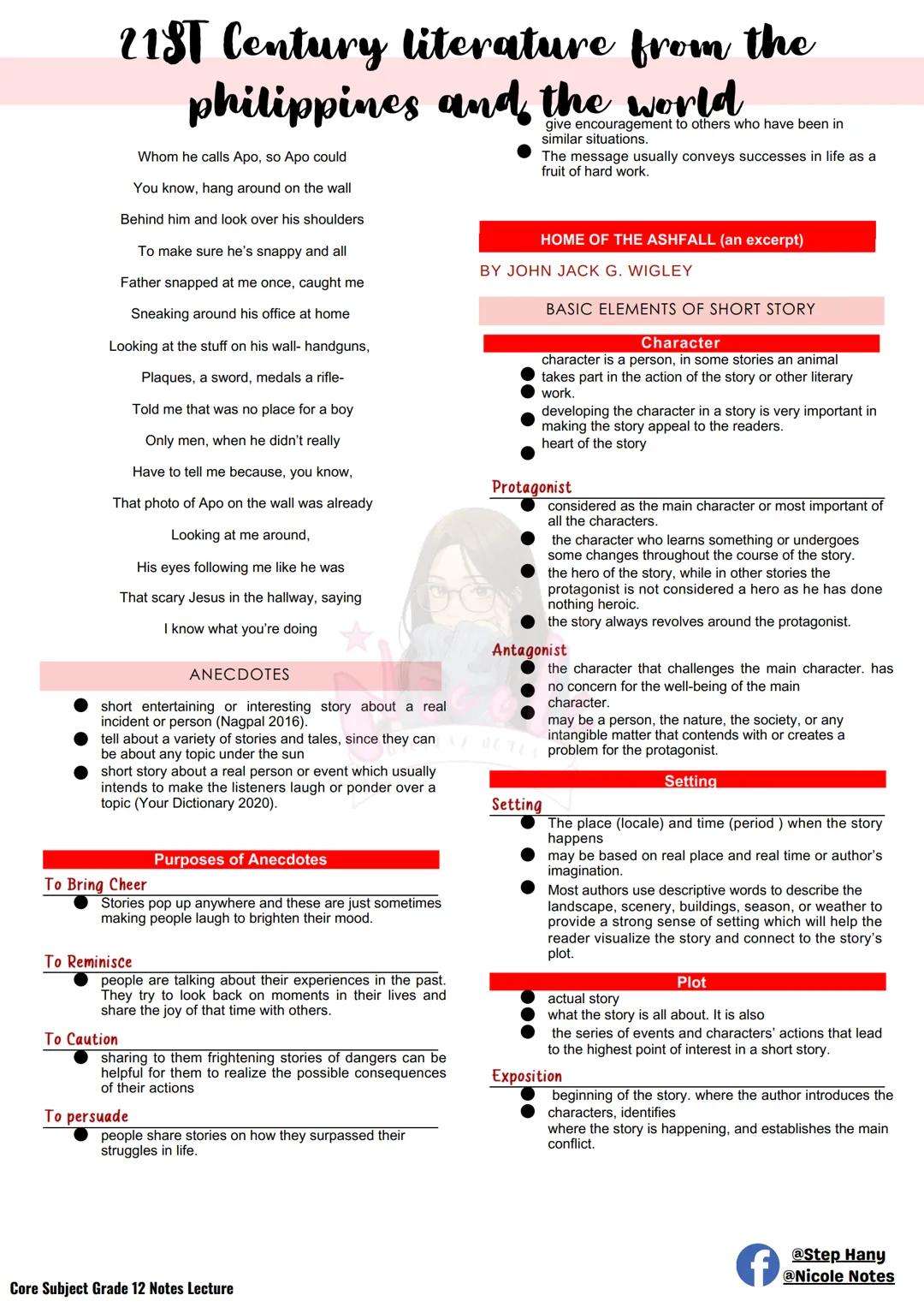
BJ Patino's poem "Apo on the Wall" demonstrates how contemporary Filipino writers address political themes in accessible ways. The speaker's observations about his father's office photo of "Apo" (a term for a political leader) creates tension through everyday details rather than direct political statements.

21ST Century literature from the
philippines and the world
LESSON 1: GEOGRAPHIC, LINGUISTIC AND ETHNIC DIMENSIONS OF PHILIPPINE LITERARY
FRO

Understanding Filipino Short Stories

Filipino short stories follow universal literary structures while incorporating distinctly Filipino cultural elements. The character serves as the heart of these narratives, with the protagonist (main character) navigating challenges throughout the story. The antagonist creates obstacles, whether as a person, nature, society, or even internal conflict.

The setting grounds Filipino stories in specific times and placesโ€”from bustling Manila streets to remote provincial villages. Writers like John Jack G. Wigley in "Home of the Ashfall" use descriptive language to help readers visualize these settings and connect to the plot.

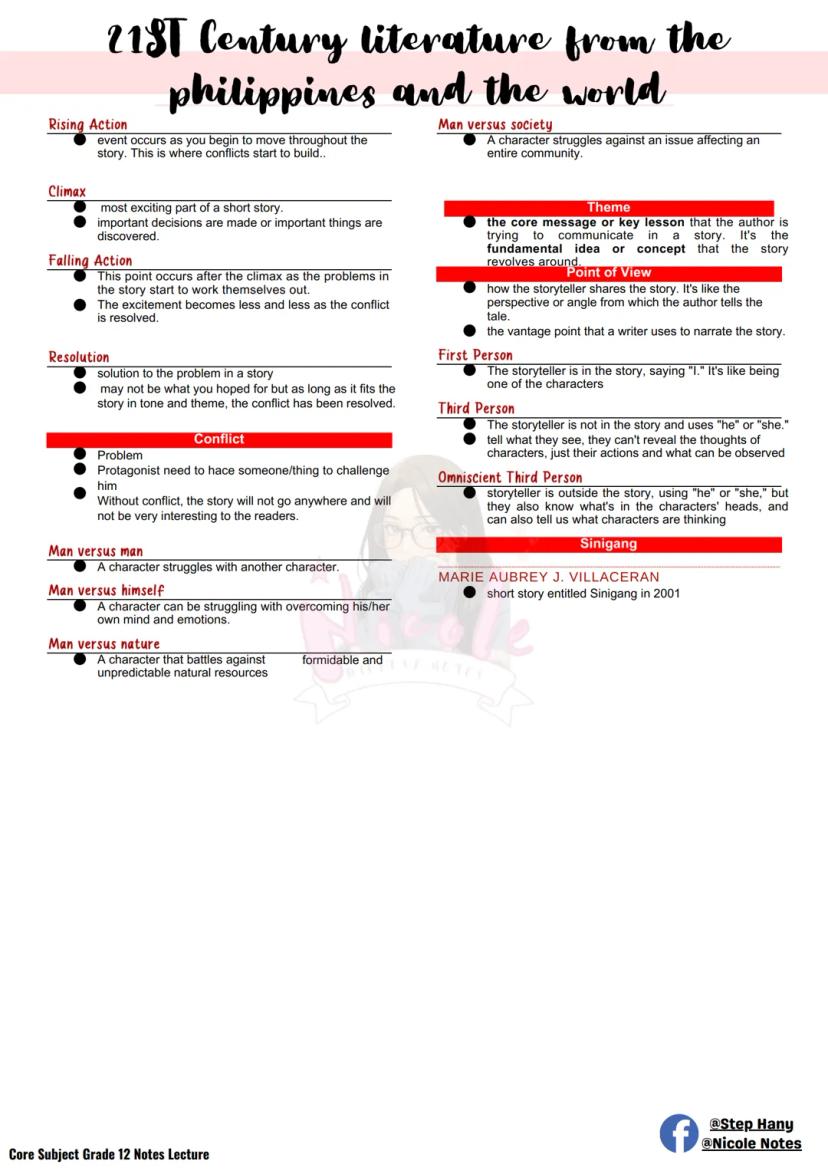
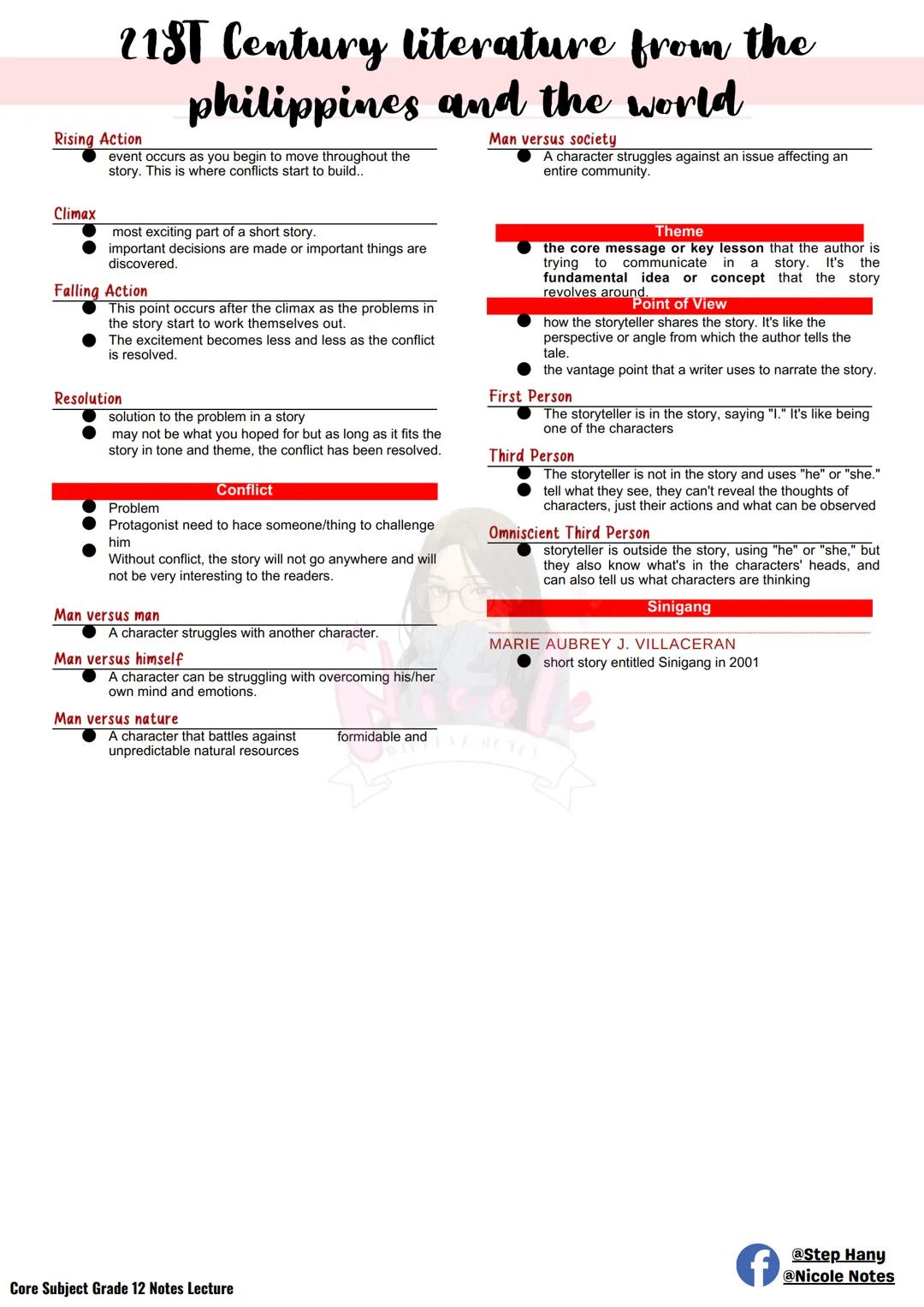
Every Filipino short story follows a plot structure that builds tension:

  • Exposition introduces characters and establishes the main conflict
  • Rising action develops conflicts and builds suspense
  • Climax delivers the most exciting moment where important discoveries occur
  • Falling action shows how conflicts begin resolving
  • Resolution provides the conclusion to the story's problem

Filipino short stories often feature conflicts reflecting the country's unique social and historical experiences. These may appear as man versus man (personal conflicts), man versus himself (internal struggles), man versus nature (environmental challenges), or man versus society (cultural and institutional obstacles).

Reading strategy: When analyzing Filipino short stories, identify the themeโ€”the core message the author communicates. Also note the point of view, whether first-person ("I"), third-person limited, or omniscient third-person, as this affects how the story unfolds.

Filipino anecdotesโ€”brief, entertaining stories about real incidentsโ€”serve various purposes in social settings: bringing cheer, reminiscing about shared experiences, cautioning against dangers, or persuading others through personal examples.

21ST Century literature from the
philippines and the world
LESSON 1: GEOGRAPHIC, LINGUISTIC AND ETHNIC DIMENSIONS OF PHILIPPINE LITERARY
FRO

Analyzing Literary Conflicts and Structure

The conflicts in Filipino short stories reveal much about cultural values and societal concerns. When a character struggles against another person (man versus man), the story often explores interpersonal relationships shaped by Filipino cultural expectations around respect, family obligation, or community harmony.

Man versus himself conflicts present characters battling internal emotionsโ€”particularly powerful in Filipino literature where characters navigate between traditional values and modern influences. These internal struggles might center on issues of identity, moral dilemmas, or personal growth.

Stories featuring man versus nature conflicts are especially relevant in the Philippine context, where natural disasters regularly impact communities. These narratives often showcase Filipino resilience while questioning humanity's relationship with the environment.

Man versus society conflicts examine how individuals challenge or conform to larger social structures. Many Filipino stories address colonial legacies, class divisions, or cultural norms through this type of conflict, revealing tensions between individual desires and collective expectations.

The theme of a Filipino storyโ€”its fundamental idea or messageโ€”emerges through these conflicts. Common themes include family bonds, national identity, social justice, and the clash between tradition and modernity. The author's choice of point of view shapes how these themes unfold:

  • First person ("I") creates intimacy with one character's perspective
  • Third person offers an outside view of characters' actions
  • Omniscient third person reveals multiple characters' thoughts and motivations

Literary analysis tip: When reading Filipino short stories like Marie Aubrey J. Villaceran's "Sinigang," notice how the title itself (a traditional Filipino sour soup) might symbolize cultural themes that become apparent through the story's conflicts and resolution.

Understanding these structural elements helps you appreciate the craft behind Filipino short stories and connect with their cultural significance.

Akala namin hindi mo na itatanong...

Ano ang Knowunity AI companion?

Ang aming AI Companion ay isang AI tool na nakatuon sa mga estudyante na nag-aalok ng higit pa sa mga sagot lang. Binuo mula sa milyong Knowunity resources, nagbibigay ito ng may-kaugnayang impormasyon, personalized na study plans, quizzes, at content direkta sa chat, na umaangkop sa iyong sariling learning journey.

Saan ko mada-download ang Knowunity app?

Maaari mong i-download ang app mula sa Google Play Store at Apple App Store.

Talaga bang libre ang Knowunity?

Tama 'yan! Mag-enjoy sa libreng access sa mga study content, makipag-connect sa kapwa mga estudyante, at kumuha ng instant na tulong โ€“ lahat nasa iyong daliri lang.

Hindi mo mahanap ang hinahanap mo? Tuklasin ang iba pang mga asignatura.

Gustong-gusto kami ng mga estudyante โ€” at magiging ganoon ka rin.

4.9/5

App Store

4.8/5

Google Play

Napakadaling gamitin at maganda ang disenyo ng app. Nahanap ko lahat ng hinahanap ko hanggang ngayon at natuto ako ng marami mula sa mga presentasyon! Tiyak na gagamitin ko ang app para sa isang takdang-aralin sa klase! At siyempre, nakakatulong din ito bilang inspirasyon.

Stefan S

gumagamit ng iOS

Sobrang ganda talaga ng app na ito. Maraming mga study notes at tulong [...]. Ang problemang subject ko ay Pranses, halimbawa, at ang app ay may maraming options para tumulong. Salamat sa app na ito, bumuti ang Pranses ko. Irerekumenda ko ito sa lahat.

Samantha Klich

Android user

Wow, talagang namangha ako. Sinubukan ko lang ang app dahil nakita ko itong ina-advertise nang maraming beses at sobrang nagulat ako. Ang app na ito ang TULONG na gusto mo para sa paaralan at higit sa lahat, nag-aalok ito ng maraming bagay, tulad ng workouts at fact sheets, na SOBRANG nakatulong sa akin.

Anna

iOS user

Pinakamagandang app sa mundo! walang masabi dahil sobrang ganda nito

Thomas R

iOS user

Napakaganda talaga. Nakakapag-review ako ng 10x mas mabuti, itong app ay mabilis na 10/10. Lubos kong inirerekomenda ito sa lahat. Pwede akong manood at maghanap ng notes. Pwede kong i-save ang mga ito sa subject folder. Pwede kong i-review anumang oras kapag bumalik ako. Kung hindi mo pa nasubukan ang app na ito, marami kang nawawala.

Basil

Android user

Ang app na ito ay nagpapalakas ng loob ko sa paghahanda sa exams, hindi lang dahil sa pagpapataas ng aking kumpiyansa sa sarili sa pamamagitan ng mga feature na nagpapahintulot sa iyo na makipag-connect sa iba at mabawasan ang pakiramdam na nag-iisa, kundi pati na rin sa paraan na nakatuon ang app sa pagpapagaan ng iyong pakiramdam. Madali itong i-navigate, masaya gamitin, at nakakatulong sa sinumang nahihirapan sa kahit anong paraan.

David K

iOS user

Sobrang galing ng app! Ilalagay ko lang ang paksa sa search bar at makakakuha na ako ng sagot kaagad. Hindi ko kailangang manood ng 10 YouTube videos para maintindihan ang isang bagay, kaya nakakatipid ako ng oras. Lubos na inirerekomenda!

Sudenaz Ocak

Android user

Sa paaralan, napakahina ko sa math pero salamat sa app, mas mahusay na ako ngayon. Lubos akong nagpapasalamat na ginawa niyo ang app na ito.

Greenlight Bonnie

Android user

napakareliable na app para tumulong at palawakin ang iyong mga ideya sa Math, English at iba pang mga related na paksa sa iyong mga gawain. gamitin mo ang app na ito kung nahihirapan ka sa mga area, susi ito para diyan. sana nag-review na ako dati. at libre rin ito kaya huwag mag-alala tungkol diyan.

Rohan U

Android user

Alam kong maraming apps gumagamit ng fake accounts para mapataas ang kanilang reviews pero ang app na ito ay deserve lahat ng papuri. Dati nakakakuha ako ng 4 sa aking English exams at ngayon nakakuha ako ng grade 7. Hindi ko pa alam ang app na ito tatlong araw bago ang exam at nakatulong ito ng SOBRA. Pakisuyong maniwala sa akin at gamitin ito dahil sigurado akong makikita mo rin ang mga pagbabago.

Xander S

iOS user

SOBRANG KAPAKI-PAKINABANG NG MGA QUIZZES AT FLASHCARDS AT SOBRANG GUSTO KO ANG SCHOOLGPT. PARANG CHATGPT DIN PERO MAS MATALINO!! TINULUNGAN DIN AKO SA AKING MASCARA PROBLEMS!! PATI NA RIN SA AKING TUNAY NA MGA SUBJECTS! DUHHH ๐Ÿ˜๐Ÿ˜๐Ÿ˜ฒ๐Ÿค‘๐Ÿ’—โœจ๐ŸŽ€๐Ÿ˜ฎ

Elisha

iOS user

Grabe talaga ang app na to. Sobrang nakakaboring sakin ang pagreview pero ginagawa ng app na to na sobrang dali mag-organize ng lahat at pwede mong tanungin ang libreng ai para subukin ang sarili mo kaya sobrang buti at madali mong ma-upload ang sarili mong mga bagay. highly recommend bilang isang taong nagte-take ng mocks ngayon

Paul T

iOS user

Napakadaling gamitin at maganda ang disenyo ng app. Nahanap ko lahat ng hinahanap ko hanggang ngayon at natuto ako ng marami mula sa mga presentasyon! Tiyak na gagamitin ko ang app para sa isang takdang-aralin sa klase! At siyempre, nakakatulong din ito bilang inspirasyon.

Stefan S

gumagamit ng iOS

Sobrang ganda talaga ng app na ito. Maraming mga study notes at tulong [...]. Ang problemang subject ko ay Pranses, halimbawa, at ang app ay may maraming options para tumulong. Salamat sa app na ito, bumuti ang Pranses ko. Irerekumenda ko ito sa lahat.

Samantha Klich

Android user

Wow, talagang namangha ako. Sinubukan ko lang ang app dahil nakita ko itong ina-advertise nang maraming beses at sobrang nagulat ako. Ang app na ito ang TULONG na gusto mo para sa paaralan at higit sa lahat, nag-aalok ito ng maraming bagay, tulad ng workouts at fact sheets, na SOBRANG nakatulong sa akin.

Anna

iOS user

Pinakamagandang app sa mundo! walang masabi dahil sobrang ganda nito

Thomas R

iOS user

Napakaganda talaga. Nakakapag-review ako ng 10x mas mabuti, itong app ay mabilis na 10/10. Lubos kong inirerekomenda ito sa lahat. Pwede akong manood at maghanap ng notes. Pwede kong i-save ang mga ito sa subject folder. Pwede kong i-review anumang oras kapag bumalik ako. Kung hindi mo pa nasubukan ang app na ito, marami kang nawawala.

Basil

Android user

Ang app na ito ay nagpapalakas ng loob ko sa paghahanda sa exams, hindi lang dahil sa pagpapataas ng aking kumpiyansa sa sarili sa pamamagitan ng mga feature na nagpapahintulot sa iyo na makipag-connect sa iba at mabawasan ang pakiramdam na nag-iisa, kundi pati na rin sa paraan na nakatuon ang app sa pagpapagaan ng iyong pakiramdam. Madali itong i-navigate, masaya gamitin, at nakakatulong sa sinumang nahihirapan sa kahit anong paraan.

David K

iOS user

Sobrang galing ng app! Ilalagay ko lang ang paksa sa search bar at makakakuha na ako ng sagot kaagad. Hindi ko kailangang manood ng 10 YouTube videos para maintindihan ang isang bagay, kaya nakakatipid ako ng oras. Lubos na inirerekomenda!

Sudenaz Ocak

Android user

Sa paaralan, napakahina ko sa math pero salamat sa app, mas mahusay na ako ngayon. Lubos akong nagpapasalamat na ginawa niyo ang app na ito.

Greenlight Bonnie

Android user

napakareliable na app para tumulong at palawakin ang iyong mga ideya sa Math, English at iba pang mga related na paksa sa iyong mga gawain. gamitin mo ang app na ito kung nahihirapan ka sa mga area, susi ito para diyan. sana nag-review na ako dati. at libre rin ito kaya huwag mag-alala tungkol diyan.

Rohan U

Android user

Alam kong maraming apps gumagamit ng fake accounts para mapataas ang kanilang reviews pero ang app na ito ay deserve lahat ng papuri. Dati nakakakuha ako ng 4 sa aking English exams at ngayon nakakuha ako ng grade 7. Hindi ko pa alam ang app na ito tatlong araw bago ang exam at nakatulong ito ng SOBRA. Pakisuyong maniwala sa akin at gamitin ito dahil sigurado akong makikita mo rin ang mga pagbabago.

Xander S

iOS user

SOBRANG KAPAKI-PAKINABANG NG MGA QUIZZES AT FLASHCARDS AT SOBRANG GUSTO KO ANG SCHOOLGPT. PARANG CHATGPT DIN PERO MAS MATALINO!! TINULUNGAN DIN AKO SA AKING MASCARA PROBLEMS!! PATI NA RIN SA AKING TUNAY NA MGA SUBJECTS! DUHHH ๐Ÿ˜๐Ÿ˜๐Ÿ˜ฒ๐Ÿค‘๐Ÿ’—โœจ๐ŸŽ€๐Ÿ˜ฎ

Elisha

iOS user

Grabe talaga ang app na to. Sobrang nakakaboring sakin ang pagreview pero ginagawa ng app na to na sobrang dali mag-organize ng lahat at pwede mong tanungin ang libreng ai para subukin ang sarili mo kaya sobrang buti at madali mong ma-upload ang sarili mong mga bagay. highly recommend bilang isang taong nagte-take ng mocks ngayon

Paul T

iOS user

ย 

Social Studies

โ€ข

554

โ€ข

Dis 9, 2025

โ€ข

7 mga pahina

21st Century Skills Notes for Grade 12

S

sam โ‹†๐™šโ‚ŠหšโŠนโ™ก

@samantha.badiola_

Dive into the rich tapestry of Philippine literature as it evolved from pre-colonial times to the modern era. This journey traces how Filipino literary forms have been shaped by historical periods, cultural influences, and the shifting dynamics of language and... Ipakita pa

21ST Century literature from the
philippines and the world
LESSON 1: GEOGRAPHIC, LINGUISTIC AND ETHNIC DIMENSIONS OF PHILIPPINE LITERARY
FRO

Mag-sign up para makita ang contentLibre ito!

Access sa lahat ng dokumento

Pagbutihin ang iyong mga grado

Sumali sa milyong mga estudyante

Sa pag-sign up, tinatanggap mo ang Terms of Service at Privacy Policy

The Evolution of Philippine Literature

Philippine literature began long before colonizers arrived, with folktales and folk songs serving as vessels for cultural values and life lessons. The Epic Age produced lengthy narrative poems centered on heroes, reflecting societal ideals and cultural identity.

When the Spanish arrived, our literary landscape transformed dramatically. The Alibata writing system was replaced by the Roman alphabet, while Christian teachings became embedded in literary works. During this period, literature divided into religious and secular forms, with recreational plays like Zarsuela becoming popular cultural expressions.

The Period of Enlightenment (1872-1898) marked a turning point as educated Filipinos called Illustrados began challenging colonial rule through their writings. Key figures included Jose Rizal with his revolutionary novels like "Noli Me Tangere," and Marcelo del Pilar with patriotic works such as "Pagibig sa Tinubuang Lupa."

Did you know? During the American period (1898-1944), Filipino writers were encouraged to write in English, creating a parallel literary tradition alongside works in Tagalog and regional languages. This dual-language development continues to influence Filipino literary expression today.

The Japanese occupation (1941-1945) disrupted literary development, with only government-approved publications allowed. Despite these restrictions, Filipino poetry flourished in three forms: Haiku (17 syllables in three lines), Tanaga (short poems with measure and rhyme), and Karaniwang Anyo (usual form).

21ST Century literature from the
philippines and the world
LESSON 1: GEOGRAPHIC, LINGUISTIC AND ETHNIC DIMENSIONS OF PHILIPPINE LITERARY
FRO

Mag-sign up para makita ang contentLibre ito!

Access sa lahat ng dokumento

Pagbutihin ang iyong mga grado

Sumali sa milyong mga estudyante

Sa pag-sign up, tinatanggap mo ang Terms of Service at Privacy Policy

Philippine Literature Through Political Changes

The Period of Activism (1970-1972) saw literature becoming a powerful vehicle for expressing social and political dissent. Young writers demanded government reforms, making their voices heard through demonstrations, sidewalk expressions, and revolutionary literature that challenged the status quo.

When Martial Law began in 1972, Philippine literature adapted to new constraints. During this "New Society" period (1972-1980), poems shifted toward themes of patience, native culture, and natural beauty. Newspapers transformed too, focusing on economic progress and tourism rather than crime reporting. Despite restrictions, the Carlos Palanca Awards continued recognizing literary excellence annually.

The Third Republic period following the lifting of Martial Law in 1981 brought both romantic and revolutionary themes to poetry. Filipino songs from this era dealt with authentic human experiencesโ€”grief, poverty, aspirations for freedom, and love of country.

Remember this: Each political period in Philippine history created its own literary response, showing how Filipino writers have consistently used literature as a tool for expression, resistance, and cultural preservation.

The People Power Revolution (1986) marked another literary turning point, with publications like The Inquirer and Malaya gaining popularity. These newspapers reflected the nation's newfound freedom and democratic aspirations, demonstrating how Philippine literature continues to evolve alongside the country's political journey.

21ST Century literature from the
philippines and the world
LESSON 1: GEOGRAPHIC, LINGUISTIC AND ETHNIC DIMENSIONS OF PHILIPPINE LITERARY
FRO

Mag-sign up para makita ang contentLibre ito!

Access sa lahat ng dokumento

Pagbutihin ang iyong mga grado

Sumali sa milyong mga estudyante

Sa pag-sign up, tinatanggap mo ang Terms of Service at Privacy Policy

Literary Techniques and 21st Century Genres

Imagery stands as a powerful element in Filipino literature, creating mental pictures through descriptive language. Writers use seven major types of imagery to engage readers' senses: visual (sight), auditory (sound), olfactory (smell), gustatory (taste), tactile (touch), kinesthetic (movement), and organic (internal sensations).

Filipino writers employ two main approaches to imagery. Literal imagery uses words that mean exactly what they say, while figurative imagery creates meaning beyond literal definitions through techniques like:

  • Similes that compare using "like" or "as"
  • Metaphors that suggest likeness between unrelated things
  • Personification that gives human qualities to objects or animals
  • Hyperbole that uses extreme exaggeration

Modern Filipino literature embraces traditional literary genres while adding contemporary innovations. Poetry continues as an expressive art form using rhythmic language to evoke emotion. Drama presents conflicts meant for stage performance, while fiction encompasses novels, short stories and novellas.

Pro tip: When analyzing Filipino literature, look for how imagery connects to cultural context. Filipino writers often use sensory descriptions that reflect the archipelagic nature of the Philippines, as seen in poems about coastlines and seas.

Understanding these literary techniques helps you appreciate how Filipino writers craft meaningful works that reflect their cultural identity while engaging with universal human experiences.

21ST Century literature from the
philippines and the world
LESSON 1: GEOGRAPHIC, LINGUISTIC AND ETHNIC DIMENSIONS OF PHILIPPINE LITERARY
FRO

Mag-sign up para makita ang contentLibre ito!

Access sa lahat ng dokumento

Pagbutihin ang iyong mga grado

Sumali sa milyong mga estudyante

Sa pag-sign up, tinatanggap mo ang Terms of Service at Privacy Policy

Modern Literary Forms and Context

The 21st century has transformed Philippine literature with exciting new formats. Illustrated novels blend text with images, requiring readers to interpret both for full understanding. Digi-fiction takes this further by incorporating digital elements like videos or websites as part of the storytelling experience, seen in works like "Skeleton Creek" by Patrick Carman.

Graphic novels tell complete stories through comic formats, while mangaโ€”originally Japanese comicsโ€”has influenced Filipino artists to create their own "Ameri-manga" style. For shorter attention spans, flash fiction delivers complete narratives in extremely brief forms, sometimes as short as six words!

Digital communication has inspired text talk novels written in blog, email, or messaging formats, while creative non-fiction applies literary techniques to factual narratives. Filipino writers also explore science fiction that examines potential consequences of scientific innovations, and hyperpoetry that uses digital links to create transformative verse.

Understanding context is essential when reading Filipino literature. Context includes:

  • Writer's context: The author's life experiences, values, and political environment
  • Reader's context: Your own previous reading experiences and values
  • Text's context: The publishing history and larger cultural background
  • Social context: The society in which both characters and author exist

Important insight: The context of Filipino literature often reflects the complex colonial history of the Philippines. When reading Filipino works, consider how Spanish, American, and Japanese influences might have shaped the writer's perspective.

These modern literary forms give Filipino writers new tools to express their unique cultural perspectives while connecting with global audiences through innovative storytelling techniques.

21ST Century literature from the
philippines and the world
LESSON 1: GEOGRAPHIC, LINGUISTIC AND ETHNIC DIMENSIONS OF PHILIPPINE LITERARY
FRO

Mag-sign up para makita ang contentLibre ito!

Access sa lahat ng dokumento

Pagbutihin ang iyong mga grado

Sumali sa milyong mga estudyante

Sa pag-sign up, tinatanggap mo ang Terms of Service at Privacy Policy

Multimedia and Literary Analysis

Today's Filipino literature extends beyond traditional text into diverse multimedia formats. These digital tools offer new ways to create and share literary works that combine various elements like text, graphics, video, and audio into integrated experiences.

Danton Remoto's poem "Padre Faura Witnesses the Execution of Rizal" might be presented through a slideshow presentation with visual elements enhancing the powerful imagery of Rizal's execution. The line "Salt things my eyes" becomes more impactful when paired with relevant visuals that emphasize the emotional weight.

Filipino writers now regularly publish through blogs where they share opinions and experiences with instant global reach. Some create mobile phone text tulaโ€”traditional Filipino poems like the tanaga with its four seven-syllable linesโ€”adapted for digital platforms. Visual representations like tagclouds arrange words to emphasize key themes, while videos capture performances of spoken word poetry.

When analyzing multimedia Filipino literature, use mind mapping to visualize connections between different elements. This graphical technique helps you comprehend how text, visuals, and audio work together to create meaning in complex works.

Try this approach: When examining Filipino multimedia literature, consider how traditional themes like national identity, colonial history, or family relationships are transformed when presented through new technology platforms.

BJ Patino's poem "Apo on the Wall" demonstrates how contemporary Filipino writers address political themes in accessible ways. The speaker's observations about his father's office photo of "Apo" (a term for a political leader) creates tension through everyday details rather than direct political statements.

21ST Century literature from the
philippines and the world
LESSON 1: GEOGRAPHIC, LINGUISTIC AND ETHNIC DIMENSIONS OF PHILIPPINE LITERARY
FRO

Mag-sign up para makita ang contentLibre ito!

Access sa lahat ng dokumento

Pagbutihin ang iyong mga grado

Sumali sa milyong mga estudyante

Sa pag-sign up, tinatanggap mo ang Terms of Service at Privacy Policy

Understanding Filipino Short Stories

Filipino short stories follow universal literary structures while incorporating distinctly Filipino cultural elements. The character serves as the heart of these narratives, with the protagonist (main character) navigating challenges throughout the story. The antagonist creates obstacles, whether as a person, nature, society, or even internal conflict.

The setting grounds Filipino stories in specific times and placesโ€”from bustling Manila streets to remote provincial villages. Writers like John Jack G. Wigley in "Home of the Ashfall" use descriptive language to help readers visualize these settings and connect to the plot.

Every Filipino short story follows a plot structure that builds tension:

  • Exposition introduces characters and establishes the main conflict
  • Rising action develops conflicts and builds suspense
  • Climax delivers the most exciting moment where important discoveries occur
  • Falling action shows how conflicts begin resolving
  • Resolution provides the conclusion to the story's problem

Filipino short stories often feature conflicts reflecting the country's unique social and historical experiences. These may appear as man versus man (personal conflicts), man versus himself (internal struggles), man versus nature (environmental challenges), or man versus society (cultural and institutional obstacles).

Reading strategy: When analyzing Filipino short stories, identify the themeโ€”the core message the author communicates. Also note the point of view, whether first-person ("I"), third-person limited, or omniscient third-person, as this affects how the story unfolds.

Filipino anecdotesโ€”brief, entertaining stories about real incidentsโ€”serve various purposes in social settings: bringing cheer, reminiscing about shared experiences, cautioning against dangers, or persuading others through personal examples.

21ST Century literature from the
philippines and the world
LESSON 1: GEOGRAPHIC, LINGUISTIC AND ETHNIC DIMENSIONS OF PHILIPPINE LITERARY
FRO

Mag-sign up para makita ang contentLibre ito!

Access sa lahat ng dokumento

Pagbutihin ang iyong mga grado

Sumali sa milyong mga estudyante

Sa pag-sign up, tinatanggap mo ang Terms of Service at Privacy Policy

Analyzing Literary Conflicts and Structure

The conflicts in Filipino short stories reveal much about cultural values and societal concerns. When a character struggles against another person (man versus man), the story often explores interpersonal relationships shaped by Filipino cultural expectations around respect, family obligation, or community harmony.

Man versus himself conflicts present characters battling internal emotionsโ€”particularly powerful in Filipino literature where characters navigate between traditional values and modern influences. These internal struggles might center on issues of identity, moral dilemmas, or personal growth.

Stories featuring man versus nature conflicts are especially relevant in the Philippine context, where natural disasters regularly impact communities. These narratives often showcase Filipino resilience while questioning humanity's relationship with the environment.

Man versus society conflicts examine how individuals challenge or conform to larger social structures. Many Filipino stories address colonial legacies, class divisions, or cultural norms through this type of conflict, revealing tensions between individual desires and collective expectations.

The theme of a Filipino storyโ€”its fundamental idea or messageโ€”emerges through these conflicts. Common themes include family bonds, national identity, social justice, and the clash between tradition and modernity. The author's choice of point of view shapes how these themes unfold:

  • First person ("I") creates intimacy with one character's perspective
  • Third person offers an outside view of characters' actions
  • Omniscient third person reveals multiple characters' thoughts and motivations

Literary analysis tip: When reading Filipino short stories like Marie Aubrey J. Villaceran's "Sinigang," notice how the title itself (a traditional Filipino sour soup) might symbolize cultural themes that become apparent through the story's conflicts and resolution.

Understanding these structural elements helps you appreciate the craft behind Filipino short stories and connect with their cultural significance.
Akala namin hindi mo na itatanong...

Ano ang Knowunity AI companion?

Ang aming AI Companion ay isang AI tool na nakatuon sa mga estudyante na nag-aalok ng higit pa sa mga sagot lang. Binuo mula sa milyong Knowunity resources, nagbibigay ito ng may-kaugnayang impormasyon, personalized na study plans, quizzes, at content direkta sa chat, na umaangkop sa iyong sariling learning journey.

Saan ko mada-download ang Knowunity app?

Maaari mong i-download ang app mula sa Google Play Store at Apple App Store.

Talaga bang libre ang Knowunity?

Tama 'yan! Mag-enjoy sa libreng access sa mga study content, makipag-connect sa kapwa mga estudyante, at kumuha ng instant na tulong โ€“ lahat nasa iyong daliri lang.

12

Smart Tools NEW

I-transform ang note na ito sa: โœ“ 50+ Practice Questions โœ“ Interactive Flashcards โœ“ Full Mock Exam โœ“ Essay Outlines

Praktis Exam
Quiz
Flashcards
Essay

Hindi mo mahanap ang hinahanap mo? Tuklasin ang iba pang mga asignatura.

Gustong-gusto kami ng mga estudyante โ€” at magiging ganoon ka rin.

4.9/5

App Store

4.8/5

Google Play

Napakadaling gamitin at maganda ang disenyo ng app. Nahanap ko lahat ng hinahanap ko hanggang ngayon at natuto ako ng marami mula sa mga presentasyon! Tiyak na gagamitin ko ang app para sa isang takdang-aralin sa klase! At siyempre, nakakatulong din ito bilang inspirasyon.

Stefan S

gumagamit ng iOS

Sobrang ganda talaga ng app na ito. Maraming mga study notes at tulong [...]. Ang problemang subject ko ay Pranses, halimbawa, at ang app ay may maraming options para tumulong. Salamat sa app na ito, bumuti ang Pranses ko. Irerekumenda ko ito sa lahat.

Samantha Klich

Android user

Wow, talagang namangha ako. Sinubukan ko lang ang app dahil nakita ko itong ina-advertise nang maraming beses at sobrang nagulat ako. Ang app na ito ang TULONG na gusto mo para sa paaralan at higit sa lahat, nag-aalok ito ng maraming bagay, tulad ng workouts at fact sheets, na SOBRANG nakatulong sa akin.

Anna

iOS user

Pinakamagandang app sa mundo! walang masabi dahil sobrang ganda nito

Thomas R

iOS user

Napakaganda talaga. Nakakapag-review ako ng 10x mas mabuti, itong app ay mabilis na 10/10. Lubos kong inirerekomenda ito sa lahat. Pwede akong manood at maghanap ng notes. Pwede kong i-save ang mga ito sa subject folder. Pwede kong i-review anumang oras kapag bumalik ako. Kung hindi mo pa nasubukan ang app na ito, marami kang nawawala.

Basil

Android user

Ang app na ito ay nagpapalakas ng loob ko sa paghahanda sa exams, hindi lang dahil sa pagpapataas ng aking kumpiyansa sa sarili sa pamamagitan ng mga feature na nagpapahintulot sa iyo na makipag-connect sa iba at mabawasan ang pakiramdam na nag-iisa, kundi pati na rin sa paraan na nakatuon ang app sa pagpapagaan ng iyong pakiramdam. Madali itong i-navigate, masaya gamitin, at nakakatulong sa sinumang nahihirapan sa kahit anong paraan.

David K

iOS user

Sobrang galing ng app! Ilalagay ko lang ang paksa sa search bar at makakakuha na ako ng sagot kaagad. Hindi ko kailangang manood ng 10 YouTube videos para maintindihan ang isang bagay, kaya nakakatipid ako ng oras. Lubos na inirerekomenda!

Sudenaz Ocak

Android user

Sa paaralan, napakahina ko sa math pero salamat sa app, mas mahusay na ako ngayon. Lubos akong nagpapasalamat na ginawa niyo ang app na ito.

Greenlight Bonnie

Android user

napakareliable na app para tumulong at palawakin ang iyong mga ideya sa Math, English at iba pang mga related na paksa sa iyong mga gawain. gamitin mo ang app na ito kung nahihirapan ka sa mga area, susi ito para diyan. sana nag-review na ako dati. at libre rin ito kaya huwag mag-alala tungkol diyan.

Rohan U

Android user

Alam kong maraming apps gumagamit ng fake accounts para mapataas ang kanilang reviews pero ang app na ito ay deserve lahat ng papuri. Dati nakakakuha ako ng 4 sa aking English exams at ngayon nakakuha ako ng grade 7. Hindi ko pa alam ang app na ito tatlong araw bago ang exam at nakatulong ito ng SOBRA. Pakisuyong maniwala sa akin at gamitin ito dahil sigurado akong makikita mo rin ang mga pagbabago.

Xander S

iOS user

SOBRANG KAPAKI-PAKINABANG NG MGA QUIZZES AT FLASHCARDS AT SOBRANG GUSTO KO ANG SCHOOLGPT. PARANG CHATGPT DIN PERO MAS MATALINO!! TINULUNGAN DIN AKO SA AKING MASCARA PROBLEMS!! PATI NA RIN SA AKING TUNAY NA MGA SUBJECTS! DUHHH ๐Ÿ˜๐Ÿ˜๐Ÿ˜ฒ๐Ÿค‘๐Ÿ’—โœจ๐ŸŽ€๐Ÿ˜ฎ

Elisha

iOS user

Grabe talaga ang app na to. Sobrang nakakaboring sakin ang pagreview pero ginagawa ng app na to na sobrang dali mag-organize ng lahat at pwede mong tanungin ang libreng ai para subukin ang sarili mo kaya sobrang buti at madali mong ma-upload ang sarili mong mga bagay. highly recommend bilang isang taong nagte-take ng mocks ngayon

Paul T

iOS user

Napakadaling gamitin at maganda ang disenyo ng app. Nahanap ko lahat ng hinahanap ko hanggang ngayon at natuto ako ng marami mula sa mga presentasyon! Tiyak na gagamitin ko ang app para sa isang takdang-aralin sa klase! At siyempre, nakakatulong din ito bilang inspirasyon.

Stefan S

gumagamit ng iOS

Sobrang ganda talaga ng app na ito. Maraming mga study notes at tulong [...]. Ang problemang subject ko ay Pranses, halimbawa, at ang app ay may maraming options para tumulong. Salamat sa app na ito, bumuti ang Pranses ko. Irerekumenda ko ito sa lahat.

Samantha Klich

Android user

Wow, talagang namangha ako. Sinubukan ko lang ang app dahil nakita ko itong ina-advertise nang maraming beses at sobrang nagulat ako. Ang app na ito ang TULONG na gusto mo para sa paaralan at higit sa lahat, nag-aalok ito ng maraming bagay, tulad ng workouts at fact sheets, na SOBRANG nakatulong sa akin.

Anna

iOS user

Pinakamagandang app sa mundo! walang masabi dahil sobrang ganda nito

Thomas R

iOS user

Napakaganda talaga. Nakakapag-review ako ng 10x mas mabuti, itong app ay mabilis na 10/10. Lubos kong inirerekomenda ito sa lahat. Pwede akong manood at maghanap ng notes. Pwede kong i-save ang mga ito sa subject folder. Pwede kong i-review anumang oras kapag bumalik ako. Kung hindi mo pa nasubukan ang app na ito, marami kang nawawala.

Basil

Android user

Ang app na ito ay nagpapalakas ng loob ko sa paghahanda sa exams, hindi lang dahil sa pagpapataas ng aking kumpiyansa sa sarili sa pamamagitan ng mga feature na nagpapahintulot sa iyo na makipag-connect sa iba at mabawasan ang pakiramdam na nag-iisa, kundi pati na rin sa paraan na nakatuon ang app sa pagpapagaan ng iyong pakiramdam. Madali itong i-navigate, masaya gamitin, at nakakatulong sa sinumang nahihirapan sa kahit anong paraan.

David K

iOS user

Sobrang galing ng app! Ilalagay ko lang ang paksa sa search bar at makakakuha na ako ng sagot kaagad. Hindi ko kailangang manood ng 10 YouTube videos para maintindihan ang isang bagay, kaya nakakatipid ako ng oras. Lubos na inirerekomenda!

Sudenaz Ocak

Android user

Sa paaralan, napakahina ko sa math pero salamat sa app, mas mahusay na ako ngayon. Lubos akong nagpapasalamat na ginawa niyo ang app na ito.

Greenlight Bonnie

Android user

napakareliable na app para tumulong at palawakin ang iyong mga ideya sa Math, English at iba pang mga related na paksa sa iyong mga gawain. gamitin mo ang app na ito kung nahihirapan ka sa mga area, susi ito para diyan. sana nag-review na ako dati. at libre rin ito kaya huwag mag-alala tungkol diyan.

Rohan U

Android user

Alam kong maraming apps gumagamit ng fake accounts para mapataas ang kanilang reviews pero ang app na ito ay deserve lahat ng papuri. Dati nakakakuha ako ng 4 sa aking English exams at ngayon nakakuha ako ng grade 7. Hindi ko pa alam ang app na ito tatlong araw bago ang exam at nakatulong ito ng SOBRA. Pakisuyong maniwala sa akin at gamitin ito dahil sigurado akong makikita mo rin ang mga pagbabago.

Xander S

iOS user

SOBRANG KAPAKI-PAKINABANG NG MGA QUIZZES AT FLASHCARDS AT SOBRANG GUSTO KO ANG SCHOOLGPT. PARANG CHATGPT DIN PERO MAS MATALINO!! TINULUNGAN DIN AKO SA AKING MASCARA PROBLEMS!! PATI NA RIN SA AKING TUNAY NA MGA SUBJECTS! DUHHH ๐Ÿ˜๐Ÿ˜๐Ÿ˜ฒ๐Ÿค‘๐Ÿ’—โœจ๐ŸŽ€๐Ÿ˜ฎ

Elisha

iOS user

Grabe talaga ang app na to. Sobrang nakakaboring sakin ang pagreview pero ginagawa ng app na to na sobrang dali mag-organize ng lahat at pwede mong tanungin ang libreng ai para subukin ang sarili mo kaya sobrang buti at madali mong ma-upload ang sarili mong mga bagay. highly recommend bilang isang taong nagte-take ng mocks ngayon

Paul T

iOS user