Understanding Your Body's Food Factory
Your digestive system works non-stop to turn food into fuel through a process called digestion. Think of it as your personal food processor that never takes a break!
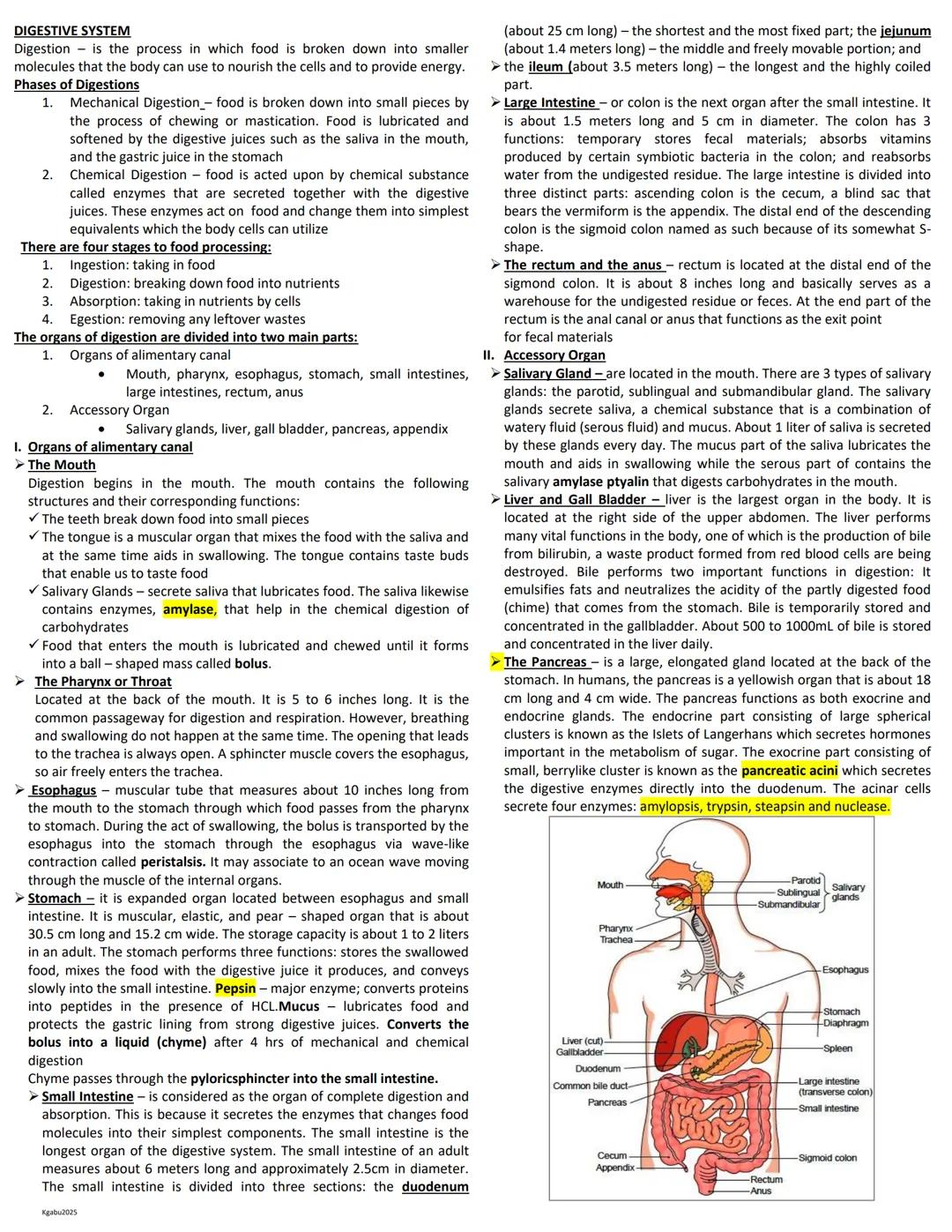
There are two main ways your body breaks down food. Mechanical digestion is like having tiny hammers - your teeth chew food into smaller pieces while digestive juices soften everything up. Chemical digestion uses special helpers called enzymes that act like molecular scissors, cutting food into the tiniest pieces your cells can actually use.
Your digestive system has a clear four-step game plan: ingestion (eating the food), digestion (breaking it down), absorption (grabbing the good stuff), and egestion (getting rid of waste). It's like an assembly line in reverse!
Quick Tip: Remember the digestive system has two teams - the main pathway (alimentary canal) and the helper organs (accessory organs) working together!
Your Mouth - Where the Magic Begins
Your mouth is where digestion kicks off the moment you take a bite. Your teeth act like food processors, breaking everything into manageable pieces while your tongue mixes it all up with saliva.
Those salivary glands in your mouth are constantly working, producing about a liter of saliva daily! This isn't just spit - it contains amylase, an enzyme that starts breaking down carbs right away. Pretty cool that digestion begins before you even swallow!
Once everything gets chewed and mixed, it forms a ball called a bolus. This is your food's first transformation on its journey through your body.
From Throat to Stomach - The Highway System
The pharynx (your throat) is like a smart traffic controller - it makes sure food goes down the right pipe to your esophagus, not your windpipe. No multitasking here - you can't breathe and swallow at the same time!
Your esophagus is basically a 10-inch muscular tube that uses wave-like contractions called peristalsis to push food down to your stomach. Think of it like squeezing toothpaste from the bottom of the tube.
The stomach is your body's mixing bowl and temporary storage unit. This stretchy, pear-shaped organ can hold 1-2 liters and spends about 4 hours churning your food with pepsin protein−digestingenzyme and acid, turning that bolus into liquid chyme.
Small Intestine - The Real MVP
Your small intestine deserves the MVP award - it's where complete digestion and absorption happen. At 6 meters long, it's like having a garden hose coiled up in your belly, but way more important!
This incredible organ has three sections: the duodenum (shortest), jejunum (middle), and ileum (longest). Each part has a specific job in breaking down and absorbing different nutrients from your food.
The small intestine produces enzymes that break food down to its simplest forms - think of it as reducing a complex recipe to just basic ingredients your cells can actually use.
Large Intestine and Final Stop
Your large intestine (or colon) is the cleanup crew of your digestive system. It's shorter than the small intestine but wider, measuring about 1.5 meters long and 5 cm in diameter.
This final processing plant has three main jobs: storing waste temporarily, absorbing water from leftovers, and soaking up vitamins made by helpful bacteria living in your gut. It's divided into ascending, descending, and sigmoid sections.
The rectum and anus are your body's exit strategy - the rectum stores waste until you're ready to eliminate it, while the anus is the final doorway out.
The Helper Squad - Accessory Organs
Your salivary glands come in three types (parotid, sublingual, and submandibular) and pump out a liter of saliva daily. This isn't just mouth moisturizer - it contains ptyalin, an enzyme that starts carb digestion immediately.
Your liver is the body's largest organ and chemical factory, producing bile that breaks down fats and neutralizes stomach acid. The gallbladder stores this bile like a backup reservoir, releasing 500-1000mL daily when needed.
The pancreas is like a double agent - it produces digestive enzymes (amylase, trypsin, steapsin, and nuclease) while also making hormones to control blood sugar through special cell clusters called Islets of Langerhans.
Remember: These accessory organs don't touch your food directly, but without them, digestion would be impossible!

 Science
 Araling Panlipunan (AP)
 Iba pa
 Practical Research
 DISS
DISS