What Are Chemical Reactions?
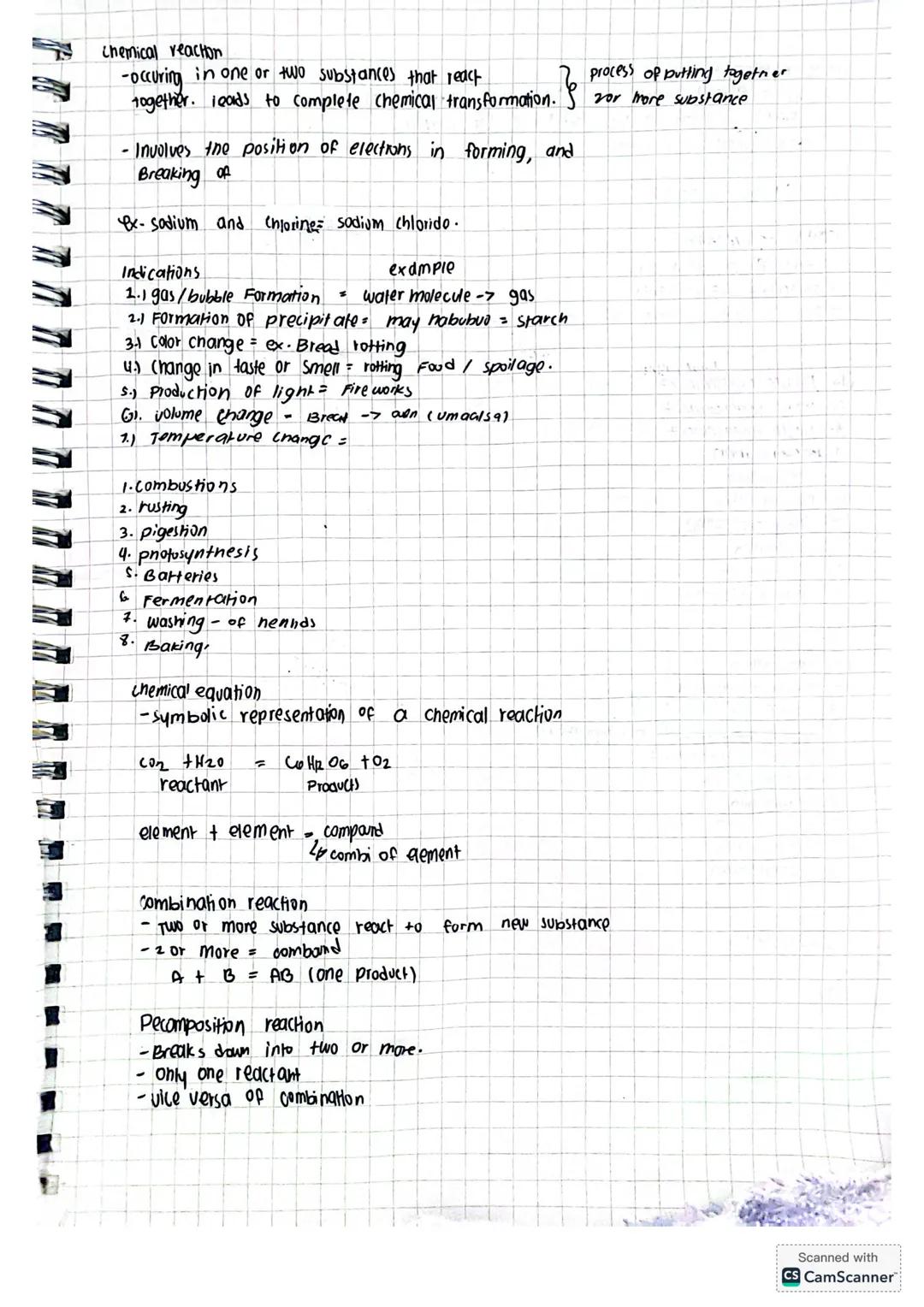
Think of a chemical reaction as nature's way of mixing and matching - when two or more substances get together and completely transform into something new. It's like combining ingredients to bake a cake, except at the molecular level!
The magic happens when electrons rearrange themselves, forming new bonds and breaking old ones. A perfect example is when sodium metal meets chlorine gas to create table salt (sodium chloride) - completely different from what you started with.
You can spot chemical reactions happening around you through these telltale signs: gas bubbles forming likewhenyoudropanAlka−Seltzerinwater, color changes (bread turning brown when it rots), temperature changes (your hand warming up when you eat spicy food), and even light production (fireworks lighting up the sky).
Quick Tip: Chemical reactions are constantly happening in your body - from digestion breaking down your lunch to photosynthesis in plants making oxygen for you to breathe!
Chemical equations are just scientist's shorthand for writing these reactions. Instead of saying "carbon plus water equals carbon dioxide plus oxygen," we write: C + H₂O → CO₂ + O₂. The stuff before the arrow are reactants (starting materials), and after are products (what you end up with).

 Science
 Araling Panlipunan (AP)
 Iba pa
 Practical Research
 DISS
DISS