
Ever wonder how human thinking evolved from ancient myths to... Ipakita pa
 UCSP
UCSP Econ
Econ Math
Math GenChem
 EAPP
EAPP Other
Other Pre-Cal
 Filipino
Mag-sign up para makita ang contentLibre ito!
Access sa lahat ng dokumento
Pagbutihin ang iyong mga grado
Sumali sa milyong mga estudyante
Knowunity AI
Higit pa
Mga Asignatura
Triangle Congruence and Similarity Theorems
Triangle Properties and Classification
Linear Equations and Graphs
Geometric Angle Relationships
Trigonometric Functions and Identities
Equation Solving Techniques
Circle Geometry Fundamentals
Division Operations and Methods
Basic Differentiation Rules
Exponent and Logarithm Properties
Ipakita lahat ng paksa
Human Organ Systems
Reproductive Cell Cycles
Biological Sciences Subdisciplines
Cellular Energy Metabolism
Autotrophic Energy Processes
Inheritance Patterns and Principles
Biomolecular Structure and Organization
Cell Cycle and Division Mechanics
Cellular Organization and Development
Biological Structural Organization
Ipakita lahat ng paksa
Chemical Sciences and Applications
Atomic Structure and Composition
Molecular Electron Structure Representation
Atomic Electron Behavior
Matter Properties and Water
Mole Concept and Calculations
Gas Laws and Behavior
Periodic Table Organization
Chemical Thermodynamics Fundamentals
Chemical Bond Types and Properties
Ipakita lahat ng paksa
European Renaissance and Enlightenment
European Cultural Movements 800-1920
American Revolution Era 1763-1797
American Civil War 1861-1865
Global Imperial Systems
Mongol and Chinese Dynasties
U.S. Presidents and World Leaders
Historical Sources and Documentation
World Wars Era and Impact
World Religious Systems
Ipakita lahat ng paksa
Classic and Contemporary Novels
Literary Character Analysis
Rhetorical Theory and Practice
Classic Literary Narratives
Reading Analysis and Interpretation
Narrative Structure and Techniques
English Language Components
Influential English-Language Authors
Basic Sentence Structure
Narrative Voice and Perspective
Ipakita lahat ng paksa
246
•
Na-update Mar 25, 2026
•
Isabel Cuevas
@isabelcue_vqe15
Ever wonder how human thinking evolved from ancient myths to... Ipakita pa
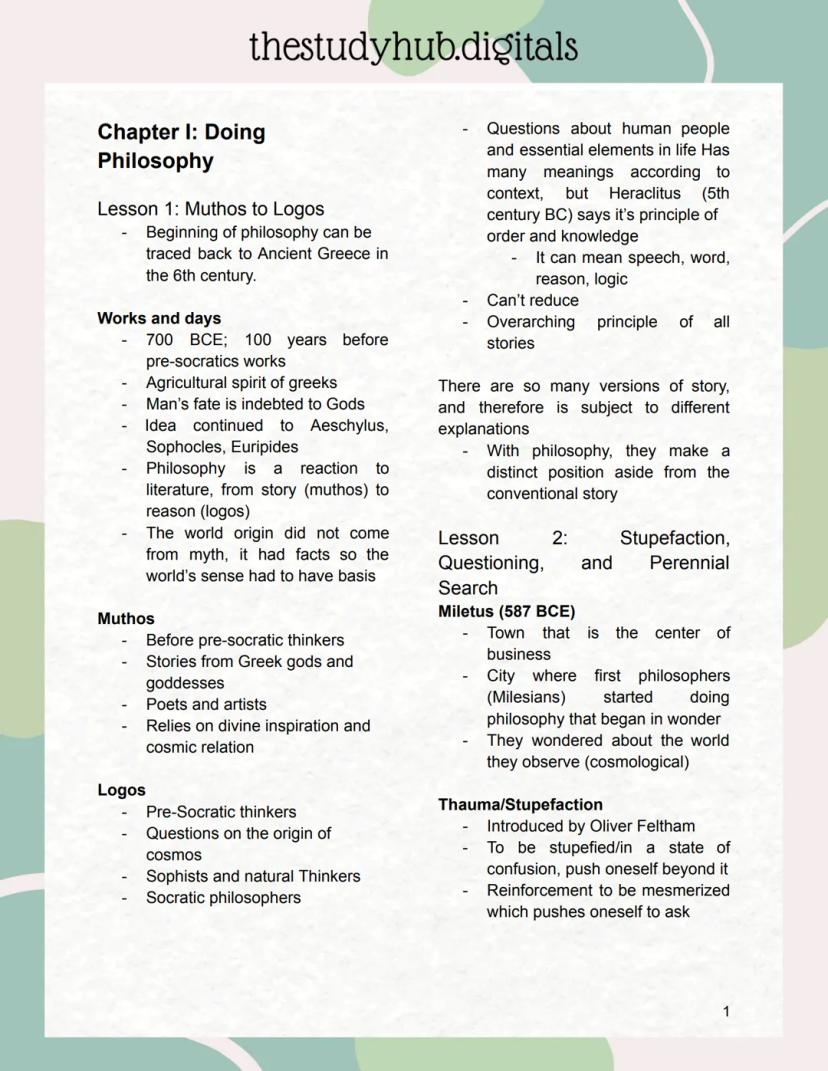
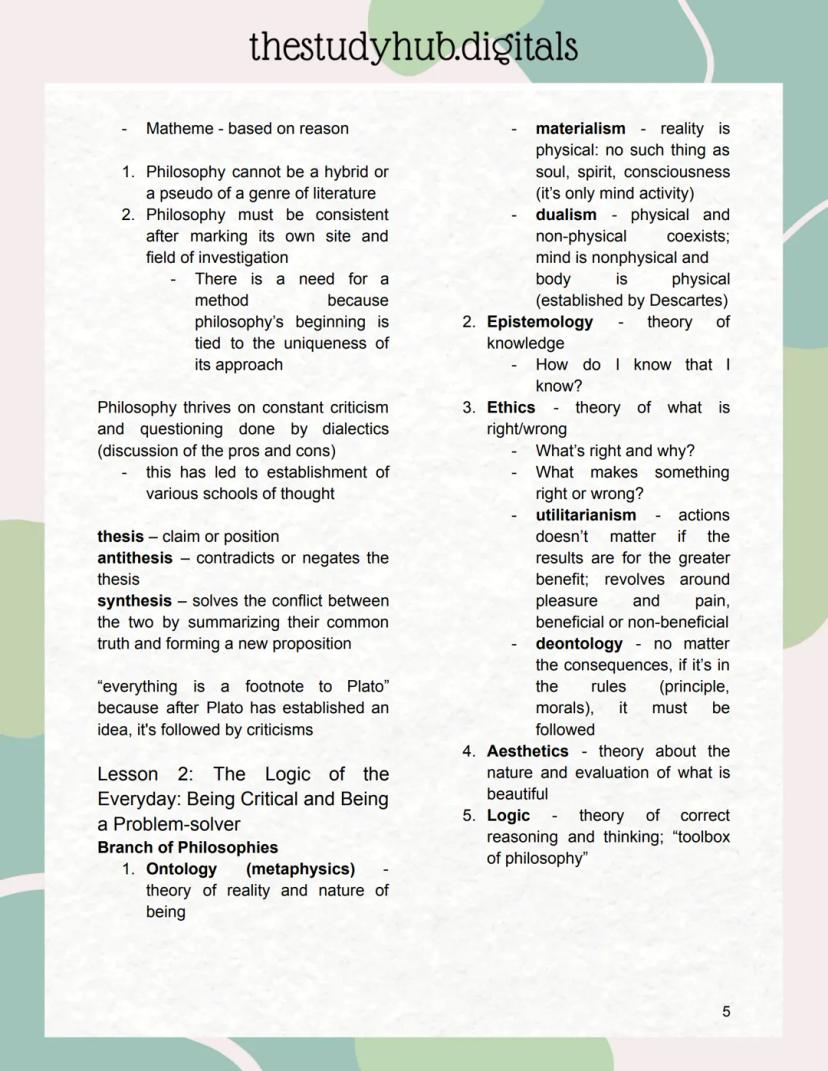
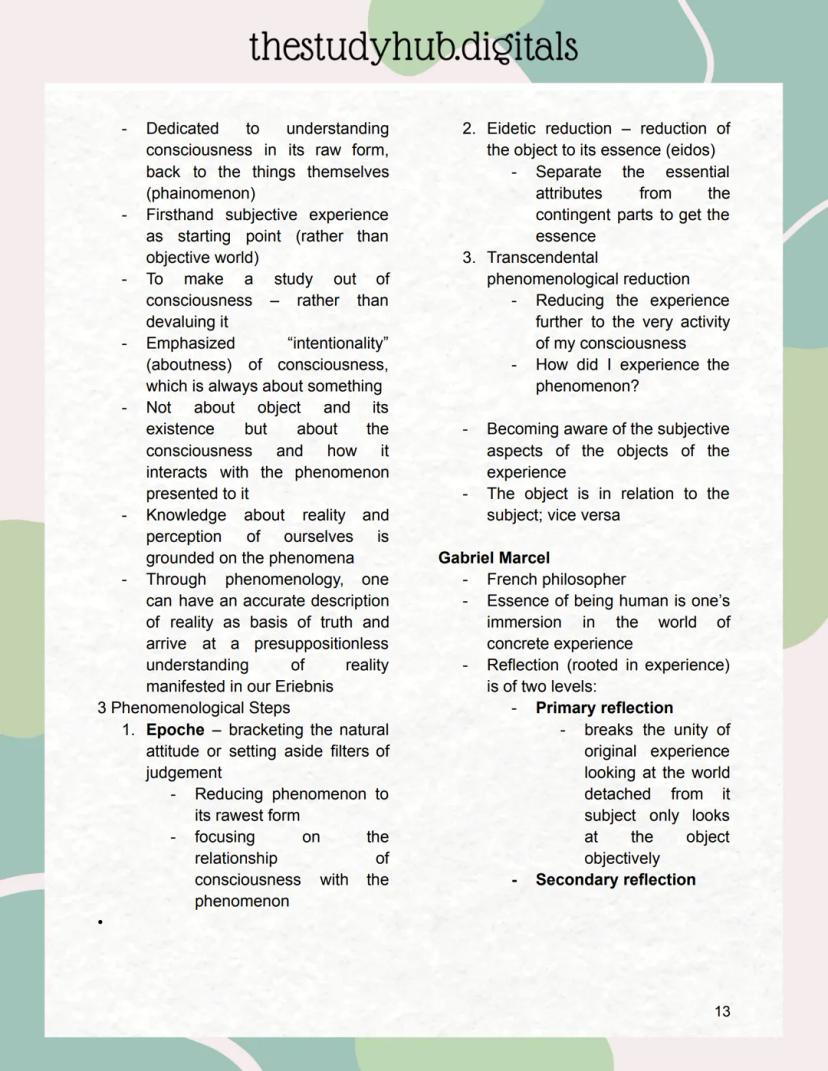
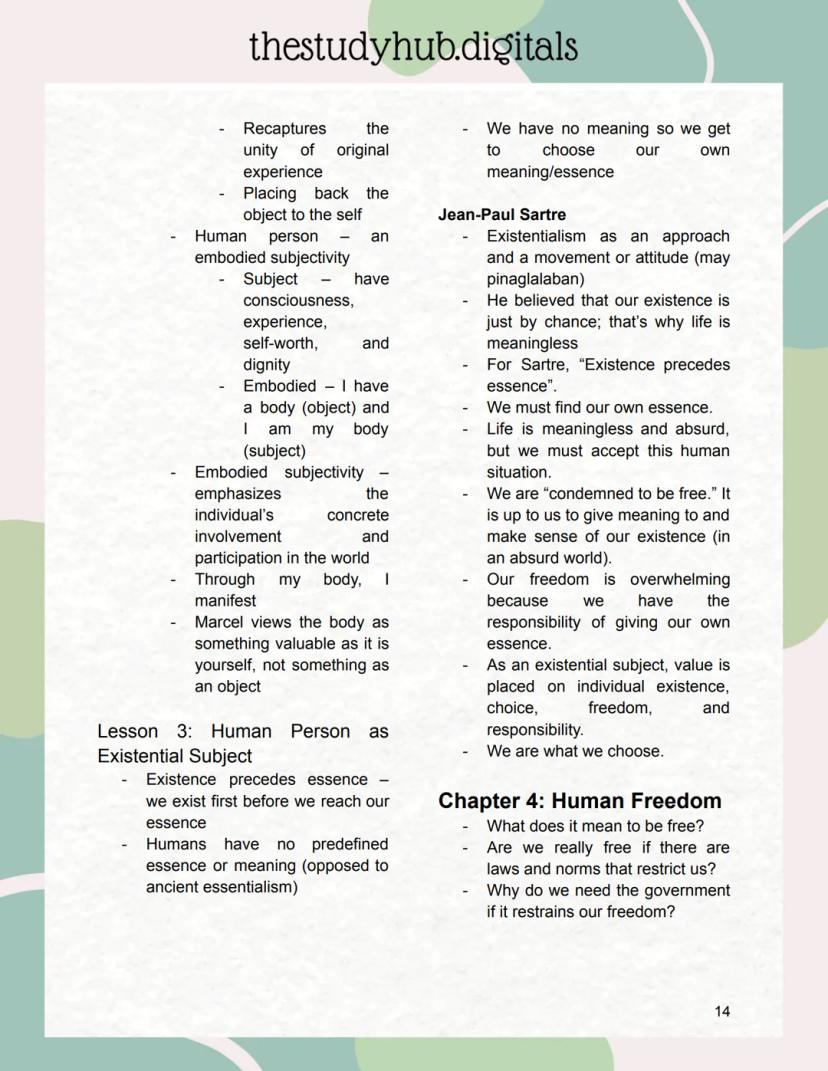
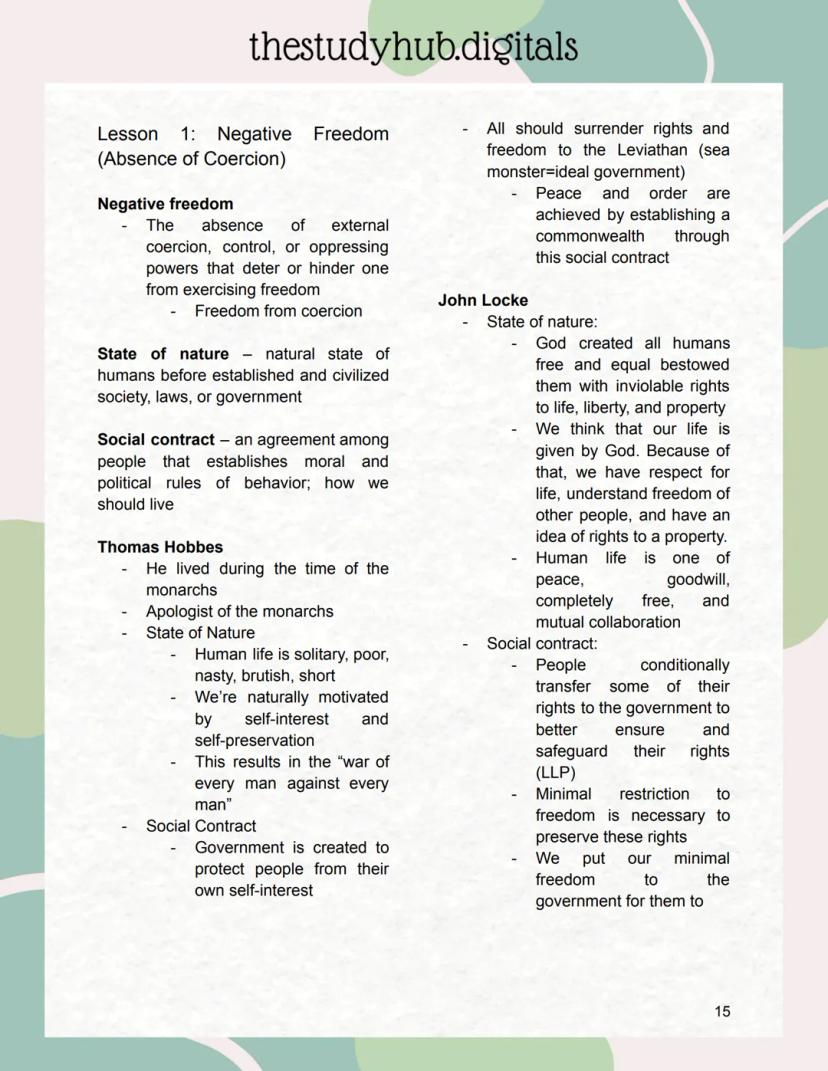
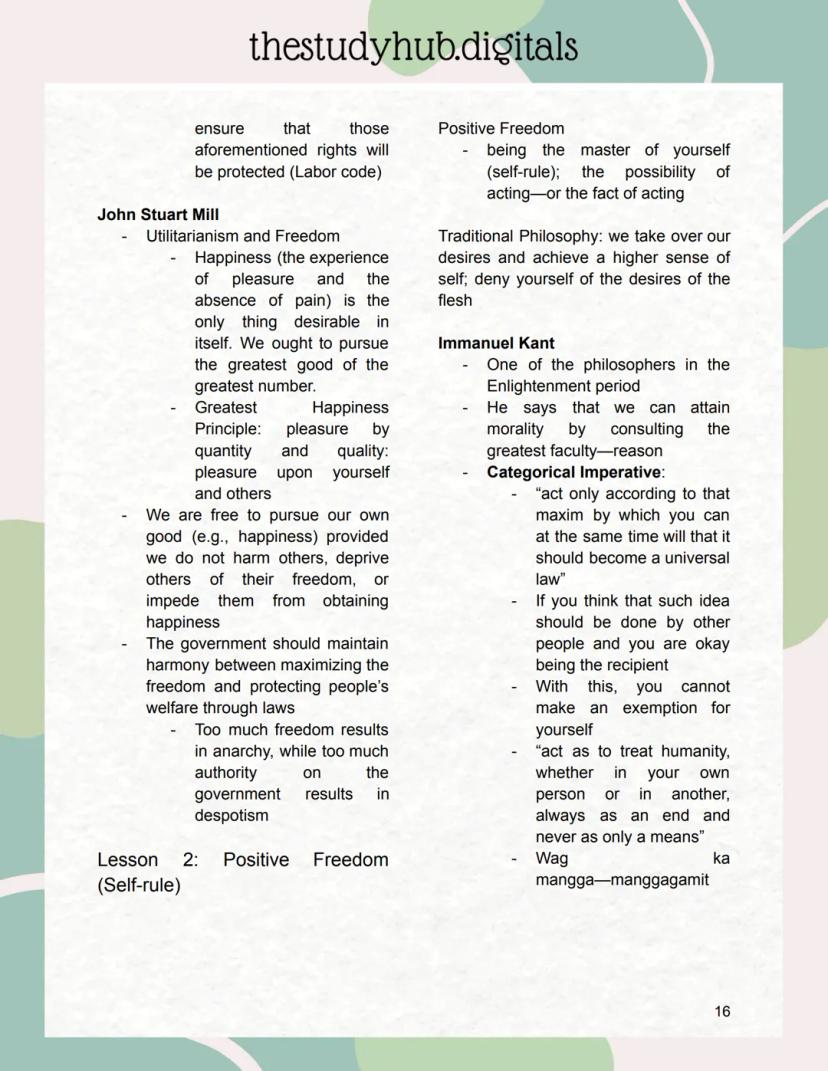
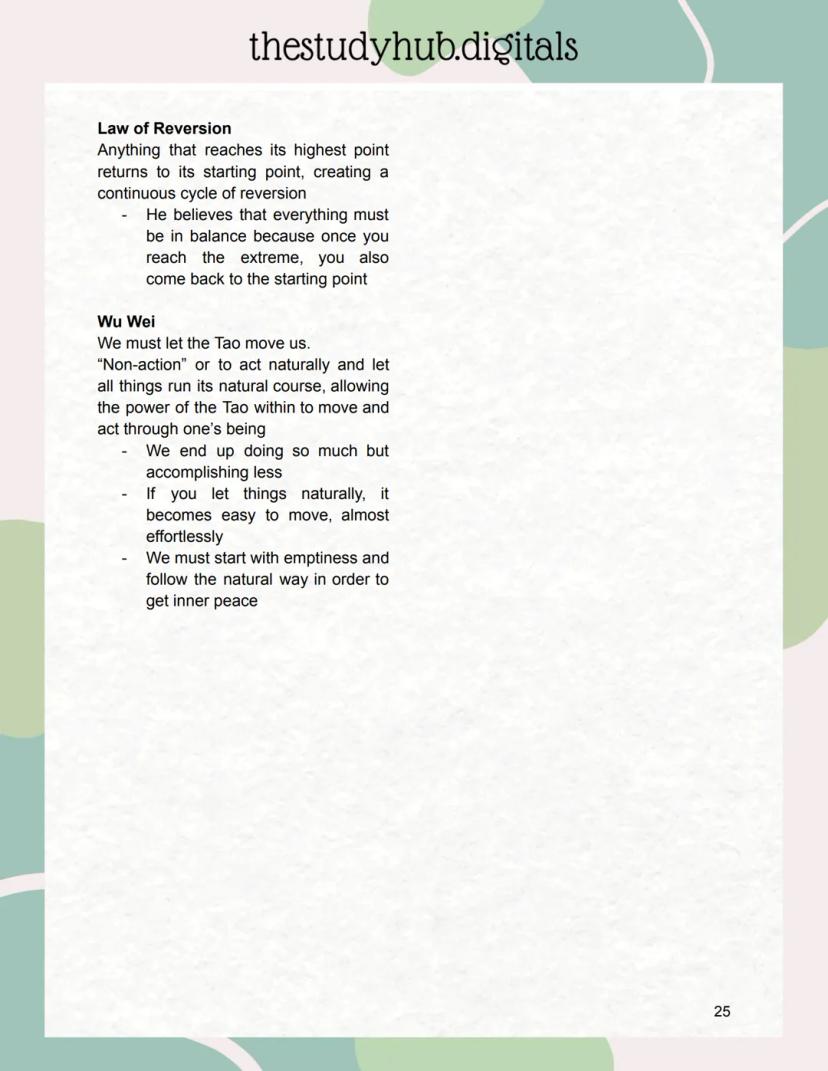
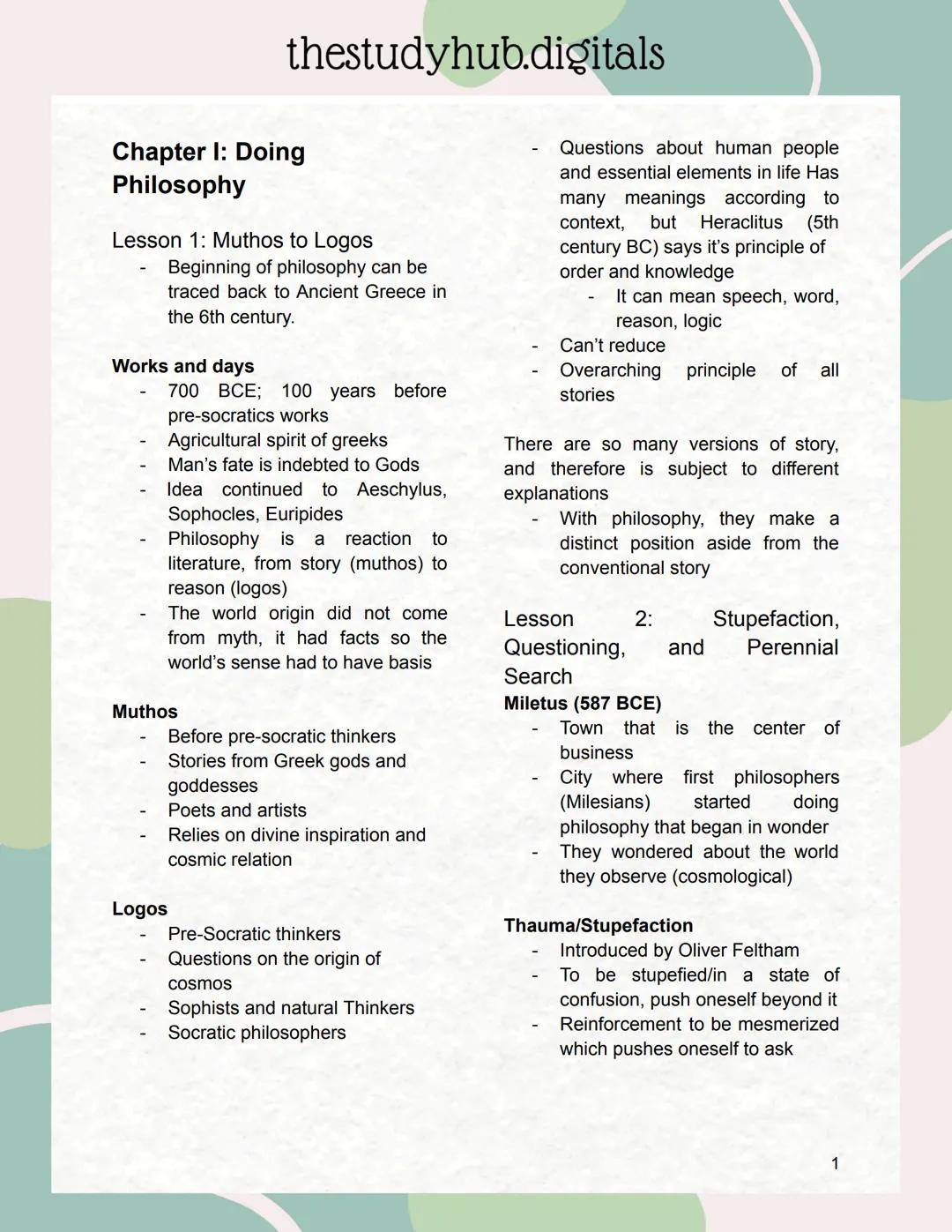
Philosophy kicked off in ancient Greece around the 6th century BCE when people got tired of explaining everything through myths about gods and goddesses. Before this, Greeks relied on epic poems like "Works and Days" that said humans were basically at the mercy of divine beings.
The game-changer happened when thinkers decided that muthos (mythical stories told by poets) wasn't cutting it anymore. They wanted logos - actual reasons and logic to explain how the world worked. Instead of saying "Zeus made it rain," they started asking "What really causes rain?"
Muthos was all about divine inspiration and cosmic relationships - pretty much letting poets and artists create explanations based on what felt right. Logos, on the other hand, demanded evidence and reasoning. Heraclitus called it the "principle of order and knowledge" that could mean speech, word, reason, or logic depending on the situation.
Key Point: This shift from accepting stories to demanding explanations is exactly what you do every time you question something instead of just believing it!
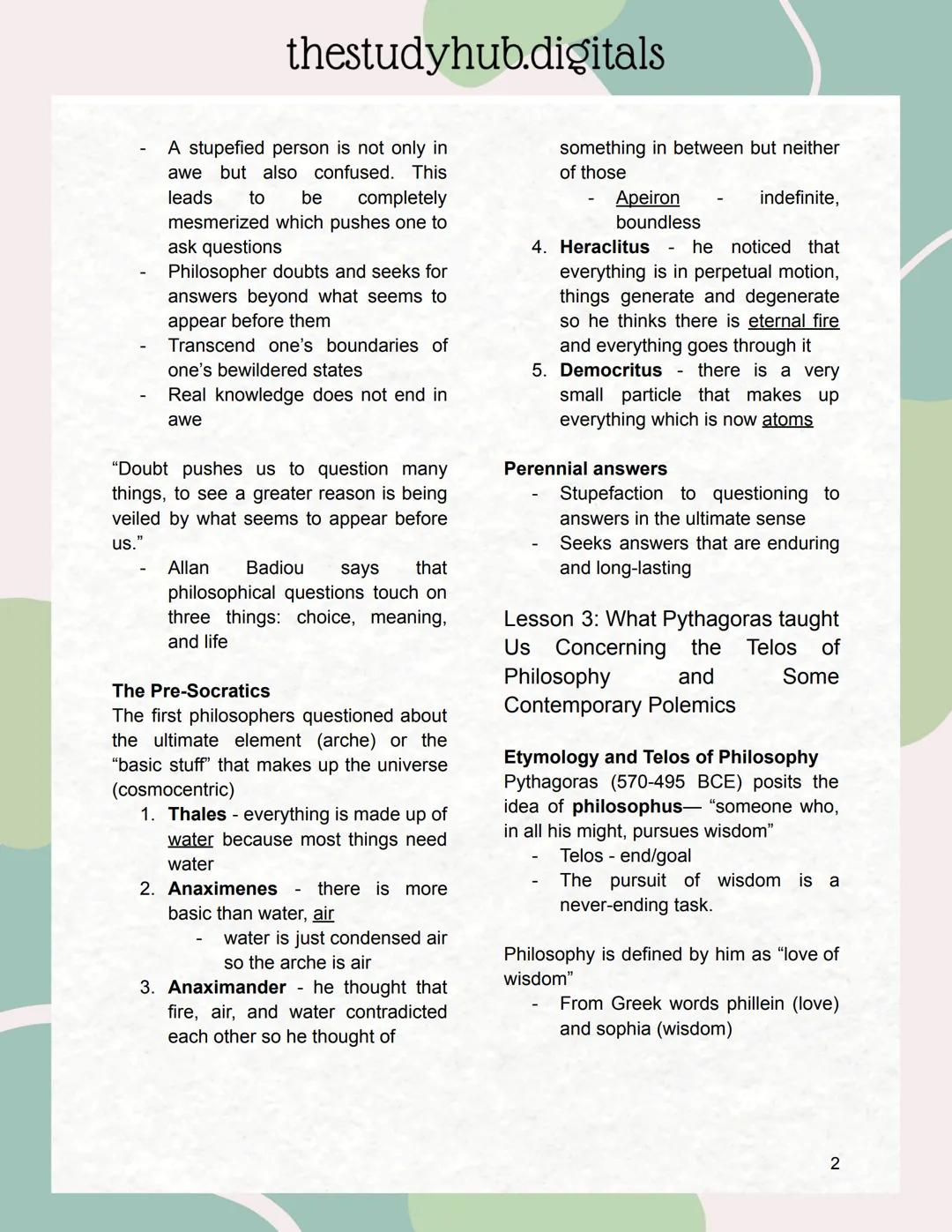
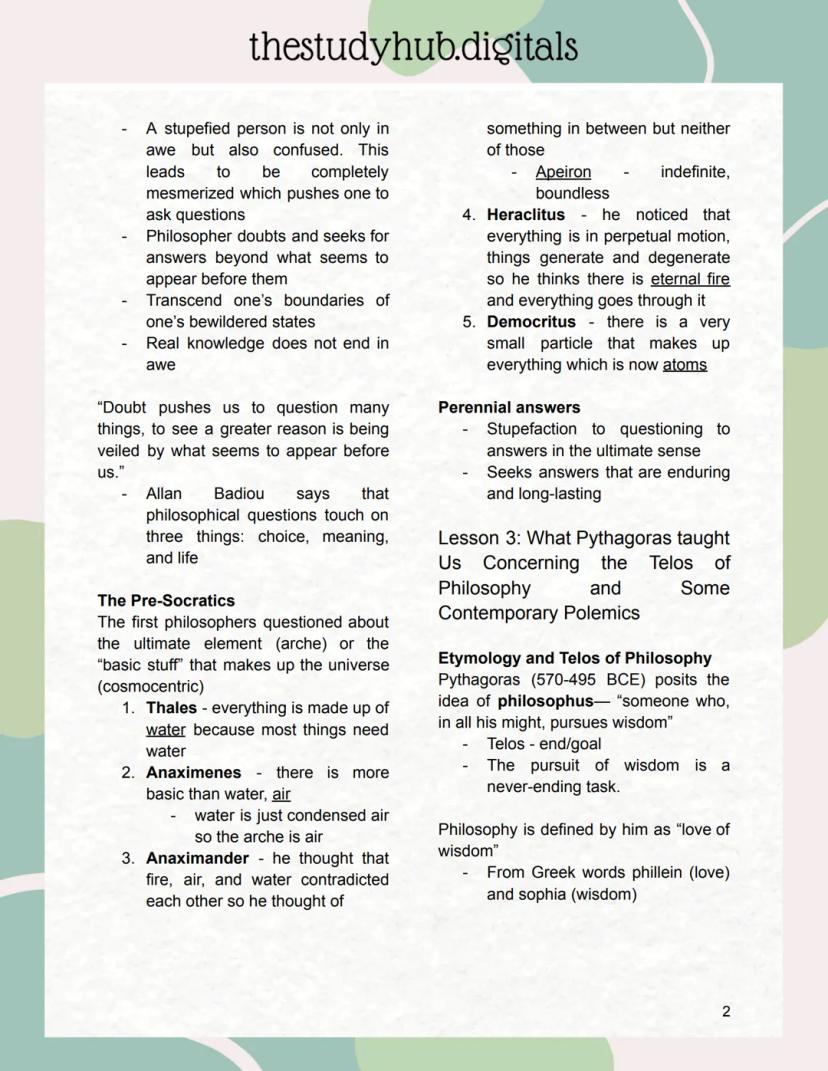
Picture this: you're in Miletus, a bustling trade city in 587 BCE, and suddenly people start getting stupefied (completely amazed and confused) by everyday things around them. This stupefaction wasn't just being impressed - it was being so puzzled that you absolutely had to find answers.
Thauma or stupefaction pushes you beyond just being confused. A truly stupefied person doesn't stop at "wow, that's cool" but goes straight to "wait, how does that actually work?" Real philosophers doubt what seems obvious and dig deeper for hidden truths.
The Pre-Socratics were the first to ask the ultimate question: what's the basic stuff (arche) that makes up everything? Thales said water, Anaximenes argued for air, Anaximander proposed something indefinite called Apeiron, Heraclitus went with eternal fire, and Democritus theorized about tiny particles (basically atoms).
Remember: The best questions often matter more than having perfect answers - doubt pushes us to discover what's really going on beneath the surface.
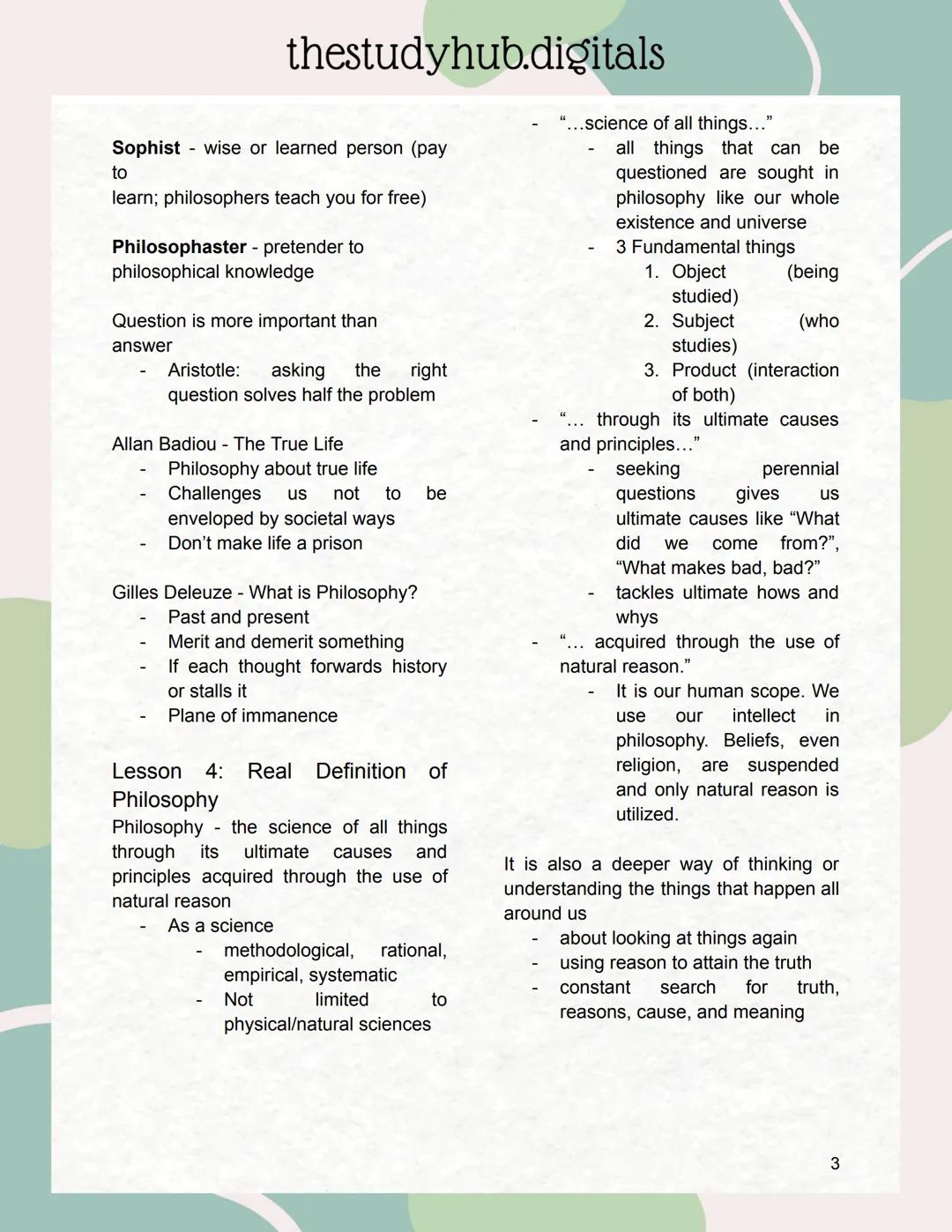
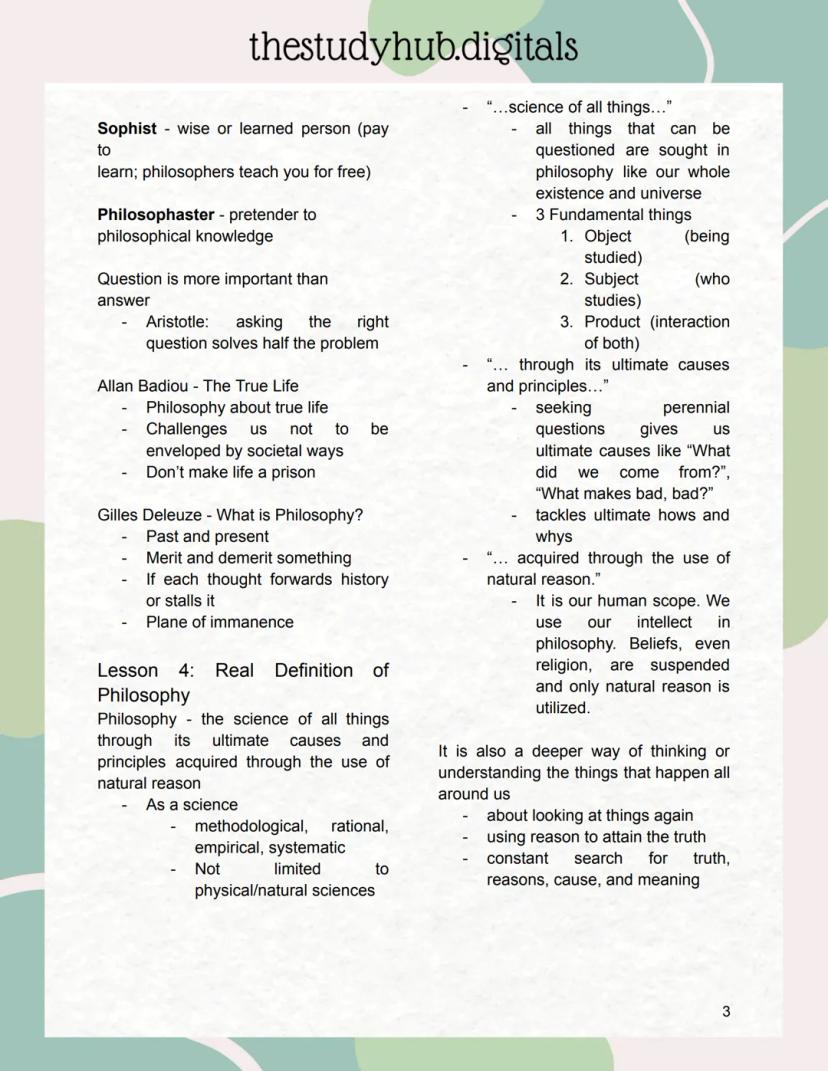
Pythagoras gave us the word "philosophy" - combining "phillein" (love) and "sophia" (wisdom) to mean "love of wisdom." Unlike sophists who charged money to teach, real philosophers shared knowledge freely because they understood that pursuing wisdom never actually ends.
Here's the real definition: Philosophy is the science of all things through their ultimate causes and principles, acquired through natural reason. It's methodical like science, covers everything that can be questioned, seeks the deepest "why" answers, and relies purely on human intellect - no blind faith allowed.
The telos (goal) of philosophy isn't to become a know-it-all, but to keep asking better questions. As Aristotle said, asking the right question solves half the problem. Philosophy challenges you to think about true living and not just go along with whatever society tells you.
Think About It: When you question why something is "just the way it is," you're doing exactly what philosophers have done for over 2,000 years.
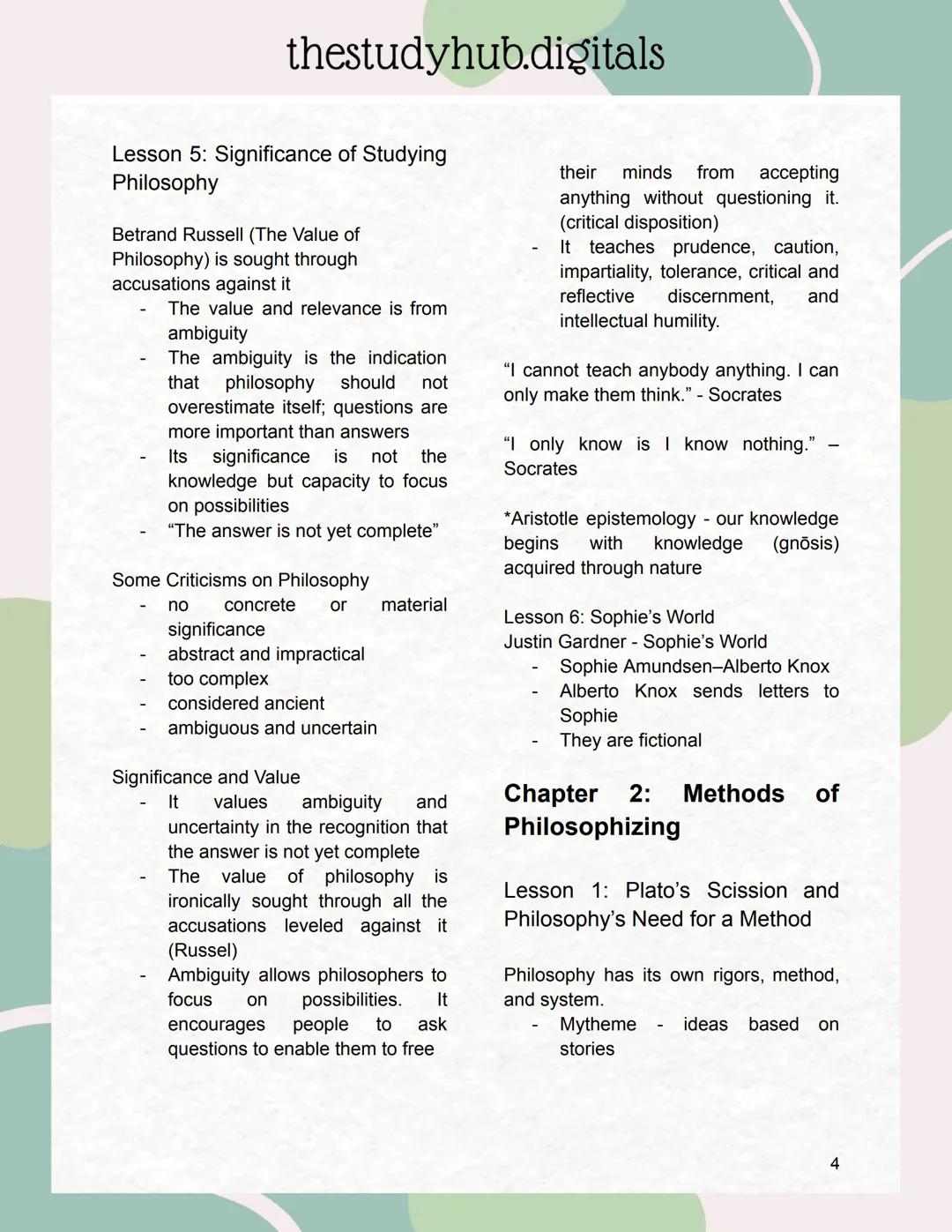
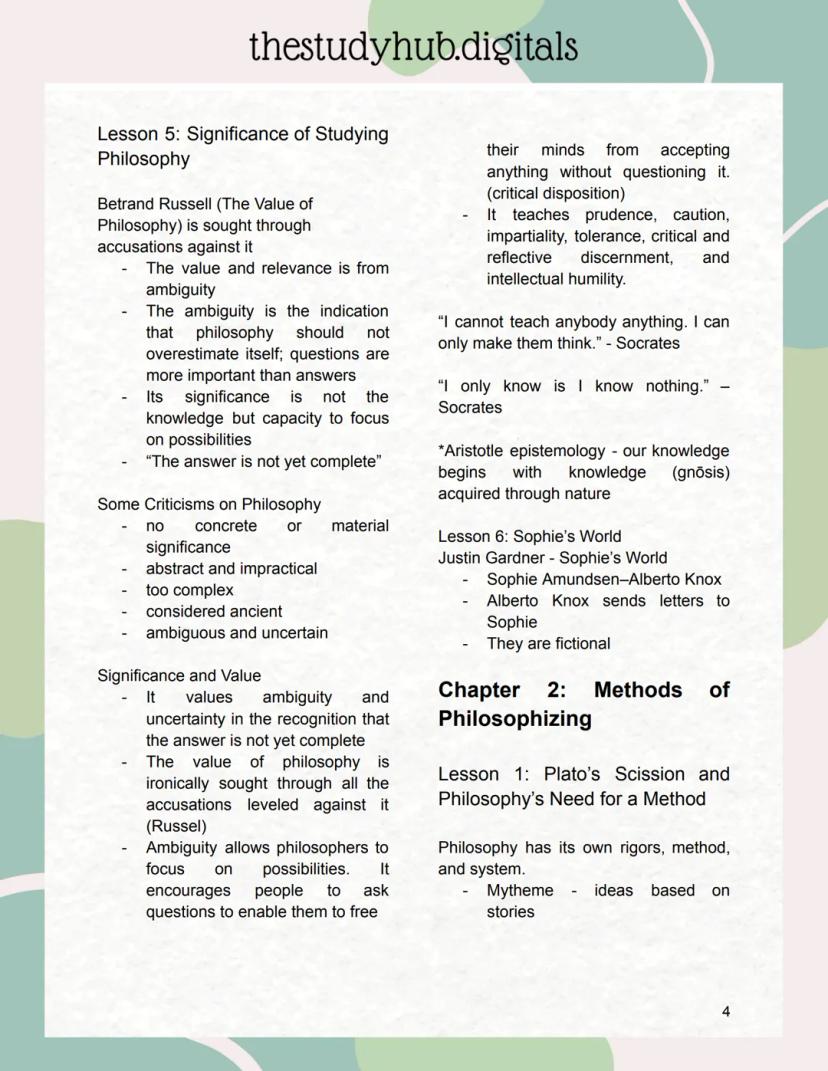
People love criticizing philosophy for being too abstract, impractical, complex, ancient, and uncertain. Bertrand Russell flipped this around, arguing that philosophy's value comes precisely from these "weaknesses." The ambiguity and uncertainty mean we haven't found complete answers yet - and that's exactly the point.
Philosophy's significance isn't in giving you final answers but in developing your capacity to focus on possibilities. It teaches you prudence, critical thinking, tolerance, and intellectual humility. When everything seems certain, philosophy reminds you to keep questioning.
The dialectical method shows how philosophy thrives on criticism through thesis (a claim), antithesis (the opposite claim), and synthesis (combining the best of both). This constant back-and-forth creates stronger ideas and better understanding.
Socrates' Wisdom: "I cannot teach anybody anything. I can only make them think" - and sometimes realizing "I know that I know nothing" is the smartest thing you can do.
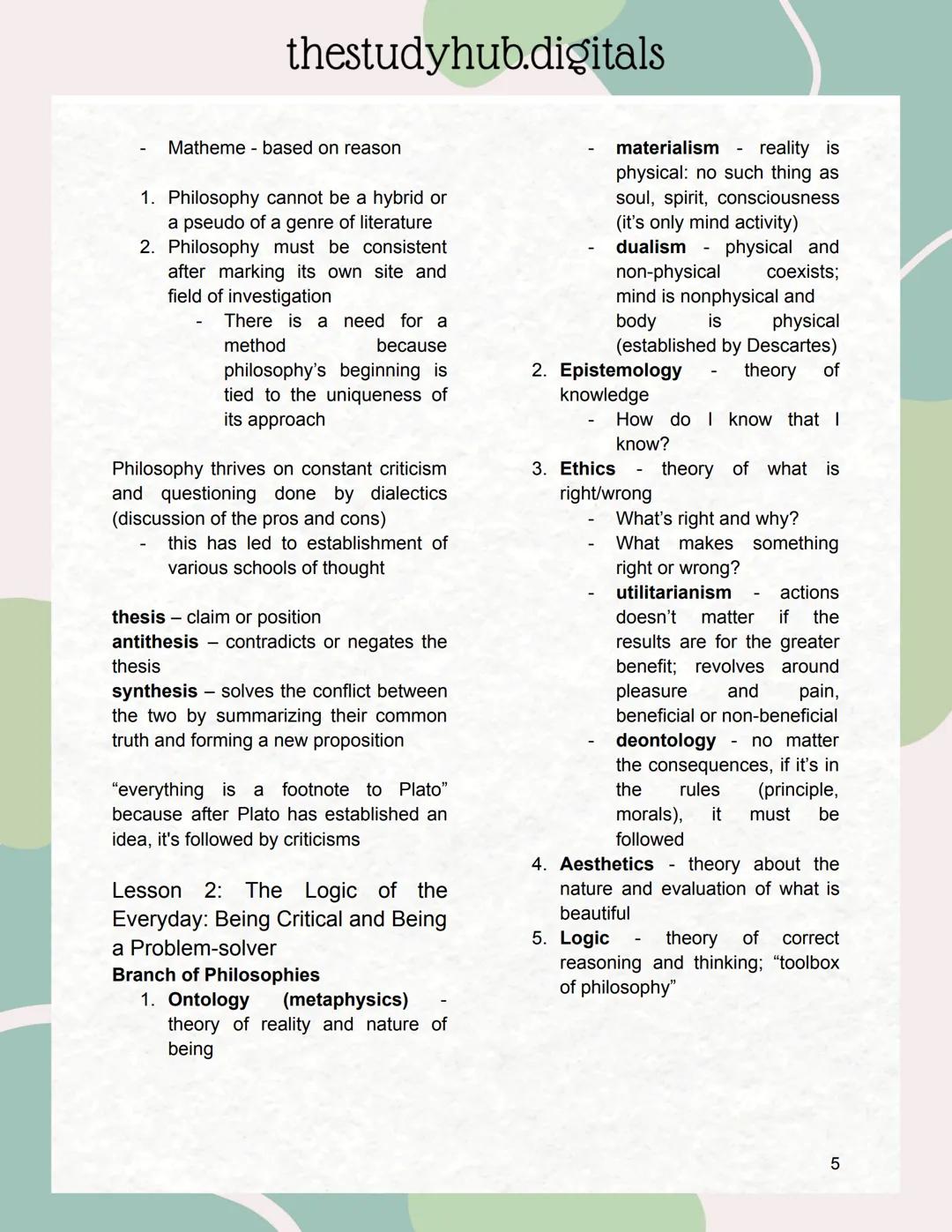
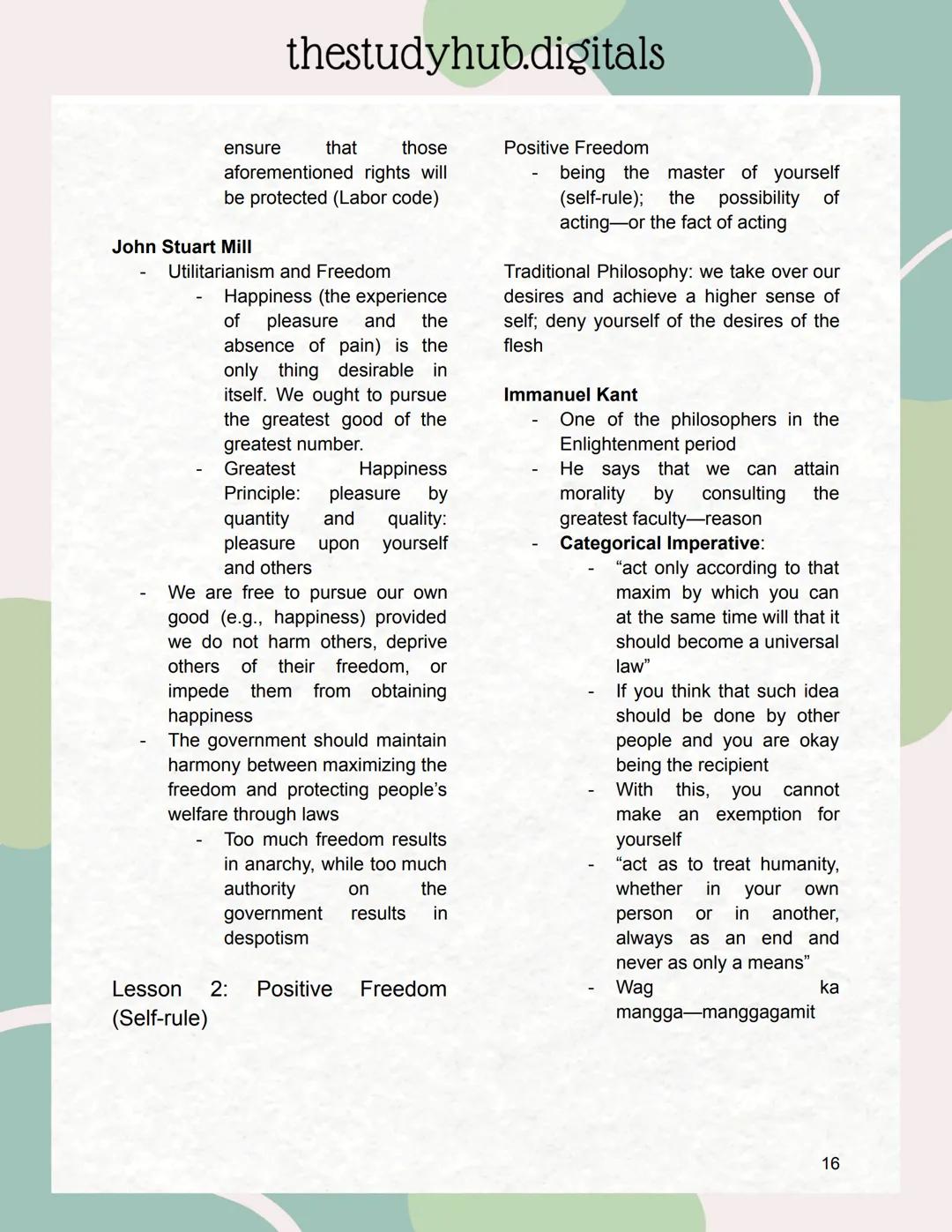
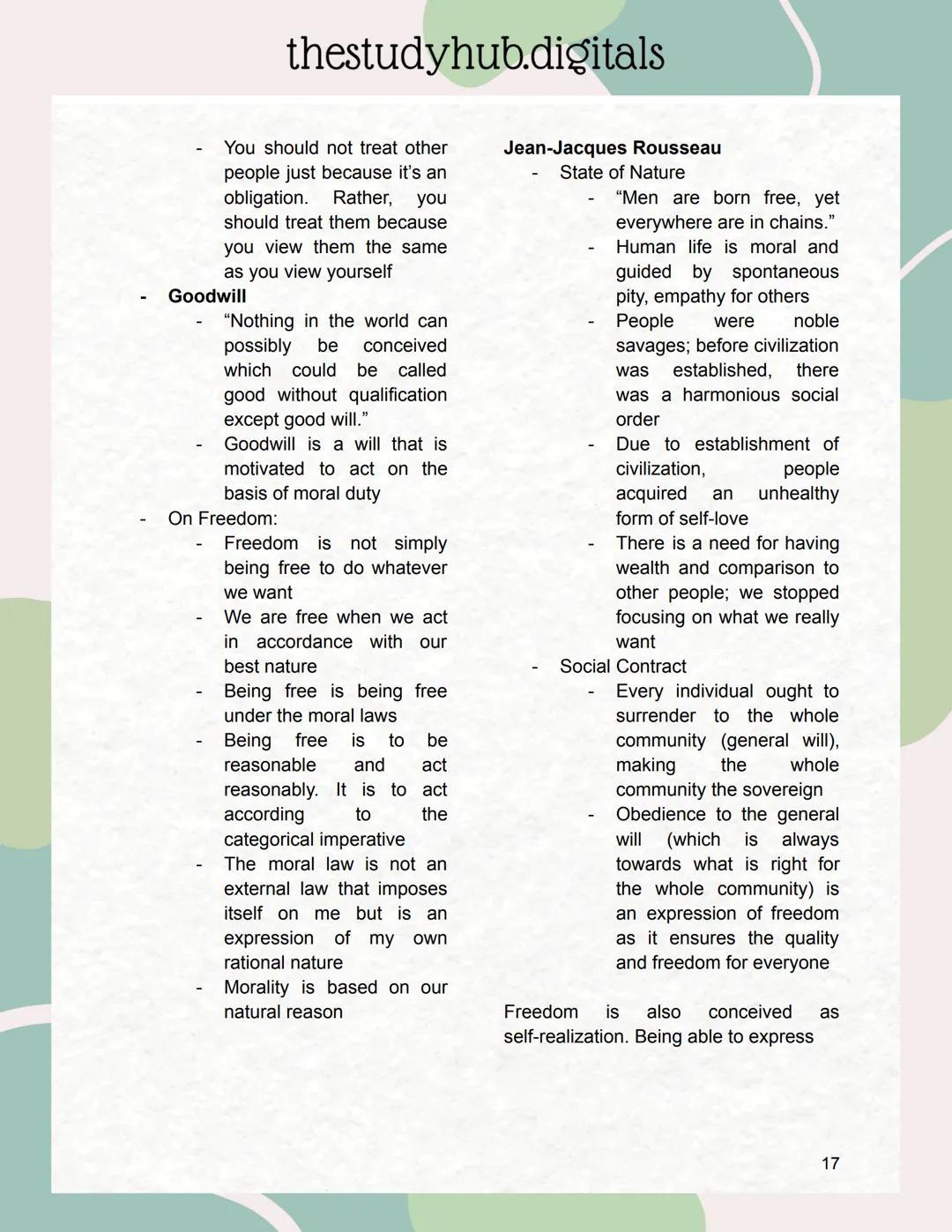
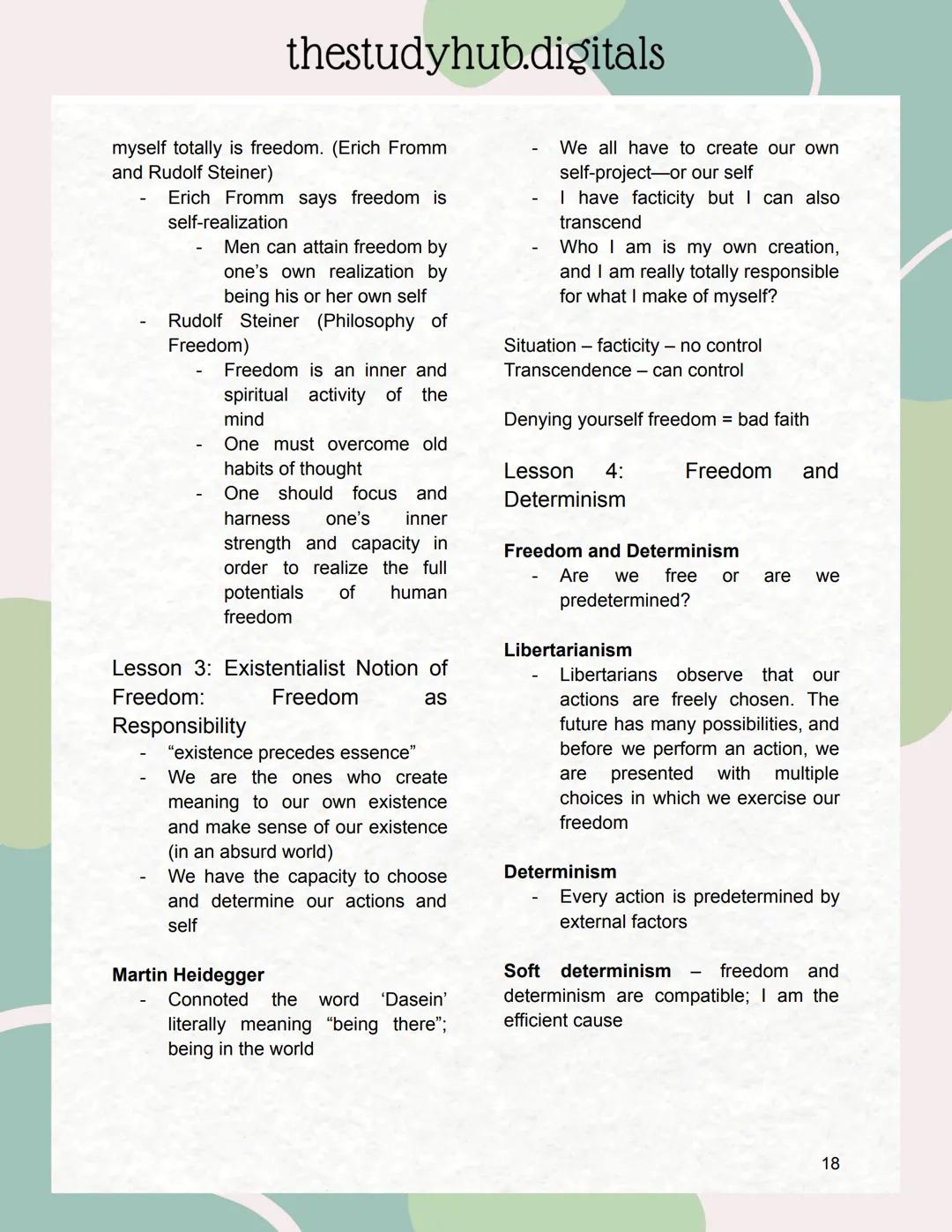
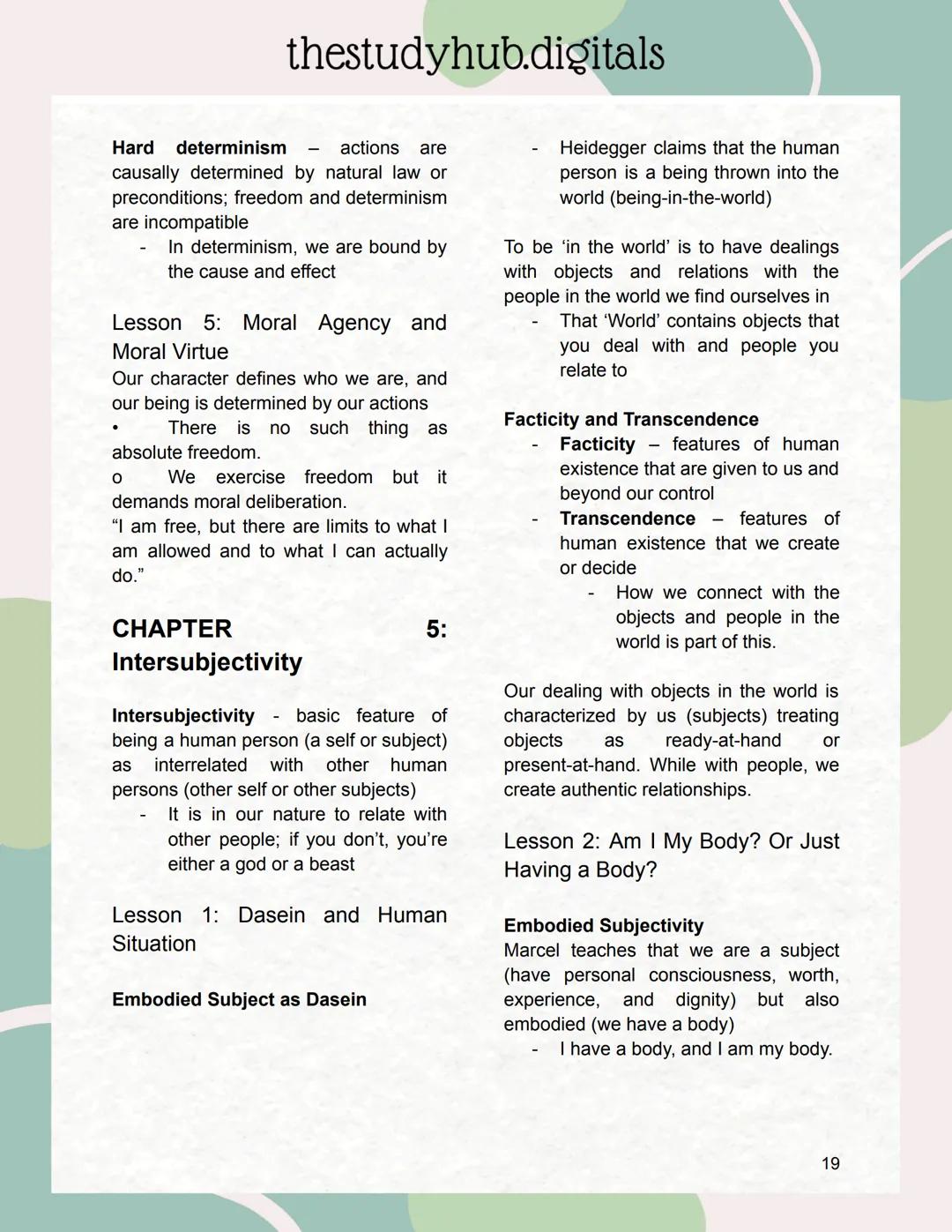
Philosophy splits into five main branches that cover everything humans can think about. Ontology deals with what's real (like whether minds and bodies are separate things). Epistemology asks how we know what we know. Ethics tackles what's right and wrong - whether consequences matter most (utilitarianism) or principles do (deontology).
Aesthetics explores what makes things beautiful, while logic serves as philosophy's toolbox for correct reasoning. These branches work together because life's biggest questions usually involve multiple areas at once.
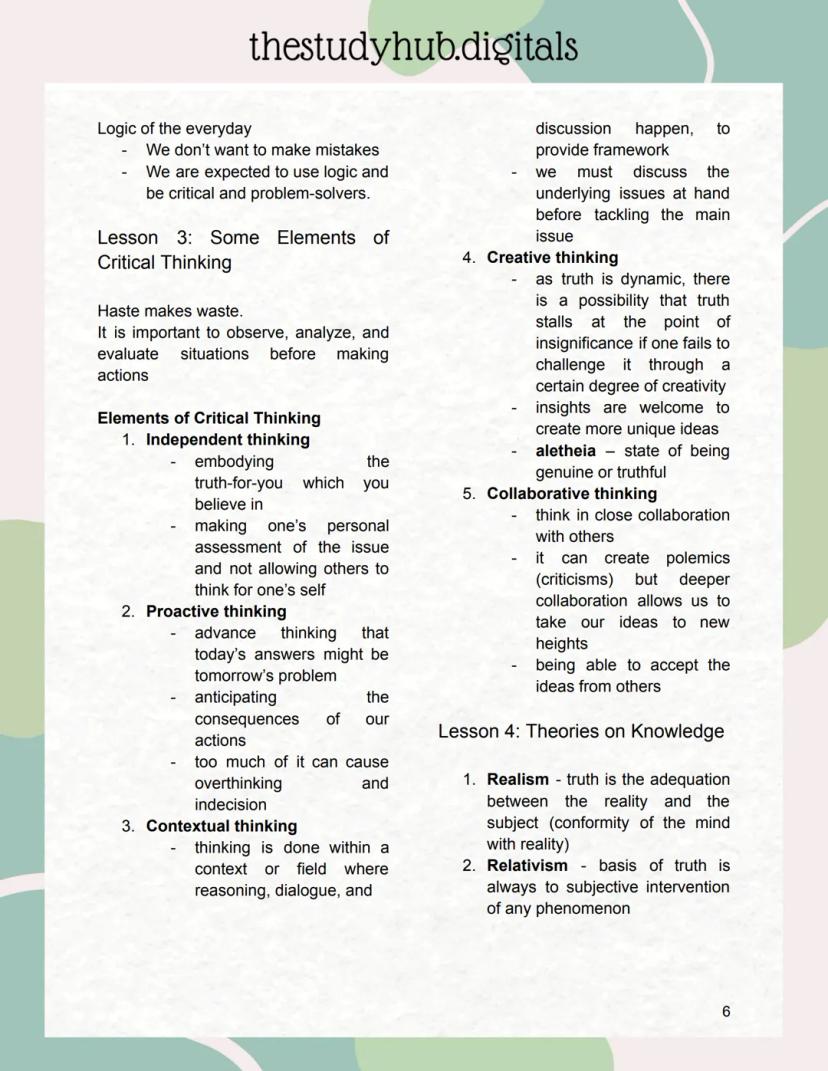
Critical thinking requires five key elements: independent thinking (forming your own assessments), proactive thinking (anticipating consequences), contextual thinking (understanding the bigger picture), creative thinking (challenging stale ideas), and collaborative thinking (working with others while staying true to your principles).
Daily Application: Every time you analyze a situation before acting instead of just reacting, you're using the logic of everyday philosophy.
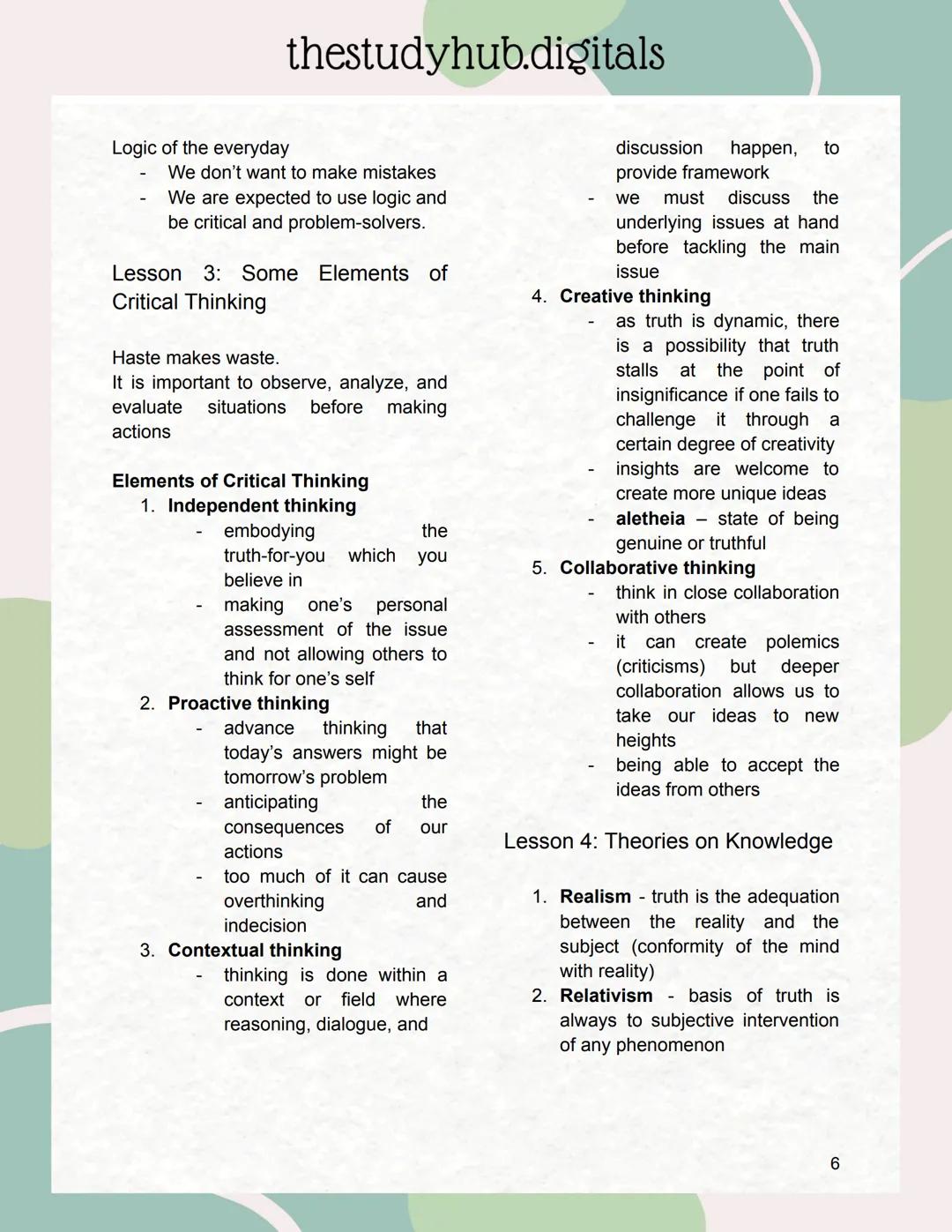
How do we figure out what's actually true? Realism says truth happens when your mind matches up with reality - pretty straightforward. Relativism argues that truth depends on personal perspective and subjective interpretation.
Pragmatism focuses on practical results - if an idea works and produces beneficial consequences, it's true enough. Phenomenology wants you to see the world fresh, like experiencing everything for the first time, focusing on how things appear to consciousness.
Axioms uses mathematical principles to understand reality, looking for universal truths that work like mathematical formulas. Each theory offers different tools for understanding knowledge, and philosophers often combine approaches depending on the situation.
Real Talk: You probably use multiple theories every day - checking facts (realism), considering different viewpoints (relativism), and focusing on what works (pragmatism).
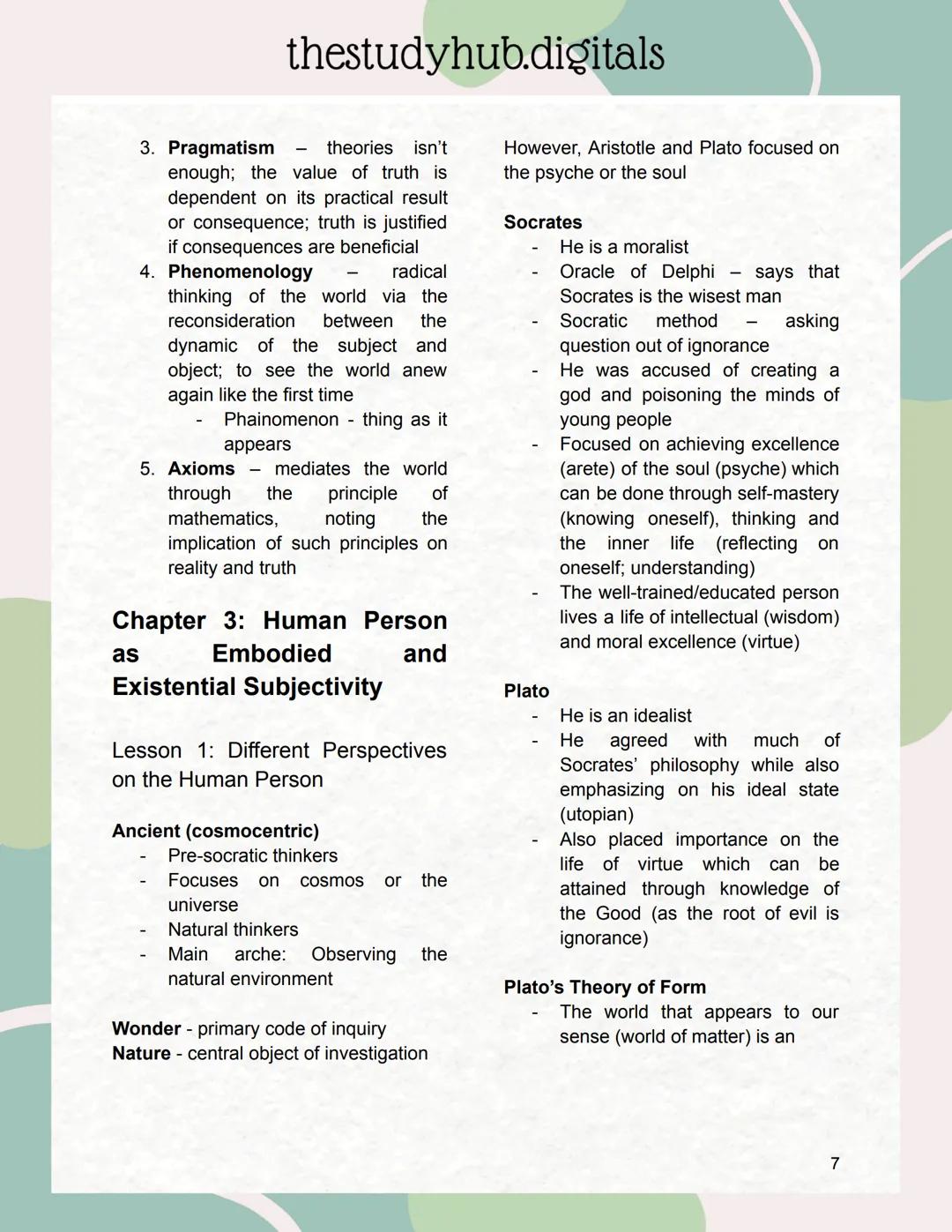
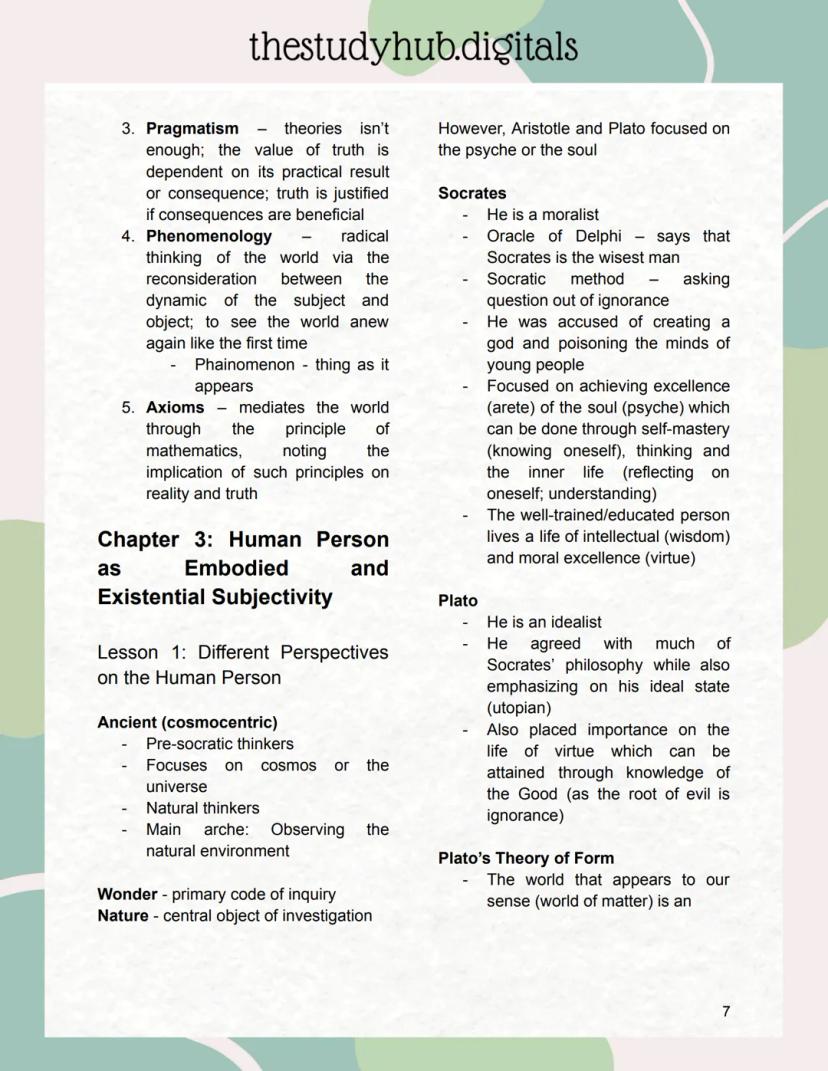
Ancient philosophy started cosmocentric - obsessed with understanding the universe and natural world. The Pre-Socratics wondered about arche (basic elements), but Socrates shifted focus to human excellence and self-knowledge.
Socrates developed the Socratic method - asking questions from a position of ignorance to expose what people really don't know. After being declared the wisest man by the Oracle of Delphi, he realized his wisdom came from recognizing his own ignorance. His goal was arete (excellence of the soul) through self-mastery and reflection.
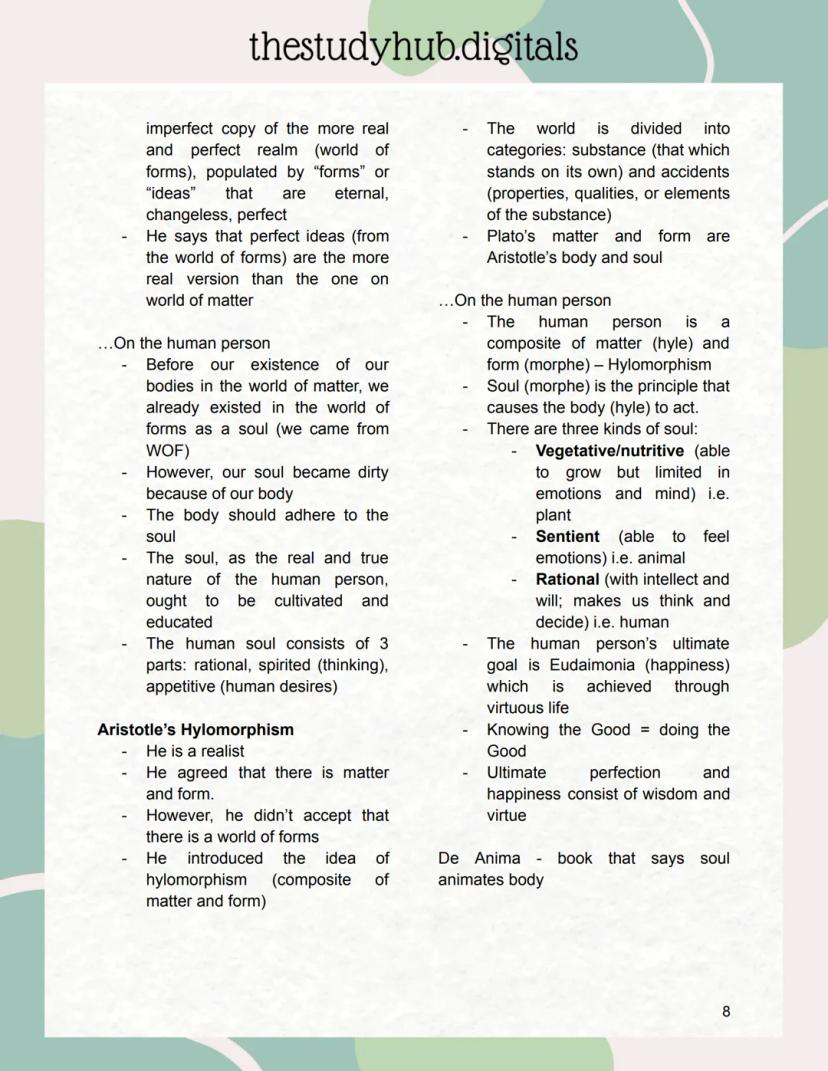
Plato took Socrates' ideas further with his Theory of Forms - arguing that our physical world is just an imperfect copy of a perfect realm of eternal ideas. According to Plato, humans have rational, spirited, and appetitive parts of the soul, with reason needing to control desires.
Ancient Wisdom: The phrase "know thyself" isn't just feel-good advice - it's the foundation for making better decisions and living excellently.
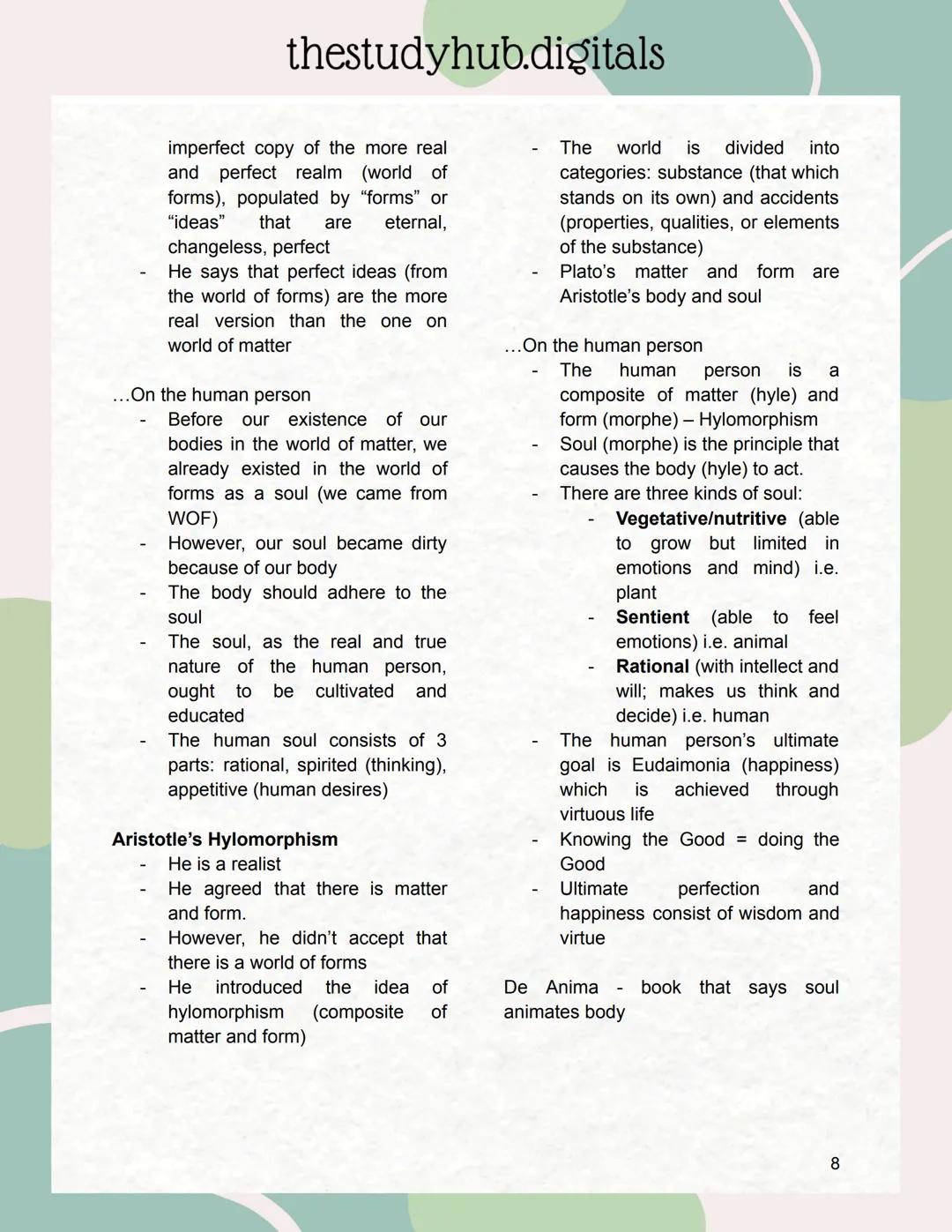
Aristotle brought philosophy down to earth with hylomorphism - the idea that everything is a combination of matter (hyle) and form (morphe). Unlike Plato's separate world of forms, Aristotle saw form and matter as inseparable parts of the same reality.
For Aristotle, humans have three types of souls: vegetative (growth like plants), sentient (feelings like animals), and rational (thinking and deciding like humans). Our ultimate goal is eudaimonia (happiness) achieved through virtuous living and wisdom.
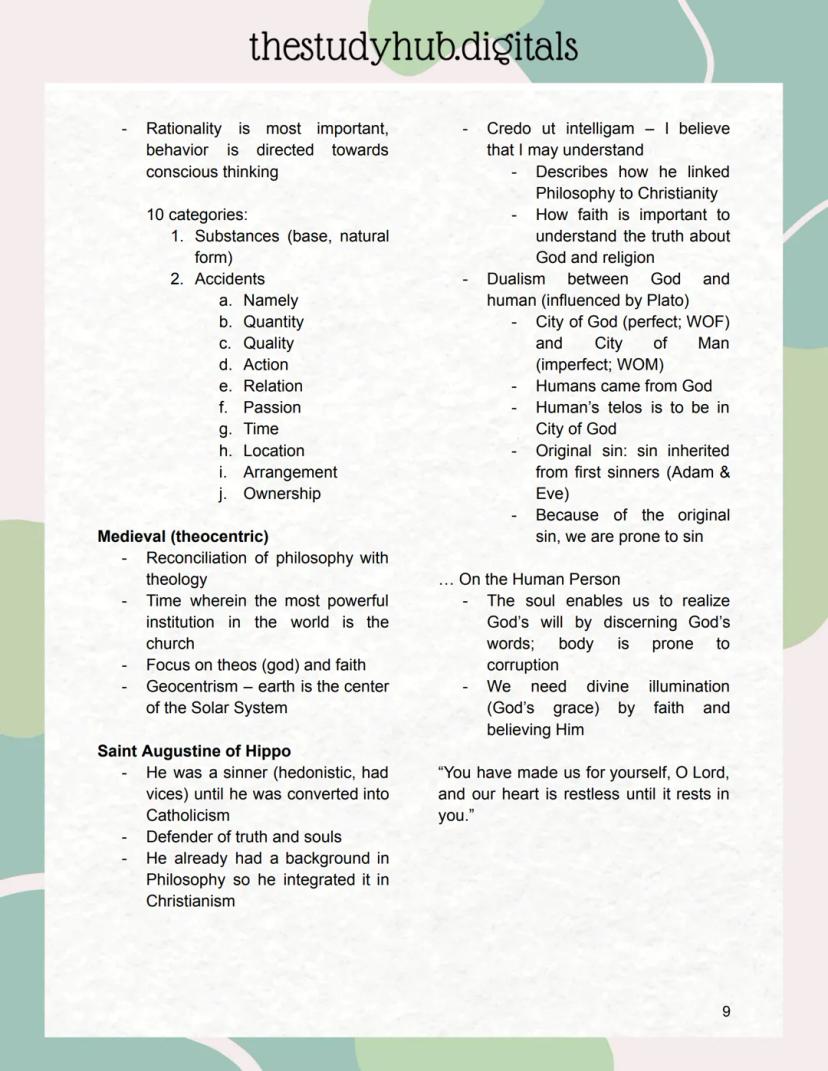
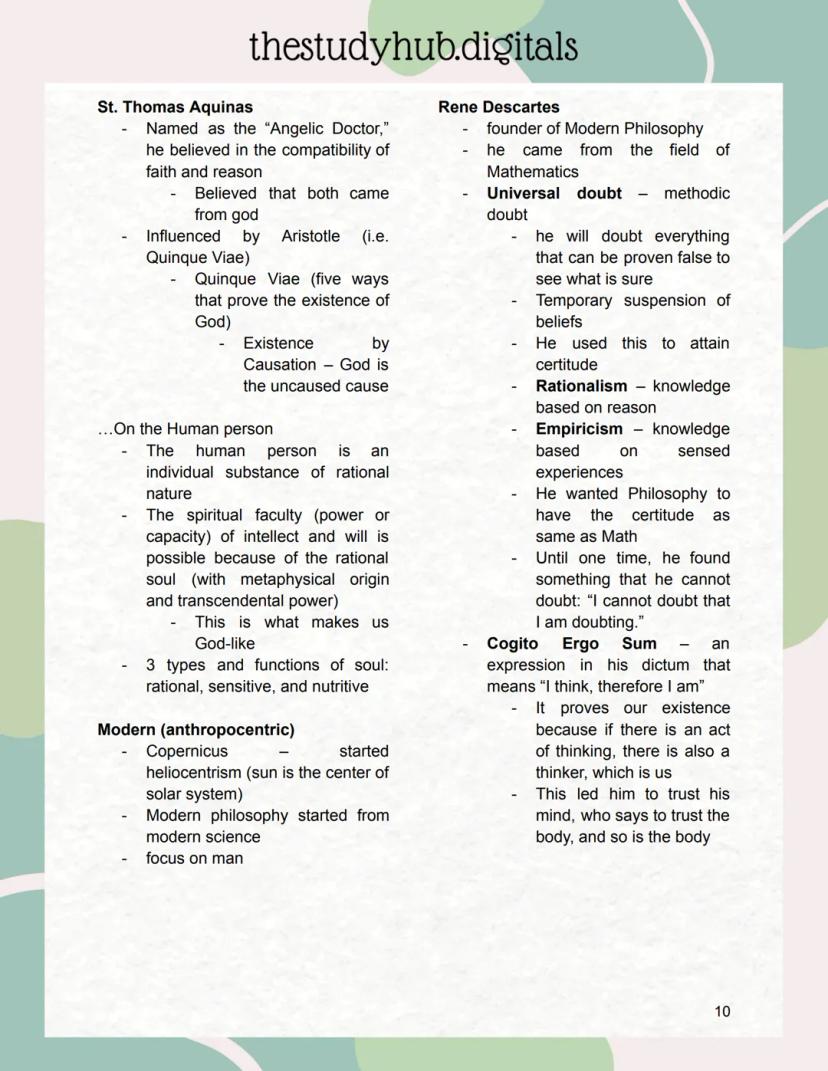
Medieval philosophy became theocentric, focusing on God and reconciling faith with reason. Saint Augustine created the formula "Credo ut intelligam" (I believe so that I may understand), linking faith and philosophy. Thomas Aquinas later argued that both faith and reason come from God, developing his famous "Quinque Viae" (five ways to prove God's existence).
Key Insight: Whether ancient or medieval, philosophers consistently argued that humans achieve their best life through combining knowledge, virtue, and understanding their place in the larger reality.
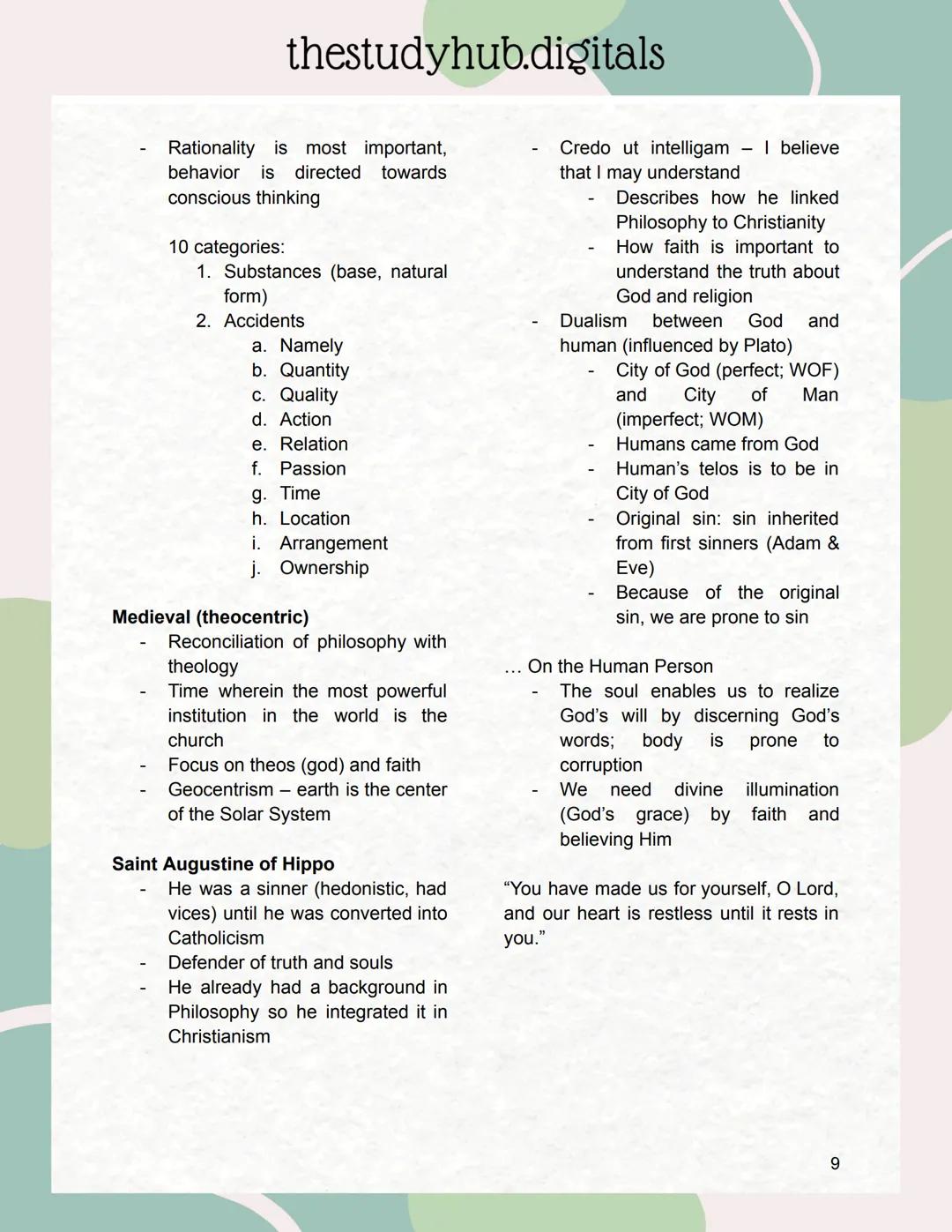
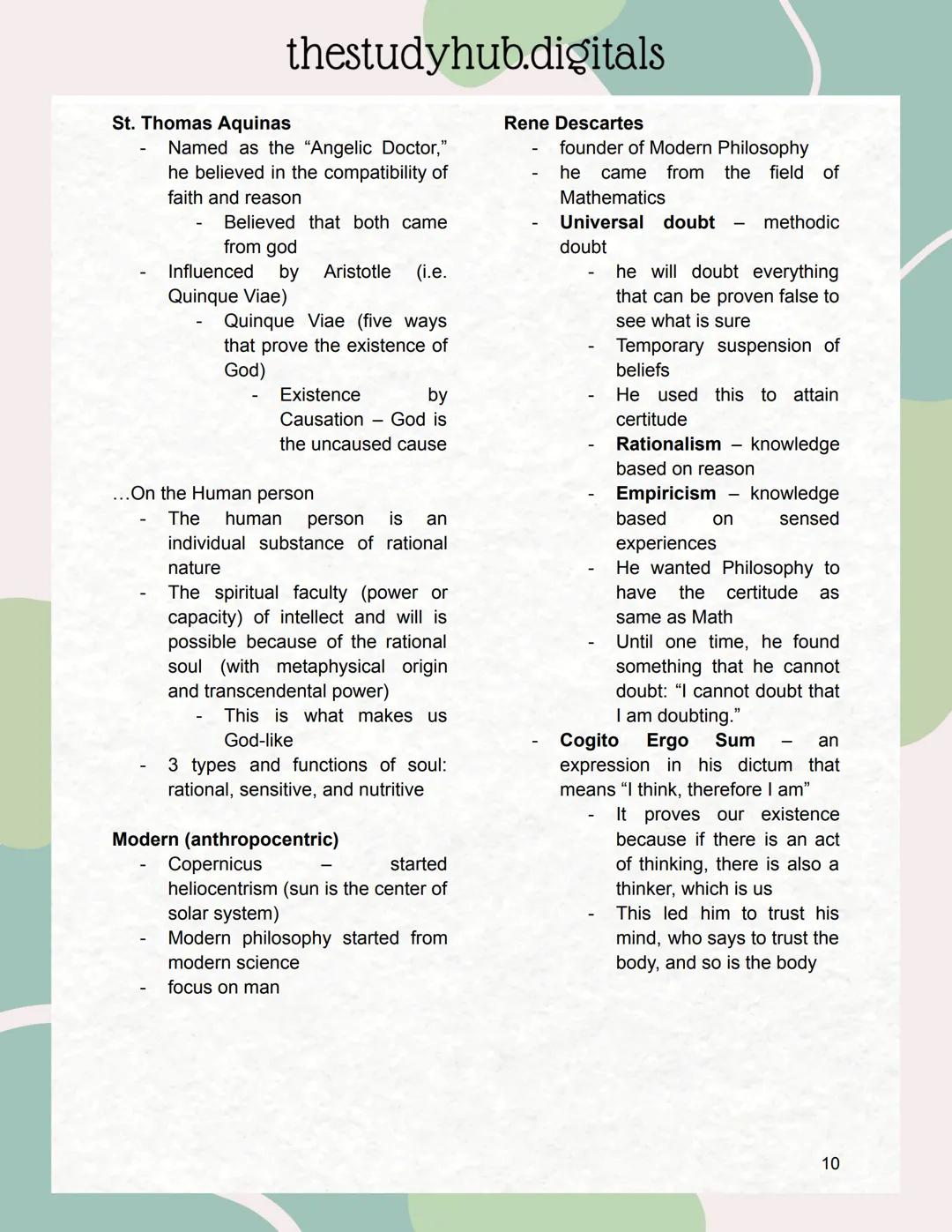
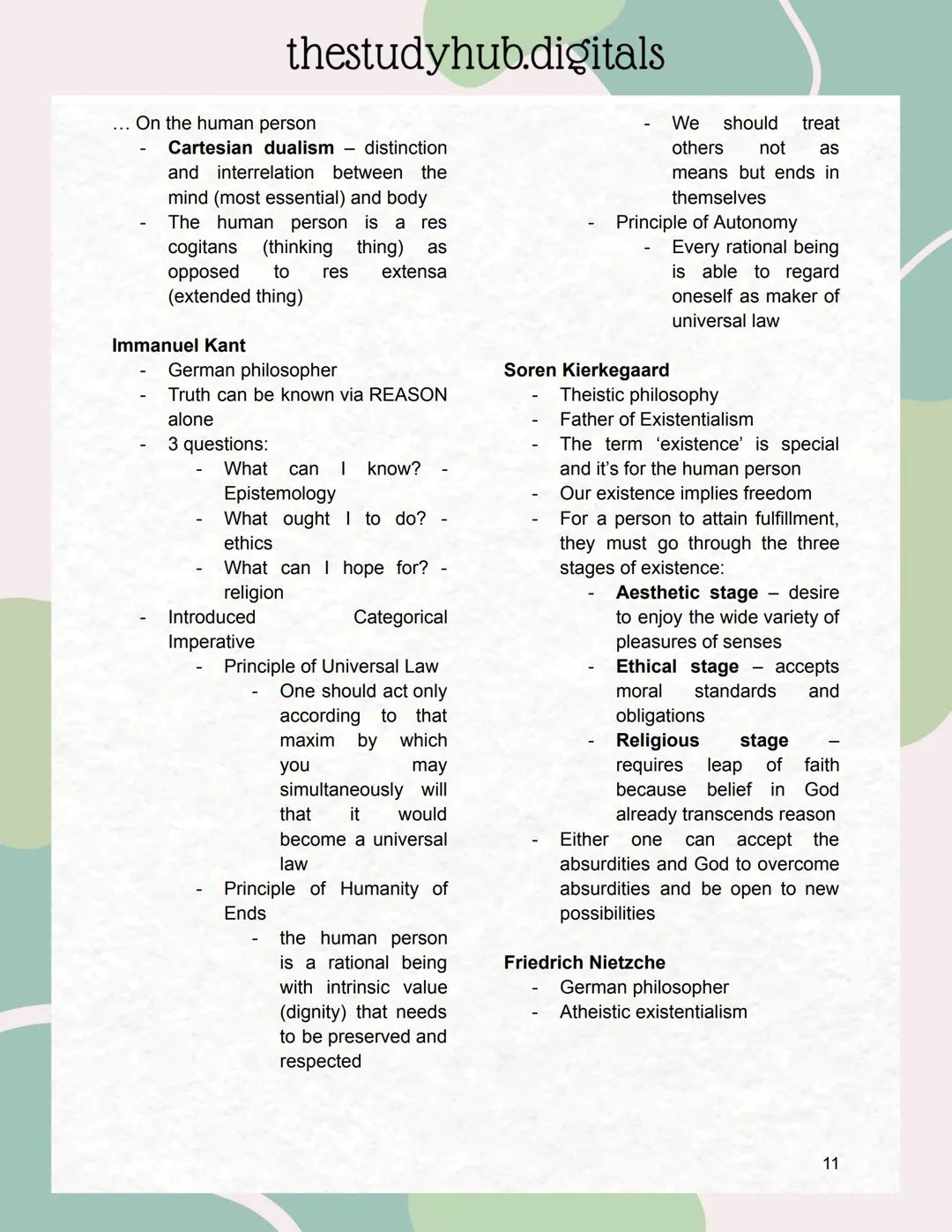
Medieval thinkers faced the challenge of combining Greek philosophy with Christian theology during an era when the Church held massive influence. This theocentric period focused everything on God while trying to make sense of human existence within a religious framework.
Saint Augustine transformed from a hedonistic lifestyle to becoming Christianity's greatest philosophical defender. His dualism separated the perfect "City of God" from the imperfect "City of Man," teaching that humans inherit original sin but can find truth through divine illumination and faith.
Augustine's famous quote captures the medieval spirit: "You have made us for yourself, O Lord, and our heart is restless until it rests in you." This shows how medieval philosophy saw human restlessness and searching as proof that we're meant for something greater than earthly life.
Historical Impact: Medieval philosophers didn't abandon reason - they used it to explore how faith and logic could work together to understand both God and humanity.
Ang aming AI Companion ay isang AI tool na nakatuon sa mga estudyante na nag-aalok ng higit pa sa mga sagot lang. Binuo mula sa milyong Knowunity resources, nagbibigay ito ng may-kaugnayang impormasyon, personalized na study plans, quizzes, at content direkta sa chat, na umaangkop sa iyong sariling learning journey.
Maaari mong i-download ang app mula sa Google Play Store at Apple App Store.
Tama 'yan! Mag-enjoy sa libreng access sa mga study content, makipag-connect sa kapwa mga estudyante, at kumuha ng instant na tulong – lahat nasa iyong daliri lang.
For Grade 12 1st Semester
 GenBio
App Store
Google Play
Napakadaling gamitin at maganda ang disenyo ng app. Nahanap ko lahat ng hinahanap ko hanggang ngayon at natuto ako ng marami mula sa mga presentasyon! Tiyak na gagamitin ko ang app para sa isang takdang-aralin sa klase! At siyempre, nakakatulong din ito bilang inspirasyon.
Stefan S
gumagamit ng iOS
Sobrang ganda talaga ng app na ito. Maraming mga study notes at tulong [...]. Ang problemang subject ko ay Pranses, halimbawa, at ang app ay may maraming options para tumulong. Salamat sa app na ito, bumuti ang Pranses ko. Irerekumenda ko ito sa lahat.
Samantha Klich
Android user
Wow, talagang namangha ako. Sinubukan ko lang ang app dahil nakita ko itong ina-advertise nang maraming beses at sobrang nagulat ako. Ang app na ito ang TULONG na gusto mo para sa paaralan at higit sa lahat, nag-aalok ito ng maraming bagay, tulad ng workouts at fact sheets, na SOBRANG nakatulong sa akin.
Anna
iOS user
Pinakamagandang app sa mundo! walang masabi dahil sobrang ganda nito
Thomas R
iOS user
Napakaganda talaga. Nakakapag-review ako ng 10x mas mabuti, itong app ay mabilis na 10/10. Lubos kong inirerekomenda ito sa lahat. Pwede akong manood at maghanap ng notes. Pwede kong i-save ang mga ito sa subject folder. Pwede kong i-review anumang oras kapag bumalik ako. Kung hindi mo pa nasubukan ang app na ito, marami kang nawawala.
Basil
Android user
Ang app na ito ay nagpapalakas ng loob ko sa paghahanda sa exams, hindi lang dahil sa pagpapataas ng aking kumpiyansa sa sarili sa pamamagitan ng mga feature na nagpapahintulot sa iyo na makipag-connect sa iba at mabawasan ang pakiramdam na nag-iisa, kundi pati na rin sa paraan na nakatuon ang app sa pagpapagaan ng iyong pakiramdam. Madali itong i-navigate, masaya gamitin, at nakakatulong sa sinumang nahihirapan sa kahit anong paraan.
David K
iOS user
Sobrang galing ng app! Ilalagay ko lang ang paksa sa search bar at makakakuha na ako ng sagot kaagad. Hindi ko kailangang manood ng 10 YouTube videos para maintindihan ang isang bagay, kaya nakakatipid ako ng oras. Lubos na inirerekomenda!
Sudenaz Ocak
Android user
Sa paaralan, napakahina ko sa math pero salamat sa app, mas mahusay na ako ngayon. Lubos akong nagpapasalamat na ginawa niyo ang app na ito.
Greenlight Bonnie
Android user
napakareliable na app para tumulong at palawakin ang iyong mga ideya sa Math, English at iba pang mga related na paksa sa iyong mga gawain. gamitin mo ang app na ito kung nahihirapan ka sa mga area, susi ito para diyan. sana nag-review na ako dati. at libre rin ito kaya huwag mag-alala tungkol diyan.
Rohan U
Android user
Alam kong maraming apps gumagamit ng fake accounts para mapataas ang kanilang reviews pero ang app na ito ay deserve lahat ng papuri. Dati nakakakuha ako ng 4 sa aking English exams at ngayon nakakuha ako ng grade 7. Hindi ko pa alam ang app na ito tatlong araw bago ang exam at nakatulong ito ng SOBRA. Pakisuyong maniwala sa akin at gamitin ito dahil sigurado akong makikita mo rin ang mga pagbabago.
Xander S
iOS user
ANG MGA quiz AT flashcard SOBRANG HELPFUL AT I LOVE TALAGA SI Knowunity AI. PARANG CHATGPT LANG PERO MAS MATALINO!! NAKATULONG DIN SA MGA MASCARA PROBLEMS KO!! PATI NA RIN SA MGA TUNAY KONG subject! SYEMPRE 😍😁😲🤑💗✨🎀😮
Elisha
iOS user
Grabe talaga ang app na to. Sobrang nakakaboring sakin ang pagreview pero ginagawa ng app na to na sobrang dali mag-organize ng lahat at pwede mong tanungin ang libreng ai para subukin ang sarili mo kaya sobrang buti at madali mong ma-upload ang sarili mong mga bagay. highly recommend bilang isang taong nagte-take ng mocks ngayon
Paul T
iOS user
Napakadaling gamitin at maganda ang disenyo ng app. Nahanap ko lahat ng hinahanap ko hanggang ngayon at natuto ako ng marami mula sa mga presentasyon! Tiyak na gagamitin ko ang app para sa isang takdang-aralin sa klase! At siyempre, nakakatulong din ito bilang inspirasyon.
Stefan S
gumagamit ng iOS
Sobrang ganda talaga ng app na ito. Maraming mga study notes at tulong [...]. Ang problemang subject ko ay Pranses, halimbawa, at ang app ay may maraming options para tumulong. Salamat sa app na ito, bumuti ang Pranses ko. Irerekumenda ko ito sa lahat.
Samantha Klich
Android user
Wow, talagang namangha ako. Sinubukan ko lang ang app dahil nakita ko itong ina-advertise nang maraming beses at sobrang nagulat ako. Ang app na ito ang TULONG na gusto mo para sa paaralan at higit sa lahat, nag-aalok ito ng maraming bagay, tulad ng workouts at fact sheets, na SOBRANG nakatulong sa akin.
Anna
iOS user
Pinakamagandang app sa mundo! walang masabi dahil sobrang ganda nito
Thomas R
iOS user
Napakaganda talaga. Nakakapag-review ako ng 10x mas mabuti, itong app ay mabilis na 10/10. Lubos kong inirerekomenda ito sa lahat. Pwede akong manood at maghanap ng notes. Pwede kong i-save ang mga ito sa subject folder. Pwede kong i-review anumang oras kapag bumalik ako. Kung hindi mo pa nasubukan ang app na ito, marami kang nawawala.
Basil
Android user
Ang app na ito ay nagpapalakas ng loob ko sa paghahanda sa exams, hindi lang dahil sa pagpapataas ng aking kumpiyansa sa sarili sa pamamagitan ng mga feature na nagpapahintulot sa iyo na makipag-connect sa iba at mabawasan ang pakiramdam na nag-iisa, kundi pati na rin sa paraan na nakatuon ang app sa pagpapagaan ng iyong pakiramdam. Madali itong i-navigate, masaya gamitin, at nakakatulong sa sinumang nahihirapan sa kahit anong paraan.
David K
iOS user
Sobrang galing ng app! Ilalagay ko lang ang paksa sa search bar at makakakuha na ako ng sagot kaagad. Hindi ko kailangang manood ng 10 YouTube videos para maintindihan ang isang bagay, kaya nakakatipid ako ng oras. Lubos na inirerekomenda!
Sudenaz Ocak
Android user
Sa paaralan, napakahina ko sa math pero salamat sa app, mas mahusay na ako ngayon. Lubos akong nagpapasalamat na ginawa niyo ang app na ito.
Greenlight Bonnie
Android user
napakareliable na app para tumulong at palawakin ang iyong mga ideya sa Math, English at iba pang mga related na paksa sa iyong mga gawain. gamitin mo ang app na ito kung nahihirapan ka sa mga area, susi ito para diyan. sana nag-review na ako dati. at libre rin ito kaya huwag mag-alala tungkol diyan.
Rohan U
Android user
Alam kong maraming apps gumagamit ng fake accounts para mapataas ang kanilang reviews pero ang app na ito ay deserve lahat ng papuri. Dati nakakakuha ako ng 4 sa aking English exams at ngayon nakakuha ako ng grade 7. Hindi ko pa alam ang app na ito tatlong araw bago ang exam at nakatulong ito ng SOBRA. Pakisuyong maniwala sa akin at gamitin ito dahil sigurado akong makikita mo rin ang mga pagbabago.
Xander S
iOS user
ANG MGA quiz AT flashcard SOBRANG HELPFUL AT I LOVE TALAGA SI Knowunity AI. PARANG CHATGPT LANG PERO MAS MATALINO!! NAKATULONG DIN SA MGA MASCARA PROBLEMS KO!! PATI NA RIN SA MGA TUNAY KONG subject! SYEMPRE 😍😁😲🤑💗✨🎀😮
Elisha
iOS user
Grabe talaga ang app na to. Sobrang nakakaboring sakin ang pagreview pero ginagawa ng app na to na sobrang dali mag-organize ng lahat at pwede mong tanungin ang libreng ai para subukin ang sarili mo kaya sobrang buti at madali mong ma-upload ang sarili mong mga bagay. highly recommend bilang isang taong nagte-take ng mocks ngayon
Paul T
iOS user
Isabel Cuevas
@isabelcue_vqe15
Ever wonder how human thinking evolved from ancient myths to logical reasoning? Philosophy began in ancient Greece when people started questioning stories about gods and goddesses, seeking real explanations for how the world works. This journey from "muthos" (stories) to... Ipakita pa
Access sa lahat ng dokumento
Pagbutihin ang iyong mga grado
Sumali sa milyong mga estudyante
Philosophy kicked off in ancient Greece around the 6th century BCE when people got tired of explaining everything through myths about gods and goddesses. Before this, Greeks relied on epic poems like "Works and Days" that said humans were basically at the mercy of divine beings.
The game-changer happened when thinkers decided that muthos (mythical stories told by poets) wasn't cutting it anymore. They wanted logos - actual reasons and logic to explain how the world worked. Instead of saying "Zeus made it rain," they started asking "What really causes rain?"
Muthos was all about divine inspiration and cosmic relationships - pretty much letting poets and artists create explanations based on what felt right. Logos, on the other hand, demanded evidence and reasoning. Heraclitus called it the "principle of order and knowledge" that could mean speech, word, reason, or logic depending on the situation.
Key Point: This shift from accepting stories to demanding explanations is exactly what you do every time you question something instead of just believing it!
Access sa lahat ng dokumento
Pagbutihin ang iyong mga grado
Sumali sa milyong mga estudyante
Picture this: you're in Miletus, a bustling trade city in 587 BCE, and suddenly people start getting stupefied (completely amazed and confused) by everyday things around them. This stupefaction wasn't just being impressed - it was being so puzzled that you absolutely had to find answers.
Thauma or stupefaction pushes you beyond just being confused. A truly stupefied person doesn't stop at "wow, that's cool" but goes straight to "wait, how does that actually work?" Real philosophers doubt what seems obvious and dig deeper for hidden truths.
The Pre-Socratics were the first to ask the ultimate question: what's the basic stuff (arche) that makes up everything? Thales said water, Anaximenes argued for air, Anaximander proposed something indefinite called Apeiron, Heraclitus went with eternal fire, and Democritus theorized about tiny particles (basically atoms).
Remember: The best questions often matter more than having perfect answers - doubt pushes us to discover what's really going on beneath the surface.
Access sa lahat ng dokumento
Pagbutihin ang iyong mga grado
Sumali sa milyong mga estudyante
Pythagoras gave us the word "philosophy" - combining "phillein" (love) and "sophia" (wisdom) to mean "love of wisdom." Unlike sophists who charged money to teach, real philosophers shared knowledge freely because they understood that pursuing wisdom never actually ends.
Here's the real definition: Philosophy is the science of all things through their ultimate causes and principles, acquired through natural reason. It's methodical like science, covers everything that can be questioned, seeks the deepest "why" answers, and relies purely on human intellect - no blind faith allowed.
The telos (goal) of philosophy isn't to become a know-it-all, but to keep asking better questions. As Aristotle said, asking the right question solves half the problem. Philosophy challenges you to think about true living and not just go along with whatever society tells you.
Think About It: When you question why something is "just the way it is," you're doing exactly what philosophers have done for over 2,000 years.
Access sa lahat ng dokumento
Pagbutihin ang iyong mga grado
Sumali sa milyong mga estudyante
People love criticizing philosophy for being too abstract, impractical, complex, ancient, and uncertain. Bertrand Russell flipped this around, arguing that philosophy's value comes precisely from these "weaknesses." The ambiguity and uncertainty mean we haven't found complete answers yet - and that's exactly the point.
Philosophy's significance isn't in giving you final answers but in developing your capacity to focus on possibilities. It teaches you prudence, critical thinking, tolerance, and intellectual humility. When everything seems certain, philosophy reminds you to keep questioning.
The dialectical method shows how philosophy thrives on criticism through thesis (a claim), antithesis (the opposite claim), and synthesis (combining the best of both). This constant back-and-forth creates stronger ideas and better understanding.
Socrates' Wisdom: "I cannot teach anybody anything. I can only make them think" - and sometimes realizing "I know that I know nothing" is the smartest thing you can do.
Access sa lahat ng dokumento
Pagbutihin ang iyong mga grado
Sumali sa milyong mga estudyante
Philosophy splits into five main branches that cover everything humans can think about. Ontology deals with what's real (like whether minds and bodies are separate things). Epistemology asks how we know what we know. Ethics tackles what's right and wrong - whether consequences matter most (utilitarianism) or principles do (deontology).
Aesthetics explores what makes things beautiful, while logic serves as philosophy's toolbox for correct reasoning. These branches work together because life's biggest questions usually involve multiple areas at once.
Critical thinking requires five key elements: independent thinking (forming your own assessments), proactive thinking (anticipating consequences), contextual thinking (understanding the bigger picture), creative thinking (challenging stale ideas), and collaborative thinking (working with others while staying true to your principles).
Daily Application: Every time you analyze a situation before acting instead of just reacting, you're using the logic of everyday philosophy.
Access sa lahat ng dokumento
Pagbutihin ang iyong mga grado
Sumali sa milyong mga estudyante
How do we figure out what's actually true? Realism says truth happens when your mind matches up with reality - pretty straightforward. Relativism argues that truth depends on personal perspective and subjective interpretation.
Pragmatism focuses on practical results - if an idea works and produces beneficial consequences, it's true enough. Phenomenology wants you to see the world fresh, like experiencing everything for the first time, focusing on how things appear to consciousness.
Axioms uses mathematical principles to understand reality, looking for universal truths that work like mathematical formulas. Each theory offers different tools for understanding knowledge, and philosophers often combine approaches depending on the situation.
Real Talk: You probably use multiple theories every day - checking facts (realism), considering different viewpoints (relativism), and focusing on what works (pragmatism).
Access sa lahat ng dokumento
Pagbutihin ang iyong mga grado
Sumali sa milyong mga estudyante
Ancient philosophy started cosmocentric - obsessed with understanding the universe and natural world. The Pre-Socratics wondered about arche (basic elements), but Socrates shifted focus to human excellence and self-knowledge.
Socrates developed the Socratic method - asking questions from a position of ignorance to expose what people really don't know. After being declared the wisest man by the Oracle of Delphi, he realized his wisdom came from recognizing his own ignorance. His goal was arete (excellence of the soul) through self-mastery and reflection.
Plato took Socrates' ideas further with his Theory of Forms - arguing that our physical world is just an imperfect copy of a perfect realm of eternal ideas. According to Plato, humans have rational, spirited, and appetitive parts of the soul, with reason needing to control desires.
Ancient Wisdom: The phrase "know thyself" isn't just feel-good advice - it's the foundation for making better decisions and living excellently.
Access sa lahat ng dokumento
Pagbutihin ang iyong mga grado
Sumali sa milyong mga estudyante
Aristotle brought philosophy down to earth with hylomorphism - the idea that everything is a combination of matter (hyle) and form (morphe). Unlike Plato's separate world of forms, Aristotle saw form and matter as inseparable parts of the same reality.
For Aristotle, humans have three types of souls: vegetative (growth like plants), sentient (feelings like animals), and rational (thinking and deciding like humans). Our ultimate goal is eudaimonia (happiness) achieved through virtuous living and wisdom.
Medieval philosophy became theocentric, focusing on God and reconciling faith with reason. Saint Augustine created the formula "Credo ut intelligam" (I believe so that I may understand), linking faith and philosophy. Thomas Aquinas later argued that both faith and reason come from God, developing his famous "Quinque Viae" (five ways to prove God's existence).
Key Insight: Whether ancient or medieval, philosophers consistently argued that humans achieve their best life through combining knowledge, virtue, and understanding their place in the larger reality.
Access sa lahat ng dokumento
Pagbutihin ang iyong mga grado
Sumali sa milyong mga estudyante
Medieval thinkers faced the challenge of combining Greek philosophy with Christian theology during an era when the Church held massive influence. This theocentric period focused everything on God while trying to make sense of human existence within a religious framework.
Saint Augustine transformed from a hedonistic lifestyle to becoming Christianity's greatest philosophical defender. His dualism separated the perfect "City of God" from the imperfect "City of Man," teaching that humans inherit original sin but can find truth through divine illumination and faith.
Augustine's famous quote captures the medieval spirit: "You have made us for yourself, O Lord, and our heart is restless until it rests in you." This shows how medieval philosophy saw human restlessness and searching as proof that we're meant for something greater than earthly life.
Historical Impact: Medieval philosophers didn't abandon reason - they used it to explore how faith and logic could work together to understand both God and humanity.
Access sa lahat ng dokumento
Pagbutihin ang iyong mga grado
Sumali sa milyong mga estudyante
Access sa lahat ng dokumento
Pagbutihin ang iyong mga grado
Sumali sa milyong mga estudyante
Access sa lahat ng dokumento
Pagbutihin ang iyong mga grado
Sumali sa milyong mga estudyante
Access sa lahat ng dokumento
Pagbutihin ang iyong mga grado
Sumali sa milyong mga estudyante
Access sa lahat ng dokumento
Pagbutihin ang iyong mga grado
Sumali sa milyong mga estudyante
Access sa lahat ng dokumento
Pagbutihin ang iyong mga grado
Sumali sa milyong mga estudyante
Access sa lahat ng dokumento
Pagbutihin ang iyong mga grado
Sumali sa milyong mga estudyante
Access sa lahat ng dokumento
Pagbutihin ang iyong mga grado
Sumali sa milyong mga estudyante
Access sa lahat ng dokumento
Pagbutihin ang iyong mga grado
Sumali sa milyong mga estudyante
Access sa lahat ng dokumento
Pagbutihin ang iyong mga grado
Sumali sa milyong mga estudyante
Access sa lahat ng dokumento
Pagbutihin ang iyong mga grado
Sumali sa milyong mga estudyante
Access sa lahat ng dokumento
Pagbutihin ang iyong mga grado
Sumali sa milyong mga estudyante
Access sa lahat ng dokumento
Pagbutihin ang iyong mga grado
Sumali sa milyong mga estudyante
Access sa lahat ng dokumento
Pagbutihin ang iyong mga grado
Sumali sa milyong mga estudyante
Access sa lahat ng dokumento
Pagbutihin ang iyong mga grado
Sumali sa milyong mga estudyante
Access sa lahat ng dokumento
Pagbutihin ang iyong mga grado
Sumali sa milyong mga estudyante
Ang aming AI Companion ay isang AI tool na nakatuon sa mga estudyante na nag-aalok ng higit pa sa mga sagot lang. Binuo mula sa milyong Knowunity resources, nagbibigay ito ng may-kaugnayang impormasyon, personalized na study plans, quizzes, at content direkta sa chat, na umaangkop sa iyong sariling learning journey.
Maaari mong i-download ang app mula sa Google Play Store at Apple App Store.
Tama 'yan! Mag-enjoy sa libreng access sa mga study content, makipag-connect sa kapwa mga estudyante, at kumuha ng instant na tulong – lahat nasa iyong daliri lang.
3
Smart Tools NEW
I-transform ang note na ito sa: ✓ 50+ Practice Questions ✓ Interactive Flashcards ✓ Full Mock Exam ✓ Essay Outlines
For Grade 12 1st Semester
GenBioApp Store
Google Play
Napakadaling gamitin at maganda ang disenyo ng app. Nahanap ko lahat ng hinahanap ko hanggang ngayon at natuto ako ng marami mula sa mga presentasyon! Tiyak na gagamitin ko ang app para sa isang takdang-aralin sa klase! At siyempre, nakakatulong din ito bilang inspirasyon.
Stefan S
gumagamit ng iOS
Sobrang ganda talaga ng app na ito. Maraming mga study notes at tulong [...]. Ang problemang subject ko ay Pranses, halimbawa, at ang app ay may maraming options para tumulong. Salamat sa app na ito, bumuti ang Pranses ko. Irerekumenda ko ito sa lahat.
Samantha Klich
Android user
Wow, talagang namangha ako. Sinubukan ko lang ang app dahil nakita ko itong ina-advertise nang maraming beses at sobrang nagulat ako. Ang app na ito ang TULONG na gusto mo para sa paaralan at higit sa lahat, nag-aalok ito ng maraming bagay, tulad ng workouts at fact sheets, na SOBRANG nakatulong sa akin.
Anna
iOS user
Pinakamagandang app sa mundo! walang masabi dahil sobrang ganda nito
Thomas R
iOS user
Napakaganda talaga. Nakakapag-review ako ng 10x mas mabuti, itong app ay mabilis na 10/10. Lubos kong inirerekomenda ito sa lahat. Pwede akong manood at maghanap ng notes. Pwede kong i-save ang mga ito sa subject folder. Pwede kong i-review anumang oras kapag bumalik ako. Kung hindi mo pa nasubukan ang app na ito, marami kang nawawala.
Basil
Android user
Ang app na ito ay nagpapalakas ng loob ko sa paghahanda sa exams, hindi lang dahil sa pagpapataas ng aking kumpiyansa sa sarili sa pamamagitan ng mga feature na nagpapahintulot sa iyo na makipag-connect sa iba at mabawasan ang pakiramdam na nag-iisa, kundi pati na rin sa paraan na nakatuon ang app sa pagpapagaan ng iyong pakiramdam. Madali itong i-navigate, masaya gamitin, at nakakatulong sa sinumang nahihirapan sa kahit anong paraan.
David K
iOS user
Sobrang galing ng app! Ilalagay ko lang ang paksa sa search bar at makakakuha na ako ng sagot kaagad. Hindi ko kailangang manood ng 10 YouTube videos para maintindihan ang isang bagay, kaya nakakatipid ako ng oras. Lubos na inirerekomenda!
Sudenaz Ocak
Android user
Sa paaralan, napakahina ko sa math pero salamat sa app, mas mahusay na ako ngayon. Lubos akong nagpapasalamat na ginawa niyo ang app na ito.
Greenlight Bonnie
Android user
napakareliable na app para tumulong at palawakin ang iyong mga ideya sa Math, English at iba pang mga related na paksa sa iyong mga gawain. gamitin mo ang app na ito kung nahihirapan ka sa mga area, susi ito para diyan. sana nag-review na ako dati. at libre rin ito kaya huwag mag-alala tungkol diyan.
Rohan U
Android user
Alam kong maraming apps gumagamit ng fake accounts para mapataas ang kanilang reviews pero ang app na ito ay deserve lahat ng papuri. Dati nakakakuha ako ng 4 sa aking English exams at ngayon nakakuha ako ng grade 7. Hindi ko pa alam ang app na ito tatlong araw bago ang exam at nakatulong ito ng SOBRA. Pakisuyong maniwala sa akin at gamitin ito dahil sigurado akong makikita mo rin ang mga pagbabago.
Xander S
iOS user
ANG MGA quiz AT flashcard SOBRANG HELPFUL AT I LOVE TALAGA SI Knowunity AI. PARANG CHATGPT LANG PERO MAS MATALINO!! NAKATULONG DIN SA MGA MASCARA PROBLEMS KO!! PATI NA RIN SA MGA TUNAY KONG subject! SYEMPRE 😍😁😲🤑💗✨🎀😮
Elisha
iOS user
Grabe talaga ang app na to. Sobrang nakakaboring sakin ang pagreview pero ginagawa ng app na to na sobrang dali mag-organize ng lahat at pwede mong tanungin ang libreng ai para subukin ang sarili mo kaya sobrang buti at madali mong ma-upload ang sarili mong mga bagay. highly recommend bilang isang taong nagte-take ng mocks ngayon
Paul T
iOS user
Napakadaling gamitin at maganda ang disenyo ng app. Nahanap ko lahat ng hinahanap ko hanggang ngayon at natuto ako ng marami mula sa mga presentasyon! Tiyak na gagamitin ko ang app para sa isang takdang-aralin sa klase! At siyempre, nakakatulong din ito bilang inspirasyon.
Stefan S
gumagamit ng iOS
Sobrang ganda talaga ng app na ito. Maraming mga study notes at tulong [...]. Ang problemang subject ko ay Pranses, halimbawa, at ang app ay may maraming options para tumulong. Salamat sa app na ito, bumuti ang Pranses ko. Irerekumenda ko ito sa lahat.
Samantha Klich
Android user
Wow, talagang namangha ako. Sinubukan ko lang ang app dahil nakita ko itong ina-advertise nang maraming beses at sobrang nagulat ako. Ang app na ito ang TULONG na gusto mo para sa paaralan at higit sa lahat, nag-aalok ito ng maraming bagay, tulad ng workouts at fact sheets, na SOBRANG nakatulong sa akin.
Anna
iOS user
Pinakamagandang app sa mundo! walang masabi dahil sobrang ganda nito
Thomas R
iOS user
Napakaganda talaga. Nakakapag-review ako ng 10x mas mabuti, itong app ay mabilis na 10/10. Lubos kong inirerekomenda ito sa lahat. Pwede akong manood at maghanap ng notes. Pwede kong i-save ang mga ito sa subject folder. Pwede kong i-review anumang oras kapag bumalik ako. Kung hindi mo pa nasubukan ang app na ito, marami kang nawawala.
Basil
Android user
Ang app na ito ay nagpapalakas ng loob ko sa paghahanda sa exams, hindi lang dahil sa pagpapataas ng aking kumpiyansa sa sarili sa pamamagitan ng mga feature na nagpapahintulot sa iyo na makipag-connect sa iba at mabawasan ang pakiramdam na nag-iisa, kundi pati na rin sa paraan na nakatuon ang app sa pagpapagaan ng iyong pakiramdam. Madali itong i-navigate, masaya gamitin, at nakakatulong sa sinumang nahihirapan sa kahit anong paraan.
David K
iOS user
Sobrang galing ng app! Ilalagay ko lang ang paksa sa search bar at makakakuha na ako ng sagot kaagad. Hindi ko kailangang manood ng 10 YouTube videos para maintindihan ang isang bagay, kaya nakakatipid ako ng oras. Lubos na inirerekomenda!
Sudenaz Ocak
Android user
Sa paaralan, napakahina ko sa math pero salamat sa app, mas mahusay na ako ngayon. Lubos akong nagpapasalamat na ginawa niyo ang app na ito.
Greenlight Bonnie
Android user
napakareliable na app para tumulong at palawakin ang iyong mga ideya sa Math, English at iba pang mga related na paksa sa iyong mga gawain. gamitin mo ang app na ito kung nahihirapan ka sa mga area, susi ito para diyan. sana nag-review na ako dati. at libre rin ito kaya huwag mag-alala tungkol diyan.
Rohan U
Android user
Alam kong maraming apps gumagamit ng fake accounts para mapataas ang kanilang reviews pero ang app na ito ay deserve lahat ng papuri. Dati nakakakuha ako ng 4 sa aking English exams at ngayon nakakuha ako ng grade 7. Hindi ko pa alam ang app na ito tatlong araw bago ang exam at nakatulong ito ng SOBRA. Pakisuyong maniwala sa akin at gamitin ito dahil sigurado akong makikita mo rin ang mga pagbabago.
Xander S
iOS user
ANG MGA quiz AT flashcard SOBRANG HELPFUL AT I LOVE TALAGA SI Knowunity AI. PARANG CHATGPT LANG PERO MAS MATALINO!! NAKATULONG DIN SA MGA MASCARA PROBLEMS KO!! PATI NA RIN SA MGA TUNAY KONG subject! SYEMPRE 😍😁😲🤑💗✨🎀😮
Elisha
iOS user
Grabe talaga ang app na to. Sobrang nakakaboring sakin ang pagreview pero ginagawa ng app na to na sobrang dali mag-organize ng lahat at pwede mong tanungin ang libreng ai para subukin ang sarili mo kaya sobrang buti at madali mong ma-upload ang sarili mong mga bagay. highly recommend bilang isang taong nagte-take ng mocks ngayon
Paul T
iOS user