
Your body is an amazing complex system where everything works... Ipakita pa
 Other
Other Pre-Cal
 Filipino
 Science
 Econ
EconMag-sign up para makita ang contentLibre ito!
Access sa lahat ng dokumento
Pagbutihin ang iyong mga grado
Sumali sa milyong mga estudyante
Knowunity AI
Higit pa
Mga Asignatura
Triangle Congruence and Similarity Theorems
Triangle Properties and Classification
Linear Equations and Graphs
Geometric Angle Relationships
Trigonometric Functions and Identities
Equation Solving Techniques
Circle Geometry Fundamentals
Division Operations and Methods
Basic Differentiation Rules
Exponent and Logarithm Properties
Ipakita lahat ng paksa
Human Organ Systems
Reproductive Cell Cycles
Biological Sciences Subdisciplines
Cellular Energy Metabolism
Autotrophic Energy Processes
Inheritance Patterns and Principles
Biomolecular Structure and Organization
Cell Cycle and Division Mechanics
Cellular Organization and Development
Biological Structural Organization
Ipakita lahat ng paksa
Chemical Sciences and Applications
Atomic Structure and Composition
Molecular Electron Structure Representation
Atomic Electron Behavior
Matter Properties and Water
Mole Concept and Calculations
Gas Laws and Behavior
Periodic Table Organization
Chemical Thermodynamics Fundamentals
Chemical Bond Types and Properties
Ipakita lahat ng paksa
European Renaissance and Enlightenment
European Cultural Movements 800-1920
American Revolution Era 1763-1797
American Civil War 1861-1865
Global Imperial Systems
Mongol and Chinese Dynasties
U.S. Presidents and World Leaders
Historical Sources and Documentation
World Wars Era and Impact
World Religious Systems
Ipakita lahat ng paksa
Classic and Contemporary Novels
Literary Character Analysis
Rhetorical Theory and Practice
Classic Literary Narratives
Reading Analysis and Interpretation
Narrative Structure and Techniques
English Language Components
Influential English-Language Authors
Basic Sentence Structure
Narrative Voice and Perspective
Ipakita lahat ng paksa
892
•
Na-update Mar 12, 2026
•
Gojo
@satorufux
Your body is an amazing complex system where everything works... Ipakita pa
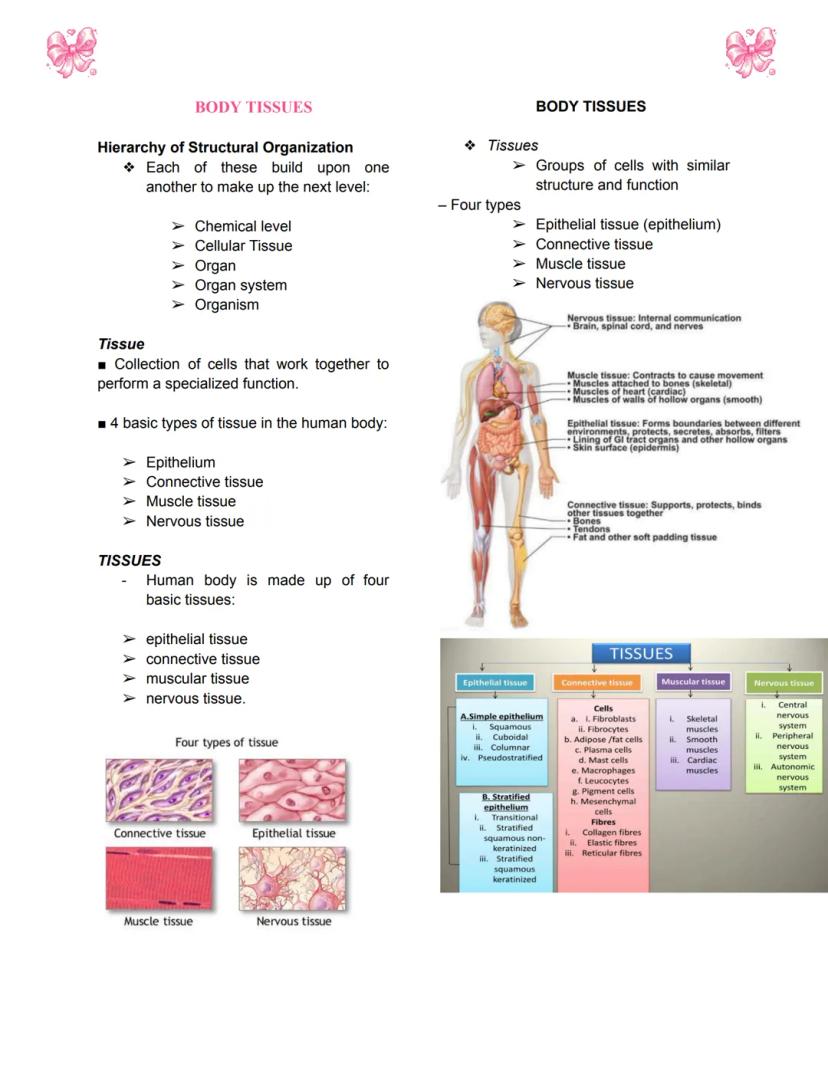
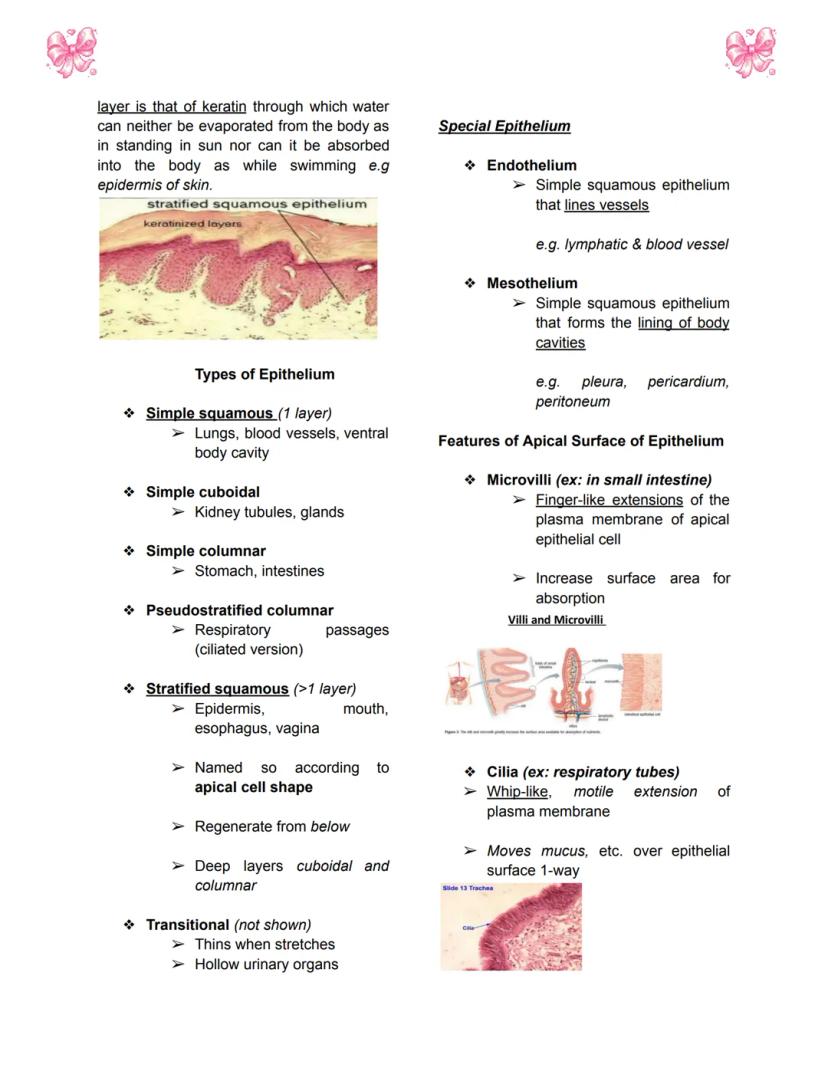
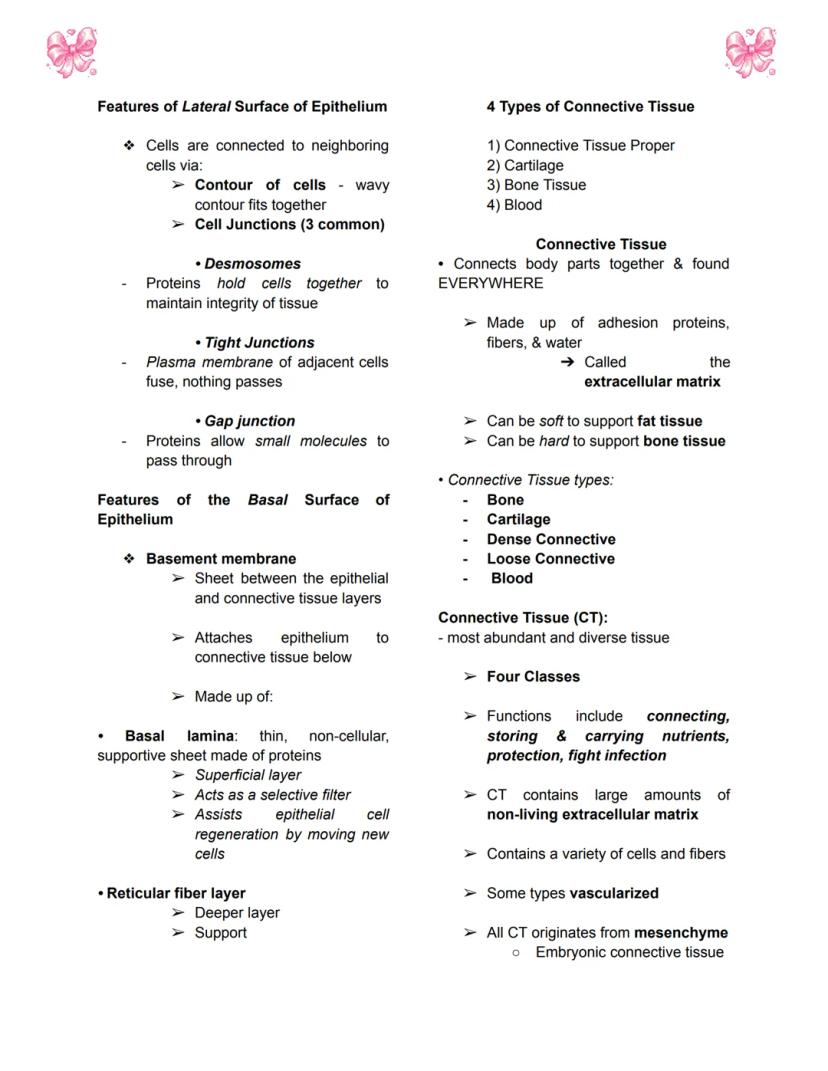
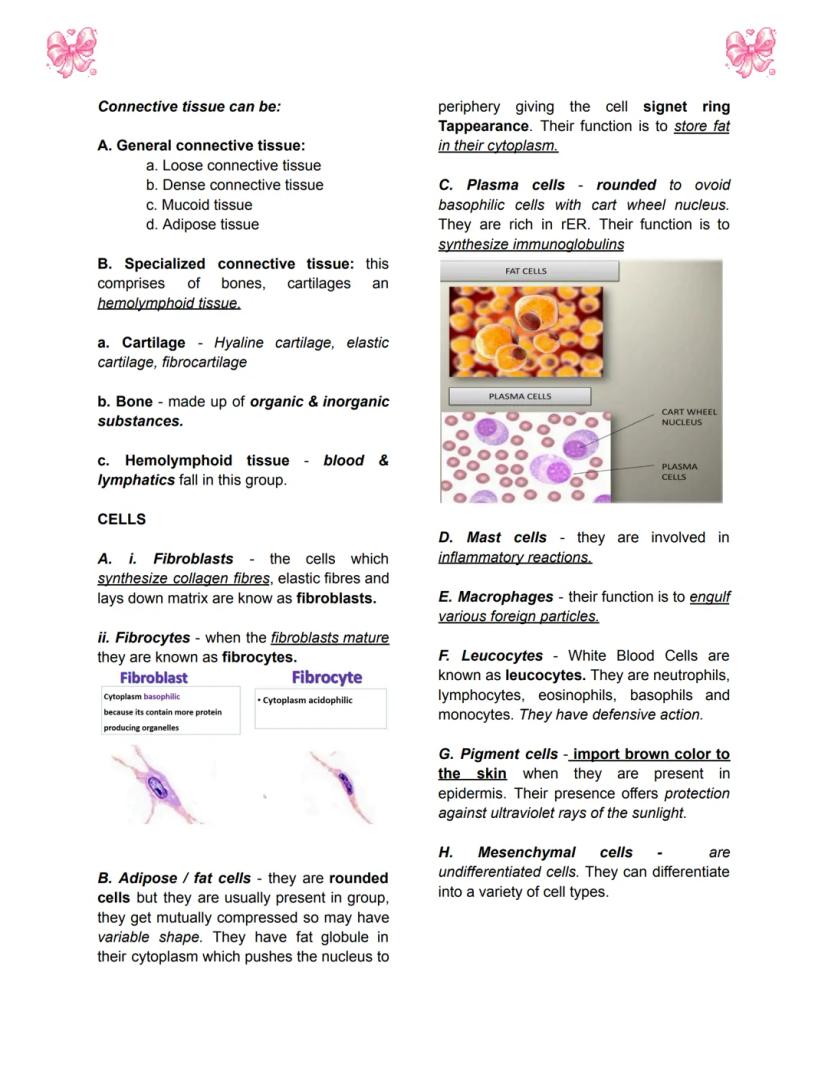
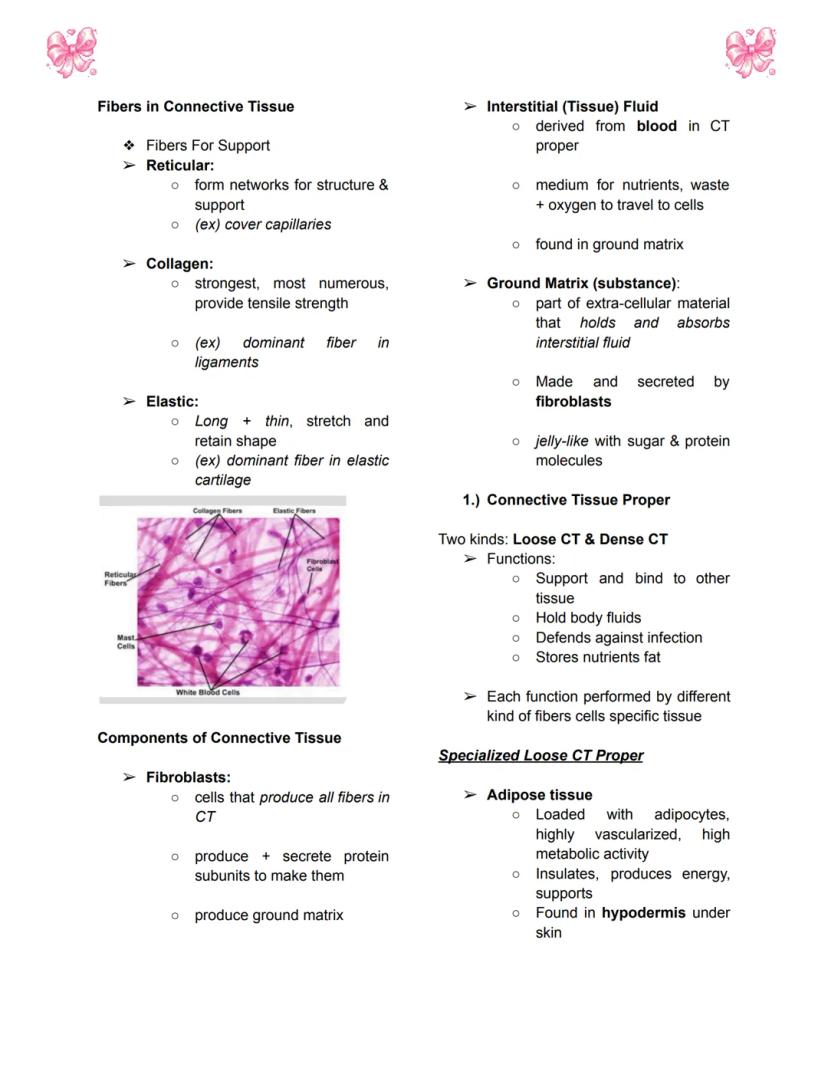
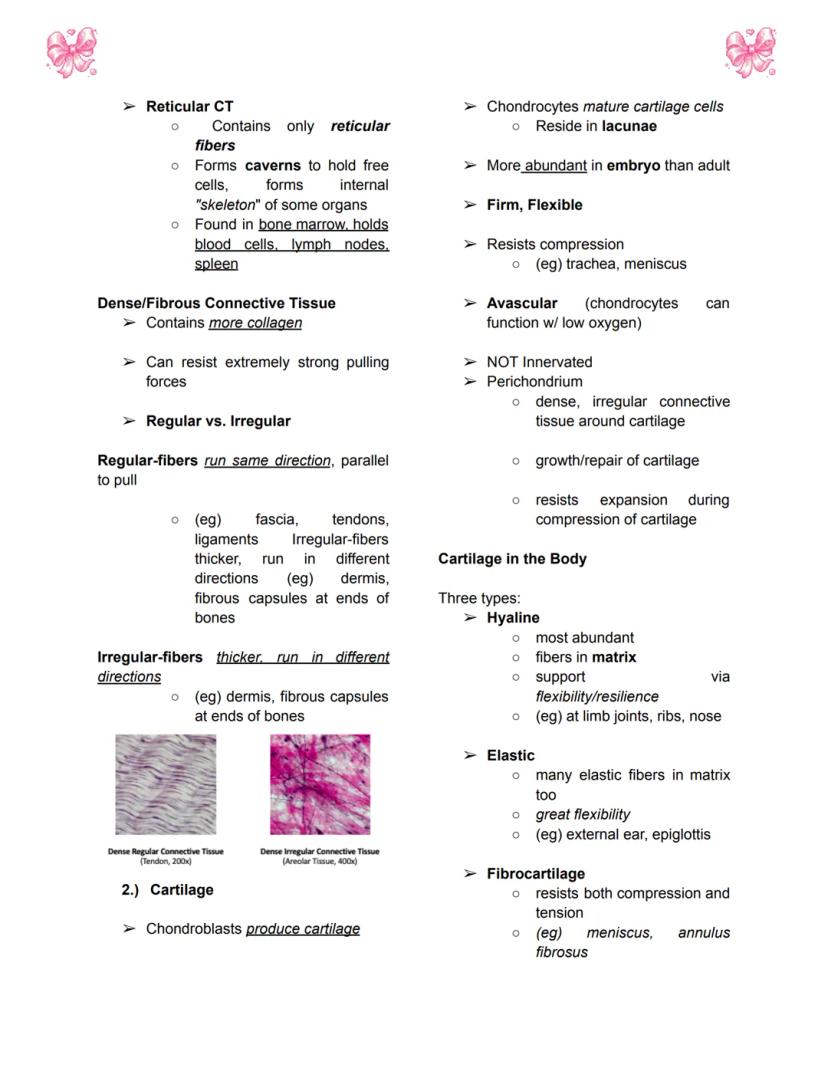
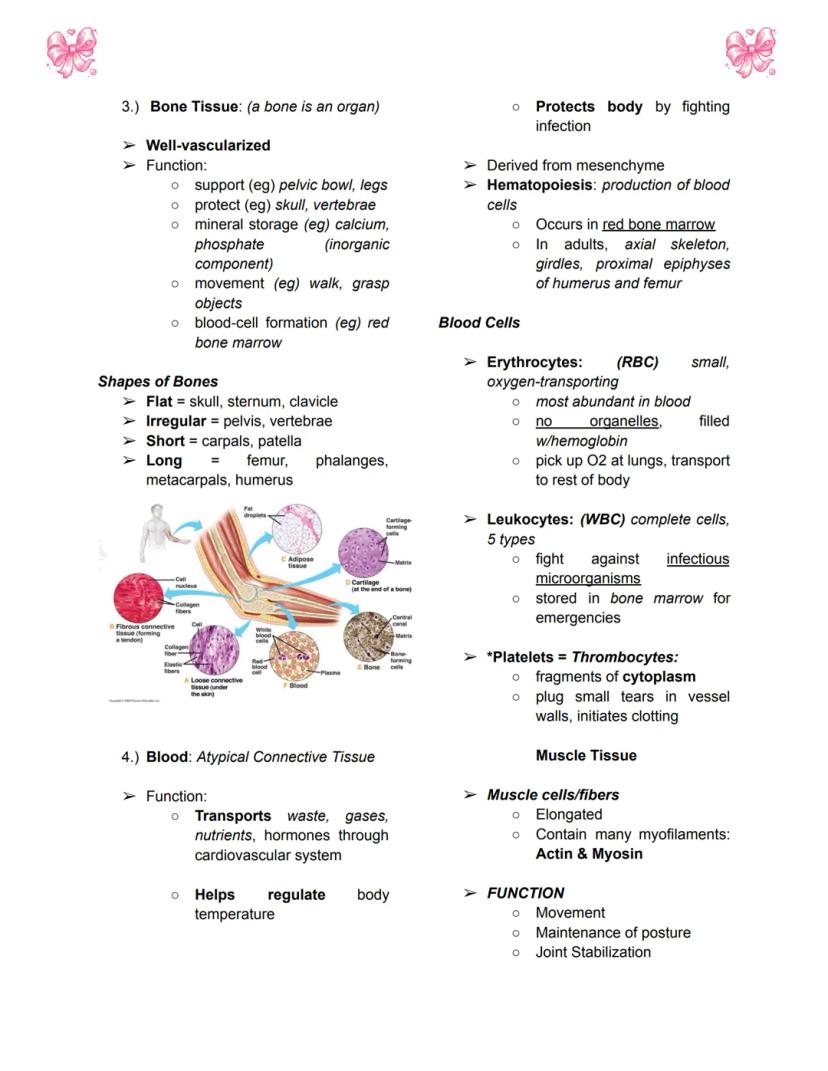
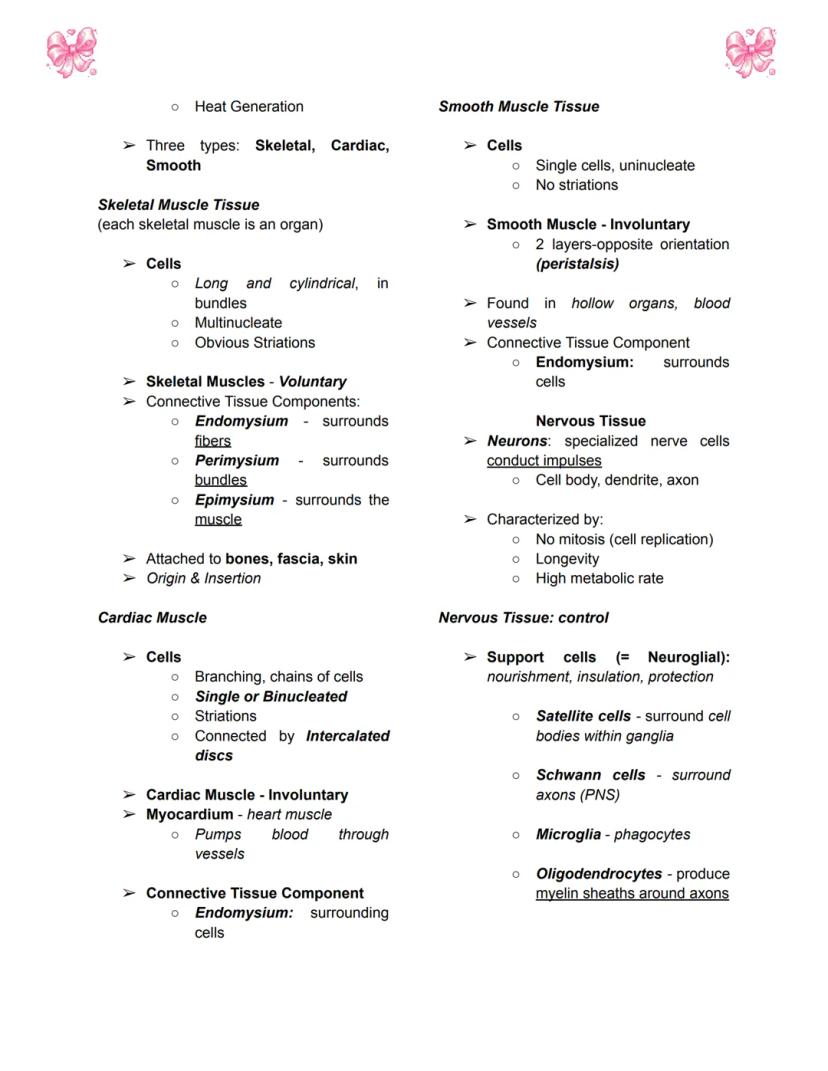
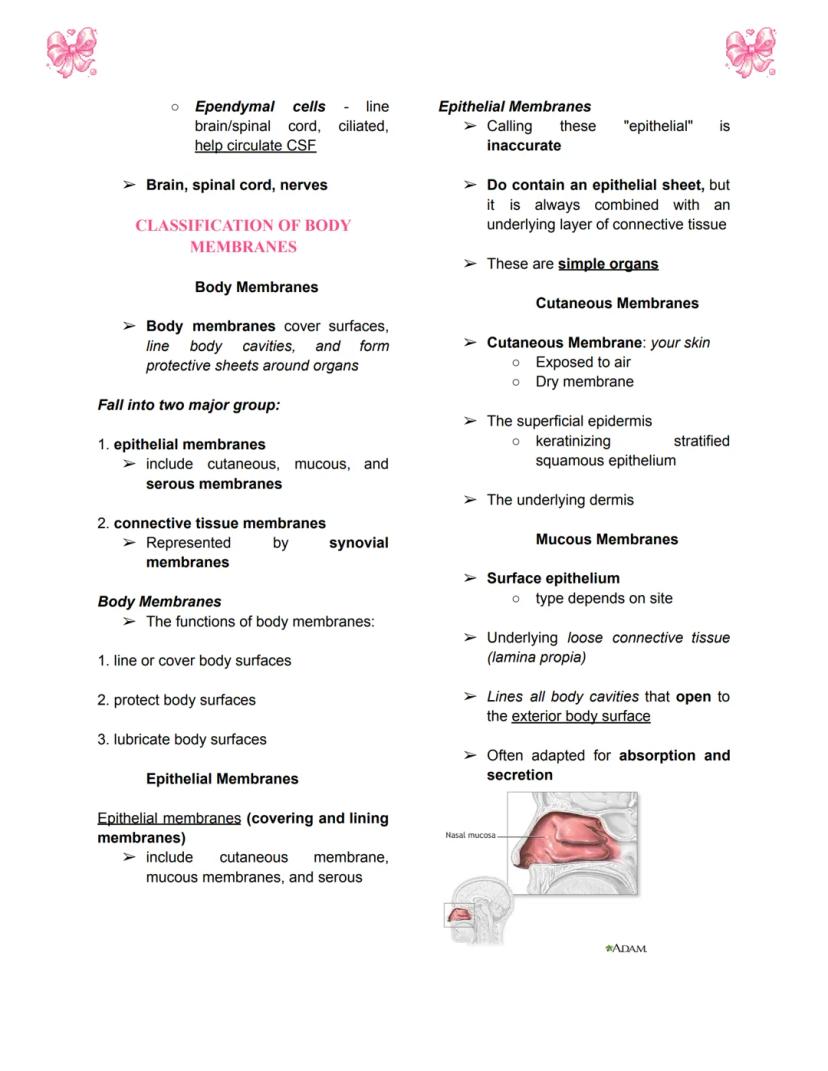
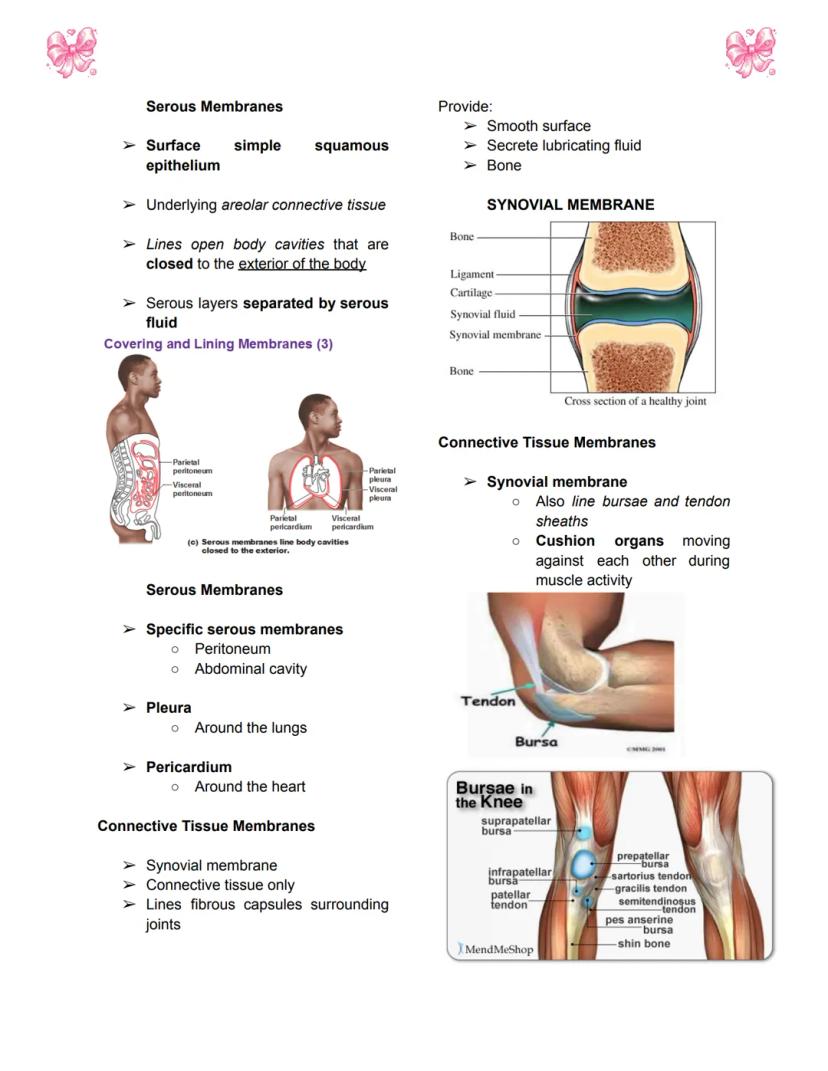
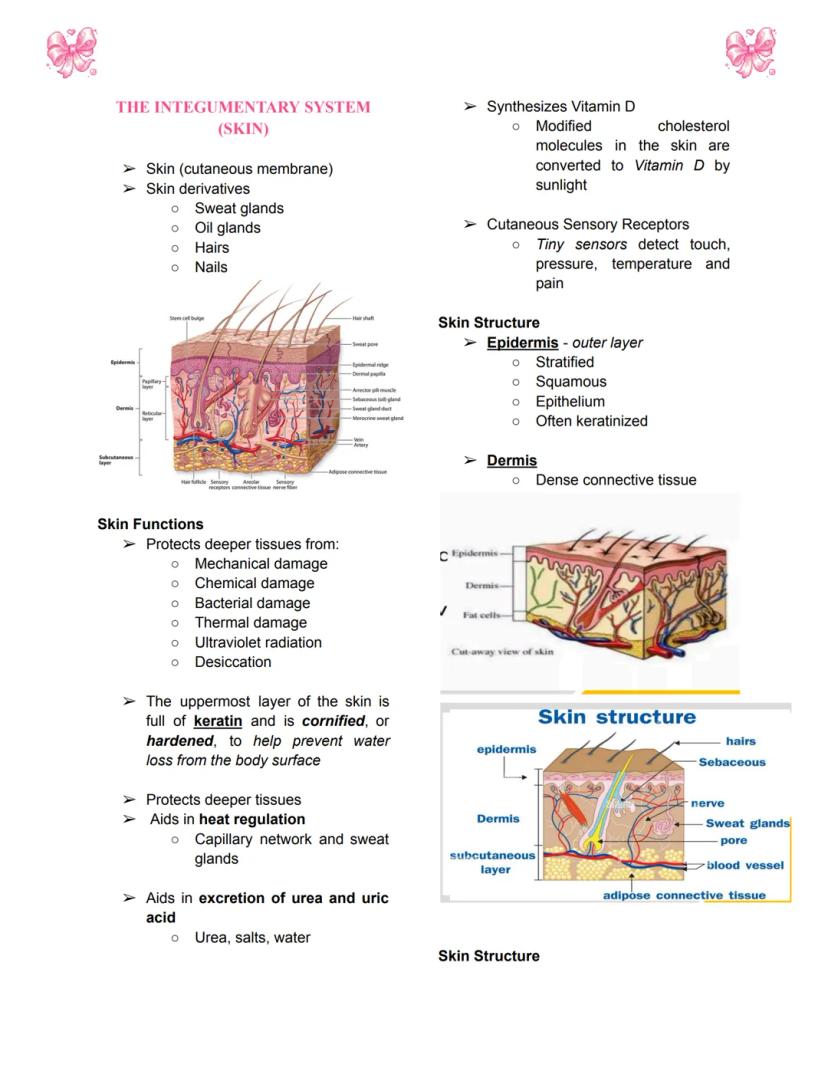
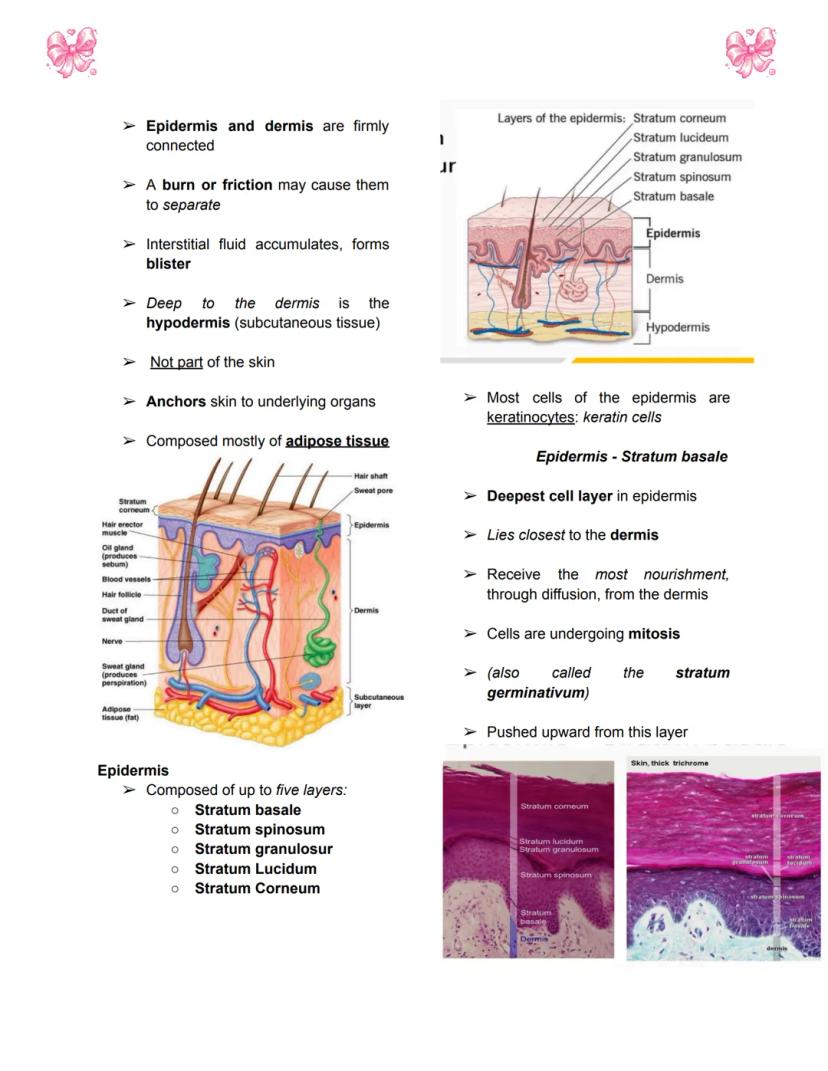
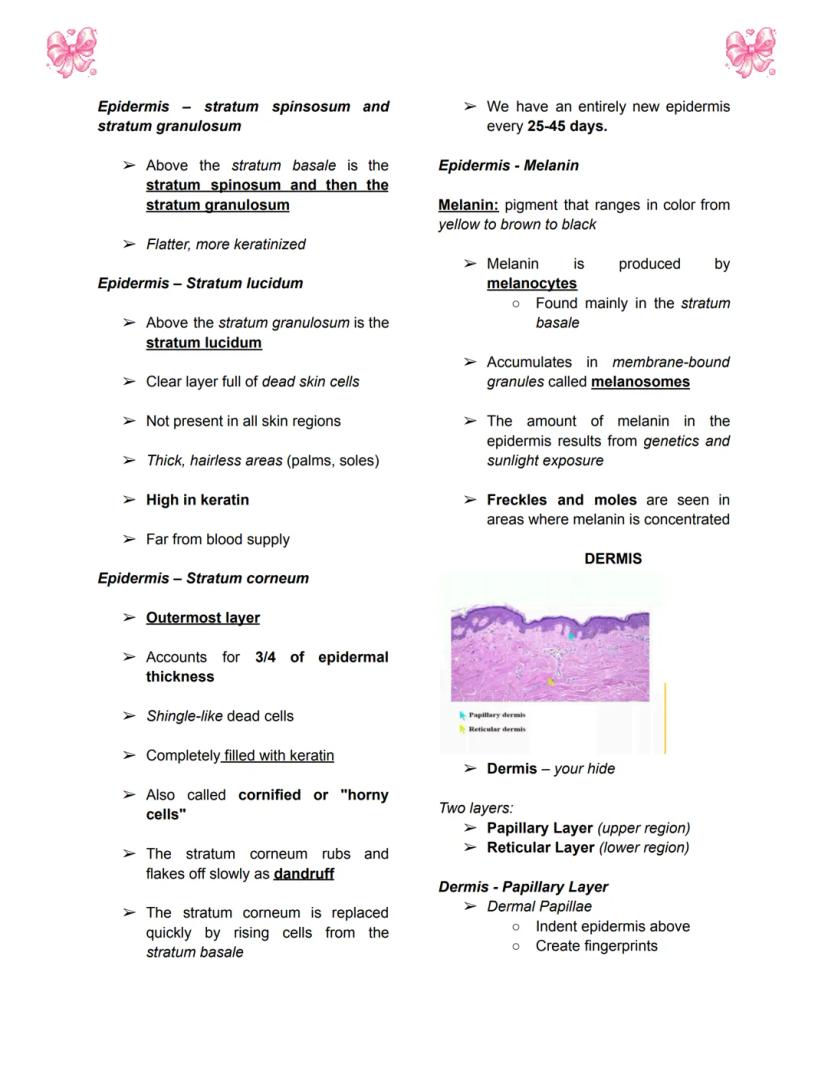
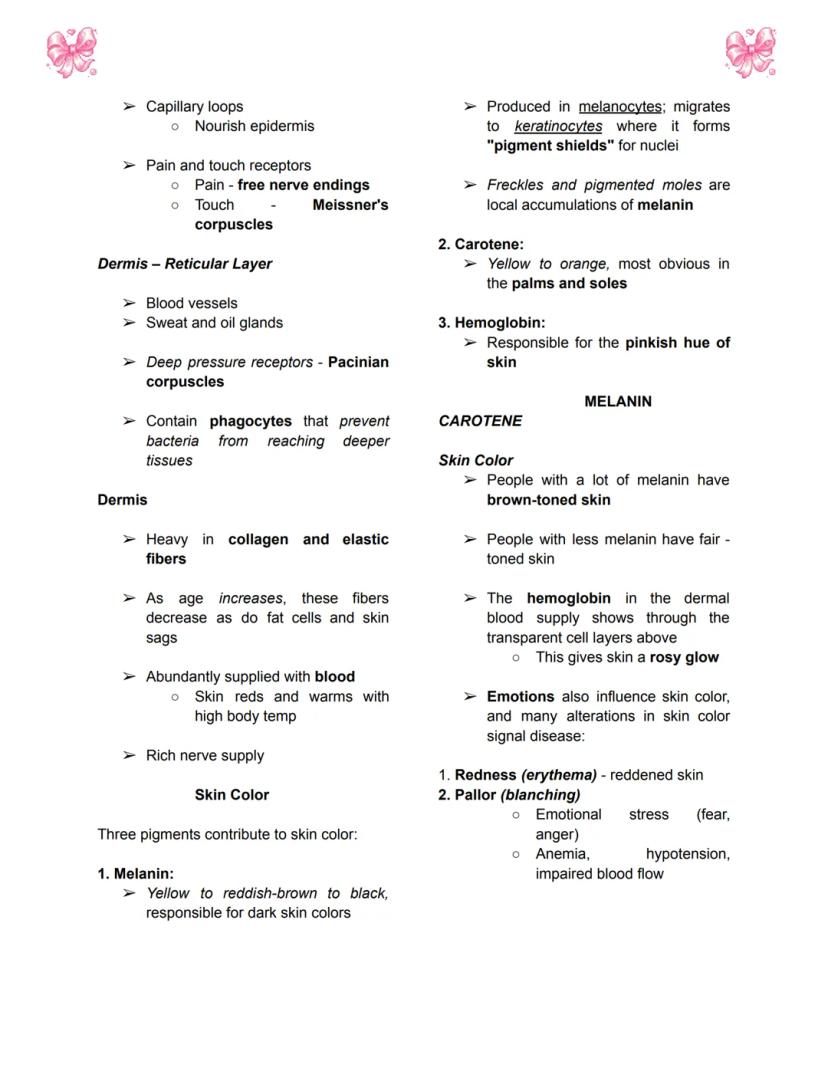
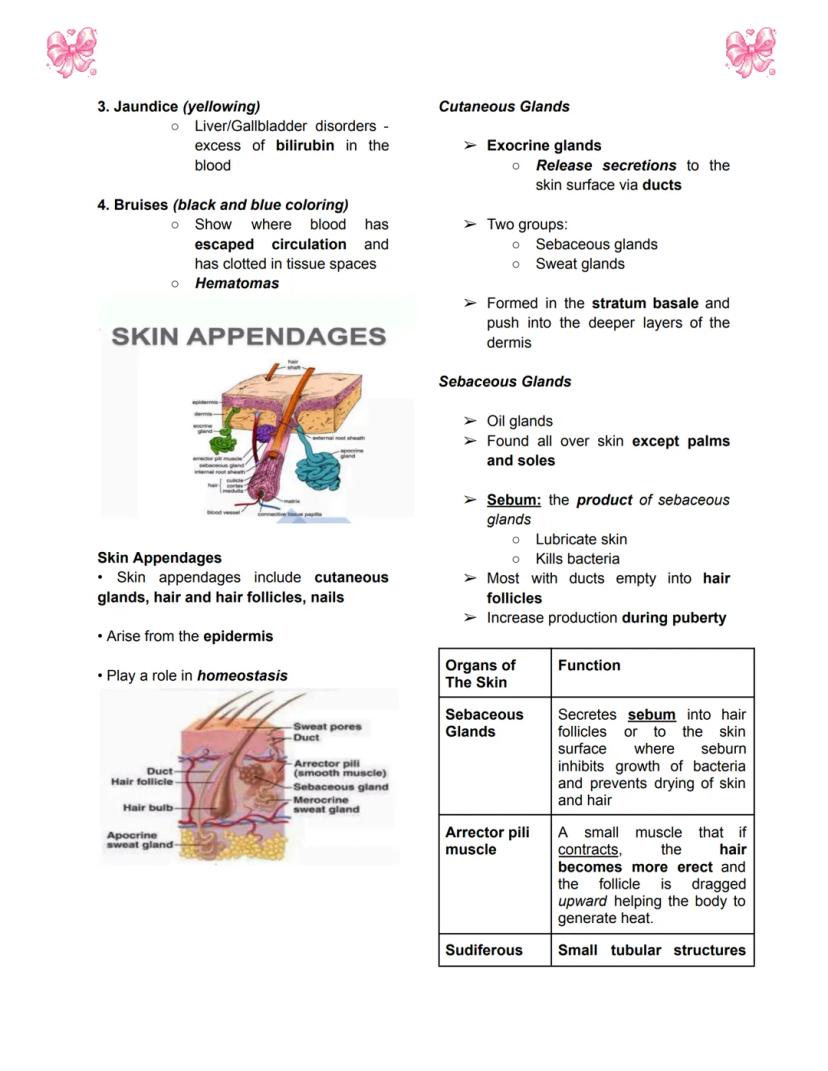
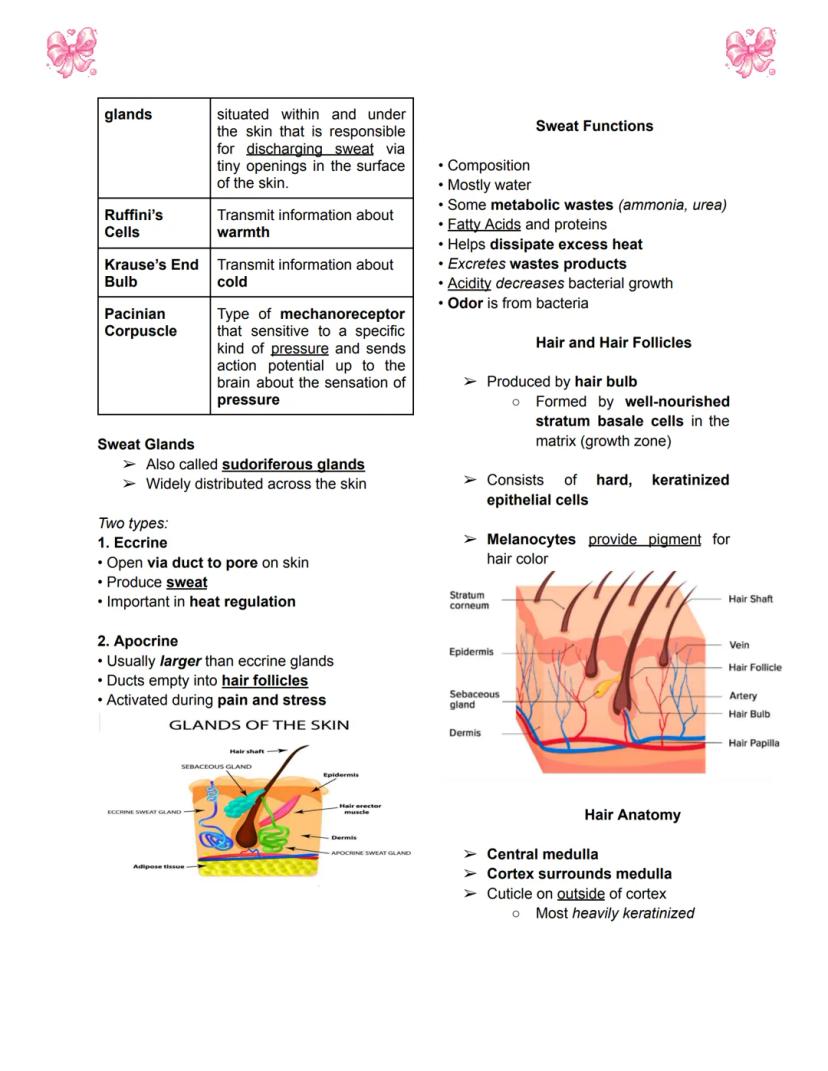
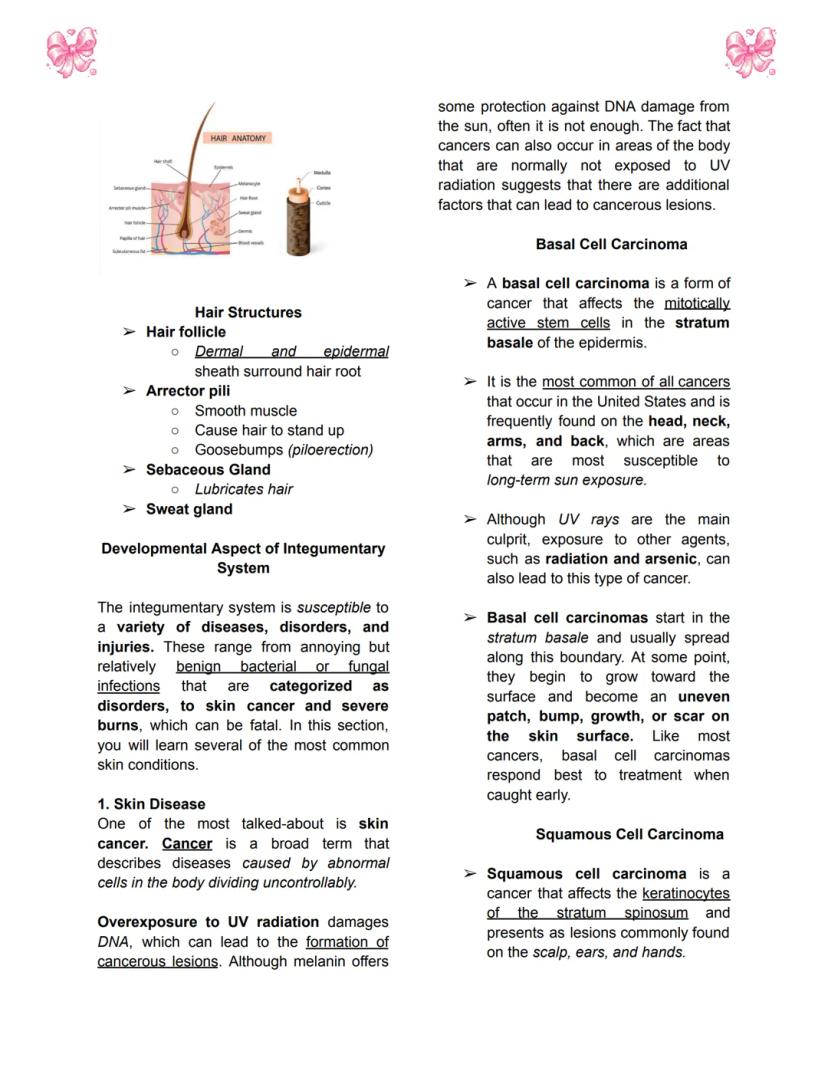

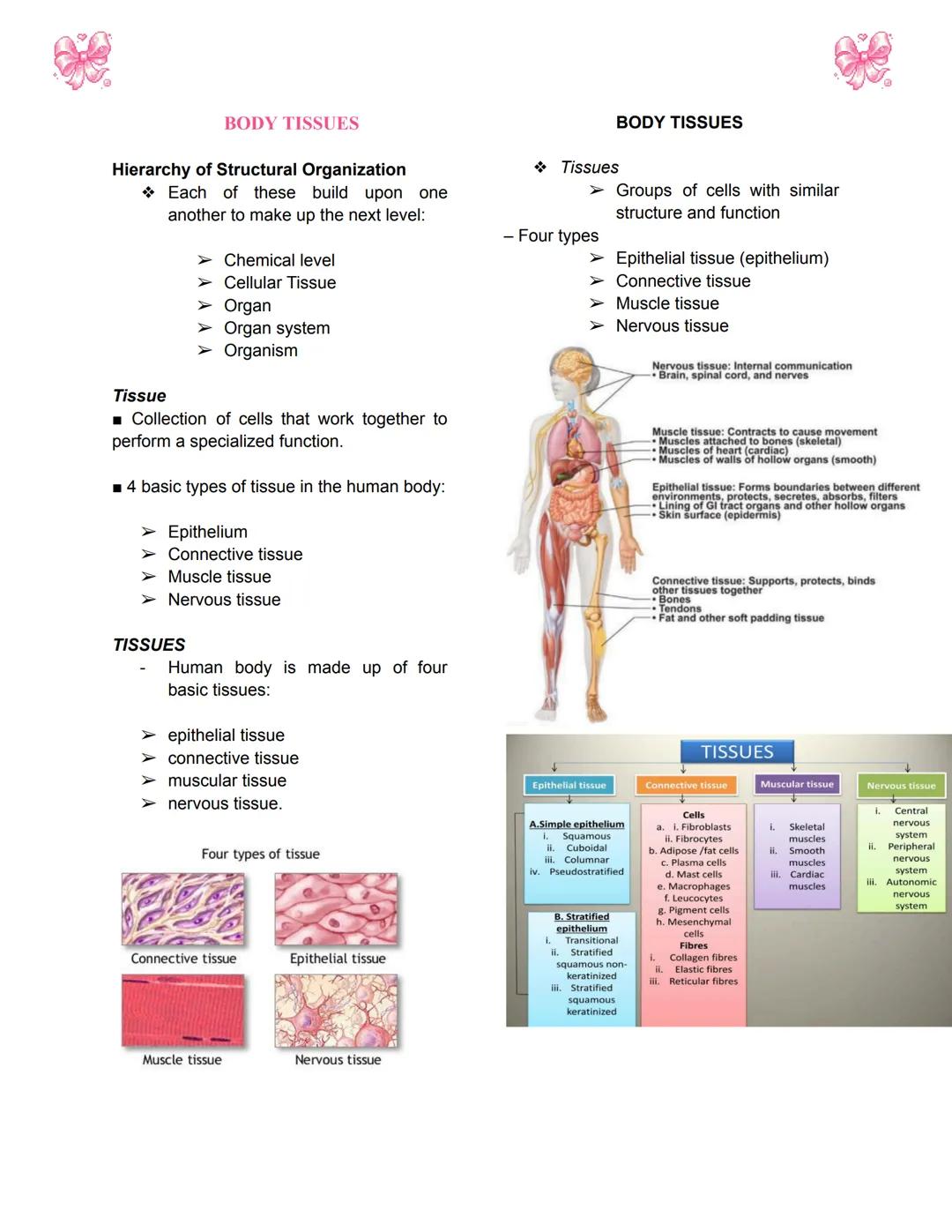
Think of your body like a perfectly organized company where everyone has a specific job to do. The hierarchy of structural organization starts small and builds up: chemicals form cells, cells create tissues, tissues make organs, organs work together in systems, and all systems create you as a complete organism.
Tissues are simply groups of similar cells that team up to do a specific job. Your entire body is built from just four basic tissue types: epithelial (your body's protective covering), connective (the support system), muscle (the movers), and nervous (your internal communication network).
Each tissue type has its own superpowers. Epithelial tissue acts like your body's security guard, forming boundaries and protecting you from the outside world. Connective tissue is like the framework of a building, supporting and binding everything together. Muscle tissue is your body's engine, contracting to create all your movements. Nervous tissue works like your body's internet, sending electrical signals throughout your brain, spinal cord, and nerves.
Quick Fact: Your body contains about 200 different cell types, but they all fall into these four main tissue categories!
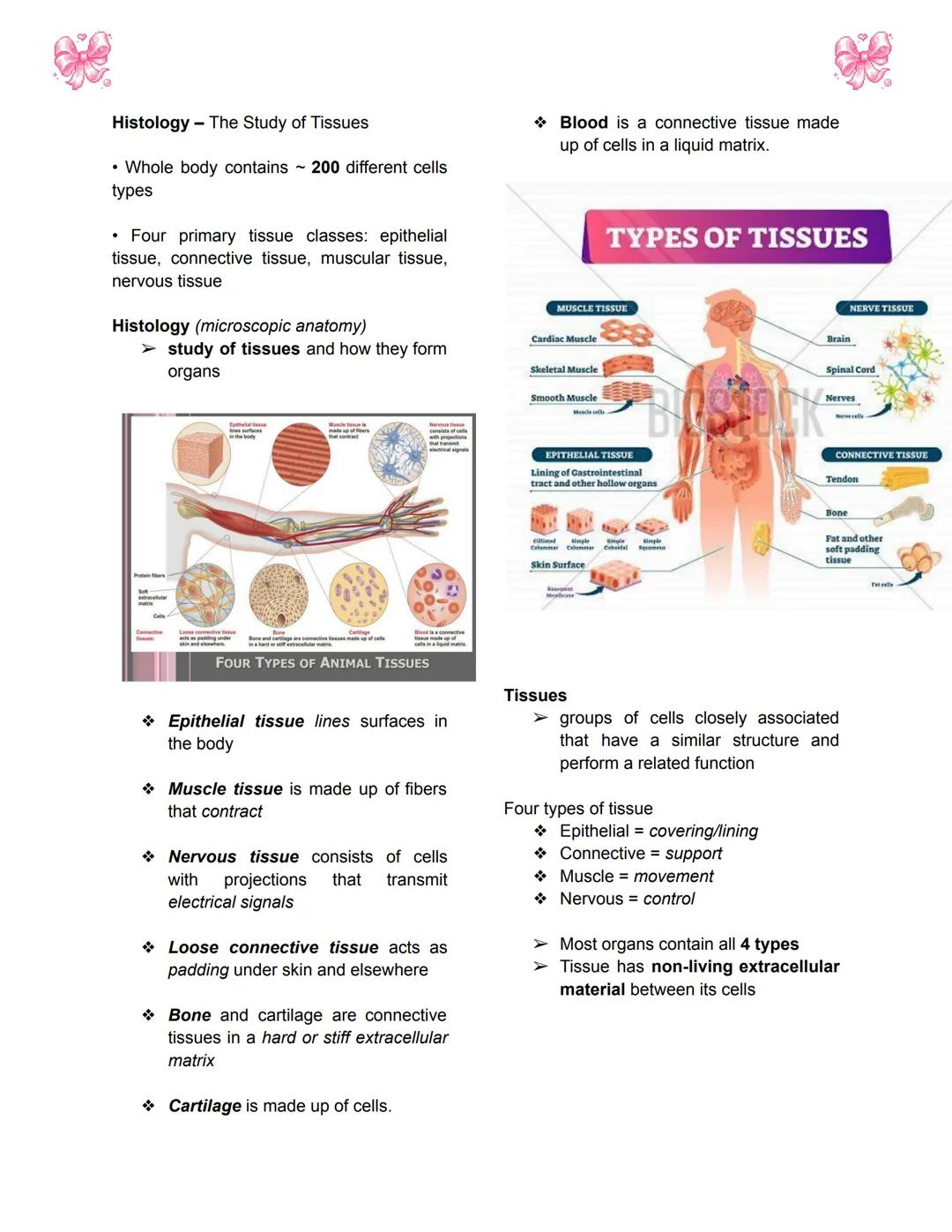
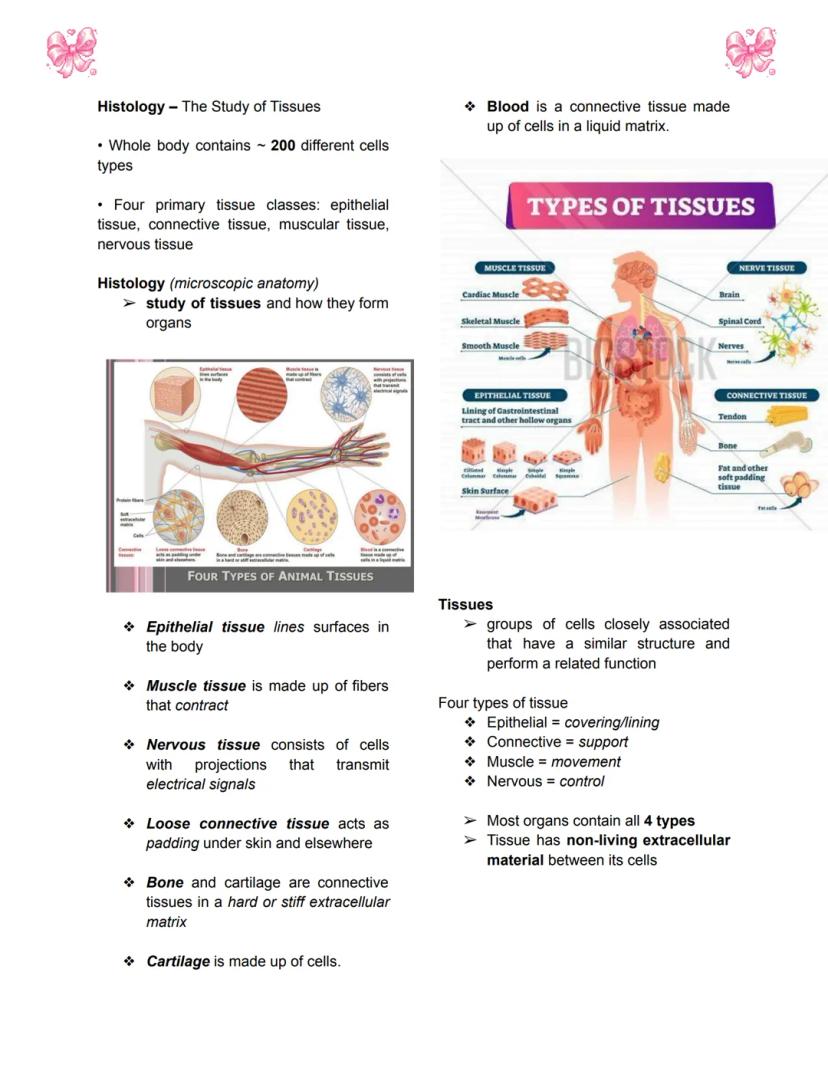
Histology is just a fancy word for studying tissues under a microscope - think of it as zooming in to see how your body really works. Most of your organs contain all four tissue types working together, which is pretty cool when you think about it.
Here's what makes each tissue special: Epithelial tissue lines every surface in your body, from your skin to the inside of your stomach. Muscle tissue comes in three varieties - skeletal (attached to your bones), cardiac (your heart), and smooth (in your hollow organs like your intestines).
Nervous tissue is made up of cells with long projections that transmit electrical signals faster than you can blink. Connective tissue is the most diverse group - it includes everything from the fat padding under your skin to your solid bones and flexible cartilage.
Blood is actually a special type of connective tissue made up of cells floating in a liquid matrix. Between all tissue cells, you'll find non-living extracellular material that helps hold everything together and provides structure.
Remember This: Every tissue has extracellular material between its cells - this "glue" is just as important as the cells themselves!
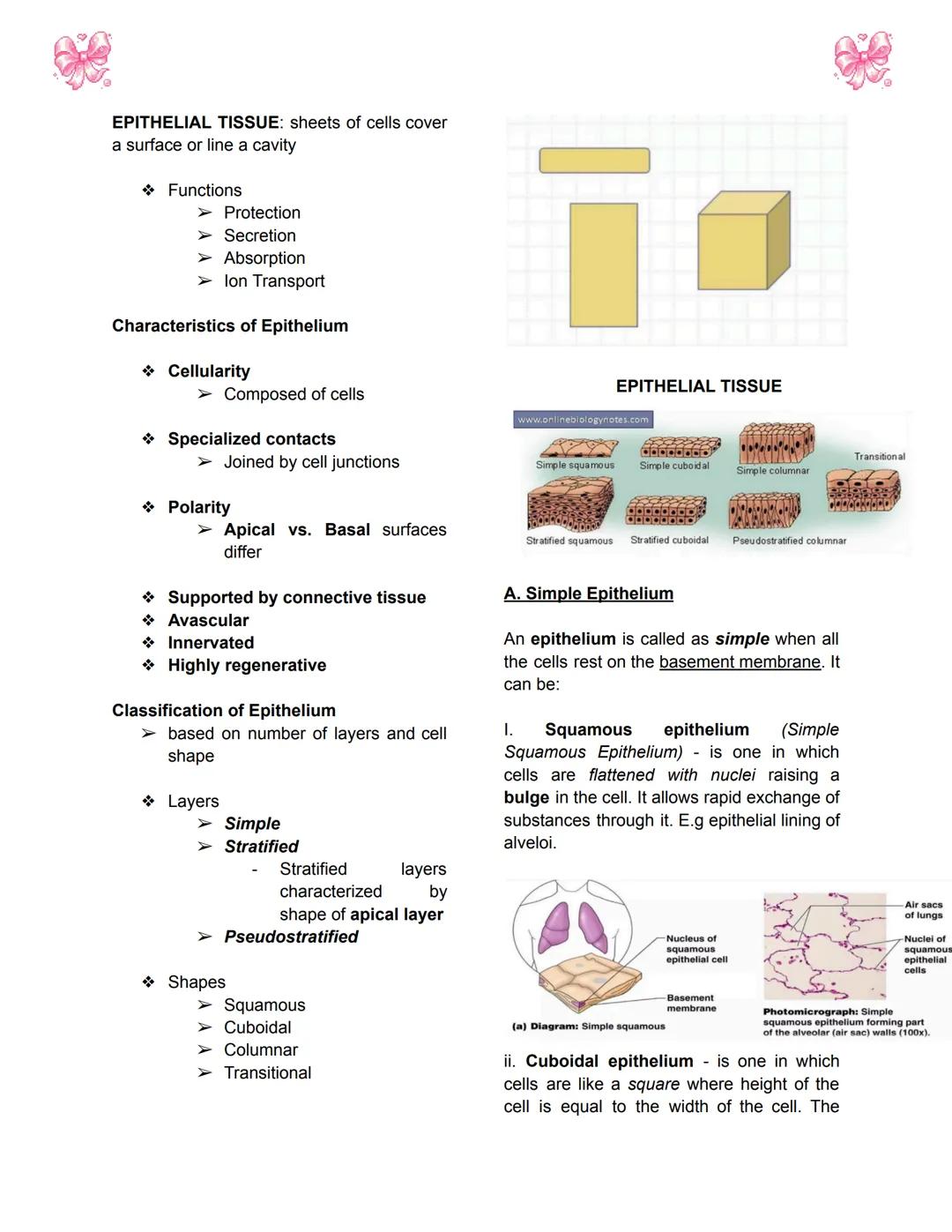
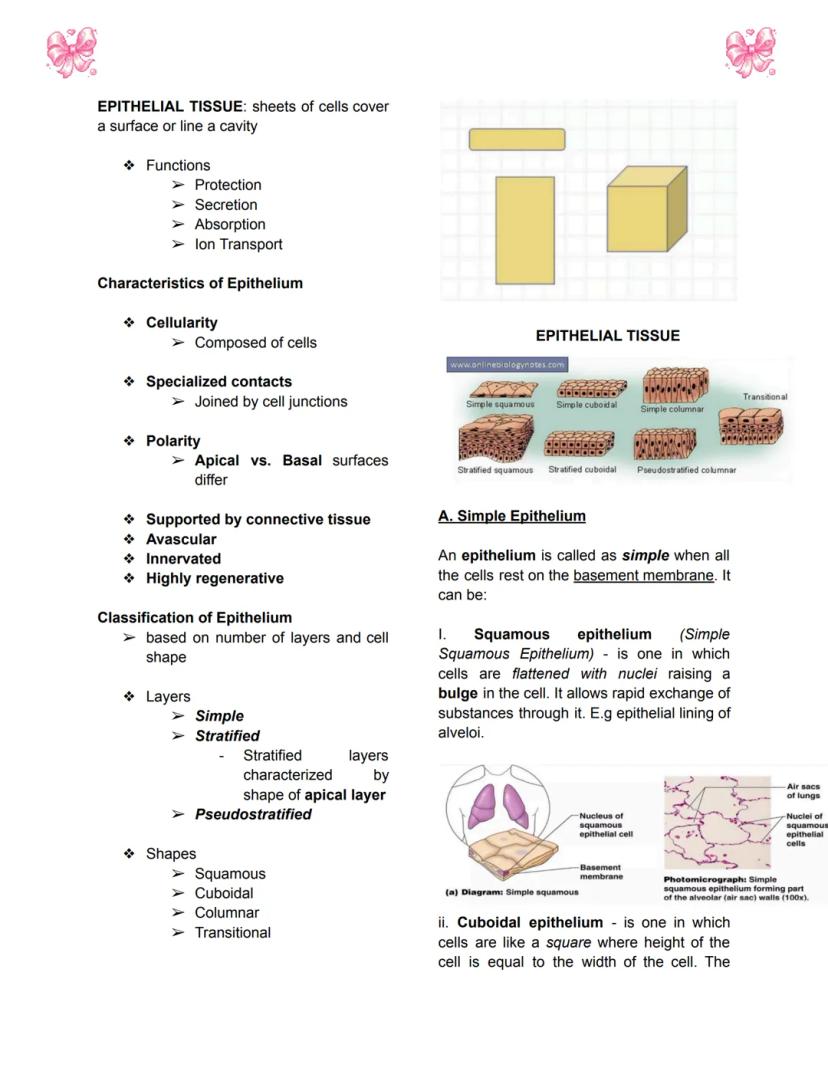
Epithelial tissue is basically your body's ultimate multitasker - it protects you, secretes important substances, absorbs nutrients, and transports ions. Think of it as sheets of cells that cover surfaces or line hollow spaces like your mouth or stomach.
What makes epithelial tissue unique? It's made entirely of cells (cellularity) that are joined together by special connections. These tissues have polarity, meaning the top surface (apical) is different from the bottom surface (basal) - kind of like how a coin has two different sides.
Scientists classify epithelial tissue based on two things: how many layers it has and what shape the cells are. Simple epithelium has just one layer, while stratified epithelium has multiple layers stacked up. Pseudostratified looks like it has layers but actually doesn't - it's a bit of a trick!
The cell shapes are pretty straightforward: squamous cells are flat and thin, cuboidal cells are square-like, and columnar cells are tall and rectangular. Transitional epithelium is special because it can stretch and change shape, like in your bladder.
Study Tip: Remember that stratified epithelium is always named by the shape of its top layer, not the bottom layers!
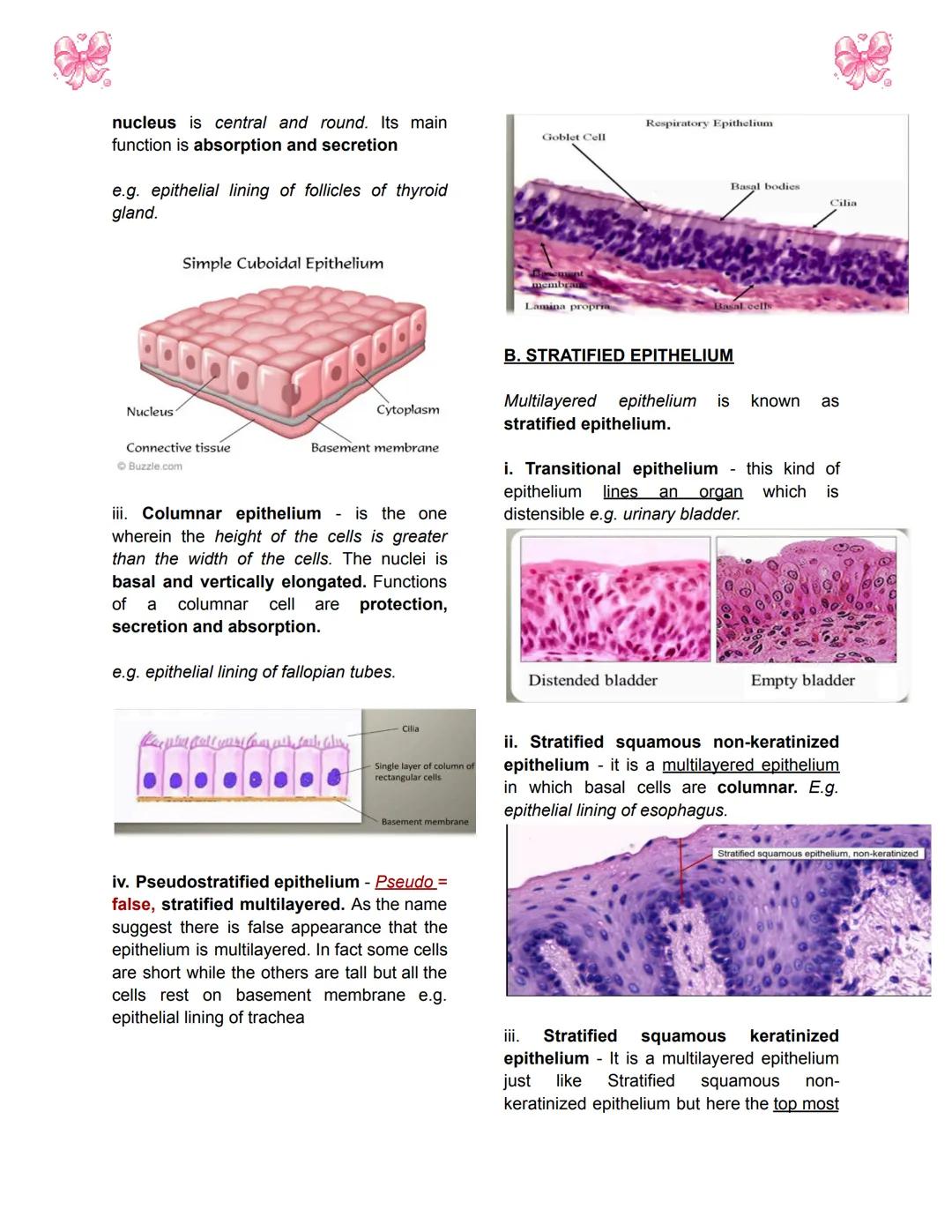
Let's break down the different types of simple epithelium you need to know. Simple squamous epithelium has flat cells that look like fried eggs under a microscope - you'll find these in your lung air sacs where they allow rapid gas exchange.
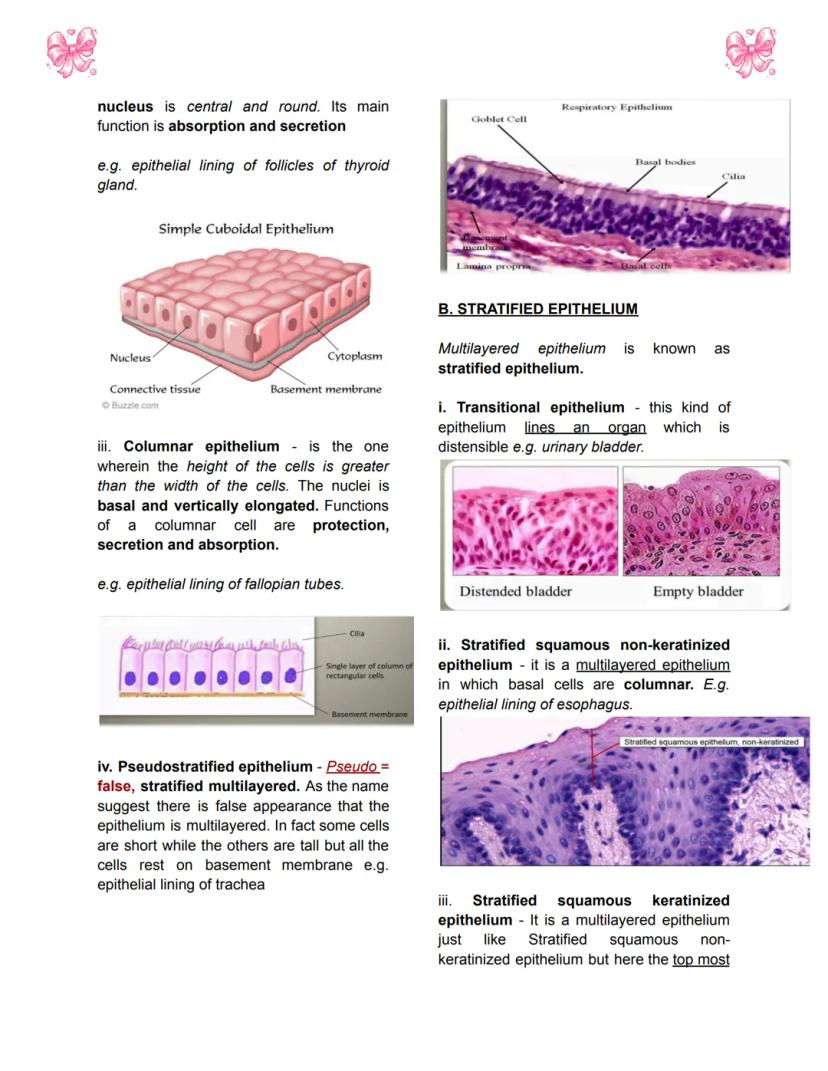
Simple cuboidal epithelium has cube-shaped cells with round, central nuclei. These are perfect for absorption and secretion jobs, like in your thyroid gland follicles. Simple columnar epithelium has tall cells with oval nuclei near the bottom - these line your fallopian tubes and help with protection, secretion, and absorption.
Stratified epithelium gets more complex. Transitional epithelium is your body's stretchy tissue - it lines organs that need to expand, like your bladder. When your bladder is empty, the cells are thick and layered, but when it's full, they flatten out to accommodate the stretch.
Stratified squamous epithelium comes in two versions: non-keratinized (like in your esophagus) and keratinized (like your skin's outer layer). The keratinized version has a special keratin layer on top that makes it waterproof - that's why you don't absorb water when you swim or lose too much water when you're in the sun.
Real-Life Connection: Your skin's ability to be waterproof comes from that top keratinized layer - without it, you'd be like a sponge!
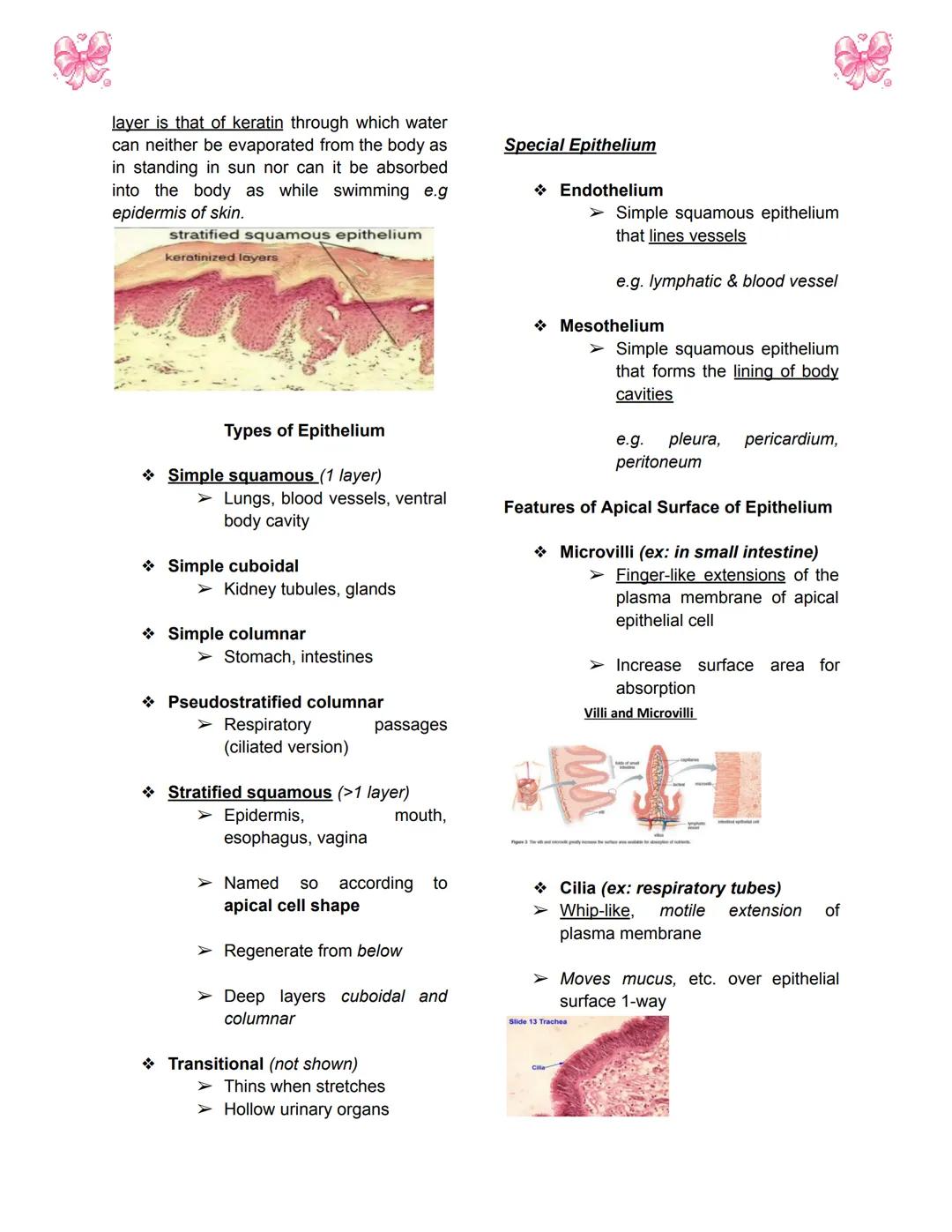
Your epithelial tissues have some pretty amazing special features that help them do their jobs better. Microvilli are tiny finger-like extensions that increase surface area for absorption - imagine trying to soak up water with a smooth cloth versus a terry towel. You'll find tons of these in your small intestine.
Cilia are like tiny whips that beat in coordinated waves to move stuff around. In your respiratory tract, they sweep mucus and trapped particles up and out of your lungs - it's like having millions of tiny brooms working 24/7 to keep you healthy.
Epithelial cells connect to each other through three main types of cell junctions. Desmosomes are like molecular Velcro that hold cells together. Tight junctions create a waterproof seal where cell membranes actually fuse together. Gap junctions are like tiny tunnels that let small molecules pass between cells.
The basement membrane is a crucial foundation layer that anchors epithelial tissue to the connective tissue below. It's made of a thin basal lamina that acts like a selective filter and a deeper reticular fiber layer that provides support. This basement membrane also helps with tissue repair by guiding new cells to the right places.
Cool Fact: Your respiratory cilia beat about 1,000 times per minute to keep your airways clean - that's faster than a hummingbird's wings!
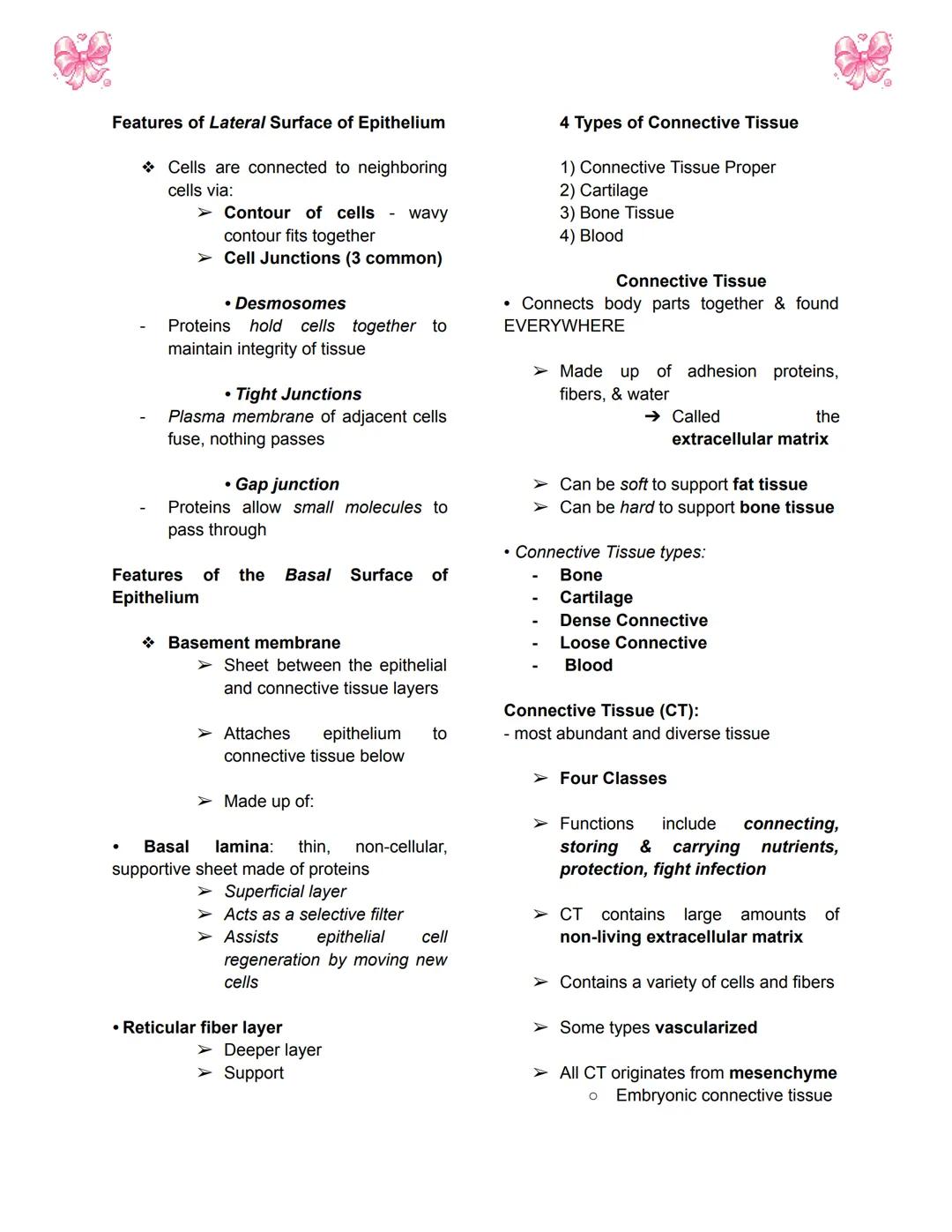
Connective tissue is literally everywhere in your body - it's the most abundant and diverse tissue type you have. Think of it as your body's support network that connects, stores nutrients, protects, and fights infection all at the same time.
What makes connective tissue unique is its large amount of extracellular matrix - the non-living material between cells made of proteins, fibers, and water. This matrix can be soft and squishy (like the fat under your skin) or rock-hard (like your bones), depending on what job it needs to do.
There are four main types of connective tissue: connective tissue proper (loose and dense), cartilage, bone, and blood. All connective tissue starts from the same embryonic tissue called mesenchyme - it's like the universal starting material that can become whatever your body needs.
The matrix contains different types of fibers for support: reticular fibers form networks for structure, collagen fibers provide incredible tensile strength (they're the strongest and most numerous), and elastic fibers stretch and snap back to their original shape. Fibroblasts are the worker cells that produce all these fibers and the ground matrix.
Amazing Fact: Collagen is so strong that gram for gram, it's stronger than steel - that's why your tendons and ligaments can handle such incredible forces!
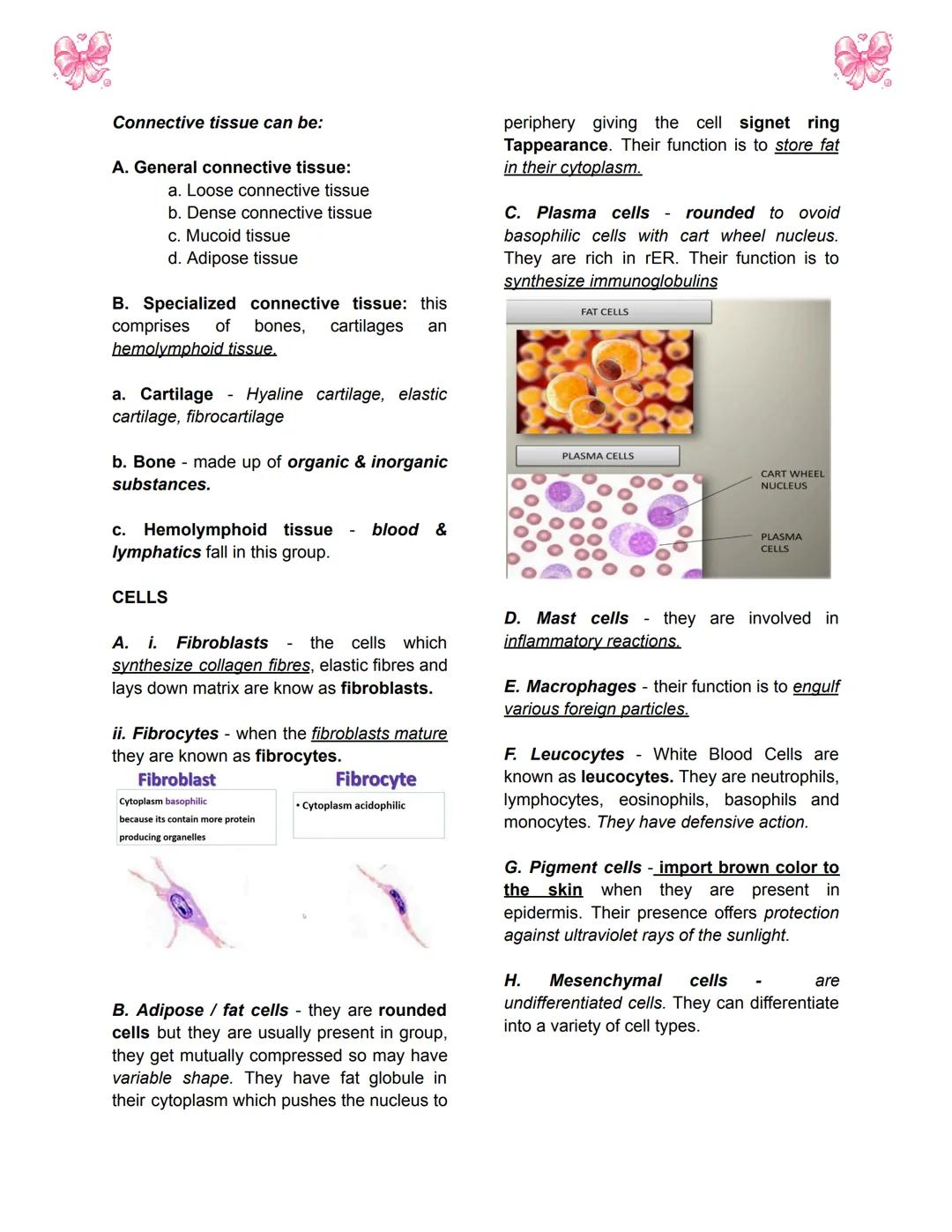
Your connective tissue contains an amazing variety of specialized cells, each with its own important job. Fibroblasts are like your body's construction workers - they synthesize collagen and elastic fibers and lay down the matrix. When they mature, they become fibrocytes and settle into maintenance mode.
Adipose cells (fat cells) are your body's storage units. They're usually round but get compressed when packed together, creating variable shapes. The fat globule in their cytoplasm pushes the nucleus to the edge, giving them a distinctive "signet ring" appearance under the microscope.
Plasma cells are your antibody factories - they're rounded cells with a distinctive "cart wheel" nucleus and are packed with rough ER to pump out immunoglobulins. Mast cells are involved in inflammatory reactions, while macrophages work like cellular vacuum cleaners, engulfing foreign particles and debris.
Your white blood cells (leukocytes) patrol through connective tissue as part of your immune system. These include neutrophils, lymphocytes, eosinophils, basophils, and monocytes. Pigment cells give your skin its brown color and protect you from UV rays. Mesenchymal cells are like stem cells - they're undifferentiated and can become whatever type of connective tissue cell your body needs.
Defense Squad: Your connective tissue is like having a 24/7 security team with different specialists - some fight infections, others clean up damage, and some sound the alarm when trouble starts!
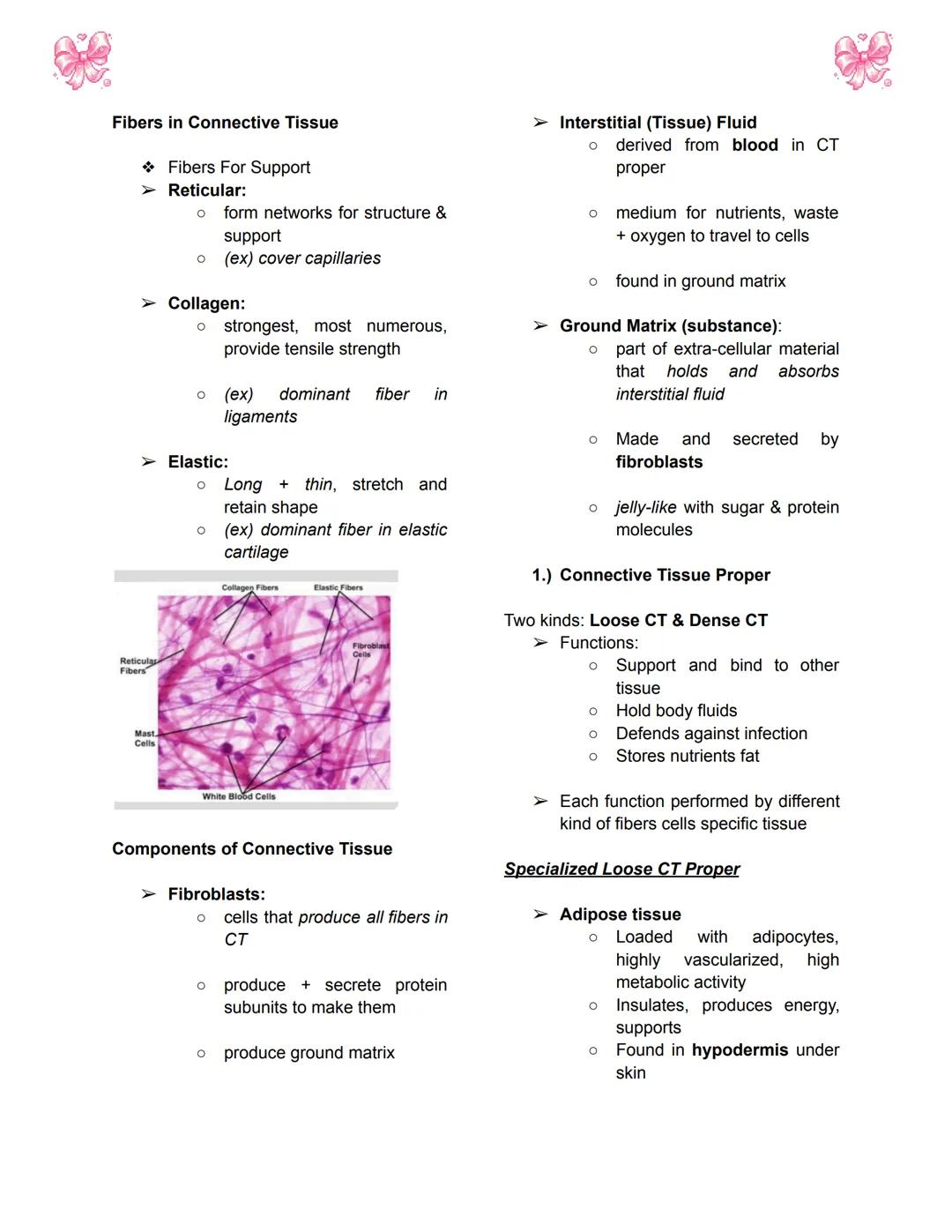
Connective tissue proper comes in two main varieties: loose and dense. Loose connective tissue is like your body's packing material - it supports and binds other tissues, holds body fluids, defends against infection, and stores nutrients. Each function is performed by different combinations of fibers and cells.
Adipose tissue is a specialized type of loose connective tissue loaded with fat cells. It's highly vascularized and metabolically active - not just passive storage! You'll find it in your hypodermis under the skin, where it insulates, produces energy, and provides cushioning support.
Dense connective tissue contains way more collagen fibers and can resist extremely strong pulling forces. Dense regular connective tissue has fibers running in the same direction (like your tendons and ligaments), while dense irregular has thicker fibers running in different directions (like your dermis and joint capsules).
Reticular connective tissue contains only reticular fibers and forms internal "skeletons" for organs like your bone marrow, lymph nodes, and spleen. It creates caverns that hold free blood cells - imagine a 3D net that catches and organizes cells where they need to be.
Strength Test: Dense connective tissue is so strong that your Achilles tendon can withstand forces of over 1,000 pounds - that's like having a small car hanging from your heel!
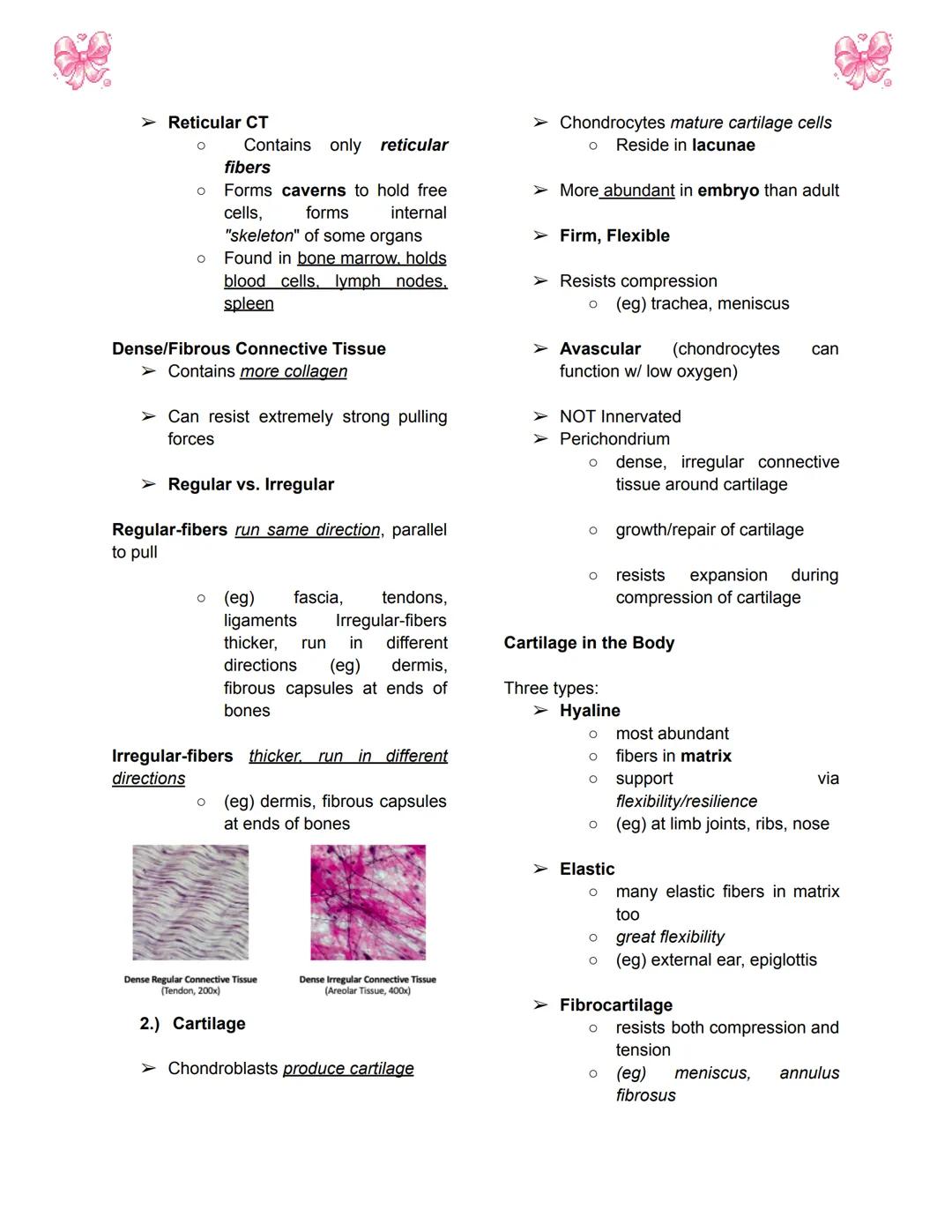
Cartilage is your body's shock absorber - it's firm yet flexible and resists compression like a high-tech cushion. Chondroblasts produce cartilage, and mature chondrocytes live in small spaces called lacunae within the cartilage matrix.
What's really cool about cartilage is that it's avascular (no blood vessels) and not innervated (no nerves), so chondrocytes can function with low oxygen levels. The perichondrium is a dense connective tissue layer around cartilage that handles growth and repair while resisting expansion during compression.
You have three types of cartilage: Hyaline cartilage is the most common type, providing support through flexibility and resilience - you'll find it at your limb joints, ribs, and nose. Elastic cartilage contains many elastic fibers for great flexibility, like in your external ear and epiglottis.
Fibrocartilage is the tough guy of the cartilage family - it resists both compression and tension. You'll find this super-strong cartilage in your knee meniscus and the annulus fibrosus of your intervertebral discs. It's like having built-in shock absorbers that can handle twisting and compression at the same time.
Fun Fact: Your ear cartilage contains so many elastic fibers that you can fold your ear and it springs right back to shape - try it!
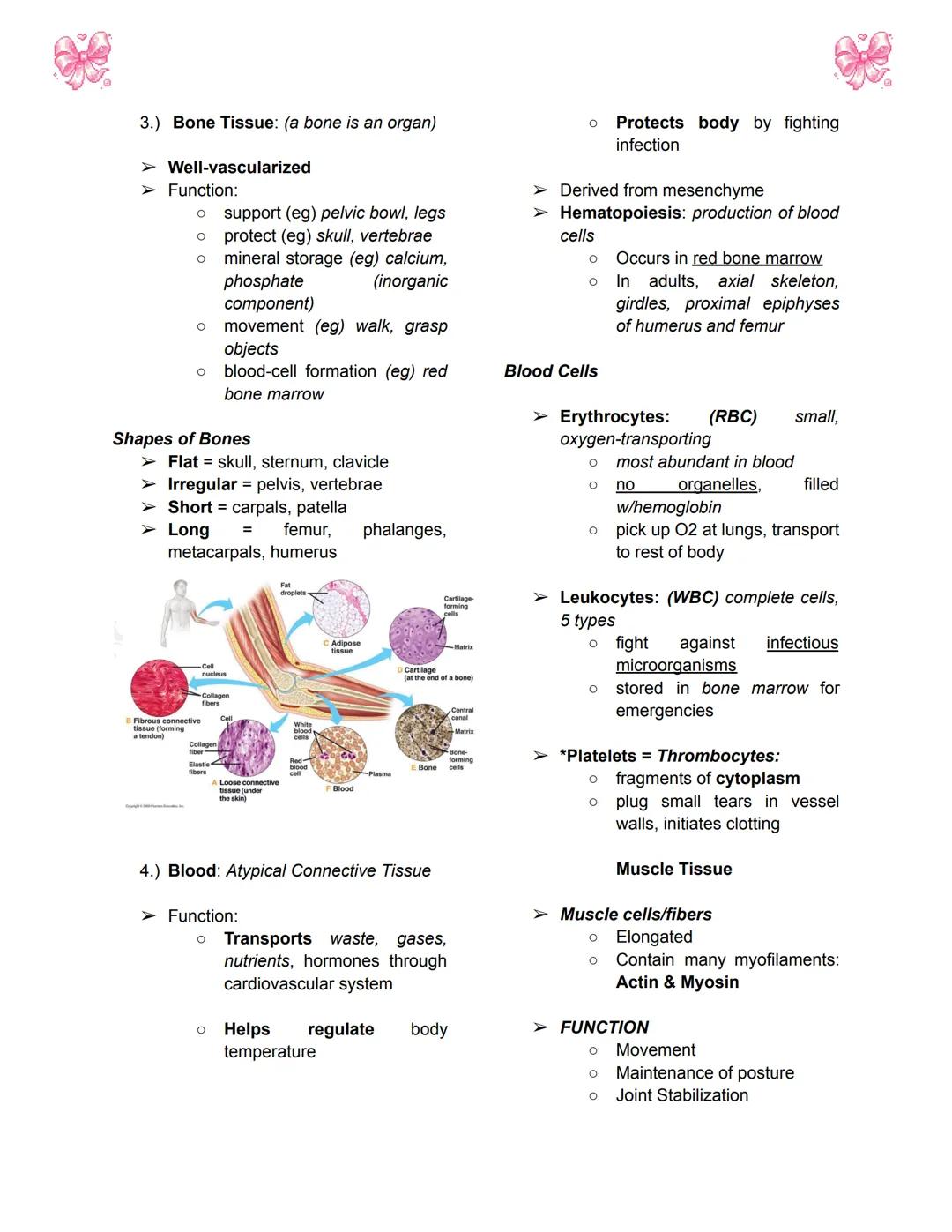
Bone tissue forms organs (your individual bones) that are well-vascularized and incredibly multifunctional. Bones support your body structure, protect vital organs, store minerals like calcium and phosphate, enable movement, and produce blood cells through hematopoiesis in red bone marrow.
Your bones come in four shapes: flat bones (skull, sternum), irregular bones (pelvis, vertebrae), short bones (carpals, patella), and long bones (femur, humerus). In adults, blood cell production happens mainly in your axial skeleton, girdles, and the ends of your arm and leg bones.
Blood is actually an atypical connective tissue that transports everything your body needs - waste, gases, nutrients, and hormones. It contains erythrocytes (red blood cells filled with hemoglobin for oxygen transport), leukocytes (white blood cells that fight infections), and platelets (cell fragments that plug tears and initiate clotting).
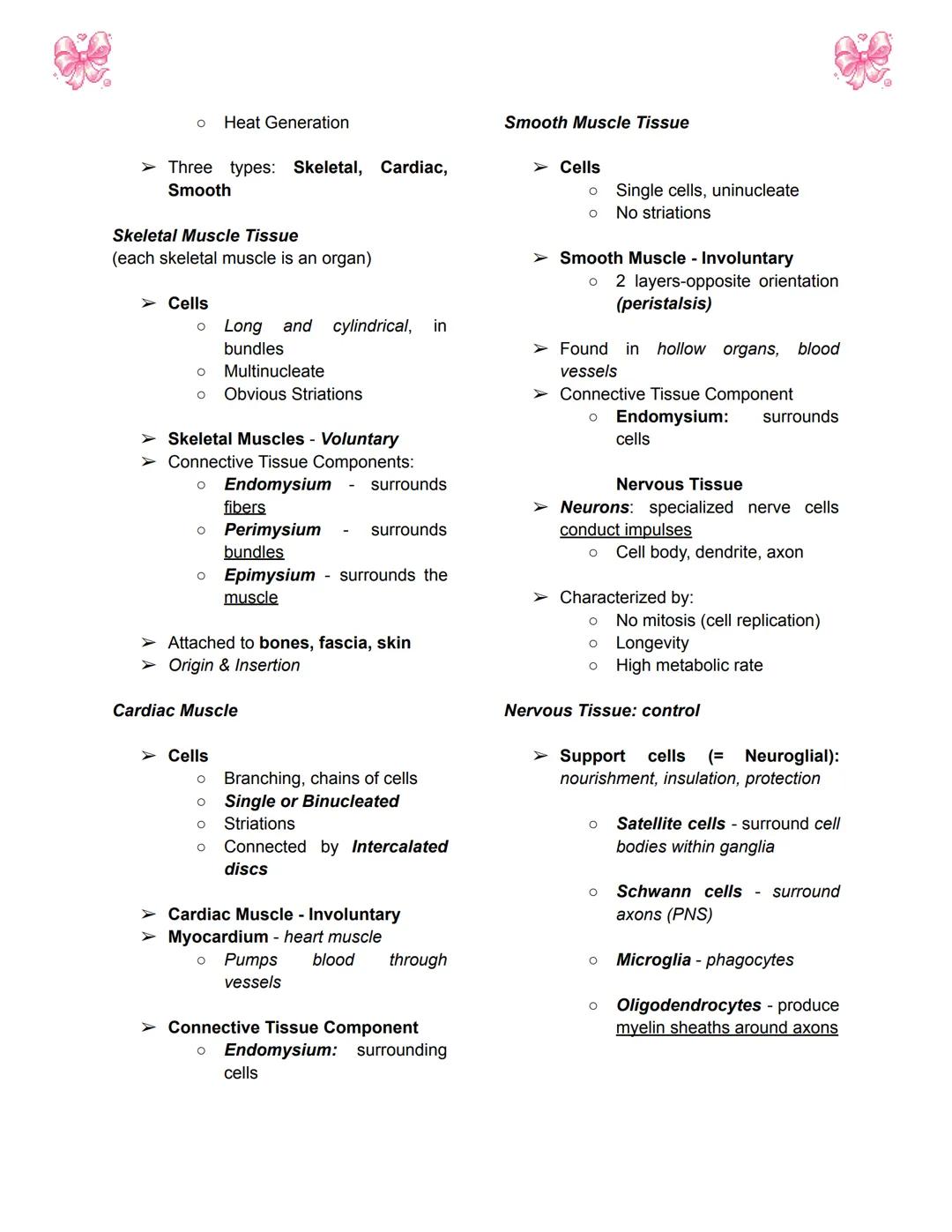
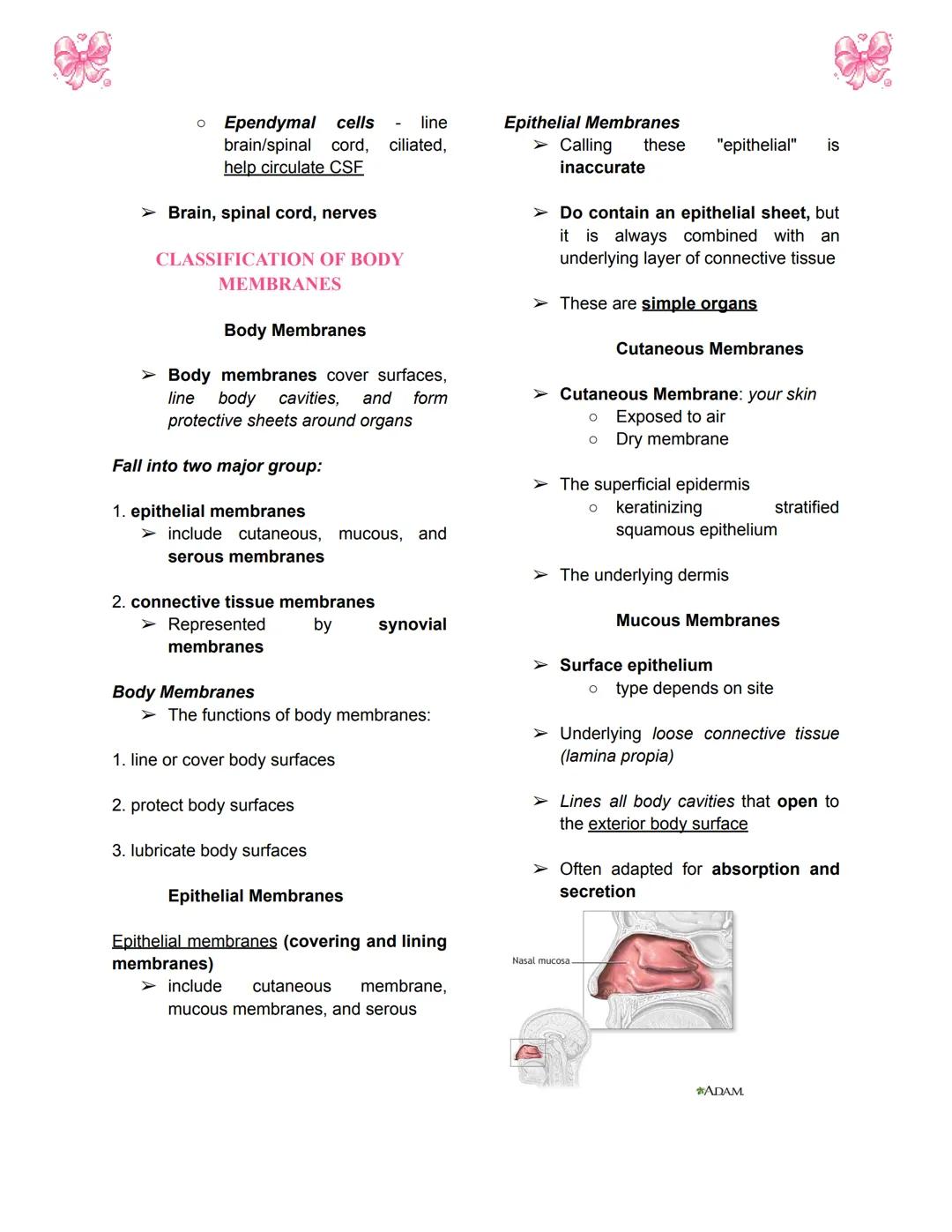
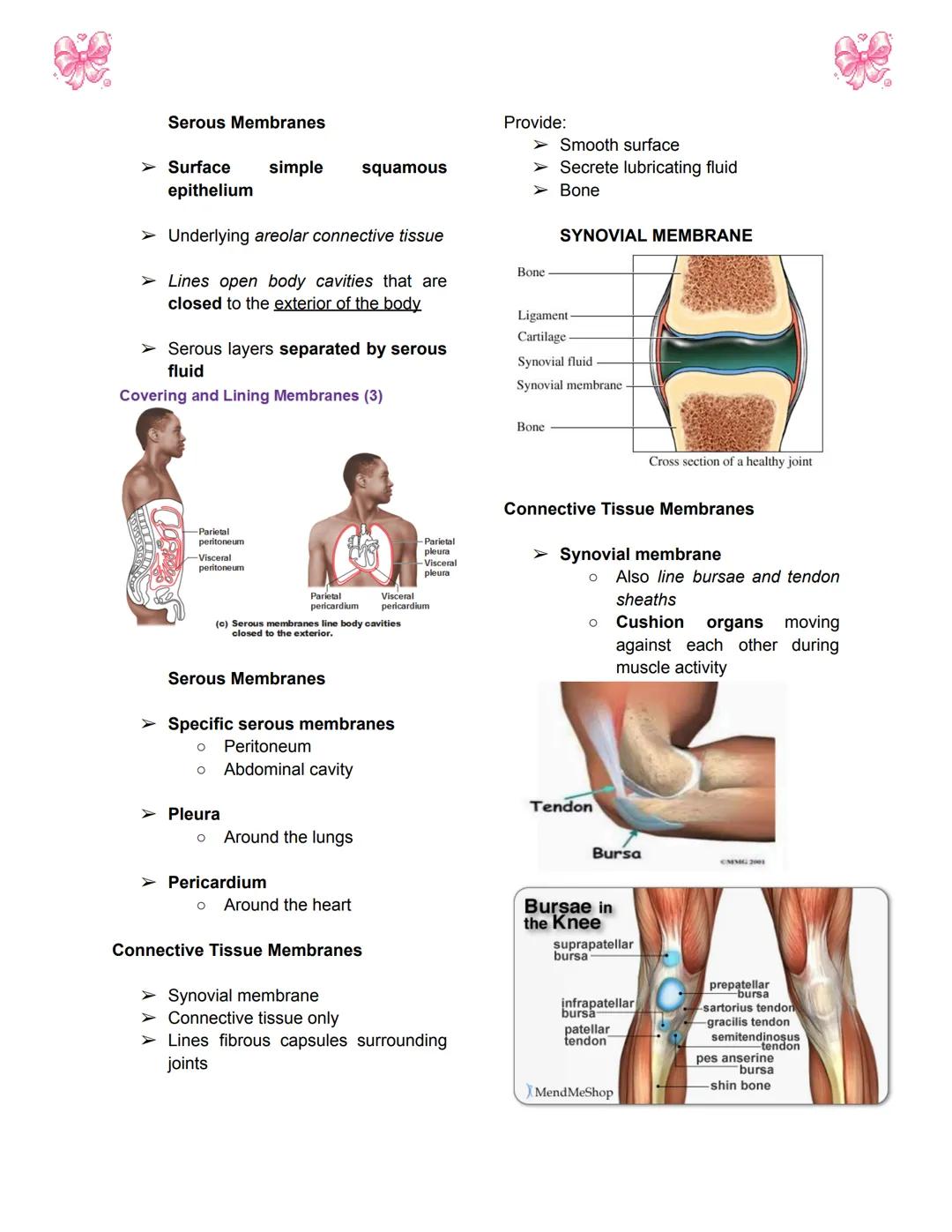
Muscle tissue consists of elongated cells packed with actin and myosin filaments that create movement, maintain posture, and stabilize joints. These contractile proteins work together like microscopic ropes and pulleys to generate the force needed for everything from blinking to lifting heavy objects.
Body Factory: Your red bone marrow is like a 24/7 factory producing millions of new blood cells every day - about 200 billion red blood cells alone!

Ang aming AI Companion ay isang AI tool na nakatuon sa mga estudyante na nag-aalok ng higit pa sa mga sagot lang. Binuo mula sa milyong Knowunity resources, nagbibigay ito ng may-kaugnayang impormasyon, personalized na study plans, quizzes, at content direkta sa chat, na umaangkop sa iyong sariling learning journey.
Maaari mong i-download ang app mula sa Google Play Store at Apple App Store.
Tama 'yan! Mag-enjoy sa libreng access sa mga study content, makipag-connect sa kapwa mga estudyante, at kumuha ng instant na tulong – lahat nasa iyong daliri lang.
App Store
Google Play
Napakadaling gamitin at maganda ang disenyo ng app. Nahanap ko lahat ng hinahanap ko hanggang ngayon at natuto ako ng marami mula sa mga presentasyon! Tiyak na gagamitin ko ang app para sa isang takdang-aralin sa klase! At siyempre, nakakatulong din ito bilang inspirasyon.
Stefan S
gumagamit ng iOS
Sobrang ganda talaga ng app na ito. Maraming mga study notes at tulong [...]. Ang problemang subject ko ay Pranses, halimbawa, at ang app ay may maraming options para tumulong. Salamat sa app na ito, bumuti ang Pranses ko. Irerekumenda ko ito sa lahat.
Samantha Klich
Android user
Wow, talagang namangha ako. Sinubukan ko lang ang app dahil nakita ko itong ina-advertise nang maraming beses at sobrang nagulat ako. Ang app na ito ang TULONG na gusto mo para sa paaralan at higit sa lahat, nag-aalok ito ng maraming bagay, tulad ng workouts at fact sheets, na SOBRANG nakatulong sa akin.
Anna
iOS user
Pinakamagandang app sa mundo! walang masabi dahil sobrang ganda nito
Thomas R
iOS user
Napakaganda talaga. Nakakapag-review ako ng 10x mas mabuti, itong app ay mabilis na 10/10. Lubos kong inirerekomenda ito sa lahat. Pwede akong manood at maghanap ng notes. Pwede kong i-save ang mga ito sa subject folder. Pwede kong i-review anumang oras kapag bumalik ako. Kung hindi mo pa nasubukan ang app na ito, marami kang nawawala.
Basil
Android user
Ang app na ito ay nagpapalakas ng loob ko sa paghahanda sa exams, hindi lang dahil sa pagpapataas ng aking kumpiyansa sa sarili sa pamamagitan ng mga feature na nagpapahintulot sa iyo na makipag-connect sa iba at mabawasan ang pakiramdam na nag-iisa, kundi pati na rin sa paraan na nakatuon ang app sa pagpapagaan ng iyong pakiramdam. Madali itong i-navigate, masaya gamitin, at nakakatulong sa sinumang nahihirapan sa kahit anong paraan.
David K
iOS user
Sobrang galing ng app! Ilalagay ko lang ang paksa sa search bar at makakakuha na ako ng sagot kaagad. Hindi ko kailangang manood ng 10 YouTube videos para maintindihan ang isang bagay, kaya nakakatipid ako ng oras. Lubos na inirerekomenda!
Sudenaz Ocak
Android user
Sa paaralan, napakahina ko sa math pero salamat sa app, mas mahusay na ako ngayon. Lubos akong nagpapasalamat na ginawa niyo ang app na ito.
Greenlight Bonnie
Android user
napakareliable na app para tumulong at palawakin ang iyong mga ideya sa Math, English at iba pang mga related na paksa sa iyong mga gawain. gamitin mo ang app na ito kung nahihirapan ka sa mga area, susi ito para diyan. sana nag-review na ako dati. at libre rin ito kaya huwag mag-alala tungkol diyan.
Rohan U
Android user
Alam kong maraming apps gumagamit ng fake accounts para mapataas ang kanilang reviews pero ang app na ito ay deserve lahat ng papuri. Dati nakakakuha ako ng 4 sa aking English exams at ngayon nakakuha ako ng grade 7. Hindi ko pa alam ang app na ito tatlong araw bago ang exam at nakatulong ito ng SOBRA. Pakisuyong maniwala sa akin at gamitin ito dahil sigurado akong makikita mo rin ang mga pagbabago.
Xander S
iOS user
ANG MGA quiz AT flashcard SOBRANG HELPFUL AT I LOVE TALAGA SI Knowunity AI. PARANG CHATGPT LANG PERO MAS MATALINO!! NAKATULONG DIN SA MGA MASCARA PROBLEMS KO!! PATI NA RIN SA MGA TUNAY KONG subject! SYEMPRE 😍😁😲🤑💗✨🎀😮
Elisha
iOS user
Grabe talaga ang app na to. Sobrang nakakaboring sakin ang pagreview pero ginagawa ng app na to na sobrang dali mag-organize ng lahat at pwede mong tanungin ang libreng ai para subukin ang sarili mo kaya sobrang buti at madali mong ma-upload ang sarili mong mga bagay. highly recommend bilang isang taong nagte-take ng mocks ngayon
Paul T
iOS user
Napakadaling gamitin at maganda ang disenyo ng app. Nahanap ko lahat ng hinahanap ko hanggang ngayon at natuto ako ng marami mula sa mga presentasyon! Tiyak na gagamitin ko ang app para sa isang takdang-aralin sa klase! At siyempre, nakakatulong din ito bilang inspirasyon.
Stefan S
gumagamit ng iOS
Sobrang ganda talaga ng app na ito. Maraming mga study notes at tulong [...]. Ang problemang subject ko ay Pranses, halimbawa, at ang app ay may maraming options para tumulong. Salamat sa app na ito, bumuti ang Pranses ko. Irerekumenda ko ito sa lahat.
Samantha Klich
Android user
Wow, talagang namangha ako. Sinubukan ko lang ang app dahil nakita ko itong ina-advertise nang maraming beses at sobrang nagulat ako. Ang app na ito ang TULONG na gusto mo para sa paaralan at higit sa lahat, nag-aalok ito ng maraming bagay, tulad ng workouts at fact sheets, na SOBRANG nakatulong sa akin.
Anna
iOS user
Pinakamagandang app sa mundo! walang masabi dahil sobrang ganda nito
Thomas R
iOS user
Napakaganda talaga. Nakakapag-review ako ng 10x mas mabuti, itong app ay mabilis na 10/10. Lubos kong inirerekomenda ito sa lahat. Pwede akong manood at maghanap ng notes. Pwede kong i-save ang mga ito sa subject folder. Pwede kong i-review anumang oras kapag bumalik ako. Kung hindi mo pa nasubukan ang app na ito, marami kang nawawala.
Basil
Android user
Ang app na ito ay nagpapalakas ng loob ko sa paghahanda sa exams, hindi lang dahil sa pagpapataas ng aking kumpiyansa sa sarili sa pamamagitan ng mga feature na nagpapahintulot sa iyo na makipag-connect sa iba at mabawasan ang pakiramdam na nag-iisa, kundi pati na rin sa paraan na nakatuon ang app sa pagpapagaan ng iyong pakiramdam. Madali itong i-navigate, masaya gamitin, at nakakatulong sa sinumang nahihirapan sa kahit anong paraan.
David K
iOS user
Sobrang galing ng app! Ilalagay ko lang ang paksa sa search bar at makakakuha na ako ng sagot kaagad. Hindi ko kailangang manood ng 10 YouTube videos para maintindihan ang isang bagay, kaya nakakatipid ako ng oras. Lubos na inirerekomenda!
Sudenaz Ocak
Android user
Sa paaralan, napakahina ko sa math pero salamat sa app, mas mahusay na ako ngayon. Lubos akong nagpapasalamat na ginawa niyo ang app na ito.
Greenlight Bonnie
Android user
napakareliable na app para tumulong at palawakin ang iyong mga ideya sa Math, English at iba pang mga related na paksa sa iyong mga gawain. gamitin mo ang app na ito kung nahihirapan ka sa mga area, susi ito para diyan. sana nag-review na ako dati. at libre rin ito kaya huwag mag-alala tungkol diyan.
Rohan U
Android user
Alam kong maraming apps gumagamit ng fake accounts para mapataas ang kanilang reviews pero ang app na ito ay deserve lahat ng papuri. Dati nakakakuha ako ng 4 sa aking English exams at ngayon nakakuha ako ng grade 7. Hindi ko pa alam ang app na ito tatlong araw bago ang exam at nakatulong ito ng SOBRA. Pakisuyong maniwala sa akin at gamitin ito dahil sigurado akong makikita mo rin ang mga pagbabago.
Xander S
iOS user
ANG MGA quiz AT flashcard SOBRANG HELPFUL AT I LOVE TALAGA SI Knowunity AI. PARANG CHATGPT LANG PERO MAS MATALINO!! NAKATULONG DIN SA MGA MASCARA PROBLEMS KO!! PATI NA RIN SA MGA TUNAY KONG subject! SYEMPRE 😍😁😲🤑💗✨🎀😮
Elisha
iOS user
Grabe talaga ang app na to. Sobrang nakakaboring sakin ang pagreview pero ginagawa ng app na to na sobrang dali mag-organize ng lahat at pwede mong tanungin ang libreng ai para subukin ang sarili mo kaya sobrang buti at madali mong ma-upload ang sarili mong mga bagay. highly recommend bilang isang taong nagte-take ng mocks ngayon
Paul T
iOS user
Gojo
@satorufux
Your body is an amazing complex system where everything works together in perfect harmony. Understanding body tissues is like learning the basic building blocks that make you who you are - from the skin that protects you to the muscles... Ipakita pa
Access sa lahat ng dokumento
Pagbutihin ang iyong mga grado
Sumali sa milyong mga estudyante
Think of your body like a perfectly organized company where everyone has a specific job to do. The hierarchy of structural organization starts small and builds up: chemicals form cells, cells create tissues, tissues make organs, organs work together in systems, and all systems create you as a complete organism.
Tissues are simply groups of similar cells that team up to do a specific job. Your entire body is built from just four basic tissue types: epithelial (your body's protective covering), connective (the support system), muscle (the movers), and nervous (your internal communication network).
Each tissue type has its own superpowers. Epithelial tissue acts like your body's security guard, forming boundaries and protecting you from the outside world. Connective tissue is like the framework of a building, supporting and binding everything together. Muscle tissue is your body's engine, contracting to create all your movements. Nervous tissue works like your body's internet, sending electrical signals throughout your brain, spinal cord, and nerves.
Quick Fact: Your body contains about 200 different cell types, but they all fall into these four main tissue categories!
Access sa lahat ng dokumento
Pagbutihin ang iyong mga grado
Sumali sa milyong mga estudyante
Histology is just a fancy word for studying tissues under a microscope - think of it as zooming in to see how your body really works. Most of your organs contain all four tissue types working together, which is pretty cool when you think about it.
Here's what makes each tissue special: Epithelial tissue lines every surface in your body, from your skin to the inside of your stomach. Muscle tissue comes in three varieties - skeletal (attached to your bones), cardiac (your heart), and smooth (in your hollow organs like your intestines).
Nervous tissue is made up of cells with long projections that transmit electrical signals faster than you can blink. Connective tissue is the most diverse group - it includes everything from the fat padding under your skin to your solid bones and flexible cartilage.
Blood is actually a special type of connective tissue made up of cells floating in a liquid matrix. Between all tissue cells, you'll find non-living extracellular material that helps hold everything together and provides structure.
Remember This: Every tissue has extracellular material between its cells - this "glue" is just as important as the cells themselves!
Access sa lahat ng dokumento
Pagbutihin ang iyong mga grado
Sumali sa milyong mga estudyante
Epithelial tissue is basically your body's ultimate multitasker - it protects you, secretes important substances, absorbs nutrients, and transports ions. Think of it as sheets of cells that cover surfaces or line hollow spaces like your mouth or stomach.
What makes epithelial tissue unique? It's made entirely of cells (cellularity) that are joined together by special connections. These tissues have polarity, meaning the top surface (apical) is different from the bottom surface (basal) - kind of like how a coin has two different sides.
Scientists classify epithelial tissue based on two things: how many layers it has and what shape the cells are. Simple epithelium has just one layer, while stratified epithelium has multiple layers stacked up. Pseudostratified looks like it has layers but actually doesn't - it's a bit of a trick!
The cell shapes are pretty straightforward: squamous cells are flat and thin, cuboidal cells are square-like, and columnar cells are tall and rectangular. Transitional epithelium is special because it can stretch and change shape, like in your bladder.
Study Tip: Remember that stratified epithelium is always named by the shape of its top layer, not the bottom layers!
Access sa lahat ng dokumento
Pagbutihin ang iyong mga grado
Sumali sa milyong mga estudyante
Let's break down the different types of simple epithelium you need to know. Simple squamous epithelium has flat cells that look like fried eggs under a microscope - you'll find these in your lung air sacs where they allow rapid gas exchange.
Simple cuboidal epithelium has cube-shaped cells with round, central nuclei. These are perfect for absorption and secretion jobs, like in your thyroid gland follicles. Simple columnar epithelium has tall cells with oval nuclei near the bottom - these line your fallopian tubes and help with protection, secretion, and absorption.
Stratified epithelium gets more complex. Transitional epithelium is your body's stretchy tissue - it lines organs that need to expand, like your bladder. When your bladder is empty, the cells are thick and layered, but when it's full, they flatten out to accommodate the stretch.
Stratified squamous epithelium comes in two versions: non-keratinized (like in your esophagus) and keratinized (like your skin's outer layer). The keratinized version has a special keratin layer on top that makes it waterproof - that's why you don't absorb water when you swim or lose too much water when you're in the sun.
Real-Life Connection: Your skin's ability to be waterproof comes from that top keratinized layer - without it, you'd be like a sponge!
Access sa lahat ng dokumento
Pagbutihin ang iyong mga grado
Sumali sa milyong mga estudyante
Your epithelial tissues have some pretty amazing special features that help them do their jobs better. Microvilli are tiny finger-like extensions that increase surface area for absorption - imagine trying to soak up water with a smooth cloth versus a terry towel. You'll find tons of these in your small intestine.
Cilia are like tiny whips that beat in coordinated waves to move stuff around. In your respiratory tract, they sweep mucus and trapped particles up and out of your lungs - it's like having millions of tiny brooms working 24/7 to keep you healthy.
Epithelial cells connect to each other through three main types of cell junctions. Desmosomes are like molecular Velcro that hold cells together. Tight junctions create a waterproof seal where cell membranes actually fuse together. Gap junctions are like tiny tunnels that let small molecules pass between cells.
The basement membrane is a crucial foundation layer that anchors epithelial tissue to the connective tissue below. It's made of a thin basal lamina that acts like a selective filter and a deeper reticular fiber layer that provides support. This basement membrane also helps with tissue repair by guiding new cells to the right places.
Cool Fact: Your respiratory cilia beat about 1,000 times per minute to keep your airways clean - that's faster than a hummingbird's wings!
Access sa lahat ng dokumento
Pagbutihin ang iyong mga grado
Sumali sa milyong mga estudyante
Connective tissue is literally everywhere in your body - it's the most abundant and diverse tissue type you have. Think of it as your body's support network that connects, stores nutrients, protects, and fights infection all at the same time.
What makes connective tissue unique is its large amount of extracellular matrix - the non-living material between cells made of proteins, fibers, and water. This matrix can be soft and squishy (like the fat under your skin) or rock-hard (like your bones), depending on what job it needs to do.
There are four main types of connective tissue: connective tissue proper (loose and dense), cartilage, bone, and blood. All connective tissue starts from the same embryonic tissue called mesenchyme - it's like the universal starting material that can become whatever your body needs.
The matrix contains different types of fibers for support: reticular fibers form networks for structure, collagen fibers provide incredible tensile strength (they're the strongest and most numerous), and elastic fibers stretch and snap back to their original shape. Fibroblasts are the worker cells that produce all these fibers and the ground matrix.
Amazing Fact: Collagen is so strong that gram for gram, it's stronger than steel - that's why your tendons and ligaments can handle such incredible forces!
Access sa lahat ng dokumento
Pagbutihin ang iyong mga grado
Sumali sa milyong mga estudyante
Your connective tissue contains an amazing variety of specialized cells, each with its own important job. Fibroblasts are like your body's construction workers - they synthesize collagen and elastic fibers and lay down the matrix. When they mature, they become fibrocytes and settle into maintenance mode.
Adipose cells (fat cells) are your body's storage units. They're usually round but get compressed when packed together, creating variable shapes. The fat globule in their cytoplasm pushes the nucleus to the edge, giving them a distinctive "signet ring" appearance under the microscope.
Plasma cells are your antibody factories - they're rounded cells with a distinctive "cart wheel" nucleus and are packed with rough ER to pump out immunoglobulins. Mast cells are involved in inflammatory reactions, while macrophages work like cellular vacuum cleaners, engulfing foreign particles and debris.
Your white blood cells (leukocytes) patrol through connective tissue as part of your immune system. These include neutrophils, lymphocytes, eosinophils, basophils, and monocytes. Pigment cells give your skin its brown color and protect you from UV rays. Mesenchymal cells are like stem cells - they're undifferentiated and can become whatever type of connective tissue cell your body needs.
Defense Squad: Your connective tissue is like having a 24/7 security team with different specialists - some fight infections, others clean up damage, and some sound the alarm when trouble starts!
Access sa lahat ng dokumento
Pagbutihin ang iyong mga grado
Sumali sa milyong mga estudyante
Connective tissue proper comes in two main varieties: loose and dense. Loose connective tissue is like your body's packing material - it supports and binds other tissues, holds body fluids, defends against infection, and stores nutrients. Each function is performed by different combinations of fibers and cells.
Adipose tissue is a specialized type of loose connective tissue loaded with fat cells. It's highly vascularized and metabolically active - not just passive storage! You'll find it in your hypodermis under the skin, where it insulates, produces energy, and provides cushioning support.
Dense connective tissue contains way more collagen fibers and can resist extremely strong pulling forces. Dense regular connective tissue has fibers running in the same direction (like your tendons and ligaments), while dense irregular has thicker fibers running in different directions (like your dermis and joint capsules).
Reticular connective tissue contains only reticular fibers and forms internal "skeletons" for organs like your bone marrow, lymph nodes, and spleen. It creates caverns that hold free blood cells - imagine a 3D net that catches and organizes cells where they need to be.
Strength Test: Dense connective tissue is so strong that your Achilles tendon can withstand forces of over 1,000 pounds - that's like having a small car hanging from your heel!
Access sa lahat ng dokumento
Pagbutihin ang iyong mga grado
Sumali sa milyong mga estudyante
Cartilage is your body's shock absorber - it's firm yet flexible and resists compression like a high-tech cushion. Chondroblasts produce cartilage, and mature chondrocytes live in small spaces called lacunae within the cartilage matrix.
What's really cool about cartilage is that it's avascular (no blood vessels) and not innervated (no nerves), so chondrocytes can function with low oxygen levels. The perichondrium is a dense connective tissue layer around cartilage that handles growth and repair while resisting expansion during compression.
You have three types of cartilage: Hyaline cartilage is the most common type, providing support through flexibility and resilience - you'll find it at your limb joints, ribs, and nose. Elastic cartilage contains many elastic fibers for great flexibility, like in your external ear and epiglottis.
Fibrocartilage is the tough guy of the cartilage family - it resists both compression and tension. You'll find this super-strong cartilage in your knee meniscus and the annulus fibrosus of your intervertebral discs. It's like having built-in shock absorbers that can handle twisting and compression at the same time.
Fun Fact: Your ear cartilage contains so many elastic fibers that you can fold your ear and it springs right back to shape - try it!
Access sa lahat ng dokumento
Pagbutihin ang iyong mga grado
Sumali sa milyong mga estudyante
Bone tissue forms organs (your individual bones) that are well-vascularized and incredibly multifunctional. Bones support your body structure, protect vital organs, store minerals like calcium and phosphate, enable movement, and produce blood cells through hematopoiesis in red bone marrow.
Your bones come in four shapes: flat bones (skull, sternum), irregular bones (pelvis, vertebrae), short bones (carpals, patella), and long bones (femur, humerus). In adults, blood cell production happens mainly in your axial skeleton, girdles, and the ends of your arm and leg bones.
Blood is actually an atypical connective tissue that transports everything your body needs - waste, gases, nutrients, and hormones. It contains erythrocytes (red blood cells filled with hemoglobin for oxygen transport), leukocytes (white blood cells that fight infections), and platelets (cell fragments that plug tears and initiate clotting).
Muscle tissue consists of elongated cells packed with actin and myosin filaments that create movement, maintain posture, and stabilize joints. These contractile proteins work together like microscopic ropes and pulleys to generate the force needed for everything from blinking to lifting heavy objects.
Body Factory: Your red bone marrow is like a 24/7 factory producing millions of new blood cells every day - about 200 billion red blood cells alone!
Access sa lahat ng dokumento
Pagbutihin ang iyong mga grado
Sumali sa milyong mga estudyante
Access sa lahat ng dokumento
Pagbutihin ang iyong mga grado
Sumali sa milyong mga estudyante
Access sa lahat ng dokumento
Pagbutihin ang iyong mga grado
Sumali sa milyong mga estudyante
Access sa lahat ng dokumento
Pagbutihin ang iyong mga grado
Sumali sa milyong mga estudyante
Access sa lahat ng dokumento
Pagbutihin ang iyong mga grado
Sumali sa milyong mga estudyante
Access sa lahat ng dokumento
Pagbutihin ang iyong mga grado
Sumali sa milyong mga estudyante
Access sa lahat ng dokumento
Pagbutihin ang iyong mga grado
Sumali sa milyong mga estudyante
Access sa lahat ng dokumento
Pagbutihin ang iyong mga grado
Sumali sa milyong mga estudyante
Access sa lahat ng dokumento
Pagbutihin ang iyong mga grado
Sumali sa milyong mga estudyante
Access sa lahat ng dokumento
Pagbutihin ang iyong mga grado
Sumali sa milyong mga estudyante
Access sa lahat ng dokumento
Pagbutihin ang iyong mga grado
Sumali sa milyong mga estudyante
Access sa lahat ng dokumento
Pagbutihin ang iyong mga grado
Sumali sa milyong mga estudyante
Access sa lahat ng dokumento
Pagbutihin ang iyong mga grado
Sumali sa milyong mga estudyante
Access sa lahat ng dokumento
Pagbutihin ang iyong mga grado
Sumali sa milyong mga estudyante
Ang aming AI Companion ay isang AI tool na nakatuon sa mga estudyante na nag-aalok ng higit pa sa mga sagot lang. Binuo mula sa milyong Knowunity resources, nagbibigay ito ng may-kaugnayang impormasyon, personalized na study plans, quizzes, at content direkta sa chat, na umaangkop sa iyong sariling learning journey.
Maaari mong i-download ang app mula sa Google Play Store at Apple App Store.
Tama 'yan! Mag-enjoy sa libreng access sa mga study content, makipag-connect sa kapwa mga estudyante, at kumuha ng instant na tulong – lahat nasa iyong daliri lang.
26
Smart Tools NEW
I-transform ang note na ito sa: ✓ 50+ Practice Questions ✓ Interactive Flashcards ✓ Full Mock Exam ✓ Essay Outlines
App Store
Google Play
Napakadaling gamitin at maganda ang disenyo ng app. Nahanap ko lahat ng hinahanap ko hanggang ngayon at natuto ako ng marami mula sa mga presentasyon! Tiyak na gagamitin ko ang app para sa isang takdang-aralin sa klase! At siyempre, nakakatulong din ito bilang inspirasyon.
Stefan S
gumagamit ng iOS
Sobrang ganda talaga ng app na ito. Maraming mga study notes at tulong [...]. Ang problemang subject ko ay Pranses, halimbawa, at ang app ay may maraming options para tumulong. Salamat sa app na ito, bumuti ang Pranses ko. Irerekumenda ko ito sa lahat.
Samantha Klich
Android user
Wow, talagang namangha ako. Sinubukan ko lang ang app dahil nakita ko itong ina-advertise nang maraming beses at sobrang nagulat ako. Ang app na ito ang TULONG na gusto mo para sa paaralan at higit sa lahat, nag-aalok ito ng maraming bagay, tulad ng workouts at fact sheets, na SOBRANG nakatulong sa akin.
Anna
iOS user
Pinakamagandang app sa mundo! walang masabi dahil sobrang ganda nito
Thomas R
iOS user
Napakaganda talaga. Nakakapag-review ako ng 10x mas mabuti, itong app ay mabilis na 10/10. Lubos kong inirerekomenda ito sa lahat. Pwede akong manood at maghanap ng notes. Pwede kong i-save ang mga ito sa subject folder. Pwede kong i-review anumang oras kapag bumalik ako. Kung hindi mo pa nasubukan ang app na ito, marami kang nawawala.
Basil
Android user
Ang app na ito ay nagpapalakas ng loob ko sa paghahanda sa exams, hindi lang dahil sa pagpapataas ng aking kumpiyansa sa sarili sa pamamagitan ng mga feature na nagpapahintulot sa iyo na makipag-connect sa iba at mabawasan ang pakiramdam na nag-iisa, kundi pati na rin sa paraan na nakatuon ang app sa pagpapagaan ng iyong pakiramdam. Madali itong i-navigate, masaya gamitin, at nakakatulong sa sinumang nahihirapan sa kahit anong paraan.
David K
iOS user
Sobrang galing ng app! Ilalagay ko lang ang paksa sa search bar at makakakuha na ako ng sagot kaagad. Hindi ko kailangang manood ng 10 YouTube videos para maintindihan ang isang bagay, kaya nakakatipid ako ng oras. Lubos na inirerekomenda!
Sudenaz Ocak
Android user
Sa paaralan, napakahina ko sa math pero salamat sa app, mas mahusay na ako ngayon. Lubos akong nagpapasalamat na ginawa niyo ang app na ito.
Greenlight Bonnie
Android user
napakareliable na app para tumulong at palawakin ang iyong mga ideya sa Math, English at iba pang mga related na paksa sa iyong mga gawain. gamitin mo ang app na ito kung nahihirapan ka sa mga area, susi ito para diyan. sana nag-review na ako dati. at libre rin ito kaya huwag mag-alala tungkol diyan.
Rohan U
Android user
Alam kong maraming apps gumagamit ng fake accounts para mapataas ang kanilang reviews pero ang app na ito ay deserve lahat ng papuri. Dati nakakakuha ako ng 4 sa aking English exams at ngayon nakakuha ako ng grade 7. Hindi ko pa alam ang app na ito tatlong araw bago ang exam at nakatulong ito ng SOBRA. Pakisuyong maniwala sa akin at gamitin ito dahil sigurado akong makikita mo rin ang mga pagbabago.
Xander S
iOS user
ANG MGA quiz AT flashcard SOBRANG HELPFUL AT I LOVE TALAGA SI Knowunity AI. PARANG CHATGPT LANG PERO MAS MATALINO!! NAKATULONG DIN SA MGA MASCARA PROBLEMS KO!! PATI NA RIN SA MGA TUNAY KONG subject! SYEMPRE 😍😁😲🤑💗✨🎀😮
Elisha
iOS user
Grabe talaga ang app na to. Sobrang nakakaboring sakin ang pagreview pero ginagawa ng app na to na sobrang dali mag-organize ng lahat at pwede mong tanungin ang libreng ai para subukin ang sarili mo kaya sobrang buti at madali mong ma-upload ang sarili mong mga bagay. highly recommend bilang isang taong nagte-take ng mocks ngayon
Paul T
iOS user
Napakadaling gamitin at maganda ang disenyo ng app. Nahanap ko lahat ng hinahanap ko hanggang ngayon at natuto ako ng marami mula sa mga presentasyon! Tiyak na gagamitin ko ang app para sa isang takdang-aralin sa klase! At siyempre, nakakatulong din ito bilang inspirasyon.
Stefan S
gumagamit ng iOS
Sobrang ganda talaga ng app na ito. Maraming mga study notes at tulong [...]. Ang problemang subject ko ay Pranses, halimbawa, at ang app ay may maraming options para tumulong. Salamat sa app na ito, bumuti ang Pranses ko. Irerekumenda ko ito sa lahat.
Samantha Klich
Android user
Wow, talagang namangha ako. Sinubukan ko lang ang app dahil nakita ko itong ina-advertise nang maraming beses at sobrang nagulat ako. Ang app na ito ang TULONG na gusto mo para sa paaralan at higit sa lahat, nag-aalok ito ng maraming bagay, tulad ng workouts at fact sheets, na SOBRANG nakatulong sa akin.
Anna
iOS user
Pinakamagandang app sa mundo! walang masabi dahil sobrang ganda nito
Thomas R
iOS user
Napakaganda talaga. Nakakapag-review ako ng 10x mas mabuti, itong app ay mabilis na 10/10. Lubos kong inirerekomenda ito sa lahat. Pwede akong manood at maghanap ng notes. Pwede kong i-save ang mga ito sa subject folder. Pwede kong i-review anumang oras kapag bumalik ako. Kung hindi mo pa nasubukan ang app na ito, marami kang nawawala.
Basil
Android user
Ang app na ito ay nagpapalakas ng loob ko sa paghahanda sa exams, hindi lang dahil sa pagpapataas ng aking kumpiyansa sa sarili sa pamamagitan ng mga feature na nagpapahintulot sa iyo na makipag-connect sa iba at mabawasan ang pakiramdam na nag-iisa, kundi pati na rin sa paraan na nakatuon ang app sa pagpapagaan ng iyong pakiramdam. Madali itong i-navigate, masaya gamitin, at nakakatulong sa sinumang nahihirapan sa kahit anong paraan.
David K
iOS user
Sobrang galing ng app! Ilalagay ko lang ang paksa sa search bar at makakakuha na ako ng sagot kaagad. Hindi ko kailangang manood ng 10 YouTube videos para maintindihan ang isang bagay, kaya nakakatipid ako ng oras. Lubos na inirerekomenda!
Sudenaz Ocak
Android user
Sa paaralan, napakahina ko sa math pero salamat sa app, mas mahusay na ako ngayon. Lubos akong nagpapasalamat na ginawa niyo ang app na ito.
Greenlight Bonnie
Android user
napakareliable na app para tumulong at palawakin ang iyong mga ideya sa Math, English at iba pang mga related na paksa sa iyong mga gawain. gamitin mo ang app na ito kung nahihirapan ka sa mga area, susi ito para diyan. sana nag-review na ako dati. at libre rin ito kaya huwag mag-alala tungkol diyan.
Rohan U
Android user
Alam kong maraming apps gumagamit ng fake accounts para mapataas ang kanilang reviews pero ang app na ito ay deserve lahat ng papuri. Dati nakakakuha ako ng 4 sa aking English exams at ngayon nakakuha ako ng grade 7. Hindi ko pa alam ang app na ito tatlong araw bago ang exam at nakatulong ito ng SOBRA. Pakisuyong maniwala sa akin at gamitin ito dahil sigurado akong makikita mo rin ang mga pagbabago.
Xander S
iOS user
ANG MGA quiz AT flashcard SOBRANG HELPFUL AT I LOVE TALAGA SI Knowunity AI. PARANG CHATGPT LANG PERO MAS MATALINO!! NAKATULONG DIN SA MGA MASCARA PROBLEMS KO!! PATI NA RIN SA MGA TUNAY KONG subject! SYEMPRE 😍😁😲🤑💗✨🎀😮
Elisha
iOS user
Grabe talaga ang app na to. Sobrang nakakaboring sakin ang pagreview pero ginagawa ng app na to na sobrang dali mag-organize ng lahat at pwede mong tanungin ang libreng ai para subukin ang sarili mo kaya sobrang buti at madali mong ma-upload ang sarili mong mga bagay. highly recommend bilang isang taong nagte-take ng mocks ngayon
Paul T
iOS user