
Ever wonder why miscommunication happens even though we talk every... Ipakita pa
 Oral Communication
 Science
 Iba pa
 Filipino
 Econ
EconMag-sign up para makita ang contentLibre ito!
Access sa lahat ng dokumento
Pagbutihin ang iyong mga grado
Sumali sa milyong mga estudyante
Knowunity AI
Higit pa
Mga Asignatura
Triangle Congruence and Similarity Theorems
Triangle Properties and Classification
Linear Equations and Graphs
Geometric Angle Relationships
Trigonometric Functions and Identities
Equation Solving Techniques
Circle Geometry Fundamentals
Division Operations and Methods
Basic Differentiation Rules
Exponent and Logarithm Properties
Ipakita lahat ng paksa
Human Organ Systems
Reproductive Cell Cycles
Biological Sciences Subdisciplines
Cellular Energy Metabolism
Autotrophic Energy Processes
Inheritance Patterns and Principles
Biomolecular Structure and Organization
Cell Cycle and Division Mechanics
Cellular Organization and Development
Biological Structural Organization
Ipakita lahat ng paksa
Chemical Sciences and Applications
Atomic Structure and Composition
Molecular Electron Structure Representation
Atomic Electron Behavior
Matter Properties and Water
Mole Concept and Calculations
Gas Laws and Behavior
Periodic Table Organization
Chemical Thermodynamics Fundamentals
Chemical Bond Types and Properties
Ipakita lahat ng paksa
European Renaissance and Enlightenment
European Cultural Movements 800-1920
American Revolution Era 1763-1797
American Civil War 1861-1865
Global Imperial Systems
Mongol and Chinese Dynasties
U.S. Presidents and World Leaders
Historical Sources and Documentation
World Wars Era and Impact
World Religious Systems
Ipakita lahat ng paksa
Classic and Contemporary Novels
Literary Character Analysis
Rhetorical Theory and Practice
Classic Literary Narratives
Reading Analysis and Interpretation
Narrative Structure and Techniques
English Language Components
Influential English-Language Authors
Basic Sentence Structure
Narrative Voice and Perspective
Ipakita lahat ng paksa
1,495
•
Na-update Mar 26, 2026
•

Karen Gella
@cayennexxx
Ever wonder why miscommunication happens even though we talk every... Ipakita pa
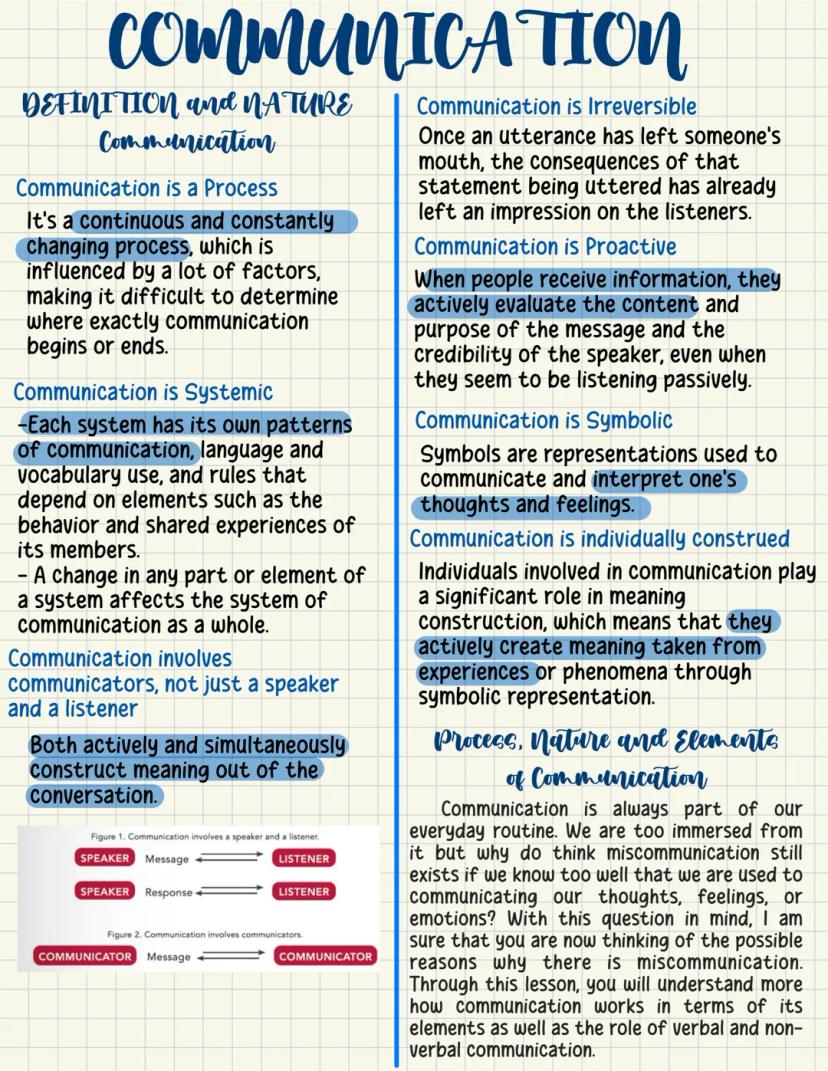




Think about it - you're constantly communicating, but communication is way more complex than just talking and listening. It's actually a continuous process that never really stops, kind of like a river that keeps flowing and changing.
Here's what makes communication tick: it's systemic, meaning every group (your barkada, family, or class) has its own way of talking and sharing ideas. When one person changes how they communicate, it affects everyone else in the group too.
The coolest part? Communication involves communicators, not just a speaker throwing words at a passive listener. You and your friend are both actively creating meaning together when you chat. Plus, communication is irreversible - once you say something, you can't take it back, so choose your words wisely!
Communication is also symbolic (we use words, gestures, and expressions to represent our thoughts) and individually construed (everyone interprets messages based on their own experiences). This explains why your joke might land differently with different people.
Key Insight: Communication is proactive - even when someone seems like they're just listening, they're actually evaluating what you're saying and deciding if they trust you.

Imagine playing baseball - you can't do it alone, and you need to communicate with teammates to win. Communication works exactly the same way - it needs multiple people working together through a specific process to create meaningful messages.
The communication process is like a cycle that starts with the sender and comes back through feedback. It's dynamic and continuous, which means it keeps flowing back and forth between people. Think of it as a conversation loop rather than a one-way street.
Here are the essential steps: the speaker generates an idea, encodes it (puts it into words or actions), transmits the message, the receiver gets and decodes it (interprets based on context), then provides feedback. Each step is crucial for effective communication.
Perfect example: Daphne tells Rico "Mahal kita bilang kaibigan" (I love you as a friend). Rico hears it, analyzes the meaning based on their relationship, gets heartbroken, and responds by frowning silently. That's the complete communication cycle in action!
Pro Tip: Understanding this process helps you control powerful tools for getting your ideas across effectively and achieving the results you want.

Every communication has specific building blocks that work together like ingredients in your favorite recipe. Master these elements of communication, and you'll understand why some conversations flow smoothly while others crash and burn.
The speaker is your message source, while the message contains the actual information or ideas you want to share. Encoding happens when you convert thoughts into words or actions, and decoding is when your listener interprets what you meant. The channel is your delivery method , and the receiver is whoever gets your message.
Feedback is super important - it's how you know if your message actually got through. Without feedback, you're basically shooting arrows in the dark! The receiver's reactions tell you whether to adjust your approach or keep going.
Context shapes everything about your communication. Physical context includes where you are, the noise level, lighting, and distance between speakers. A phone conversation with your friend hits different than talking face-to-face because the physical context changes how you interpret the message.
Reality Check: Even perfect encoding doesn't guarantee perfect decoding - your receiver needs enough knowledge and context to understand what you really mean.

Communication isn't one-size-fits-all - the context totally changes how you should approach different speaking situations. Getting this right separates good communicators from great ones, and it'll definitely help you nail presentations and conversations.
Intrapersonal communication is basically your inner voice - when you're having that internal debate about whether to buy something you want but don't need, or telling yourself to stay calm during a stressful situation. This "self-talk" includes writing your thoughts, making gestures while thinking, and even talking to your body parts like "My eyes hurt, time to stop scrolling."
Interpersonal communication happens between people, and it comes in two flavors. Dyad communication is just you and one other person (like getting study advice from your close friend). Small group communication involves three to ten people in face-to-face interactions (think group projects or study sessions with your barkada).
Public communication is when you're addressing a large audience, usually to inform or persuade them. Examples include delivering a valedictory speech to your batch or when the barangay captain explains COVID protocols to residents.
Smart Move: Recognizing which context you're in helps you adjust your communication style automatically, making you way more effective in different situations.

Your speech style needs to match your situation - you wouldn't talk to your principal the same way you chat with your bestie, right? According to expert Martin Joos, there are five distinct levels of formality that dictate how you should communicate.
Intimate style is for close family and friends where you share personal stuff. Casual style features slang, jargon, and street language perfect for catching up with friends. Consultative style is your standard professional language for teachers, doctors, or strangers - it's mutually acceptable and gets the job done.
Formal style happens during one-way speeches like graduation addresses or sermons, while frozen style is used for unchanging ceremonial language like the national anthem or constitution. Each style serves specific purposes and audiences.
Communicative strategies help you navigate conversations smoothly. Nomination introduces topics, restriction limits responses to stay focused, and topic control keeps discussions on track by asking relevant questions and managing contributions from everyone involved.
Game Changer: Topic shifting moves conversations naturally, turn-taking gives everyone fair chances to speak, repair fixes misunderstandings, and termination ends conversations gracefully.

Mastering these remaining communicative strategies will seriously level up your conversation game, whether you're leading group projects or just trying to keep discussions productive and engaging.
Topic control keeps everyone focused on what matters by asking related questions and making sure contributions actually connect to the main discussion. It's the difference between productive meetings and chaotic time-wasters where nothing gets accomplished.
Topic shifting smoothly transitions between related subjects, like moving from discussing pandemics to covering economic impacts. This strategy helps you explore different angles while maintaining conversational flow and keeping everyone engaged.
Turn-taking ensures fair participation by giving everyone chances to speak while others listen respectfully. Good facilitators use this to create inclusive discussions where all voices get heard, making meetings way more effective and democratic.
Repair saves conversations when misunderstandings happen - and trust me, they will! Simply asking "Can you please repeat that?" or "I didn't catch what you said" prevents small confusion from becoming major communication breakdowns.
Termination gracefully ends conversations using verbal and non-verbal cues. Sometimes it's brief, other times you extend it by asking follow-up questions, but the goal is always leaving participants feeling satisfied and appreciated for their contributions.
Pro Strategy: These seven strategies work together like a toolkit - the more naturally you can use them, the more people will see you as an effective communicator and leader.

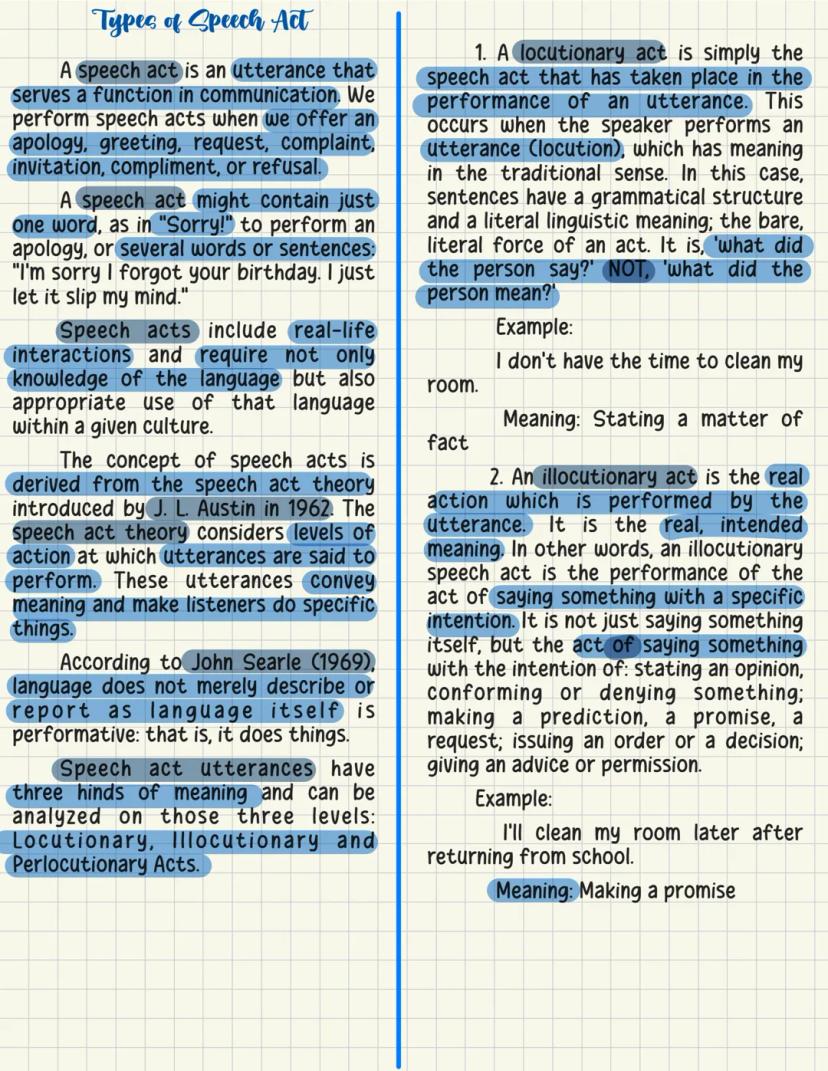
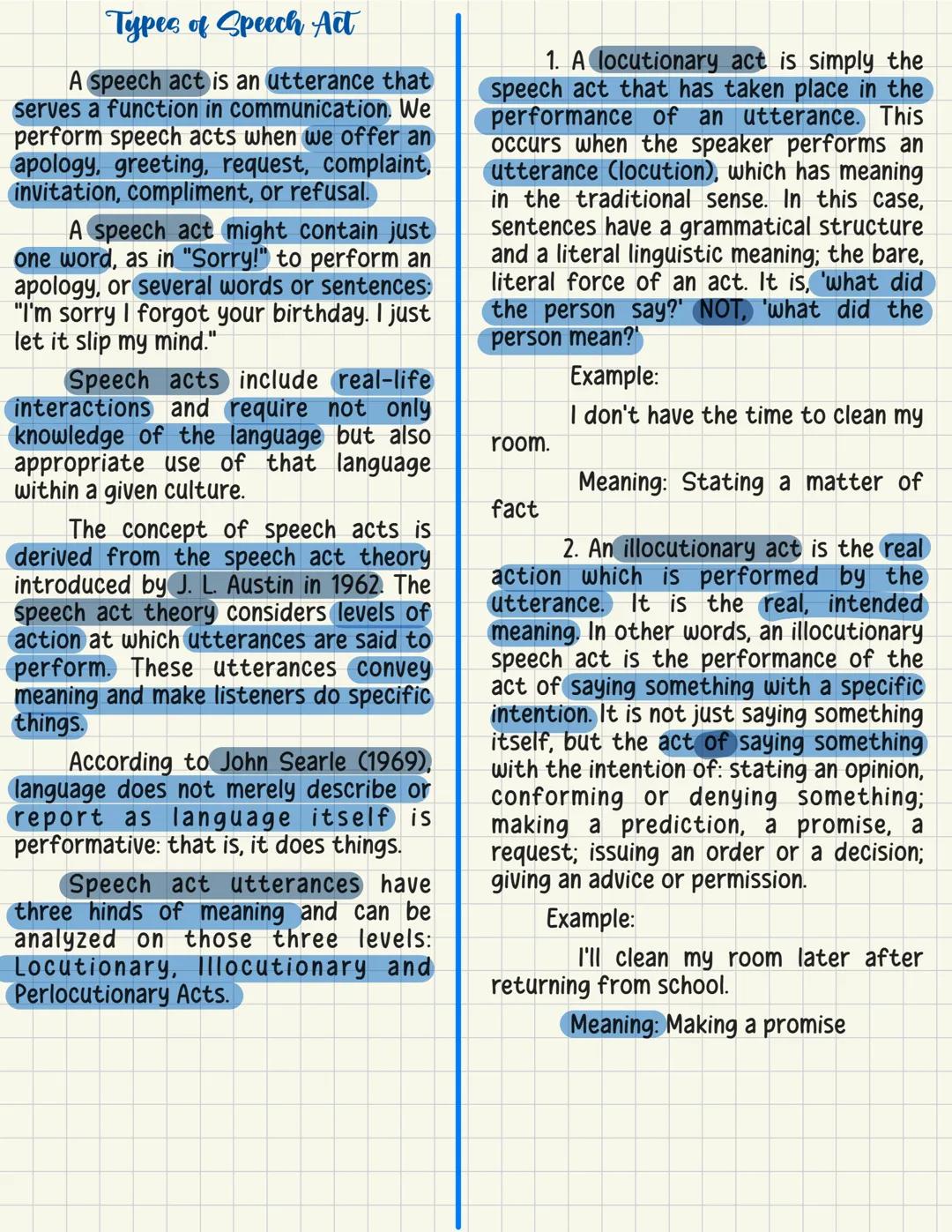
Words don't just describe things - they actually do things and make stuff happen in the real world. This is the core idea behind speech acts, which are utterances that serve specific functions beyond just sharing information.
Speech acts can be as simple as "Sorry!" or complex like "I'm sorry I forgot your birthday, it just slipped my mind." Both perform the same function (apologizing) but with different levels of detail. These acts require understanding both language and culture to work effectively.
J.L. Austin introduced this theory, and John Searle expanded it by showing that language is performative - it actively does things rather than just describing them. Every utterance works on three levels that you should understand.
Locutionary acts are simply what words literally mean - the basic grammatical structure and dictionary definitions. Illocutionary acts are what you actually intend to accomplish (promising, requesting, ordering). Perlocutionary acts are the actual effects your words have on listeners - whether they feel inspired, scared, convinced, or annoyed.
For example: "I don't have time to clean my room" , "I'll clean my room after school" , and "Clean your room or no allowance!" .
Key Insight: Understanding these three levels helps you choose words that not only say what you mean, but actually achieve the results you want from your listeners.
John Searle identified five specific types of speech acts that cover pretty much every way you use language to get things done. Getting familiar with these will help you communicate with much more precision and effectiveness.
Assertive acts state facts or opinions that can be judged true or false - basically when you're describing reality or sharing conclusions. Directive acts try to get people to do something through orders or requests. Commissive acts commit you to future actions through promises or offers.
Expressive acts show your feelings and attitudes through thanking, congratulating, or apologizing. Declarative acts actually change reality by announcing changes - like when someone declares you married or graduates you from school.
The relationship between speaker and listener is super important for illocutionary and perlocutionary acts to work properly. Your audience needs to understand not just your words, but your intentions and the cultural context behind them.
Here's the practical takeaway: when you want to communicate effectively, you need to consider all three levels. What are you literally saying? What do you intend to accomplish? What effect will it actually have on your specific audience?
Success Formula: Great communicators match their speech acts to their audience's ability to understand and respond appropriately - this is what separates awkward interactions from smooth, effective communication.

Ang aming AI Companion ay isang AI tool na nakatuon sa mga estudyante na nag-aalok ng higit pa sa mga sagot lang. Binuo mula sa milyong Knowunity resources, nagbibigay ito ng may-kaugnayang impormasyon, personalized na study plans, quizzes, at content direkta sa chat, na umaangkop sa iyong sariling learning journey.
Maaari mong i-download ang app mula sa Google Play Store at Apple App Store.
Tama 'yan! Mag-enjoy sa libreng access sa mga study content, makipag-connect sa kapwa mga estudyante, at kumuha ng instant na tulong – lahat nasa iyong daliri lang.
App Store
Google Play
Napakadaling gamitin at maganda ang disenyo ng app. Nahanap ko lahat ng hinahanap ko hanggang ngayon at natuto ako ng marami mula sa mga presentasyon! Tiyak na gagamitin ko ang app para sa isang takdang-aralin sa klase! At siyempre, nakakatulong din ito bilang inspirasyon.
Stefan S
gumagamit ng iOS
Sobrang ganda talaga ng app na ito. Maraming mga study notes at tulong [...]. Ang problemang subject ko ay Pranses, halimbawa, at ang app ay may maraming options para tumulong. Salamat sa app na ito, bumuti ang Pranses ko. Irerekumenda ko ito sa lahat.
Samantha Klich
Android user
Wow, talagang namangha ako. Sinubukan ko lang ang app dahil nakita ko itong ina-advertise nang maraming beses at sobrang nagulat ako. Ang app na ito ang TULONG na gusto mo para sa paaralan at higit sa lahat, nag-aalok ito ng maraming bagay, tulad ng workouts at fact sheets, na SOBRANG nakatulong sa akin.
Anna
iOS user
Pinakamagandang app sa mundo! walang masabi dahil sobrang ganda nito
Thomas R
iOS user
Napakaganda talaga. Nakakapag-review ako ng 10x mas mabuti, itong app ay mabilis na 10/10. Lubos kong inirerekomenda ito sa lahat. Pwede akong manood at maghanap ng notes. Pwede kong i-save ang mga ito sa subject folder. Pwede kong i-review anumang oras kapag bumalik ako. Kung hindi mo pa nasubukan ang app na ito, marami kang nawawala.
Basil
Android user
Ang app na ito ay nagpapalakas ng loob ko sa paghahanda sa exams, hindi lang dahil sa pagpapataas ng aking kumpiyansa sa sarili sa pamamagitan ng mga feature na nagpapahintulot sa iyo na makipag-connect sa iba at mabawasan ang pakiramdam na nag-iisa, kundi pati na rin sa paraan na nakatuon ang app sa pagpapagaan ng iyong pakiramdam. Madali itong i-navigate, masaya gamitin, at nakakatulong sa sinumang nahihirapan sa kahit anong paraan.
David K
iOS user
Sobrang galing ng app! Ilalagay ko lang ang paksa sa search bar at makakakuha na ako ng sagot kaagad. Hindi ko kailangang manood ng 10 YouTube videos para maintindihan ang isang bagay, kaya nakakatipid ako ng oras. Lubos na inirerekomenda!
Sudenaz Ocak
Android user
Sa paaralan, napakahina ko sa math pero salamat sa app, mas mahusay na ako ngayon. Lubos akong nagpapasalamat na ginawa niyo ang app na ito.
Greenlight Bonnie
Android user
napakareliable na app para tumulong at palawakin ang iyong mga ideya sa Math, English at iba pang mga related na paksa sa iyong mga gawain. gamitin mo ang app na ito kung nahihirapan ka sa mga area, susi ito para diyan. sana nag-review na ako dati. at libre rin ito kaya huwag mag-alala tungkol diyan.
Rohan U
Android user
Alam kong maraming apps gumagamit ng fake accounts para mapataas ang kanilang reviews pero ang app na ito ay deserve lahat ng papuri. Dati nakakakuha ako ng 4 sa aking English exams at ngayon nakakuha ako ng grade 7. Hindi ko pa alam ang app na ito tatlong araw bago ang exam at nakatulong ito ng SOBRA. Pakisuyong maniwala sa akin at gamitin ito dahil sigurado akong makikita mo rin ang mga pagbabago.
Xander S
iOS user
ANG MGA quiz AT flashcard SOBRANG HELPFUL AT I LOVE TALAGA SI Knowunity AI. PARANG CHATGPT LANG PERO MAS MATALINO!! NAKATULONG DIN SA MGA MASCARA PROBLEMS KO!! PATI NA RIN SA MGA TUNAY KONG subject! SYEMPRE 😍😁😲🤑💗✨🎀😮
Elisha
iOS user
Grabe talaga ang app na to. Sobrang nakakaboring sakin ang pagreview pero ginagawa ng app na to na sobrang dali mag-organize ng lahat at pwede mong tanungin ang libreng ai para subukin ang sarili mo kaya sobrang buti at madali mong ma-upload ang sarili mong mga bagay. highly recommend bilang isang taong nagte-take ng mocks ngayon
Paul T
iOS user
Napakadaling gamitin at maganda ang disenyo ng app. Nahanap ko lahat ng hinahanap ko hanggang ngayon at natuto ako ng marami mula sa mga presentasyon! Tiyak na gagamitin ko ang app para sa isang takdang-aralin sa klase! At siyempre, nakakatulong din ito bilang inspirasyon.
Stefan S
gumagamit ng iOS
Sobrang ganda talaga ng app na ito. Maraming mga study notes at tulong [...]. Ang problemang subject ko ay Pranses, halimbawa, at ang app ay may maraming options para tumulong. Salamat sa app na ito, bumuti ang Pranses ko. Irerekumenda ko ito sa lahat.
Samantha Klich
Android user
Wow, talagang namangha ako. Sinubukan ko lang ang app dahil nakita ko itong ina-advertise nang maraming beses at sobrang nagulat ako. Ang app na ito ang TULONG na gusto mo para sa paaralan at higit sa lahat, nag-aalok ito ng maraming bagay, tulad ng workouts at fact sheets, na SOBRANG nakatulong sa akin.
Anna
iOS user
Pinakamagandang app sa mundo! walang masabi dahil sobrang ganda nito
Thomas R
iOS user
Napakaganda talaga. Nakakapag-review ako ng 10x mas mabuti, itong app ay mabilis na 10/10. Lubos kong inirerekomenda ito sa lahat. Pwede akong manood at maghanap ng notes. Pwede kong i-save ang mga ito sa subject folder. Pwede kong i-review anumang oras kapag bumalik ako. Kung hindi mo pa nasubukan ang app na ito, marami kang nawawala.
Basil
Android user
Ang app na ito ay nagpapalakas ng loob ko sa paghahanda sa exams, hindi lang dahil sa pagpapataas ng aking kumpiyansa sa sarili sa pamamagitan ng mga feature na nagpapahintulot sa iyo na makipag-connect sa iba at mabawasan ang pakiramdam na nag-iisa, kundi pati na rin sa paraan na nakatuon ang app sa pagpapagaan ng iyong pakiramdam. Madali itong i-navigate, masaya gamitin, at nakakatulong sa sinumang nahihirapan sa kahit anong paraan.
David K
iOS user
Sobrang galing ng app! Ilalagay ko lang ang paksa sa search bar at makakakuha na ako ng sagot kaagad. Hindi ko kailangang manood ng 10 YouTube videos para maintindihan ang isang bagay, kaya nakakatipid ako ng oras. Lubos na inirerekomenda!
Sudenaz Ocak
Android user
Sa paaralan, napakahina ko sa math pero salamat sa app, mas mahusay na ako ngayon. Lubos akong nagpapasalamat na ginawa niyo ang app na ito.
Greenlight Bonnie
Android user
napakareliable na app para tumulong at palawakin ang iyong mga ideya sa Math, English at iba pang mga related na paksa sa iyong mga gawain. gamitin mo ang app na ito kung nahihirapan ka sa mga area, susi ito para diyan. sana nag-review na ako dati. at libre rin ito kaya huwag mag-alala tungkol diyan.
Rohan U
Android user
Alam kong maraming apps gumagamit ng fake accounts para mapataas ang kanilang reviews pero ang app na ito ay deserve lahat ng papuri. Dati nakakakuha ako ng 4 sa aking English exams at ngayon nakakuha ako ng grade 7. Hindi ko pa alam ang app na ito tatlong araw bago ang exam at nakatulong ito ng SOBRA. Pakisuyong maniwala sa akin at gamitin ito dahil sigurado akong makikita mo rin ang mga pagbabago.
Xander S
iOS user
ANG MGA quiz AT flashcard SOBRANG HELPFUL AT I LOVE TALAGA SI Knowunity AI. PARANG CHATGPT LANG PERO MAS MATALINO!! NAKATULONG DIN SA MGA MASCARA PROBLEMS KO!! PATI NA RIN SA MGA TUNAY KONG subject! SYEMPRE 😍😁😲🤑💗✨🎀😮
Elisha
iOS user
Grabe talaga ang app na to. Sobrang nakakaboring sakin ang pagreview pero ginagawa ng app na to na sobrang dali mag-organize ng lahat at pwede mong tanungin ang libreng ai para subukin ang sarili mo kaya sobrang buti at madali mong ma-upload ang sarili mong mga bagay. highly recommend bilang isang taong nagte-take ng mocks ngayon
Paul T
iOS user
Karen Gella
@cayennexxx
Ever wonder why miscommunication happens even though we talk every day? Understanding how communication really works - from its basic elements to different speaking styles - can help you become a way better communicator in school, with friends, and in... Ipakita pa
Access sa lahat ng dokumento
Pagbutihin ang iyong mga grado
Sumali sa milyong mga estudyante
Think about it - you're constantly communicating, but communication is way more complex than just talking and listening. It's actually a continuous process that never really stops, kind of like a river that keeps flowing and changing.
Here's what makes communication tick: it's systemic, meaning every group (your barkada, family, or class) has its own way of talking and sharing ideas. When one person changes how they communicate, it affects everyone else in the group too.
The coolest part? Communication involves communicators, not just a speaker throwing words at a passive listener. You and your friend are both actively creating meaning together when you chat. Plus, communication is irreversible - once you say something, you can't take it back, so choose your words wisely!
Communication is also symbolic (we use words, gestures, and expressions to represent our thoughts) and individually construed (everyone interprets messages based on their own experiences). This explains why your joke might land differently with different people.
Key Insight: Communication is proactive - even when someone seems like they're just listening, they're actually evaluating what you're saying and deciding if they trust you.
Access sa lahat ng dokumento
Pagbutihin ang iyong mga grado
Sumali sa milyong mga estudyante
Imagine playing baseball - you can't do it alone, and you need to communicate with teammates to win. Communication works exactly the same way - it needs multiple people working together through a specific process to create meaningful messages.
The communication process is like a cycle that starts with the sender and comes back through feedback. It's dynamic and continuous, which means it keeps flowing back and forth between people. Think of it as a conversation loop rather than a one-way street.
Here are the essential steps: the speaker generates an idea, encodes it (puts it into words or actions), transmits the message, the receiver gets and decodes it (interprets based on context), then provides feedback. Each step is crucial for effective communication.
Perfect example: Daphne tells Rico "Mahal kita bilang kaibigan" (I love you as a friend). Rico hears it, analyzes the meaning based on their relationship, gets heartbroken, and responds by frowning silently. That's the complete communication cycle in action!
Pro Tip: Understanding this process helps you control powerful tools for getting your ideas across effectively and achieving the results you want.
Access sa lahat ng dokumento
Pagbutihin ang iyong mga grado
Sumali sa milyong mga estudyante
Every communication has specific building blocks that work together like ingredients in your favorite recipe. Master these elements of communication, and you'll understand why some conversations flow smoothly while others crash and burn.
The speaker is your message source, while the message contains the actual information or ideas you want to share. Encoding happens when you convert thoughts into words or actions, and decoding is when your listener interprets what you meant. The channel is your delivery method , and the receiver is whoever gets your message.
Feedback is super important - it's how you know if your message actually got through. Without feedback, you're basically shooting arrows in the dark! The receiver's reactions tell you whether to adjust your approach or keep going.
Context shapes everything about your communication. Physical context includes where you are, the noise level, lighting, and distance between speakers. A phone conversation with your friend hits different than talking face-to-face because the physical context changes how you interpret the message.
Reality Check: Even perfect encoding doesn't guarantee perfect decoding - your receiver needs enough knowledge and context to understand what you really mean.
Access sa lahat ng dokumento
Pagbutihin ang iyong mga grado
Sumali sa milyong mga estudyante
Communication isn't one-size-fits-all - the context totally changes how you should approach different speaking situations. Getting this right separates good communicators from great ones, and it'll definitely help you nail presentations and conversations.
Intrapersonal communication is basically your inner voice - when you're having that internal debate about whether to buy something you want but don't need, or telling yourself to stay calm during a stressful situation. This "self-talk" includes writing your thoughts, making gestures while thinking, and even talking to your body parts like "My eyes hurt, time to stop scrolling."
Interpersonal communication happens between people, and it comes in two flavors. Dyad communication is just you and one other person (like getting study advice from your close friend). Small group communication involves three to ten people in face-to-face interactions (think group projects or study sessions with your barkada).
Public communication is when you're addressing a large audience, usually to inform or persuade them. Examples include delivering a valedictory speech to your batch or when the barangay captain explains COVID protocols to residents.
Smart Move: Recognizing which context you're in helps you adjust your communication style automatically, making you way more effective in different situations.
Access sa lahat ng dokumento
Pagbutihin ang iyong mga grado
Sumali sa milyong mga estudyante
Your speech style needs to match your situation - you wouldn't talk to your principal the same way you chat with your bestie, right? According to expert Martin Joos, there are five distinct levels of formality that dictate how you should communicate.
Intimate style is for close family and friends where you share personal stuff. Casual style features slang, jargon, and street language perfect for catching up with friends. Consultative style is your standard professional language for teachers, doctors, or strangers - it's mutually acceptable and gets the job done.
Formal style happens during one-way speeches like graduation addresses or sermons, while frozen style is used for unchanging ceremonial language like the national anthem or constitution. Each style serves specific purposes and audiences.
Communicative strategies help you navigate conversations smoothly. Nomination introduces topics, restriction limits responses to stay focused, and topic control keeps discussions on track by asking relevant questions and managing contributions from everyone involved.
Game Changer: Topic shifting moves conversations naturally, turn-taking gives everyone fair chances to speak, repair fixes misunderstandings, and termination ends conversations gracefully.
Access sa lahat ng dokumento
Pagbutihin ang iyong mga grado
Sumali sa milyong mga estudyante
Mastering these remaining communicative strategies will seriously level up your conversation game, whether you're leading group projects or just trying to keep discussions productive and engaging.
Topic control keeps everyone focused on what matters by asking related questions and making sure contributions actually connect to the main discussion. It's the difference between productive meetings and chaotic time-wasters where nothing gets accomplished.
Topic shifting smoothly transitions between related subjects, like moving from discussing pandemics to covering economic impacts. This strategy helps you explore different angles while maintaining conversational flow and keeping everyone engaged.
Turn-taking ensures fair participation by giving everyone chances to speak while others listen respectfully. Good facilitators use this to create inclusive discussions where all voices get heard, making meetings way more effective and democratic.
Repair saves conversations when misunderstandings happen - and trust me, they will! Simply asking "Can you please repeat that?" or "I didn't catch what you said" prevents small confusion from becoming major communication breakdowns.
Termination gracefully ends conversations using verbal and non-verbal cues. Sometimes it's brief, other times you extend it by asking follow-up questions, but the goal is always leaving participants feeling satisfied and appreciated for their contributions.
Pro Strategy: These seven strategies work together like a toolkit - the more naturally you can use them, the more people will see you as an effective communicator and leader.
Access sa lahat ng dokumento
Pagbutihin ang iyong mga grado
Sumali sa milyong mga estudyante
Words don't just describe things - they actually do things and make stuff happen in the real world. This is the core idea behind speech acts, which are utterances that serve specific functions beyond just sharing information.
Speech acts can be as simple as "Sorry!" or complex like "I'm sorry I forgot your birthday, it just slipped my mind." Both perform the same function (apologizing) but with different levels of detail. These acts require understanding both language and culture to work effectively.
J.L. Austin introduced this theory, and John Searle expanded it by showing that language is performative - it actively does things rather than just describing them. Every utterance works on three levels that you should understand.
Locutionary acts are simply what words literally mean - the basic grammatical structure and dictionary definitions. Illocutionary acts are what you actually intend to accomplish (promising, requesting, ordering). Perlocutionary acts are the actual effects your words have on listeners - whether they feel inspired, scared, convinced, or annoyed.
For example: "I don't have time to clean my room" , "I'll clean my room after school" , and "Clean your room or no allowance!" .
Key Insight: Understanding these three levels helps you choose words that not only say what you mean, but actually achieve the results you want from your listeners.
Access sa lahat ng dokumento
Pagbutihin ang iyong mga grado
Sumali sa milyong mga estudyante
John Searle identified five specific types of speech acts that cover pretty much every way you use language to get things done. Getting familiar with these will help you communicate with much more precision and effectiveness.
Assertive acts state facts or opinions that can be judged true or false - basically when you're describing reality or sharing conclusions. Directive acts try to get people to do something through orders or requests. Commissive acts commit you to future actions through promises or offers.
Expressive acts show your feelings and attitudes through thanking, congratulating, or apologizing. Declarative acts actually change reality by announcing changes - like when someone declares you married or graduates you from school.
The relationship between speaker and listener is super important for illocutionary and perlocutionary acts to work properly. Your audience needs to understand not just your words, but your intentions and the cultural context behind them.
Here's the practical takeaway: when you want to communicate effectively, you need to consider all three levels. What are you literally saying? What do you intend to accomplish? What effect will it actually have on your specific audience?
Success Formula: Great communicators match their speech acts to their audience's ability to understand and respond appropriately - this is what separates awkward interactions from smooth, effective communication.
Access sa lahat ng dokumento
Pagbutihin ang iyong mga grado
Sumali sa milyong mga estudyante
Ang aming AI Companion ay isang AI tool na nakatuon sa mga estudyante na nag-aalok ng higit pa sa mga sagot lang. Binuo mula sa milyong Knowunity resources, nagbibigay ito ng may-kaugnayang impormasyon, personalized na study plans, quizzes, at content direkta sa chat, na umaangkop sa iyong sariling learning journey.
Maaari mong i-download ang app mula sa Google Play Store at Apple App Store.
Tama 'yan! Mag-enjoy sa libreng access sa mga study content, makipag-connect sa kapwa mga estudyante, at kumuha ng instant na tulong – lahat nasa iyong daliri lang.
23
Smart Tools NEW
I-transform ang note na ito sa: ✓ 50+ Practice Questions ✓ Interactive Flashcards ✓ Full Mock Exam ✓ Essay Outlines
App Store
Google Play
Napakadaling gamitin at maganda ang disenyo ng app. Nahanap ko lahat ng hinahanap ko hanggang ngayon at natuto ako ng marami mula sa mga presentasyon! Tiyak na gagamitin ko ang app para sa isang takdang-aralin sa klase! At siyempre, nakakatulong din ito bilang inspirasyon.
Stefan S
gumagamit ng iOS
Sobrang ganda talaga ng app na ito. Maraming mga study notes at tulong [...]. Ang problemang subject ko ay Pranses, halimbawa, at ang app ay may maraming options para tumulong. Salamat sa app na ito, bumuti ang Pranses ko. Irerekumenda ko ito sa lahat.
Samantha Klich
Android user
Wow, talagang namangha ako. Sinubukan ko lang ang app dahil nakita ko itong ina-advertise nang maraming beses at sobrang nagulat ako. Ang app na ito ang TULONG na gusto mo para sa paaralan at higit sa lahat, nag-aalok ito ng maraming bagay, tulad ng workouts at fact sheets, na SOBRANG nakatulong sa akin.
Anna
iOS user
Pinakamagandang app sa mundo! walang masabi dahil sobrang ganda nito
Thomas R
iOS user
Napakaganda talaga. Nakakapag-review ako ng 10x mas mabuti, itong app ay mabilis na 10/10. Lubos kong inirerekomenda ito sa lahat. Pwede akong manood at maghanap ng notes. Pwede kong i-save ang mga ito sa subject folder. Pwede kong i-review anumang oras kapag bumalik ako. Kung hindi mo pa nasubukan ang app na ito, marami kang nawawala.
Basil
Android user
Ang app na ito ay nagpapalakas ng loob ko sa paghahanda sa exams, hindi lang dahil sa pagpapataas ng aking kumpiyansa sa sarili sa pamamagitan ng mga feature na nagpapahintulot sa iyo na makipag-connect sa iba at mabawasan ang pakiramdam na nag-iisa, kundi pati na rin sa paraan na nakatuon ang app sa pagpapagaan ng iyong pakiramdam. Madali itong i-navigate, masaya gamitin, at nakakatulong sa sinumang nahihirapan sa kahit anong paraan.
David K
iOS user
Sobrang galing ng app! Ilalagay ko lang ang paksa sa search bar at makakakuha na ako ng sagot kaagad. Hindi ko kailangang manood ng 10 YouTube videos para maintindihan ang isang bagay, kaya nakakatipid ako ng oras. Lubos na inirerekomenda!
Sudenaz Ocak
Android user
Sa paaralan, napakahina ko sa math pero salamat sa app, mas mahusay na ako ngayon. Lubos akong nagpapasalamat na ginawa niyo ang app na ito.
Greenlight Bonnie
Android user
napakareliable na app para tumulong at palawakin ang iyong mga ideya sa Math, English at iba pang mga related na paksa sa iyong mga gawain. gamitin mo ang app na ito kung nahihirapan ka sa mga area, susi ito para diyan. sana nag-review na ako dati. at libre rin ito kaya huwag mag-alala tungkol diyan.
Rohan U
Android user
Alam kong maraming apps gumagamit ng fake accounts para mapataas ang kanilang reviews pero ang app na ito ay deserve lahat ng papuri. Dati nakakakuha ako ng 4 sa aking English exams at ngayon nakakuha ako ng grade 7. Hindi ko pa alam ang app na ito tatlong araw bago ang exam at nakatulong ito ng SOBRA. Pakisuyong maniwala sa akin at gamitin ito dahil sigurado akong makikita mo rin ang mga pagbabago.
Xander S
iOS user
ANG MGA quiz AT flashcard SOBRANG HELPFUL AT I LOVE TALAGA SI Knowunity AI. PARANG CHATGPT LANG PERO MAS MATALINO!! NAKATULONG DIN SA MGA MASCARA PROBLEMS KO!! PATI NA RIN SA MGA TUNAY KONG subject! SYEMPRE 😍😁😲🤑💗✨🎀😮
Elisha
iOS user
Grabe talaga ang app na to. Sobrang nakakaboring sakin ang pagreview pero ginagawa ng app na to na sobrang dali mag-organize ng lahat at pwede mong tanungin ang libreng ai para subukin ang sarili mo kaya sobrang buti at madali mong ma-upload ang sarili mong mga bagay. highly recommend bilang isang taong nagte-take ng mocks ngayon
Paul T
iOS user
Napakadaling gamitin at maganda ang disenyo ng app. Nahanap ko lahat ng hinahanap ko hanggang ngayon at natuto ako ng marami mula sa mga presentasyon! Tiyak na gagamitin ko ang app para sa isang takdang-aralin sa klase! At siyempre, nakakatulong din ito bilang inspirasyon.
Stefan S
gumagamit ng iOS
Sobrang ganda talaga ng app na ito. Maraming mga study notes at tulong [...]. Ang problemang subject ko ay Pranses, halimbawa, at ang app ay may maraming options para tumulong. Salamat sa app na ito, bumuti ang Pranses ko. Irerekumenda ko ito sa lahat.
Samantha Klich
Android user
Wow, talagang namangha ako. Sinubukan ko lang ang app dahil nakita ko itong ina-advertise nang maraming beses at sobrang nagulat ako. Ang app na ito ang TULONG na gusto mo para sa paaralan at higit sa lahat, nag-aalok ito ng maraming bagay, tulad ng workouts at fact sheets, na SOBRANG nakatulong sa akin.
Anna
iOS user
Pinakamagandang app sa mundo! walang masabi dahil sobrang ganda nito
Thomas R
iOS user
Napakaganda talaga. Nakakapag-review ako ng 10x mas mabuti, itong app ay mabilis na 10/10. Lubos kong inirerekomenda ito sa lahat. Pwede akong manood at maghanap ng notes. Pwede kong i-save ang mga ito sa subject folder. Pwede kong i-review anumang oras kapag bumalik ako. Kung hindi mo pa nasubukan ang app na ito, marami kang nawawala.
Basil
Android user
Ang app na ito ay nagpapalakas ng loob ko sa paghahanda sa exams, hindi lang dahil sa pagpapataas ng aking kumpiyansa sa sarili sa pamamagitan ng mga feature na nagpapahintulot sa iyo na makipag-connect sa iba at mabawasan ang pakiramdam na nag-iisa, kundi pati na rin sa paraan na nakatuon ang app sa pagpapagaan ng iyong pakiramdam. Madali itong i-navigate, masaya gamitin, at nakakatulong sa sinumang nahihirapan sa kahit anong paraan.
David K
iOS user
Sobrang galing ng app! Ilalagay ko lang ang paksa sa search bar at makakakuha na ako ng sagot kaagad. Hindi ko kailangang manood ng 10 YouTube videos para maintindihan ang isang bagay, kaya nakakatipid ako ng oras. Lubos na inirerekomenda!
Sudenaz Ocak
Android user
Sa paaralan, napakahina ko sa math pero salamat sa app, mas mahusay na ako ngayon. Lubos akong nagpapasalamat na ginawa niyo ang app na ito.
Greenlight Bonnie
Android user
napakareliable na app para tumulong at palawakin ang iyong mga ideya sa Math, English at iba pang mga related na paksa sa iyong mga gawain. gamitin mo ang app na ito kung nahihirapan ka sa mga area, susi ito para diyan. sana nag-review na ako dati. at libre rin ito kaya huwag mag-alala tungkol diyan.
Rohan U
Android user
Alam kong maraming apps gumagamit ng fake accounts para mapataas ang kanilang reviews pero ang app na ito ay deserve lahat ng papuri. Dati nakakakuha ako ng 4 sa aking English exams at ngayon nakakuha ako ng grade 7. Hindi ko pa alam ang app na ito tatlong araw bago ang exam at nakatulong ito ng SOBRA. Pakisuyong maniwala sa akin at gamitin ito dahil sigurado akong makikita mo rin ang mga pagbabago.
Xander S
iOS user
ANG MGA quiz AT flashcard SOBRANG HELPFUL AT I LOVE TALAGA SI Knowunity AI. PARANG CHATGPT LANG PERO MAS MATALINO!! NAKATULONG DIN SA MGA MASCARA PROBLEMS KO!! PATI NA RIN SA MGA TUNAY KONG subject! SYEMPRE 😍😁😲🤑💗✨🎀😮
Elisha
iOS user
Grabe talaga ang app na to. Sobrang nakakaboring sakin ang pagreview pero ginagawa ng app na to na sobrang dali mag-organize ng lahat at pwede mong tanungin ang libreng ai para subukin ang sarili mo kaya sobrang buti at madali mong ma-upload ang sarili mong mga bagay. highly recommend bilang isang taong nagte-take ng mocks ngayon
Paul T
iOS user