Wearable Technology and 3D Environments
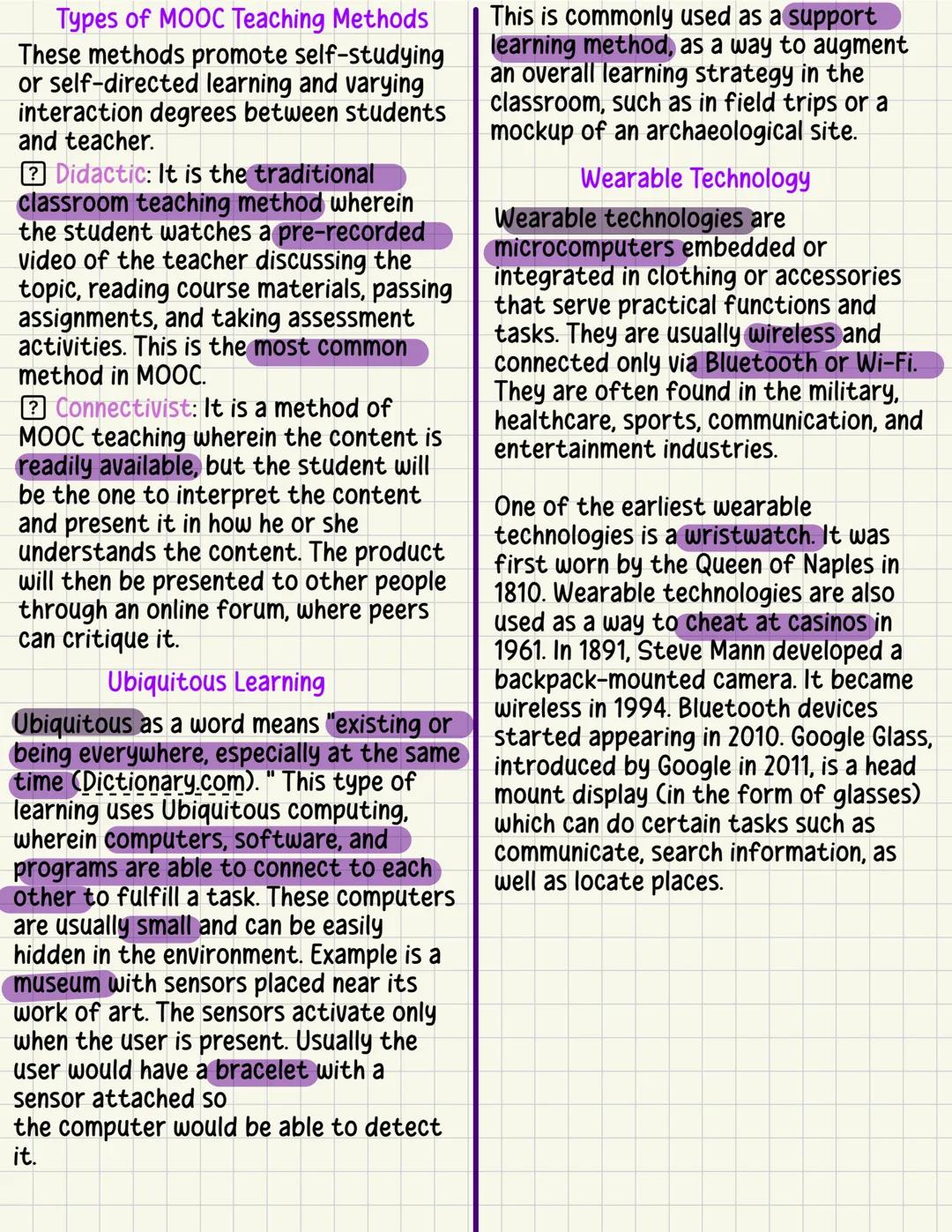
Wearable tech offers significant benefits but comes with drawbacks. On the positive side, it enables multitasking by handling simple tasks while you focus on priorities. These devices monitor patients during therapy, track athletes' performance, and collect data for security and research. Their wireless design allows freedom of movement without restrictive cables.
However, wearables can cause problematic multitasking that leads to distraction and decreased situational awareness. They may promote detached social engagement and create privacy concerns when recording others without consent. Security vulnerabilities also pose risks to businesses implementing wearable technology.
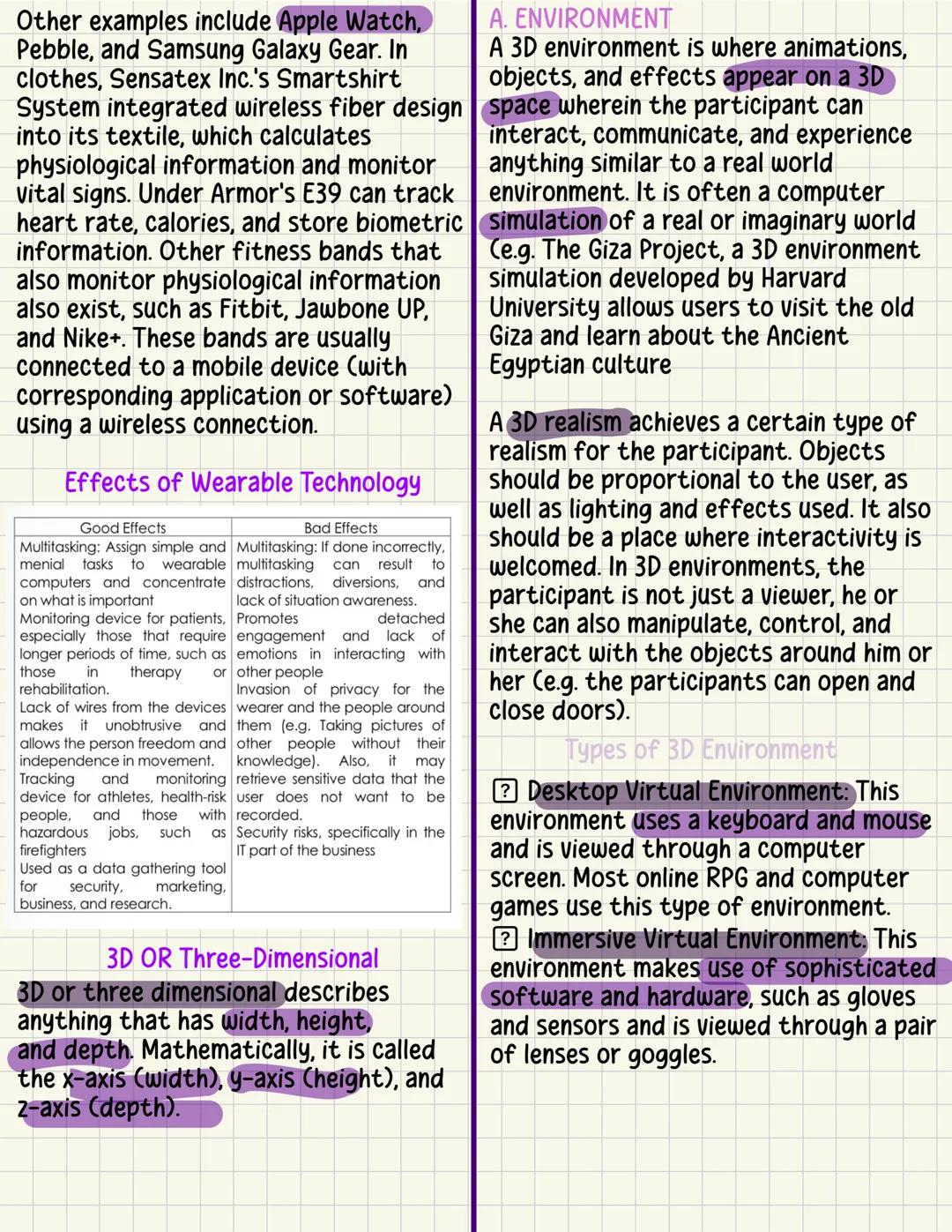
Three-dimensional (3D) environments create spaces with width, height, and depth where users can interact as they would in the real world. These computer simulations of real or imaginary worlds, like Harvard's Giza Project, allow users to explore ancient Egyptian culture virtually. Effective 3D environments maintain proportional objects, realistic lighting, and interactive features.
There are two main types of 3D environments. Desktop virtual environments use keyboard and mouse controls viewed through computer screens, common in online games. Immersive virtual environments employ sophisticated equipment like sensor gloves and special goggles for a more complete sensory experience.
Remember: 3D environments aren't just for gaming! They're increasingly used for education, military training, and exploring places we couldn't otherwise visit.



 Science
 Iba pa
 Practical Research
 DISS
DISS