Understanding Formal vs Informal Language
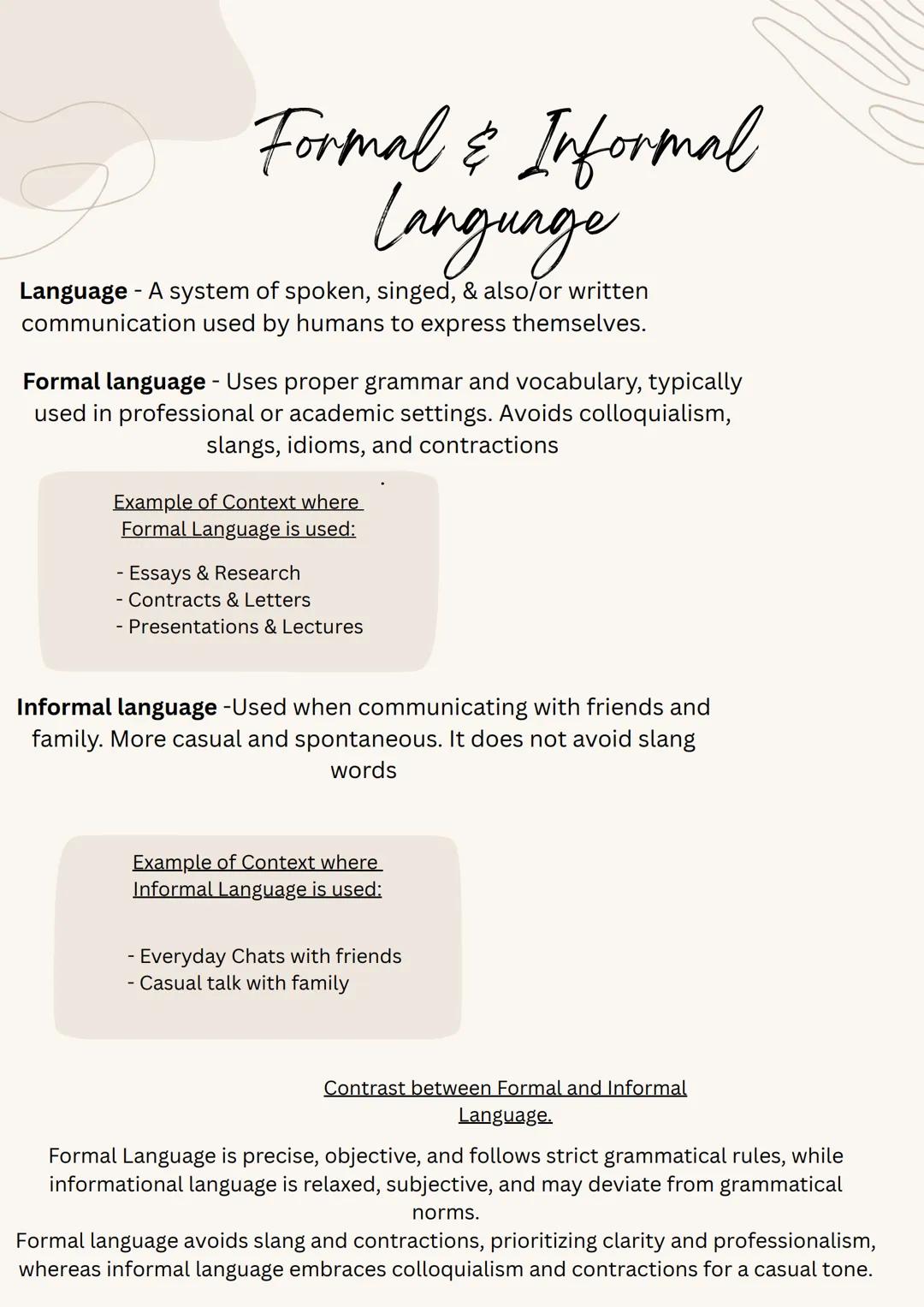
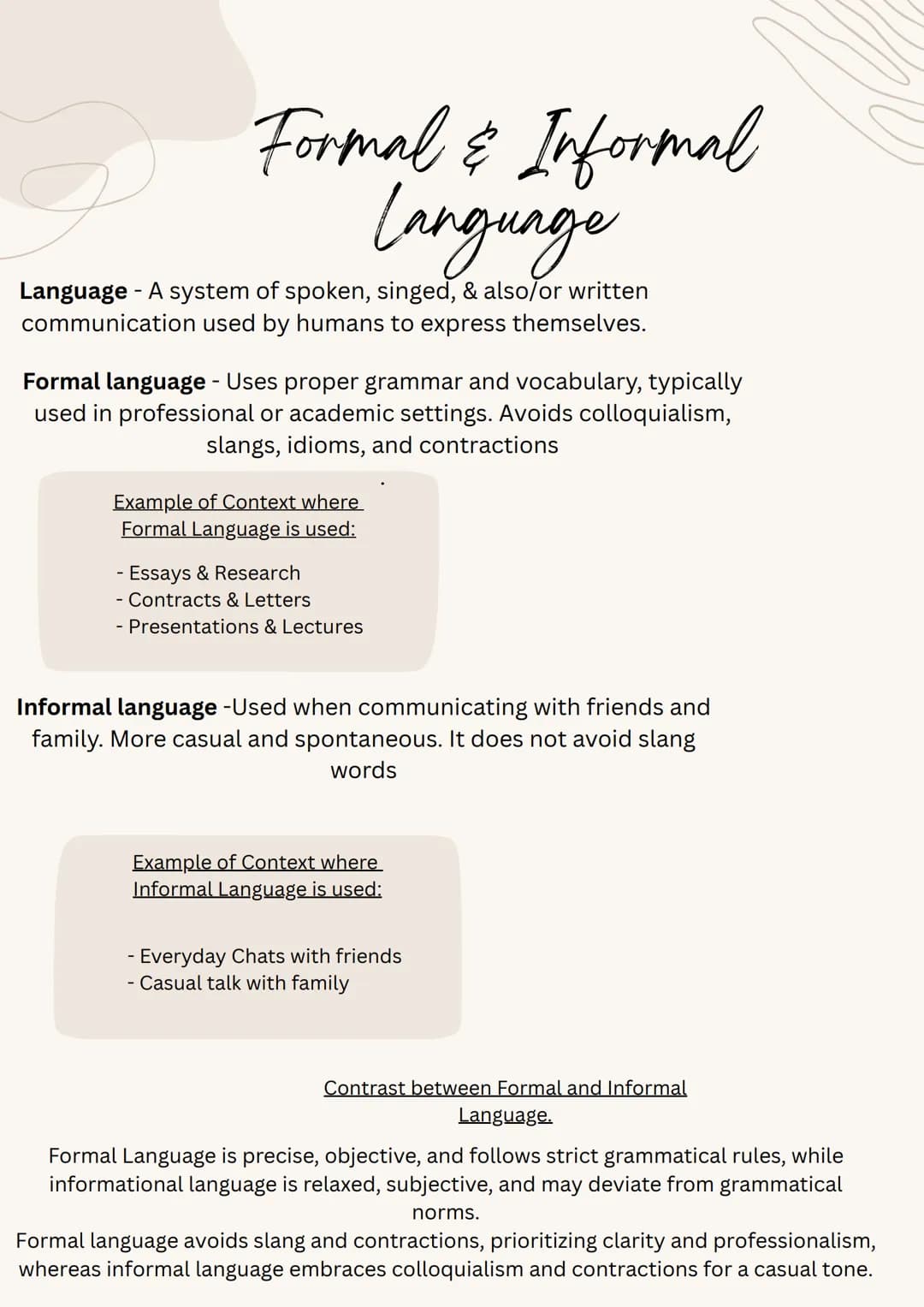
Think of language as your communication toolkit - it's how you express your thoughts through speaking, writing, or even signing. But here's the thing: you wouldn't use the same tone with your teacher as you do with your best friend, right?
Formal language is like wearing your best uniform to school. It uses proper grammar, avoids slang, and sounds professional. You'll need this for essays, research papers, business letters, and presentations. No "gonna" or "LOL" here - everything needs to be spelled out completely and correctly.
Informal language, on the other hand, is like your comfortable home clothes. It's relaxed, spontaneous, and perfect for chatting with friends and family. Slang words, contractions, and casual expressions are totally fine here.
Pro Tip: The key difference? Formal language prioritizes clarity and professionalism, while informal language focuses on building personal connections and expressing personality.
The main contrast is simple: formal language follows strict rules and stays objective, while informal language is flexible and personal. Master both, and you'll communicate effectively in any situation!


 MIL
MIL Science
 Iba pa
 Practical Research
 DISS
DISS