
Understanding different types of media and how they communicate information... Ipakita pa
 MIL
MIL Science
 Iba pa
 Filipino
 Econ
EconMag-sign up para makita ang contentLibre ito!
Access sa lahat ng dokumento
Pagbutihin ang iyong mga grado
Sumali sa milyong mga estudyante
Knowunity AI
Higit pa
Mga Asignatura
Triangle Congruence and Similarity Theorems
Triangle Properties and Classification
Linear Equations and Graphs
Geometric Angle Relationships
Trigonometric Functions and Identities
Equation Solving Techniques
Circle Geometry Fundamentals
Division Operations and Methods
Basic Differentiation Rules
Exponent and Logarithm Properties
Ipakita lahat ng paksa
Human Organ Systems
Reproductive Cell Cycles
Biological Sciences Subdisciplines
Cellular Energy Metabolism
Autotrophic Energy Processes
Inheritance Patterns and Principles
Biomolecular Structure and Organization
Cell Cycle and Division Mechanics
Cellular Organization and Development
Biological Structural Organization
Ipakita lahat ng paksa
Chemical Sciences and Applications
Atomic Structure and Composition
Molecular Electron Structure Representation
Atomic Electron Behavior
Matter Properties and Water
Mole Concept and Calculations
Gas Laws and Behavior
Periodic Table Organization
Chemical Thermodynamics Fundamentals
Chemical Bond Types and Properties
Ipakita lahat ng paksa
European Renaissance and Enlightenment
European Cultural Movements 800-1920
American Revolution Era 1763-1797
American Civil War 1861-1865
Global Imperial Systems
Mongol and Chinese Dynasties
U.S. Presidents and World Leaders
Historical Sources and Documentation
World Wars Era and Impact
World Religious Systems
Ipakita lahat ng paksa
Classic and Contemporary Novels
Literary Character Analysis
Rhetorical Theory and Practice
Classic Literary Narratives
Reading Analysis and Interpretation
Narrative Structure and Techniques
English Language Components
Influential English-Language Authors
Basic Sentence Structure
Narrative Voice and Perspective
Ipakita lahat ng paksa
39
•
Na-update Mar 14, 2026
•

Karen Gella
@cayennexxx
Understanding different types of media and how they communicate information... Ipakita pa
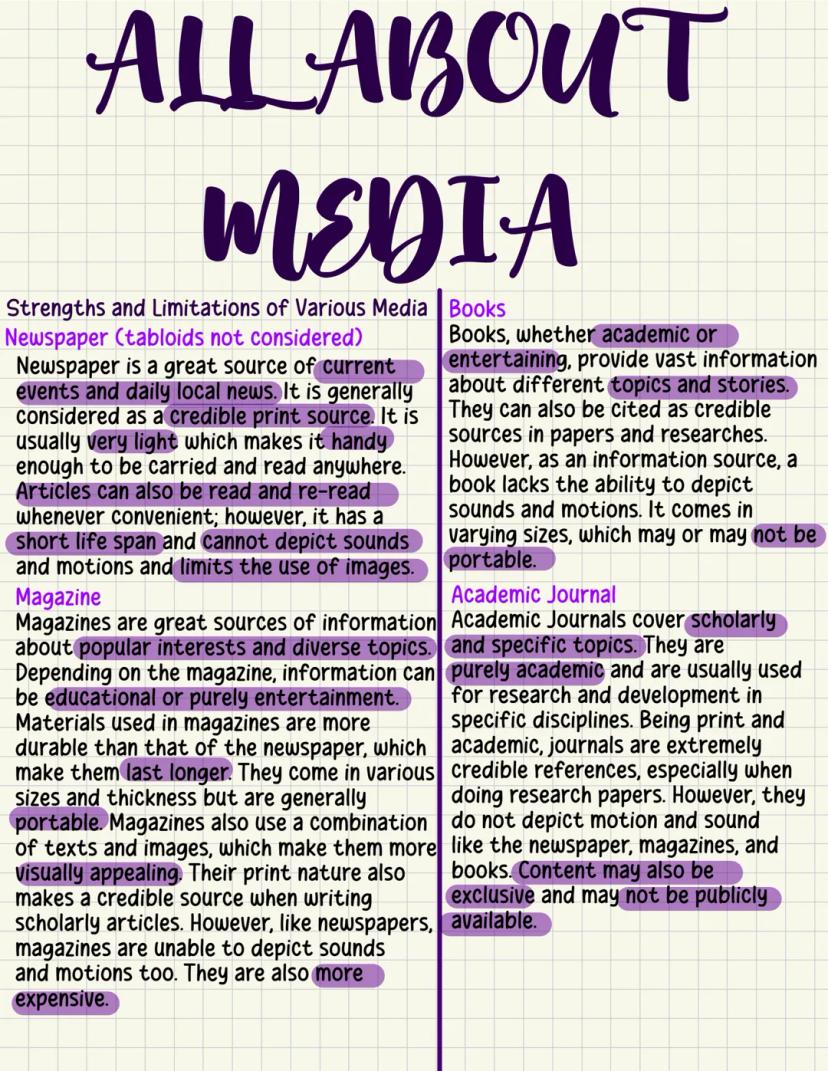



Ever wondered why your teachers still prefer newspaper articles over random internet posts for research? Print media like newspapers, magazines, books, and academic journals have built their reputation on reliability over centuries.
Newspapers give you fresh daily news that's portable and credible - perfect for staying updated on current events. However, they can't show you videos or play sounds, and yesterday's news literally becomes trash. Magazines last longer and look way more appealing with their colorful images, but they're pricier and still can't capture motion or sound.
Books remain the ultimate deep-dive source for any topic, whether you're studying for exams or reading for fun. They're incredibly credible for research papers, though they can be bulky and obviously can't play videos. Academic journals are the gold standard for serious research - they're peer-reviewed and super specific, but they're often locked behind paywalls and target a very educated audience.
Quick Tip: When writing research papers, always prioritize academic journals and credible newspapers over random websites for the most reliable information.
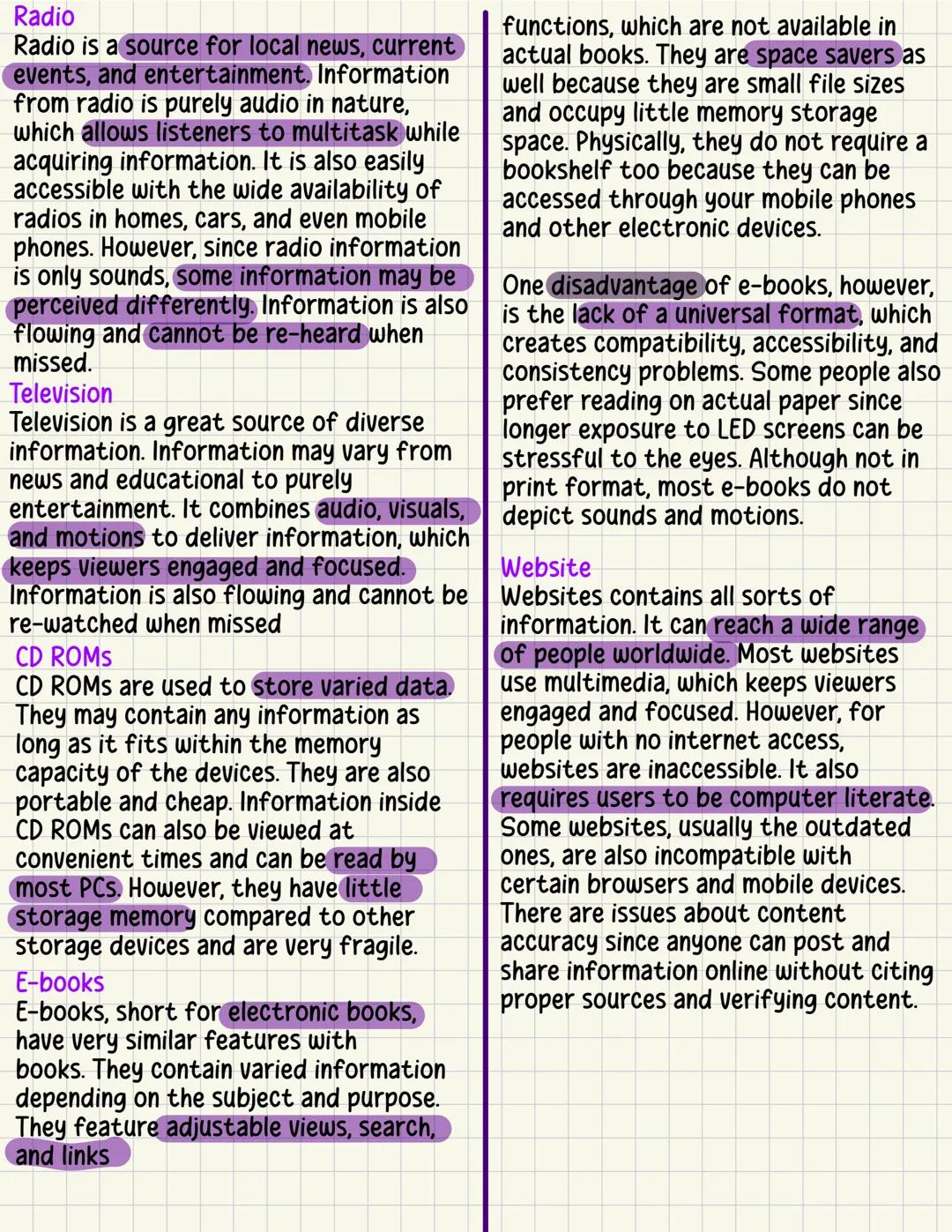
Now we're talking about media that can actually show and tell you things! Audio-visual media completely changed how we consume information by adding sound, motion, and multimedia elements.
Radio lets you multitask like a boss - you can listen to news while doing homework or hear music during your commute. It's super accessible since almost everyone has a phone with radio capability. The downside? Miss something important and it's gone forever, plus some info might get lost in translation when it's audio-only.
Television combines the best of both worlds with audio, visuals, and motion that keep you glued to the screen. Whether it's educational shows or entertainment, TV delivers diverse content that's engaging. But just like radio, you can't rewind live broadcasts when you miss something crucial.
Websites are the ultimate multimedia playground, reaching people worldwide with text, images, videos, and interactive content. However, they require internet access and computer literacy, plus anyone can post anything online, making fact-checking essential.
Reality Check: Not all websites are created equal - always verify information from multiple credible sources before believing or sharing it.
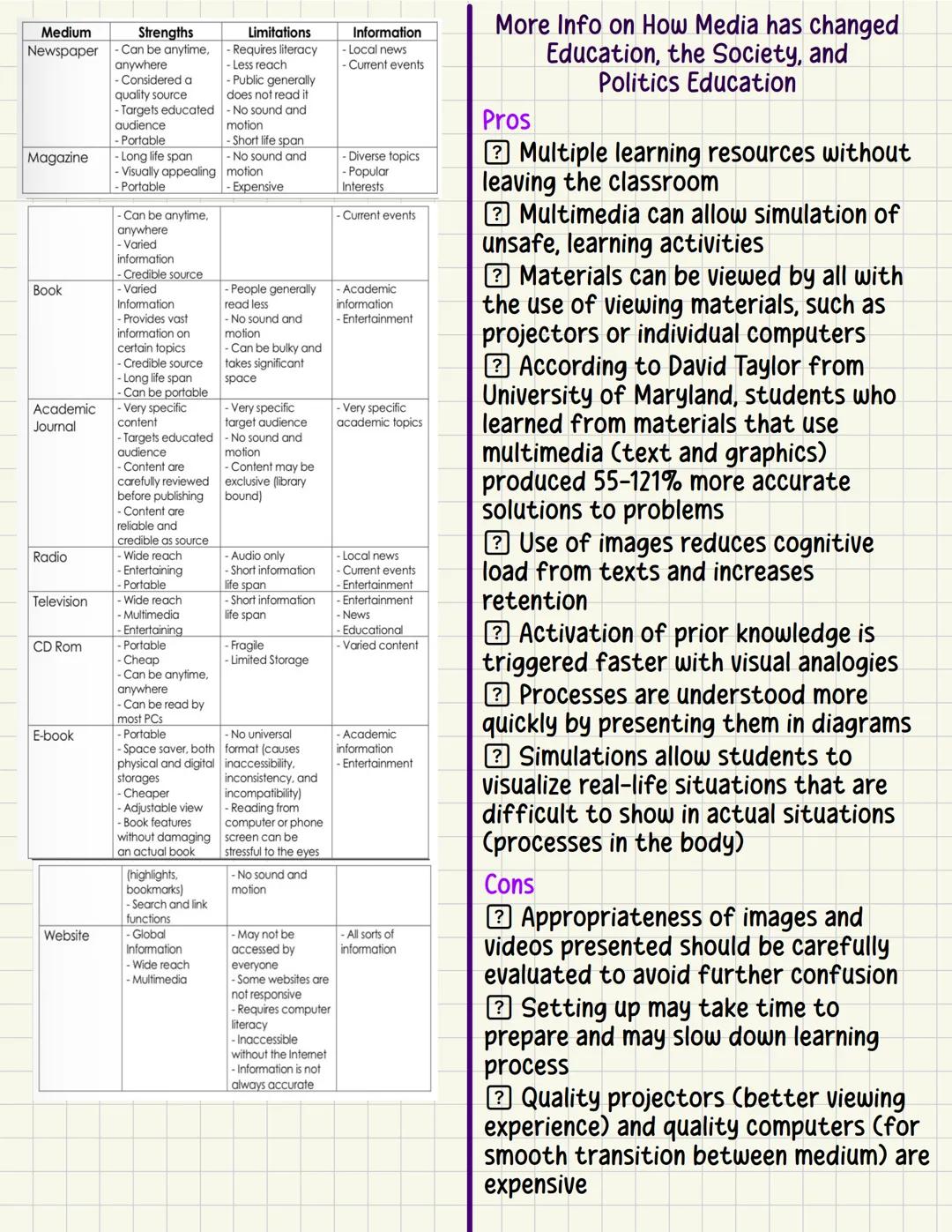
The digital age transformed how we store and access information, making knowledge more portable and accessible than ever before. CD ROMs were game-changers in the '90s, offering cheap, portable storage that most computers could read, though they're pretty fragile and have limited memory compared to today's standards.
E-books basically took regular books and gave them superpowers. You can adjust text size, search for specific words, and carry thousands of books in your pocket through your smartphone. They're cheaper and don't require physical storage space. The main issues? Not all e-books work on all devices, and staring at screens for hours can strain your eyes.
Digital media revolutionized education by bringing multiple learning resources right into classrooms. Studies show that students using multimedia materials (text plus graphics) solved problems 55-121% more accurately! Visual aids reduce the mental effort needed to process text and help you remember information better.
However, setting up digital learning tools takes time and money. Quality projectors and computers are expensive, and not all students have equal access to technology at home, which can create unfair advantages for some students.
Study Hack: Use e-books' search function to quickly find key terms when reviewing for exams - it's way faster than flipping through physical pages!
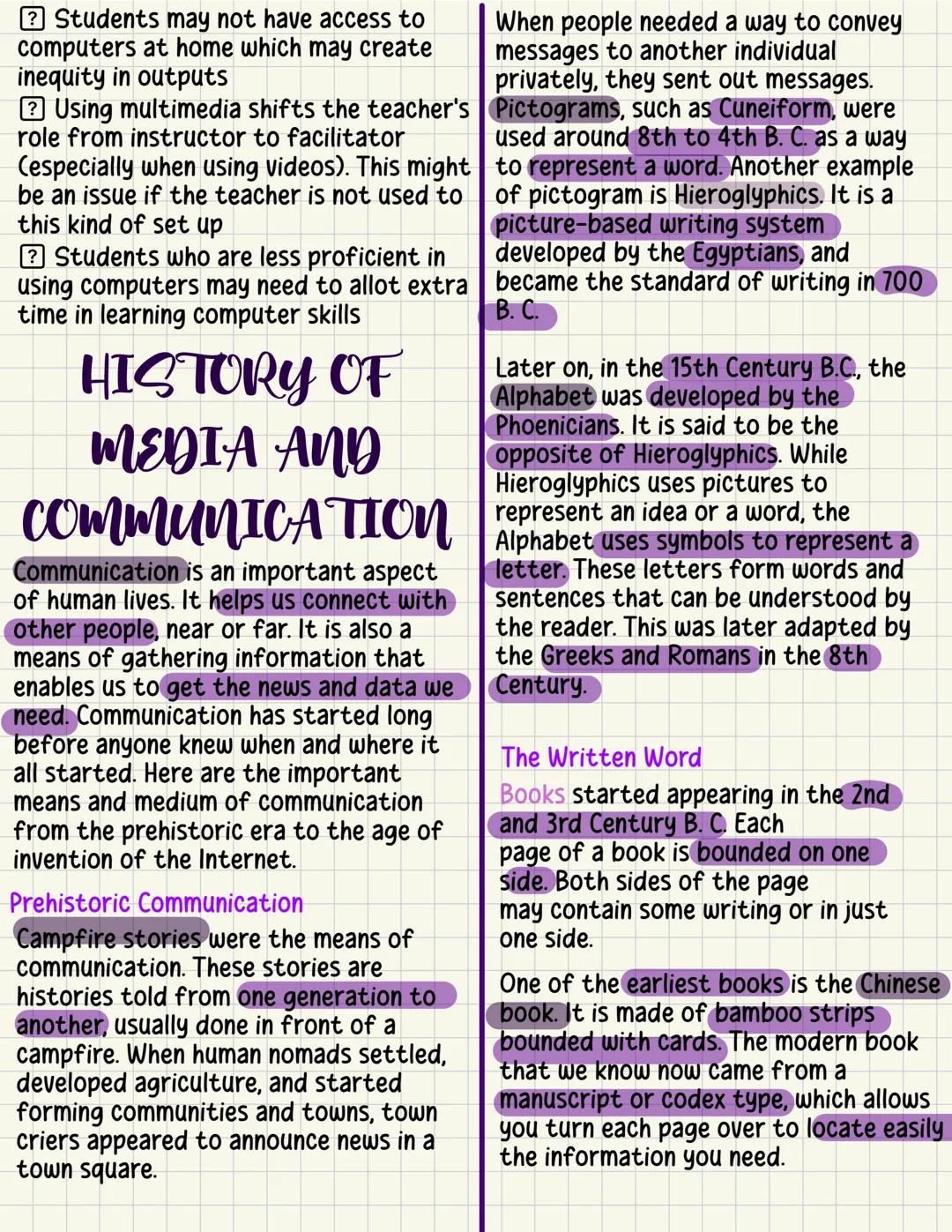
Long before smartphones and social media, humans found creative ways to share stories and information. Prehistoric communication started with campfire stories passed down through generations - imagine your family history being told the same way for hundreds of years!
As communities grew, town criers became the original news anchors, shouting announcements in town squares. When people needed private messaging, they developed pictograms like Cuneiform and Egyptian Hieroglyphics, which used pictures to represent words and ideas.
The real game-changer came in the 15th century BC when Phoenicians invented the alphabet. Unlike hieroglyphics that used pictures for whole words, alphabets use symbols for individual letters that form words. Greeks and Romans adopted this system in the 8th century, creating the foundation for modern writing.
Books appeared in the 2nd-3rd century BC, starting with Chinese bamboo strip books tied together with cords. The modern book format we know today came from manuscript codex types that let you flip pages easily to find information.
Cool Fact: The alphabet system you're reading right now is basically a 3,000-year-old technology that's still the most efficient way to record language!

Johannes Gutenberg's printing press in the 14th century was basically the internet of its time - it made books faster, cheaper, and available to regular people instead of just the wealthy elite. While Chinese invented woodblock printing first, Gutenberg's mechanized version revolutionized how information spread across Europe.
This printing boom also improved postal services. King Cyrus of Persia built roads for horseback messengers, and Romans expanded this system across their empire. Charles I of Europe hired Thomas Witherings to create the Postmaster service - basically ancient post offices with fresh horses and rest stops for messengers.
The 17th century brought creative coding systems like semaphores (flag signals used by navy ships) and land semaphores on towers for hilltop communication. Punched cards appeared in the 1800s, using hole patterns to operate looms and even tally the US Census in 1880.
Everything changed in the 1830s when Samuel Morse and Alfred Vail invented the telegraph. This electrical messaging system replaced slow postal services as the fastest way to communicate across distances. Around the same time, Charles Babbage created the Differential Machine for mathematical computations, leading to his unfinished Analytical Machine - essentially the first programmable computer using punched cards.
Mind-Blowing Connection: Ada Lovelace wrote programs for Babbage's machine in the 1800s, making her arguably the world's first computer programmer!
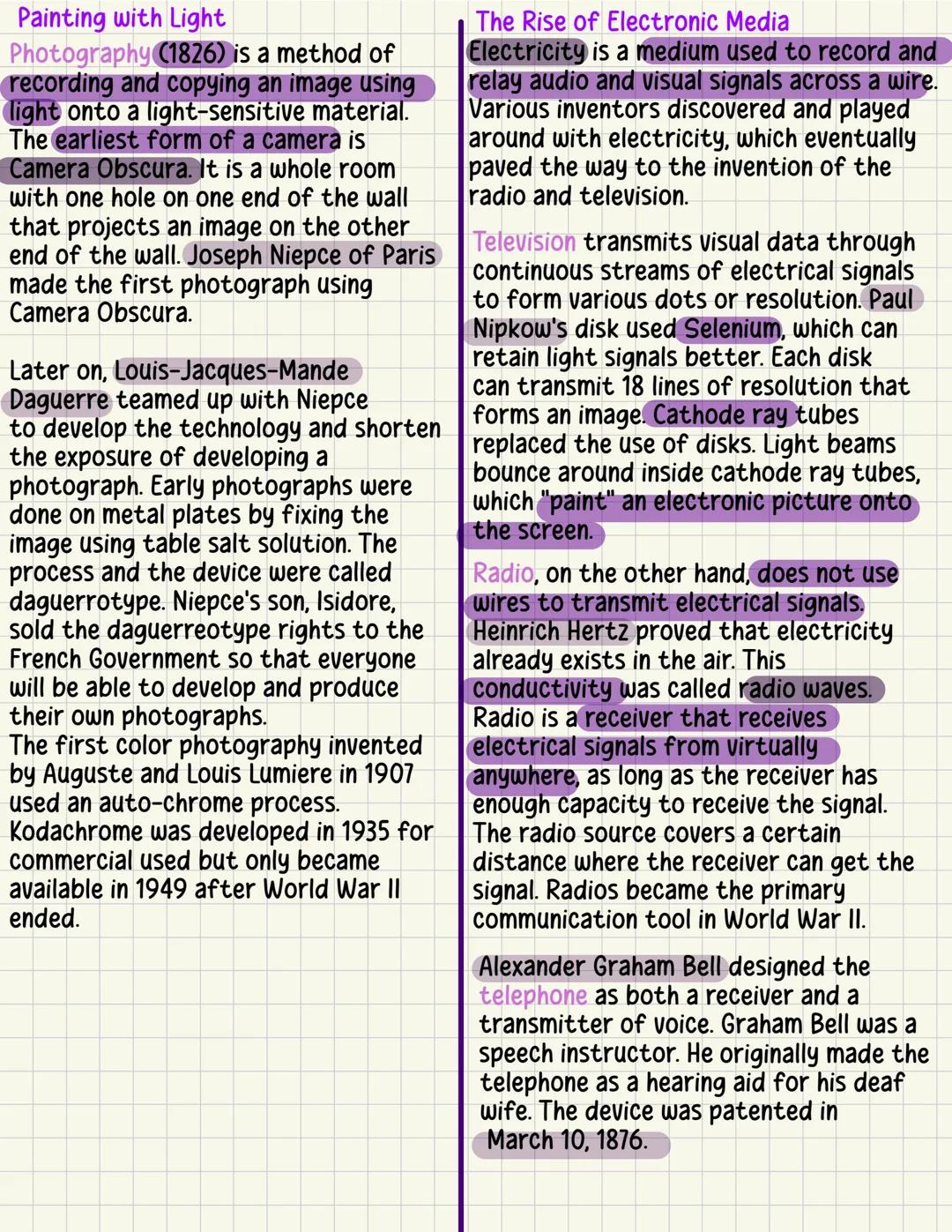
Photography started in 1826 as a way to capture and copy images using light on special materials. The earliest camera was actually a whole room called Camera Obscura with one hole projecting images on the opposite wall! Joseph Niepce made the first photograph this way in Paris.
Louis-Jacques-Mande Daguerre partnered with Niepce to speed up photo development, creating the daguerreotype process using metal plates and salt solutions. Smart move by Niepce's son - he sold the rights to France's government so everyone could learn photography for free.
The electronic media revolution happened when inventors started playing with electricity to transmit audio and visual signals. Television works by sending electrical signals that form dots or pixels on your screen. Paul Nipkow's disk used Selenium to transmit 18 lines of resolution, while cathode ray tubes later "painted" electronic pictures by bouncing light beams inside tubes.
Radio proved that electricity already exists in the air as radio waves (thanks to Heinrich Hertz's discovery). Radio receivers catch these electrical signals from anywhere within range - this technology became crucial during World War II. Alexander Graham Bell invented the telephone as both receiver and transmitter, originally designing it as a hearing aid for his deaf wife!
Tech Evolution: From room-sized cameras to pocket-sized smartphones with better image quality - photography technology advanced more in 150 years than most inventions do in millennia!
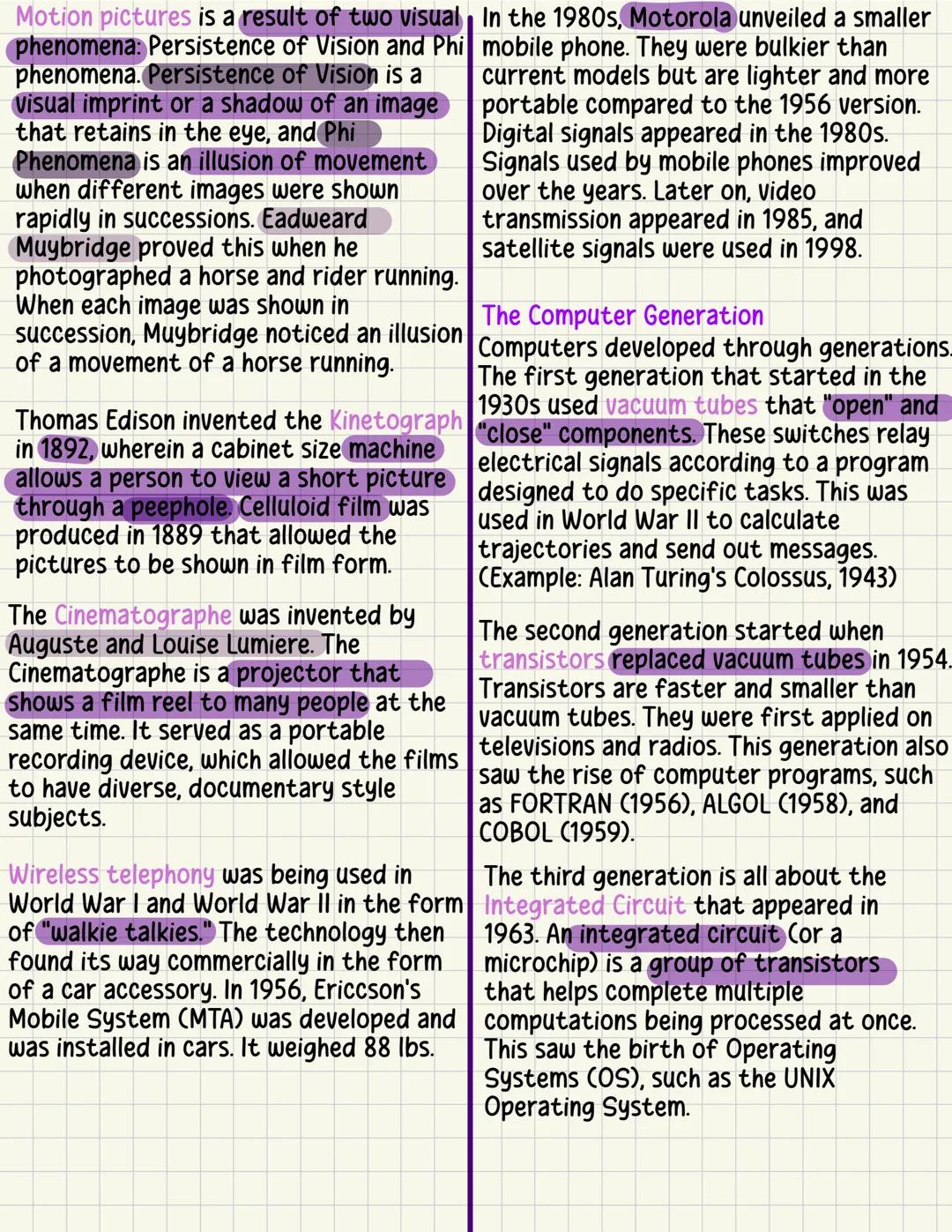
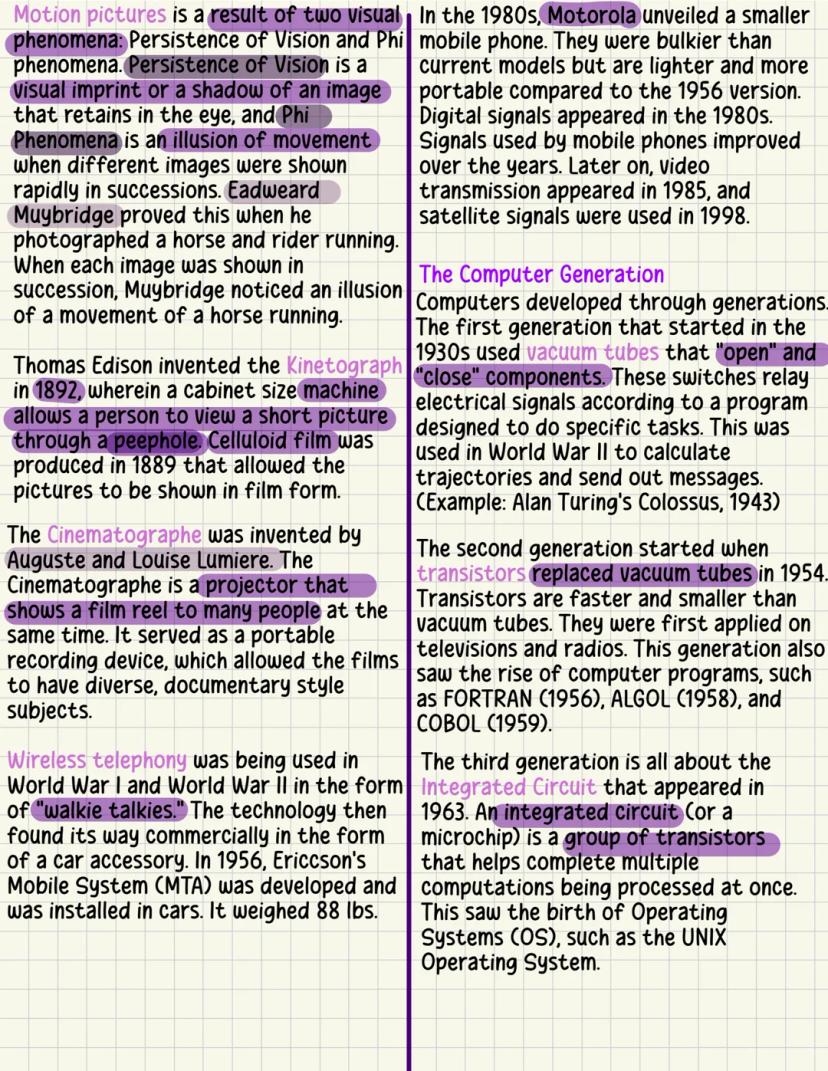
Motion pictures work because of two cool visual tricks your brain plays: Persistence of Vision (images stay in your eye briefly) and Phi Phenomena (rapid image succession creates movement illusion). Eadweard Muybridge proved this by photographing a running horse - when shown quickly in sequence, it looked like the horse was actually moving!
Thomas Edison's Kinetograph (1892) was a cabinet where one person could watch short films through a peephole. The Lumiere brothers' Cinematographe was the real breakthrough - a projector showing films to many people simultaneously, basically creating the first movie theaters.
Mobile phones evolved from 88-pound car-installed systems (1956 Ericsson MTA) to Motorola's smaller but still bulky 1980s versions. Digital signals appeared in the 1980s, video transmission in 1985, and satellite signals by 1998.
Computer development happened in clear generations. First generation (1930s) used vacuum tubes as switches for electrical signals, crucial for WWII calculations. Second generation (1954) replaced vacuum tubes with faster, smaller transistors, introducing programming languages like FORTRAN and COBOL. Third generation (1963) brought integrated circuits (microchips) with multiple transistors, creating operating systems like UNIX.
Progress Check: We went from room-sized computers that could barely calculate basic math to pocket-sized smartphones more powerful than entire 1960s computer labs!
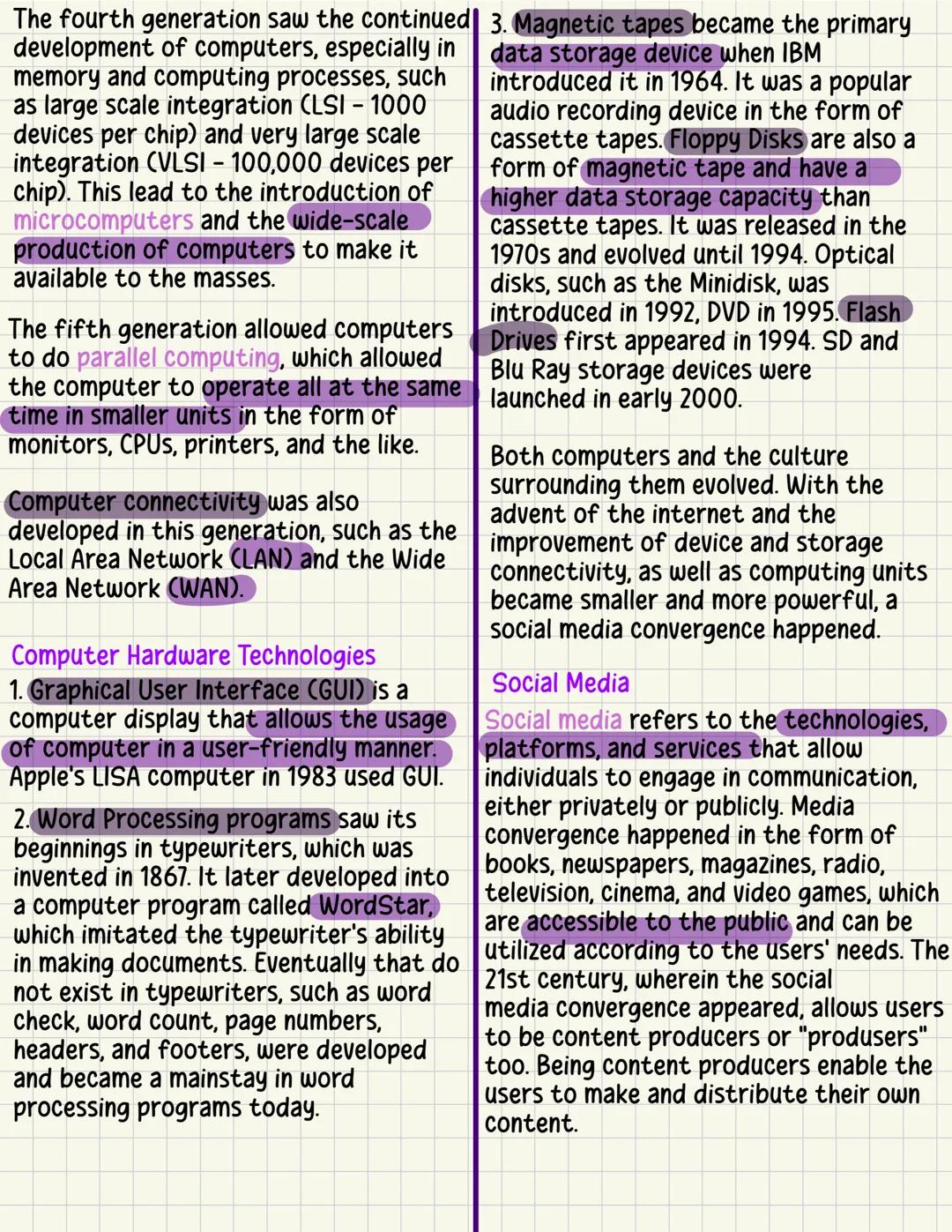
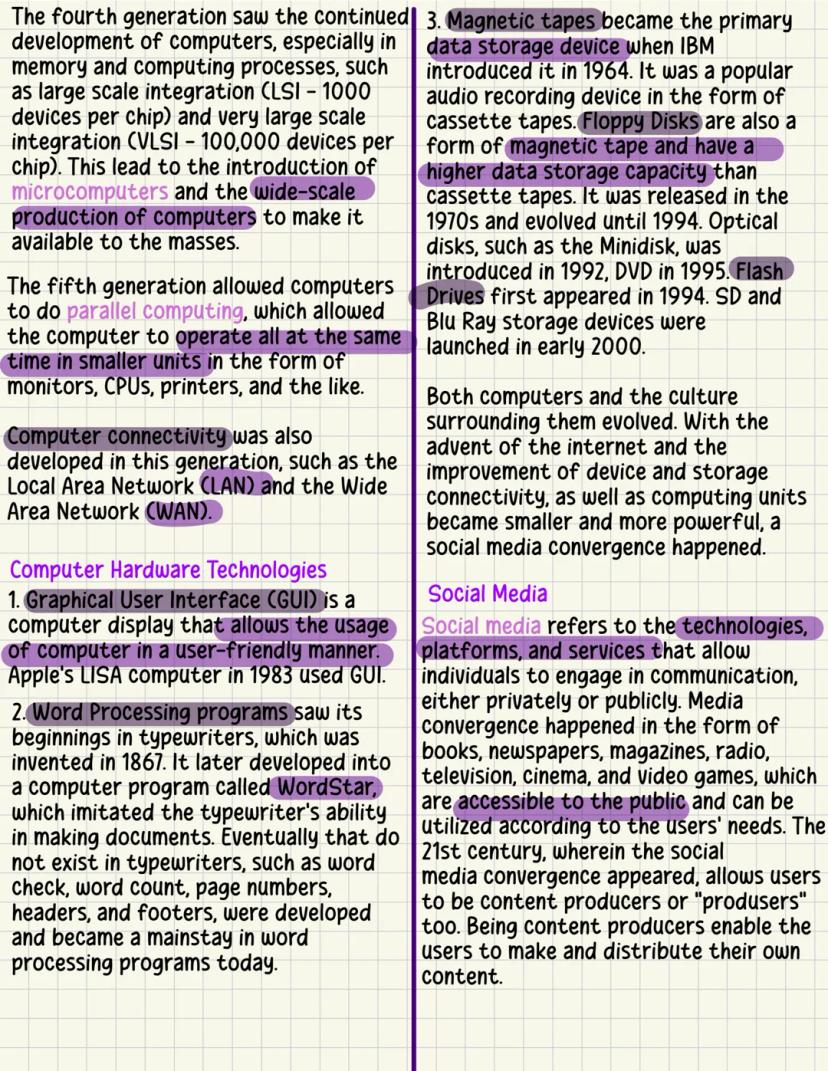
The fourth generation of computers introduced large-scale integration (1,000 devices per chip) and very large-scale integration (100,000 devices per chip), making computers affordable for regular people. The fifth generation enabled parallel computing and connectivity through Local Area Networks (LAN) and Wide Area Networks (WAN).
Game-changing computer technologies shaped how we use devices today. Apple's LISA computer (1983) introduced Graphical User Interface (GUI) - the user-friendly displays we take for granted. Word processing evolved from 1867 typewriters to WordStar computer programs, eventually adding features like spell-check and page numbering that typewriters couldn't do.
Data storage progressed rapidly from IBM's magnetic tapes (1964) to floppy disks (1970s), optical disks like DVDs (1995), flash drives (1994), and SD cards and Blu-Ray in the early 2000s. Each advancement increased storage capacity while shrinking physical size.
Social media convergence transformed users from passive consumers to active "produsers" who create and distribute their own content. This 21st-century phenomenon merged books, newspapers, magazines, radio, television, cinema, and video games into accessible digital platforms where anyone can be a content creator.
The convergence completely changed how information flows - instead of one-way communication from media companies to audiences, we now have multi-directional communication where everyone can share, comment, and create content.
Reality Shift: You're living through the biggest communication revolution in human history - social media gave everyone a printing press, radio station, and TV network in their pocket!
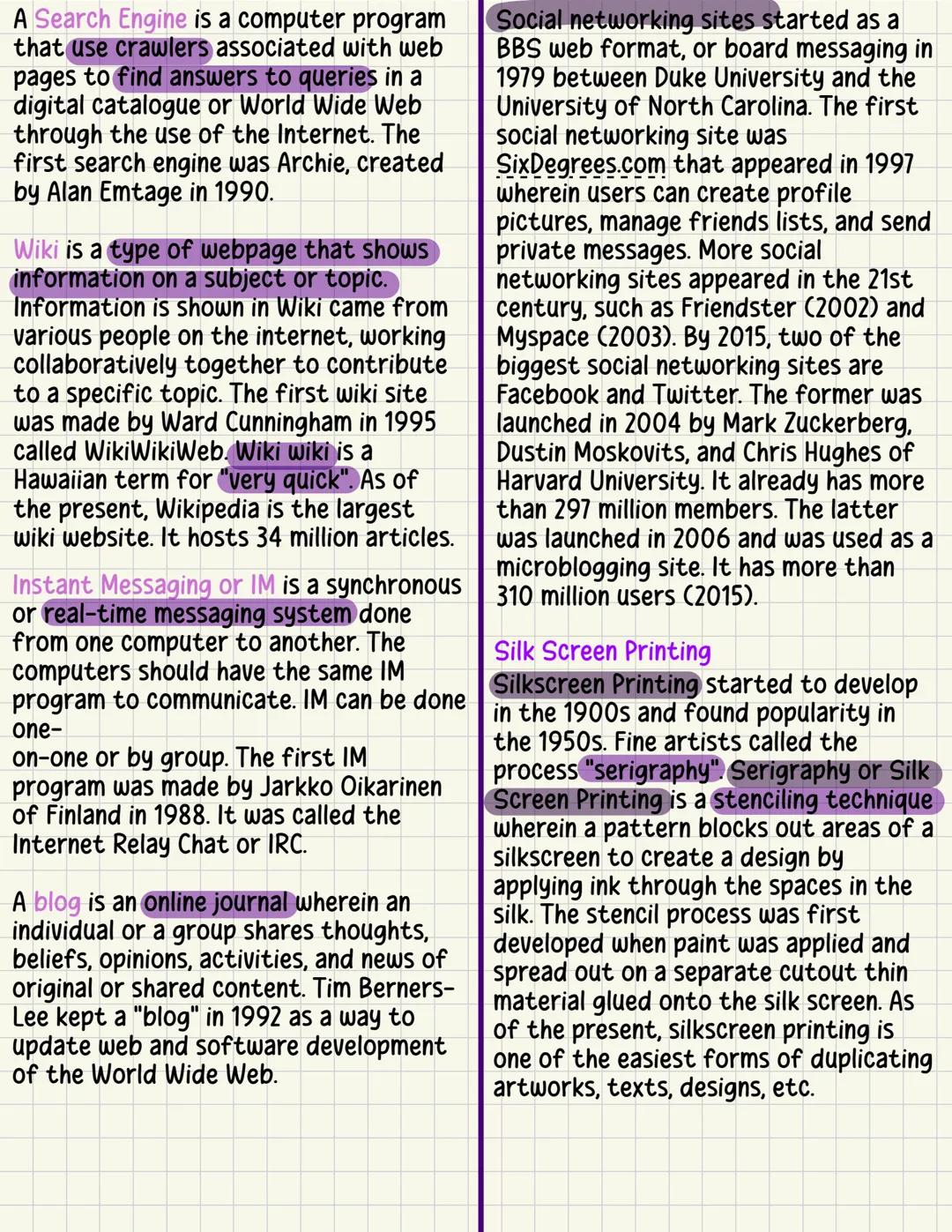
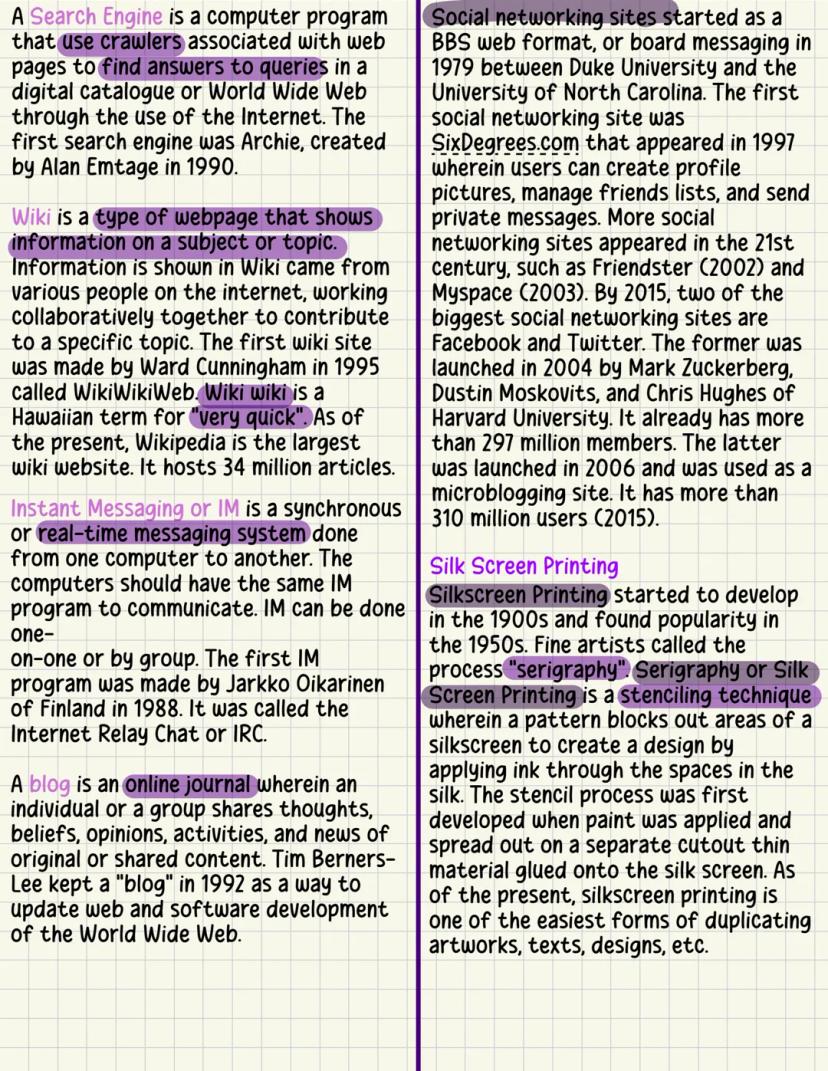
Search engines revolutionized how we find information online. Alan Emtage created the first search engine, Archie, in 1990, leading to today's sophisticated systems that crawl billions of web pages to answer your queries instantly.
Wikipedia represents collaborative knowledge creation - Ward Cunningham's 1995 WikiWikiWeb (Hawaiian for "very quick") evolved into today's Wikipedia with 34 million articles written by volunteers worldwide. Instant messaging started with Jarkko Oikarinen's Internet Relay Chat (IRC) in 1988, enabling real-time computer-to-computer communication.
Blogs began as online journals where individuals share thoughts and experiences. Tim Berners-Lee kept the first "blog" in 1992 while developing the World Wide Web. Social networking evolved from 1979 university bulletin board systems to SixDegrees.com (1997) - the first site with profile pictures, friend lists, and private messaging.
Major platforms emerged in the 2000s: Friendster (2002), Myspace (2003), Facebook (2004 by Mark Zuckerberg and Harvard classmates), and Twitter (2006 for microblogging). By 2015, Facebook had 297 million users and Twitter had 310 million users.
Silkscreen printing developed in the 1900s and gained popularity in the 1950s among fine artists who called it "serigraphy." This stenciling technique blocks areas of silk screen to create designs by applying ink through open spaces - it remains one of the easiest ways to duplicate artworks and texts today.
Creative Power: Today's digital tools give you the same creative capabilities that required expensive equipment and specialized training just decades ago!
Ang aming AI Companion ay isang AI tool na nakatuon sa mga estudyante na nag-aalok ng higit pa sa mga sagot lang. Binuo mula sa milyong Knowunity resources, nagbibigay ito ng may-kaugnayang impormasyon, personalized na study plans, quizzes, at content direkta sa chat, na umaangkop sa iyong sariling learning journey.
Maaari mong i-download ang app mula sa Google Play Store at Apple App Store.
Tama 'yan! Mag-enjoy sa libreng access sa mga study content, makipag-connect sa kapwa mga estudyante, at kumuha ng instant na tulong – lahat nasa iyong daliri lang.
App Store
Google Play
Napakadaling gamitin at maganda ang disenyo ng app. Nahanap ko lahat ng hinahanap ko hanggang ngayon at natuto ako ng marami mula sa mga presentasyon! Tiyak na gagamitin ko ang app para sa isang takdang-aralin sa klase! At siyempre, nakakatulong din ito bilang inspirasyon.
Stefan S
gumagamit ng iOS
Sobrang ganda talaga ng app na ito. Maraming mga study notes at tulong [...]. Ang problemang subject ko ay Pranses, halimbawa, at ang app ay may maraming options para tumulong. Salamat sa app na ito, bumuti ang Pranses ko. Irerekumenda ko ito sa lahat.
Samantha Klich
Android user
Wow, talagang namangha ako. Sinubukan ko lang ang app dahil nakita ko itong ina-advertise nang maraming beses at sobrang nagulat ako. Ang app na ito ang TULONG na gusto mo para sa paaralan at higit sa lahat, nag-aalok ito ng maraming bagay, tulad ng workouts at fact sheets, na SOBRANG nakatulong sa akin.
Anna
iOS user
Pinakamagandang app sa mundo! walang masabi dahil sobrang ganda nito
Thomas R
iOS user
Napakaganda talaga. Nakakapag-review ako ng 10x mas mabuti, itong app ay mabilis na 10/10. Lubos kong inirerekomenda ito sa lahat. Pwede akong manood at maghanap ng notes. Pwede kong i-save ang mga ito sa subject folder. Pwede kong i-review anumang oras kapag bumalik ako. Kung hindi mo pa nasubukan ang app na ito, marami kang nawawala.
Basil
Android user
Ang app na ito ay nagpapalakas ng loob ko sa paghahanda sa exams, hindi lang dahil sa pagpapataas ng aking kumpiyansa sa sarili sa pamamagitan ng mga feature na nagpapahintulot sa iyo na makipag-connect sa iba at mabawasan ang pakiramdam na nag-iisa, kundi pati na rin sa paraan na nakatuon ang app sa pagpapagaan ng iyong pakiramdam. Madali itong i-navigate, masaya gamitin, at nakakatulong sa sinumang nahihirapan sa kahit anong paraan.
David K
iOS user
Sobrang galing ng app! Ilalagay ko lang ang paksa sa search bar at makakakuha na ako ng sagot kaagad. Hindi ko kailangang manood ng 10 YouTube videos para maintindihan ang isang bagay, kaya nakakatipid ako ng oras. Lubos na inirerekomenda!
Sudenaz Ocak
Android user
Sa paaralan, napakahina ko sa math pero salamat sa app, mas mahusay na ako ngayon. Lubos akong nagpapasalamat na ginawa niyo ang app na ito.
Greenlight Bonnie
Android user
napakareliable na app para tumulong at palawakin ang iyong mga ideya sa Math, English at iba pang mga related na paksa sa iyong mga gawain. gamitin mo ang app na ito kung nahihirapan ka sa mga area, susi ito para diyan. sana nag-review na ako dati. at libre rin ito kaya huwag mag-alala tungkol diyan.
Rohan U
Android user
Alam kong maraming apps gumagamit ng fake accounts para mapataas ang kanilang reviews pero ang app na ito ay deserve lahat ng papuri. Dati nakakakuha ako ng 4 sa aking English exams at ngayon nakakuha ako ng grade 7. Hindi ko pa alam ang app na ito tatlong araw bago ang exam at nakatulong ito ng SOBRA. Pakisuyong maniwala sa akin at gamitin ito dahil sigurado akong makikita mo rin ang mga pagbabago.
Xander S
iOS user
ANG MGA quiz AT flashcard SOBRANG HELPFUL AT I LOVE TALAGA SI Knowunity AI. PARANG CHATGPT LANG PERO MAS MATALINO!! NAKATULONG DIN SA MGA MASCARA PROBLEMS KO!! PATI NA RIN SA MGA TUNAY KONG subject! SYEMPRE 😍😁😲🤑💗✨🎀😮
Elisha
iOS user
Grabe talaga ang app na to. Sobrang nakakaboring sakin ang pagreview pero ginagawa ng app na to na sobrang dali mag-organize ng lahat at pwede mong tanungin ang libreng ai para subukin ang sarili mo kaya sobrang buti at madali mong ma-upload ang sarili mong mga bagay. highly recommend bilang isang taong nagte-take ng mocks ngayon
Paul T
iOS user
Napakadaling gamitin at maganda ang disenyo ng app. Nahanap ko lahat ng hinahanap ko hanggang ngayon at natuto ako ng marami mula sa mga presentasyon! Tiyak na gagamitin ko ang app para sa isang takdang-aralin sa klase! At siyempre, nakakatulong din ito bilang inspirasyon.
Stefan S
gumagamit ng iOS
Sobrang ganda talaga ng app na ito. Maraming mga study notes at tulong [...]. Ang problemang subject ko ay Pranses, halimbawa, at ang app ay may maraming options para tumulong. Salamat sa app na ito, bumuti ang Pranses ko. Irerekumenda ko ito sa lahat.
Samantha Klich
Android user
Wow, talagang namangha ako. Sinubukan ko lang ang app dahil nakita ko itong ina-advertise nang maraming beses at sobrang nagulat ako. Ang app na ito ang TULONG na gusto mo para sa paaralan at higit sa lahat, nag-aalok ito ng maraming bagay, tulad ng workouts at fact sheets, na SOBRANG nakatulong sa akin.
Anna
iOS user
Pinakamagandang app sa mundo! walang masabi dahil sobrang ganda nito
Thomas R
iOS user
Napakaganda talaga. Nakakapag-review ako ng 10x mas mabuti, itong app ay mabilis na 10/10. Lubos kong inirerekomenda ito sa lahat. Pwede akong manood at maghanap ng notes. Pwede kong i-save ang mga ito sa subject folder. Pwede kong i-review anumang oras kapag bumalik ako. Kung hindi mo pa nasubukan ang app na ito, marami kang nawawala.
Basil
Android user
Ang app na ito ay nagpapalakas ng loob ko sa paghahanda sa exams, hindi lang dahil sa pagpapataas ng aking kumpiyansa sa sarili sa pamamagitan ng mga feature na nagpapahintulot sa iyo na makipag-connect sa iba at mabawasan ang pakiramdam na nag-iisa, kundi pati na rin sa paraan na nakatuon ang app sa pagpapagaan ng iyong pakiramdam. Madali itong i-navigate, masaya gamitin, at nakakatulong sa sinumang nahihirapan sa kahit anong paraan.
David K
iOS user
Sobrang galing ng app! Ilalagay ko lang ang paksa sa search bar at makakakuha na ako ng sagot kaagad. Hindi ko kailangang manood ng 10 YouTube videos para maintindihan ang isang bagay, kaya nakakatipid ako ng oras. Lubos na inirerekomenda!
Sudenaz Ocak
Android user
Sa paaralan, napakahina ko sa math pero salamat sa app, mas mahusay na ako ngayon. Lubos akong nagpapasalamat na ginawa niyo ang app na ito.
Greenlight Bonnie
Android user
napakareliable na app para tumulong at palawakin ang iyong mga ideya sa Math, English at iba pang mga related na paksa sa iyong mga gawain. gamitin mo ang app na ito kung nahihirapan ka sa mga area, susi ito para diyan. sana nag-review na ako dati. at libre rin ito kaya huwag mag-alala tungkol diyan.
Rohan U
Android user
Alam kong maraming apps gumagamit ng fake accounts para mapataas ang kanilang reviews pero ang app na ito ay deserve lahat ng papuri. Dati nakakakuha ako ng 4 sa aking English exams at ngayon nakakuha ako ng grade 7. Hindi ko pa alam ang app na ito tatlong araw bago ang exam at nakatulong ito ng SOBRA. Pakisuyong maniwala sa akin at gamitin ito dahil sigurado akong makikita mo rin ang mga pagbabago.
Xander S
iOS user
ANG MGA quiz AT flashcard SOBRANG HELPFUL AT I LOVE TALAGA SI Knowunity AI. PARANG CHATGPT LANG PERO MAS MATALINO!! NAKATULONG DIN SA MGA MASCARA PROBLEMS KO!! PATI NA RIN SA MGA TUNAY KONG subject! SYEMPRE 😍😁😲🤑💗✨🎀😮
Elisha
iOS user
Grabe talaga ang app na to. Sobrang nakakaboring sakin ang pagreview pero ginagawa ng app na to na sobrang dali mag-organize ng lahat at pwede mong tanungin ang libreng ai para subukin ang sarili mo kaya sobrang buti at madali mong ma-upload ang sarili mong mga bagay. highly recommend bilang isang taong nagte-take ng mocks ngayon
Paul T
iOS user
Karen Gella
@cayennexxx
Understanding different types of media and how they communicate information is super important in today's digital world. From traditional newspapers to social media, each medium has its own strengths and weaknesses that affect how we get and share information.
Access sa lahat ng dokumento
Pagbutihin ang iyong mga grado
Sumali sa milyong mga estudyante
Ever wondered why your teachers still prefer newspaper articles over random internet posts for research? Print media like newspapers, magazines, books, and academic journals have built their reputation on reliability over centuries.
Newspapers give you fresh daily news that's portable and credible - perfect for staying updated on current events. However, they can't show you videos or play sounds, and yesterday's news literally becomes trash. Magazines last longer and look way more appealing with their colorful images, but they're pricier and still can't capture motion or sound.
Books remain the ultimate deep-dive source for any topic, whether you're studying for exams or reading for fun. They're incredibly credible for research papers, though they can be bulky and obviously can't play videos. Academic journals are the gold standard for serious research - they're peer-reviewed and super specific, but they're often locked behind paywalls and target a very educated audience.
Quick Tip: When writing research papers, always prioritize academic journals and credible newspapers over random websites for the most reliable information.
Access sa lahat ng dokumento
Pagbutihin ang iyong mga grado
Sumali sa milyong mga estudyante
Now we're talking about media that can actually show and tell you things! Audio-visual media completely changed how we consume information by adding sound, motion, and multimedia elements.
Radio lets you multitask like a boss - you can listen to news while doing homework or hear music during your commute. It's super accessible since almost everyone has a phone with radio capability. The downside? Miss something important and it's gone forever, plus some info might get lost in translation when it's audio-only.
Television combines the best of both worlds with audio, visuals, and motion that keep you glued to the screen. Whether it's educational shows or entertainment, TV delivers diverse content that's engaging. But just like radio, you can't rewind live broadcasts when you miss something crucial.
Websites are the ultimate multimedia playground, reaching people worldwide with text, images, videos, and interactive content. However, they require internet access and computer literacy, plus anyone can post anything online, making fact-checking essential.
Reality Check: Not all websites are created equal - always verify information from multiple credible sources before believing or sharing it.
Access sa lahat ng dokumento
Pagbutihin ang iyong mga grado
Sumali sa milyong mga estudyante
The digital age transformed how we store and access information, making knowledge more portable and accessible than ever before. CD ROMs were game-changers in the '90s, offering cheap, portable storage that most computers could read, though they're pretty fragile and have limited memory compared to today's standards.
E-books basically took regular books and gave them superpowers. You can adjust text size, search for specific words, and carry thousands of books in your pocket through your smartphone. They're cheaper and don't require physical storage space. The main issues? Not all e-books work on all devices, and staring at screens for hours can strain your eyes.
Digital media revolutionized education by bringing multiple learning resources right into classrooms. Studies show that students using multimedia materials (text plus graphics) solved problems 55-121% more accurately! Visual aids reduce the mental effort needed to process text and help you remember information better.
However, setting up digital learning tools takes time and money. Quality projectors and computers are expensive, and not all students have equal access to technology at home, which can create unfair advantages for some students.
Study Hack: Use e-books' search function to quickly find key terms when reviewing for exams - it's way faster than flipping through physical pages!
Access sa lahat ng dokumento
Pagbutihin ang iyong mga grado
Sumali sa milyong mga estudyante
Long before smartphones and social media, humans found creative ways to share stories and information. Prehistoric communication started with campfire stories passed down through generations - imagine your family history being told the same way for hundreds of years!
As communities grew, town criers became the original news anchors, shouting announcements in town squares. When people needed private messaging, they developed pictograms like Cuneiform and Egyptian Hieroglyphics, which used pictures to represent words and ideas.
The real game-changer came in the 15th century BC when Phoenicians invented the alphabet. Unlike hieroglyphics that used pictures for whole words, alphabets use symbols for individual letters that form words. Greeks and Romans adopted this system in the 8th century, creating the foundation for modern writing.
Books appeared in the 2nd-3rd century BC, starting with Chinese bamboo strip books tied together with cords. The modern book format we know today came from manuscript codex types that let you flip pages easily to find information.
Cool Fact: The alphabet system you're reading right now is basically a 3,000-year-old technology that's still the most efficient way to record language!
Access sa lahat ng dokumento
Pagbutihin ang iyong mga grado
Sumali sa milyong mga estudyante
Johannes Gutenberg's printing press in the 14th century was basically the internet of its time - it made books faster, cheaper, and available to regular people instead of just the wealthy elite. While Chinese invented woodblock printing first, Gutenberg's mechanized version revolutionized how information spread across Europe.
This printing boom also improved postal services. King Cyrus of Persia built roads for horseback messengers, and Romans expanded this system across their empire. Charles I of Europe hired Thomas Witherings to create the Postmaster service - basically ancient post offices with fresh horses and rest stops for messengers.
The 17th century brought creative coding systems like semaphores (flag signals used by navy ships) and land semaphores on towers for hilltop communication. Punched cards appeared in the 1800s, using hole patterns to operate looms and even tally the US Census in 1880.
Everything changed in the 1830s when Samuel Morse and Alfred Vail invented the telegraph. This electrical messaging system replaced slow postal services as the fastest way to communicate across distances. Around the same time, Charles Babbage created the Differential Machine for mathematical computations, leading to his unfinished Analytical Machine - essentially the first programmable computer using punched cards.
Mind-Blowing Connection: Ada Lovelace wrote programs for Babbage's machine in the 1800s, making her arguably the world's first computer programmer!
Access sa lahat ng dokumento
Pagbutihin ang iyong mga grado
Sumali sa milyong mga estudyante
Photography started in 1826 as a way to capture and copy images using light on special materials. The earliest camera was actually a whole room called Camera Obscura with one hole projecting images on the opposite wall! Joseph Niepce made the first photograph this way in Paris.
Louis-Jacques-Mande Daguerre partnered with Niepce to speed up photo development, creating the daguerreotype process using metal plates and salt solutions. Smart move by Niepce's son - he sold the rights to France's government so everyone could learn photography for free.
The electronic media revolution happened when inventors started playing with electricity to transmit audio and visual signals. Television works by sending electrical signals that form dots or pixels on your screen. Paul Nipkow's disk used Selenium to transmit 18 lines of resolution, while cathode ray tubes later "painted" electronic pictures by bouncing light beams inside tubes.
Radio proved that electricity already exists in the air as radio waves (thanks to Heinrich Hertz's discovery). Radio receivers catch these electrical signals from anywhere within range - this technology became crucial during World War II. Alexander Graham Bell invented the telephone as both receiver and transmitter, originally designing it as a hearing aid for his deaf wife!
Tech Evolution: From room-sized cameras to pocket-sized smartphones with better image quality - photography technology advanced more in 150 years than most inventions do in millennia!
Access sa lahat ng dokumento
Pagbutihin ang iyong mga grado
Sumali sa milyong mga estudyante
Motion pictures work because of two cool visual tricks your brain plays: Persistence of Vision (images stay in your eye briefly) and Phi Phenomena (rapid image succession creates movement illusion). Eadweard Muybridge proved this by photographing a running horse - when shown quickly in sequence, it looked like the horse was actually moving!
Thomas Edison's Kinetograph (1892) was a cabinet where one person could watch short films through a peephole. The Lumiere brothers' Cinematographe was the real breakthrough - a projector showing films to many people simultaneously, basically creating the first movie theaters.
Mobile phones evolved from 88-pound car-installed systems (1956 Ericsson MTA) to Motorola's smaller but still bulky 1980s versions. Digital signals appeared in the 1980s, video transmission in 1985, and satellite signals by 1998.
Computer development happened in clear generations. First generation (1930s) used vacuum tubes as switches for electrical signals, crucial for WWII calculations. Second generation (1954) replaced vacuum tubes with faster, smaller transistors, introducing programming languages like FORTRAN and COBOL. Third generation (1963) brought integrated circuits (microchips) with multiple transistors, creating operating systems like UNIX.
Progress Check: We went from room-sized computers that could barely calculate basic math to pocket-sized smartphones more powerful than entire 1960s computer labs!
Access sa lahat ng dokumento
Pagbutihin ang iyong mga grado
Sumali sa milyong mga estudyante
The fourth generation of computers introduced large-scale integration (1,000 devices per chip) and very large-scale integration (100,000 devices per chip), making computers affordable for regular people. The fifth generation enabled parallel computing and connectivity through Local Area Networks (LAN) and Wide Area Networks (WAN).
Game-changing computer technologies shaped how we use devices today. Apple's LISA computer (1983) introduced Graphical User Interface (GUI) - the user-friendly displays we take for granted. Word processing evolved from 1867 typewriters to WordStar computer programs, eventually adding features like spell-check and page numbering that typewriters couldn't do.
Data storage progressed rapidly from IBM's magnetic tapes (1964) to floppy disks (1970s), optical disks like DVDs (1995), flash drives (1994), and SD cards and Blu-Ray in the early 2000s. Each advancement increased storage capacity while shrinking physical size.
Social media convergence transformed users from passive consumers to active "produsers" who create and distribute their own content. This 21st-century phenomenon merged books, newspapers, magazines, radio, television, cinema, and video games into accessible digital platforms where anyone can be a content creator.
The convergence completely changed how information flows - instead of one-way communication from media companies to audiences, we now have multi-directional communication where everyone can share, comment, and create content.
Reality Shift: You're living through the biggest communication revolution in human history - social media gave everyone a printing press, radio station, and TV network in their pocket!
Access sa lahat ng dokumento
Pagbutihin ang iyong mga grado
Sumali sa milyong mga estudyante
Search engines revolutionized how we find information online. Alan Emtage created the first search engine, Archie, in 1990, leading to today's sophisticated systems that crawl billions of web pages to answer your queries instantly.
Wikipedia represents collaborative knowledge creation - Ward Cunningham's 1995 WikiWikiWeb (Hawaiian for "very quick") evolved into today's Wikipedia with 34 million articles written by volunteers worldwide. Instant messaging started with Jarkko Oikarinen's Internet Relay Chat (IRC) in 1988, enabling real-time computer-to-computer communication.
Blogs began as online journals where individuals share thoughts and experiences. Tim Berners-Lee kept the first "blog" in 1992 while developing the World Wide Web. Social networking evolved from 1979 university bulletin board systems to SixDegrees.com (1997) - the first site with profile pictures, friend lists, and private messaging.
Major platforms emerged in the 2000s: Friendster (2002), Myspace (2003), Facebook (2004 by Mark Zuckerberg and Harvard classmates), and Twitter (2006 for microblogging). By 2015, Facebook had 297 million users and Twitter had 310 million users.
Silkscreen printing developed in the 1900s and gained popularity in the 1950s among fine artists who called it "serigraphy." This stenciling technique blocks areas of silk screen to create designs by applying ink through open spaces - it remains one of the easiest ways to duplicate artworks and texts today.
Creative Power: Today's digital tools give you the same creative capabilities that required expensive equipment and specialized training just decades ago!
Ang aming AI Companion ay isang AI tool na nakatuon sa mga estudyante na nag-aalok ng higit pa sa mga sagot lang. Binuo mula sa milyong Knowunity resources, nagbibigay ito ng may-kaugnayang impormasyon, personalized na study plans, quizzes, at content direkta sa chat, na umaangkop sa iyong sariling learning journey.
Maaari mong i-download ang app mula sa Google Play Store at Apple App Store.
Tama 'yan! Mag-enjoy sa libreng access sa mga study content, makipag-connect sa kapwa mga estudyante, at kumuha ng instant na tulong – lahat nasa iyong daliri lang.
1
Smart Tools NEW
I-transform ang note na ito sa: ✓ 50+ Practice Questions ✓ Interactive Flashcards ✓ Full Mock Exam ✓ Essay Outlines
App Store
Google Play
Napakadaling gamitin at maganda ang disenyo ng app. Nahanap ko lahat ng hinahanap ko hanggang ngayon at natuto ako ng marami mula sa mga presentasyon! Tiyak na gagamitin ko ang app para sa isang takdang-aralin sa klase! At siyempre, nakakatulong din ito bilang inspirasyon.
Stefan S
gumagamit ng iOS
Sobrang ganda talaga ng app na ito. Maraming mga study notes at tulong [...]. Ang problemang subject ko ay Pranses, halimbawa, at ang app ay may maraming options para tumulong. Salamat sa app na ito, bumuti ang Pranses ko. Irerekumenda ko ito sa lahat.
Samantha Klich
Android user
Wow, talagang namangha ako. Sinubukan ko lang ang app dahil nakita ko itong ina-advertise nang maraming beses at sobrang nagulat ako. Ang app na ito ang TULONG na gusto mo para sa paaralan at higit sa lahat, nag-aalok ito ng maraming bagay, tulad ng workouts at fact sheets, na SOBRANG nakatulong sa akin.
Anna
iOS user
Pinakamagandang app sa mundo! walang masabi dahil sobrang ganda nito
Thomas R
iOS user
Napakaganda talaga. Nakakapag-review ako ng 10x mas mabuti, itong app ay mabilis na 10/10. Lubos kong inirerekomenda ito sa lahat. Pwede akong manood at maghanap ng notes. Pwede kong i-save ang mga ito sa subject folder. Pwede kong i-review anumang oras kapag bumalik ako. Kung hindi mo pa nasubukan ang app na ito, marami kang nawawala.
Basil
Android user
Ang app na ito ay nagpapalakas ng loob ko sa paghahanda sa exams, hindi lang dahil sa pagpapataas ng aking kumpiyansa sa sarili sa pamamagitan ng mga feature na nagpapahintulot sa iyo na makipag-connect sa iba at mabawasan ang pakiramdam na nag-iisa, kundi pati na rin sa paraan na nakatuon ang app sa pagpapagaan ng iyong pakiramdam. Madali itong i-navigate, masaya gamitin, at nakakatulong sa sinumang nahihirapan sa kahit anong paraan.
David K
iOS user
Sobrang galing ng app! Ilalagay ko lang ang paksa sa search bar at makakakuha na ako ng sagot kaagad. Hindi ko kailangang manood ng 10 YouTube videos para maintindihan ang isang bagay, kaya nakakatipid ako ng oras. Lubos na inirerekomenda!
Sudenaz Ocak
Android user
Sa paaralan, napakahina ko sa math pero salamat sa app, mas mahusay na ako ngayon. Lubos akong nagpapasalamat na ginawa niyo ang app na ito.
Greenlight Bonnie
Android user
napakareliable na app para tumulong at palawakin ang iyong mga ideya sa Math, English at iba pang mga related na paksa sa iyong mga gawain. gamitin mo ang app na ito kung nahihirapan ka sa mga area, susi ito para diyan. sana nag-review na ako dati. at libre rin ito kaya huwag mag-alala tungkol diyan.
Rohan U
Android user
Alam kong maraming apps gumagamit ng fake accounts para mapataas ang kanilang reviews pero ang app na ito ay deserve lahat ng papuri. Dati nakakakuha ako ng 4 sa aking English exams at ngayon nakakuha ako ng grade 7. Hindi ko pa alam ang app na ito tatlong araw bago ang exam at nakatulong ito ng SOBRA. Pakisuyong maniwala sa akin at gamitin ito dahil sigurado akong makikita mo rin ang mga pagbabago.
Xander S
iOS user
ANG MGA quiz AT flashcard SOBRANG HELPFUL AT I LOVE TALAGA SI Knowunity AI. PARANG CHATGPT LANG PERO MAS MATALINO!! NAKATULONG DIN SA MGA MASCARA PROBLEMS KO!! PATI NA RIN SA MGA TUNAY KONG subject! SYEMPRE 😍😁😲🤑💗✨🎀😮
Elisha
iOS user
Grabe talaga ang app na to. Sobrang nakakaboring sakin ang pagreview pero ginagawa ng app na to na sobrang dali mag-organize ng lahat at pwede mong tanungin ang libreng ai para subukin ang sarili mo kaya sobrang buti at madali mong ma-upload ang sarili mong mga bagay. highly recommend bilang isang taong nagte-take ng mocks ngayon
Paul T
iOS user
Napakadaling gamitin at maganda ang disenyo ng app. Nahanap ko lahat ng hinahanap ko hanggang ngayon at natuto ako ng marami mula sa mga presentasyon! Tiyak na gagamitin ko ang app para sa isang takdang-aralin sa klase! At siyempre, nakakatulong din ito bilang inspirasyon.
Stefan S
gumagamit ng iOS
Sobrang ganda talaga ng app na ito. Maraming mga study notes at tulong [...]. Ang problemang subject ko ay Pranses, halimbawa, at ang app ay may maraming options para tumulong. Salamat sa app na ito, bumuti ang Pranses ko. Irerekumenda ko ito sa lahat.
Samantha Klich
Android user
Wow, talagang namangha ako. Sinubukan ko lang ang app dahil nakita ko itong ina-advertise nang maraming beses at sobrang nagulat ako. Ang app na ito ang TULONG na gusto mo para sa paaralan at higit sa lahat, nag-aalok ito ng maraming bagay, tulad ng workouts at fact sheets, na SOBRANG nakatulong sa akin.
Anna
iOS user
Pinakamagandang app sa mundo! walang masabi dahil sobrang ganda nito
Thomas R
iOS user
Napakaganda talaga. Nakakapag-review ako ng 10x mas mabuti, itong app ay mabilis na 10/10. Lubos kong inirerekomenda ito sa lahat. Pwede akong manood at maghanap ng notes. Pwede kong i-save ang mga ito sa subject folder. Pwede kong i-review anumang oras kapag bumalik ako. Kung hindi mo pa nasubukan ang app na ito, marami kang nawawala.
Basil
Android user
Ang app na ito ay nagpapalakas ng loob ko sa paghahanda sa exams, hindi lang dahil sa pagpapataas ng aking kumpiyansa sa sarili sa pamamagitan ng mga feature na nagpapahintulot sa iyo na makipag-connect sa iba at mabawasan ang pakiramdam na nag-iisa, kundi pati na rin sa paraan na nakatuon ang app sa pagpapagaan ng iyong pakiramdam. Madali itong i-navigate, masaya gamitin, at nakakatulong sa sinumang nahihirapan sa kahit anong paraan.
David K
iOS user
Sobrang galing ng app! Ilalagay ko lang ang paksa sa search bar at makakakuha na ako ng sagot kaagad. Hindi ko kailangang manood ng 10 YouTube videos para maintindihan ang isang bagay, kaya nakakatipid ako ng oras. Lubos na inirerekomenda!
Sudenaz Ocak
Android user
Sa paaralan, napakahina ko sa math pero salamat sa app, mas mahusay na ako ngayon. Lubos akong nagpapasalamat na ginawa niyo ang app na ito.
Greenlight Bonnie
Android user
napakareliable na app para tumulong at palawakin ang iyong mga ideya sa Math, English at iba pang mga related na paksa sa iyong mga gawain. gamitin mo ang app na ito kung nahihirapan ka sa mga area, susi ito para diyan. sana nag-review na ako dati. at libre rin ito kaya huwag mag-alala tungkol diyan.
Rohan U
Android user
Alam kong maraming apps gumagamit ng fake accounts para mapataas ang kanilang reviews pero ang app na ito ay deserve lahat ng papuri. Dati nakakakuha ako ng 4 sa aking English exams at ngayon nakakuha ako ng grade 7. Hindi ko pa alam ang app na ito tatlong araw bago ang exam at nakatulong ito ng SOBRA. Pakisuyong maniwala sa akin at gamitin ito dahil sigurado akong makikita mo rin ang mga pagbabago.
Xander S
iOS user
ANG MGA quiz AT flashcard SOBRANG HELPFUL AT I LOVE TALAGA SI Knowunity AI. PARANG CHATGPT LANG PERO MAS MATALINO!! NAKATULONG DIN SA MGA MASCARA PROBLEMS KO!! PATI NA RIN SA MGA TUNAY KONG subject! SYEMPRE 😍😁😲🤑💗✨🎀😮
Elisha
iOS user
Grabe talaga ang app na to. Sobrang nakakaboring sakin ang pagreview pero ginagawa ng app na to na sobrang dali mag-organize ng lahat at pwede mong tanungin ang libreng ai para subukin ang sarili mo kaya sobrang buti at madali mong ma-upload ang sarili mong mga bagay. highly recommend bilang isang taong nagte-take ng mocks ngayon
Paul T
iOS user