
Ever wonder why some people seem naturally athletic while others... Ipakita pa
 MAPEH
MAPEH Filipino
 Iba pa
 Econ
Econ Math
Math Araling Panlipunan (AP)
 Science
Mag-sign up para makita ang contentLibre ito!
Access sa lahat ng dokumento
Pagbutihin ang iyong mga grado
Sumali sa milyong mga estudyante
Knowunity AI
Higit pa
Mga Asignatura
Triangle Congruence and Similarity Theorems
Triangle Properties and Classification
Linear Equations and Graphs
Geometric Angle Relationships
Trigonometric Functions and Identities
Equation Solving Techniques
Circle Geometry Fundamentals
Division Operations and Methods
Basic Differentiation Rules
Exponent and Logarithm Properties
Ipakita lahat ng paksa
Human Organ Systems
Reproductive Cell Cycles
Biological Sciences Subdisciplines
Cellular Energy Metabolism
Autotrophic Energy Processes
Inheritance Patterns and Principles
Biomolecular Structure and Organization
Cell Cycle and Division Mechanics
Cellular Organization and Development
Biological Structural Organization
Ipakita lahat ng paksa
Chemical Sciences and Applications
Atomic Structure and Composition
Molecular Electron Structure Representation
Atomic Electron Behavior
Matter Properties and Water
Mole Concept and Calculations
Gas Laws and Behavior
Periodic Table Organization
Chemical Thermodynamics Fundamentals
Chemical Bond Types and Properties
Ipakita lahat ng paksa
European Renaissance and Enlightenment
European Cultural Movements 800-1920
American Revolution Era 1763-1797
American Civil War 1861-1865
Global Imperial Systems
Mongol and Chinese Dynasties
U.S. Presidents and World Leaders
Historical Sources and Documentation
World Wars Era and Impact
World Religious Systems
Ipakita lahat ng paksa
Classic and Contemporary Novels
Literary Character Analysis
Rhetorical Theory and Practice
Classic Literary Narratives
Reading Analysis and Interpretation
Narrative Structure and Techniques
English Language Components
Influential English-Language Authors
Basic Sentence Structure
Narrative Voice and Perspective
Ipakita lahat ng paksa
1,581
•
Na-update May 2, 2026
•
sam ⋆𐙚₊˚⊹♡
@samantha.badiola_
Ever wonder why some people seem naturally athletic while others... Ipakita pa
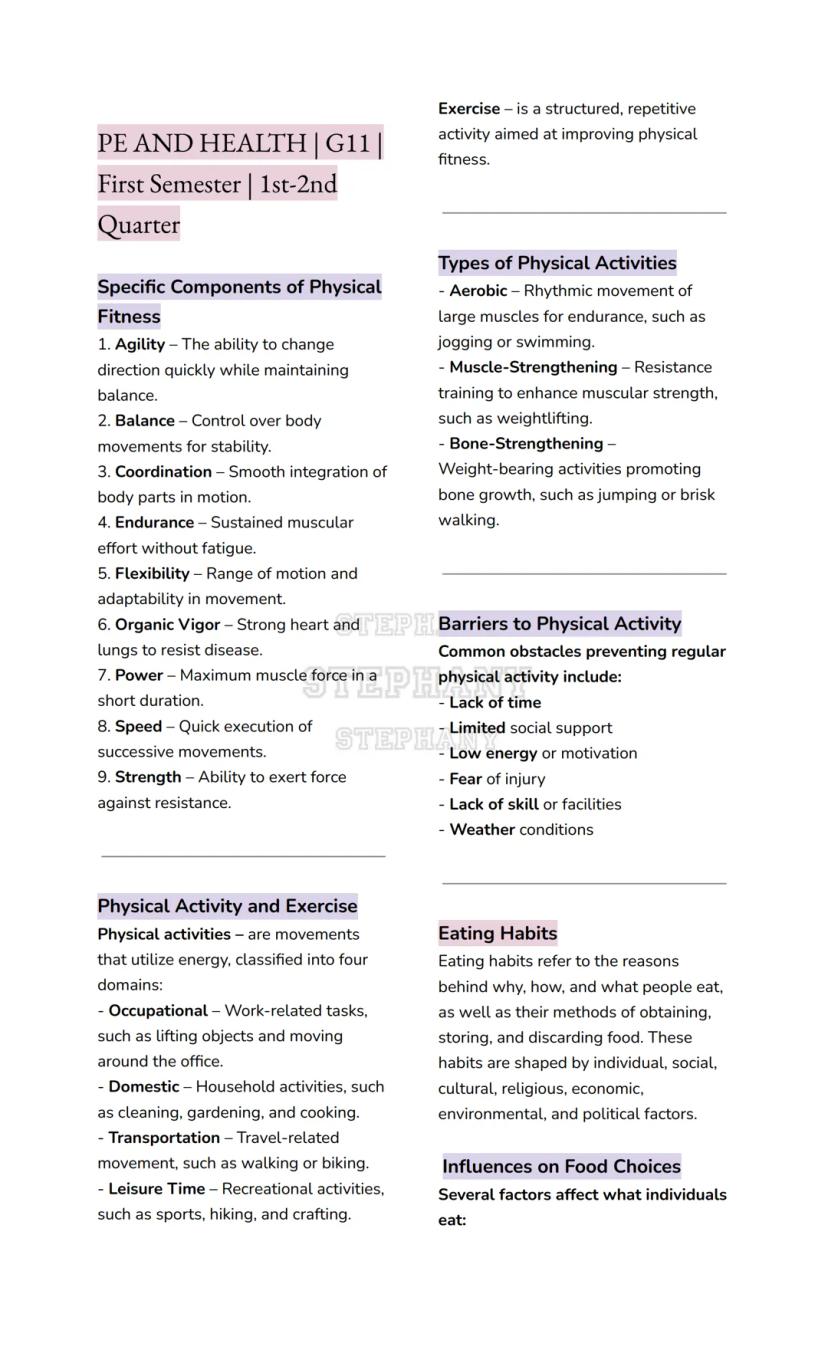

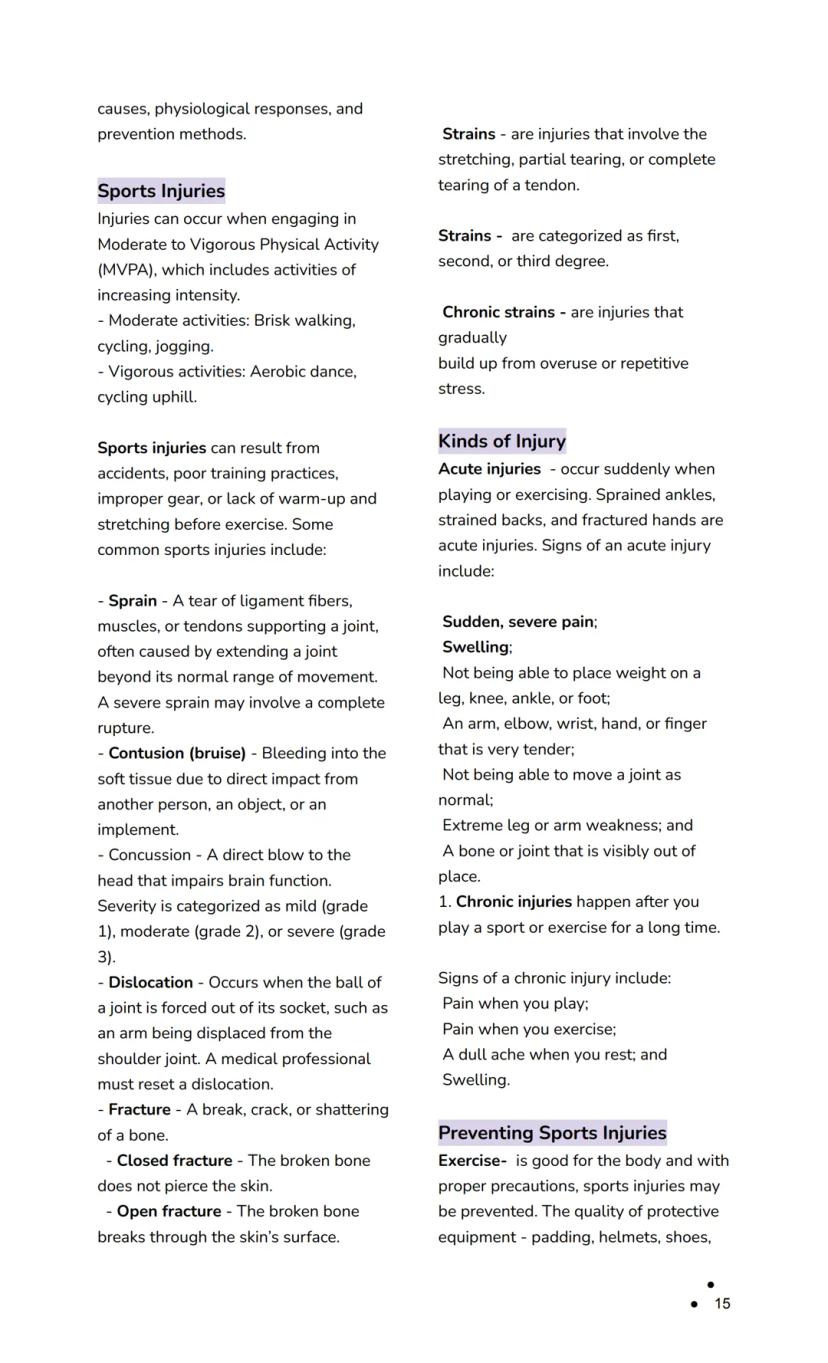
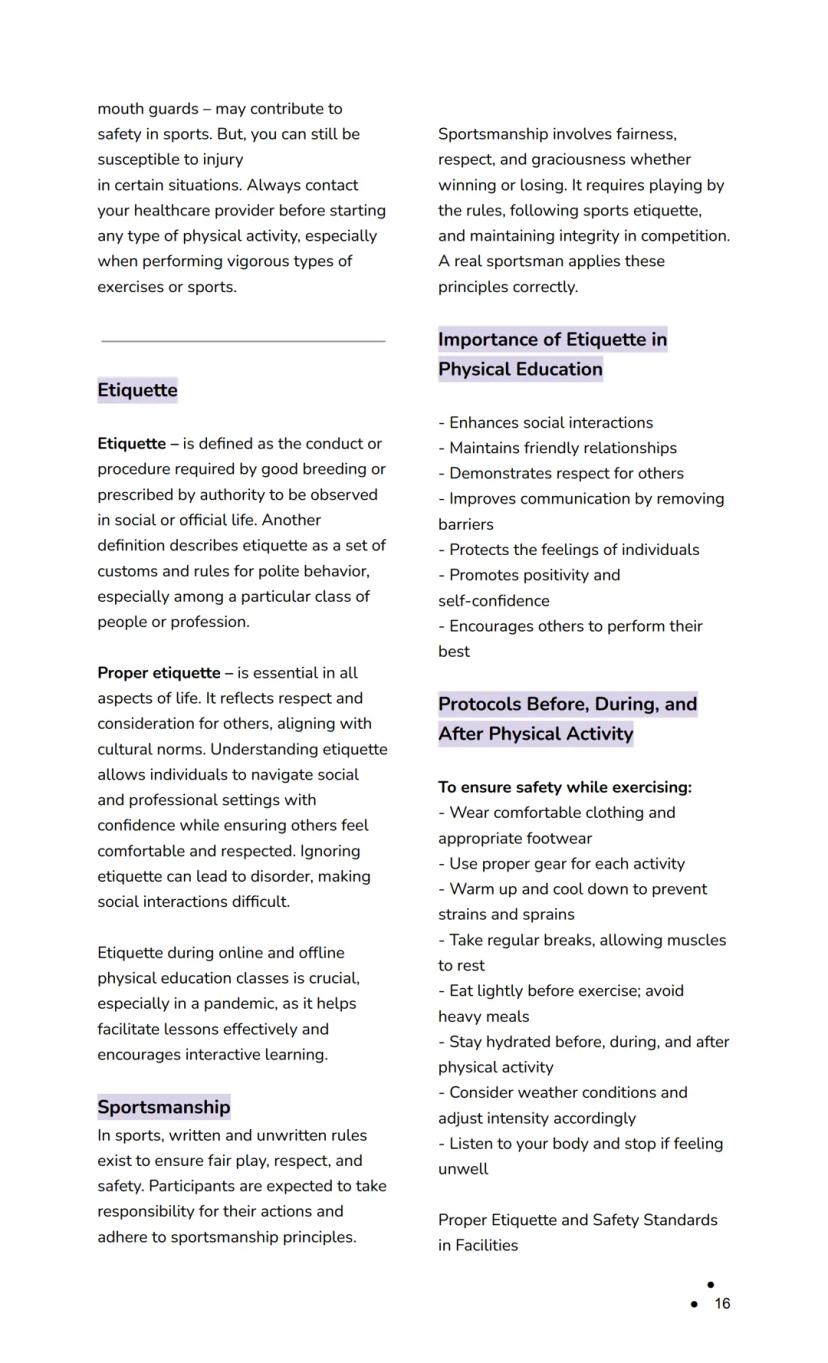
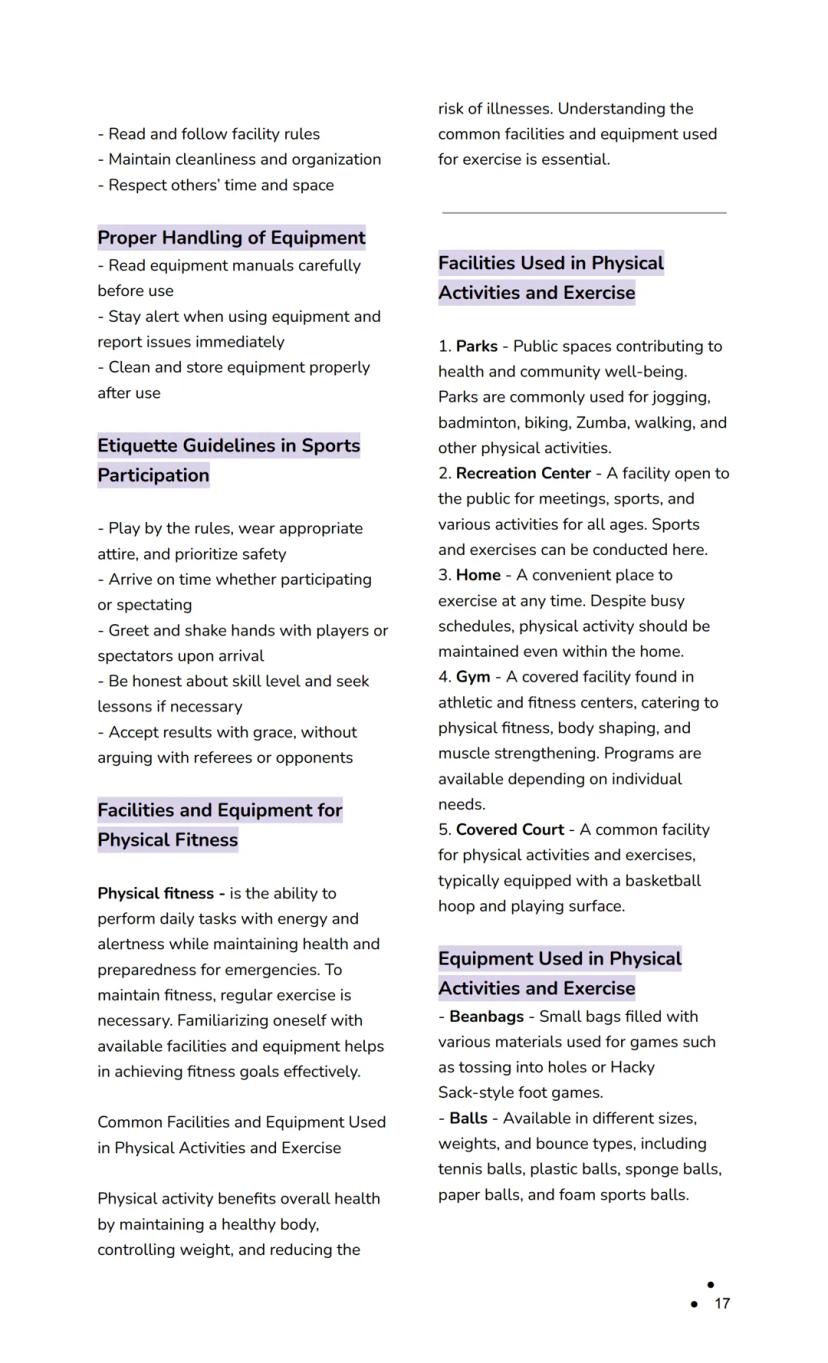
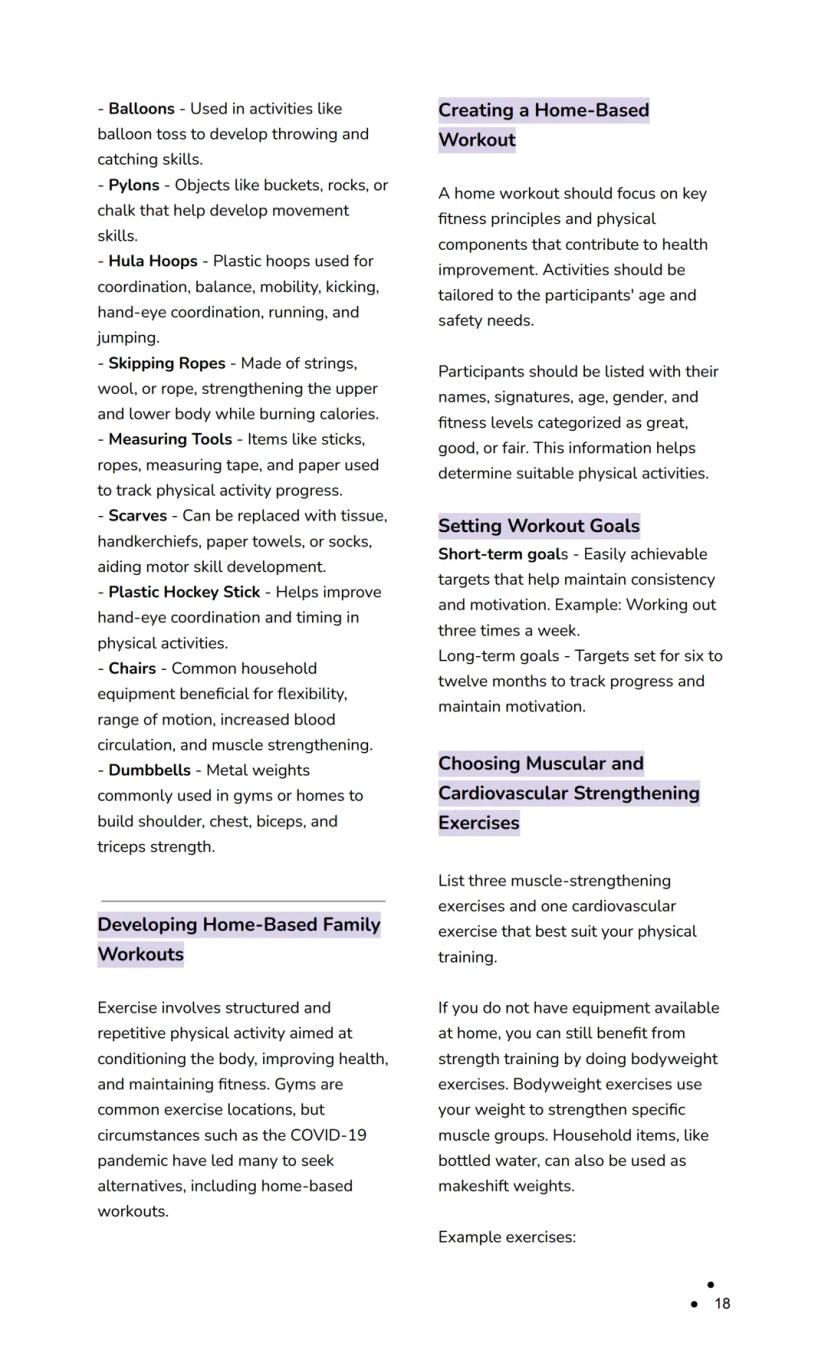
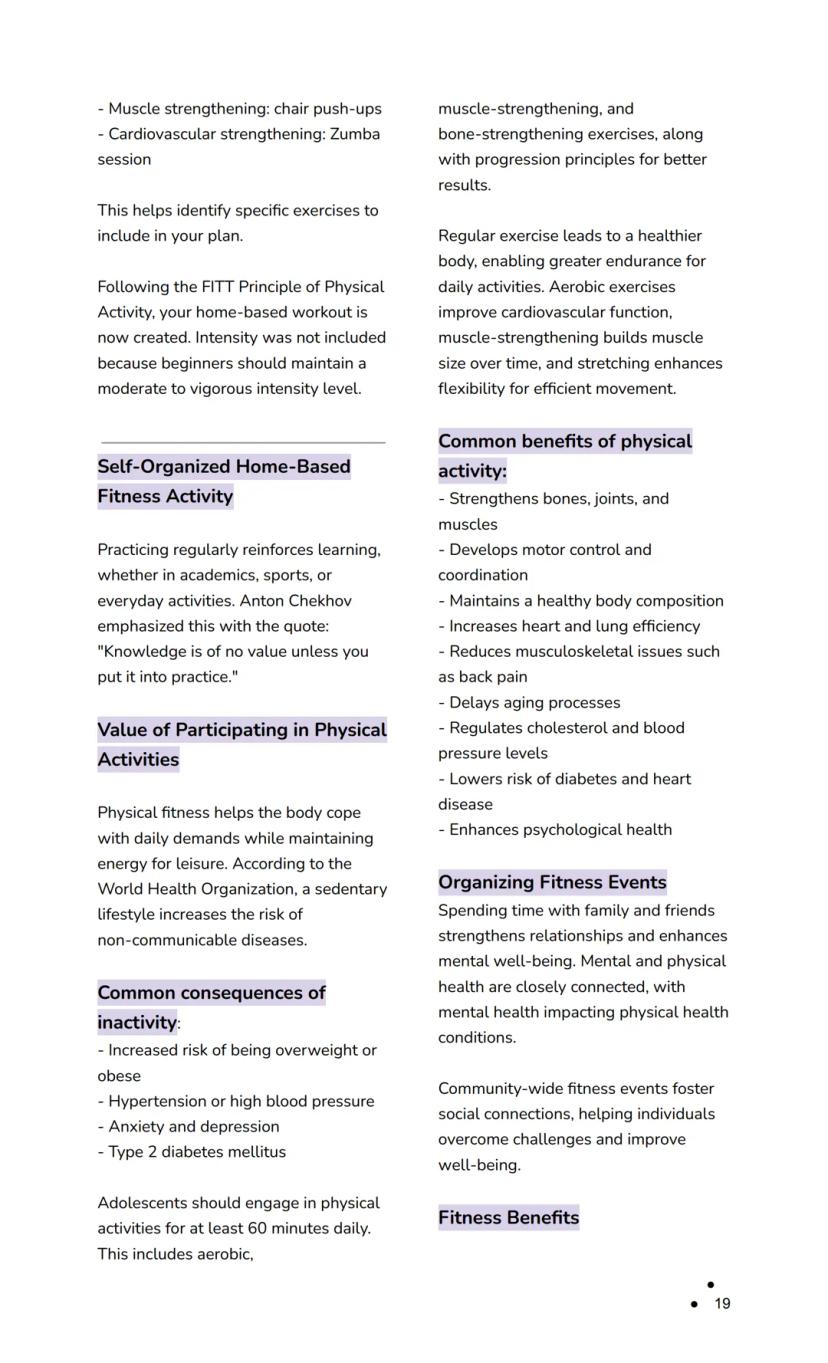
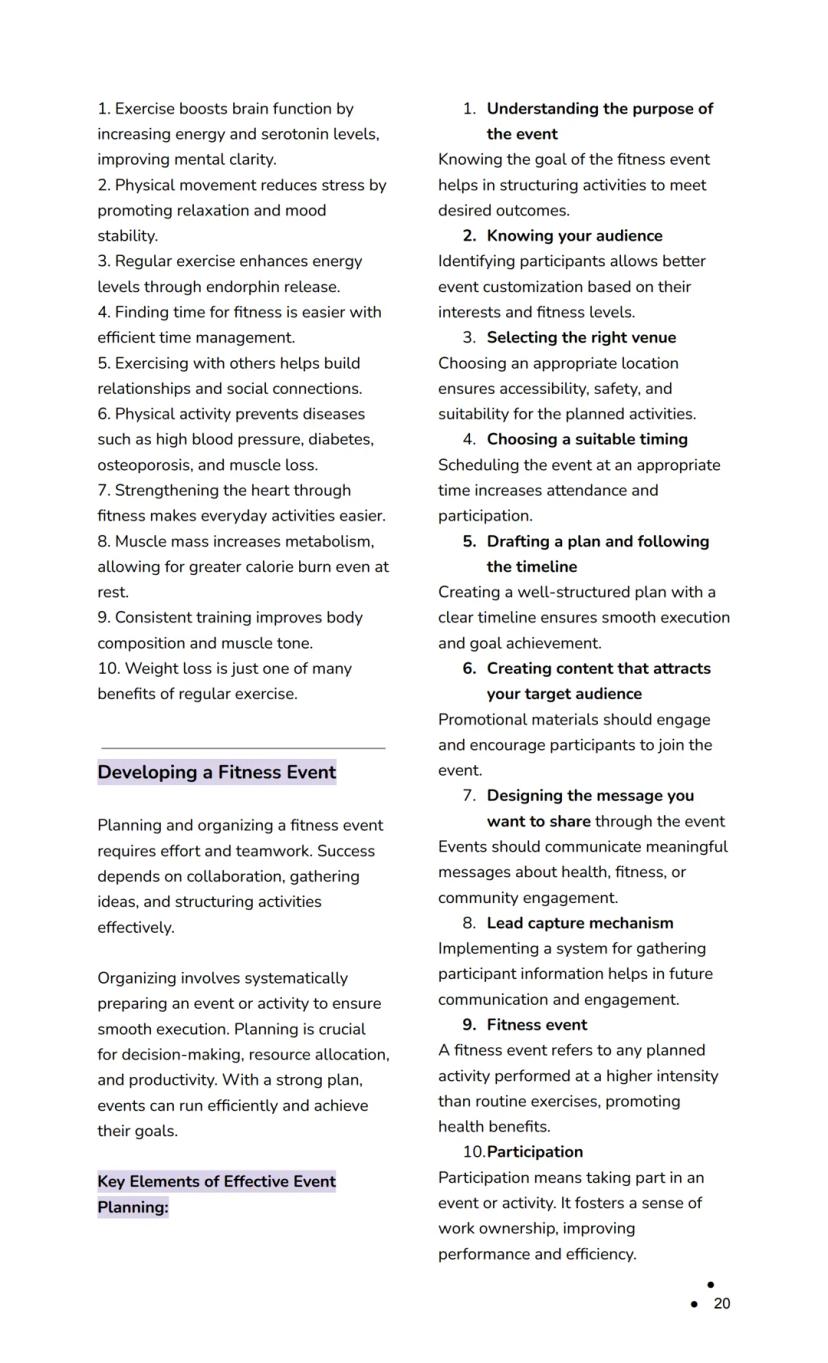
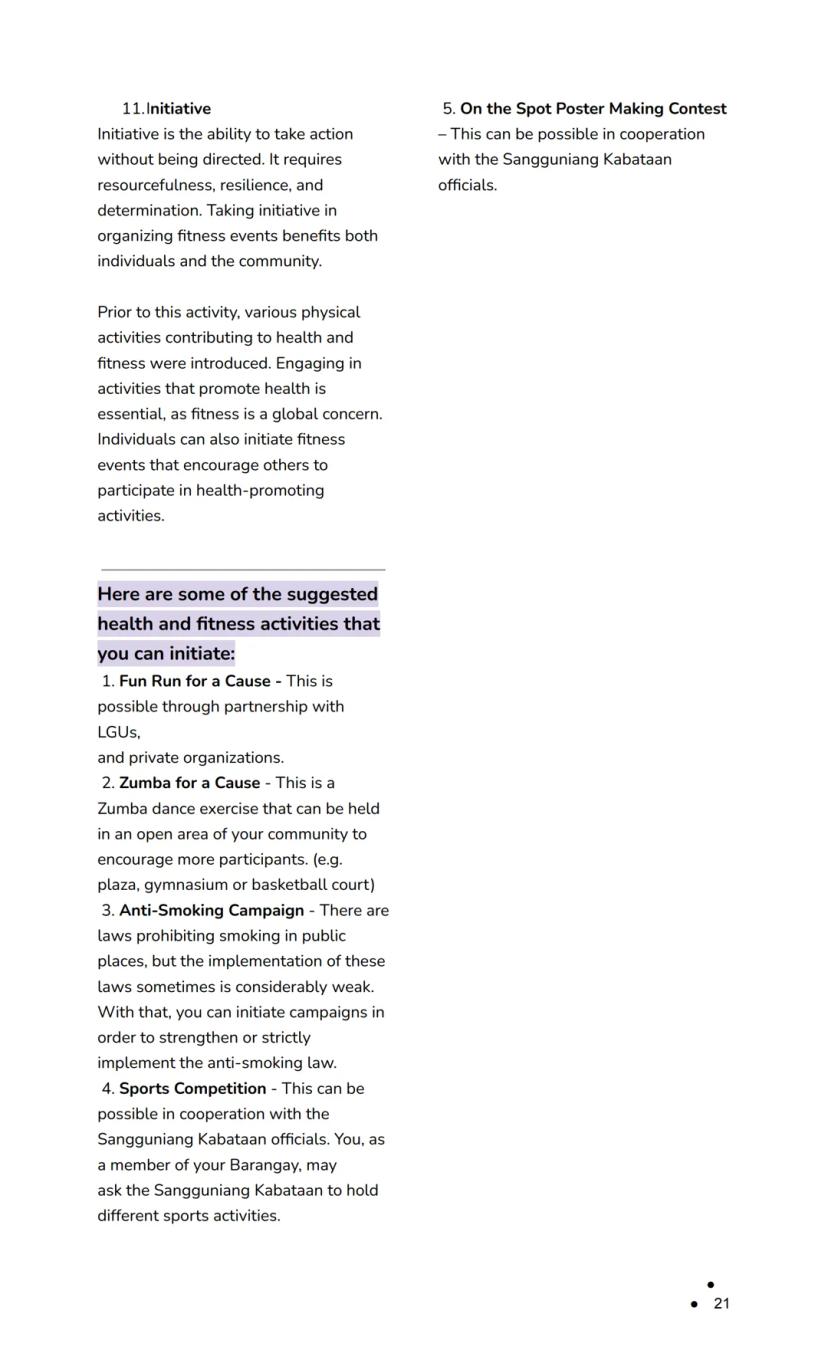
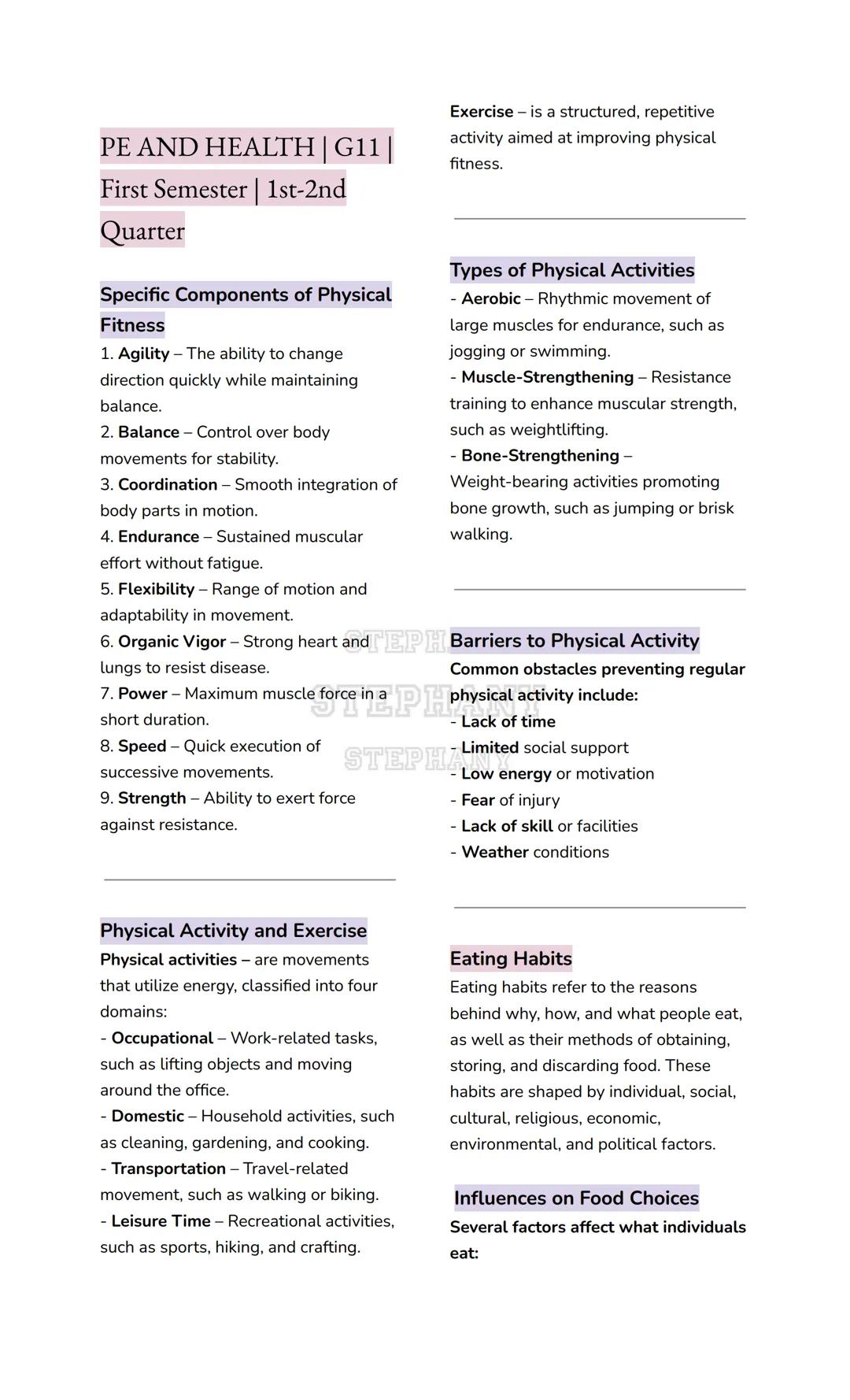
Your body has nine key fitness areas that work together to make you stronger and more athletic. Agility helps you change directions quickly (think basketball players dodging defenders), while balance keeps you steady. Coordination makes your movements smooth, and endurance lets you keep going without getting tired.
Physical activities fall into four main categories that you probably do every day without realizing it. Occupational activities include work tasks, domestic covers household chores, transportation means walking or biking places, and leisure time is your fun stuff like sports or hiking.
There are three types of exercises that target different parts of your fitness. Aerobic activities like jogging boost your heart health, muscle-strengthening exercises like weightlifting build power, and bone-strengthening activities like jumping make your skeleton stronger.
Quick Tip: Don't let common barriers like "no time" or "bad weather" stop you - even 15 minutes of movement counts!
Your eating habits shape how your body performs and recovers. These habits come from personal preferences, cultural traditions, social groups, religious beliefs, your budget, local food availability, and even government policies. The good news? You can change unhealthy eating patterns by reflecting on your current habits, replacing bad ones with better choices, and reinforcing positive changes until they stick.
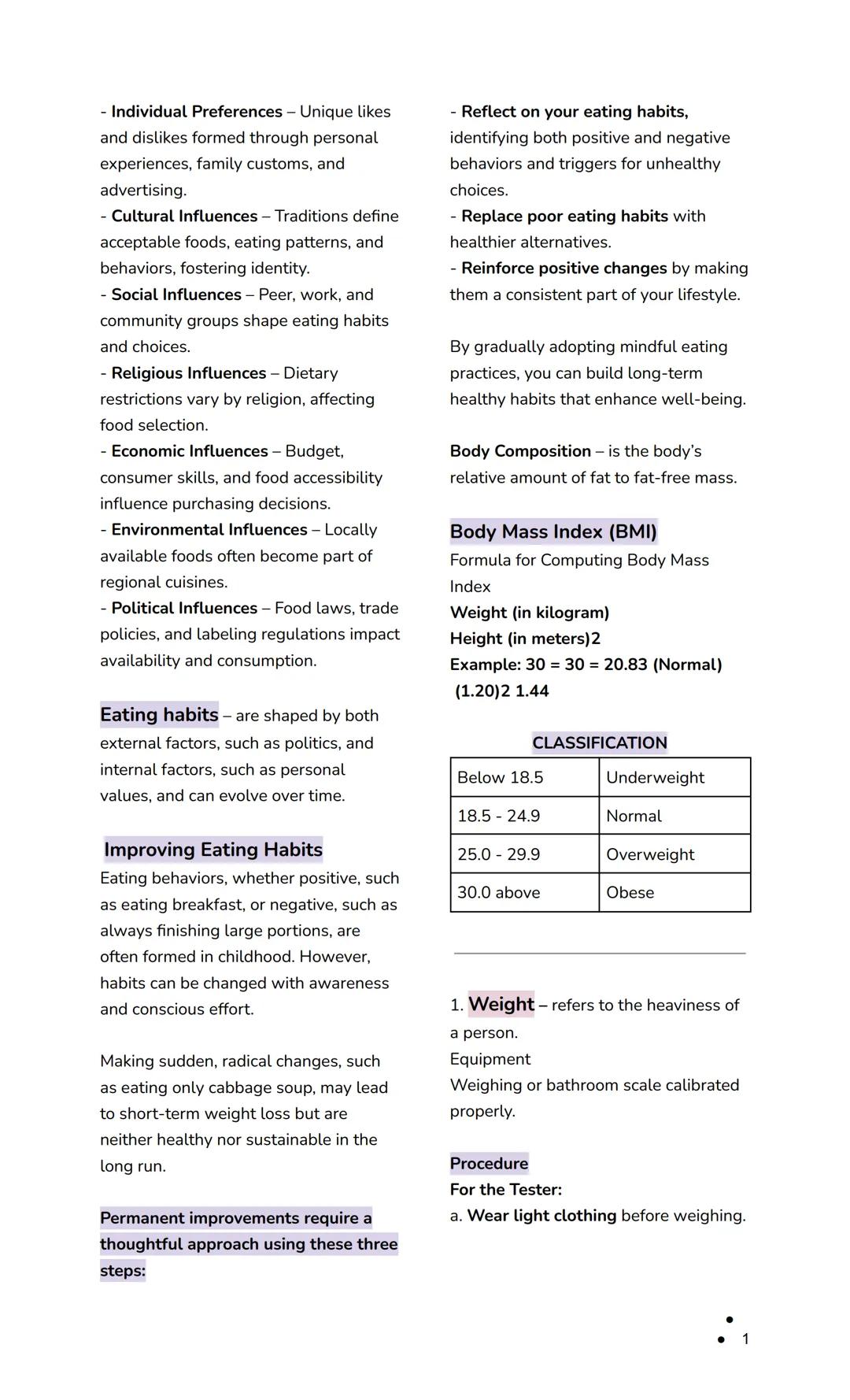
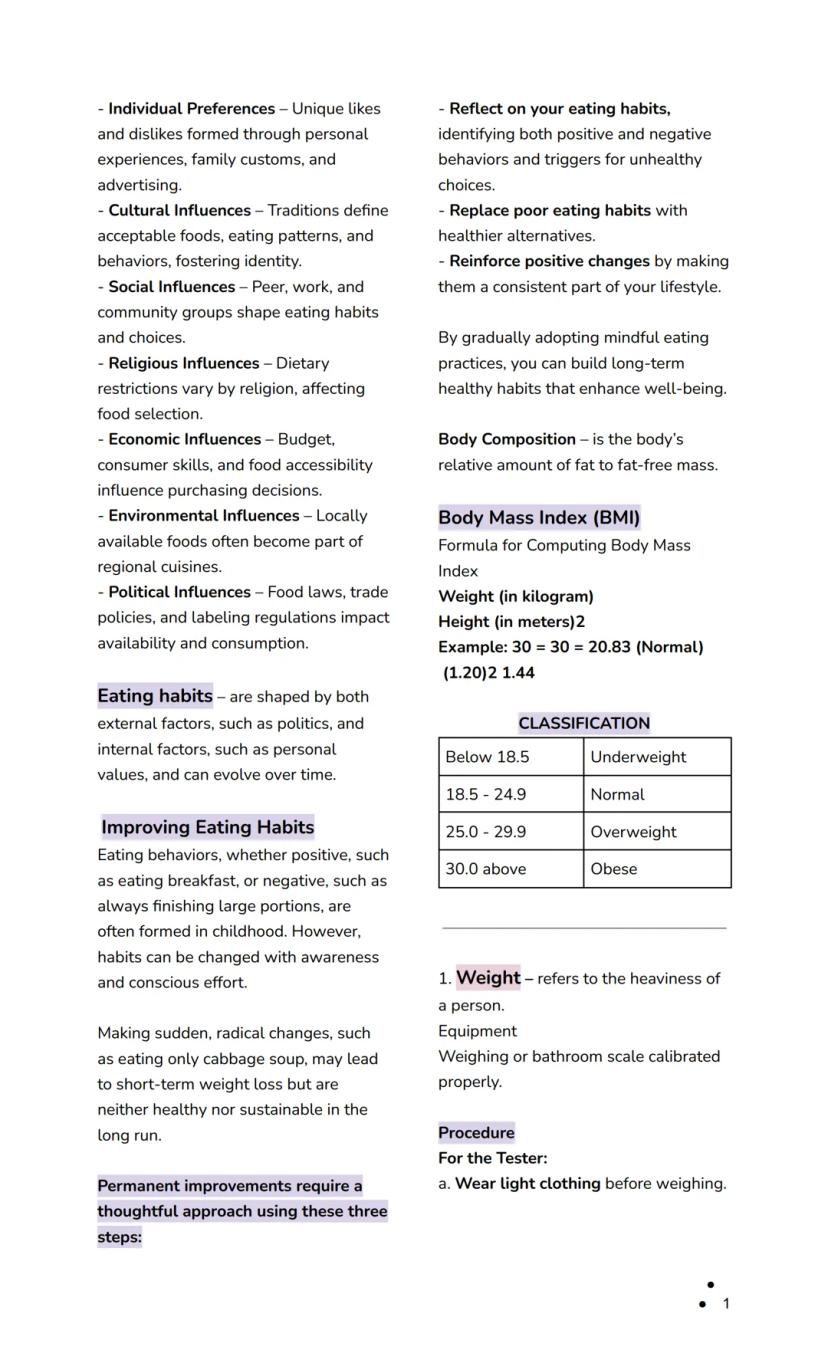
Your body composition tells you how much of your weight is fat versus muscle, bone, and other tissues. The easiest way to check this is through Body Mass Index (BMI), which uses a simple formula: your weight in kilograms divided by your height in meters squared.
Here's how BMI breaks down: below 18.5 means underweight, 18.5-24.9 is normal, 25.0-29.9 is overweight, and 30.0 and above indicates obesity. For example, if you weigh 60kg and are 1.7m tall, your BMI would be 20.8 (normal range).
When measuring your weight and height for accurate results, wear light clothing and stand barefoot on a properly calibrated scale. For height, stand straight against a wall with your heels, buttocks, and shoulders touching the wall.
Reality Check: BMI isn't perfect - it doesn't account for muscle mass, so very athletic people might show as "overweight" even when they're super healthy.
The key to improving eating habits isn't making drastic changes like only eating cabbage soup. Instead, use a three-step approach: reflect on your current patterns, replace unhealthy choices with better ones, and reinforce these new habits until they become automatic. Remember, habits formed in childhood can definitely be changed with awareness and effort.
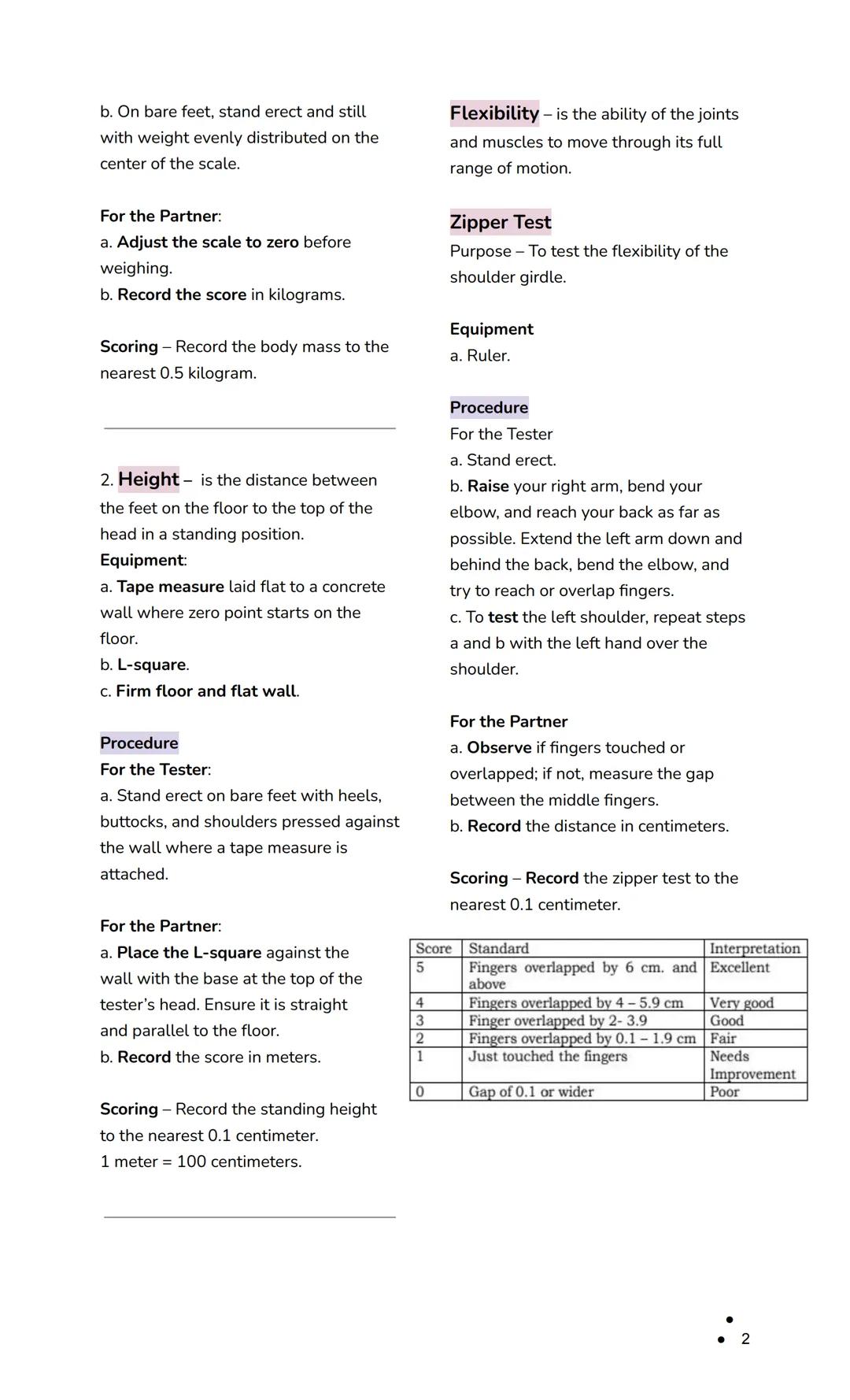
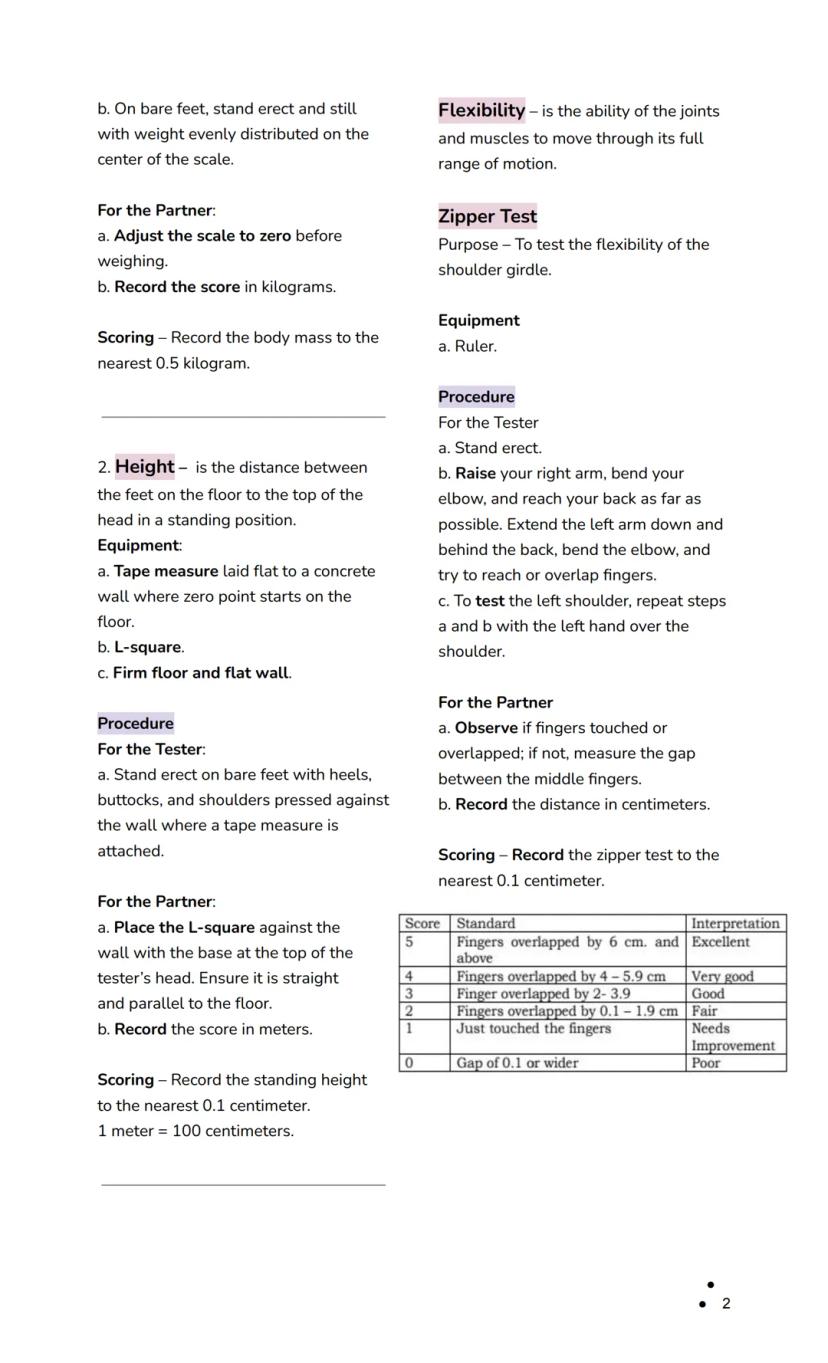
Flexibility determines how well your joints and muscles can move through their full range of motion. The Zipper Test checks your shoulder flexibility by seeing if you can touch your fingers behind your back - one arm reaching over your shoulder, the other reaching up from below.
Scoring is straightforward: if your fingers overlap by 6cm or more, you're excellent. Overlapping by 4-5.9cm is very good, 2-3.9cm is good, barely overlapping is fair, just touching means you need improvement, and any gap shows poor flexibility.
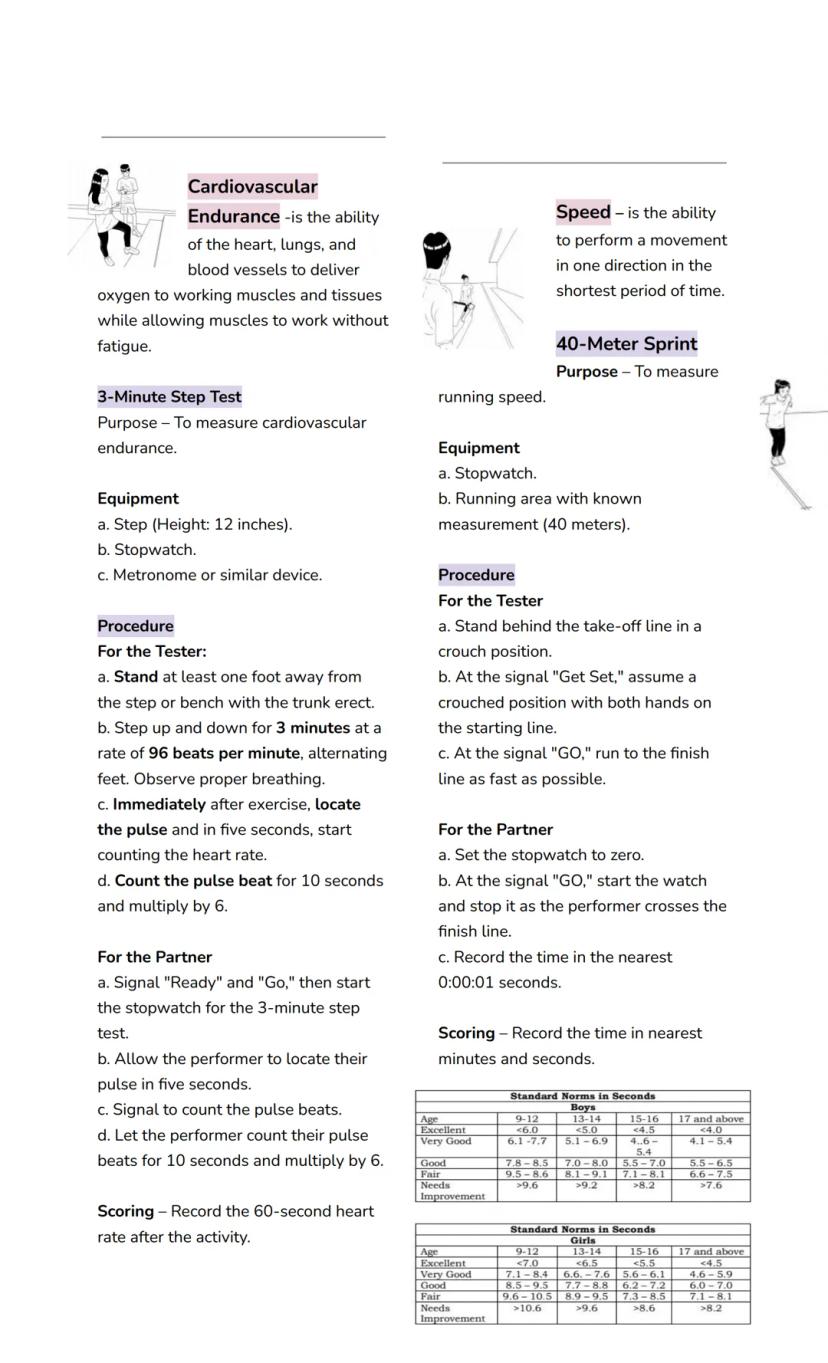
Cardiovascular endurance measures how well your heart, lungs, and blood vessels deliver oxygen during exercise. The 3-Minute Step Test involves stepping up and down on a 12-inch platform for three minutes at 96 beats per minute, then immediately checking your heart rate.
Pro Tip: Find your pulse quickly by placing two fingers on your wrist below your thumb - count for 10 seconds and multiply by 6 for your heart rate per minute.
After the step test, your recovery heart rate tells you about your fitness level. Lower heart rates indicate better cardiovascular health, while higher rates suggest you need more cardio training. This test is practical because it mimics everyday activities like climbing stairs.
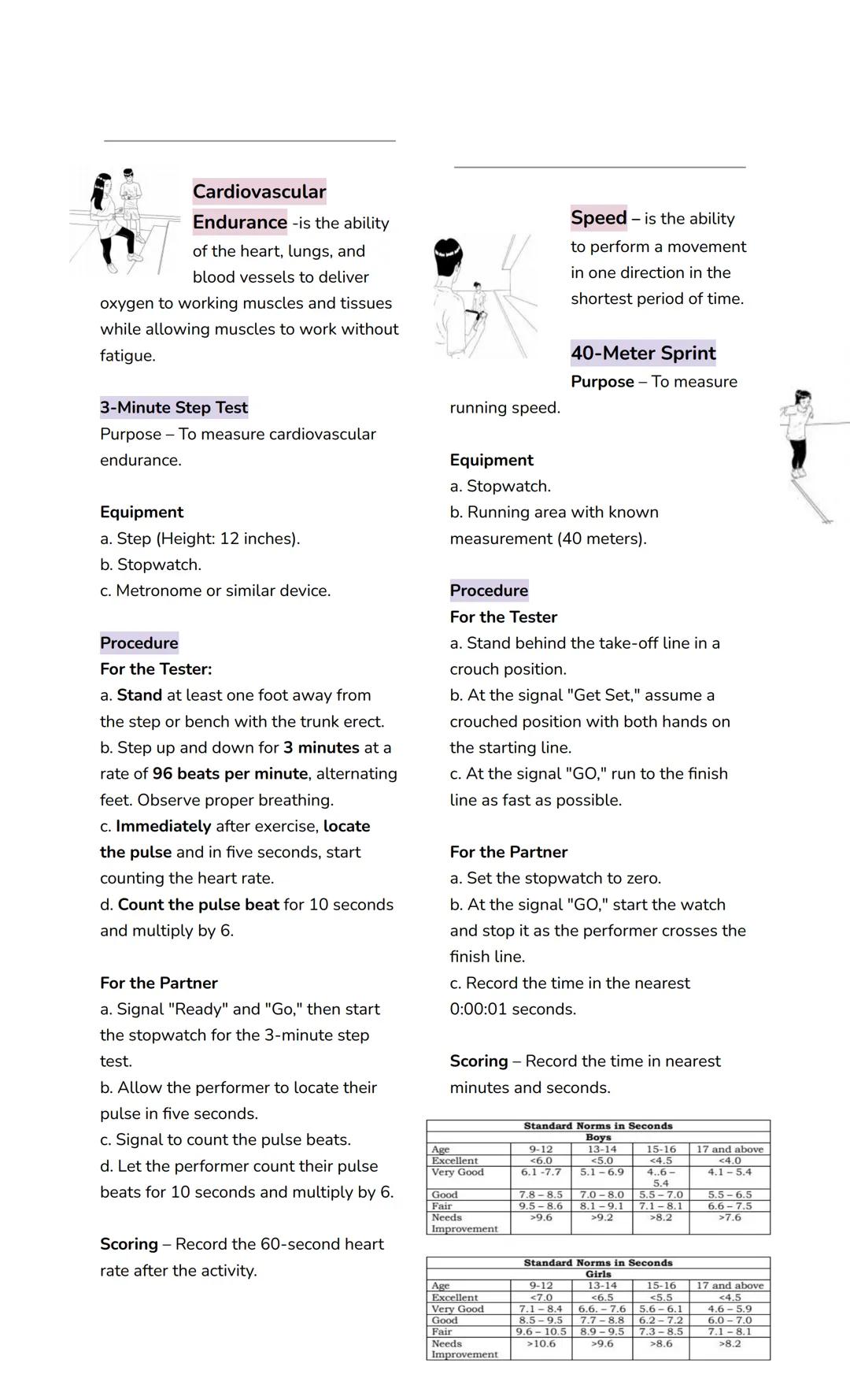
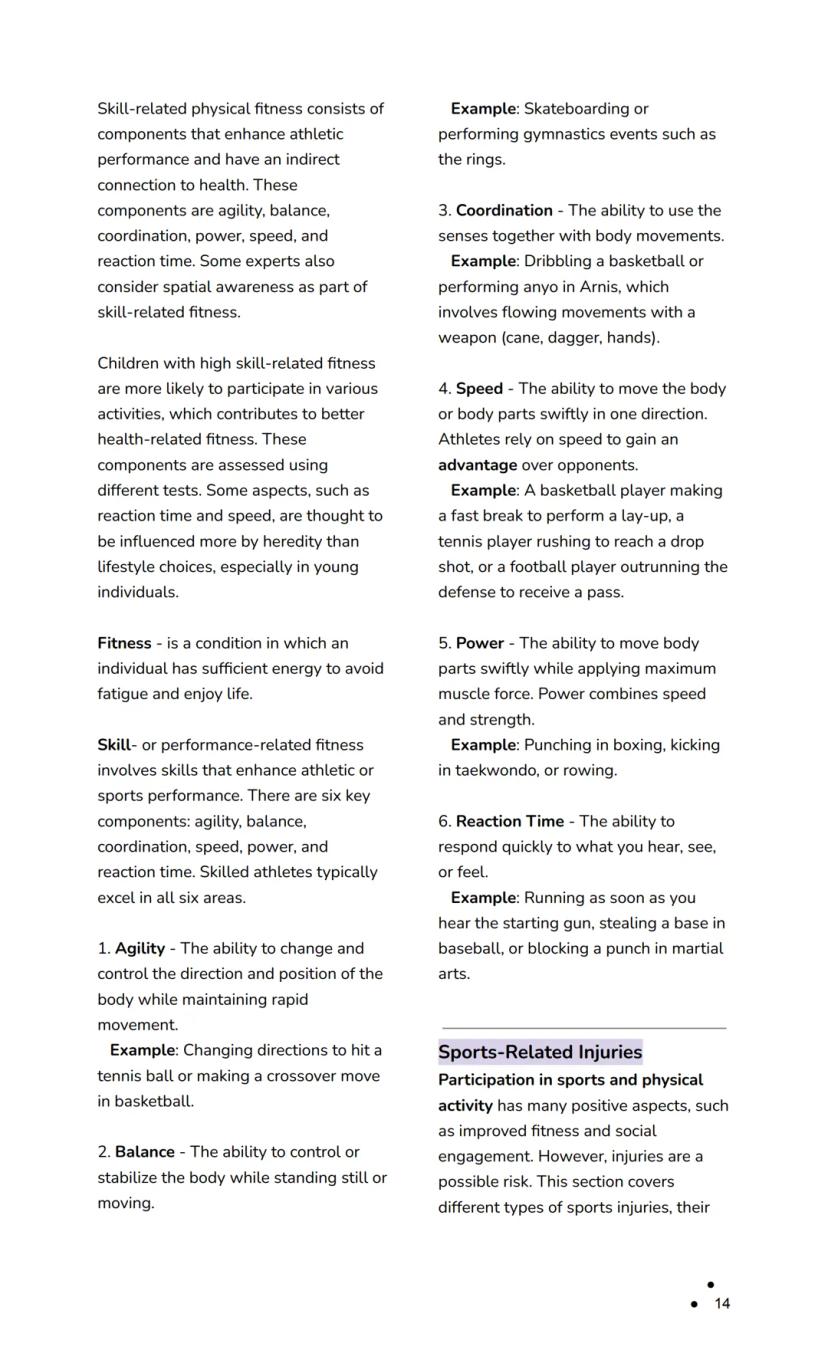
Speed is your ability to move in one direction as fast as possible. The 40-Meter Sprint test measures this by timing how quickly you can run from start to finish line. Boys aged 17+ should aim for under 4 seconds (excellent), while girls the same age should target under 6 seconds.
Your starting position matters - begin in a crouch behind the line, get into position at "Get Set," then explode forward at "GO." The timer starts when you move and stops when you cross the finish line. Practice your starts because good technique can shave precious seconds off your time.
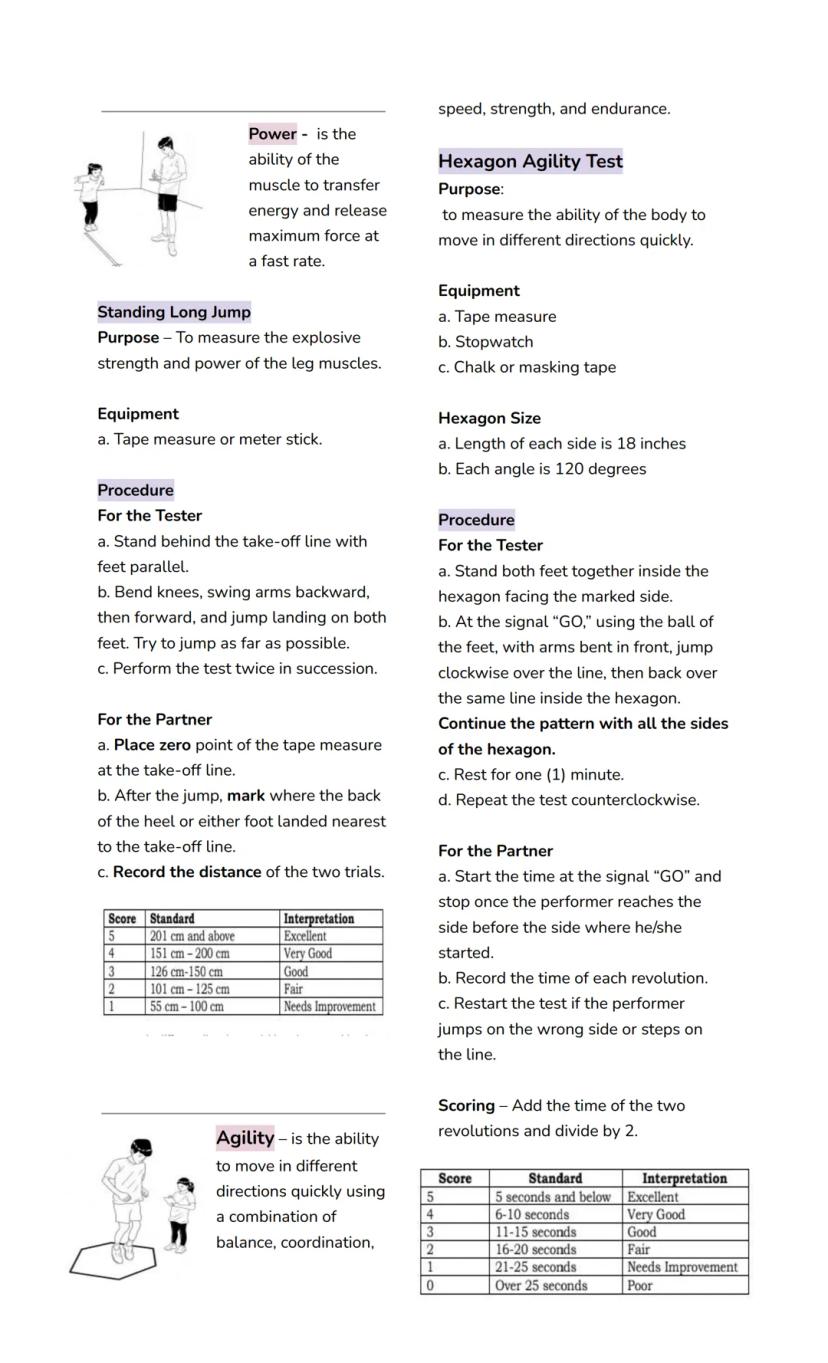
Power combines strength and speed to create explosive movement. The Standing Long Jump tests your leg power by measuring how far you can jump from a standing position. Jump over 201cm for an excellent score, while 55-100cm means you need improvement.
Training Insight: Power isn't just about being strong - it's about being strong AND fast, which is why explosive exercises like jumping are so effective.
For the long jump, start with feet parallel behind the line, bend your knees, swing your arms back then forward, and jump as far as possible while landing on both feet. You get two tries, and your score is measured from the take-off line to where your back heel lands.
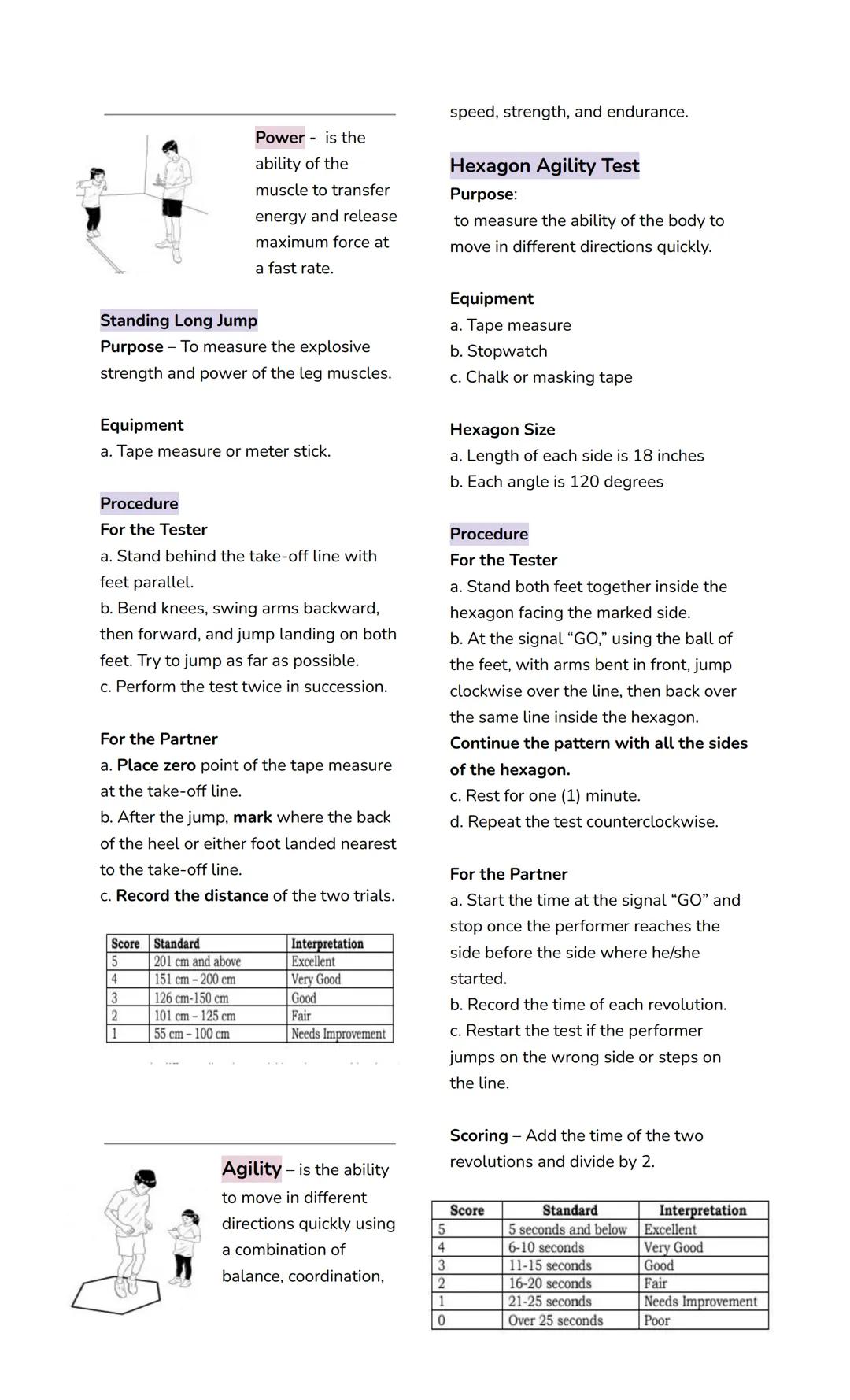
Agility is your ability to move quickly in different directions while maintaining balance and control. The Hexagon Agility Test uses a six-sided figure where you jump clockwise over each side, then back inside, continuing around the entire hexagon before reversing direction.
Each side of the hexagon is 18 inches long with 120-degree angles. Your score is the average time of both clockwise and counterclockwise rounds - under 5 seconds is excellent, while over 25 seconds is poor. This test mimics sports movements where you need to change direction rapidly.
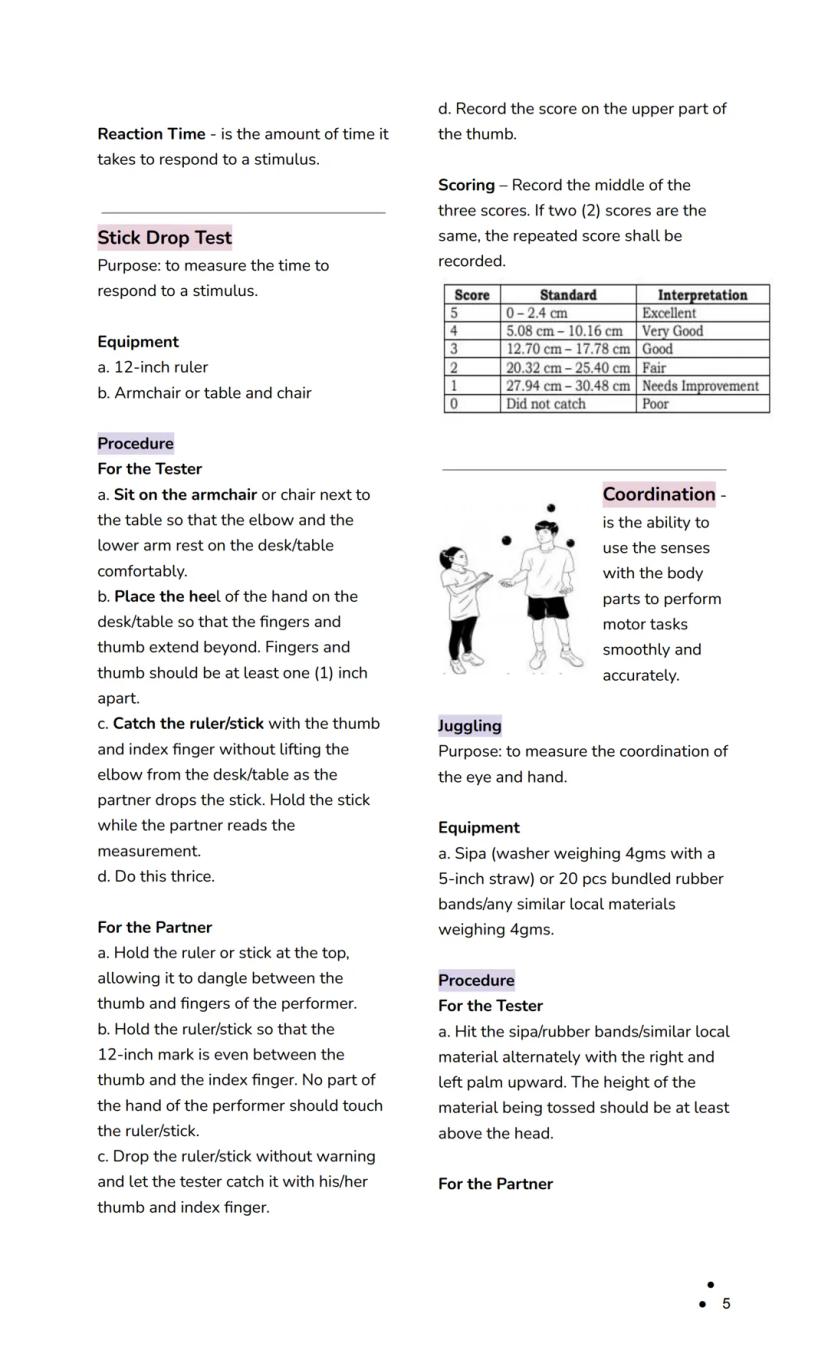
Reaction time measures how quickly you respond to unexpected events. The Stick Drop Test involves catching a 12-inch ruler dropped without warning between your thumb and index finger. Your score depends on where you catch it - grabbing it between 0-2.4cm is excellent.
Game Connection: These skills directly transfer to sports and video games - better reaction time means faster responses whether you're catching a ball or hitting a button combo.
Coordination combines your senses with body movements for smooth, accurate actions. The Juggling Test using a sipa (or rubber bands) measures eye-hand coordination by counting alternating hits with right and left palms. Scoring 41+ hits is excellent, while 1-10 hits needs improvement.
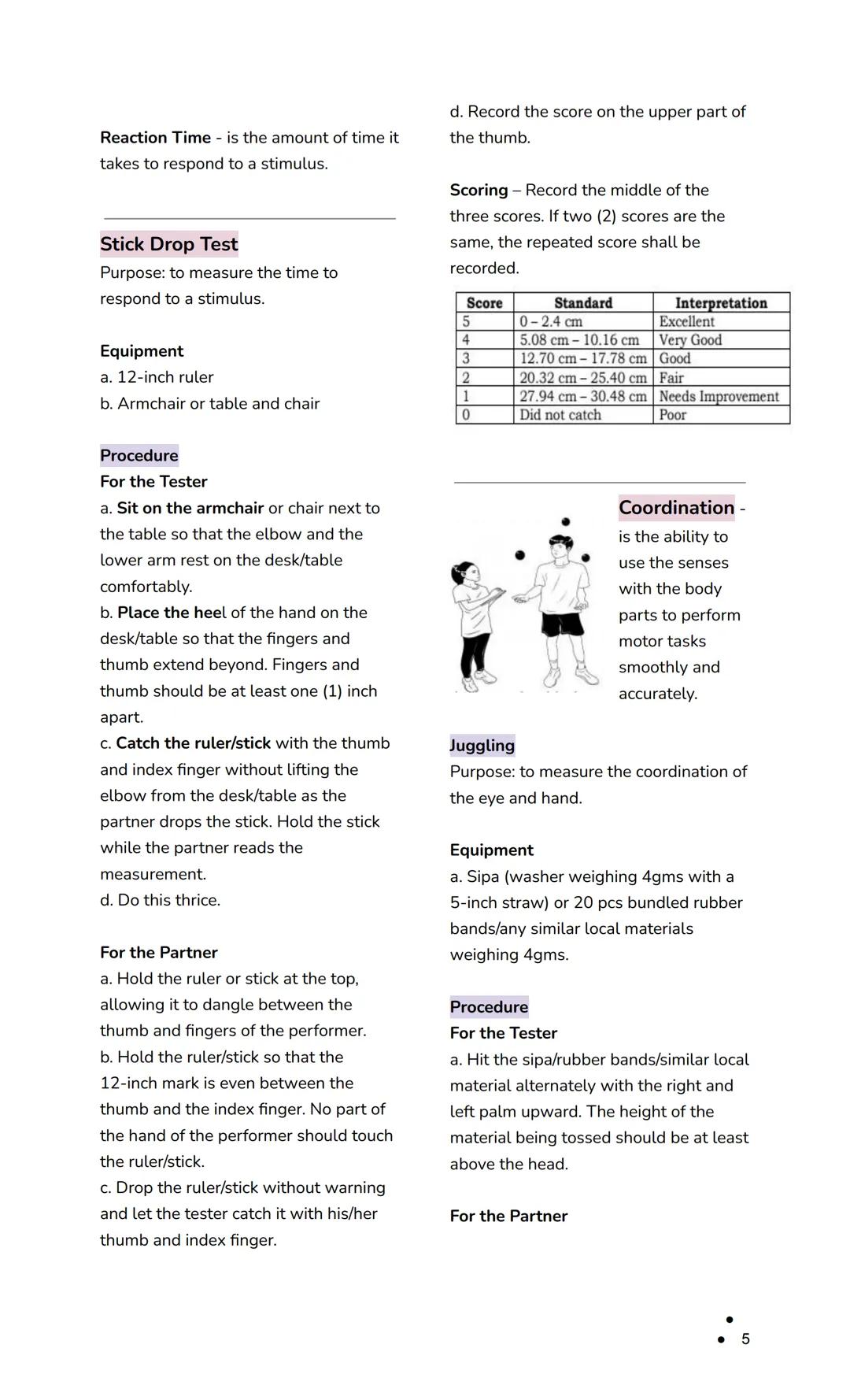
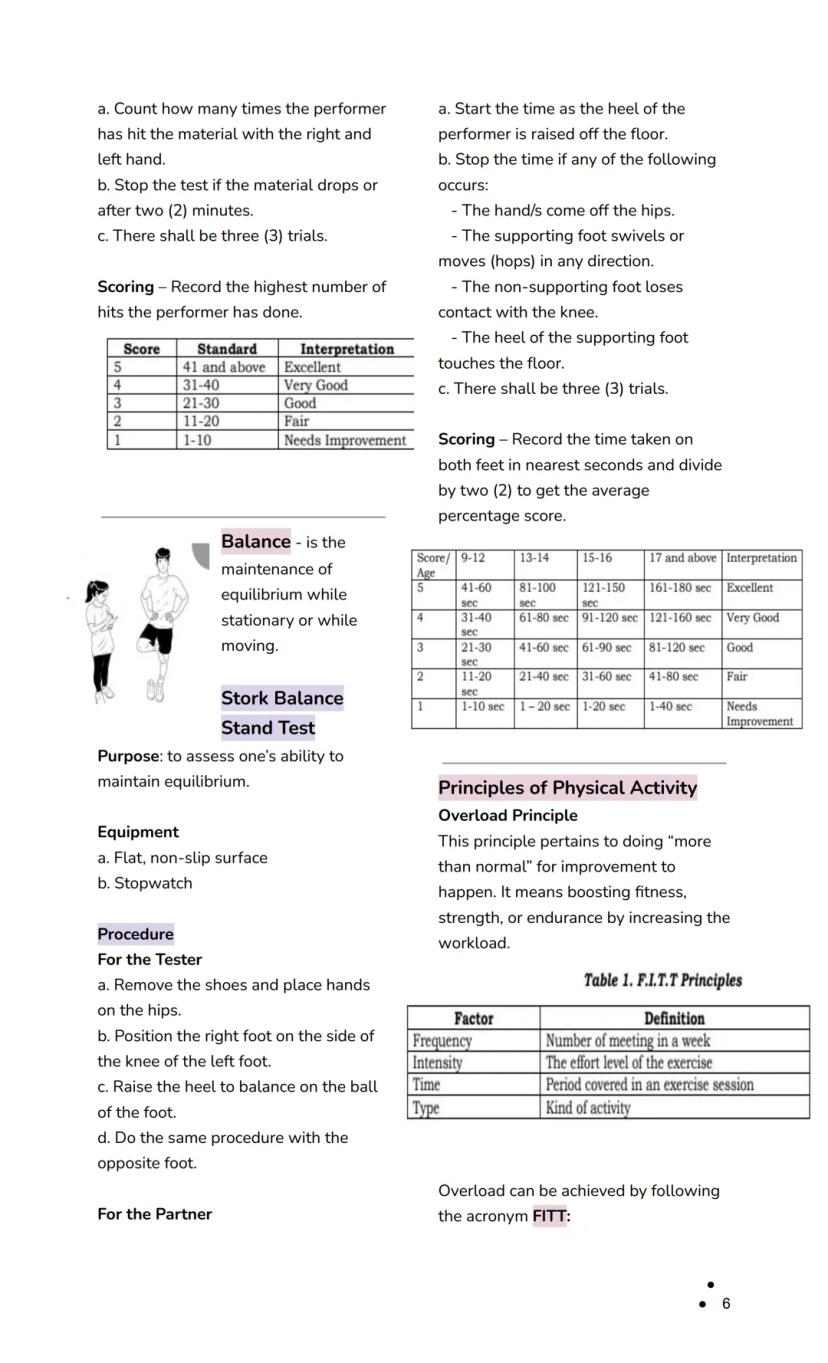
Balance is maintaining equilibrium whether you're standing still or moving. The Stork Balance Stand Test measures this by timing how long you can balance on one foot with the other foot placed against your knee and hands on your hips.
Your score depends on your age - older teens should balance longer than younger ones. Stop the timer if your hands come off your hips, your supporting foot moves, the raised foot loses contact with your knee, or your heel touches the ground. Take three trials and average your best times.
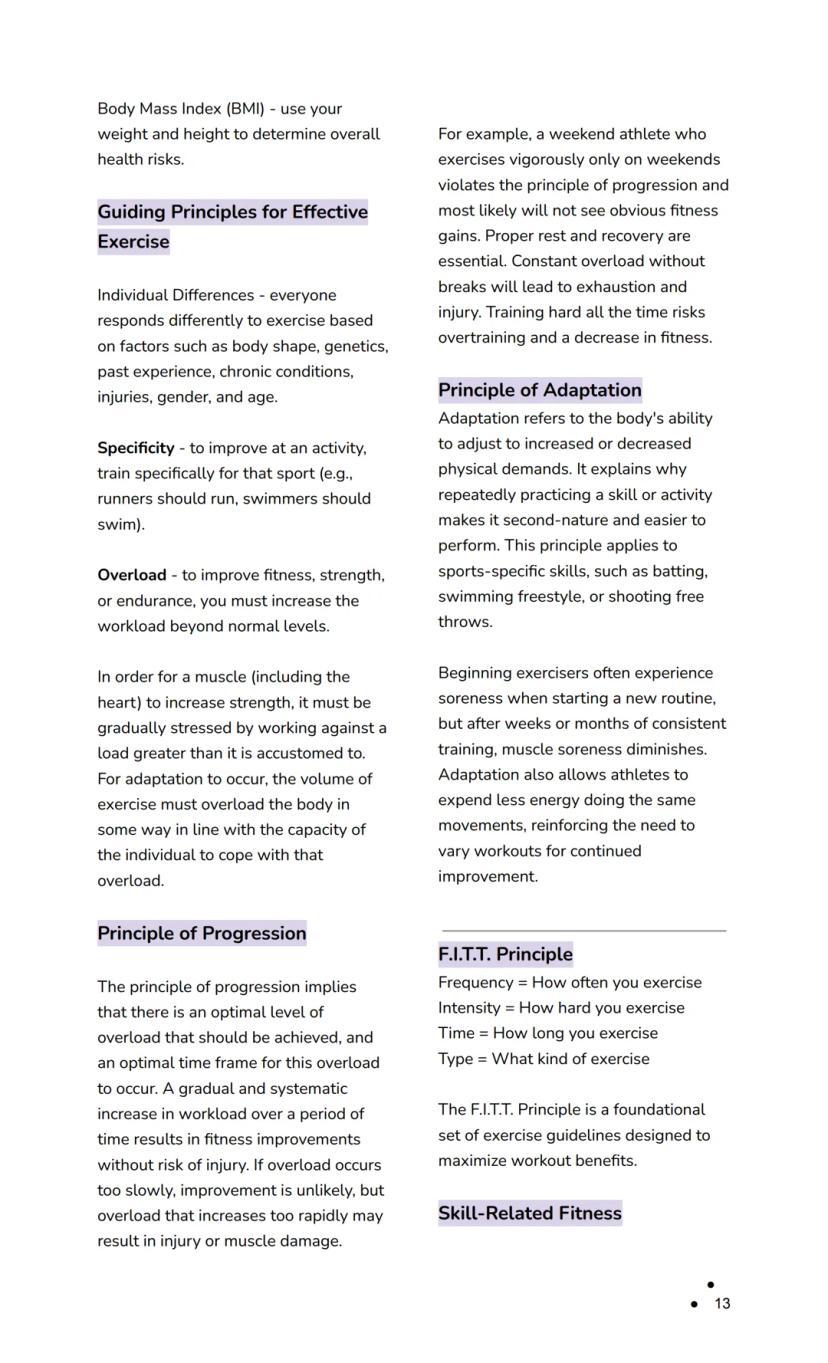
The Overload Principle is fundamental to getting fitter - you must do "more than normal" for improvement to happen. This means gradually increasing your workload beyond what your body is used to, following the FITT principles: Frequency (how often), Intensity (how hard), Time (how long), and Type (what kind).
Key Insight: Your body adapts to whatever you consistently do, so if you want to get stronger or faster, you need to gradually challenge it more than before.
Other important principles include Progression (systematically increasing workload over time), Specificity (training should match your goals), and Reversibility (fitness gains disappear if you stop training). These principles work together to create effective workout programs.
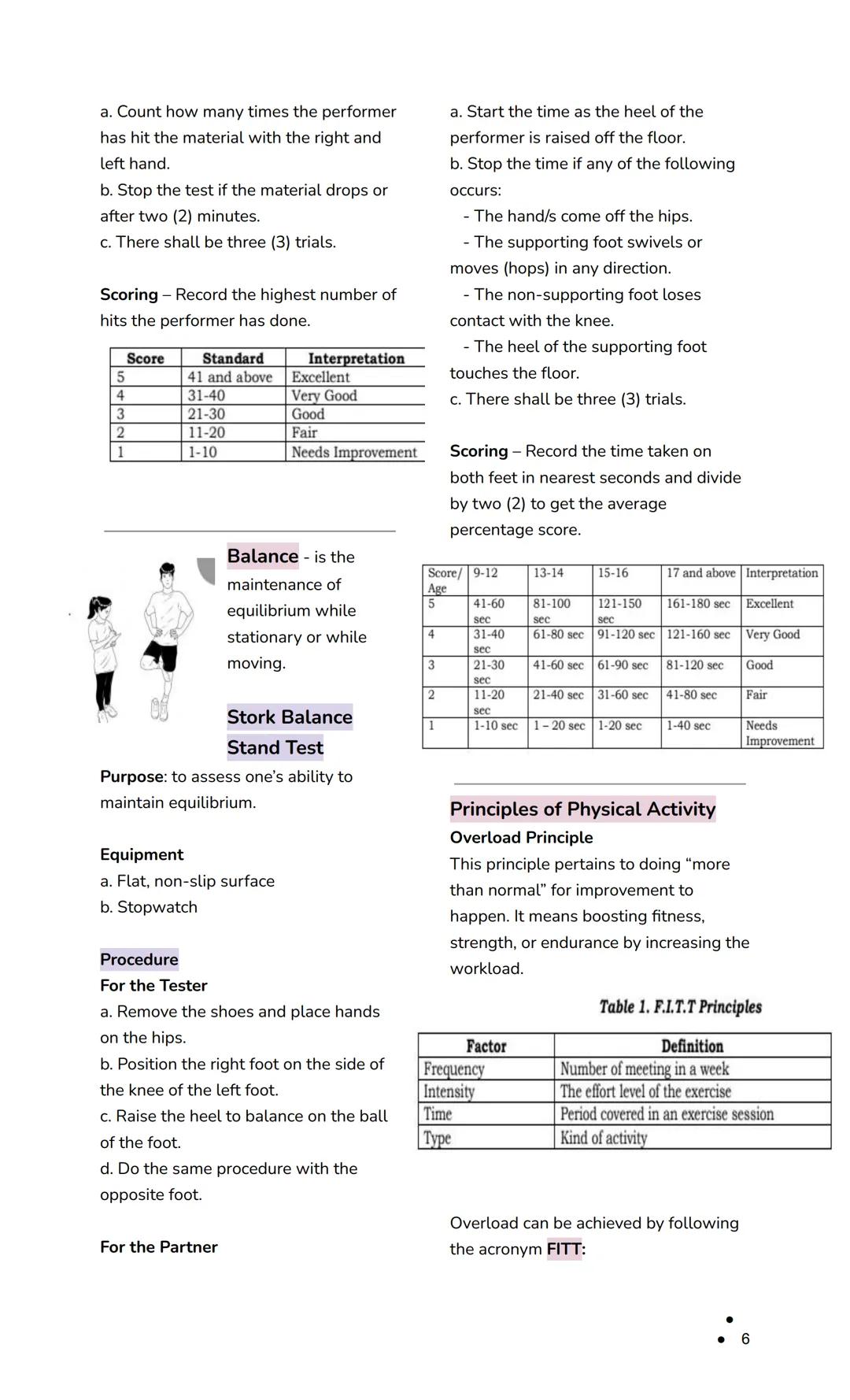
The FITT Principle helps you design workouts that actually work. For frequency, aim for moderate cardio 5+ days per week or intense cardio 3 days per week. Strength training works best 2-3 non-consecutive days per week to allow muscle recovery.
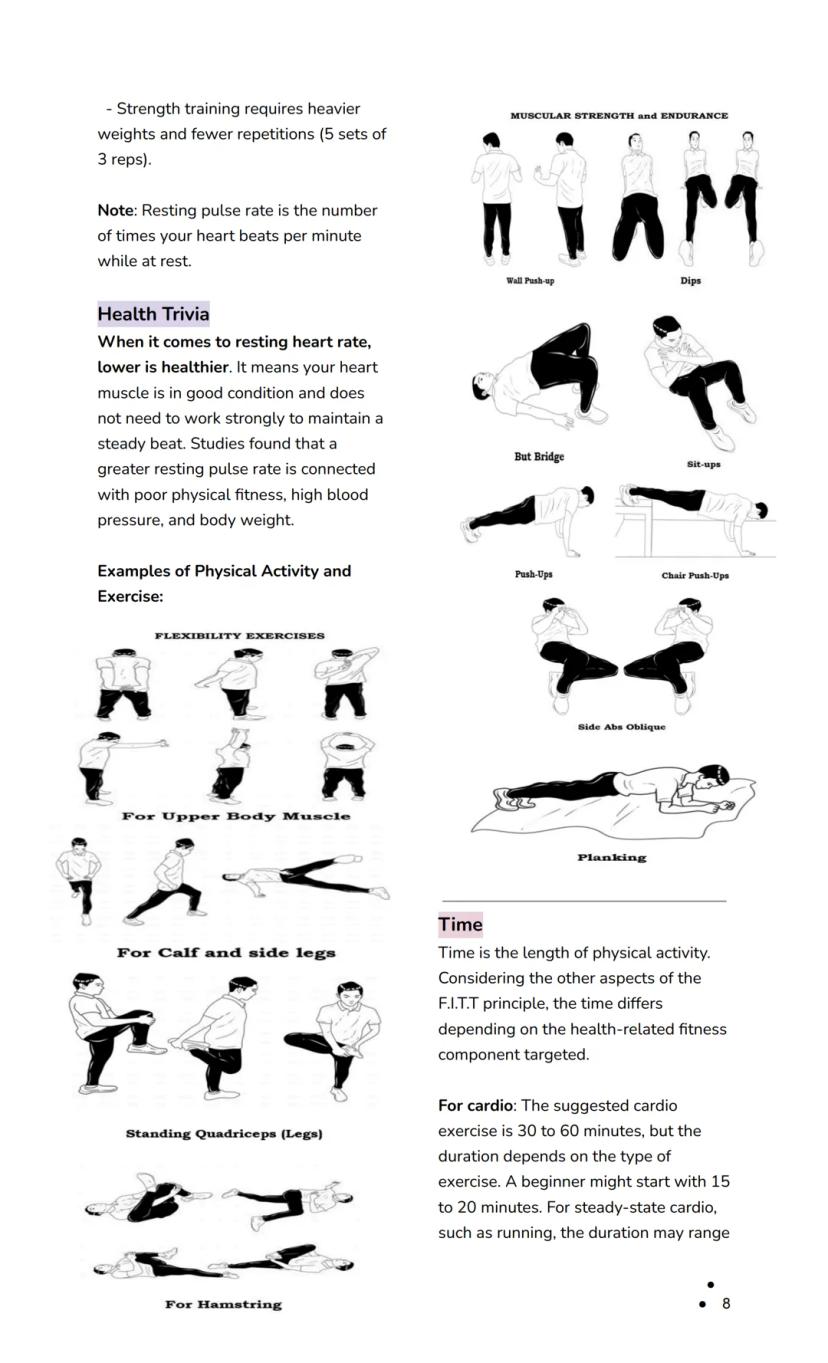
Intensity varies by exercise type. For cardio, use your heart rate as a guide - beginners might work at moderate intensity while advanced athletes incorporate high-intensity intervals. For strength training, beginners should use lighter weights with more repetitions , while strength building requires heavier weights with fewer reps (5 sets of 3 reps).
Time depends on your fitness level and goals. Beginners might start with 15-20 minutes of cardio, progressing to 30-60 minutes. Strength training sessions can range from 30 minutes for split routines to an hour for full-body workouts.
Smart Strategy: Lower resting heart rate means better fitness - your heart doesn't have to work as hard to pump blood when you're in good shape.
Type refers to choosing specific activities that match your goals. For cardio, options include dancing, running, walking, jogging, and cycling. For strength training, you can use dumbbells, barbells, machines, or just your body weight - variety prevents boredom and keeps your body challenged.
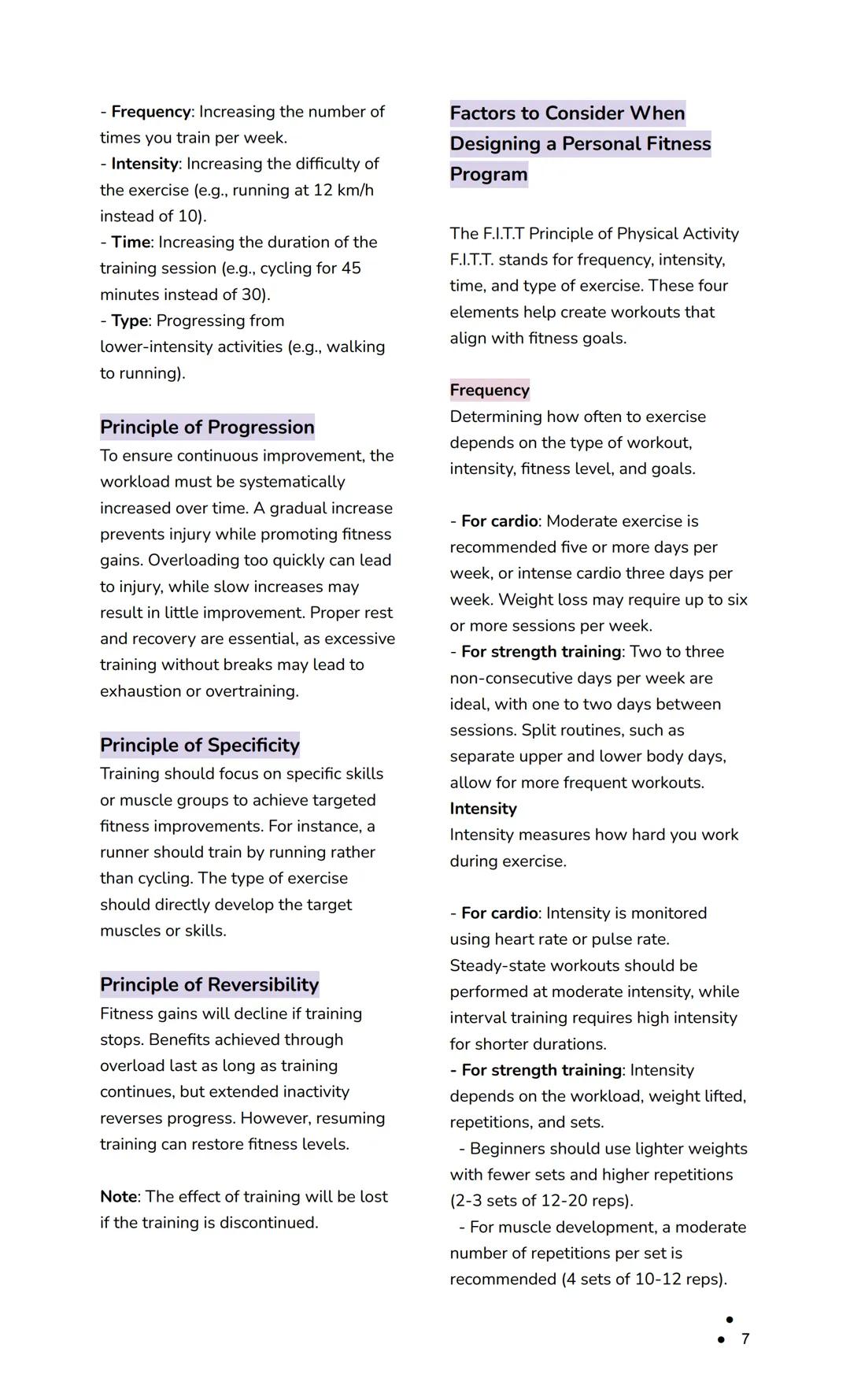
Using the FITT Principle effectively means making gradual adjustments when your current routine becomes too easy. For example, if you're walking three times per week for 30 minutes, your body will eventually adapt and you'll stop seeing improvements.
When this happens, you can increase frequency by adding another workout day, boost intensity by walking faster or adding running intervals, extend time by making sessions longer, or change type by trying cycling or dancing instead.
The beauty of FITT is that changing just one element can dramatically improve your results. Your muscles develop when challenged beyond their previous limits - this is why the Overload Principle works so well with systematic progression.
Success Formula: Consistency beats perfection - doing something regularly is better than doing everything perfectly but inconsistently.
Remember that intensity is measured by how hard an exercise feels and your body's response (heart rate). Maintaining the right heart rate range ensures your workouts are effective without being dangerous. Your resting pulse rate should naturally decrease as you get fitter, indicating your heart is becoming more efficient.
Regular variation using FITT principles keeps both your body and mind engaged, preventing plateaus and boredom while ensuring continuous improvement toward your fitness goals.
Ang aming AI Companion ay isang AI tool na nakatuon sa mga estudyante na nag-aalok ng higit pa sa mga sagot lang. Binuo mula sa milyong Knowunity resources, nagbibigay ito ng may-kaugnayang impormasyon, personalized na study plans, quizzes, at content direkta sa chat, na umaangkop sa iyong sariling learning journey.
Maaari mong i-download ang app mula sa Google Play Store at Apple App Store.
Tama 'yan! Mag-enjoy sa libreng access sa mga study content, makipag-connect sa kapwa mga estudyante, at kumuha ng instant na tulong – lahat nasa iyong daliri lang.
App Store
Google Play
Napakadaling gamitin at maganda ang disenyo ng app. Nahanap ko lahat ng hinahanap ko hanggang ngayon at natuto ako ng marami mula sa mga presentasyon! Tiyak na gagamitin ko ang app para sa isang takdang-aralin sa klase! At siyempre, nakakatulong din ito bilang inspirasyon.
Stefan S
gumagamit ng iOS
Sobrang ganda talaga ng app na ito. Maraming mga study notes at tulong [...]. Ang problemang subject ko ay Pranses, halimbawa, at ang app ay may maraming options para tumulong. Salamat sa app na ito, bumuti ang Pranses ko. Irerekumenda ko ito sa lahat.
Samantha Klich
Android user
Wow, talagang namangha ako. Sinubukan ko lang ang app dahil nakita ko itong ina-advertise nang maraming beses at sobrang nagulat ako. Ang app na ito ang TULONG na gusto mo para sa paaralan at higit sa lahat, nag-aalok ito ng maraming bagay, tulad ng workouts at fact sheets, na SOBRANG nakatulong sa akin.
Anna
iOS user
Pinakamagandang app sa mundo! walang masabi dahil sobrang ganda nito
Thomas R
iOS user
Napakaganda talaga. Nakakapag-review ako ng 10x mas mabuti, itong app ay mabilis na 10/10. Lubos kong inirerekomenda ito sa lahat. Pwede akong manood at maghanap ng notes. Pwede kong i-save ang mga ito sa subject folder. Pwede kong i-review anumang oras kapag bumalik ako. Kung hindi mo pa nasubukan ang app na ito, marami kang nawawala.
Basil
Android user
Ang app na ito ay nagpapalakas ng loob ko sa paghahanda sa exams, hindi lang dahil sa pagpapataas ng aking kumpiyansa sa sarili sa pamamagitan ng mga feature na nagpapahintulot sa iyo na makipag-connect sa iba at mabawasan ang pakiramdam na nag-iisa, kundi pati na rin sa paraan na nakatuon ang app sa pagpapagaan ng iyong pakiramdam. Madali itong i-navigate, masaya gamitin, at nakakatulong sa sinumang nahihirapan sa kahit anong paraan.
David K
iOS user
Sobrang galing ng app! Ilalagay ko lang ang paksa sa search bar at makakakuha na ako ng sagot kaagad. Hindi ko kailangang manood ng 10 YouTube videos para maintindihan ang isang bagay, kaya nakakatipid ako ng oras. Lubos na inirerekomenda!
Sudenaz Ocak
Android user
Sa paaralan, napakahina ko sa math pero salamat sa app, mas mahusay na ako ngayon. Lubos akong nagpapasalamat na ginawa niyo ang app na ito.
Greenlight Bonnie
Android user
napakareliable na app para tumulong at palawakin ang iyong mga ideya sa Math, English at iba pang mga related na paksa sa iyong mga gawain. gamitin mo ang app na ito kung nahihirapan ka sa mga area, susi ito para diyan. sana nag-review na ako dati. at libre rin ito kaya huwag mag-alala tungkol diyan.
Rohan U
Android user
Alam kong maraming apps gumagamit ng fake accounts para mapataas ang kanilang reviews pero ang app na ito ay deserve lahat ng papuri. Dati nakakakuha ako ng 4 sa aking English exams at ngayon nakakuha ako ng grade 7. Hindi ko pa alam ang app na ito tatlong araw bago ang exam at nakatulong ito ng SOBRA. Pakisuyong maniwala sa akin at gamitin ito dahil sigurado akong makikita mo rin ang mga pagbabago.
Xander S
iOS user
ANG MGA quiz AT flashcard SOBRANG HELPFUL AT I LOVE TALAGA SI Knowunity AI. PARANG CHATGPT LANG PERO MAS MATALINO!! NAKATULONG DIN SA MGA MASCARA PROBLEMS KO!! PATI NA RIN SA MGA TUNAY KONG subject! SYEMPRE 😍😁😲🤑💗✨🎀😮
Elisha
iOS user
Grabe talaga ang app na to. Sobrang nakakaboring sakin ang pagreview pero ginagawa ng app na to na sobrang dali mag-organize ng lahat at pwede mong tanungin ang libreng ai para subukin ang sarili mo kaya sobrang buti at madali mong ma-upload ang sarili mong mga bagay. highly recommend bilang isang taong nagte-take ng mocks ngayon
Paul T
iOS user
Napakadaling gamitin at maganda ang disenyo ng app. Nahanap ko lahat ng hinahanap ko hanggang ngayon at natuto ako ng marami mula sa mga presentasyon! Tiyak na gagamitin ko ang app para sa isang takdang-aralin sa klase! At siyempre, nakakatulong din ito bilang inspirasyon.
Stefan S
gumagamit ng iOS
Sobrang ganda talaga ng app na ito. Maraming mga study notes at tulong [...]. Ang problemang subject ko ay Pranses, halimbawa, at ang app ay may maraming options para tumulong. Salamat sa app na ito, bumuti ang Pranses ko. Irerekumenda ko ito sa lahat.
Samantha Klich
Android user
Wow, talagang namangha ako. Sinubukan ko lang ang app dahil nakita ko itong ina-advertise nang maraming beses at sobrang nagulat ako. Ang app na ito ang TULONG na gusto mo para sa paaralan at higit sa lahat, nag-aalok ito ng maraming bagay, tulad ng workouts at fact sheets, na SOBRANG nakatulong sa akin.
Anna
iOS user
Pinakamagandang app sa mundo! walang masabi dahil sobrang ganda nito
Thomas R
iOS user
Napakaganda talaga. Nakakapag-review ako ng 10x mas mabuti, itong app ay mabilis na 10/10. Lubos kong inirerekomenda ito sa lahat. Pwede akong manood at maghanap ng notes. Pwede kong i-save ang mga ito sa subject folder. Pwede kong i-review anumang oras kapag bumalik ako. Kung hindi mo pa nasubukan ang app na ito, marami kang nawawala.
Basil
Android user
Ang app na ito ay nagpapalakas ng loob ko sa paghahanda sa exams, hindi lang dahil sa pagpapataas ng aking kumpiyansa sa sarili sa pamamagitan ng mga feature na nagpapahintulot sa iyo na makipag-connect sa iba at mabawasan ang pakiramdam na nag-iisa, kundi pati na rin sa paraan na nakatuon ang app sa pagpapagaan ng iyong pakiramdam. Madali itong i-navigate, masaya gamitin, at nakakatulong sa sinumang nahihirapan sa kahit anong paraan.
David K
iOS user
Sobrang galing ng app! Ilalagay ko lang ang paksa sa search bar at makakakuha na ako ng sagot kaagad. Hindi ko kailangang manood ng 10 YouTube videos para maintindihan ang isang bagay, kaya nakakatipid ako ng oras. Lubos na inirerekomenda!
Sudenaz Ocak
Android user
Sa paaralan, napakahina ko sa math pero salamat sa app, mas mahusay na ako ngayon. Lubos akong nagpapasalamat na ginawa niyo ang app na ito.
Greenlight Bonnie
Android user
napakareliable na app para tumulong at palawakin ang iyong mga ideya sa Math, English at iba pang mga related na paksa sa iyong mga gawain. gamitin mo ang app na ito kung nahihirapan ka sa mga area, susi ito para diyan. sana nag-review na ako dati. at libre rin ito kaya huwag mag-alala tungkol diyan.
Rohan U
Android user
Alam kong maraming apps gumagamit ng fake accounts para mapataas ang kanilang reviews pero ang app na ito ay deserve lahat ng papuri. Dati nakakakuha ako ng 4 sa aking English exams at ngayon nakakuha ako ng grade 7. Hindi ko pa alam ang app na ito tatlong araw bago ang exam at nakatulong ito ng SOBRA. Pakisuyong maniwala sa akin at gamitin ito dahil sigurado akong makikita mo rin ang mga pagbabago.
Xander S
iOS user
ANG MGA quiz AT flashcard SOBRANG HELPFUL AT I LOVE TALAGA SI Knowunity AI. PARANG CHATGPT LANG PERO MAS MATALINO!! NAKATULONG DIN SA MGA MASCARA PROBLEMS KO!! PATI NA RIN SA MGA TUNAY KONG subject! SYEMPRE 😍😁😲🤑💗✨🎀😮
Elisha
iOS user
Grabe talaga ang app na to. Sobrang nakakaboring sakin ang pagreview pero ginagawa ng app na to na sobrang dali mag-organize ng lahat at pwede mong tanungin ang libreng ai para subukin ang sarili mo kaya sobrang buti at madali mong ma-upload ang sarili mong mga bagay. highly recommend bilang isang taong nagte-take ng mocks ngayon
Paul T
iOS user
sam ⋆𐙚₊˚⊹♡
@samantha.badiola_
Ever wonder why some people seem naturally athletic while others struggle with basic movements? It all comes down to understanding the specific components of physical fitness and how your body works. This guide breaks down everything you need to know... Ipakita pa
Access sa lahat ng dokumento
Pagbutihin ang iyong mga grado
Sumali sa milyong mga estudyante
Your body has nine key fitness areas that work together to make you stronger and more athletic. Agility helps you change directions quickly (think basketball players dodging defenders), while balance keeps you steady. Coordination makes your movements smooth, and endurance lets you keep going without getting tired.
Physical activities fall into four main categories that you probably do every day without realizing it. Occupational activities include work tasks, domestic covers household chores, transportation means walking or biking places, and leisure time is your fun stuff like sports or hiking.
There are three types of exercises that target different parts of your fitness. Aerobic activities like jogging boost your heart health, muscle-strengthening exercises like weightlifting build power, and bone-strengthening activities like jumping make your skeleton stronger.
Quick Tip: Don't let common barriers like "no time" or "bad weather" stop you - even 15 minutes of movement counts!
Your eating habits shape how your body performs and recovers. These habits come from personal preferences, cultural traditions, social groups, religious beliefs, your budget, local food availability, and even government policies. The good news? You can change unhealthy eating patterns by reflecting on your current habits, replacing bad ones with better choices, and reinforcing positive changes until they stick.
Access sa lahat ng dokumento
Pagbutihin ang iyong mga grado
Sumali sa milyong mga estudyante
Your body composition tells you how much of your weight is fat versus muscle, bone, and other tissues. The easiest way to check this is through Body Mass Index (BMI), which uses a simple formula: your weight in kilograms divided by your height in meters squared.
Here's how BMI breaks down: below 18.5 means underweight, 18.5-24.9 is normal, 25.0-29.9 is overweight, and 30.0 and above indicates obesity. For example, if you weigh 60kg and are 1.7m tall, your BMI would be 20.8 (normal range).
When measuring your weight and height for accurate results, wear light clothing and stand barefoot on a properly calibrated scale. For height, stand straight against a wall with your heels, buttocks, and shoulders touching the wall.
Reality Check: BMI isn't perfect - it doesn't account for muscle mass, so very athletic people might show as "overweight" even when they're super healthy.
The key to improving eating habits isn't making drastic changes like only eating cabbage soup. Instead, use a three-step approach: reflect on your current patterns, replace unhealthy choices with better ones, and reinforce these new habits until they become automatic. Remember, habits formed in childhood can definitely be changed with awareness and effort.
Access sa lahat ng dokumento
Pagbutihin ang iyong mga grado
Sumali sa milyong mga estudyante
Flexibility determines how well your joints and muscles can move through their full range of motion. The Zipper Test checks your shoulder flexibility by seeing if you can touch your fingers behind your back - one arm reaching over your shoulder, the other reaching up from below.
Scoring is straightforward: if your fingers overlap by 6cm or more, you're excellent. Overlapping by 4-5.9cm is very good, 2-3.9cm is good, barely overlapping is fair, just touching means you need improvement, and any gap shows poor flexibility.
Cardiovascular endurance measures how well your heart, lungs, and blood vessels deliver oxygen during exercise. The 3-Minute Step Test involves stepping up and down on a 12-inch platform for three minutes at 96 beats per minute, then immediately checking your heart rate.
Pro Tip: Find your pulse quickly by placing two fingers on your wrist below your thumb - count for 10 seconds and multiply by 6 for your heart rate per minute.
After the step test, your recovery heart rate tells you about your fitness level. Lower heart rates indicate better cardiovascular health, while higher rates suggest you need more cardio training. This test is practical because it mimics everyday activities like climbing stairs.
Access sa lahat ng dokumento
Pagbutihin ang iyong mga grado
Sumali sa milyong mga estudyante
Speed is your ability to move in one direction as fast as possible. The 40-Meter Sprint test measures this by timing how quickly you can run from start to finish line. Boys aged 17+ should aim for under 4 seconds (excellent), while girls the same age should target under 6 seconds.
Your starting position matters - begin in a crouch behind the line, get into position at "Get Set," then explode forward at "GO." The timer starts when you move and stops when you cross the finish line. Practice your starts because good technique can shave precious seconds off your time.
Power combines strength and speed to create explosive movement. The Standing Long Jump tests your leg power by measuring how far you can jump from a standing position. Jump over 201cm for an excellent score, while 55-100cm means you need improvement.
Training Insight: Power isn't just about being strong - it's about being strong AND fast, which is why explosive exercises like jumping are so effective.
For the long jump, start with feet parallel behind the line, bend your knees, swing your arms back then forward, and jump as far as possible while landing on both feet. You get two tries, and your score is measured from the take-off line to where your back heel lands.
Access sa lahat ng dokumento
Pagbutihin ang iyong mga grado
Sumali sa milyong mga estudyante
Agility is your ability to move quickly in different directions while maintaining balance and control. The Hexagon Agility Test uses a six-sided figure where you jump clockwise over each side, then back inside, continuing around the entire hexagon before reversing direction.
Each side of the hexagon is 18 inches long with 120-degree angles. Your score is the average time of both clockwise and counterclockwise rounds - under 5 seconds is excellent, while over 25 seconds is poor. This test mimics sports movements where you need to change direction rapidly.
Reaction time measures how quickly you respond to unexpected events. The Stick Drop Test involves catching a 12-inch ruler dropped without warning between your thumb and index finger. Your score depends on where you catch it - grabbing it between 0-2.4cm is excellent.
Game Connection: These skills directly transfer to sports and video games - better reaction time means faster responses whether you're catching a ball or hitting a button combo.
Coordination combines your senses with body movements for smooth, accurate actions. The Juggling Test using a sipa (or rubber bands) measures eye-hand coordination by counting alternating hits with right and left palms. Scoring 41+ hits is excellent, while 1-10 hits needs improvement.
Access sa lahat ng dokumento
Pagbutihin ang iyong mga grado
Sumali sa milyong mga estudyante
Balance is maintaining equilibrium whether you're standing still or moving. The Stork Balance Stand Test measures this by timing how long you can balance on one foot with the other foot placed against your knee and hands on your hips.
Your score depends on your age - older teens should balance longer than younger ones. Stop the timer if your hands come off your hips, your supporting foot moves, the raised foot loses contact with your knee, or your heel touches the ground. Take three trials and average your best times.
The Overload Principle is fundamental to getting fitter - you must do "more than normal" for improvement to happen. This means gradually increasing your workload beyond what your body is used to, following the FITT principles: Frequency (how often), Intensity (how hard), Time (how long), and Type (what kind).
Key Insight: Your body adapts to whatever you consistently do, so if you want to get stronger or faster, you need to gradually challenge it more than before.
Other important principles include Progression (systematically increasing workload over time), Specificity (training should match your goals), and Reversibility (fitness gains disappear if you stop training). These principles work together to create effective workout programs.
Access sa lahat ng dokumento
Pagbutihin ang iyong mga grado
Sumali sa milyong mga estudyante
The FITT Principle helps you design workouts that actually work. For frequency, aim for moderate cardio 5+ days per week or intense cardio 3 days per week. Strength training works best 2-3 non-consecutive days per week to allow muscle recovery.
Intensity varies by exercise type. For cardio, use your heart rate as a guide - beginners might work at moderate intensity while advanced athletes incorporate high-intensity intervals. For strength training, beginners should use lighter weights with more repetitions , while strength building requires heavier weights with fewer reps (5 sets of 3 reps).
Time depends on your fitness level and goals. Beginners might start with 15-20 minutes of cardio, progressing to 30-60 minutes. Strength training sessions can range from 30 minutes for split routines to an hour for full-body workouts.
Smart Strategy: Lower resting heart rate means better fitness - your heart doesn't have to work as hard to pump blood when you're in good shape.
Type refers to choosing specific activities that match your goals. For cardio, options include dancing, running, walking, jogging, and cycling. For strength training, you can use dumbbells, barbells, machines, or just your body weight - variety prevents boredom and keeps your body challenged.
Access sa lahat ng dokumento
Pagbutihin ang iyong mga grado
Sumali sa milyong mga estudyante
Using the FITT Principle effectively means making gradual adjustments when your current routine becomes too easy. For example, if you're walking three times per week for 30 minutes, your body will eventually adapt and you'll stop seeing improvements.
When this happens, you can increase frequency by adding another workout day, boost intensity by walking faster or adding running intervals, extend time by making sessions longer, or change type by trying cycling or dancing instead.
The beauty of FITT is that changing just one element can dramatically improve your results. Your muscles develop when challenged beyond their previous limits - this is why the Overload Principle works so well with systematic progression.
Success Formula: Consistency beats perfection - doing something regularly is better than doing everything perfectly but inconsistently.
Remember that intensity is measured by how hard an exercise feels and your body's response (heart rate). Maintaining the right heart rate range ensures your workouts are effective without being dangerous. Your resting pulse rate should naturally decrease as you get fitter, indicating your heart is becoming more efficient.
Regular variation using FITT principles keeps both your body and mind engaged, preventing plateaus and boredom while ensuring continuous improvement toward your fitness goals.
Access sa lahat ng dokumento
Pagbutihin ang iyong mga grado
Sumali sa milyong mga estudyante
Access sa lahat ng dokumento
Pagbutihin ang iyong mga grado
Sumali sa milyong mga estudyante
Access sa lahat ng dokumento
Pagbutihin ang iyong mga grado
Sumali sa milyong mga estudyante
Access sa lahat ng dokumento
Pagbutihin ang iyong mga grado
Sumali sa milyong mga estudyante
Access sa lahat ng dokumento
Pagbutihin ang iyong mga grado
Sumali sa milyong mga estudyante
Access sa lahat ng dokumento
Pagbutihin ang iyong mga grado
Sumali sa milyong mga estudyante
Access sa lahat ng dokumento
Pagbutihin ang iyong mga grado
Sumali sa milyong mga estudyante
Access sa lahat ng dokumento
Pagbutihin ang iyong mga grado
Sumali sa milyong mga estudyante
Access sa lahat ng dokumento
Pagbutihin ang iyong mga grado
Sumali sa milyong mga estudyante
Access sa lahat ng dokumento
Pagbutihin ang iyong mga grado
Sumali sa milyong mga estudyante
Access sa lahat ng dokumento
Pagbutihin ang iyong mga grado
Sumali sa milyong mga estudyante
Access sa lahat ng dokumento
Pagbutihin ang iyong mga grado
Sumali sa milyong mga estudyante
Access sa lahat ng dokumento
Pagbutihin ang iyong mga grado
Sumali sa milyong mga estudyante
Access sa lahat ng dokumento
Pagbutihin ang iyong mga grado
Sumali sa milyong mga estudyante
Ang aming AI Companion ay isang AI tool na nakatuon sa mga estudyante na nag-aalok ng higit pa sa mga sagot lang. Binuo mula sa milyong Knowunity resources, nagbibigay ito ng may-kaugnayang impormasyon, personalized na study plans, quizzes, at content direkta sa chat, na umaangkop sa iyong sariling learning journey.
Maaari mong i-download ang app mula sa Google Play Store at Apple App Store.
Tama 'yan! Mag-enjoy sa libreng access sa mga study content, makipag-connect sa kapwa mga estudyante, at kumuha ng instant na tulong – lahat nasa iyong daliri lang.
32
Smart Tools NEW
I-transform ang note na ito sa: ✓ 50+ Practice Questions ✓ Interactive Flashcards ✓ Full Mock Exam ✓ Essay Outlines
App Store
Google Play
Napakadaling gamitin at maganda ang disenyo ng app. Nahanap ko lahat ng hinahanap ko hanggang ngayon at natuto ako ng marami mula sa mga presentasyon! Tiyak na gagamitin ko ang app para sa isang takdang-aralin sa klase! At siyempre, nakakatulong din ito bilang inspirasyon.
Stefan S
gumagamit ng iOS
Sobrang ganda talaga ng app na ito. Maraming mga study notes at tulong [...]. Ang problemang subject ko ay Pranses, halimbawa, at ang app ay may maraming options para tumulong. Salamat sa app na ito, bumuti ang Pranses ko. Irerekumenda ko ito sa lahat.
Samantha Klich
Android user
Wow, talagang namangha ako. Sinubukan ko lang ang app dahil nakita ko itong ina-advertise nang maraming beses at sobrang nagulat ako. Ang app na ito ang TULONG na gusto mo para sa paaralan at higit sa lahat, nag-aalok ito ng maraming bagay, tulad ng workouts at fact sheets, na SOBRANG nakatulong sa akin.
Anna
iOS user
Pinakamagandang app sa mundo! walang masabi dahil sobrang ganda nito
Thomas R
iOS user
Napakaganda talaga. Nakakapag-review ako ng 10x mas mabuti, itong app ay mabilis na 10/10. Lubos kong inirerekomenda ito sa lahat. Pwede akong manood at maghanap ng notes. Pwede kong i-save ang mga ito sa subject folder. Pwede kong i-review anumang oras kapag bumalik ako. Kung hindi mo pa nasubukan ang app na ito, marami kang nawawala.
Basil
Android user
Ang app na ito ay nagpapalakas ng loob ko sa paghahanda sa exams, hindi lang dahil sa pagpapataas ng aking kumpiyansa sa sarili sa pamamagitan ng mga feature na nagpapahintulot sa iyo na makipag-connect sa iba at mabawasan ang pakiramdam na nag-iisa, kundi pati na rin sa paraan na nakatuon ang app sa pagpapagaan ng iyong pakiramdam. Madali itong i-navigate, masaya gamitin, at nakakatulong sa sinumang nahihirapan sa kahit anong paraan.
David K
iOS user
Sobrang galing ng app! Ilalagay ko lang ang paksa sa search bar at makakakuha na ako ng sagot kaagad. Hindi ko kailangang manood ng 10 YouTube videos para maintindihan ang isang bagay, kaya nakakatipid ako ng oras. Lubos na inirerekomenda!
Sudenaz Ocak
Android user
Sa paaralan, napakahina ko sa math pero salamat sa app, mas mahusay na ako ngayon. Lubos akong nagpapasalamat na ginawa niyo ang app na ito.
Greenlight Bonnie
Android user
napakareliable na app para tumulong at palawakin ang iyong mga ideya sa Math, English at iba pang mga related na paksa sa iyong mga gawain. gamitin mo ang app na ito kung nahihirapan ka sa mga area, susi ito para diyan. sana nag-review na ako dati. at libre rin ito kaya huwag mag-alala tungkol diyan.
Rohan U
Android user
Alam kong maraming apps gumagamit ng fake accounts para mapataas ang kanilang reviews pero ang app na ito ay deserve lahat ng papuri. Dati nakakakuha ako ng 4 sa aking English exams at ngayon nakakuha ako ng grade 7. Hindi ko pa alam ang app na ito tatlong araw bago ang exam at nakatulong ito ng SOBRA. Pakisuyong maniwala sa akin at gamitin ito dahil sigurado akong makikita mo rin ang mga pagbabago.
Xander S
iOS user
ANG MGA quiz AT flashcard SOBRANG HELPFUL AT I LOVE TALAGA SI Knowunity AI. PARANG CHATGPT LANG PERO MAS MATALINO!! NAKATULONG DIN SA MGA MASCARA PROBLEMS KO!! PATI NA RIN SA MGA TUNAY KONG subject! SYEMPRE 😍😁😲🤑💗✨🎀😮
Elisha
iOS user
Grabe talaga ang app na to. Sobrang nakakaboring sakin ang pagreview pero ginagawa ng app na to na sobrang dali mag-organize ng lahat at pwede mong tanungin ang libreng ai para subukin ang sarili mo kaya sobrang buti at madali mong ma-upload ang sarili mong mga bagay. highly recommend bilang isang taong nagte-take ng mocks ngayon
Paul T
iOS user
Napakadaling gamitin at maganda ang disenyo ng app. Nahanap ko lahat ng hinahanap ko hanggang ngayon at natuto ako ng marami mula sa mga presentasyon! Tiyak na gagamitin ko ang app para sa isang takdang-aralin sa klase! At siyempre, nakakatulong din ito bilang inspirasyon.
Stefan S
gumagamit ng iOS
Sobrang ganda talaga ng app na ito. Maraming mga study notes at tulong [...]. Ang problemang subject ko ay Pranses, halimbawa, at ang app ay may maraming options para tumulong. Salamat sa app na ito, bumuti ang Pranses ko. Irerekumenda ko ito sa lahat.
Samantha Klich
Android user
Wow, talagang namangha ako. Sinubukan ko lang ang app dahil nakita ko itong ina-advertise nang maraming beses at sobrang nagulat ako. Ang app na ito ang TULONG na gusto mo para sa paaralan at higit sa lahat, nag-aalok ito ng maraming bagay, tulad ng workouts at fact sheets, na SOBRANG nakatulong sa akin.
Anna
iOS user
Pinakamagandang app sa mundo! walang masabi dahil sobrang ganda nito
Thomas R
iOS user
Napakaganda talaga. Nakakapag-review ako ng 10x mas mabuti, itong app ay mabilis na 10/10. Lubos kong inirerekomenda ito sa lahat. Pwede akong manood at maghanap ng notes. Pwede kong i-save ang mga ito sa subject folder. Pwede kong i-review anumang oras kapag bumalik ako. Kung hindi mo pa nasubukan ang app na ito, marami kang nawawala.
Basil
Android user
Ang app na ito ay nagpapalakas ng loob ko sa paghahanda sa exams, hindi lang dahil sa pagpapataas ng aking kumpiyansa sa sarili sa pamamagitan ng mga feature na nagpapahintulot sa iyo na makipag-connect sa iba at mabawasan ang pakiramdam na nag-iisa, kundi pati na rin sa paraan na nakatuon ang app sa pagpapagaan ng iyong pakiramdam. Madali itong i-navigate, masaya gamitin, at nakakatulong sa sinumang nahihirapan sa kahit anong paraan.
David K
iOS user
Sobrang galing ng app! Ilalagay ko lang ang paksa sa search bar at makakakuha na ako ng sagot kaagad. Hindi ko kailangang manood ng 10 YouTube videos para maintindihan ang isang bagay, kaya nakakatipid ako ng oras. Lubos na inirerekomenda!
Sudenaz Ocak
Android user
Sa paaralan, napakahina ko sa math pero salamat sa app, mas mahusay na ako ngayon. Lubos akong nagpapasalamat na ginawa niyo ang app na ito.
Greenlight Bonnie
Android user
napakareliable na app para tumulong at palawakin ang iyong mga ideya sa Math, English at iba pang mga related na paksa sa iyong mga gawain. gamitin mo ang app na ito kung nahihirapan ka sa mga area, susi ito para diyan. sana nag-review na ako dati. at libre rin ito kaya huwag mag-alala tungkol diyan.
Rohan U
Android user
Alam kong maraming apps gumagamit ng fake accounts para mapataas ang kanilang reviews pero ang app na ito ay deserve lahat ng papuri. Dati nakakakuha ako ng 4 sa aking English exams at ngayon nakakuha ako ng grade 7. Hindi ko pa alam ang app na ito tatlong araw bago ang exam at nakatulong ito ng SOBRA. Pakisuyong maniwala sa akin at gamitin ito dahil sigurado akong makikita mo rin ang mga pagbabago.
Xander S
iOS user
ANG MGA quiz AT flashcard SOBRANG HELPFUL AT I LOVE TALAGA SI Knowunity AI. PARANG CHATGPT LANG PERO MAS MATALINO!! NAKATULONG DIN SA MGA MASCARA PROBLEMS KO!! PATI NA RIN SA MGA TUNAY KONG subject! SYEMPRE 😍😁😲🤑💗✨🎀😮
Elisha
iOS user
Grabe talaga ang app na to. Sobrang nakakaboring sakin ang pagreview pero ginagawa ng app na to na sobrang dali mag-organize ng lahat at pwede mong tanungin ang libreng ai para subukin ang sarili mo kaya sobrang buti at madali mong ma-upload ang sarili mong mga bagay. highly recommend bilang isang taong nagte-take ng mocks ngayon
Paul T
iOS user