What Are Art Movements and Impressionism
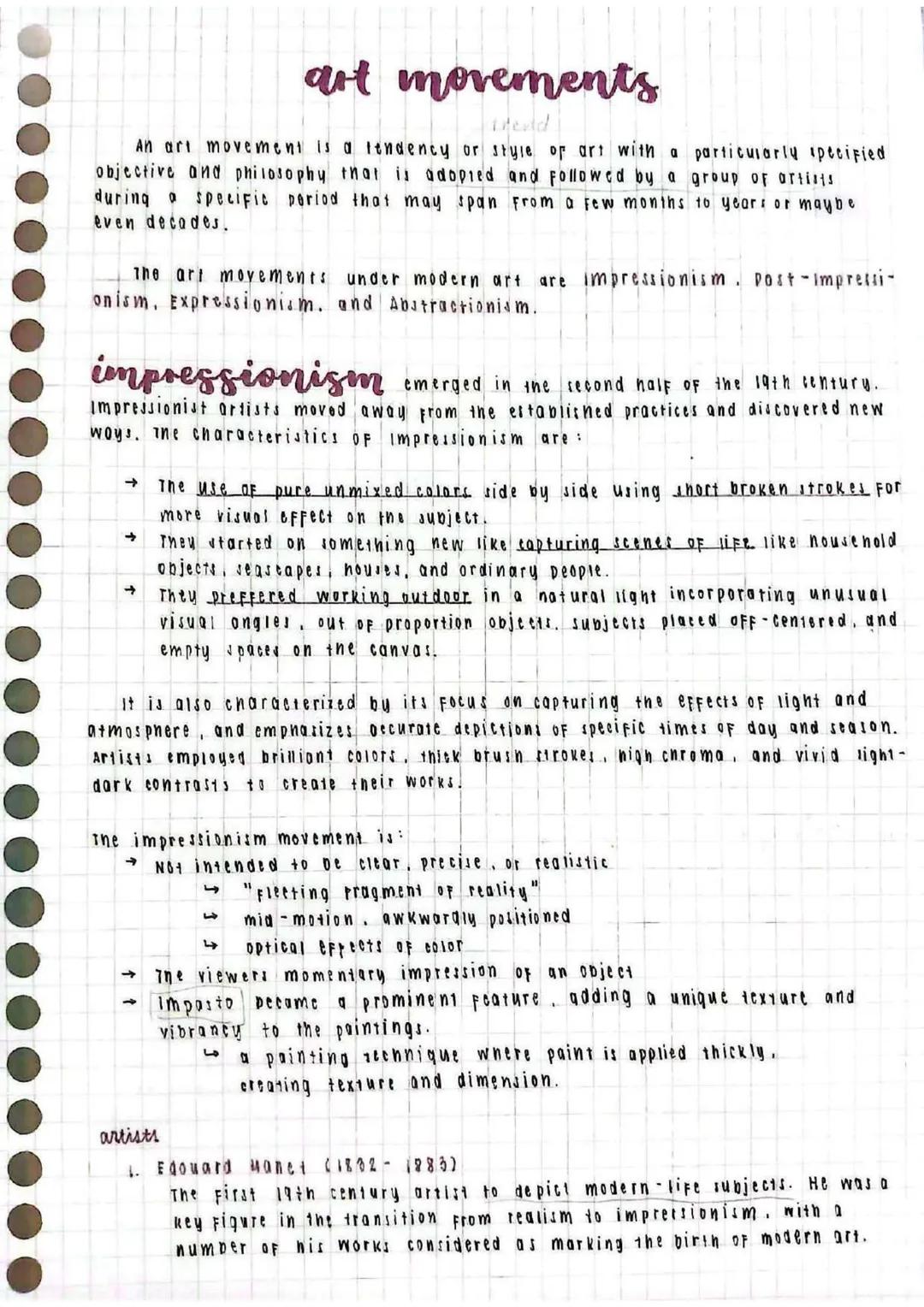
Think of art movements as fashion trends, but for painters! They're specific styles that artists adopt together during certain time periods, sometimes lasting months or even decades.
Modern art includes four major movements you need to know: Impressionism, Post-Impressionism, Expressionism, and Abstractionism. Each one broke traditional rules in exciting new ways.
Impressionism emerged in the late 1800s when artists got tired of stuffy, formal painting rules. These rebels started painting outdoors, capturing everyday life like household objects and ordinary people instead of just fancy portraits. They used pure, unmixed colors side by side with short, broken brush strokes to create amazing visual effects.
The coolest thing about Impressionist paintings? They're not meant to look crystal clear or perfectly realistic. Instead, they capture fleeting moments - like a "snapshot" of reality. Artists used a technique called impasto, where paint is applied super thick to create texture that practically jumps off the canvas.
Key Insight: Impressionist paintings focus on capturing light and atmosphere at specific times of day, making them feel alive and momentary.
Edouard Manet was the trailblazer who first painted modern life subjects, helping birth modern art as we know it with famous works like "The Bar at the Folies Bergère."





 Science
 Araling Panlipunan (AP)
 Iba pa
 Practical Research
 DISS
DISS