Linear Inequalities
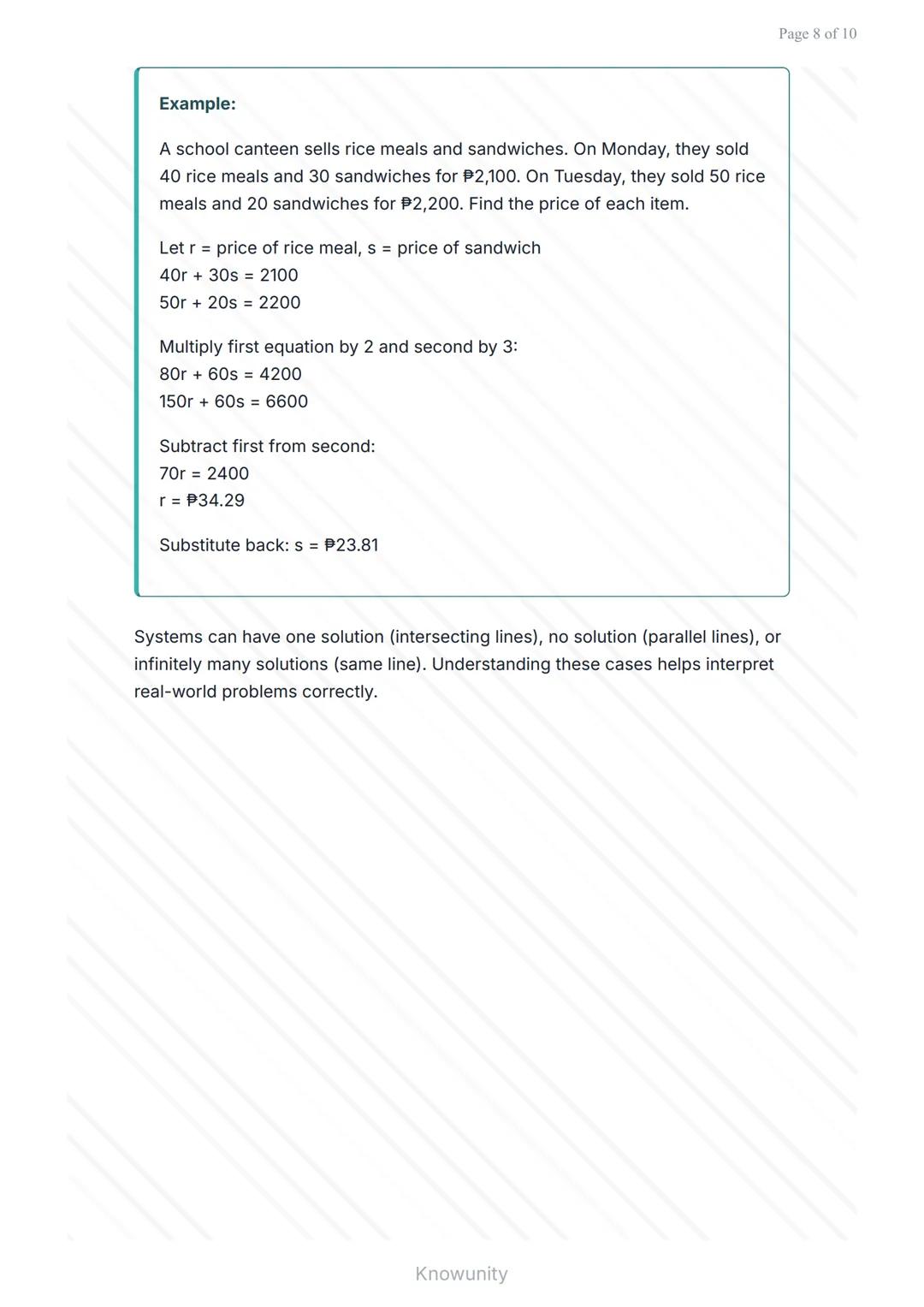
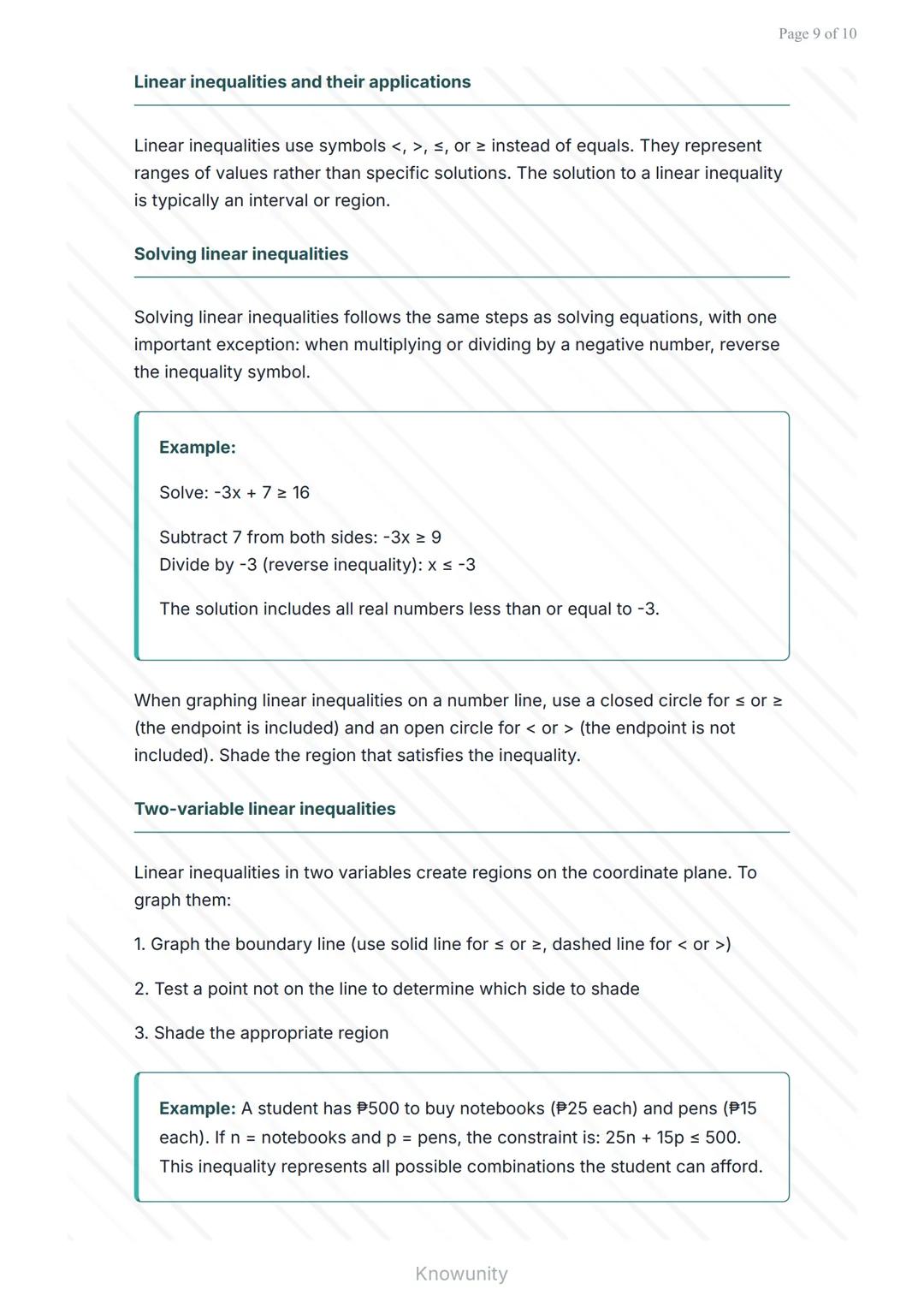
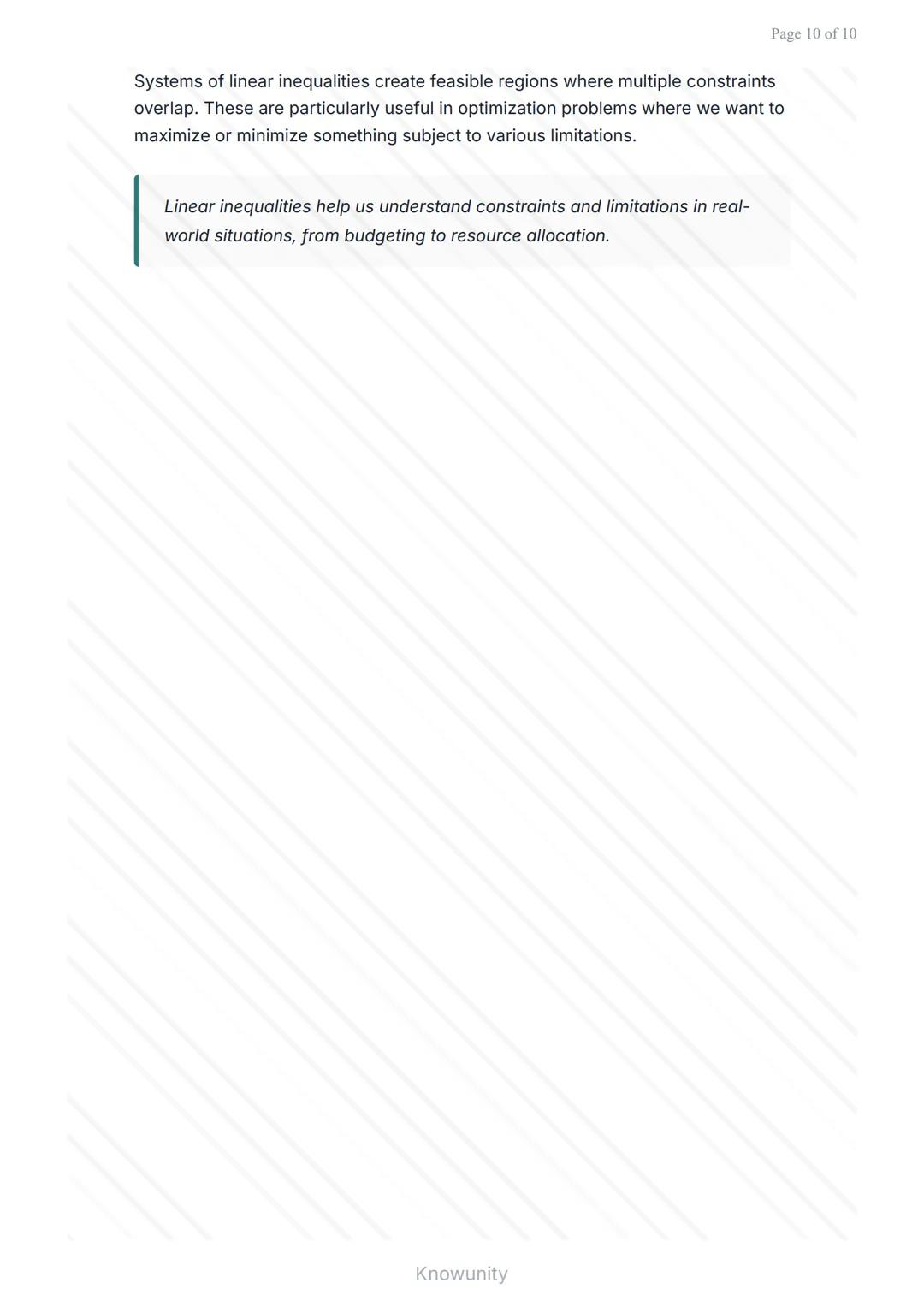
Linear inequalities use symbols like <, >, ≤, or ≥ instead of equals, representing ranges of values rather than single answers. They're perfect for describing constraints and limitations in real situations.
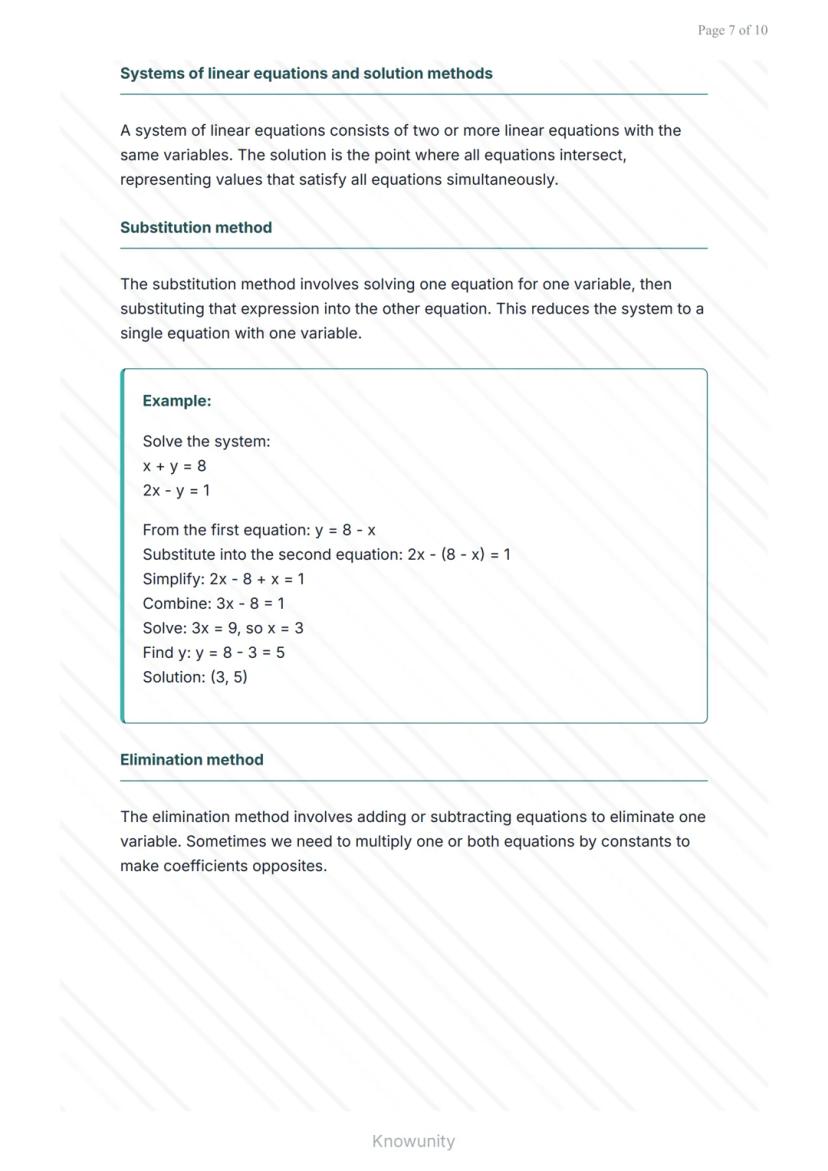
Solving inequalities follows the same steps as equations, with one crucial exception: when multiplying or dividing by a negative number, you must reverse the inequality symbol. For -3x + 7 ≥ 16, you get -3x ≥ 9, then x ≤ -3 after dividing by -3 and flipping the sign.
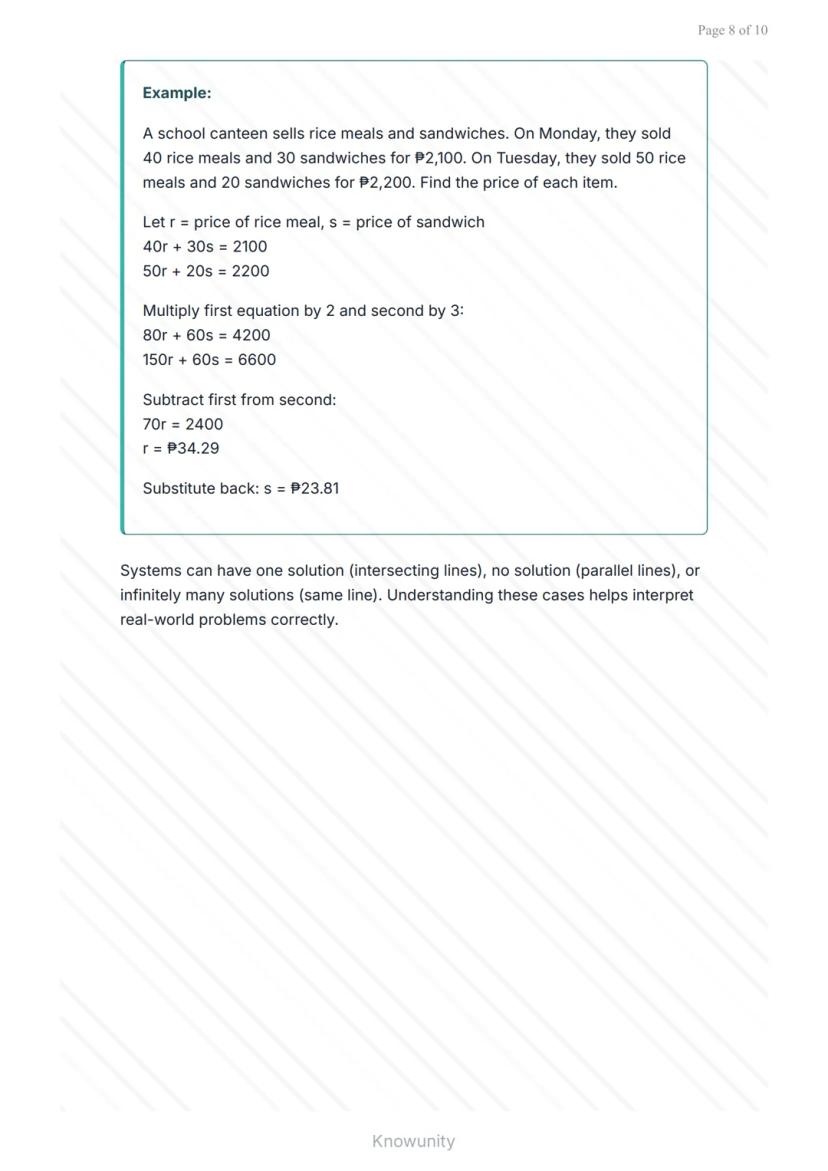
When graphing on a number line, use closed circles for ≤ or ≥ (the endpoint counts) and open circles for < or > (the endpoint doesn't count). For two-variable inequalities, you'll shade regions on the coordinate plane instead of just marking points.
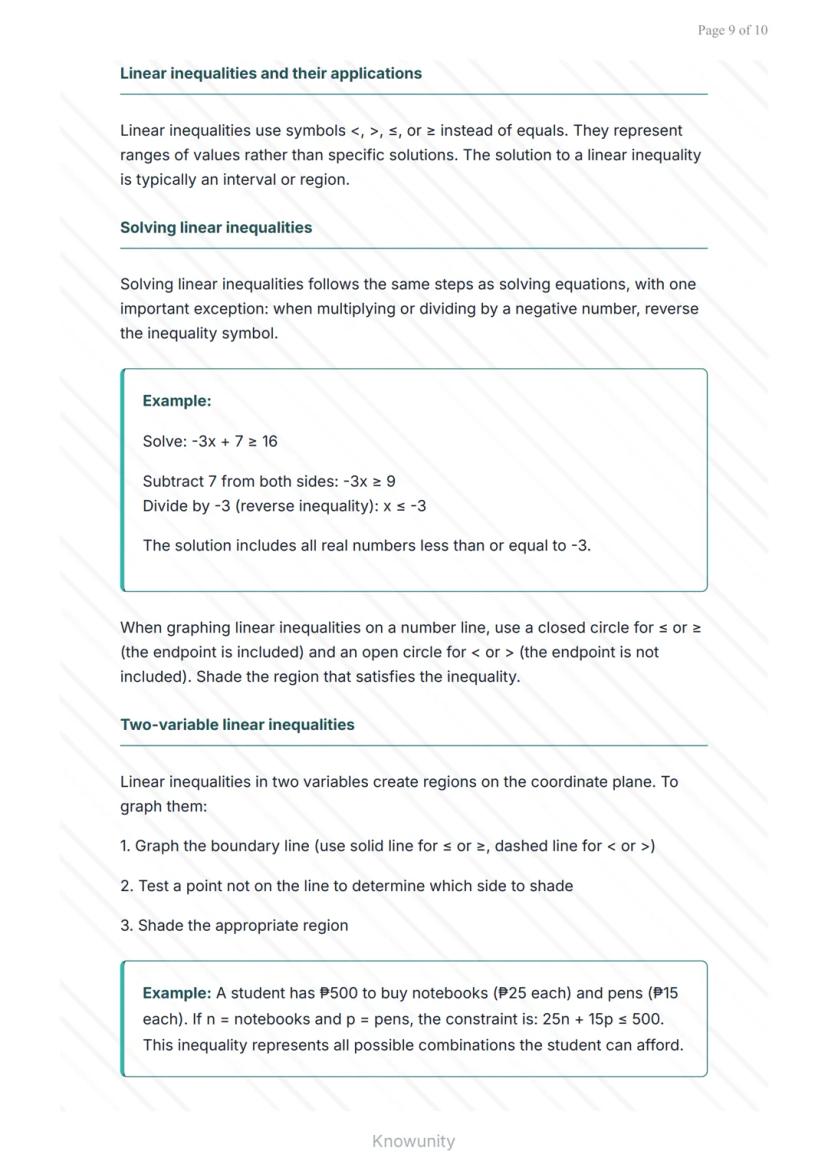
Real-world constraints make inequalities incredibly useful. If you have £500 to spend on notebooks (£2.50 each) and pens (£1.50 each), the inequality 2.50n + 1.50p ≤ 500 shows all possible combinations you can afford. These feasible regions help with budgeting and resource allocation decisions.
Memory Trick: When dividing by negative numbers in inequalities, think "negative flips" - the inequality sign always flips direction, just like how negative numbers flip the direction on a number line!


 Practical Research
 Iba pa
 GenMath
 Science
 Econ
Econ Filipino
 Social Studies