Graphing Combined Functions
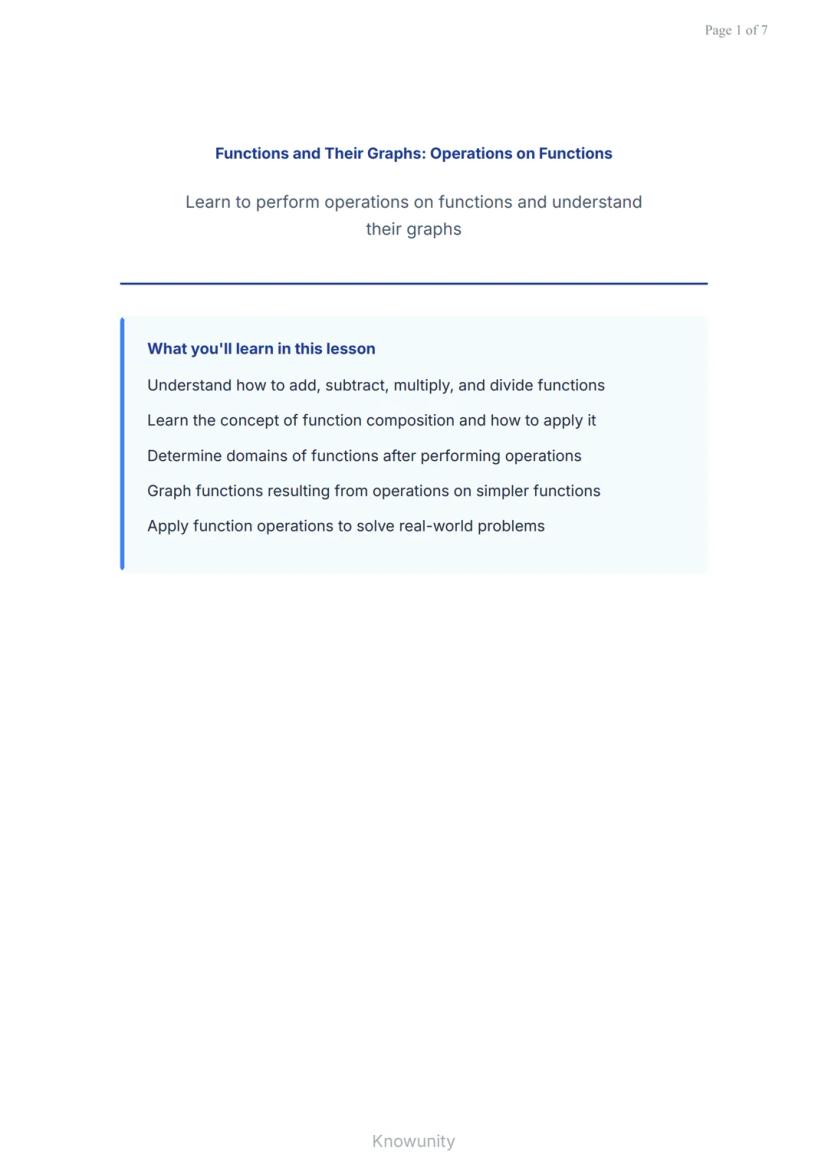
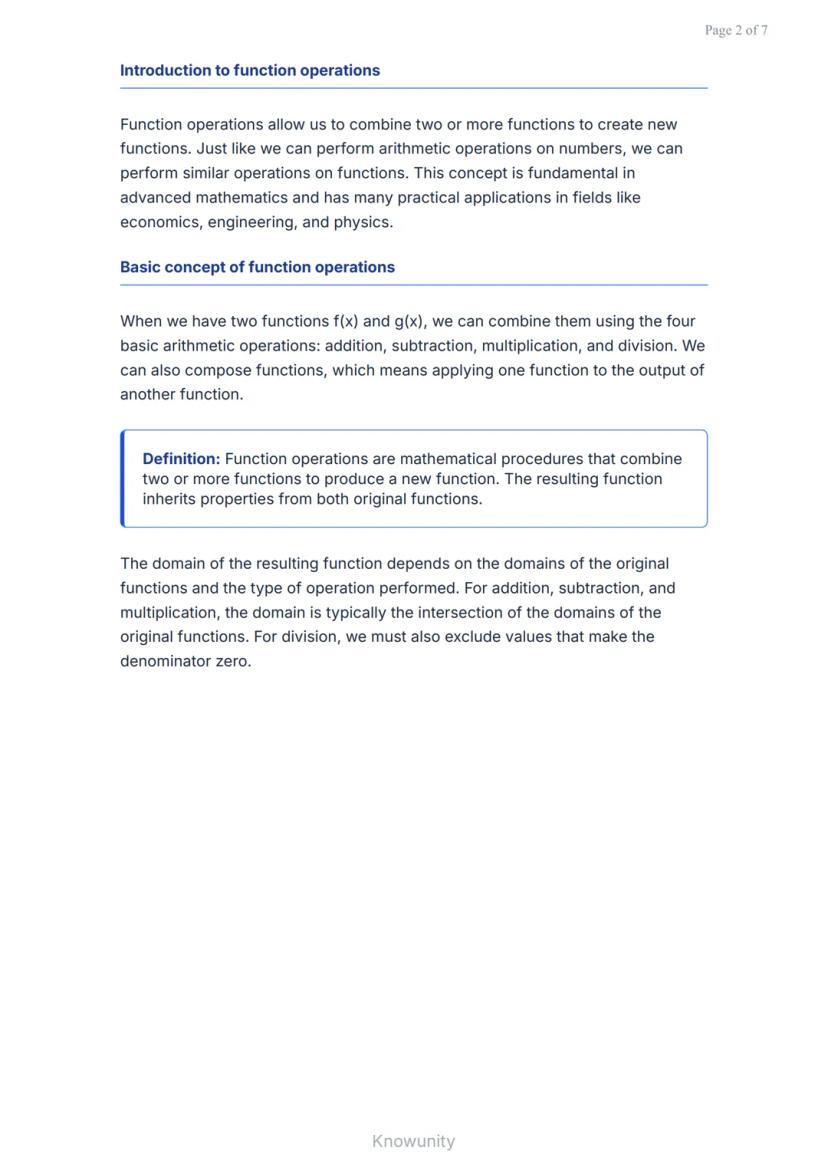
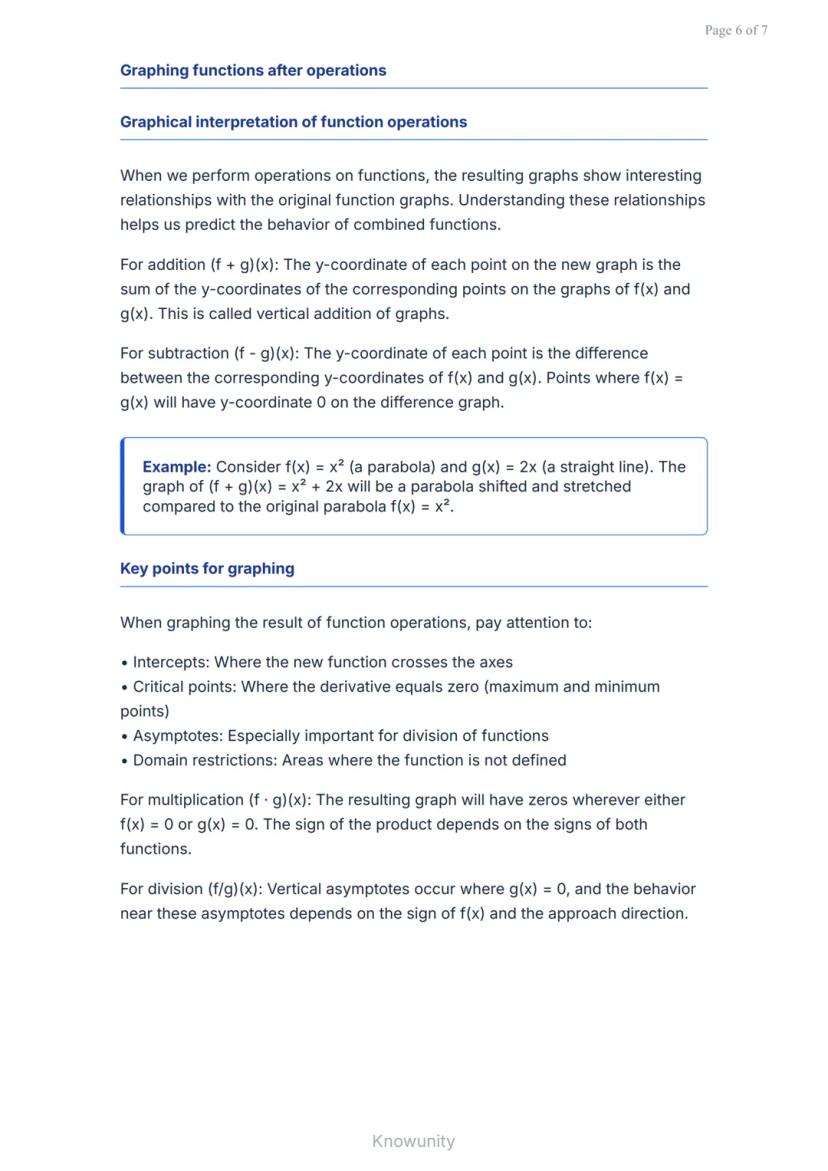
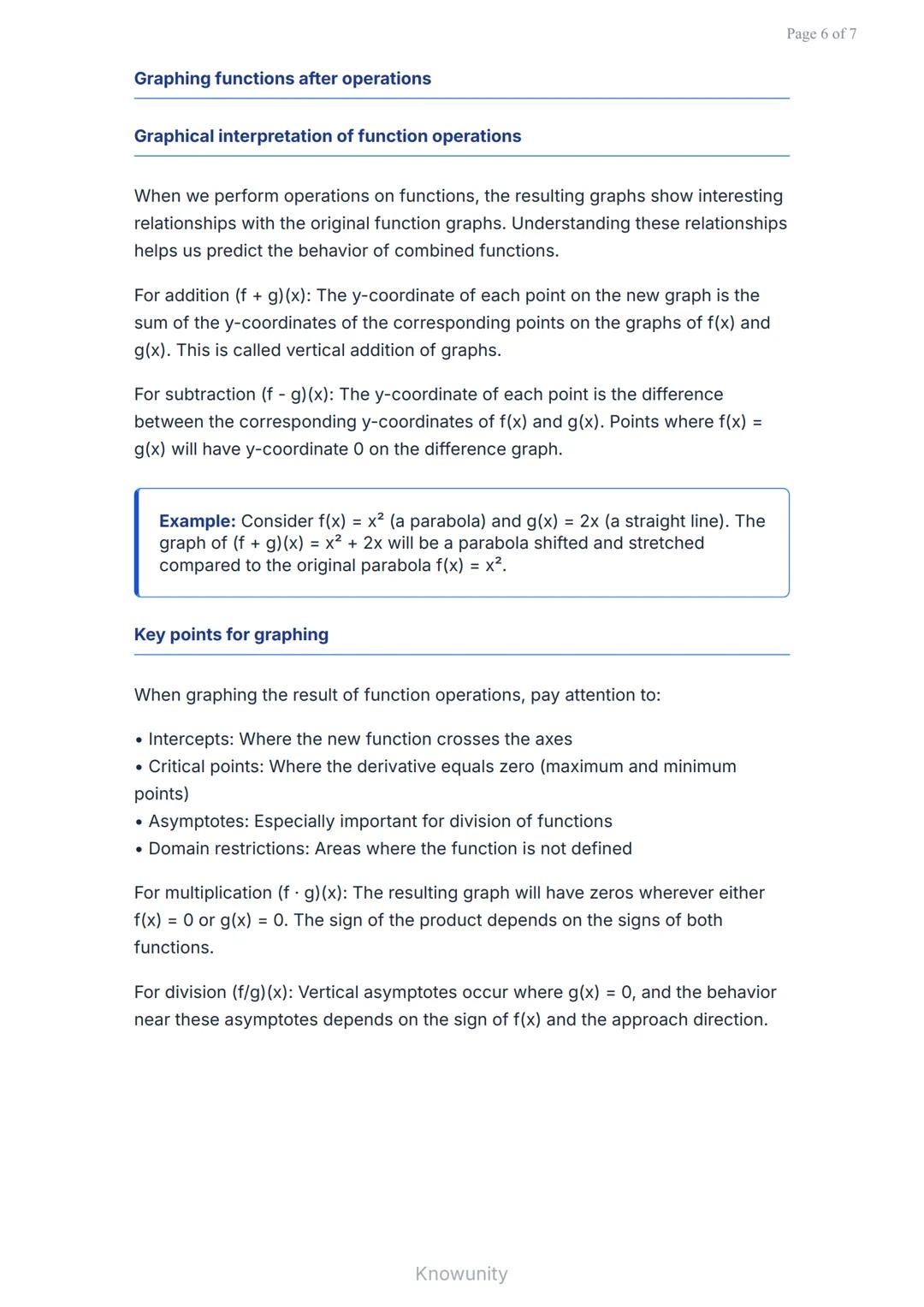
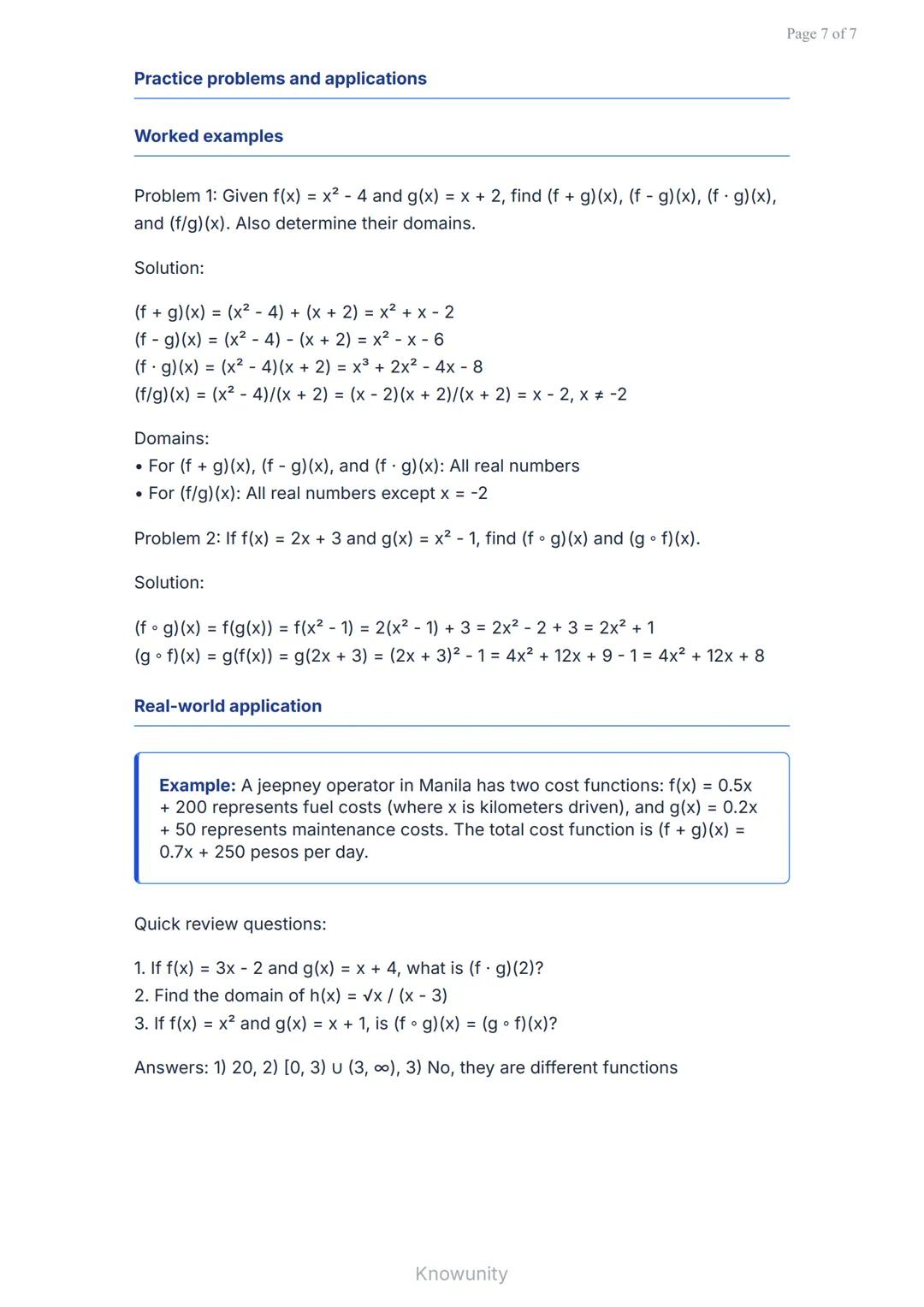
When you graph function operations, you're essentially doing visual arithmetic with the original graphs. For addition f+g(x), you add the y-coordinates at each x-value - this creates vertical stretching and shifting effects.
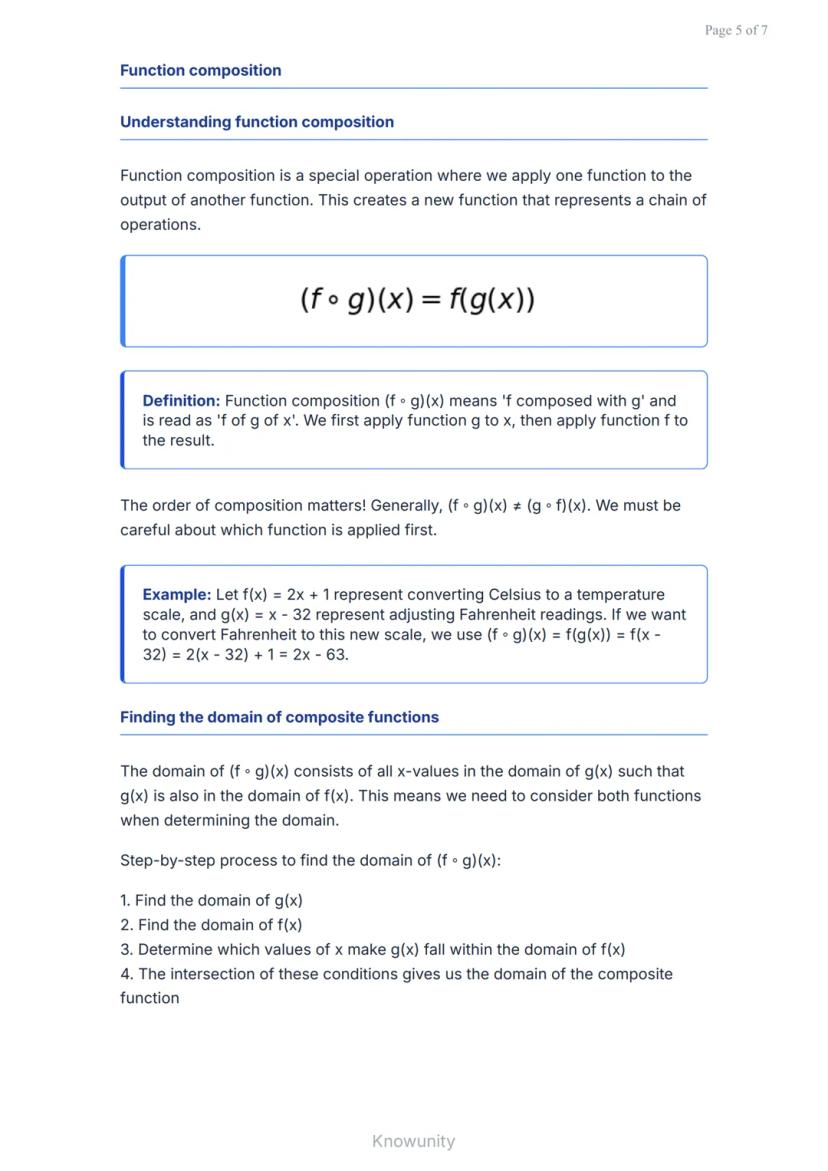
Graphical addition means taking corresponding points from both graphs and adding their heights. Where one function is positive and another negative, they partially cancel out - creating interesting wave-like patterns.
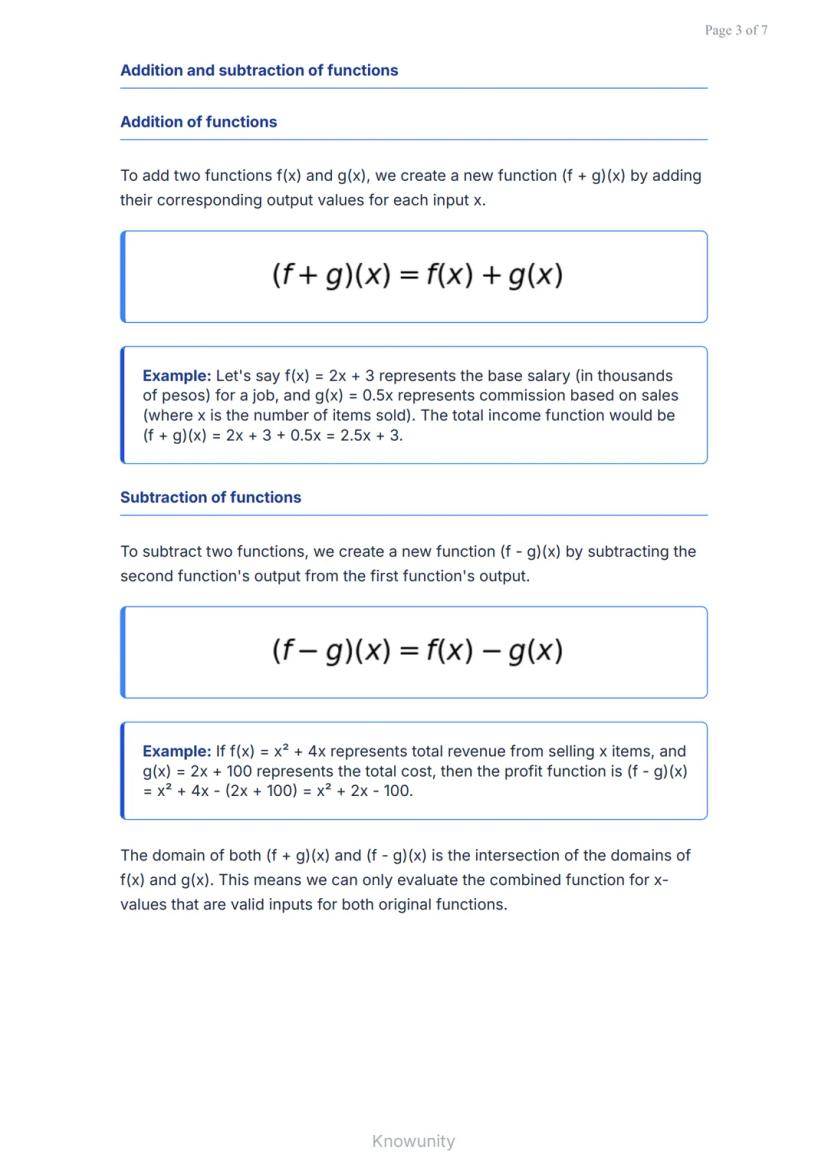
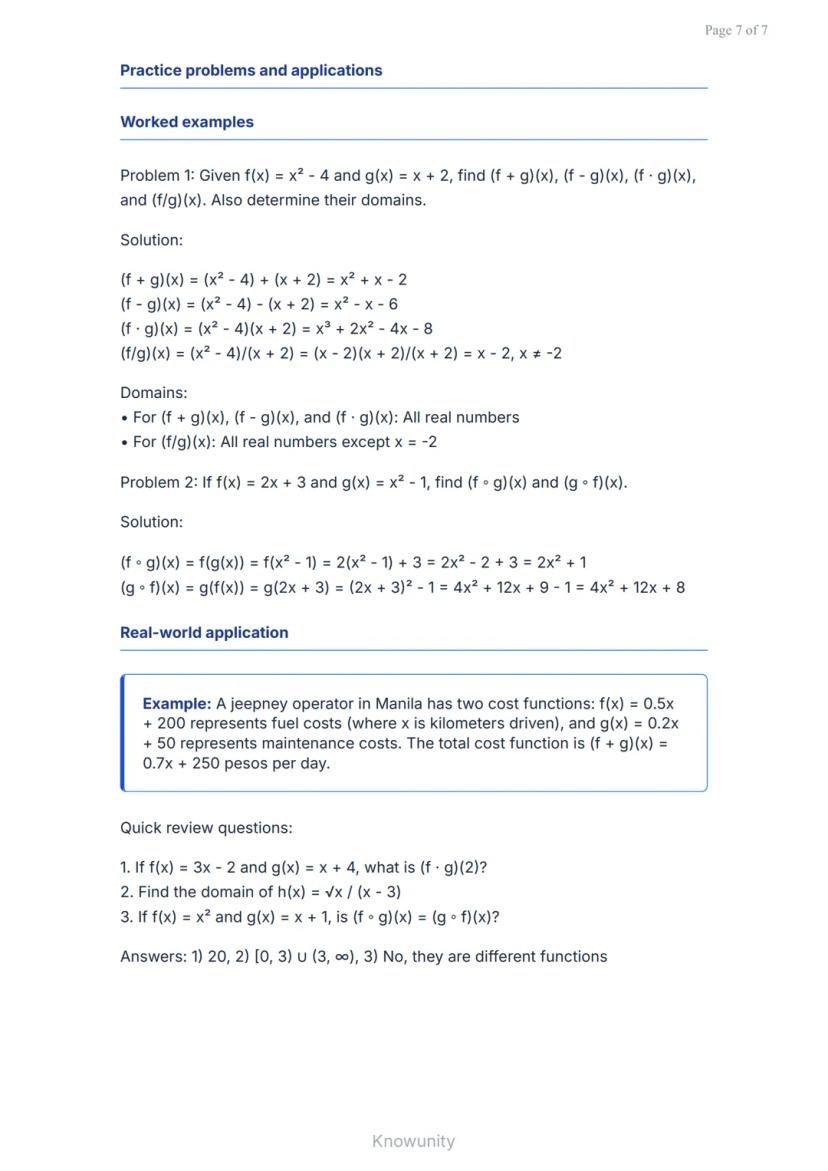
Multiplication and division create more dramatic changes. With (f · g)(x), wherever either function equals zero, your product will be zero too. This creates new x-intercepts that didn't exist before.
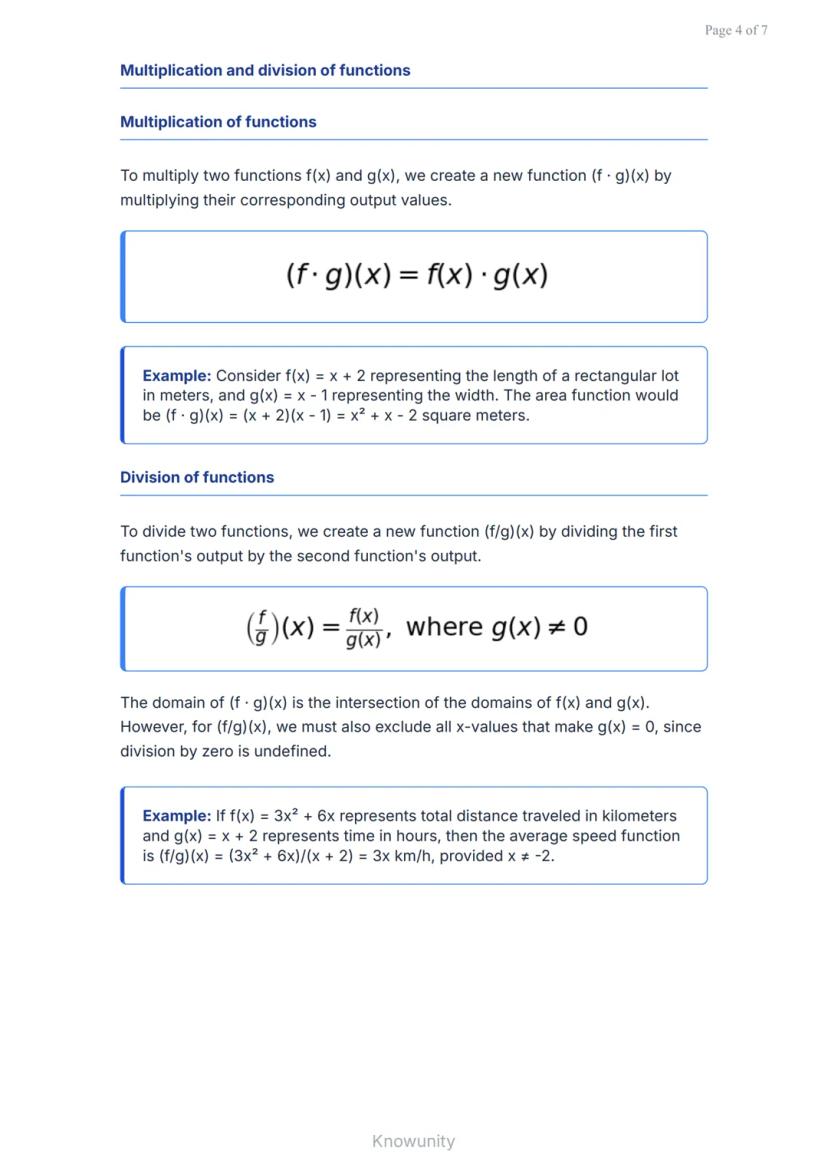
Division graphs are particularly exciting because they create vertical asymptotes wherever g(x) = 0. The graph shoots up to infinity or down to negative infinity at these forbidden x-values.
Pay special attention to intercepts, turning points, and asymptotes when sketching. These key features help you understand the behaviour of your combined function.
Graphing Tip: Start by identifying where each original function equals zero - these points often become crucial features in your combined graph!

 GenMath
 Science
 Econ
Econ Iba pa
 Filipino
 Social Studies