Getting Started with Function Operations
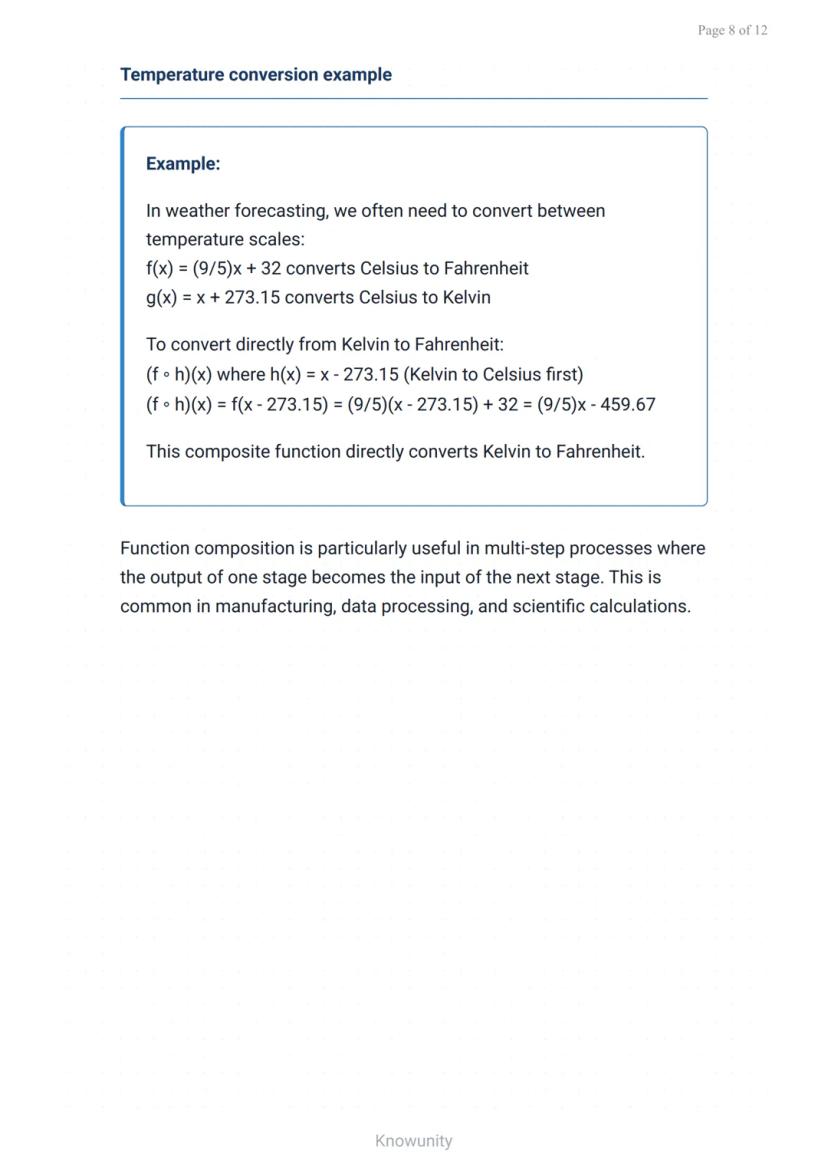
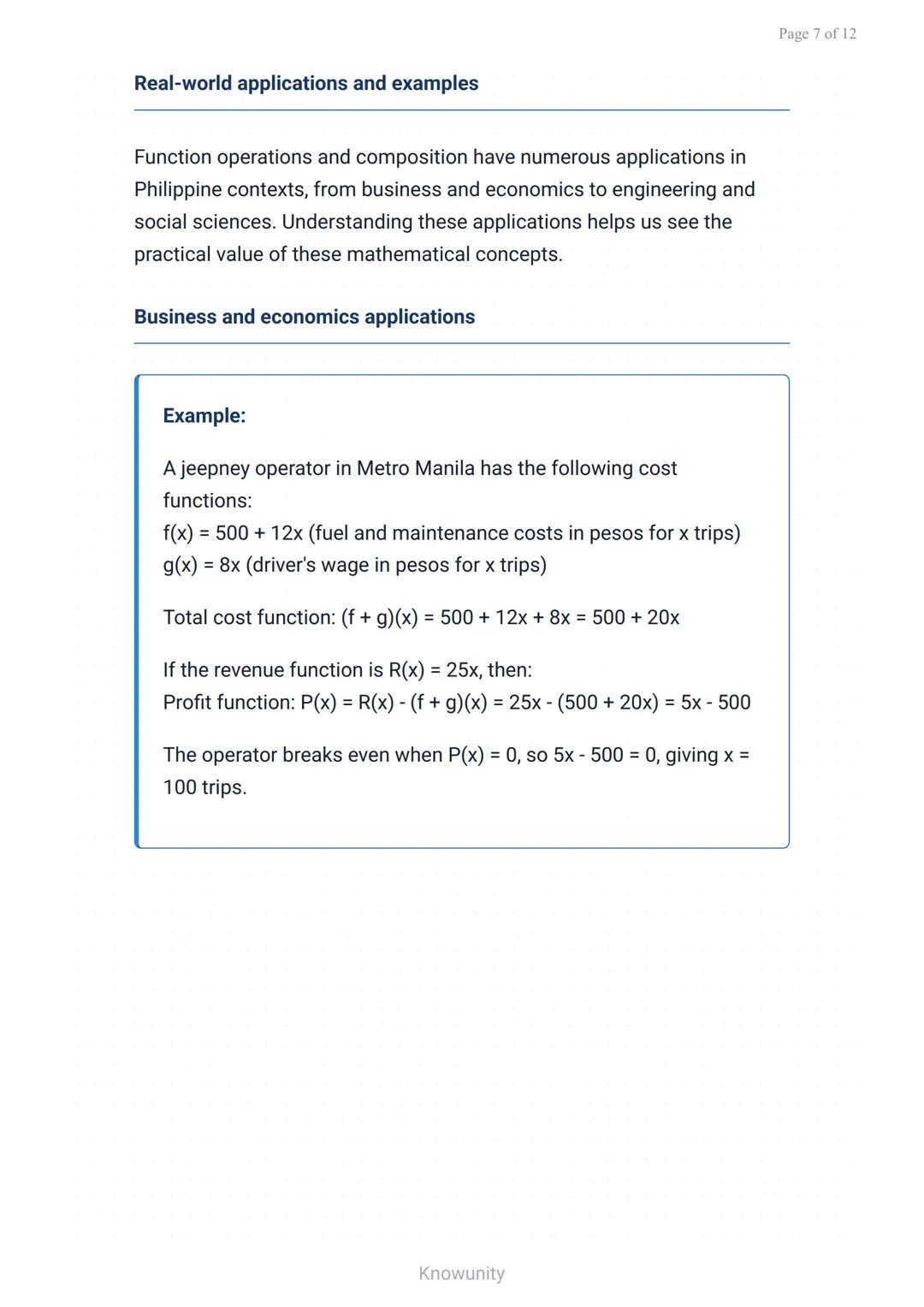
Think of function operations as mathematical recipes where you combine two functions to create something new. Just like mixing ingredients changes the final dish, combining functions creates entirely new mathematical relationships.
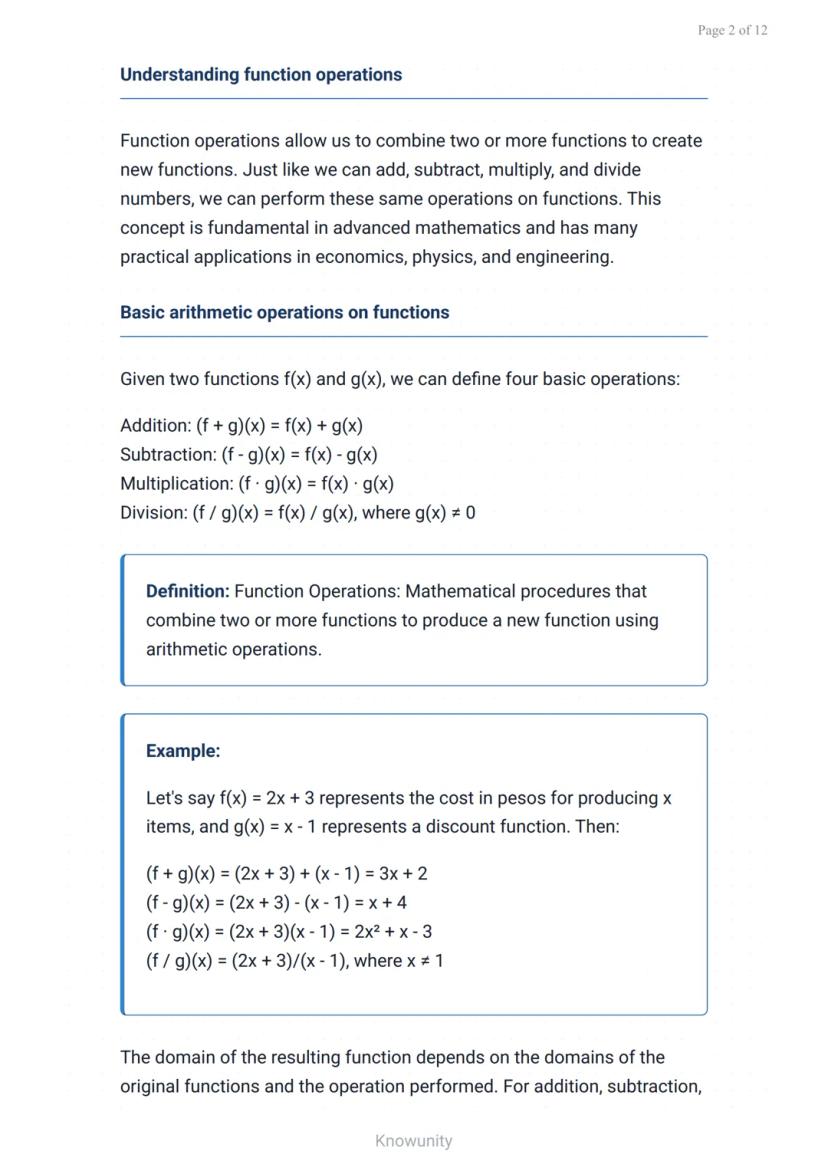
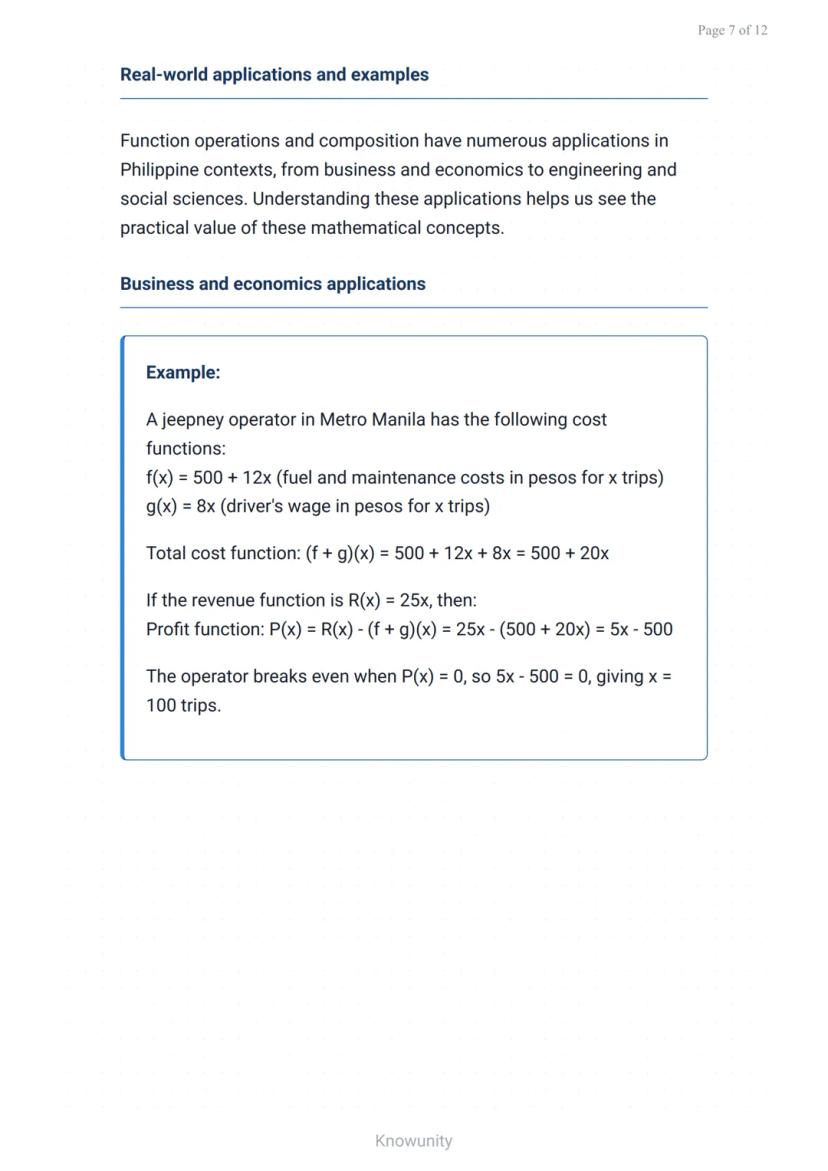
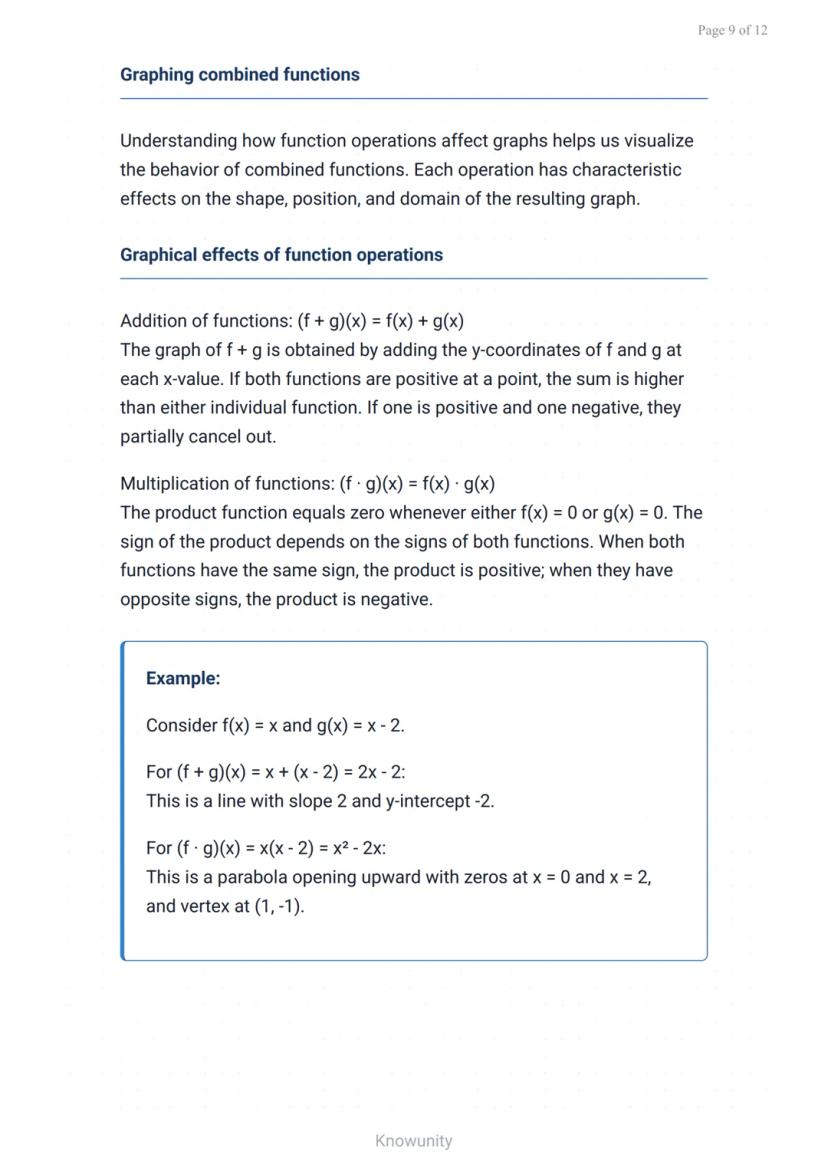
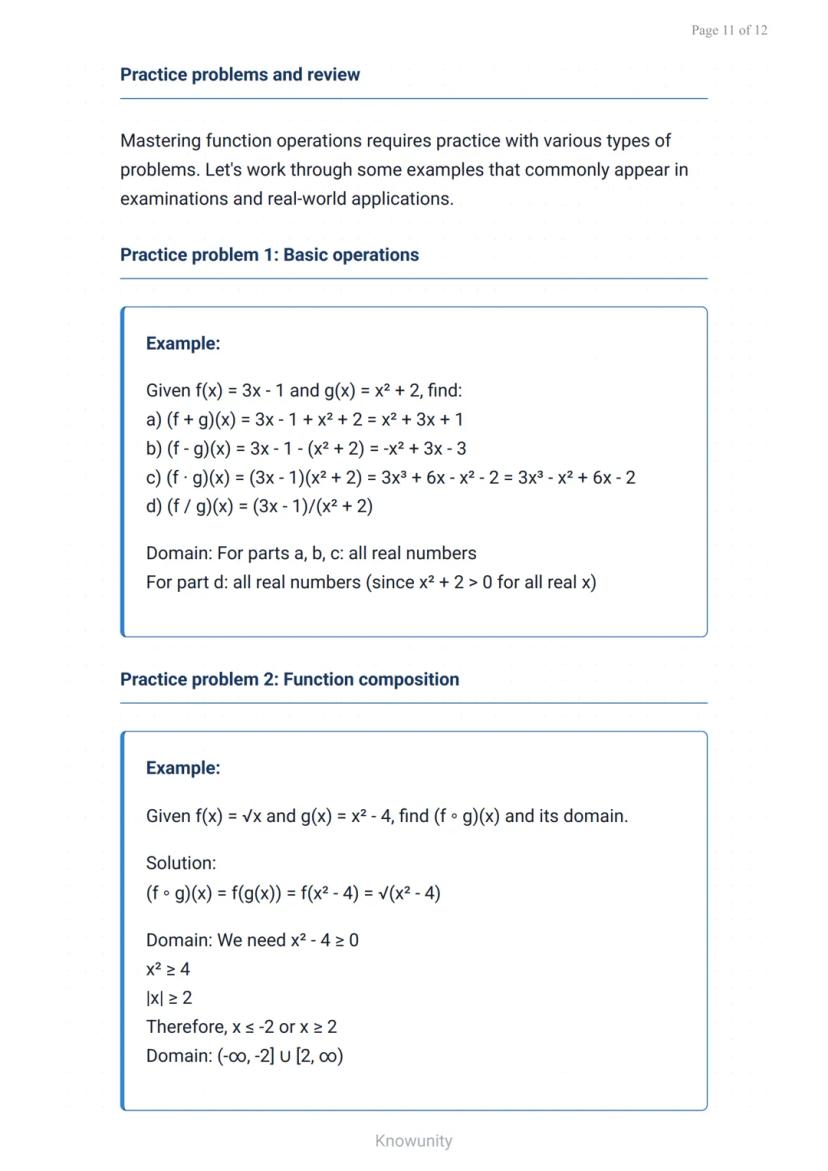
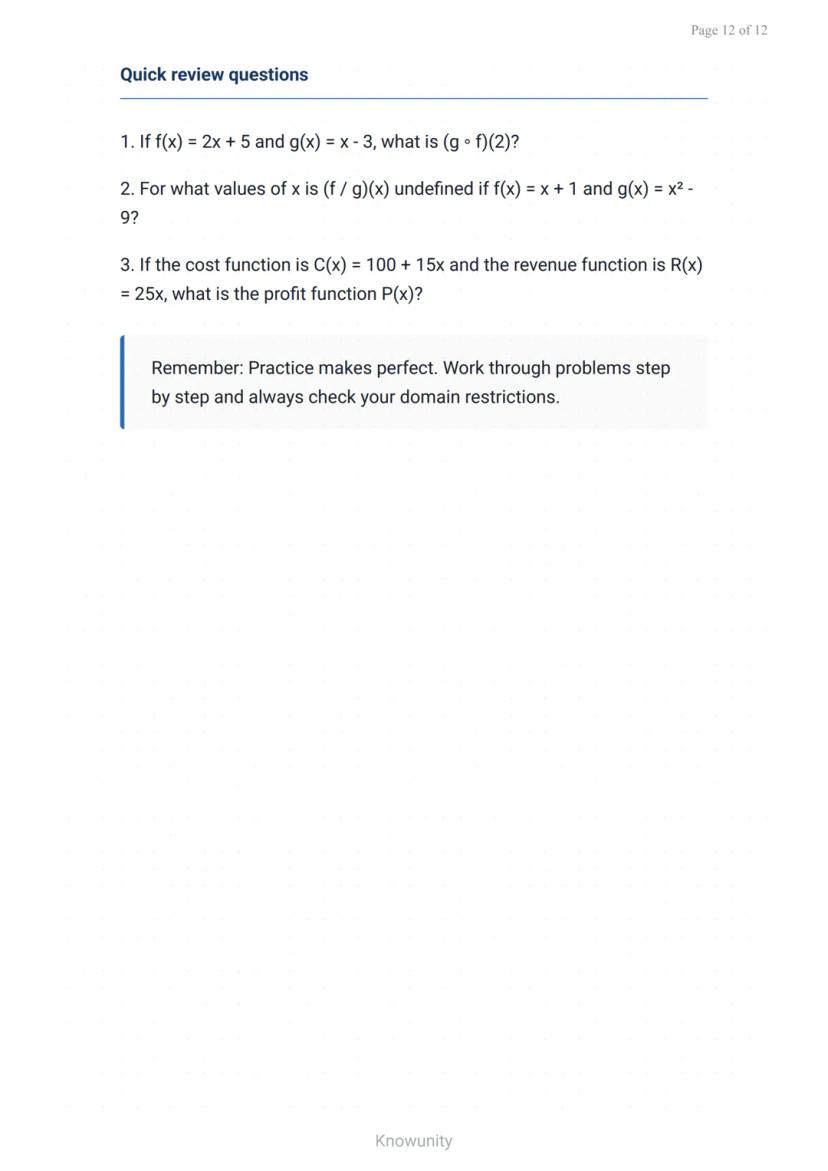
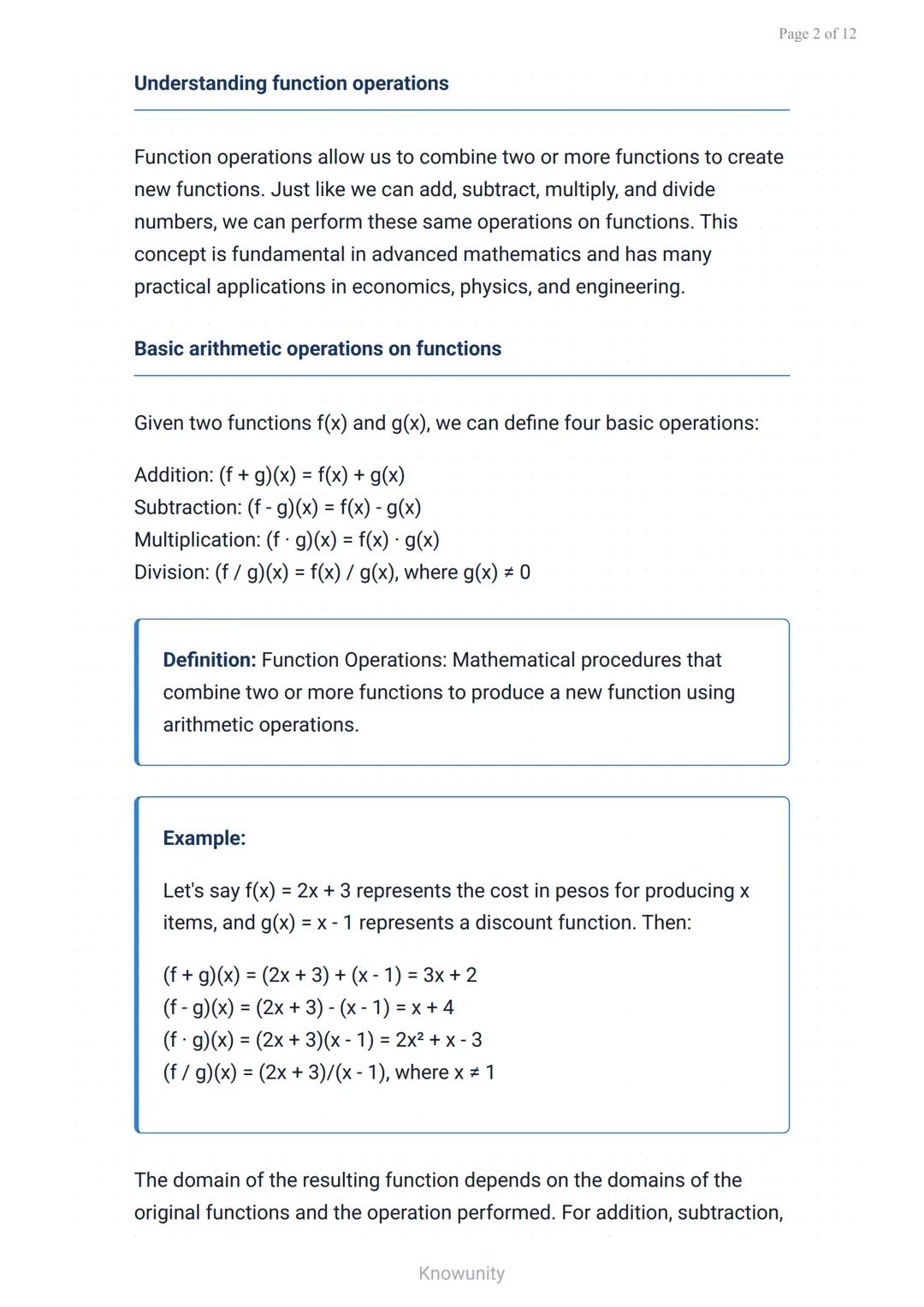
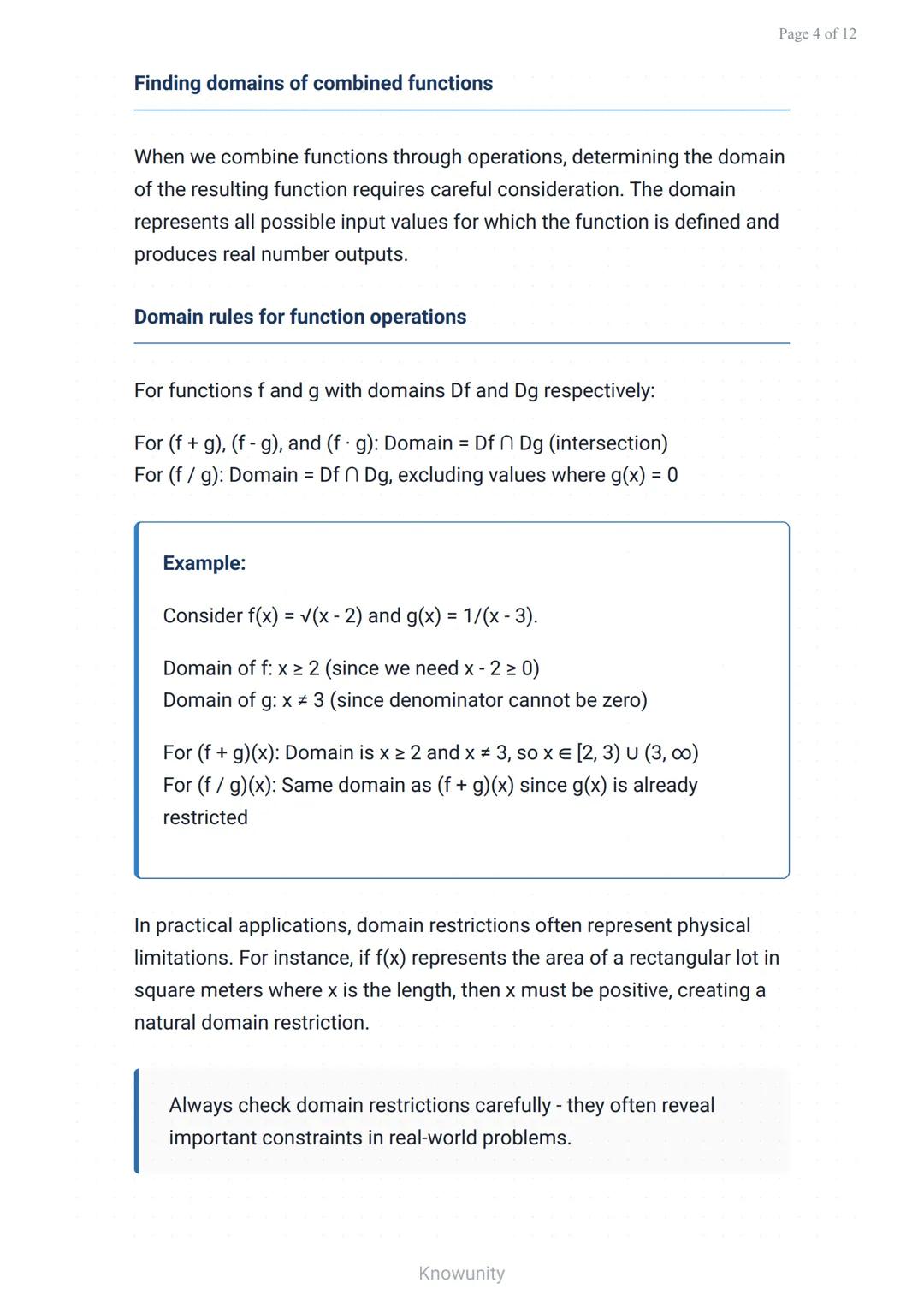
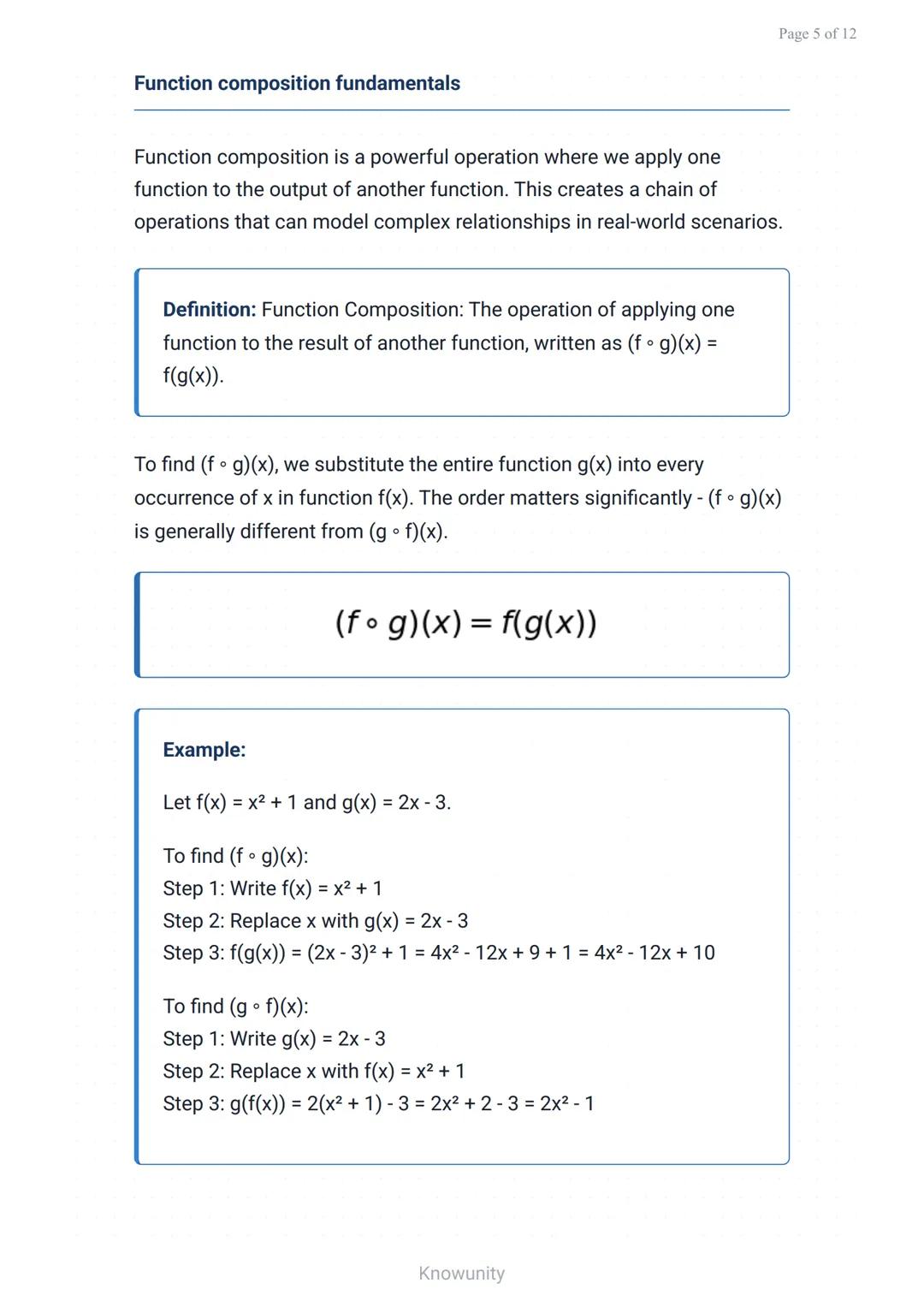
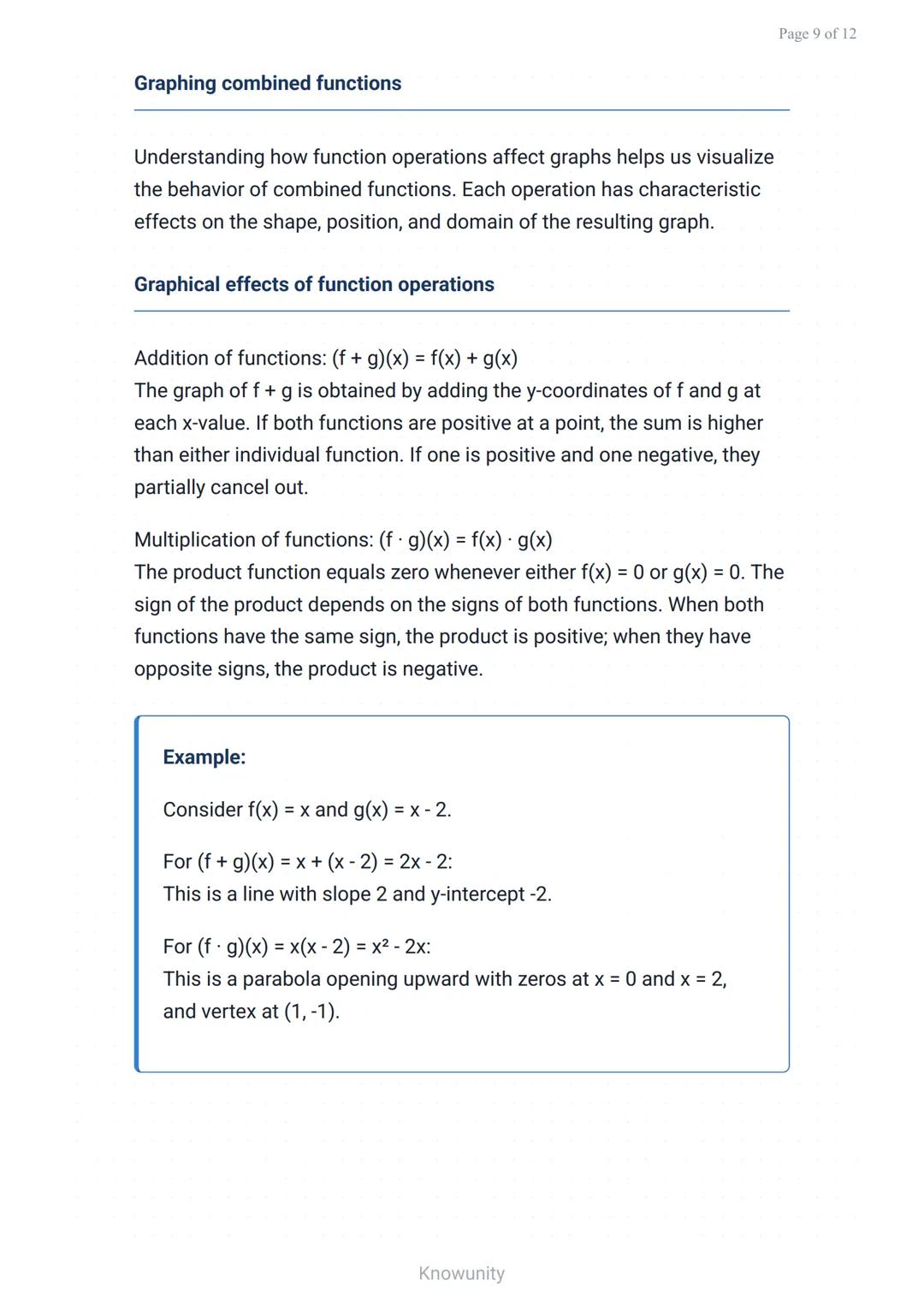
You can perform four basic operations on functions: addition, subtraction, multiplication, and division. For example, if f(x) = 2x + 3 and g(x) = x - 1, then f+g(x) simply means you add them together: 2x+3 + x−1 = 3x + 2.
Remember: Function operations follow the same rules as regular arithmetic, but now you're working with entire expressions instead of just numbers. This makes them incredibly useful for modelling complex real-world situations.
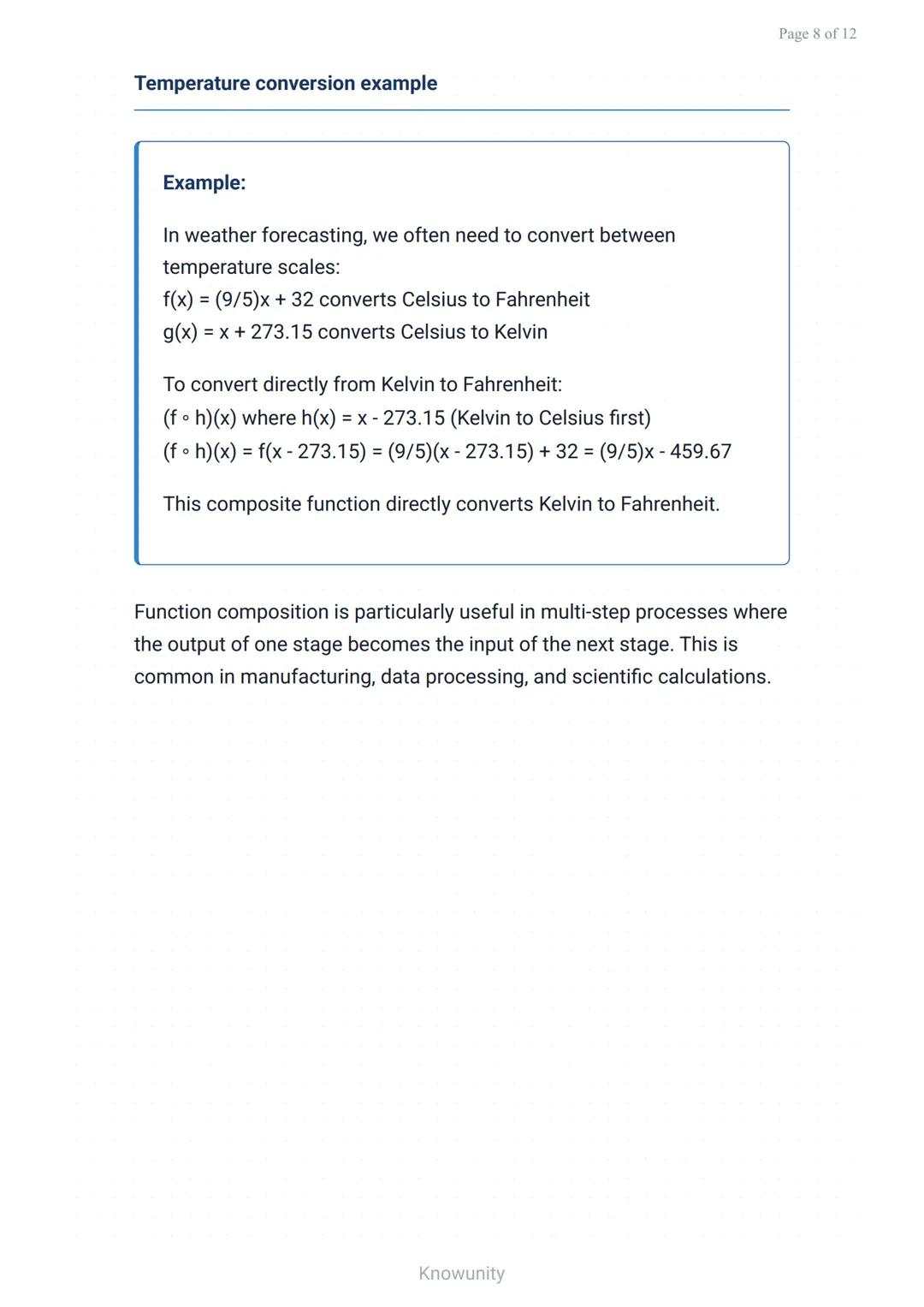
Key Insight: Function operations let you build complex models from simpler parts - perfect for tackling multi-step problems in physics, economics, and engineering!







 UCSP
UCSP Econ
Econ Math
Math GenChem
 GenBio
 EAPP
EAPP Iba pa
 Filipino
 Social Studies