
Ever wondered how scientists figured out that all living things... Ipakita pa
 UCSP
UCSP Econ
Econ Math
Math GenChem
 EAPP
EAPP Iba pa
 Filipino
Mag-sign up para makita ang contentLibre ito!
Access sa lahat ng dokumento
Pagbutihin ang iyong mga grado
Sumali sa milyong mga estudyante
Knowunity AI
Higit pa
Mga Asignatura
Triangle Congruence and Similarity Theorems
Triangle Properties and Classification
Linear Equations and Graphs
Geometric Angle Relationships
Trigonometric Functions and Identities
Equation Solving Techniques
Circle Geometry Fundamentals
Division Operations and Methods
Basic Differentiation Rules
Exponent and Logarithm Properties
Ipakita lahat ng paksa
Human Organ Systems
Reproductive Cell Cycles
Biological Sciences Subdisciplines
Cellular Energy Metabolism
Autotrophic Energy Processes
Inheritance Patterns and Principles
Biomolecular Structure and Organization
Cell Cycle and Division Mechanics
Cellular Organization and Development
Biological Structural Organization
Ipakita lahat ng paksa
Chemical Sciences and Applications
Atomic Structure and Composition
Molecular Electron Structure Representation
Atomic Electron Behavior
Matter Properties and Water
Mole Concept and Calculations
Gas Laws and Behavior
Periodic Table Organization
Chemical Thermodynamics Fundamentals
Chemical Bond Types and Properties
Ipakita lahat ng paksa
European Renaissance and Enlightenment
European Cultural Movements 800-1920
American Revolution Era 1763-1797
American Civil War 1861-1865
Global Imperial Systems
Mongol and Chinese Dynasties
U.S. Presidents and World Leaders
Historical Sources and Documentation
World Wars Era and Impact
World Religious Systems
Ipakita lahat ng paksa
Classic and Contemporary Novels
Literary Character Analysis
Rhetorical Theory and Practice
Classic Literary Narratives
Reading Analysis and Interpretation
Narrative Structure and Techniques
English Language Components
Influential English-Language Authors
Basic Sentence Structure
Narrative Voice and Perspective
Ipakita lahat ng paksa
1,925
•
Na-update Mar 21, 2026
•

Jones
@pee_gie.05
Ever wondered how scientists figured out that all living things... Ipakita pa
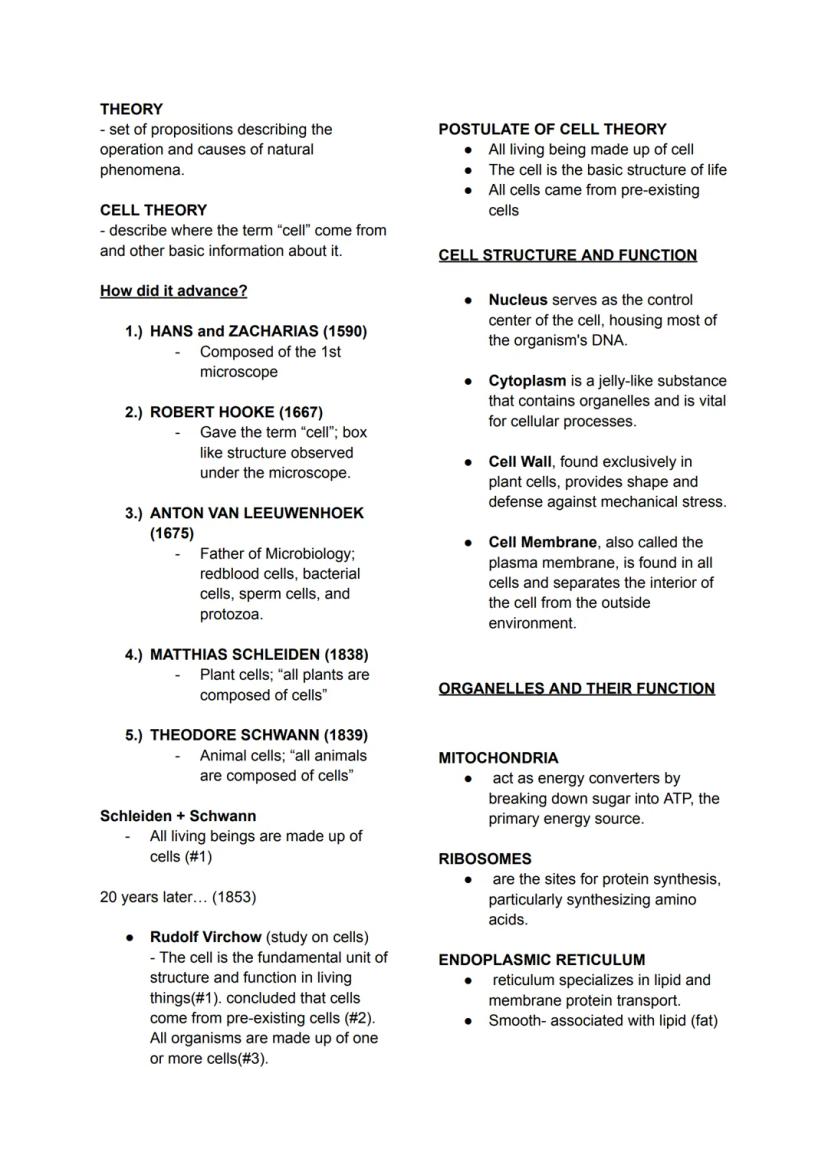
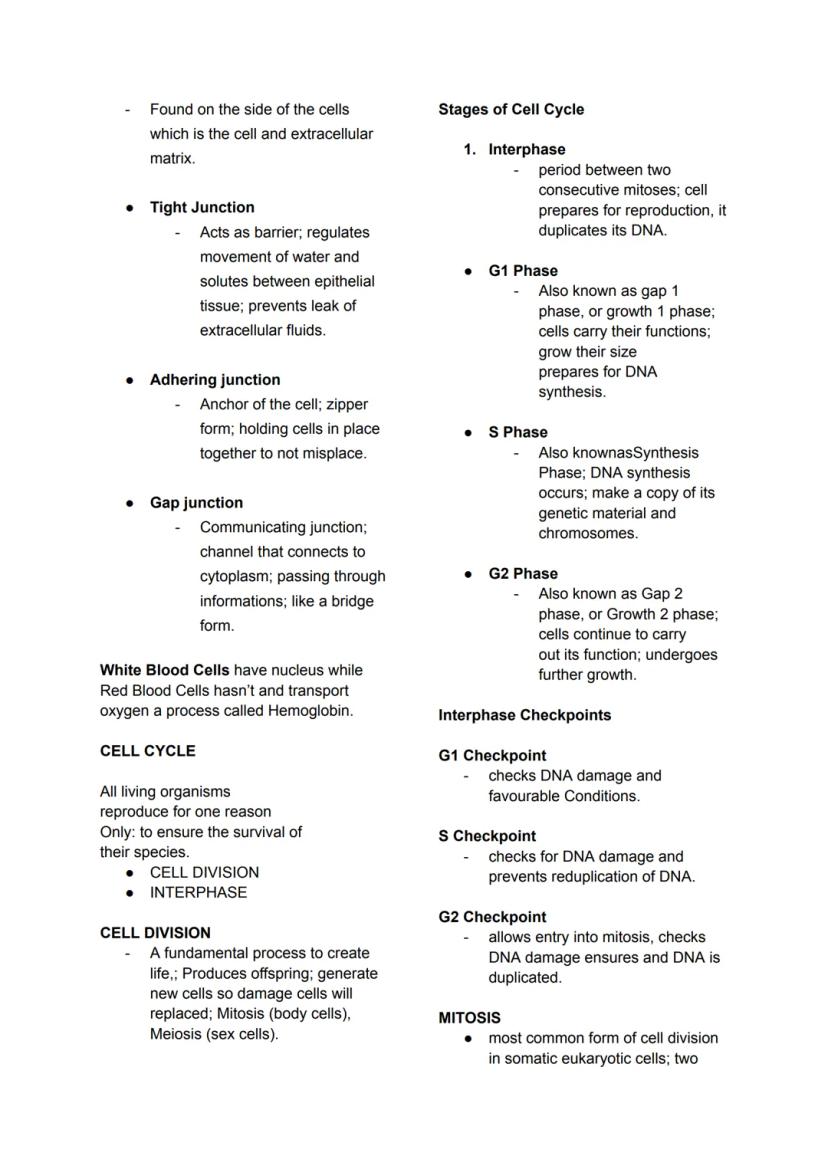

Your smartphone has better zoom than the first microscopes, but those simple devices changed everything! Hans and Zacharias Janssen created the first microscope in 1590, opening up a whole new world. Robert Hooke gave us the word "cell" in 1667 when he saw box-like structures that reminded him of monastery cells.
Anton van Leeuwenhoek, the father of microbiology, was like the first person to discover a hidden universe. He observed red blood cells, bacteria, sperm cells, and tiny organisms called protozoa in 1675. His discoveries proved that life existed at levels invisible to the naked eye.
The real breakthrough came when Matthias Schleiden (plants) and Theodore Schwann (animals) realized that all living things are made of cells. Twenty years later, Rudolf Virchow completed the puzzle by proving that cells only come from other existing cells.
Key Insight: The three postulates of cell theory are: all living beings are made of cells, cells are life's basic structure, and all cells come from pre-existing cells.
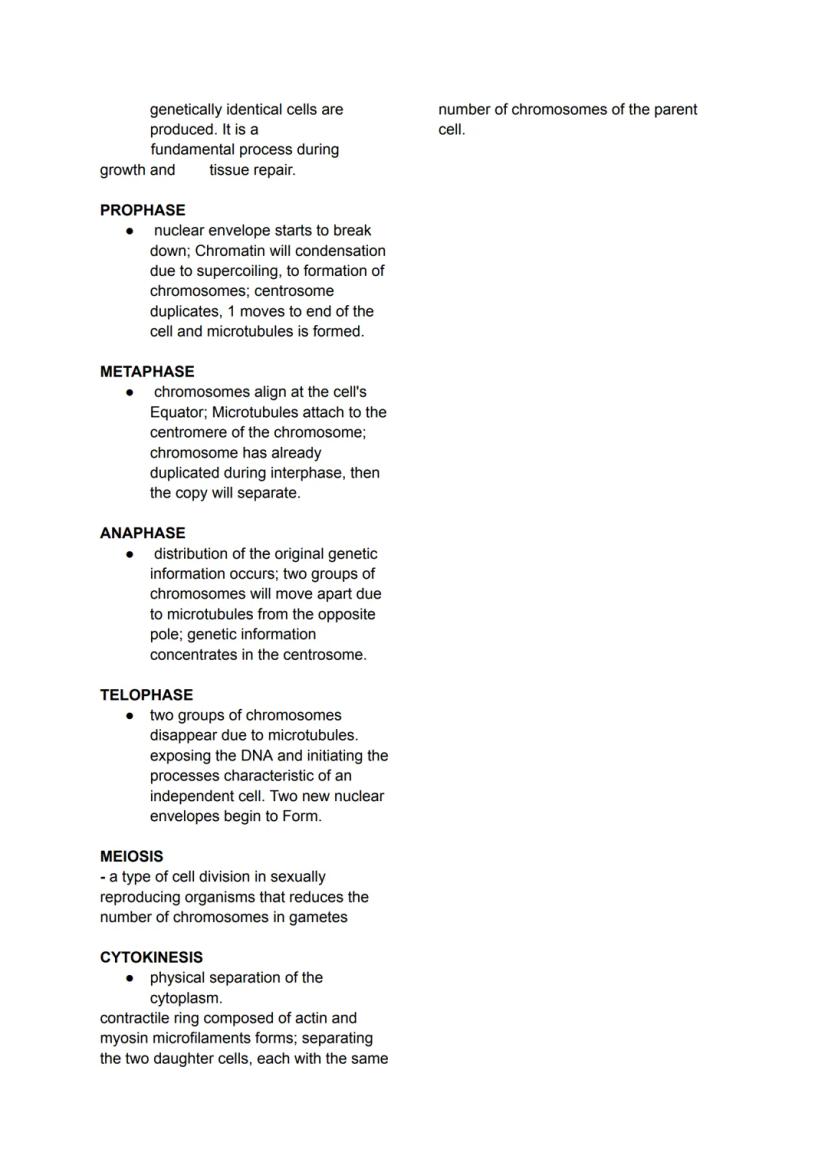
Think of a cell like a bustling city with specialized districts! The nucleus acts as city hall, controlling everything and storing the DNA blueprints. The cytoplasm is like the city's foundation - a jelly-like substance where all the action happens.
Plant cells have unique features that animal cells don't. The cell wall acts like a protective fortress, while chloroplasts work as solar panels for photosynthesis. Vacuoles serve as storage warehouses. Both plant and animal cells have a cell membrane that controls what enters and exits.
Mitochondria are your cellular power plants, converting sugar into ATP energy. Ribosomes work as protein factories, while the endoplasmic reticulum acts like a highway system - smooth ER handles fats, rough ER (covered in ribosomes) processes proteins. The Golgi apparatus works like a post office, packaging and shipping cellular materials.
Remember: Each organelle has a specific job, just like different departments in a company working together to keep everything running smoothly.
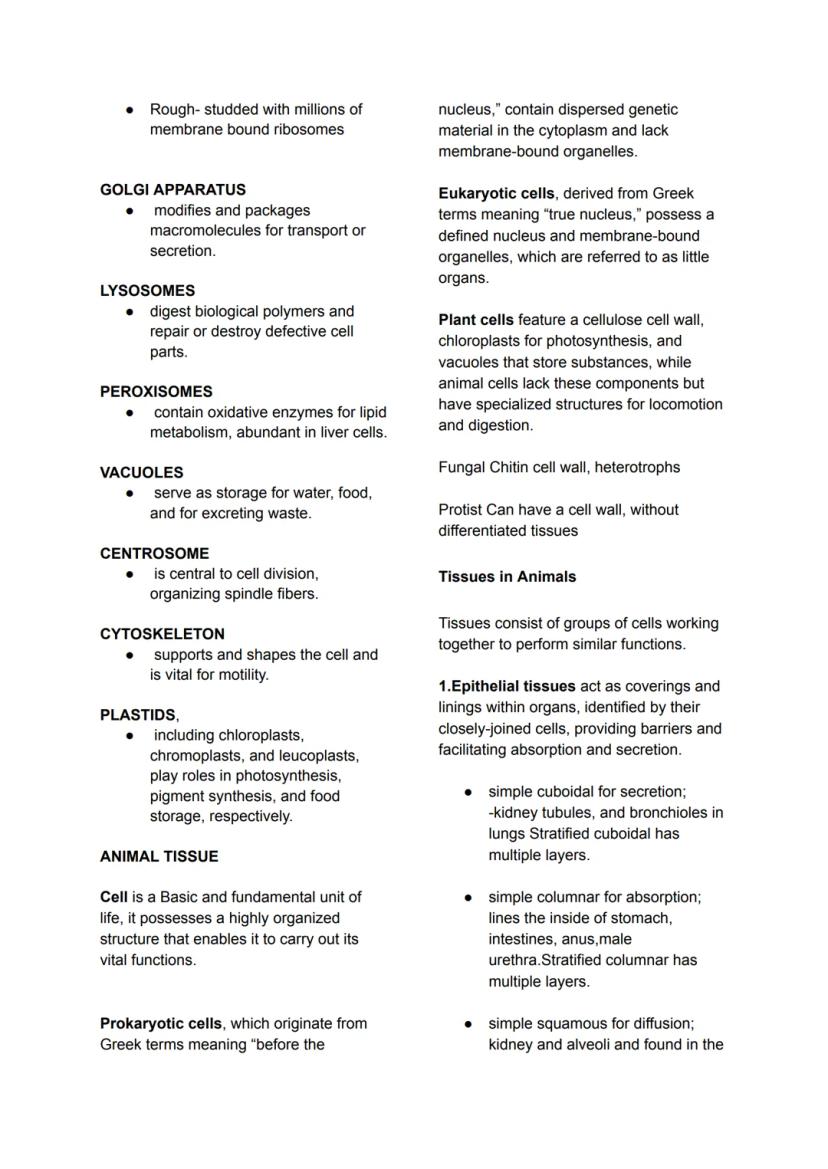
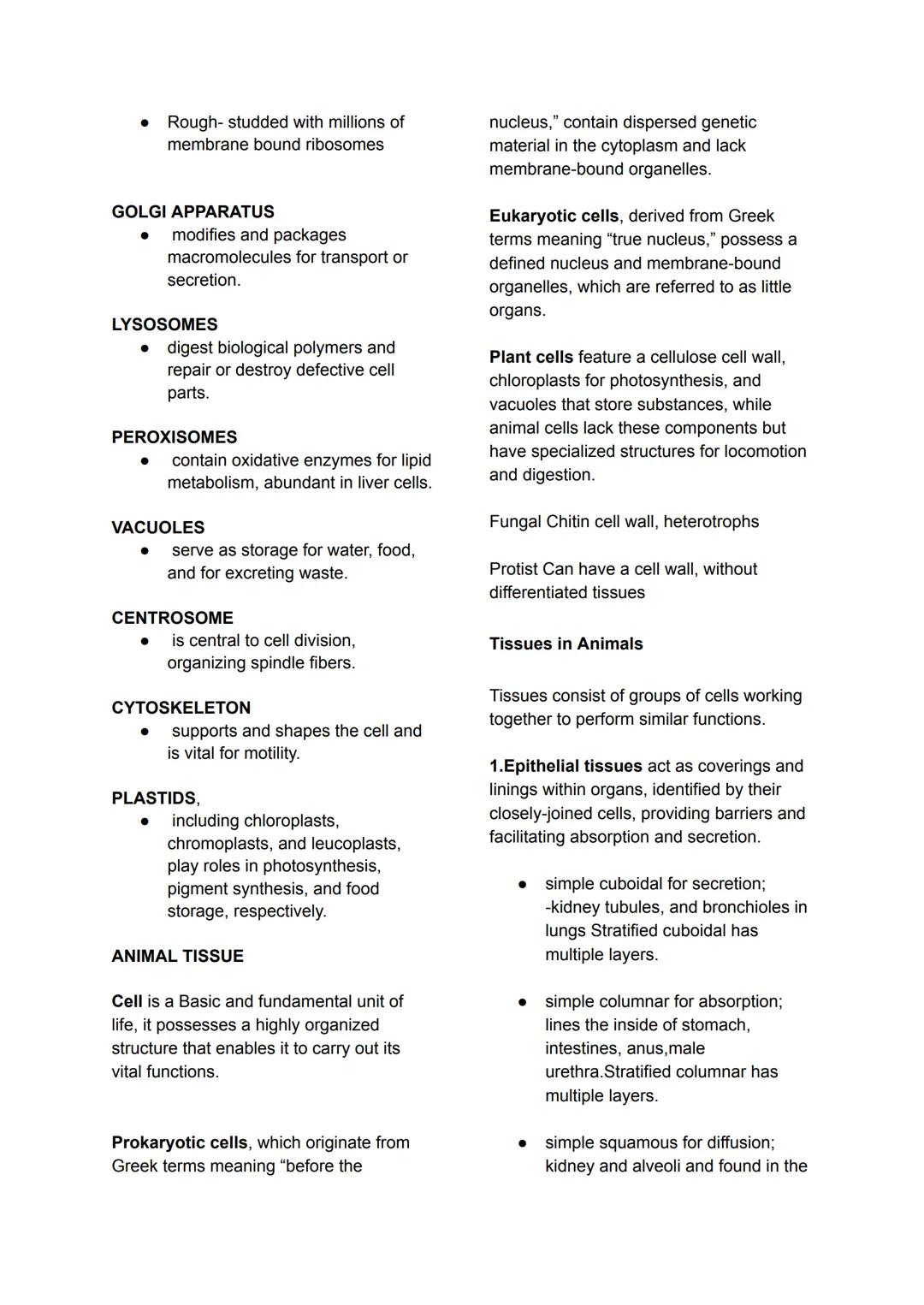
Not all cells are created equal! Prokaryotic cells (like bacteria) are simple - their genetic material floats freely without a membrane-bound nucleus. Eukaryotic cells are more complex, with a true nucleus and specialized organelles acting like tiny organs.
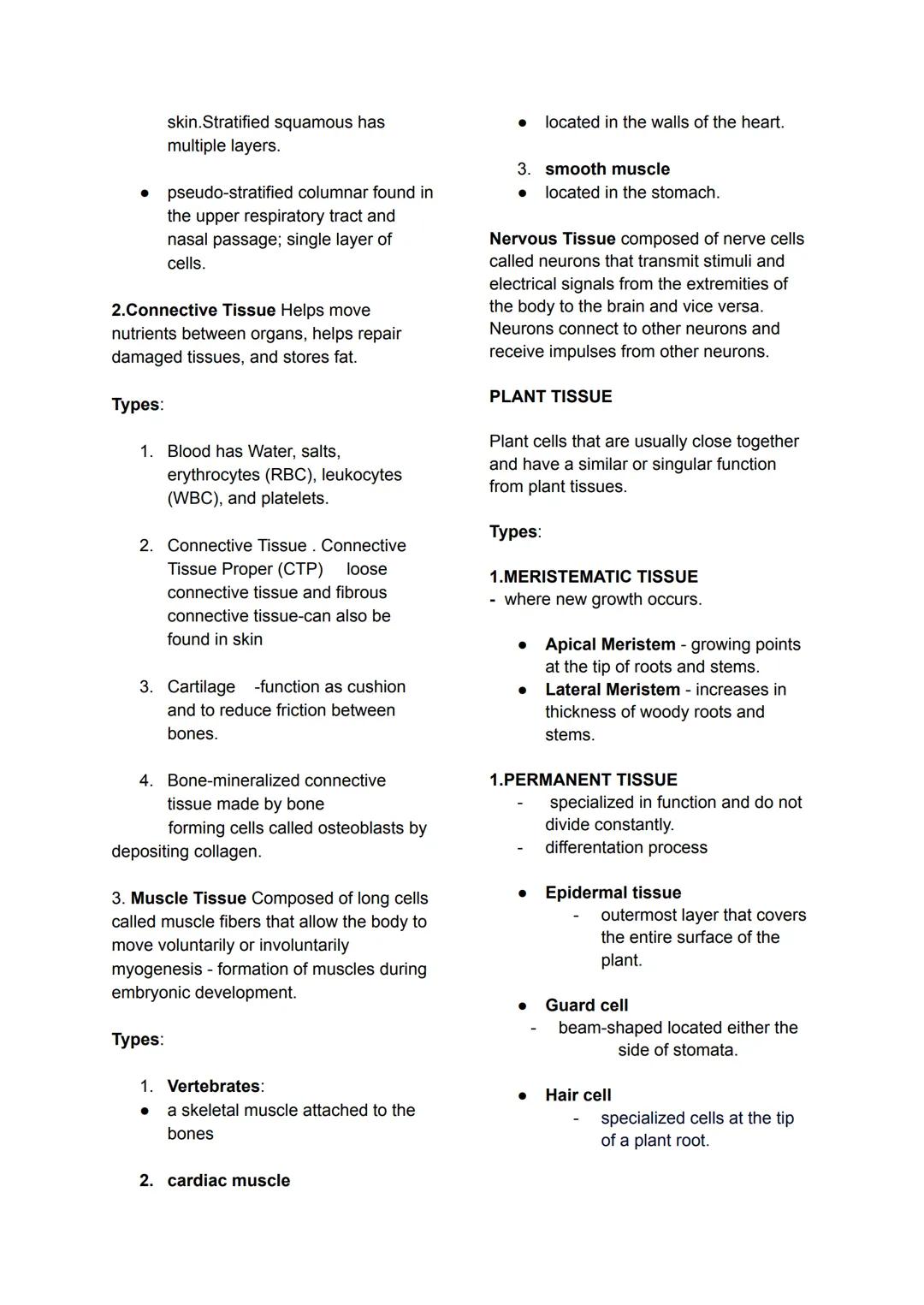
Epithelial tissues are your body's protective coverings and linings. Simple squamous epithelium allows easy diffusion in your lungs and kidneys, while stratified squamous provides tough protection in your skin. Columnar epithelium lines your digestive tract for absorption.
Connective tissue is your body's support system. Blood transports nutrients and oxygen, while loose and fibrous connective tissues provide structure. Cartilage cushions your joints, and bone provides rigid support through osteoblasts that deposit collagen.
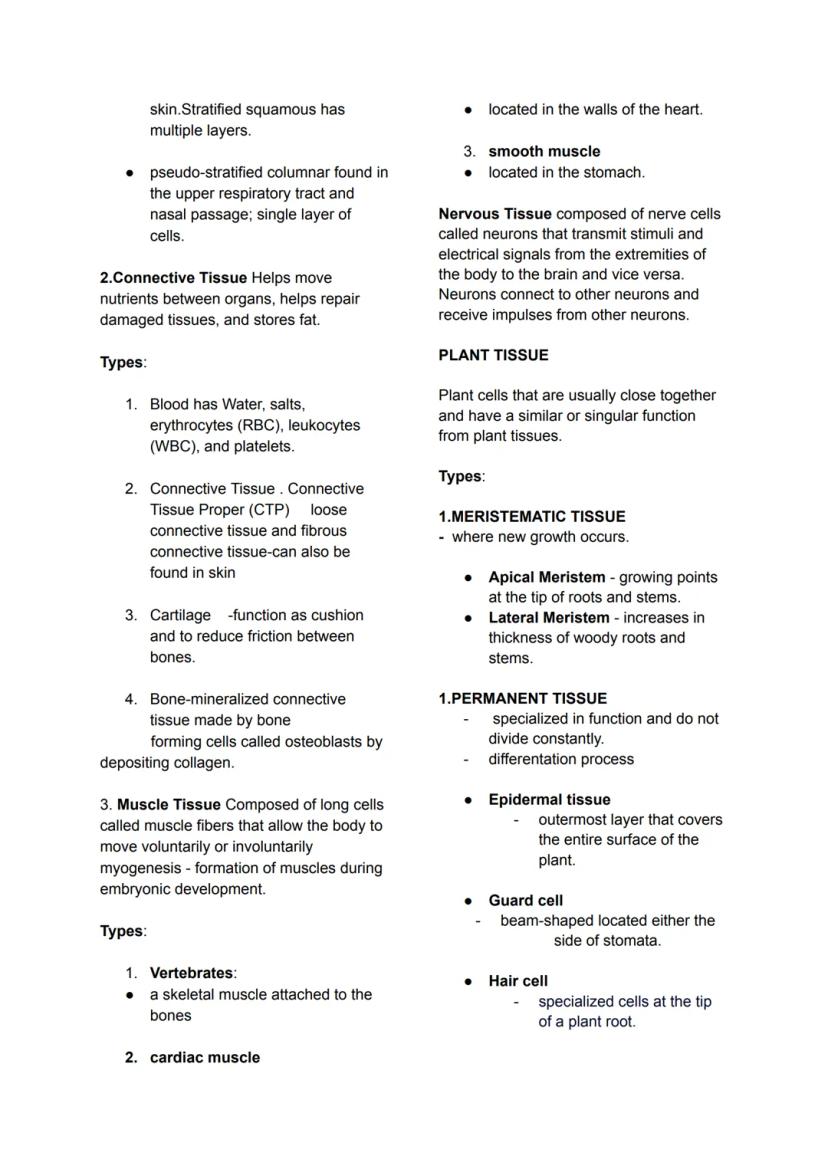
Muscle tissue gives you the power to move. Skeletal muscle attaches to bones for voluntary movement, cardiac muscle keeps your heart beating, and smooth muscle works in your digestive system. Nervous tissue contains neurons that transmit electrical signals, connecting your brain to every part of your body.
Quick Tip: Remember the four tissue types by thinking ECMN: Epithelial (protection), Connective (support), Muscle (movement), Nervous (communication).
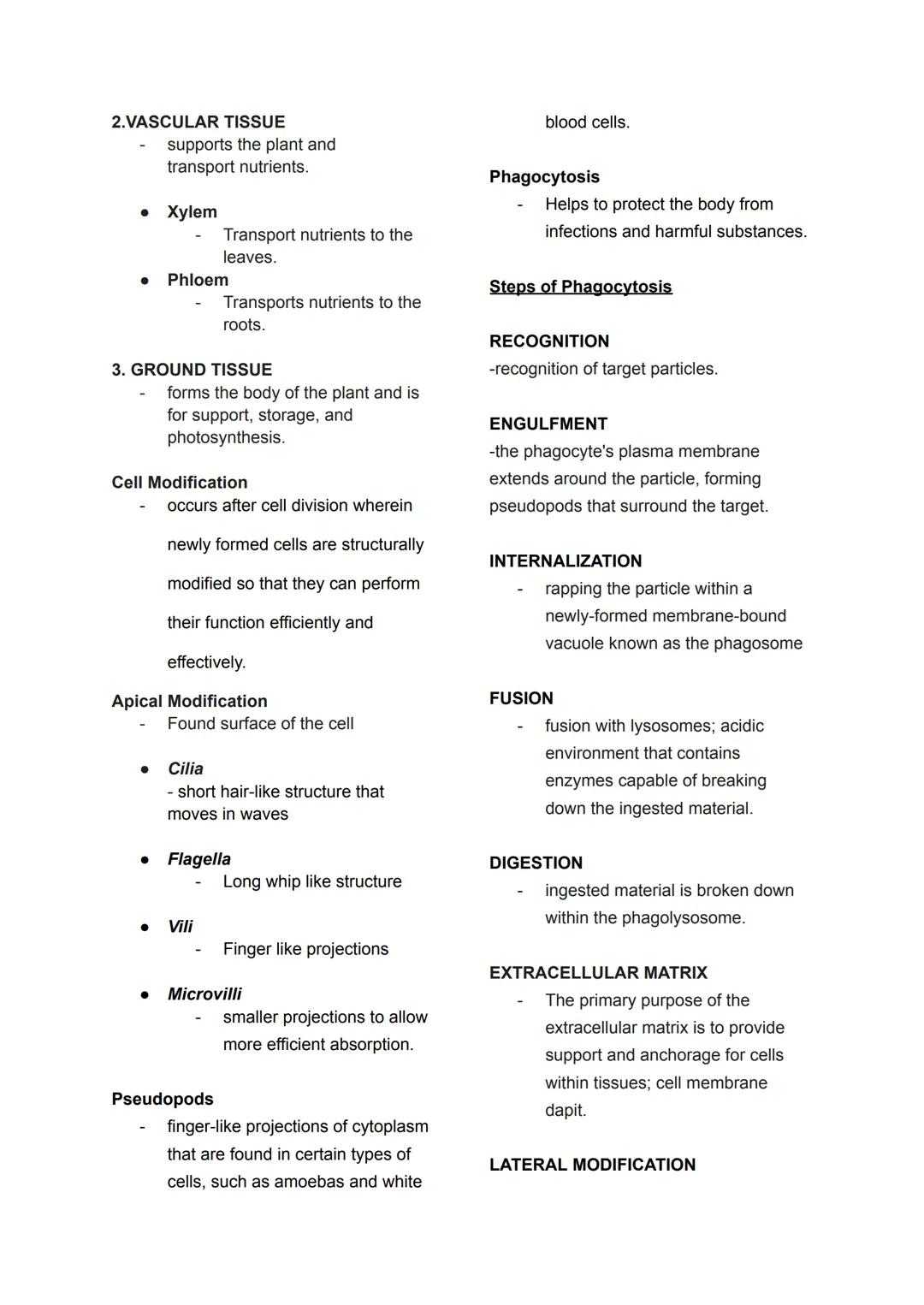
Plants have their own specialized tissue system! Meristematic tissue is where all the growth magic happens. Apical meristems at root and stem tips help plants grow longer, while lateral meristems make woody stems and roots thicker.
Permanent tissues have specialized jobs and don't divide constantly. Epidermal tissue forms the plant's protective outer layer, complete with guard cells that control gas exchange through stomata and hair cells at root tips for absorption.
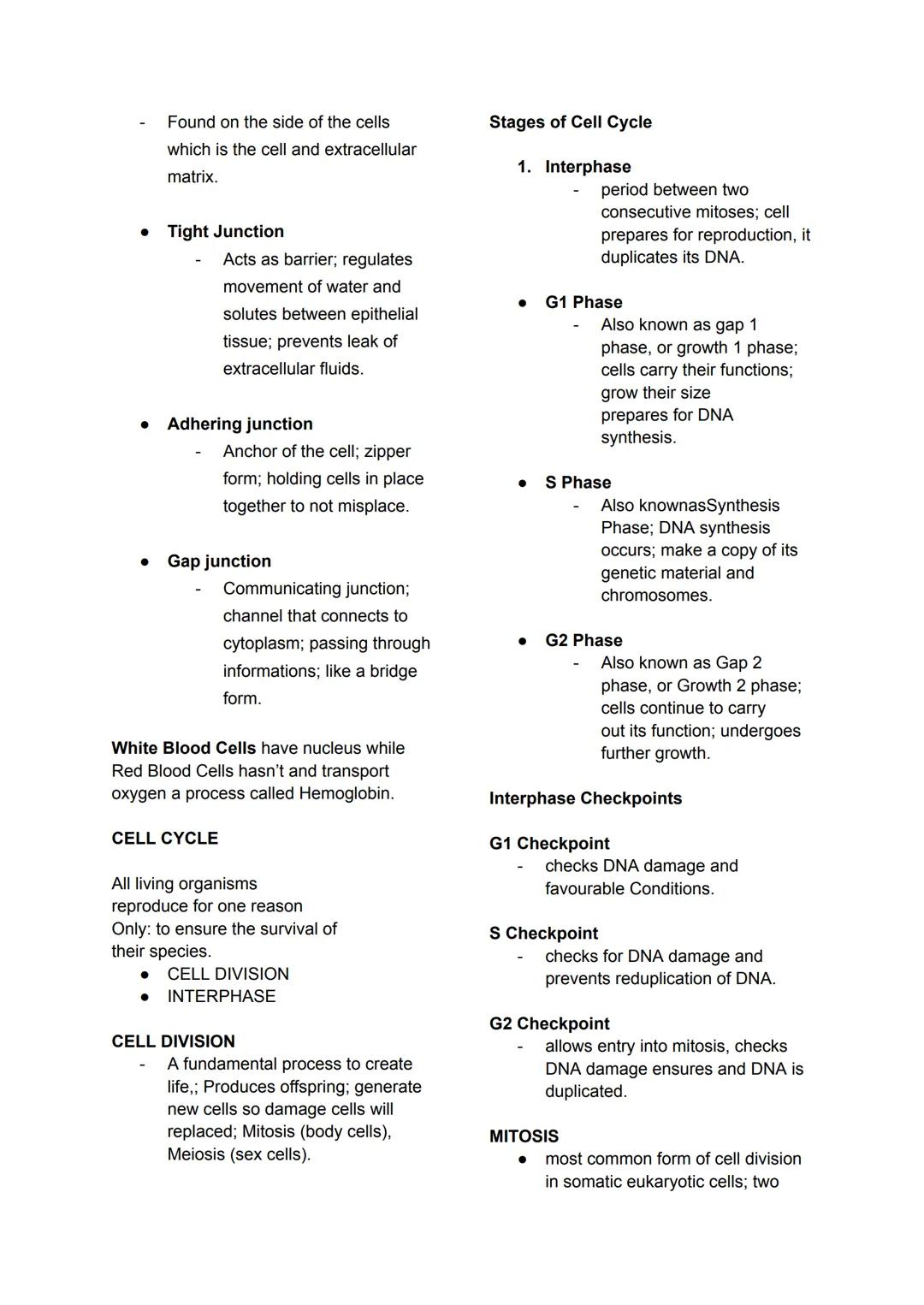
Vascular tissue works like a plant's circulatory system. Xylem transports water and nutrients up to the leaves (think of it as the plant's water pipes), while phloem carries food down to the roots. Ground tissue forms the plant's main body, handling support, storage, and photosynthesis.
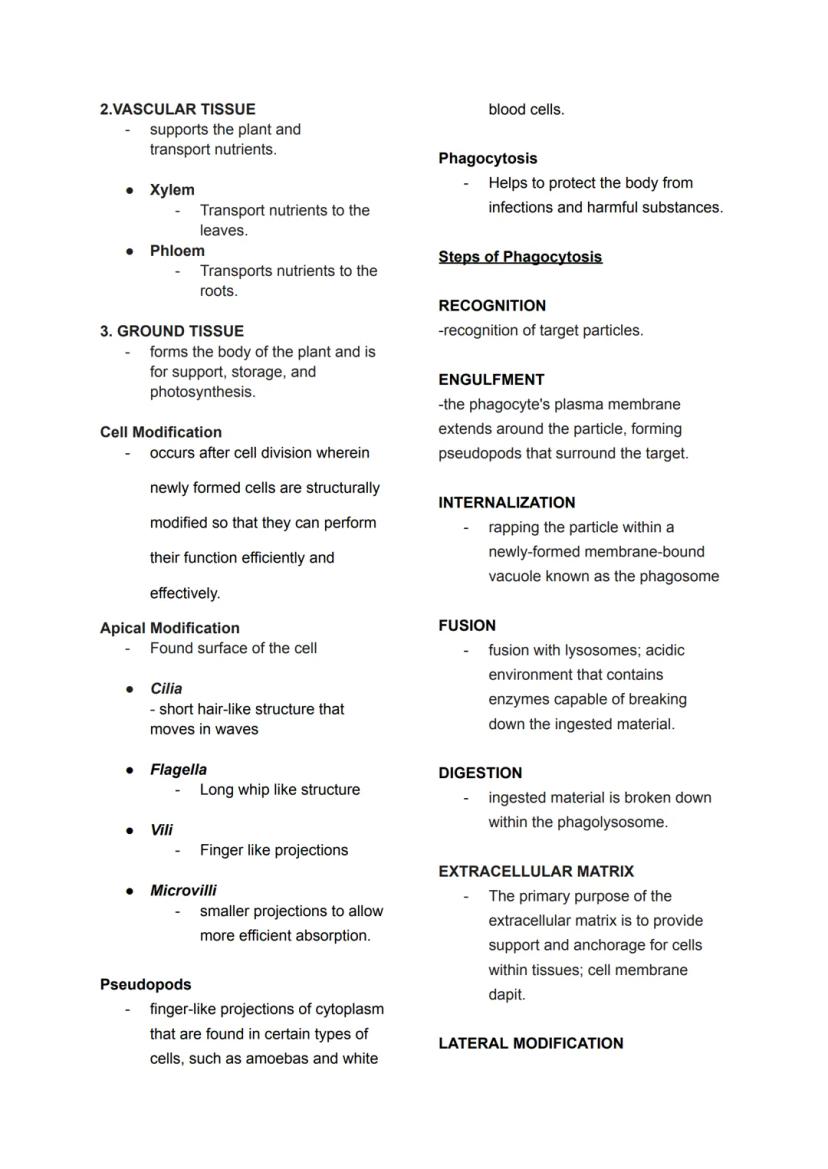
Cells modify themselves to work more efficiently. Apical modifications include cilia , flagella , and villi that increase surface area. These modifications help cells move, absorb nutrients, and perform specialized functions better.
Plant Power: Unlike animals, plants can make their own food through photosynthesis in their chloroplasts - they're basically living solar panels!
Cells don't work alone - they need to communicate and stick together! Lateral modifications include different types of junctions. Tight junctions act as barriers preventing leaks, adhering junctions work like zippers holding cells in place, and gap junctions create communication channels between cells.
White blood cells protect you through phagocytosis - literally "cell eating." This process involves recognition of threats, engulfment using pseudopods , internalization into a phagosome, fusion with lysosomes, and finally digestion of harmful materials.
The cell cycle ensures life continues through reproduction and repair. Interphase is the preparation phase, divided into G1 (growth and normal functions), S phase (DNA synthesis and chromosome copying), and G2 (continued growth and preparation for division).
Checkpoints keep everything running smoothly. The G1 checkpoint checks for DNA damage, the S checkpoint prevents DNA re-duplication, and the G2 checkpoint ensures DNA is properly duplicated before division begins.
Life Hack: Think of the cell cycle like preparing for a major exam - you need time to study (G1), make notes (S phase), review everything (G2), and finally take the test (mitosis).
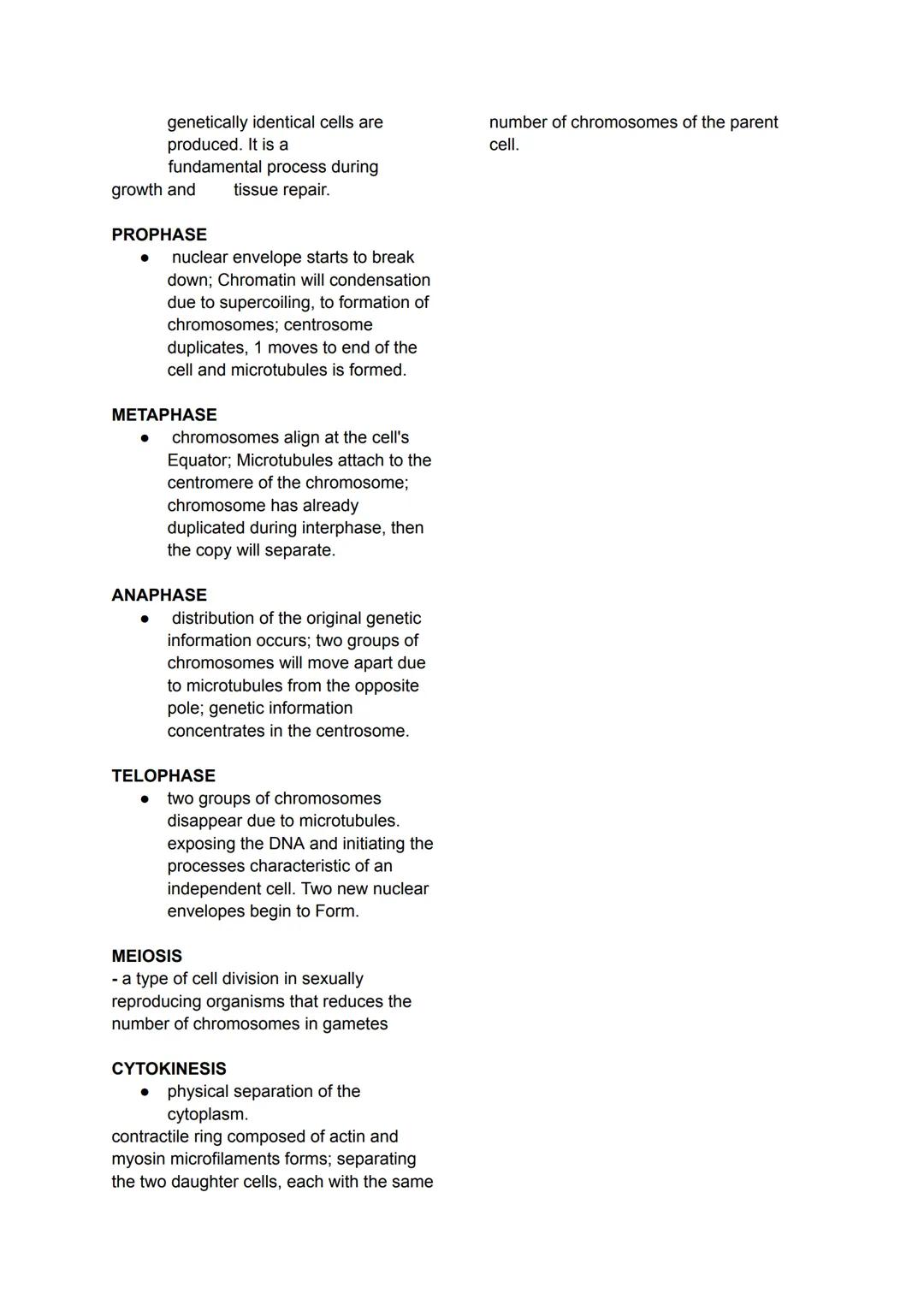
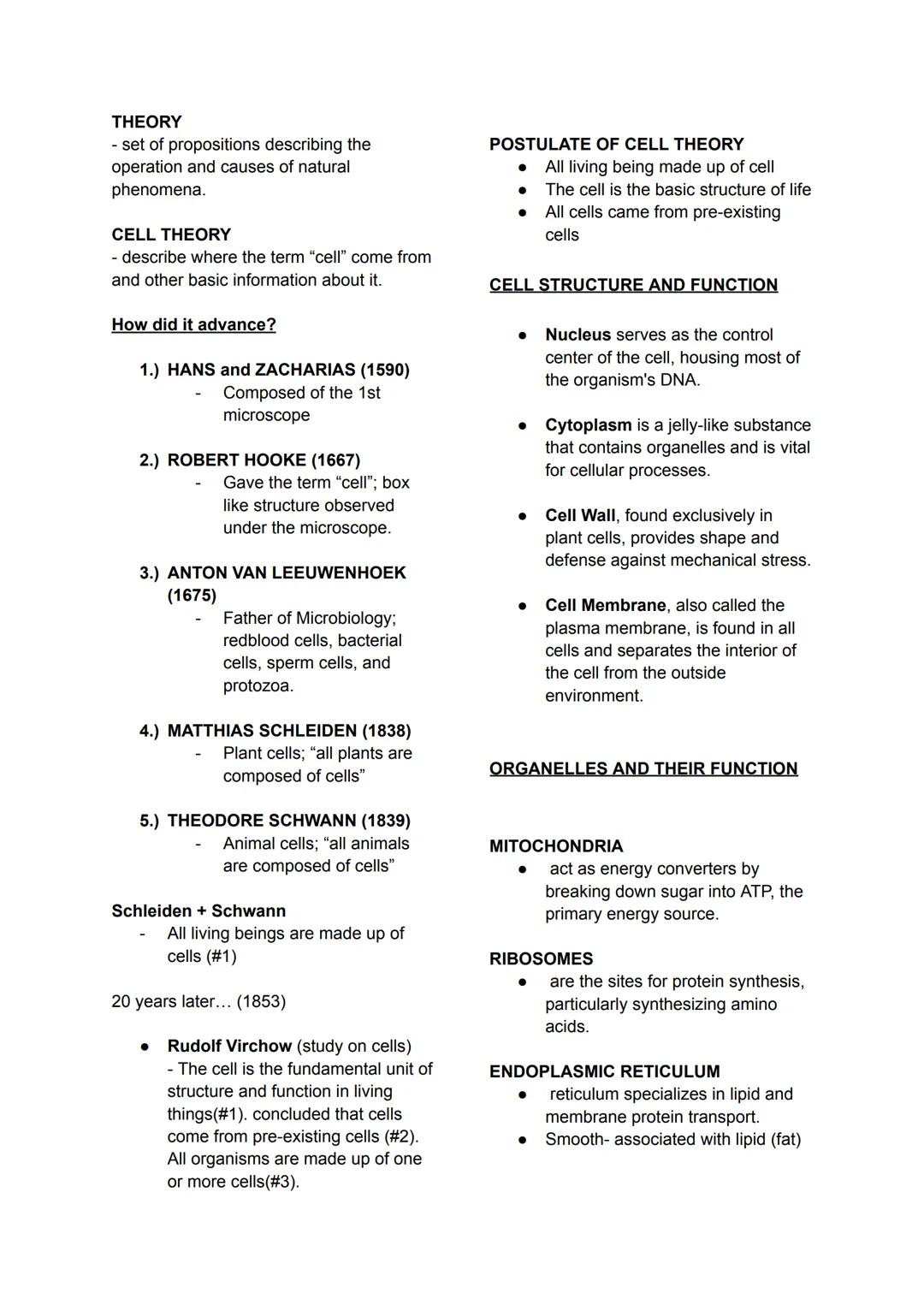
Mitosis is how your body grows and repairs itself by creating identical copies. During prophase, the nuclear envelope breaks down and chromosomes become visible as chromatin condenses. The centrosome duplicates and moves to opposite ends of the cell.
Metaphase is organization time - chromosomes line up at the cell's equator like students in a straight line. Microtubules attach to each chromosome's centromere, preparing for the big split.
Anaphase is the separation phase where chromosome copies move to opposite poles of the cell, pulled by microtubules. Telophase completes the process as two new nuclear envelopes form around each group of chromosomes.
Cytokinesis is the final step where the cytoplasm physically divides. A contractile ring made of actin and myosin filaments pinches the cell in two, creating two identical daughter cells. Meiosis is different - it's used for sexual reproduction and creates gametes (sex cells) with half the chromosomes.
Success Strategy: Remember mitosis phases with "PMAT" - Prophase, Metaphase, Anaphase, Telophase. Each phase has a specific job in creating new cells!

Ang aming AI Companion ay isang AI tool na nakatuon sa mga estudyante na nag-aalok ng higit pa sa mga sagot lang. Binuo mula sa milyong Knowunity resources, nagbibigay ito ng may-kaugnayang impormasyon, personalized na study plans, quizzes, at content direkta sa chat, na umaangkop sa iyong sariling learning journey.
Maaari mong i-download ang app mula sa Google Play Store at Apple App Store.
Tama 'yan! Mag-enjoy sa libreng access sa mga study content, makipag-connect sa kapwa mga estudyante, at kumuha ng instant na tulong – lahat nasa iyong daliri lang.
For Grade 12 1st Semester
 GenBio
App Store
Google Play
Napakadaling gamitin at maganda ang disenyo ng app. Nahanap ko lahat ng hinahanap ko hanggang ngayon at natuto ako ng marami mula sa mga presentasyon! Tiyak na gagamitin ko ang app para sa isang takdang-aralin sa klase! At siyempre, nakakatulong din ito bilang inspirasyon.
Stefan S
gumagamit ng iOS
Sobrang ganda talaga ng app na ito. Maraming mga study notes at tulong [...]. Ang problemang subject ko ay Pranses, halimbawa, at ang app ay may maraming options para tumulong. Salamat sa app na ito, bumuti ang Pranses ko. Irerekumenda ko ito sa lahat.
Samantha Klich
Android user
Wow, talagang namangha ako. Sinubukan ko lang ang app dahil nakita ko itong ina-advertise nang maraming beses at sobrang nagulat ako. Ang app na ito ang TULONG na gusto mo para sa paaralan at higit sa lahat, nag-aalok ito ng maraming bagay, tulad ng workouts at fact sheets, na SOBRANG nakatulong sa akin.
Anna
iOS user
Pinakamagandang app sa mundo! walang masabi dahil sobrang ganda nito
Thomas R
iOS user
Napakaganda talaga. Nakakapag-review ako ng 10x mas mabuti, itong app ay mabilis na 10/10. Lubos kong inirerekomenda ito sa lahat. Pwede akong manood at maghanap ng notes. Pwede kong i-save ang mga ito sa subject folder. Pwede kong i-review anumang oras kapag bumalik ako. Kung hindi mo pa nasubukan ang app na ito, marami kang nawawala.
Basil
Android user
Ang app na ito ay nagpapalakas ng loob ko sa paghahanda sa exams, hindi lang dahil sa pagpapataas ng aking kumpiyansa sa sarili sa pamamagitan ng mga feature na nagpapahintulot sa iyo na makipag-connect sa iba at mabawasan ang pakiramdam na nag-iisa, kundi pati na rin sa paraan na nakatuon ang app sa pagpapagaan ng iyong pakiramdam. Madali itong i-navigate, masaya gamitin, at nakakatulong sa sinumang nahihirapan sa kahit anong paraan.
David K
iOS user
Sobrang galing ng app! Ilalagay ko lang ang paksa sa search bar at makakakuha na ako ng sagot kaagad. Hindi ko kailangang manood ng 10 YouTube videos para maintindihan ang isang bagay, kaya nakakatipid ako ng oras. Lubos na inirerekomenda!
Sudenaz Ocak
Android user
Sa paaralan, napakahina ko sa math pero salamat sa app, mas mahusay na ako ngayon. Lubos akong nagpapasalamat na ginawa niyo ang app na ito.
Greenlight Bonnie
Android user
napakareliable na app para tumulong at palawakin ang iyong mga ideya sa Math, English at iba pang mga related na paksa sa iyong mga gawain. gamitin mo ang app na ito kung nahihirapan ka sa mga area, susi ito para diyan. sana nag-review na ako dati. at libre rin ito kaya huwag mag-alala tungkol diyan.
Rohan U
Android user
Alam kong maraming apps gumagamit ng fake accounts para mapataas ang kanilang reviews pero ang app na ito ay deserve lahat ng papuri. Dati nakakakuha ako ng 4 sa aking English exams at ngayon nakakuha ako ng grade 7. Hindi ko pa alam ang app na ito tatlong araw bago ang exam at nakatulong ito ng SOBRA. Pakisuyong maniwala sa akin at gamitin ito dahil sigurado akong makikita mo rin ang mga pagbabago.
Xander S
iOS user
ANG MGA quiz AT flashcard SOBRANG HELPFUL AT I LOVE TALAGA SI Knowunity AI. PARANG CHATGPT LANG PERO MAS MATALINO!! NAKATULONG DIN SA MGA MASCARA PROBLEMS KO!! PATI NA RIN SA MGA TUNAY KONG subject! SYEMPRE 😍😁😲🤑💗✨🎀😮
Elisha
iOS user
Grabe talaga ang app na to. Sobrang nakakaboring sakin ang pagreview pero ginagawa ng app na to na sobrang dali mag-organize ng lahat at pwede mong tanungin ang libreng ai para subukin ang sarili mo kaya sobrang buti at madali mong ma-upload ang sarili mong mga bagay. highly recommend bilang isang taong nagte-take ng mocks ngayon
Paul T
iOS user
Napakadaling gamitin at maganda ang disenyo ng app. Nahanap ko lahat ng hinahanap ko hanggang ngayon at natuto ako ng marami mula sa mga presentasyon! Tiyak na gagamitin ko ang app para sa isang takdang-aralin sa klase! At siyempre, nakakatulong din ito bilang inspirasyon.
Stefan S
gumagamit ng iOS
Sobrang ganda talaga ng app na ito. Maraming mga study notes at tulong [...]. Ang problemang subject ko ay Pranses, halimbawa, at ang app ay may maraming options para tumulong. Salamat sa app na ito, bumuti ang Pranses ko. Irerekumenda ko ito sa lahat.
Samantha Klich
Android user
Wow, talagang namangha ako. Sinubukan ko lang ang app dahil nakita ko itong ina-advertise nang maraming beses at sobrang nagulat ako. Ang app na ito ang TULONG na gusto mo para sa paaralan at higit sa lahat, nag-aalok ito ng maraming bagay, tulad ng workouts at fact sheets, na SOBRANG nakatulong sa akin.
Anna
iOS user
Pinakamagandang app sa mundo! walang masabi dahil sobrang ganda nito
Thomas R
iOS user
Napakaganda talaga. Nakakapag-review ako ng 10x mas mabuti, itong app ay mabilis na 10/10. Lubos kong inirerekomenda ito sa lahat. Pwede akong manood at maghanap ng notes. Pwede kong i-save ang mga ito sa subject folder. Pwede kong i-review anumang oras kapag bumalik ako. Kung hindi mo pa nasubukan ang app na ito, marami kang nawawala.
Basil
Android user
Ang app na ito ay nagpapalakas ng loob ko sa paghahanda sa exams, hindi lang dahil sa pagpapataas ng aking kumpiyansa sa sarili sa pamamagitan ng mga feature na nagpapahintulot sa iyo na makipag-connect sa iba at mabawasan ang pakiramdam na nag-iisa, kundi pati na rin sa paraan na nakatuon ang app sa pagpapagaan ng iyong pakiramdam. Madali itong i-navigate, masaya gamitin, at nakakatulong sa sinumang nahihirapan sa kahit anong paraan.
David K
iOS user
Sobrang galing ng app! Ilalagay ko lang ang paksa sa search bar at makakakuha na ako ng sagot kaagad. Hindi ko kailangang manood ng 10 YouTube videos para maintindihan ang isang bagay, kaya nakakatipid ako ng oras. Lubos na inirerekomenda!
Sudenaz Ocak
Android user
Sa paaralan, napakahina ko sa math pero salamat sa app, mas mahusay na ako ngayon. Lubos akong nagpapasalamat na ginawa niyo ang app na ito.
Greenlight Bonnie
Android user
napakareliable na app para tumulong at palawakin ang iyong mga ideya sa Math, English at iba pang mga related na paksa sa iyong mga gawain. gamitin mo ang app na ito kung nahihirapan ka sa mga area, susi ito para diyan. sana nag-review na ako dati. at libre rin ito kaya huwag mag-alala tungkol diyan.
Rohan U
Android user
Alam kong maraming apps gumagamit ng fake accounts para mapataas ang kanilang reviews pero ang app na ito ay deserve lahat ng papuri. Dati nakakakuha ako ng 4 sa aking English exams at ngayon nakakuha ako ng grade 7. Hindi ko pa alam ang app na ito tatlong araw bago ang exam at nakatulong ito ng SOBRA. Pakisuyong maniwala sa akin at gamitin ito dahil sigurado akong makikita mo rin ang mga pagbabago.
Xander S
iOS user
ANG MGA quiz AT flashcard SOBRANG HELPFUL AT I LOVE TALAGA SI Knowunity AI. PARANG CHATGPT LANG PERO MAS MATALINO!! NAKATULONG DIN SA MGA MASCARA PROBLEMS KO!! PATI NA RIN SA MGA TUNAY KONG subject! SYEMPRE 😍😁😲🤑💗✨🎀😮
Elisha
iOS user
Grabe talaga ang app na to. Sobrang nakakaboring sakin ang pagreview pero ginagawa ng app na to na sobrang dali mag-organize ng lahat at pwede mong tanungin ang libreng ai para subukin ang sarili mo kaya sobrang buti at madali mong ma-upload ang sarili mong mga bagay. highly recommend bilang isang taong nagte-take ng mocks ngayon
Paul T
iOS user
Jones
@pee_gie.05
Ever wondered how scientists figured out that all living things are made of tiny building blocks called cells? The cell theory is one of biology's most important discoveries, explaining how cells work as the basic units of life. From the... Ipakita pa
Access sa lahat ng dokumento
Pagbutihin ang iyong mga grado
Sumali sa milyong mga estudyante
Your smartphone has better zoom than the first microscopes, but those simple devices changed everything! Hans and Zacharias Janssen created the first microscope in 1590, opening up a whole new world. Robert Hooke gave us the word "cell" in 1667 when he saw box-like structures that reminded him of monastery cells.
Anton van Leeuwenhoek, the father of microbiology, was like the first person to discover a hidden universe. He observed red blood cells, bacteria, sperm cells, and tiny organisms called protozoa in 1675. His discoveries proved that life existed at levels invisible to the naked eye.
The real breakthrough came when Matthias Schleiden (plants) and Theodore Schwann (animals) realized that all living things are made of cells. Twenty years later, Rudolf Virchow completed the puzzle by proving that cells only come from other existing cells.
Key Insight: The three postulates of cell theory are: all living beings are made of cells, cells are life's basic structure, and all cells come from pre-existing cells.
Access sa lahat ng dokumento
Pagbutihin ang iyong mga grado
Sumali sa milyong mga estudyante
Think of a cell like a bustling city with specialized districts! The nucleus acts as city hall, controlling everything and storing the DNA blueprints. The cytoplasm is like the city's foundation - a jelly-like substance where all the action happens.
Plant cells have unique features that animal cells don't. The cell wall acts like a protective fortress, while chloroplasts work as solar panels for photosynthesis. Vacuoles serve as storage warehouses. Both plant and animal cells have a cell membrane that controls what enters and exits.
Mitochondria are your cellular power plants, converting sugar into ATP energy. Ribosomes work as protein factories, while the endoplasmic reticulum acts like a highway system - smooth ER handles fats, rough ER (covered in ribosomes) processes proteins. The Golgi apparatus works like a post office, packaging and shipping cellular materials.
Remember: Each organelle has a specific job, just like different departments in a company working together to keep everything running smoothly.
Access sa lahat ng dokumento
Pagbutihin ang iyong mga grado
Sumali sa milyong mga estudyante
Not all cells are created equal! Prokaryotic cells (like bacteria) are simple - their genetic material floats freely without a membrane-bound nucleus. Eukaryotic cells are more complex, with a true nucleus and specialized organelles acting like tiny organs.
Epithelial tissues are your body's protective coverings and linings. Simple squamous epithelium allows easy diffusion in your lungs and kidneys, while stratified squamous provides tough protection in your skin. Columnar epithelium lines your digestive tract for absorption.
Connective tissue is your body's support system. Blood transports nutrients and oxygen, while loose and fibrous connective tissues provide structure. Cartilage cushions your joints, and bone provides rigid support through osteoblasts that deposit collagen.
Muscle tissue gives you the power to move. Skeletal muscle attaches to bones for voluntary movement, cardiac muscle keeps your heart beating, and smooth muscle works in your digestive system. Nervous tissue contains neurons that transmit electrical signals, connecting your brain to every part of your body.
Quick Tip: Remember the four tissue types by thinking ECMN: Epithelial (protection), Connective (support), Muscle (movement), Nervous (communication).
Access sa lahat ng dokumento
Pagbutihin ang iyong mga grado
Sumali sa milyong mga estudyante
Plants have their own specialized tissue system! Meristematic tissue is where all the growth magic happens. Apical meristems at root and stem tips help plants grow longer, while lateral meristems make woody stems and roots thicker.
Permanent tissues have specialized jobs and don't divide constantly. Epidermal tissue forms the plant's protective outer layer, complete with guard cells that control gas exchange through stomata and hair cells at root tips for absorption.
Vascular tissue works like a plant's circulatory system. Xylem transports water and nutrients up to the leaves (think of it as the plant's water pipes), while phloem carries food down to the roots. Ground tissue forms the plant's main body, handling support, storage, and photosynthesis.
Cells modify themselves to work more efficiently. Apical modifications include cilia , flagella , and villi that increase surface area. These modifications help cells move, absorb nutrients, and perform specialized functions better.
Plant Power: Unlike animals, plants can make their own food through photosynthesis in their chloroplasts - they're basically living solar panels!
Access sa lahat ng dokumento
Pagbutihin ang iyong mga grado
Sumali sa milyong mga estudyante
Cells don't work alone - they need to communicate and stick together! Lateral modifications include different types of junctions. Tight junctions act as barriers preventing leaks, adhering junctions work like zippers holding cells in place, and gap junctions create communication channels between cells.
White blood cells protect you through phagocytosis - literally "cell eating." This process involves recognition of threats, engulfment using pseudopods , internalization into a phagosome, fusion with lysosomes, and finally digestion of harmful materials.
The cell cycle ensures life continues through reproduction and repair. Interphase is the preparation phase, divided into G1 (growth and normal functions), S phase (DNA synthesis and chromosome copying), and G2 (continued growth and preparation for division).
Checkpoints keep everything running smoothly. The G1 checkpoint checks for DNA damage, the S checkpoint prevents DNA re-duplication, and the G2 checkpoint ensures DNA is properly duplicated before division begins.
Life Hack: Think of the cell cycle like preparing for a major exam - you need time to study (G1), make notes (S phase), review everything (G2), and finally take the test (mitosis).
Access sa lahat ng dokumento
Pagbutihin ang iyong mga grado
Sumali sa milyong mga estudyante
Mitosis is how your body grows and repairs itself by creating identical copies. During prophase, the nuclear envelope breaks down and chromosomes become visible as chromatin condenses. The centrosome duplicates and moves to opposite ends of the cell.
Metaphase is organization time - chromosomes line up at the cell's equator like students in a straight line. Microtubules attach to each chromosome's centromere, preparing for the big split.
Anaphase is the separation phase where chromosome copies move to opposite poles of the cell, pulled by microtubules. Telophase completes the process as two new nuclear envelopes form around each group of chromosomes.
Cytokinesis is the final step where the cytoplasm physically divides. A contractile ring made of actin and myosin filaments pinches the cell in two, creating two identical daughter cells. Meiosis is different - it's used for sexual reproduction and creates gametes (sex cells) with half the chromosomes.
Success Strategy: Remember mitosis phases with "PMAT" - Prophase, Metaphase, Anaphase, Telophase. Each phase has a specific job in creating new cells!
Access sa lahat ng dokumento
Pagbutihin ang iyong mga grado
Sumali sa milyong mga estudyante
Ang aming AI Companion ay isang AI tool na nakatuon sa mga estudyante na nag-aalok ng higit pa sa mga sagot lang. Binuo mula sa milyong Knowunity resources, nagbibigay ito ng may-kaugnayang impormasyon, personalized na study plans, quizzes, at content direkta sa chat, na umaangkop sa iyong sariling learning journey.
Maaari mong i-download ang app mula sa Google Play Store at Apple App Store.
Tama 'yan! Mag-enjoy sa libreng access sa mga study content, makipag-connect sa kapwa mga estudyante, at kumuha ng instant na tulong – lahat nasa iyong daliri lang.
55
Smart Tools NEW
I-transform ang note na ito sa: ✓ 50+ Practice Questions ✓ Interactive Flashcards ✓ Full Mock Exam ✓ Essay Outlines
For Grade 12 1st Semester
GenBioApp Store
Google Play
Napakadaling gamitin at maganda ang disenyo ng app. Nahanap ko lahat ng hinahanap ko hanggang ngayon at natuto ako ng marami mula sa mga presentasyon! Tiyak na gagamitin ko ang app para sa isang takdang-aralin sa klase! At siyempre, nakakatulong din ito bilang inspirasyon.
Stefan S
gumagamit ng iOS
Sobrang ganda talaga ng app na ito. Maraming mga study notes at tulong [...]. Ang problemang subject ko ay Pranses, halimbawa, at ang app ay may maraming options para tumulong. Salamat sa app na ito, bumuti ang Pranses ko. Irerekumenda ko ito sa lahat.
Samantha Klich
Android user
Wow, talagang namangha ako. Sinubukan ko lang ang app dahil nakita ko itong ina-advertise nang maraming beses at sobrang nagulat ako. Ang app na ito ang TULONG na gusto mo para sa paaralan at higit sa lahat, nag-aalok ito ng maraming bagay, tulad ng workouts at fact sheets, na SOBRANG nakatulong sa akin.
Anna
iOS user
Pinakamagandang app sa mundo! walang masabi dahil sobrang ganda nito
Thomas R
iOS user
Napakaganda talaga. Nakakapag-review ako ng 10x mas mabuti, itong app ay mabilis na 10/10. Lubos kong inirerekomenda ito sa lahat. Pwede akong manood at maghanap ng notes. Pwede kong i-save ang mga ito sa subject folder. Pwede kong i-review anumang oras kapag bumalik ako. Kung hindi mo pa nasubukan ang app na ito, marami kang nawawala.
Basil
Android user
Ang app na ito ay nagpapalakas ng loob ko sa paghahanda sa exams, hindi lang dahil sa pagpapataas ng aking kumpiyansa sa sarili sa pamamagitan ng mga feature na nagpapahintulot sa iyo na makipag-connect sa iba at mabawasan ang pakiramdam na nag-iisa, kundi pati na rin sa paraan na nakatuon ang app sa pagpapagaan ng iyong pakiramdam. Madali itong i-navigate, masaya gamitin, at nakakatulong sa sinumang nahihirapan sa kahit anong paraan.
David K
iOS user
Sobrang galing ng app! Ilalagay ko lang ang paksa sa search bar at makakakuha na ako ng sagot kaagad. Hindi ko kailangang manood ng 10 YouTube videos para maintindihan ang isang bagay, kaya nakakatipid ako ng oras. Lubos na inirerekomenda!
Sudenaz Ocak
Android user
Sa paaralan, napakahina ko sa math pero salamat sa app, mas mahusay na ako ngayon. Lubos akong nagpapasalamat na ginawa niyo ang app na ito.
Greenlight Bonnie
Android user
napakareliable na app para tumulong at palawakin ang iyong mga ideya sa Math, English at iba pang mga related na paksa sa iyong mga gawain. gamitin mo ang app na ito kung nahihirapan ka sa mga area, susi ito para diyan. sana nag-review na ako dati. at libre rin ito kaya huwag mag-alala tungkol diyan.
Rohan U
Android user
Alam kong maraming apps gumagamit ng fake accounts para mapataas ang kanilang reviews pero ang app na ito ay deserve lahat ng papuri. Dati nakakakuha ako ng 4 sa aking English exams at ngayon nakakuha ako ng grade 7. Hindi ko pa alam ang app na ito tatlong araw bago ang exam at nakatulong ito ng SOBRA. Pakisuyong maniwala sa akin at gamitin ito dahil sigurado akong makikita mo rin ang mga pagbabago.
Xander S
iOS user
ANG MGA quiz AT flashcard SOBRANG HELPFUL AT I LOVE TALAGA SI Knowunity AI. PARANG CHATGPT LANG PERO MAS MATALINO!! NAKATULONG DIN SA MGA MASCARA PROBLEMS KO!! PATI NA RIN SA MGA TUNAY KONG subject! SYEMPRE 😍😁😲🤑💗✨🎀😮
Elisha
iOS user
Grabe talaga ang app na to. Sobrang nakakaboring sakin ang pagreview pero ginagawa ng app na to na sobrang dali mag-organize ng lahat at pwede mong tanungin ang libreng ai para subukin ang sarili mo kaya sobrang buti at madali mong ma-upload ang sarili mong mga bagay. highly recommend bilang isang taong nagte-take ng mocks ngayon
Paul T
iOS user
Napakadaling gamitin at maganda ang disenyo ng app. Nahanap ko lahat ng hinahanap ko hanggang ngayon at natuto ako ng marami mula sa mga presentasyon! Tiyak na gagamitin ko ang app para sa isang takdang-aralin sa klase! At siyempre, nakakatulong din ito bilang inspirasyon.
Stefan S
gumagamit ng iOS
Sobrang ganda talaga ng app na ito. Maraming mga study notes at tulong [...]. Ang problemang subject ko ay Pranses, halimbawa, at ang app ay may maraming options para tumulong. Salamat sa app na ito, bumuti ang Pranses ko. Irerekumenda ko ito sa lahat.
Samantha Klich
Android user
Wow, talagang namangha ako. Sinubukan ko lang ang app dahil nakita ko itong ina-advertise nang maraming beses at sobrang nagulat ako. Ang app na ito ang TULONG na gusto mo para sa paaralan at higit sa lahat, nag-aalok ito ng maraming bagay, tulad ng workouts at fact sheets, na SOBRANG nakatulong sa akin.
Anna
iOS user
Pinakamagandang app sa mundo! walang masabi dahil sobrang ganda nito
Thomas R
iOS user
Napakaganda talaga. Nakakapag-review ako ng 10x mas mabuti, itong app ay mabilis na 10/10. Lubos kong inirerekomenda ito sa lahat. Pwede akong manood at maghanap ng notes. Pwede kong i-save ang mga ito sa subject folder. Pwede kong i-review anumang oras kapag bumalik ako. Kung hindi mo pa nasubukan ang app na ito, marami kang nawawala.
Basil
Android user
Ang app na ito ay nagpapalakas ng loob ko sa paghahanda sa exams, hindi lang dahil sa pagpapataas ng aking kumpiyansa sa sarili sa pamamagitan ng mga feature na nagpapahintulot sa iyo na makipag-connect sa iba at mabawasan ang pakiramdam na nag-iisa, kundi pati na rin sa paraan na nakatuon ang app sa pagpapagaan ng iyong pakiramdam. Madali itong i-navigate, masaya gamitin, at nakakatulong sa sinumang nahihirapan sa kahit anong paraan.
David K
iOS user
Sobrang galing ng app! Ilalagay ko lang ang paksa sa search bar at makakakuha na ako ng sagot kaagad. Hindi ko kailangang manood ng 10 YouTube videos para maintindihan ang isang bagay, kaya nakakatipid ako ng oras. Lubos na inirerekomenda!
Sudenaz Ocak
Android user
Sa paaralan, napakahina ko sa math pero salamat sa app, mas mahusay na ako ngayon. Lubos akong nagpapasalamat na ginawa niyo ang app na ito.
Greenlight Bonnie
Android user
napakareliable na app para tumulong at palawakin ang iyong mga ideya sa Math, English at iba pang mga related na paksa sa iyong mga gawain. gamitin mo ang app na ito kung nahihirapan ka sa mga area, susi ito para diyan. sana nag-review na ako dati. at libre rin ito kaya huwag mag-alala tungkol diyan.
Rohan U
Android user
Alam kong maraming apps gumagamit ng fake accounts para mapataas ang kanilang reviews pero ang app na ito ay deserve lahat ng papuri. Dati nakakakuha ako ng 4 sa aking English exams at ngayon nakakuha ako ng grade 7. Hindi ko pa alam ang app na ito tatlong araw bago ang exam at nakatulong ito ng SOBRA. Pakisuyong maniwala sa akin at gamitin ito dahil sigurado akong makikita mo rin ang mga pagbabago.
Xander S
iOS user
ANG MGA quiz AT flashcard SOBRANG HELPFUL AT I LOVE TALAGA SI Knowunity AI. PARANG CHATGPT LANG PERO MAS MATALINO!! NAKATULONG DIN SA MGA MASCARA PROBLEMS KO!! PATI NA RIN SA MGA TUNAY KONG subject! SYEMPRE 😍😁😲🤑💗✨🎀😮
Elisha
iOS user
Grabe talaga ang app na to. Sobrang nakakaboring sakin ang pagreview pero ginagawa ng app na to na sobrang dali mag-organize ng lahat at pwede mong tanungin ang libreng ai para subukin ang sarili mo kaya sobrang buti at madali mong ma-upload ang sarili mong mga bagay. highly recommend bilang isang taong nagte-take ng mocks ngayon
Paul T
iOS user