
Ever wonder how scientists create "designer" organisms or how life...
 GenBio1,084 views·Na-update Hul 20, 2026·13 mga pahina
Comprehensive Notes on General Biology II
E
every day@everyday_d79hz
1 / 13
1
of 13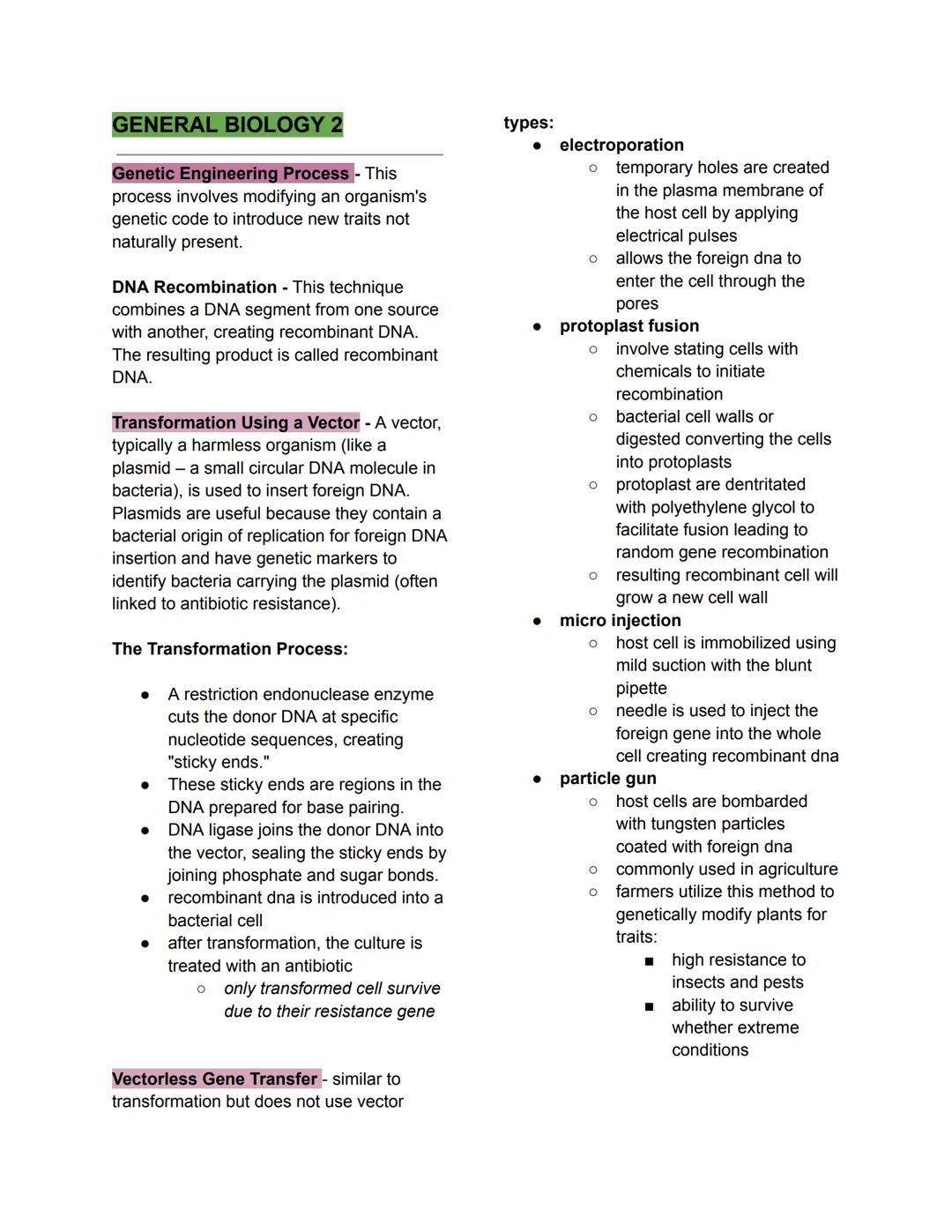
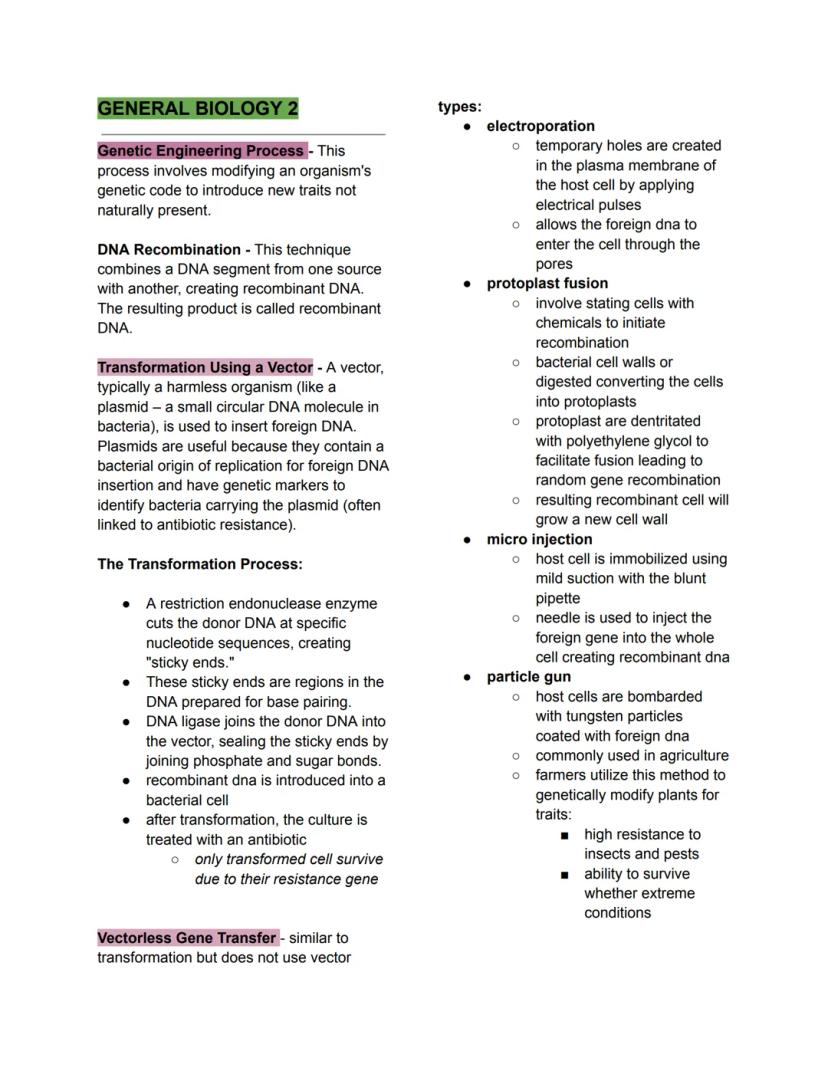
Genetic Engineering and DNA Magic
Think of genetic engineering like editing a computer program - but instead of code, you're editing DNA to give organisms superpowers they never had naturally. Scientists use this amazing process to create everything from disease-resistant crops to life-saving medicines.
The secret weapon in this process is recombinant DNA - basically DNA from two different sources mashed together. Scientists use helper molecules called vectors (usually harmless bacteria called plasmids) to smuggle foreign DNA into target cells. It's like using a delivery truck to drop off genetic packages!
The transformation process is surprisingly elegant. Special enzymes called restriction endonucleases cut DNA at specific spots, creating "sticky ends" that are ready to connect. Then DNA ligase acts like molecular glue, sealing everything together perfectly.
There are several cool ways to get DNA into cells: electroporation zaps cells with electricity to create temporary holes, microinjection uses tiny needles like molecular syringes, and particle guns literally shoot DNA-coated particles into cells. Each method is like having different tools for different jobs - some work better for bacteria, others for plants or animal cells.
Quick Tip: Remember that sticky ends + DNA ligase = successful recombination. This combo is your key to understanding how genetic engineering works!
2
of 13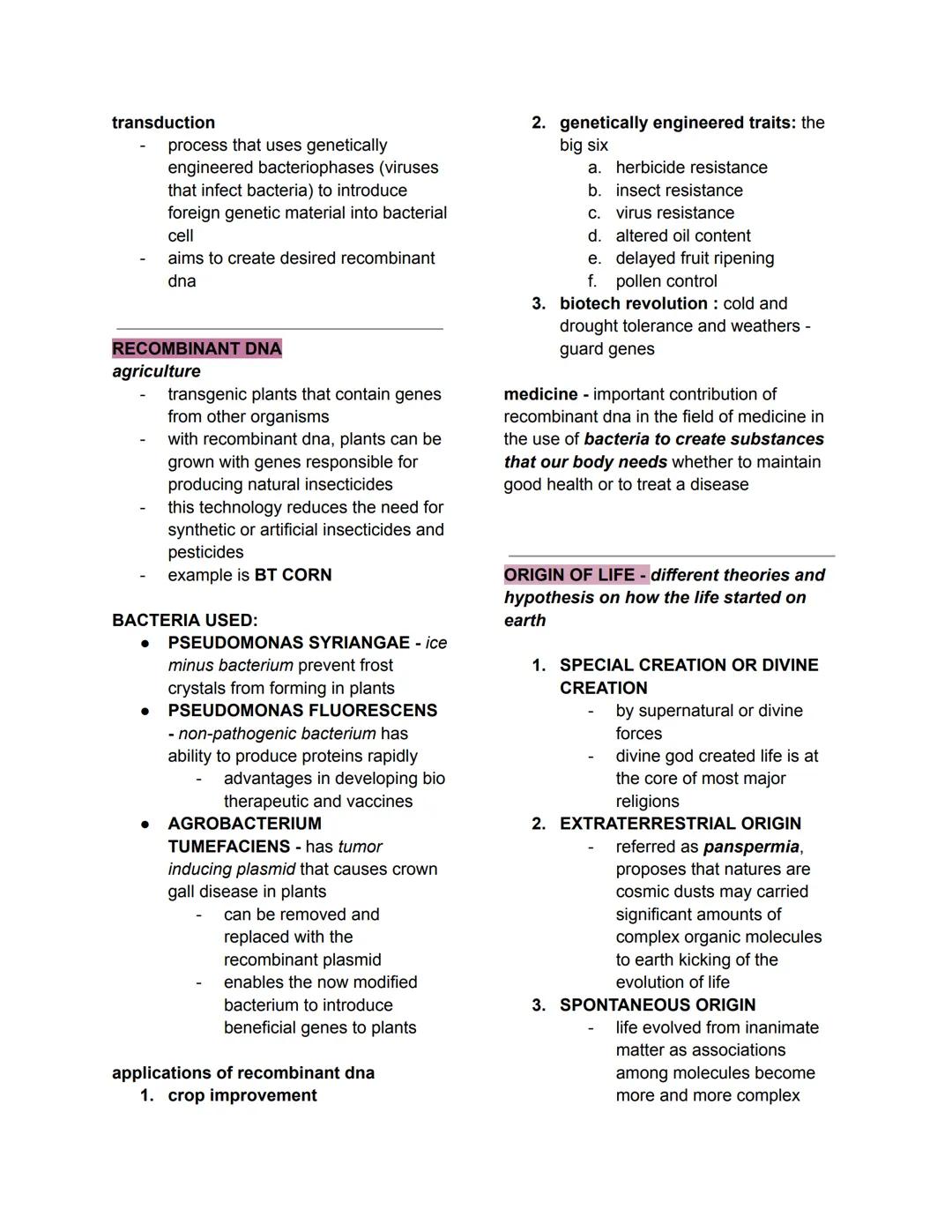
Real-World Applications and Origin of Life
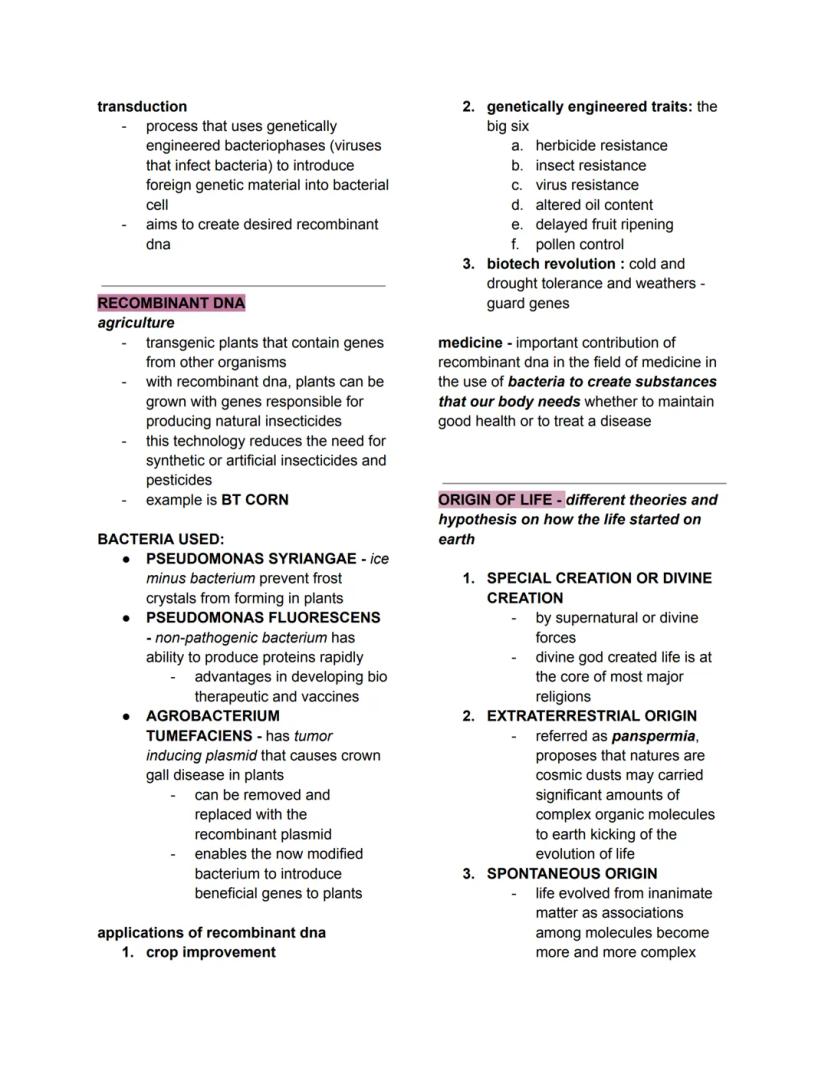
Recombinant DNA technology is already changing agriculture in amazing ways. BT corn produces its own natural insecticide, reducing the need for harmful chemical sprays. Scientists use helpful bacteria like Pseudomonas syringae (prevents frost damage) and Agrobacterium tumefaciens (delivers beneficial genes to plants) to create crops that can survive droughts, resist pests, and even produce more nutritious food.
In medicine, genetically modified bacteria work like tiny factories, producing insulin, vaccines, and other life-saving treatments. This is way more efficient and safer than extracting these substances from animals or plants.
But how did life itself begin? Scientists have proposed three main theories: special creation (divine forces), extraterrestrial origin (life came from space), and spontaneous origin (life evolved from non-living matter). The famous Miller-Urey experiment in 1953 showed that organic molecules could form naturally under early Earth conditions, supporting the spontaneous origin theory.
Life might have first appeared in various locations - ocean edges, deep-sea vents, or even within clay deposits. Each location offered unique chemical conditions that could have sparked the first living molecules.
Did You Know: The Miller-Urey experiment created amino acids (building blocks of proteins) just by simulating early Earth's atmosphere with lightning!
3
of 13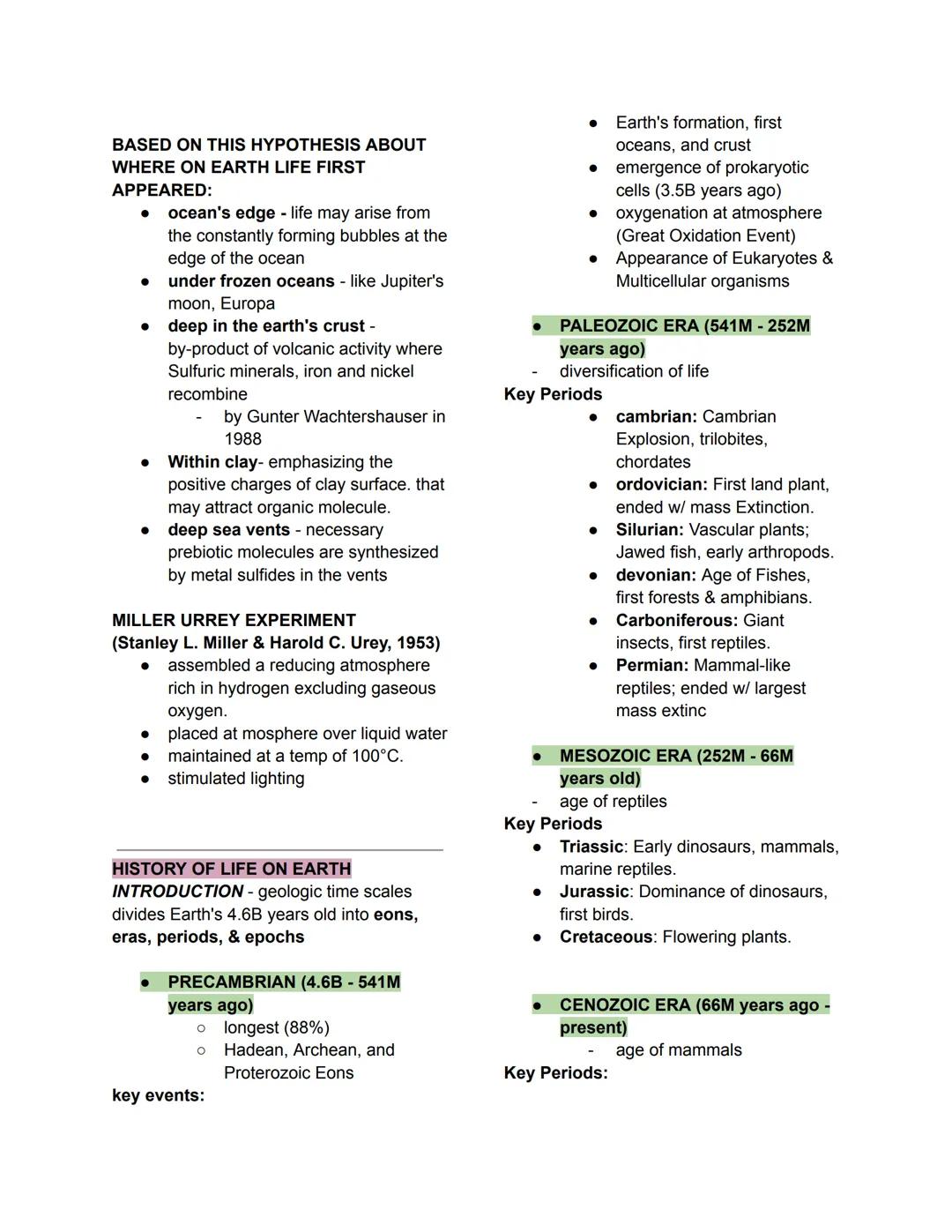
Earth's Epic Timeline
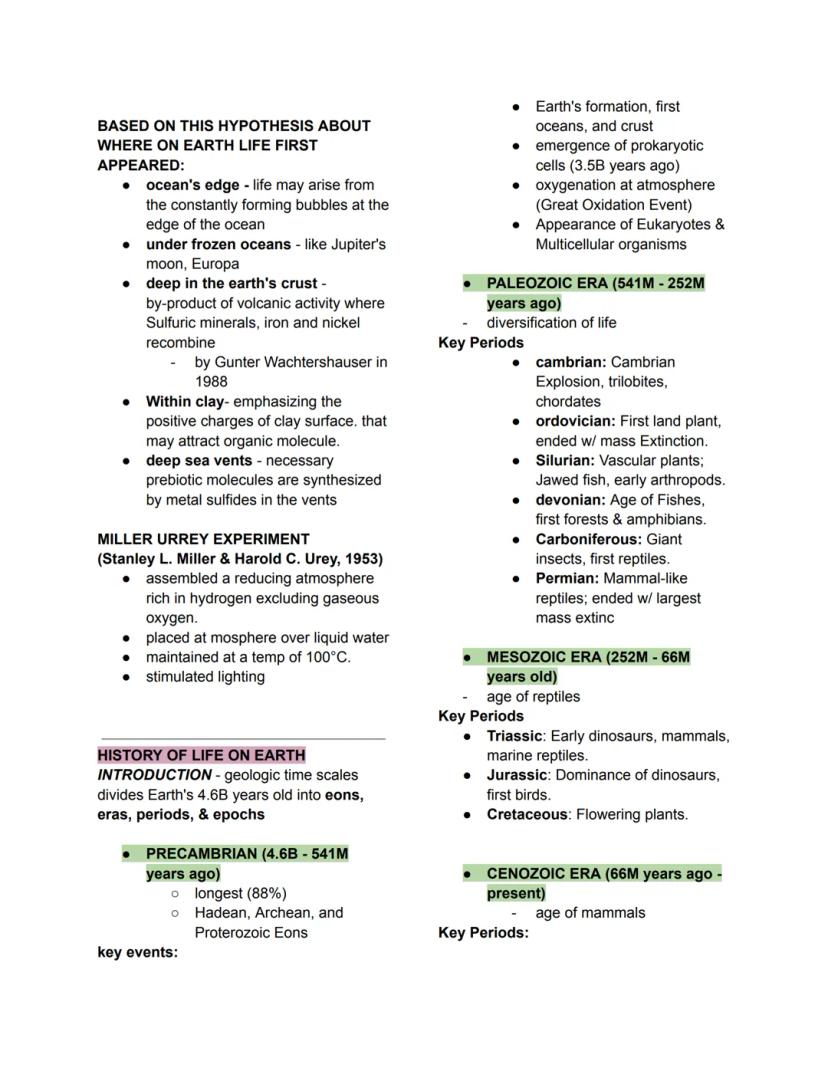
Earth's 4.6 billion-year history is divided into massive time chunks that tell an incredible story of change. The Precambrian era (88% of Earth's history!) saw the formation of our planet, first oceans, and the emergence of basic life forms like bacteria around 3.5 billion years ago.
The Paleozoic era brought the "Cambrian Explosion" - a time when life diversified like crazy. This era saw the first land plants, jawed fish, forests, and amphibians. Think of it as life's experimental phase, trying out tons of new body plans and lifestyles.
The Mesozoic era was the famous "Age of Reptiles" when dinosaurs ruled the Earth. This period also gave us the first mammals, birds, and flowering plants. It ended with the massive extinction event that wiped out the dinosaurs 66 million years ago.
Finally, the Cenozoic era (our current era) is the "Age of Mammals." After the dinosaurs disappeared, mammals evolved rapidly to fill empty ecological niches. This era includes the ice ages and the eventual rise of humans.
Memory Trick: Think "Pre-Paleo-Meso-Cenozoic" as "Pretty-Powerful-Monsters-Came" to remember the order of Earth's major eras!
4
of 13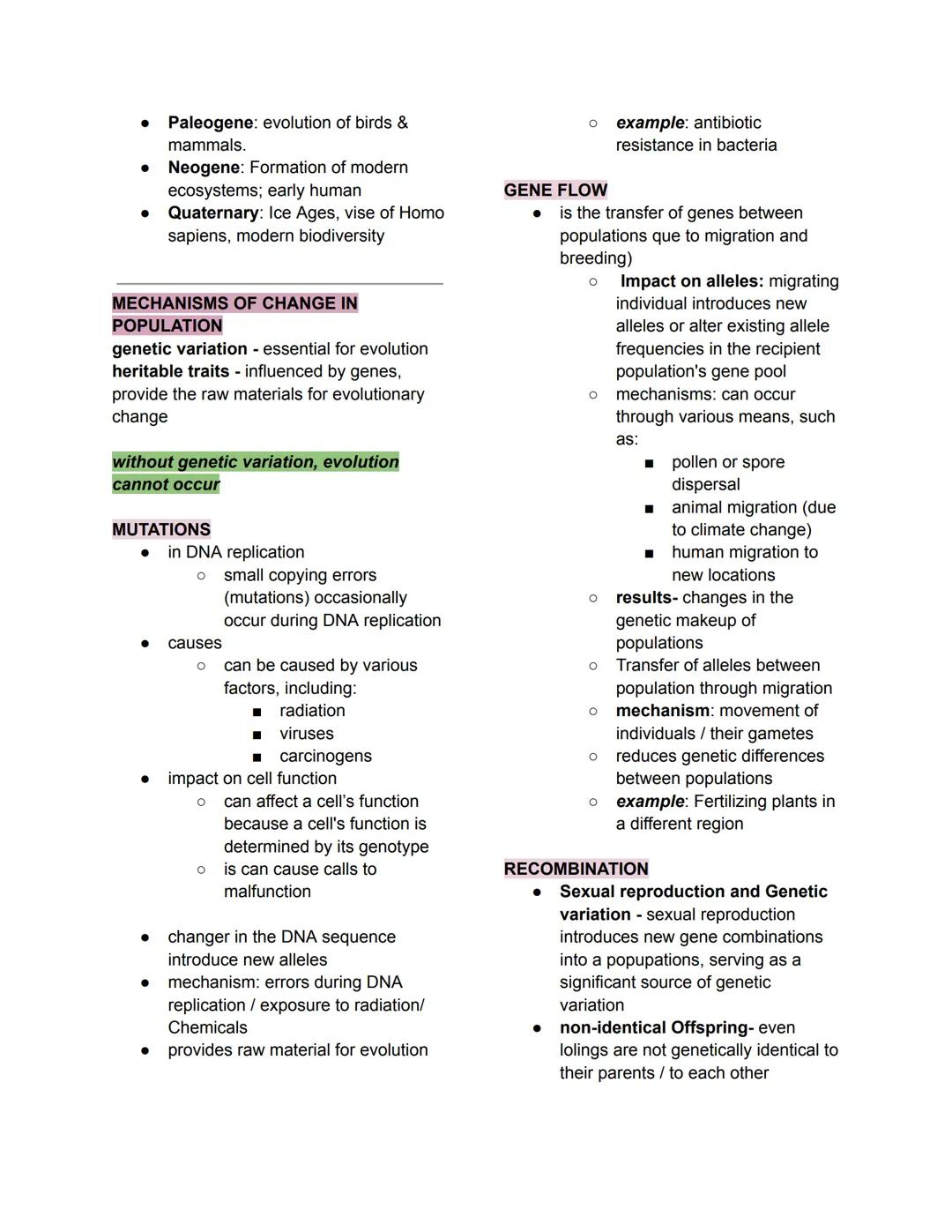
How Evolution Actually Works
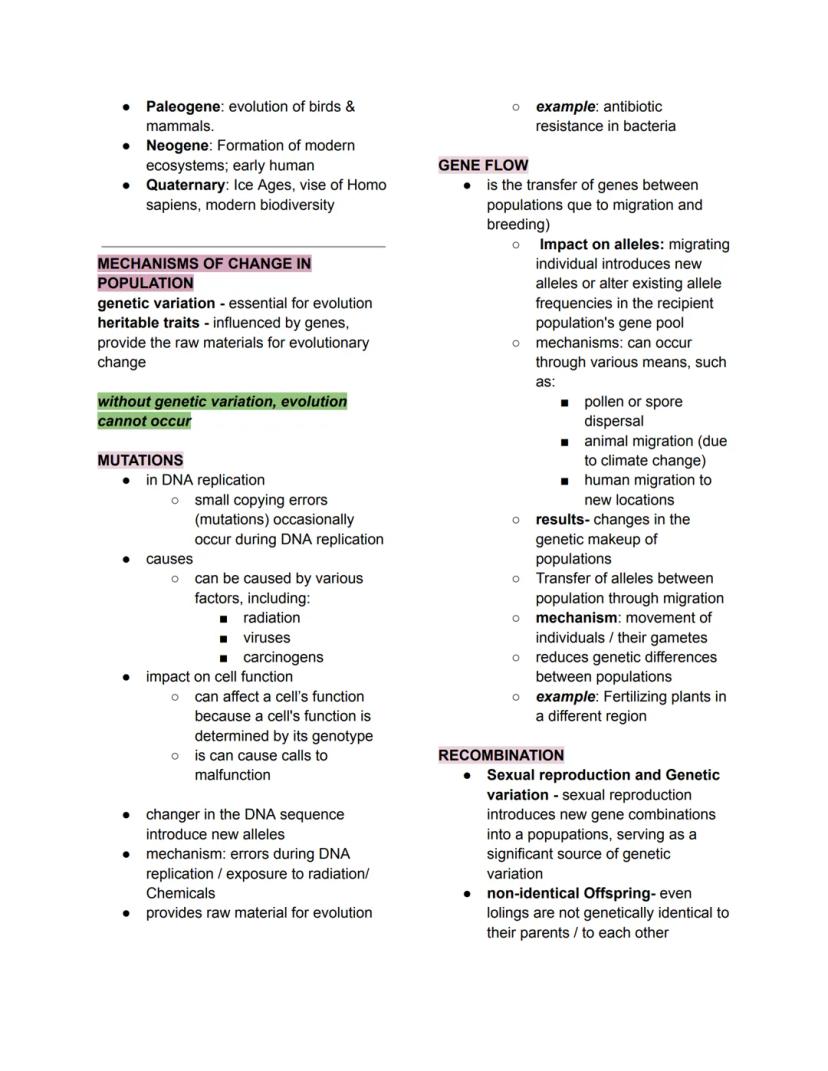
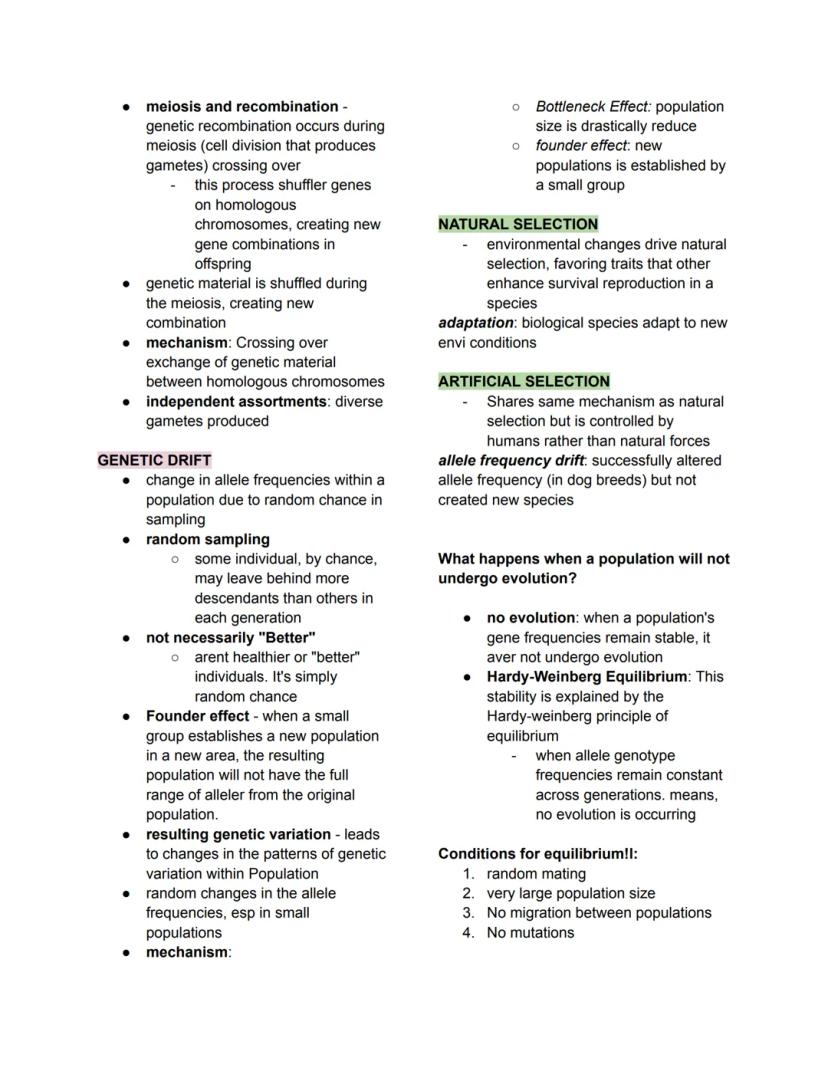
Genetic variation is evolution's raw material - without it, species can't change or adapt. Four main mechanisms constantly shake up the genetic makeup of populations, driving evolutionary change in different ways.
Mutations are like typos in DNA copying, usually caused by radiation, chemicals, or simple copying errors. While most mutations are harmless or harmful, occasionally they create beneficial traits that help organisms survive better. Antibiotic resistance in bacteria is a perfect example of helpful mutations in action.
Gene flow happens when organisms migrate and breed in new populations, bringing fresh genes with them. Picture pollen blowing between plant populations or animals moving due to climate change - they're carrying genetic diversity wherever they go.
Recombination during sexual reproduction shuffles genetic material like a deck of cards. Through processes like crossing over in meiosis, parents create offspring with entirely new gene combinations. This is why siblings look different despite having the same parents!
Genetic drift causes random changes in small populations - it's pure chance determining which individuals reproduce successfully. The founder effect and bottleneck effect are dramatic examples where small groups establish new populations with limited genetic diversity.
Real Example: When a few birds get blown to a remote island and start a new population, they carry only a fraction of their original species' genetic diversity - that's the founder effect in action!
5
of 13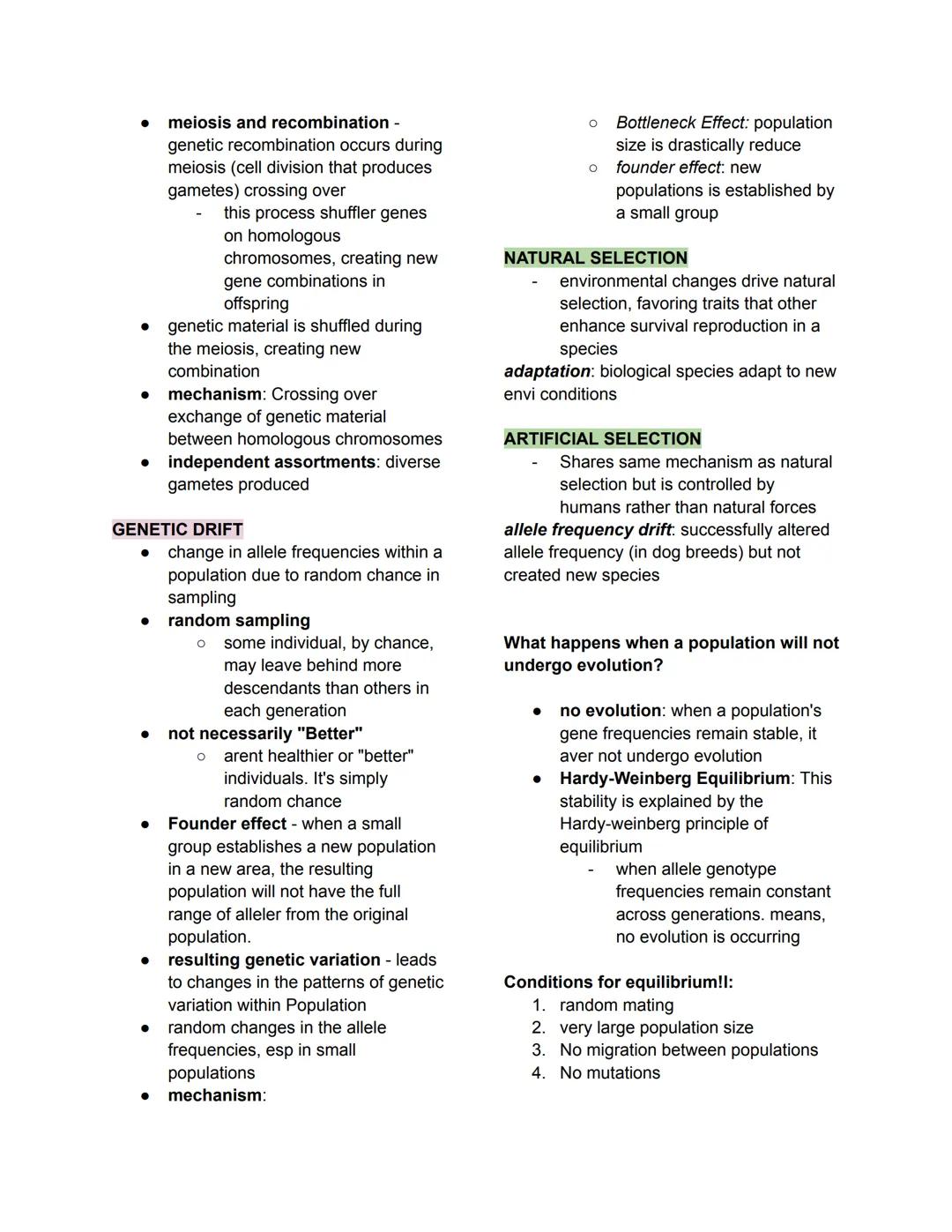
When Evolution Stops
Sometimes populations don't evolve at all! The Hardy-Weinberg equilibrium describes when allele frequencies stay constant across generations, meaning zero evolutionary change is happening.
For this genetic stability to occur, five strict conditions must be met: random mating, very large population size, no migration, no mutations, and no natural selection. In reality, these conditions almost never exist perfectly, which is why most populations are constantly evolving to some degree.
Natural selection drives adaptation when environmental changes favor certain traits over others. Organisms with helpful characteristics survive and reproduce more successfully, gradually changing the population's genetic makeup over time.
Humans have mastered artificial selection - the same mechanism as natural selection but controlled by us instead of nature. Dog breeding is a perfect example: we've dramatically altered allele frequencies to create everything from tiny Chihuahuas to massive Great Danes, though we haven't created new species.
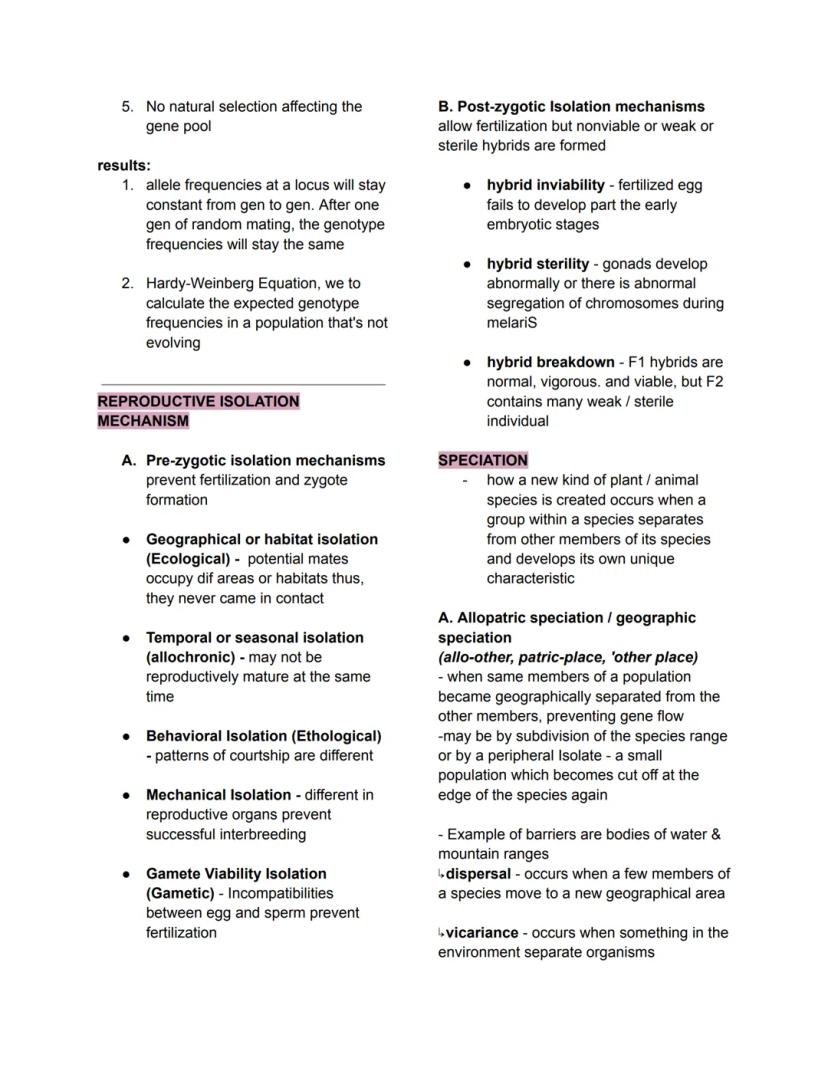
The Hardy-Weinberg equation lets scientists calculate expected genotype frequencies in non-evolving populations. When real populations don't match these predictions, it signals that evolutionary forces are at work.
Key Insight: Hardy-Weinberg equilibrium is like a null hypothesis - it shows us what would happen if evolution wasn't occurring, making it easier to spot when evolution is actually happening!
6
of 13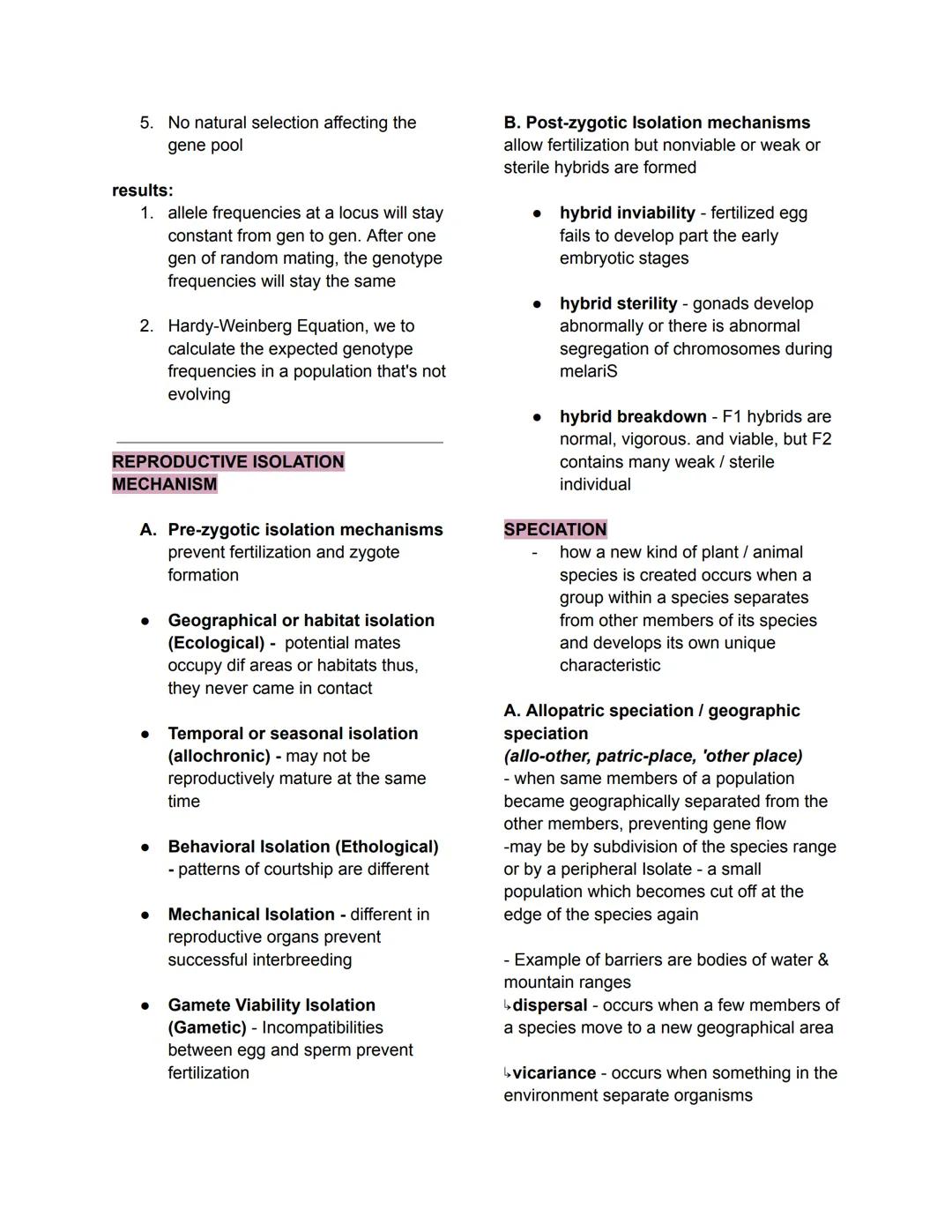
How New Species Are Born
Reproductive isolation is the key to speciation - the process of creating entirely new species. When populations can no longer interbreed successfully, they're on the path to becoming separate species.
Pre-zygotic barriers prevent fertilization from happening in the first place. Geographic separation keeps potential mates apart, while temporal isolation means they reproduce at different times. Behavioral differences (like unique mating dances) and mechanical incompatibilities (different reproductive organ shapes) also prevent successful breeding.
Post-zygotic barriers allow fertilization but result in weak, sterile, or non-viable offspring. Mules (horse-donkey hybrids) are a classic example - they can be born healthy but are sterile, preventing gene flow between parent species.
There are three main types of speciation: Allopatric (geographic separation), sympatric (same location, often through chromosome changes), and parapatric (populations border each other with strong selection pressure). Reinforcement can enhance reproductive isolation when natural selection favors individuals who mate within their own type rather than with other populations.
Mountain ranges, rivers, and other geographic barriers commonly drive allopatric speciation by physically separating populations until they diverge into different species.
Cool Example: The Grand Canyon has separated squirrel populations on its north and south rims for so long that they've evolved into distinct subspecies with different fur colors!
7
of 13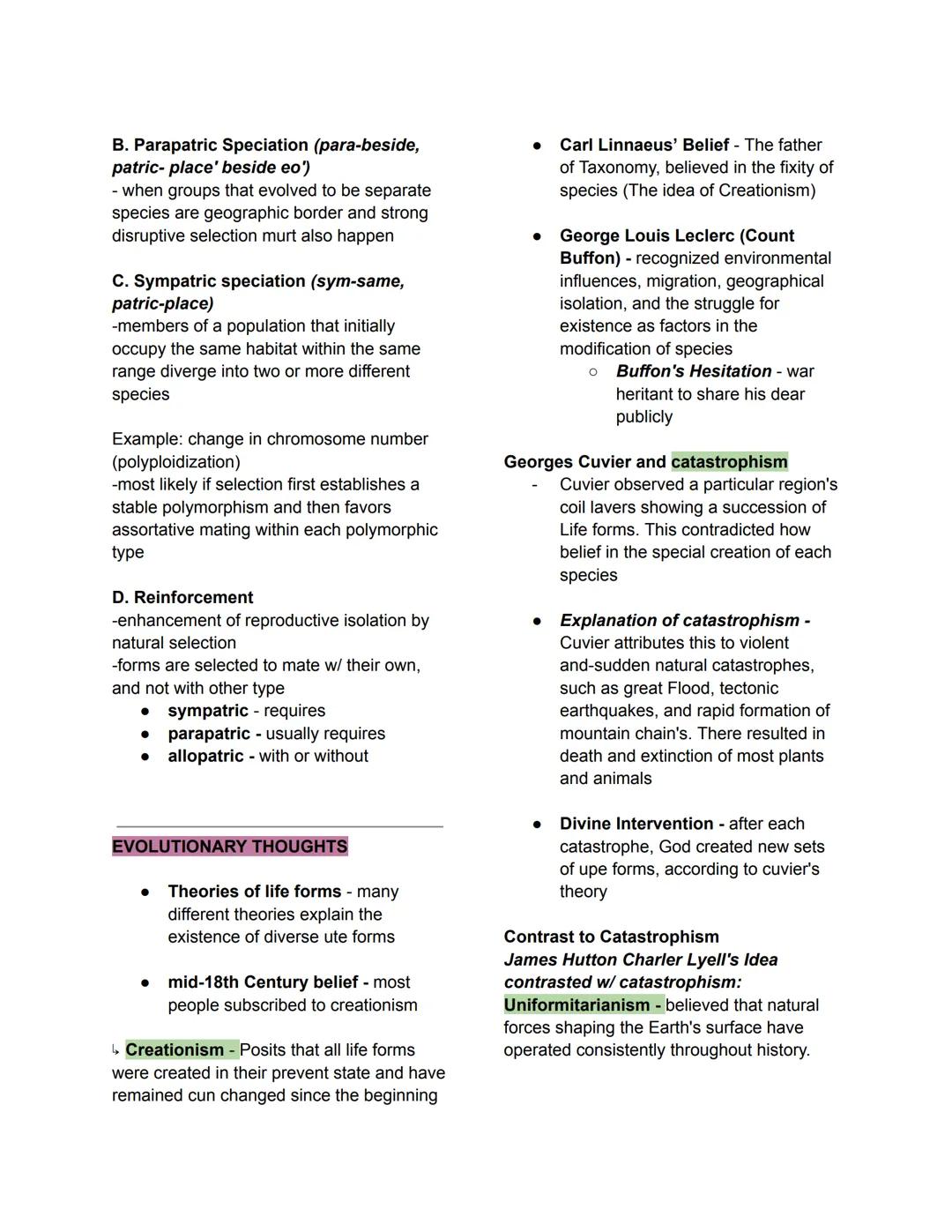
Historical Thinking About Evolution
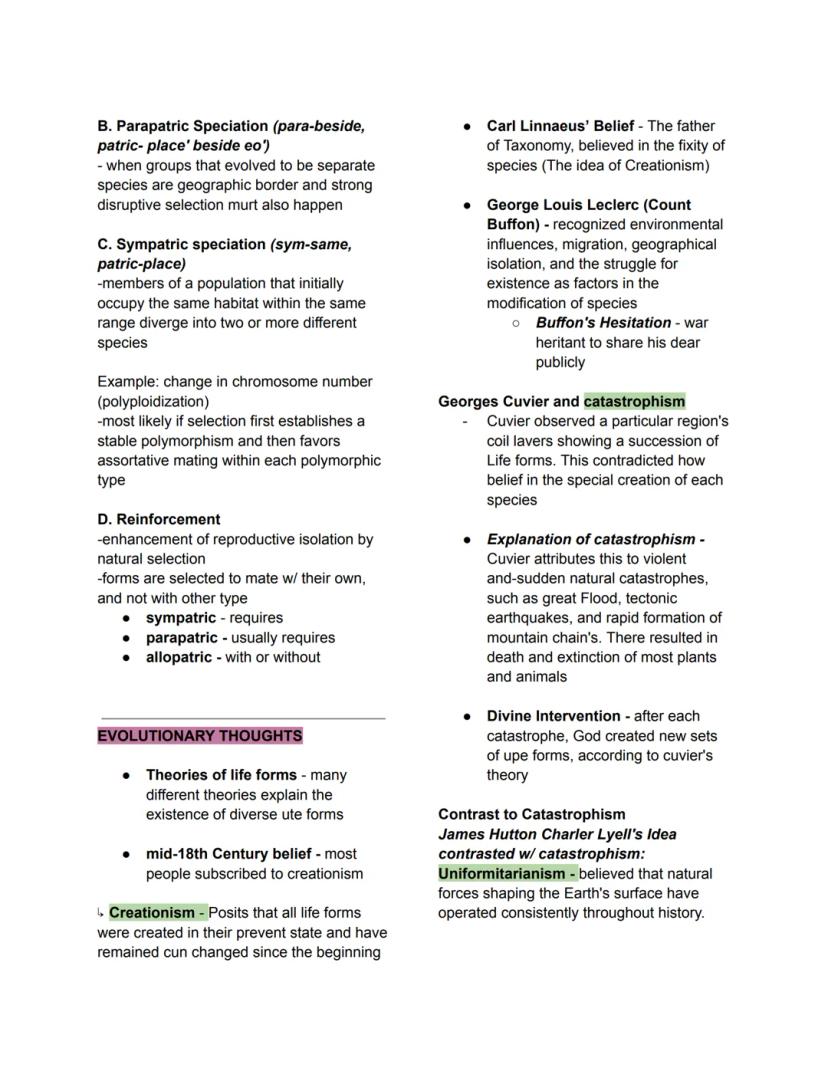
Before Darwin, most people believed in creationism - the idea that all life forms were created in their present state and never changed. This view dominated scientific thinking through the mid-18th century.
Georges Cuvier developed catastrophism to explain fossil evidence of extinct species. He proposed that violent natural disasters periodically wiped out most life, after which God created entirely new sets of organisms. This theory tried to reconcile fossil evidence with religious beliefs about special creation.
Uniformitarianism, proposed by James Hutton and Charles Lyell, challenged catastrophism by suggesting that Earth's changes occurred gradually through consistent natural forces over vast time periods. This idea provided the foundation for understanding how gradual evolutionary change was possible.
Jean-Baptiste Lamarck was the first biologist to propose that organisms actually evolve, though his mechanism was incorrect. He believed organisms could inherit traits acquired during their lifetime - like a giraffe stretching its neck and passing longer necks to offspring. While this specific idea was wrong, Lamarck deserves credit for recognizing that species change over time.
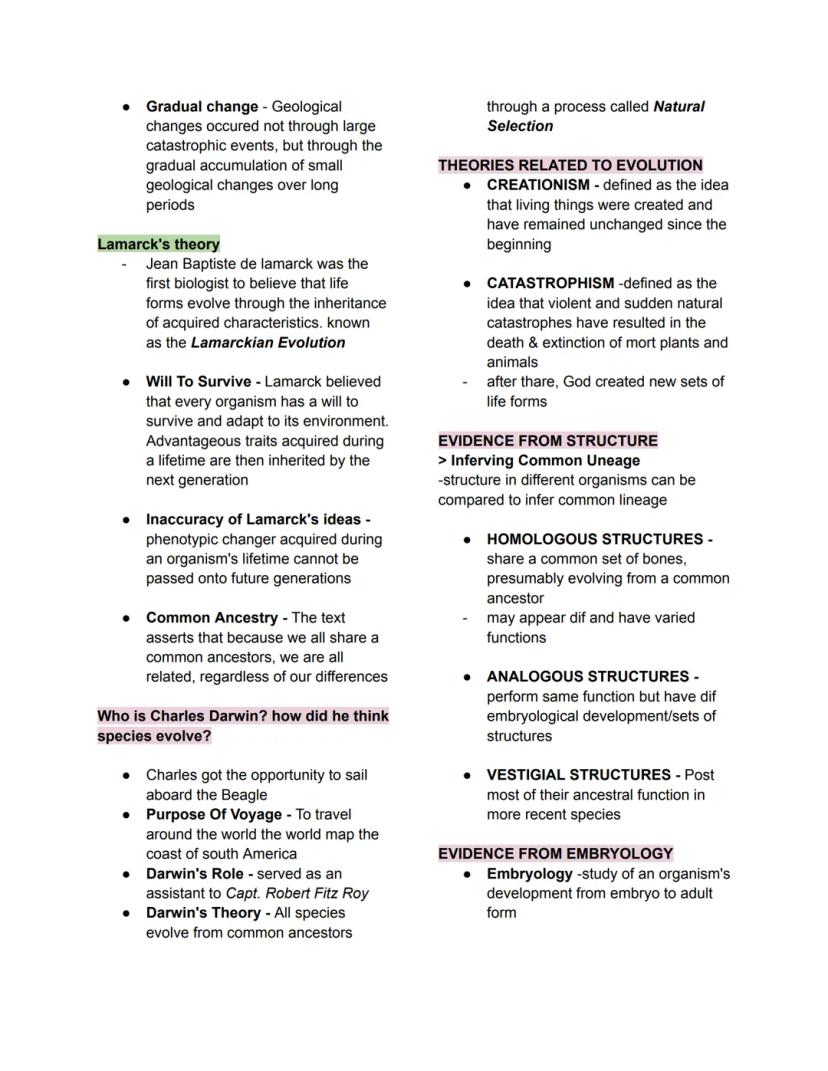
Charles Darwin's voyage on the HMS Beagle provided him with evidence that all species evolve from common ancestors through natural selection - a much more accurate explanation than Lamarck's inheritance of acquired characteristics.
Historical Context: Darwin's revolutionary idea wasn't just that species change - it was that they all share common ancestors and change through natural, observable processes rather than divine intervention.
8
of 13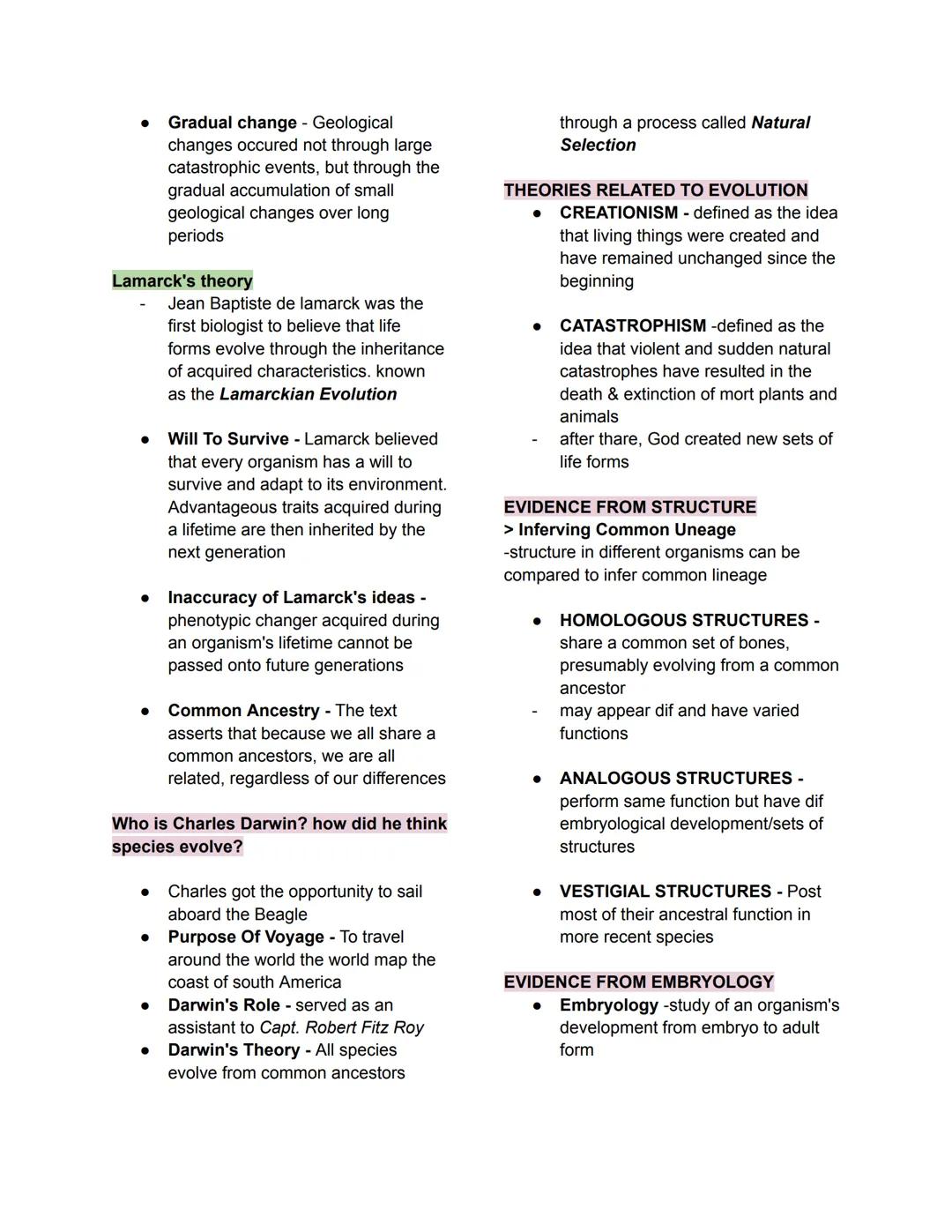
Evidence for Evolution
Multiple lines of evidence strongly support evolutionary theory, making it one of the most well-supported theories in all of science.
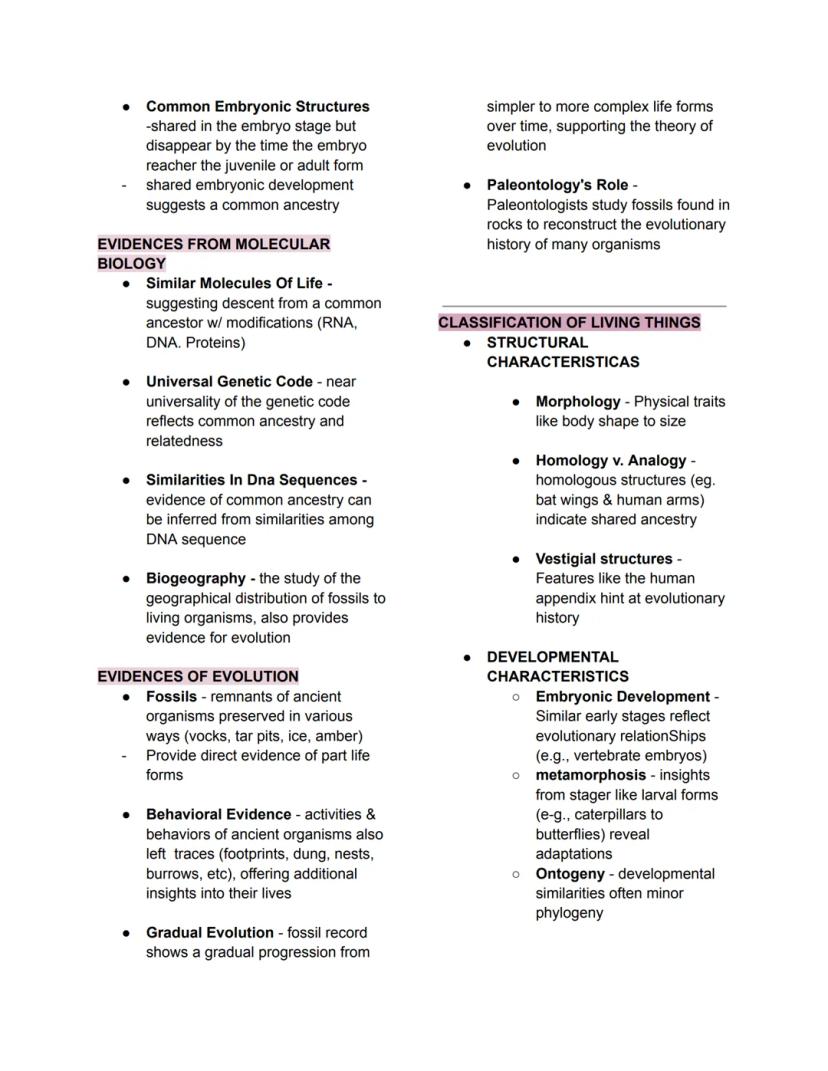
Structural evidence includes homologous structures (like bat wings and human arms) that share the same bone pattern despite different functions, indicating common ancestry. Analogous structures perform similar functions but have different underlying structures, showing convergent evolution. Vestigial structures like the human appendix are remnants of features that were useful in ancestral species.
Embryological evidence reveals that many different species share remarkably similar embryonic development stages, even when the adult forms look completely different. These shared early development patterns strongly suggest common ancestry.
Molecular evidence from DNA and protein comparisons provides the strongest support for evolution. The universal genetic code used by nearly all life forms indicates descent from a common ancestor. DNA sequence similarities directly reflect how closely related different species are - humans and chimpanzees share about 98% of their DNA!
Fossil evidence provides direct documentation of past life forms and shows gradual transitions from simpler to more complex organisms over millions of years. Paleontologists study these preserved remains to reconstruct evolutionary history and trace the development of major groups.
Powerful Point: The fact that evidence from fossils, embryos, DNA, and body structures all tell the same evolutionary story makes the theory incredibly robust and reliable.
9
of 13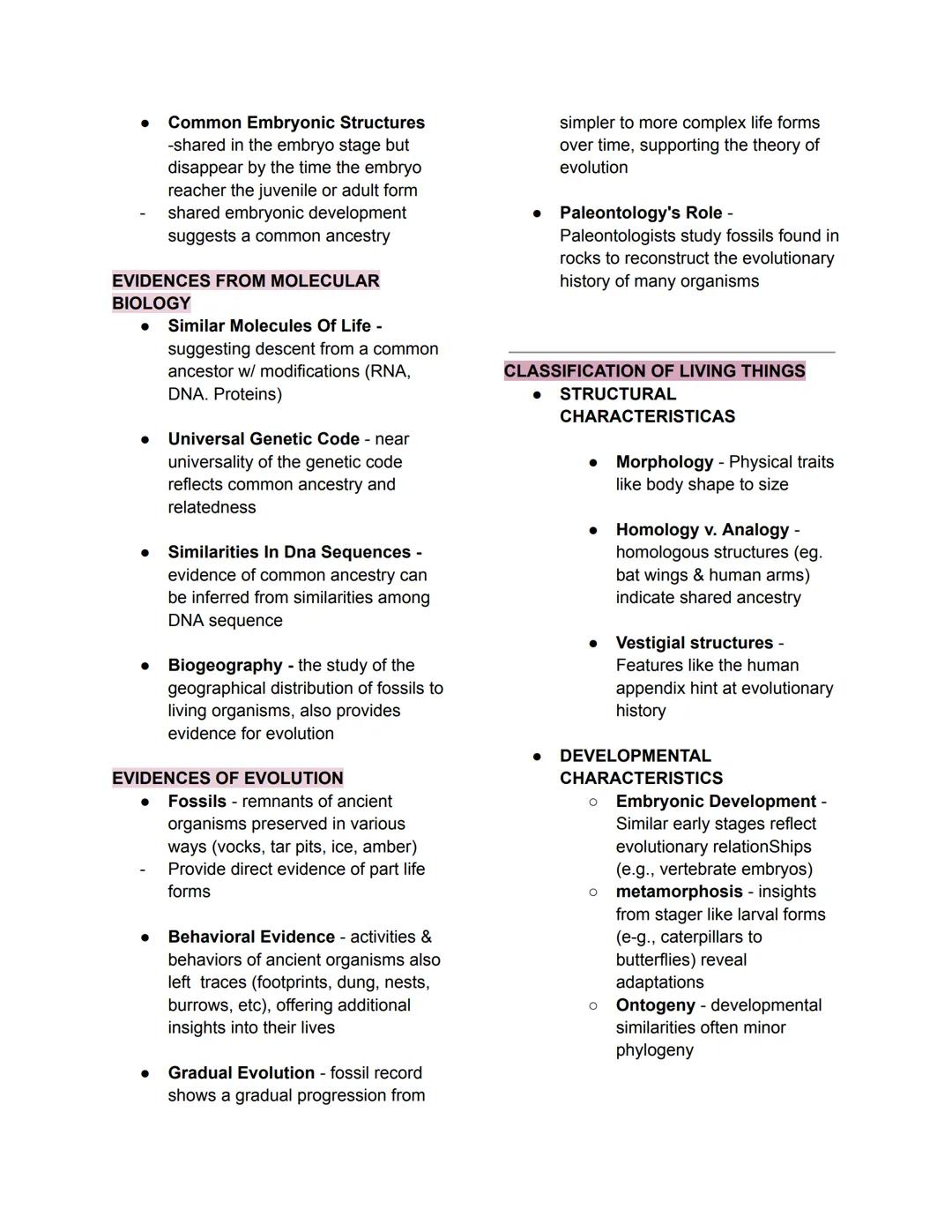
Modern Classification Methods
Scientists classify organisms using multiple types of evidence to understand evolutionary relationships and organize Earth's incredible biodiversity.
Structural characteristics like morphology (body shape and size) provide obvious starting points for classification. However, scientists must distinguish between homologous and analogous structures to avoid being misled by similar appearances that evolved independently.
Developmental characteristics examine how organisms grow from embryos to adults. Similar embryonic development often reveals evolutionary relationships that aren't obvious from adult forms alone. Metamorphosis patterns and other developmental stages provide additional clues about how species are related.
DNA sequence analysis has revolutionized modern classification by providing objective molecular data. Molecular phylogenetics uses gene comparisons to build evolutionary trees showing how species branched apart over time. Molecular clocks estimate when different lineages diverged based on mutation rates.
The most reliable classifications integrate all three types of evidence - structural, developmental, and molecular. This comprehensive approach helps scientists build accurate phylogenetic trees that reflect true evolutionary relationships rather than superficial similarities.
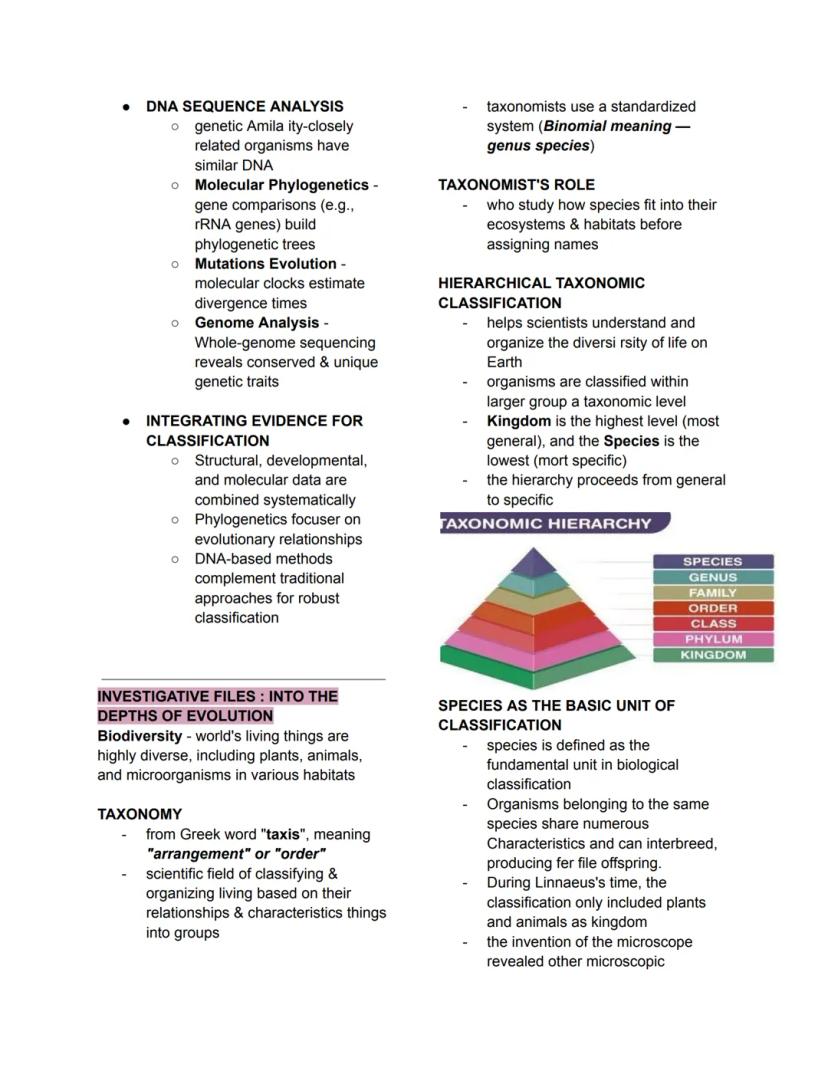
Taxonomists organize this information using the standardized binomial system (genus + species names) within a hierarchical classification from species up through genus, family, order, class, phylum, and kingdom.
Modern Reality: DNA analysis has completely reshuffled many traditional classifications, showing that some organisms that look similar are actually very distantly related, while others that look different are close cousins!
10
of 13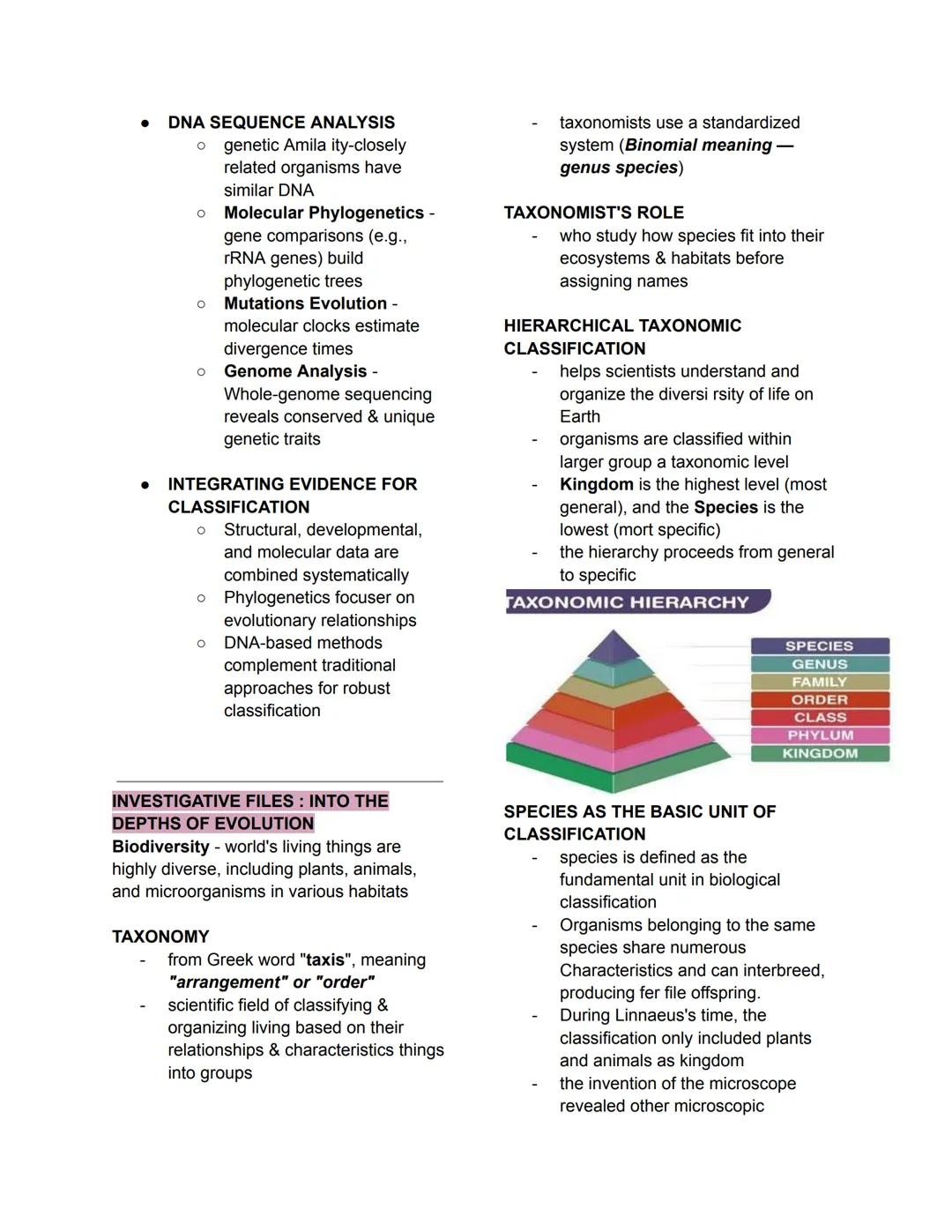
The Science of Organizing Life
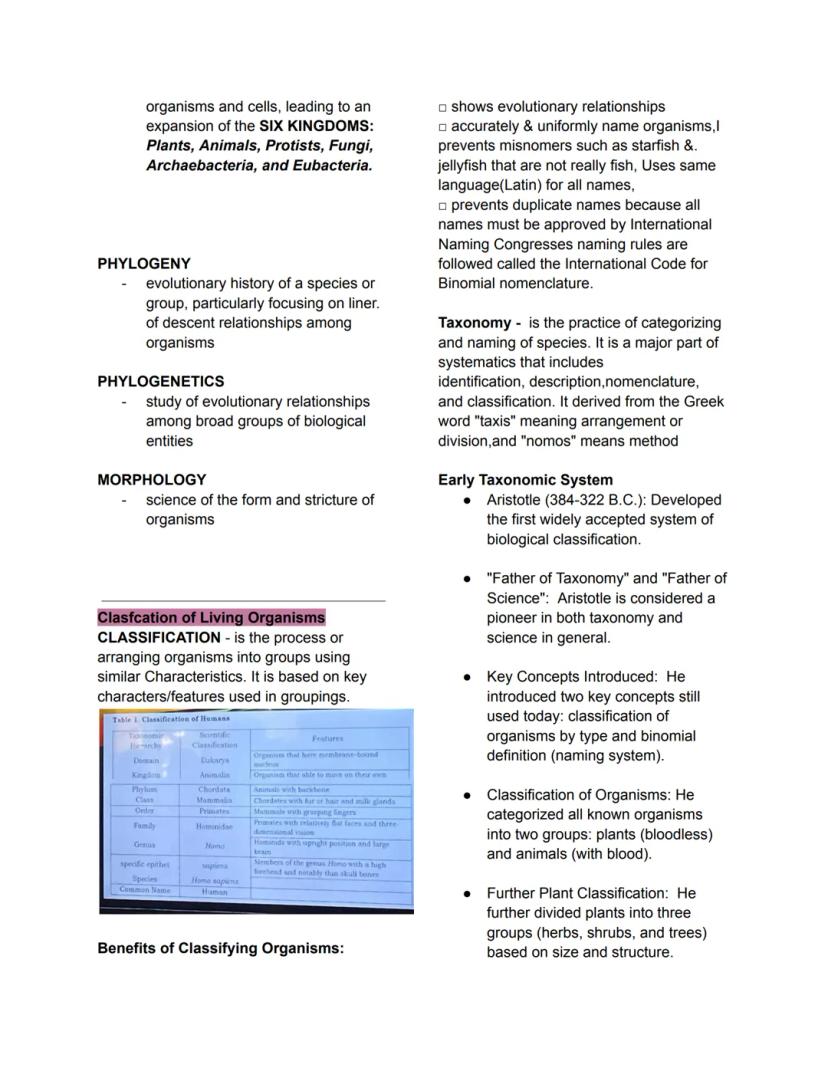
Taxonomy comes from the Greek word "taxis" meaning "arrangement" - it's the scientific field dedicated to classifying and organizing living things based on their evolutionary relationships and shared characteristics.
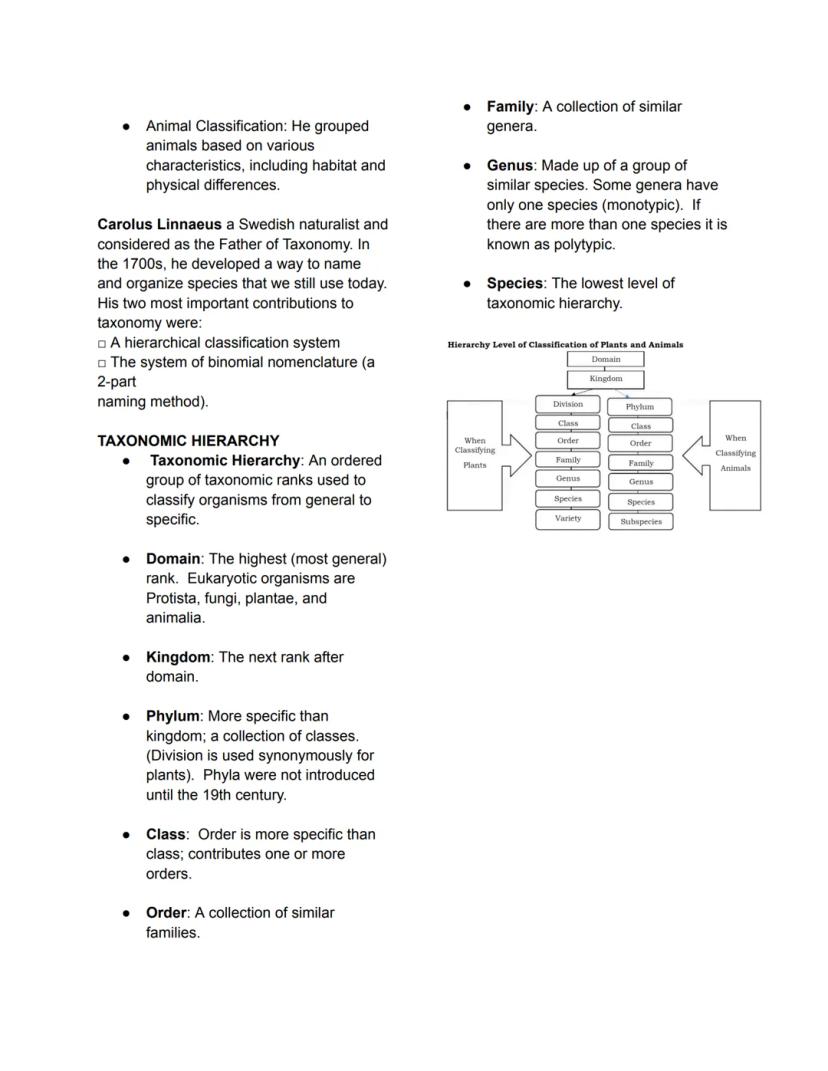
The taxonomic hierarchy works like a filing system, organizing Earth's incredible biodiversity from the most general level (kingdom) down to the most specific (species). Each level groups organisms that share increasingly specific characteristics and closer evolutionary relationships.
Species serves as the fundamental unit of classification - organisms belonging to the same species share numerous characteristics and can interbreed to produce fertile offspring. This reproductive criterion helps scientists determine where to draw the lines between different species.
The hierarchical system proceeds from Kingdom (most general) down through Phylum, Class, Order, Family, Genus, to Species (most specific). Think of it like your address system - starting with your country and narrowing down to your specific house number.
Modern taxonomy has expanded far beyond Linnaeus's original two-kingdom system of plants and animals. The invention of microscopes revealed microscopic organisms that didn't fit traditional categories, leading to more complex classification systems that better reflect the true diversity of life on Earth.
Scientists constantly refine classifications as new species are discovered and DNA analysis reveals previously unknown evolutionary relationships.
Memory Device: Use "King Philip Came Over For Good Spaghetti" to remember Kingdom, Phylum, Class, Order, Family, Genus, Species - the taxonomic hierarchy from most general to most specific!
11
of 13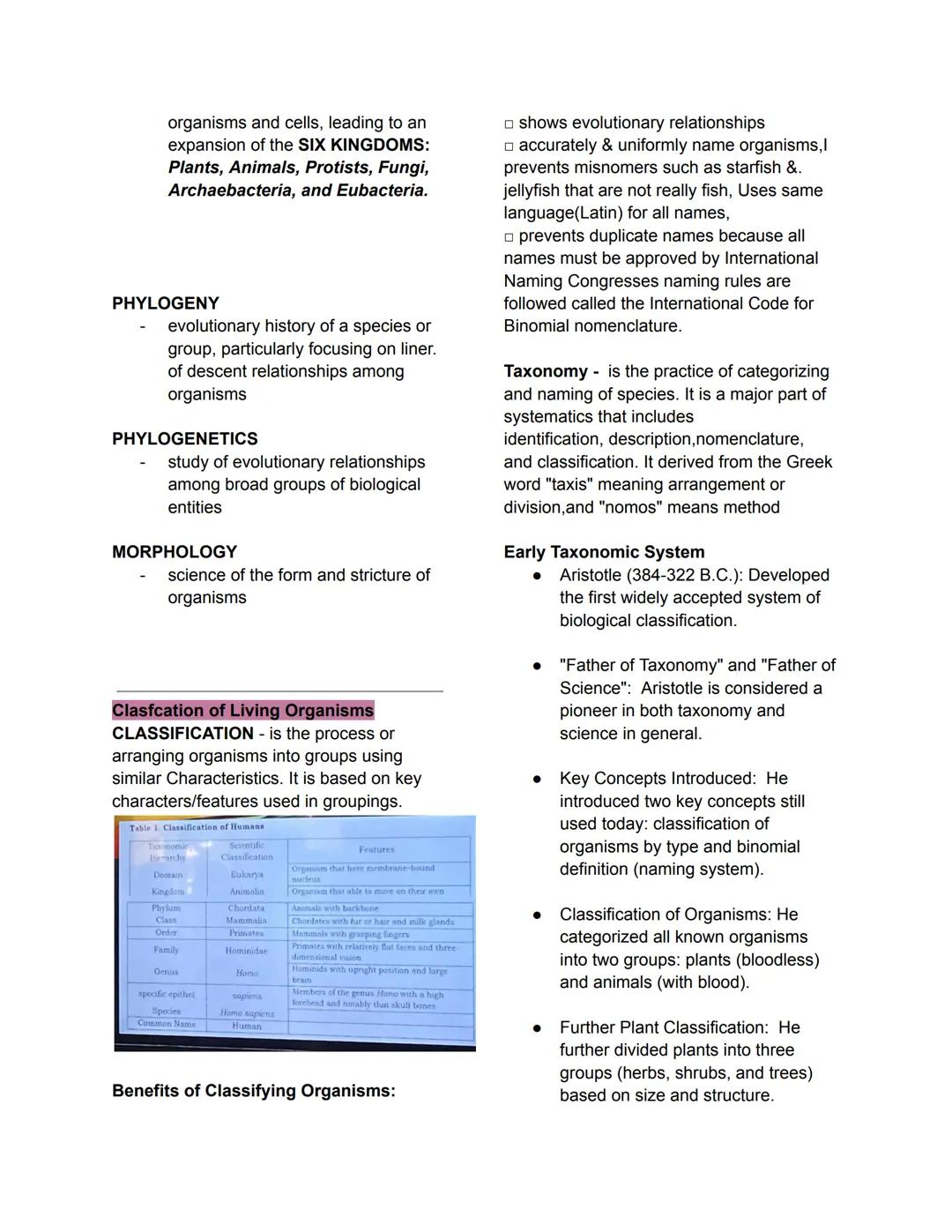
12
of 13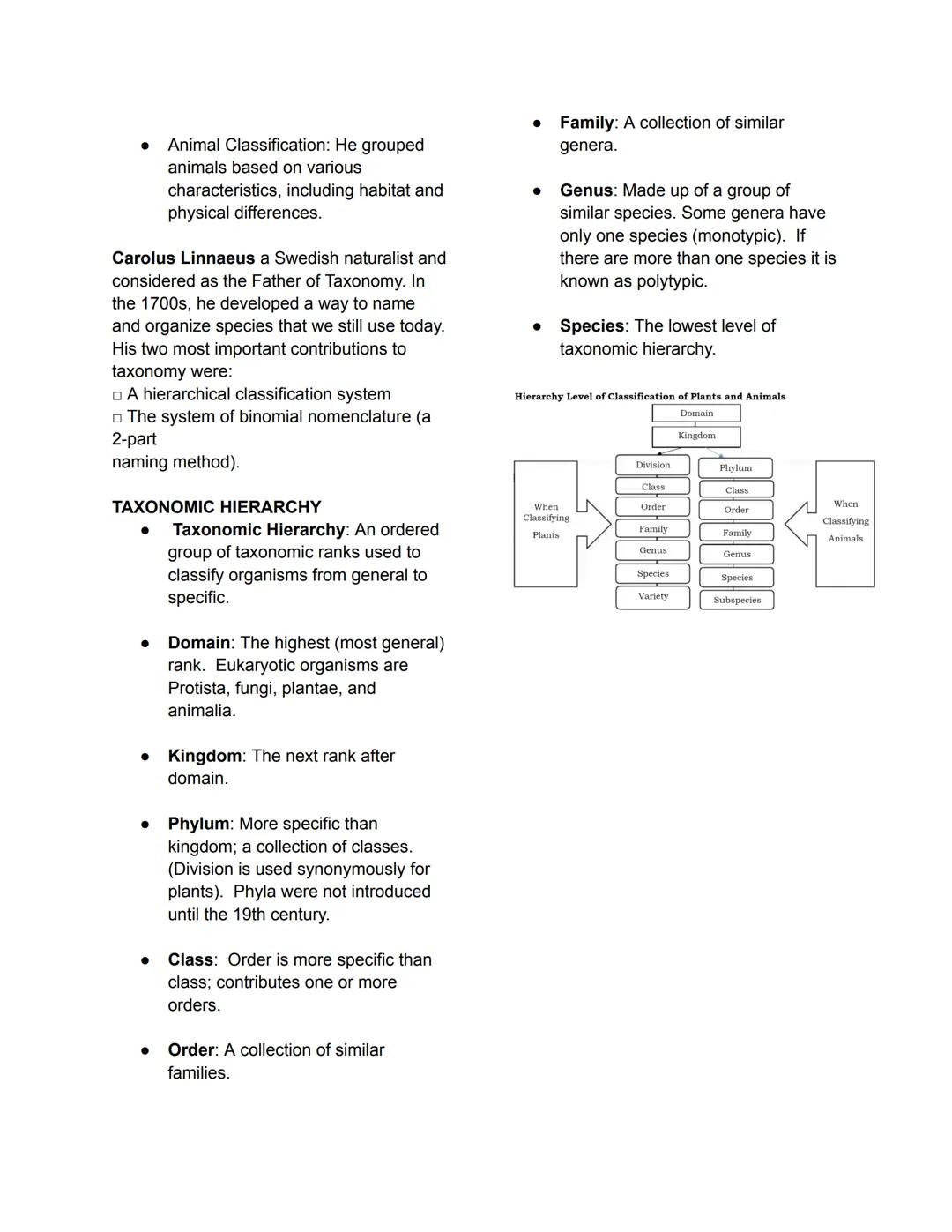
13
of 13
Akala namin hindi mo na itatanong...
Ang aming AI Companion ay isang AI tool na nakatuon sa mga estudyante na nag-aalok ng higit pa sa mga sagot lang. Binuo mula sa milyong Knowunity resources, nagbibigay ito ng may-kaugnayang impormasyon, personalized na study plans, quizzes, at content direkta sa chat, na umaangkop sa iyong sariling learning journey.
Maaari mong i-download ang app mula sa Google Play Store at Apple App Store.
Tama 'yan! Mag-enjoy sa libreng access sa mga study content, makipag-connect sa kapwa mga estudyante, at kumuha ng instant na tulong – lahat nasa iyong daliri lang.
Kahalintulad na content
 Practical Research
 English
Pinaka-sikat na nilalaman sa GenBio
9GenBioGeneral Biology 1, 1st Sem
Topics: Cells, Organelles, Prokaryotes & Eukaryotes, Specialized Cells, Cell Modification, Cell Cycle, Mitosis, Meiosis, Chromosomal Abnormalities, Cell Membrane, Transport Mechanism
G119,497289
GenBioBiology
General Knowledge
G113,45292
GenBioUNDERSTANDING THE SELF LESSON 1
understanding the self lesson one
College3,59983
GenBioReview on Anatomy and Physiology
These notes contain a collated review on anatomy and physiology, which covers the different parts of the body and their basic descriptions.
G114,277141
 GenChem
Theoretical Foundation of Nursing
Compact guide that breaks down major nursing theorist. CTTO.
G112,09747
GenBioGeneral Biology 2
MUSCLE TISSUE - NERVOUS SYSTEM
G111,11112
Earth ScienceCell Division - Difference of Mitosis and Meiosis
General Biology
G112,00944
GenBioBiology review 1
Preparation for college entrance exams
College81317
GenBioPhotosynthesis Reviewer
Contains a complete review of photosynthesis, with detailed explanations of the light-dependent reactions and the light-independent (Calvin cycle) reactions.
G112,42344
Pinaka-sikat na nilalaman
9 Iba pa
El Filibusterismo (FILIPINO 10)
Kilalanin ang mga karakter at alamin ang mga pangyayari mula Kabanata 1 hanggang 39.
G1013,399264
 Math
MathMathematics Grade 10 Quarter 1
Grade 10 Math topics
G1010,326250
M
 Araling Panlipunan (AP)
mapeh
Explore traditional Philippine and Malaysian performing arts, including plays, epics, and dance dramas like Darangen and Mak Yong.
G75,1210
 Gen Physics
General Physics 1, First Sem
Units of Measurement, Vectors, and Kinematics. All with formulas
G116,590173
ScienceScience 9 Quarter 1 Lesson 1
Topics: The Respiratory System and The Circulatory System
G911,129385
OtherIntroduction to Philosophy - 1st Semester, Grade 12
A summarized notes for Grade 12 students. Easier learning for the 1st semester’s Philosophy subject.
G124,54362
 Philosophy
Introduction to Philosophy
Philosophy encourages reflection and reasoning about life’s big questions.
G113,86371
GenBioGeneral Biology 1, 1st Sem
Topics: Cells, Organelles, Prokaryotes & Eukaryotes, Specialized Cells, Cell Modification, Cell Cycle, Mitosis, Meiosis, Chromosomal Abnormalities, Cell Membrane, Transport Mechanism
G119,497289
ScienceThe Human Digestive System
Science Grade 8 1st Quarter Lesson
G84,84486
Gustong-gusto kami ng mga estudyante — at magiging ganoon ka rin.
4.6/5App Store
4.7/5Google Play
Napakadaling gamitin at maganda ang disenyo ng app. Nahanap ko lahat ng hinahanap ko hanggang ngayon at natuto ako ng marami mula sa mga presentasyon! Tiyak na gagamitin ko ang app para sa isang takdang-aralin sa klase! At siyempre, nakakatulong din ito bilang inspirasyon.
Stefan Sgumagamit ng iOS
Sobrang ganda talaga ng app na ito. Maraming mga study notes at tulong [...]. Ang problemang subject ko ay Pranses, halimbawa, at ang app ay may maraming options para tumulong. Salamat sa app na ito, bumuti ang Pranses ko. Irerekumenda ko ito sa lahat.
Samantha KlichAndroid user
Wow, talagang namangha ako. Sinubukan ko lang ang app dahil nakita ko itong ina-advertise nang maraming beses at sobrang nagulat ako. Ang app na ito ang TULONG na gusto mo para sa paaralan at higit sa lahat, nag-aalok ito ng maraming bagay, tulad ng workouts at fact sheets, na SOBRANG nakatulong sa akin.
AnnaiOS user
GenBio1,084 views·Na-update Hul 20, 2026·13 mga pahinaComprehensive Notes on General Biology II
E
every day@everyday_d79hz
Ever wonder how scientists create "designer" organisms or how life itself began on Earth? Genetic engineering lets us literally rewrite the genetic code of living things, while evolutionary biology explains how all life forms are connected through billions of years...
1
of 13
Mag-sign up para makita ang content. Libre ito!
- Access sa lahat ng dokumento
- Pagbutihin ang iyong mga grado
- Sumali sa milyong mga estudyante
Sa pag-sign up, tinatanggap mo ang Terms of Service at Privacy Policy
Genetic Engineering and DNA Magic
Think of genetic engineering like editing a computer program - but instead of code, you're editing DNA to give organisms superpowers they never had naturally. Scientists use this amazing process to create everything from disease-resistant crops to life-saving medicines.
The secret weapon in this process is recombinant DNA - basically DNA from two different sources mashed together. Scientists use helper molecules called vectors (usually harmless bacteria called plasmids) to smuggle foreign DNA into target cells. It's like using a delivery truck to drop off genetic packages!
The transformation process is surprisingly elegant. Special enzymes called restriction endonucleases cut DNA at specific spots, creating "sticky ends" that are ready to connect. Then DNA ligase acts like molecular glue, sealing everything together perfectly.
There are several cool ways to get DNA into cells: electroporation zaps cells with electricity to create temporary holes, microinjection uses tiny needles like molecular syringes, and particle guns literally shoot DNA-coated particles into cells. Each method is like having different tools for different jobs - some work better for bacteria, others for plants or animal cells.
Quick Tip: Remember that sticky ends + DNA ligase = successful recombination. This combo is your key to understanding how genetic engineering works!
2
of 13Mag-sign up para makita ang content. Libre ito!
- Access sa lahat ng dokumento
- Pagbutihin ang iyong mga grado
- Sumali sa milyong mga estudyante
Sa pag-sign up, tinatanggap mo ang Terms of Service at Privacy Policy
Real-World Applications and Origin of Life
Recombinant DNA technology is already changing agriculture in amazing ways. BT corn produces its own natural insecticide, reducing the need for harmful chemical sprays. Scientists use helpful bacteria like Pseudomonas syringae (prevents frost damage) and Agrobacterium tumefaciens (delivers beneficial genes to plants) to create crops that can survive droughts, resist pests, and even produce more nutritious food.
In medicine, genetically modified bacteria work like tiny factories, producing insulin, vaccines, and other life-saving treatments. This is way more efficient and safer than extracting these substances from animals or plants.
But how did life itself begin? Scientists have proposed three main theories: special creation (divine forces), extraterrestrial origin (life came from space), and spontaneous origin (life evolved from non-living matter). The famous Miller-Urey experiment in 1953 showed that organic molecules could form naturally under early Earth conditions, supporting the spontaneous origin theory.
Life might have first appeared in various locations - ocean edges, deep-sea vents, or even within clay deposits. Each location offered unique chemical conditions that could have sparked the first living molecules.
Did You Know: The Miller-Urey experiment created amino acids (building blocks of proteins) just by simulating early Earth's atmosphere with lightning!
3
of 13Mag-sign up para makita ang content. Libre ito!
- Access sa lahat ng dokumento
- Pagbutihin ang iyong mga grado
- Sumali sa milyong mga estudyante
Sa pag-sign up, tinatanggap mo ang Terms of Service at Privacy Policy
Earth's Epic Timeline
Earth's 4.6 billion-year history is divided into massive time chunks that tell an incredible story of change. The Precambrian era (88% of Earth's history!) saw the formation of our planet, first oceans, and the emergence of basic life forms like bacteria around 3.5 billion years ago.
The Paleozoic era brought the "Cambrian Explosion" - a time when life diversified like crazy. This era saw the first land plants, jawed fish, forests, and amphibians. Think of it as life's experimental phase, trying out tons of new body plans and lifestyles.
The Mesozoic era was the famous "Age of Reptiles" when dinosaurs ruled the Earth. This period also gave us the first mammals, birds, and flowering plants. It ended with the massive extinction event that wiped out the dinosaurs 66 million years ago.
Finally, the Cenozoic era (our current era) is the "Age of Mammals." After the dinosaurs disappeared, mammals evolved rapidly to fill empty ecological niches. This era includes the ice ages and the eventual rise of humans.
Memory Trick: Think "Pre-Paleo-Meso-Cenozoic" as "Pretty-Powerful-Monsters-Came" to remember the order of Earth's major eras!
4
of 13Mag-sign up para makita ang content. Libre ito!
- Access sa lahat ng dokumento
- Pagbutihin ang iyong mga grado
- Sumali sa milyong mga estudyante
Sa pag-sign up, tinatanggap mo ang Terms of Service at Privacy Policy
How Evolution Actually Works
Genetic variation is evolution's raw material - without it, species can't change or adapt. Four main mechanisms constantly shake up the genetic makeup of populations, driving evolutionary change in different ways.
Mutations are like typos in DNA copying, usually caused by radiation, chemicals, or simple copying errors. While most mutations are harmless or harmful, occasionally they create beneficial traits that help organisms survive better. Antibiotic resistance in bacteria is a perfect example of helpful mutations in action.
Gene flow happens when organisms migrate and breed in new populations, bringing fresh genes with them. Picture pollen blowing between plant populations or animals moving due to climate change - they're carrying genetic diversity wherever they go.
Recombination during sexual reproduction shuffles genetic material like a deck of cards. Through processes like crossing over in meiosis, parents create offspring with entirely new gene combinations. This is why siblings look different despite having the same parents!
Genetic drift causes random changes in small populations - it's pure chance determining which individuals reproduce successfully. The founder effect and bottleneck effect are dramatic examples where small groups establish new populations with limited genetic diversity.
Real Example: When a few birds get blown to a remote island and start a new population, they carry only a fraction of their original species' genetic diversity - that's the founder effect in action!
5
of 13Mag-sign up para makita ang content. Libre ito!
- Access sa lahat ng dokumento
- Pagbutihin ang iyong mga grado
- Sumali sa milyong mga estudyante
Sa pag-sign up, tinatanggap mo ang Terms of Service at Privacy Policy
When Evolution Stops
Sometimes populations don't evolve at all! The Hardy-Weinberg equilibrium describes when allele frequencies stay constant across generations, meaning zero evolutionary change is happening.
For this genetic stability to occur, five strict conditions must be met: random mating, very large population size, no migration, no mutations, and no natural selection. In reality, these conditions almost never exist perfectly, which is why most populations are constantly evolving to some degree.
Natural selection drives adaptation when environmental changes favor certain traits over others. Organisms with helpful characteristics survive and reproduce more successfully, gradually changing the population's genetic makeup over time.
Humans have mastered artificial selection - the same mechanism as natural selection but controlled by us instead of nature. Dog breeding is a perfect example: we've dramatically altered allele frequencies to create everything from tiny Chihuahuas to massive Great Danes, though we haven't created new species.
The Hardy-Weinberg equation lets scientists calculate expected genotype frequencies in non-evolving populations. When real populations don't match these predictions, it signals that evolutionary forces are at work.
Key Insight: Hardy-Weinberg equilibrium is like a null hypothesis - it shows us what would happen if evolution wasn't occurring, making it easier to spot when evolution is actually happening!
6
of 13Mag-sign up para makita ang content. Libre ito!
- Access sa lahat ng dokumento
- Pagbutihin ang iyong mga grado
- Sumali sa milyong mga estudyante
Sa pag-sign up, tinatanggap mo ang Terms of Service at Privacy Policy
How New Species Are Born
Reproductive isolation is the key to speciation - the process of creating entirely new species. When populations can no longer interbreed successfully, they're on the path to becoming separate species.
Pre-zygotic barriers prevent fertilization from happening in the first place. Geographic separation keeps potential mates apart, while temporal isolation means they reproduce at different times. Behavioral differences (like unique mating dances) and mechanical incompatibilities (different reproductive organ shapes) also prevent successful breeding.
Post-zygotic barriers allow fertilization but result in weak, sterile, or non-viable offspring. Mules (horse-donkey hybrids) are a classic example - they can be born healthy but are sterile, preventing gene flow between parent species.
There are three main types of speciation: Allopatric (geographic separation), sympatric (same location, often through chromosome changes), and parapatric (populations border each other with strong selection pressure). Reinforcement can enhance reproductive isolation when natural selection favors individuals who mate within their own type rather than with other populations.
Mountain ranges, rivers, and other geographic barriers commonly drive allopatric speciation by physically separating populations until they diverge into different species.
Cool Example: The Grand Canyon has separated squirrel populations on its north and south rims for so long that they've evolved into distinct subspecies with different fur colors!
7
of 13Mag-sign up para makita ang content. Libre ito!
- Access sa lahat ng dokumento
- Pagbutihin ang iyong mga grado
- Sumali sa milyong mga estudyante
Sa pag-sign up, tinatanggap mo ang Terms of Service at Privacy Policy
Historical Thinking About Evolution
Before Darwin, most people believed in creationism - the idea that all life forms were created in their present state and never changed. This view dominated scientific thinking through the mid-18th century.
Georges Cuvier developed catastrophism to explain fossil evidence of extinct species. He proposed that violent natural disasters periodically wiped out most life, after which God created entirely new sets of organisms. This theory tried to reconcile fossil evidence with religious beliefs about special creation.
Uniformitarianism, proposed by James Hutton and Charles Lyell, challenged catastrophism by suggesting that Earth's changes occurred gradually through consistent natural forces over vast time periods. This idea provided the foundation for understanding how gradual evolutionary change was possible.
Jean-Baptiste Lamarck was the first biologist to propose that organisms actually evolve, though his mechanism was incorrect. He believed organisms could inherit traits acquired during their lifetime - like a giraffe stretching its neck and passing longer necks to offspring. While this specific idea was wrong, Lamarck deserves credit for recognizing that species change over time.
Charles Darwin's voyage on the HMS Beagle provided him with evidence that all species evolve from common ancestors through natural selection - a much more accurate explanation than Lamarck's inheritance of acquired characteristics.
Historical Context: Darwin's revolutionary idea wasn't just that species change - it was that they all share common ancestors and change through natural, observable processes rather than divine intervention.
8
of 13Mag-sign up para makita ang content. Libre ito!
- Access sa lahat ng dokumento
- Pagbutihin ang iyong mga grado
- Sumali sa milyong mga estudyante
Sa pag-sign up, tinatanggap mo ang Terms of Service at Privacy Policy
Evidence for Evolution
Multiple lines of evidence strongly support evolutionary theory, making it one of the most well-supported theories in all of science.
Structural evidence includes homologous structures (like bat wings and human arms) that share the same bone pattern despite different functions, indicating common ancestry. Analogous structures perform similar functions but have different underlying structures, showing convergent evolution. Vestigial structures like the human appendix are remnants of features that were useful in ancestral species.
Embryological evidence reveals that many different species share remarkably similar embryonic development stages, even when the adult forms look completely different. These shared early development patterns strongly suggest common ancestry.
Molecular evidence from DNA and protein comparisons provides the strongest support for evolution. The universal genetic code used by nearly all life forms indicates descent from a common ancestor. DNA sequence similarities directly reflect how closely related different species are - humans and chimpanzees share about 98% of their DNA!
Fossil evidence provides direct documentation of past life forms and shows gradual transitions from simpler to more complex organisms over millions of years. Paleontologists study these preserved remains to reconstruct evolutionary history and trace the development of major groups.
Powerful Point: The fact that evidence from fossils, embryos, DNA, and body structures all tell the same evolutionary story makes the theory incredibly robust and reliable.
9
of 13Mag-sign up para makita ang content. Libre ito!
- Access sa lahat ng dokumento
- Pagbutihin ang iyong mga grado
- Sumali sa milyong mga estudyante
Sa pag-sign up, tinatanggap mo ang Terms of Service at Privacy Policy
Modern Classification Methods
Scientists classify organisms using multiple types of evidence to understand evolutionary relationships and organize Earth's incredible biodiversity.
Structural characteristics like morphology (body shape and size) provide obvious starting points for classification. However, scientists must distinguish between homologous and analogous structures to avoid being misled by similar appearances that evolved independently.
Developmental characteristics examine how organisms grow from embryos to adults. Similar embryonic development often reveals evolutionary relationships that aren't obvious from adult forms alone. Metamorphosis patterns and other developmental stages provide additional clues about how species are related.
DNA sequence analysis has revolutionized modern classification by providing objective molecular data. Molecular phylogenetics uses gene comparisons to build evolutionary trees showing how species branched apart over time. Molecular clocks estimate when different lineages diverged based on mutation rates.
The most reliable classifications integrate all three types of evidence - structural, developmental, and molecular. This comprehensive approach helps scientists build accurate phylogenetic trees that reflect true evolutionary relationships rather than superficial similarities.
Taxonomists organize this information using the standardized binomial system (genus + species names) within a hierarchical classification from species up through genus, family, order, class, phylum, and kingdom.
Modern Reality: DNA analysis has completely reshuffled many traditional classifications, showing that some organisms that look similar are actually very distantly related, while others that look different are close cousins!
10
of 13Mag-sign up para makita ang content. Libre ito!
- Access sa lahat ng dokumento
- Pagbutihin ang iyong mga grado
- Sumali sa milyong mga estudyante
Sa pag-sign up, tinatanggap mo ang Terms of Service at Privacy Policy
The Science of Organizing Life
Taxonomy comes from the Greek word "taxis" meaning "arrangement" - it's the scientific field dedicated to classifying and organizing living things based on their evolutionary relationships and shared characteristics.
The taxonomic hierarchy works like a filing system, organizing Earth's incredible biodiversity from the most general level (kingdom) down to the most specific (species). Each level groups organisms that share increasingly specific characteristics and closer evolutionary relationships.
Species serves as the fundamental unit of classification - organisms belonging to the same species share numerous characteristics and can interbreed to produce fertile offspring. This reproductive criterion helps scientists determine where to draw the lines between different species.
The hierarchical system proceeds from Kingdom (most general) down through Phylum, Class, Order, Family, Genus, to Species (most specific). Think of it like your address system - starting with your country and narrowing down to your specific house number.
Modern taxonomy has expanded far beyond Linnaeus's original two-kingdom system of plants and animals. The invention of microscopes revealed microscopic organisms that didn't fit traditional categories, leading to more complex classification systems that better reflect the true diversity of life on Earth.
Scientists constantly refine classifications as new species are discovered and DNA analysis reveals previously unknown evolutionary relationships.
Memory Device: Use "King Philip Came Over For Good Spaghetti" to remember Kingdom, Phylum, Class, Order, Family, Genus, Species - the taxonomic hierarchy from most general to most specific!
11
of 13Mag-sign up para makita ang content. Libre ito!
- Access sa lahat ng dokumento
- Pagbutihin ang iyong mga grado
- Sumali sa milyong mga estudyante
Sa pag-sign up, tinatanggap mo ang Terms of Service at Privacy Policy
12
of 13Mag-sign up para makita ang content. Libre ito!
- Access sa lahat ng dokumento
- Pagbutihin ang iyong mga grado
- Sumali sa milyong mga estudyante
Sa pag-sign up, tinatanggap mo ang Terms of Service at Privacy Policy
13
of 13Mag-sign up para makita ang content. Libre ito!
- Access sa lahat ng dokumento
- Pagbutihin ang iyong mga grado
- Sumali sa milyong mga estudyante
Sa pag-sign up, tinatanggap mo ang Terms of Service at Privacy Policy
Akala namin hindi mo na itatanong...
Ang aming AI Companion ay isang AI tool na nakatuon sa mga estudyante na nag-aalok ng higit pa sa mga sagot lang. Binuo mula sa milyong Knowunity resources, nagbibigay ito ng may-kaugnayang impormasyon, personalized na study plans, quizzes, at content direkta sa chat, na umaangkop sa iyong sariling learning journey.
Maaari mong i-download ang app mula sa Google Play Store at Apple App Store.
Tama 'yan! Mag-enjoy sa libreng access sa mga study content, makipag-connect sa kapwa mga estudyante, at kumuha ng instant na tulong – lahat nasa iyong daliri lang.
Kahalintulad na content
Pinaka-sikat na nilalaman sa GenBio
9GenBioGeneral Biology 1, 1st Sem
Topics: Cells, Organelles, Prokaryotes & Eukaryotes, Specialized Cells, Cell Modification, Cell Cycle, Mitosis, Meiosis, Chromosomal Abnormalities, Cell Membrane, Transport Mechanism
G119,497289
GenBioBiology
General Knowledge
G113,45292
GenBioUNDERSTANDING THE SELF LESSON 1
understanding the self lesson one
College3,59983
GenBioReview on Anatomy and Physiology
These notes contain a collated review on anatomy and physiology, which covers the different parts of the body and their basic descriptions.
G114,277141
GenChemTheoretical Foundation of Nursing
Compact guide that breaks down major nursing theorist. CTTO.
G112,09747
GenBioGeneral Biology 2
MUSCLE TISSUE - NERVOUS SYSTEM
G111,11112
Earth ScienceCell Division - Difference of Mitosis and Meiosis
General Biology
G112,00944
GenBioBiology review 1
Preparation for college entrance exams
College81317
GenBioPhotosynthesis Reviewer
Contains a complete review of photosynthesis, with detailed explanations of the light-dependent reactions and the light-independent (Calvin cycle) reactions.
G112,42344
Pinaka-sikat na nilalaman
9Iba paEl Filibusterismo (FILIPINO 10)
Kilalanin ang mga karakter at alamin ang mga pangyayari mula Kabanata 1 hanggang 39.
G1013,399264
MathMathematics Grade 10 Quarter 1
Grade 10 Math topics
G1010,326250
M
Araling Panlipunan (AP)mapeh
Explore traditional Philippine and Malaysian performing arts, including plays, epics, and dance dramas like Darangen and Mak Yong.
G75,1210
Gen PhysicsGeneral Physics 1, First Sem
Units of Measurement, Vectors, and Kinematics. All with formulas
G116,590173
ScienceScience 9 Quarter 1 Lesson 1
Topics: The Respiratory System and The Circulatory System
G911,129385
OtherIntroduction to Philosophy - 1st Semester, Grade 12
A summarized notes for Grade 12 students. Easier learning for the 1st semester’s Philosophy subject.
G124,54362
PhilosophyIntroduction to Philosophy
Philosophy encourages reflection and reasoning about life’s big questions.
G113,86371
GenBioGeneral Biology 1, 1st Sem
Topics: Cells, Organelles, Prokaryotes & Eukaryotes, Specialized Cells, Cell Modification, Cell Cycle, Mitosis, Meiosis, Chromosomal Abnormalities, Cell Membrane, Transport Mechanism
G119,497289
ScienceThe Human Digestive System
Science Grade 8 1st Quarter Lesson
G84,84486
Gustong-gusto kami ng mga estudyante — at magiging ganoon ka rin.
4.6/5App Store
4.7/5Google Play
Napakadaling gamitin at maganda ang disenyo ng app. Nahanap ko lahat ng hinahanap ko hanggang ngayon at natuto ako ng marami mula sa mga presentasyon! Tiyak na gagamitin ko ang app para sa isang takdang-aralin sa klase! At siyempre, nakakatulong din ito bilang inspirasyon.
Stefan Sgumagamit ng iOS
Sobrang ganda talaga ng app na ito. Maraming mga study notes at tulong [...]. Ang problemang subject ko ay Pranses, halimbawa, at ang app ay may maraming options para tumulong. Salamat sa app na ito, bumuti ang Pranses ko. Irerekumenda ko ito sa lahat.
Samantha KlichAndroid user
Wow, talagang namangha ako. Sinubukan ko lang ang app dahil nakita ko itong ina-advertise nang maraming beses at sobrang nagulat ako. Ang app na ito ang TULONG na gusto mo para sa paaralan at higit sa lahat, nag-aalok ito ng maraming bagay, tulad ng workouts at fact sheets, na SOBRANG nakatulong sa akin.
AnnaiOS user