
Financial accounting is like the language of business - it's... Ipakita pa
 FABM
FABM Science
 Iba pa
 Filipino
 Econ
EconMag-sign up para makita ang contentLibre ito!
Access sa lahat ng dokumento
Pagbutihin ang iyong mga grado
Sumali sa milyong mga estudyante
Knowunity AI
Higit pa
Mga Asignatura
Triangle Congruence and Similarity Theorems
Triangle Properties and Classification
Linear Equations and Graphs
Geometric Angle Relationships
Trigonometric Functions and Identities
Equation Solving Techniques
Circle Geometry Fundamentals
Division Operations and Methods
Basic Differentiation Rules
Exponent and Logarithm Properties
Ipakita lahat ng paksa
Human Organ Systems
Reproductive Cell Cycles
Biological Sciences Subdisciplines
Cellular Energy Metabolism
Autotrophic Energy Processes
Inheritance Patterns and Principles
Biomolecular Structure and Organization
Cell Cycle and Division Mechanics
Cellular Organization and Development
Biological Structural Organization
Ipakita lahat ng paksa
Chemical Sciences and Applications
Atomic Structure and Composition
Molecular Electron Structure Representation
Atomic Electron Behavior
Matter Properties and Water
Mole Concept and Calculations
Gas Laws and Behavior
Periodic Table Organization
Chemical Thermodynamics Fundamentals
Chemical Bond Types and Properties
Ipakita lahat ng paksa
European Renaissance and Enlightenment
European Cultural Movements 800-1920
American Revolution Era 1763-1797
American Civil War 1861-1865
Global Imperial Systems
Mongol and Chinese Dynasties
U.S. Presidents and World Leaders
Historical Sources and Documentation
World Wars Era and Impact
World Religious Systems
Ipakita lahat ng paksa
Classic and Contemporary Novels
Literary Character Analysis
Rhetorical Theory and Practice
Classic Literary Narratives
Reading Analysis and Interpretation
Narrative Structure and Techniques
English Language Components
Influential English-Language Authors
Basic Sentence Structure
Narrative Voice and Perspective
Ipakita lahat ng paksa
429
•
Na-update Mar 19, 2026
•
Lily Learns
@accountingwithlily
Financial accounting is like the language of business - it's... Ipakita pa
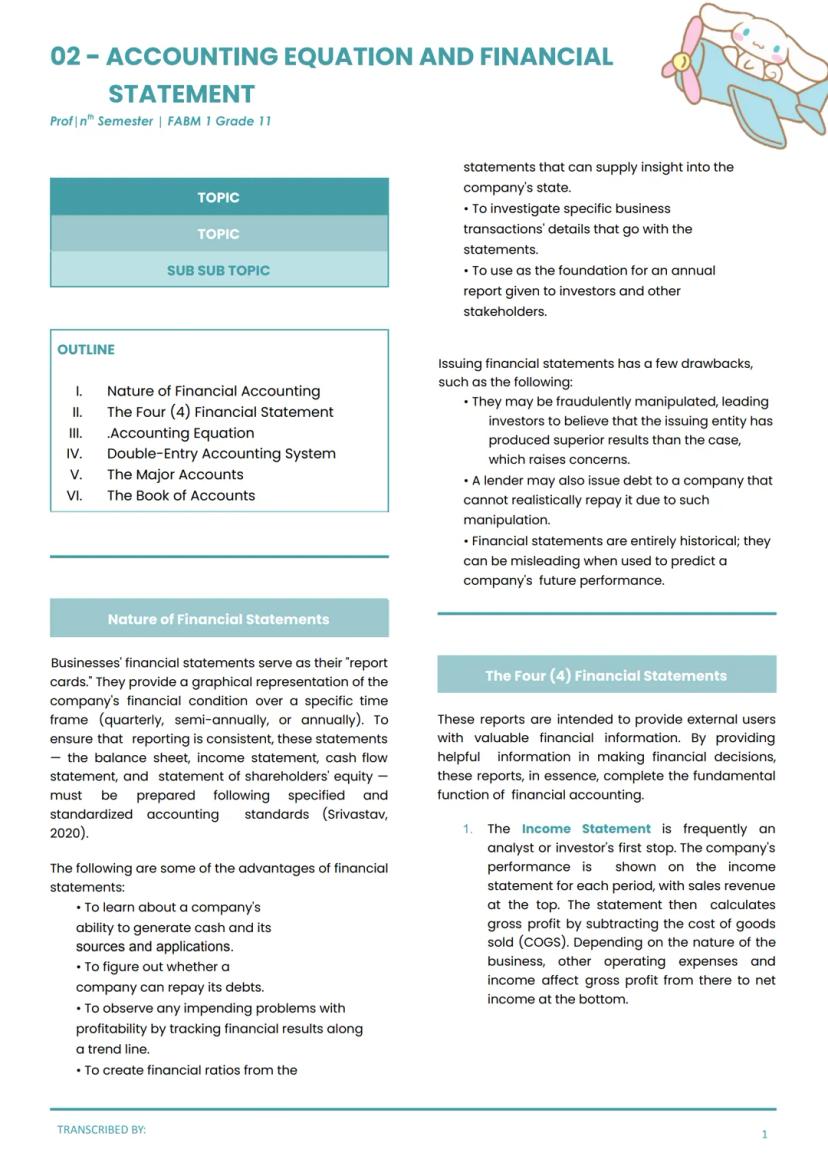
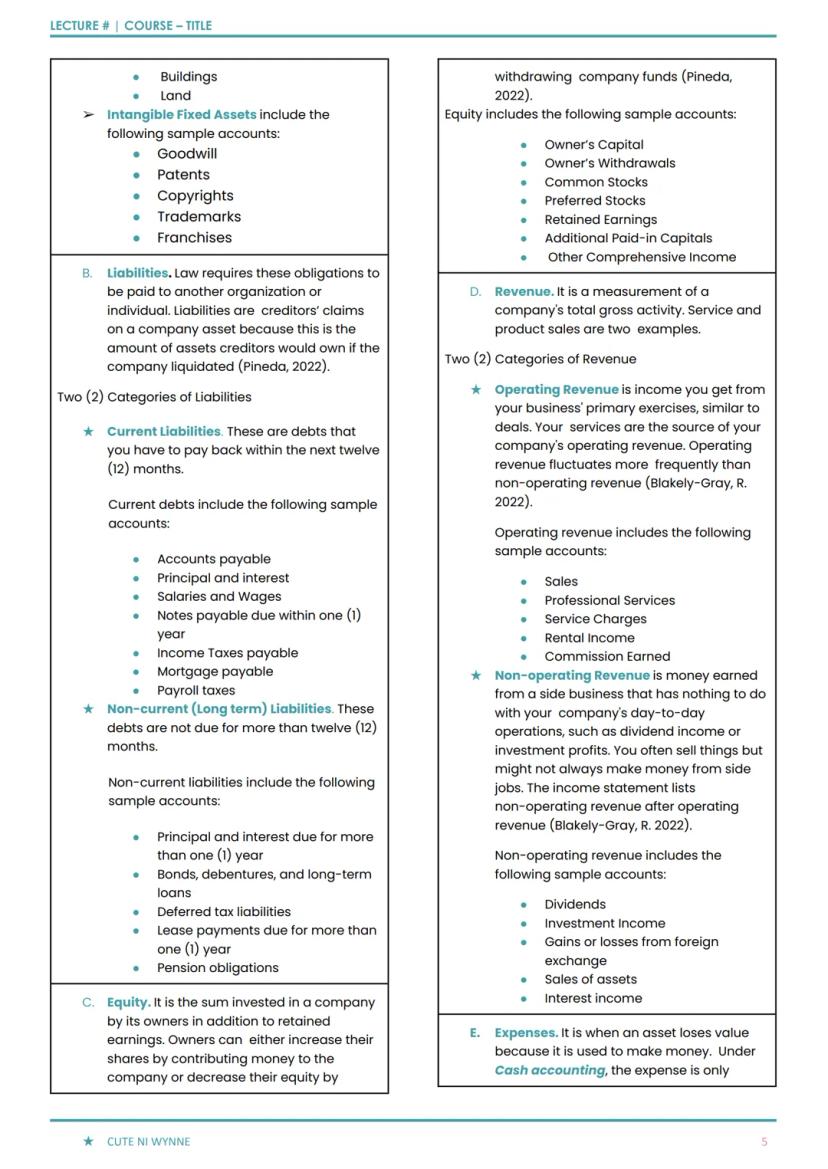

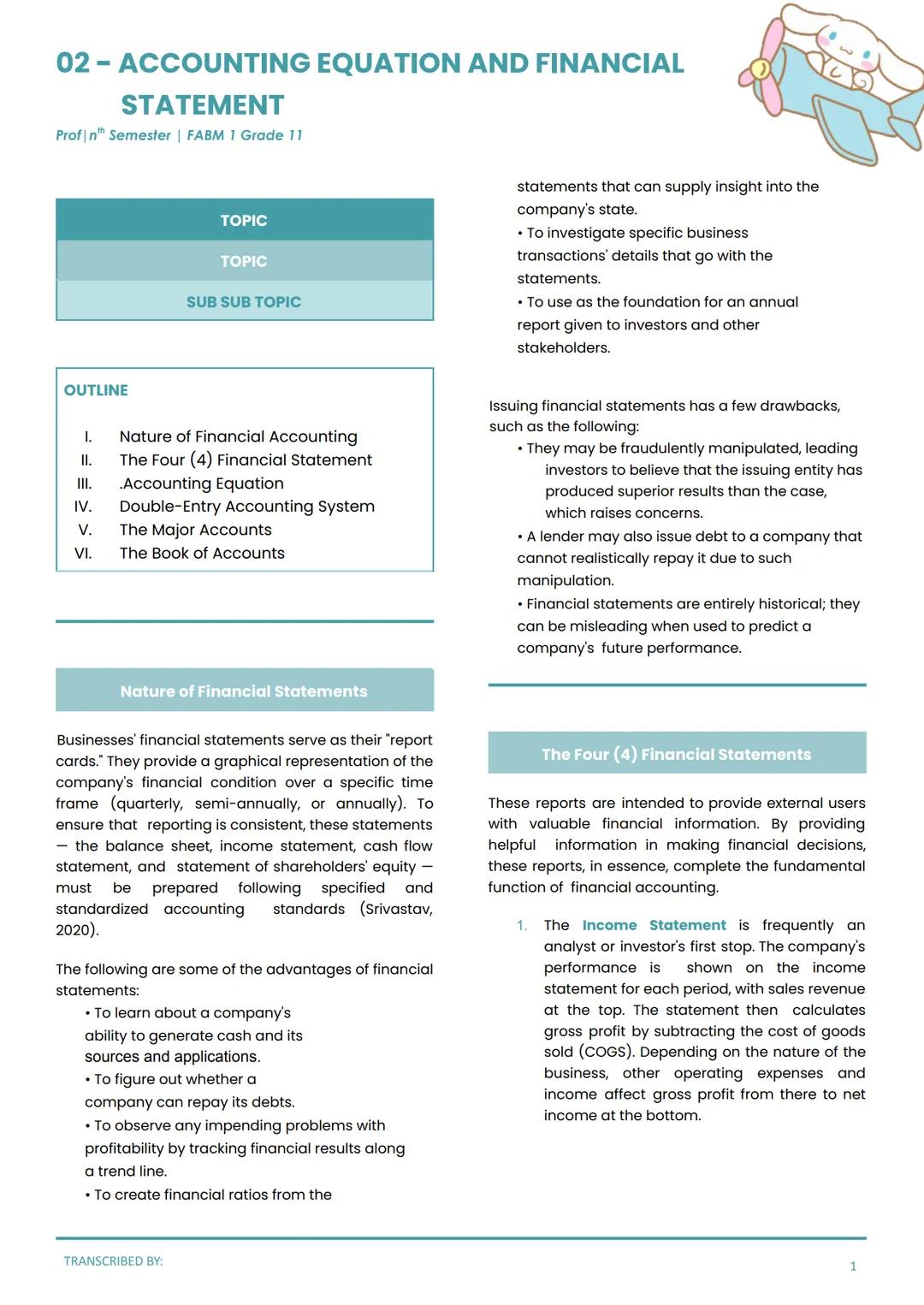
Financial statements are basically a company's report cards that show their financial condition over specific periods like quarterly or yearly. These standardized documents help investors, lenders, and other stakeholders understand how well a business is doing financially.
The main benefits of financial statements include helping people figure out if a company can generate cash, repay its debts, and maintain profitability over time. They're also used to create financial ratios and serve as the foundation for annual reports given to investors.
However, financial statements aren't perfect. They can be manipulated to make a company look better than it actually is, which can trick investors into making bad decisions. Plus, they're entirely historical - they tell you what already happened, not what will happen in the future.
Quick Tip: Think of financial statements like looking in your rearview mirror while driving - they show you where you've been, but you still need to look ahead to see where you're going!
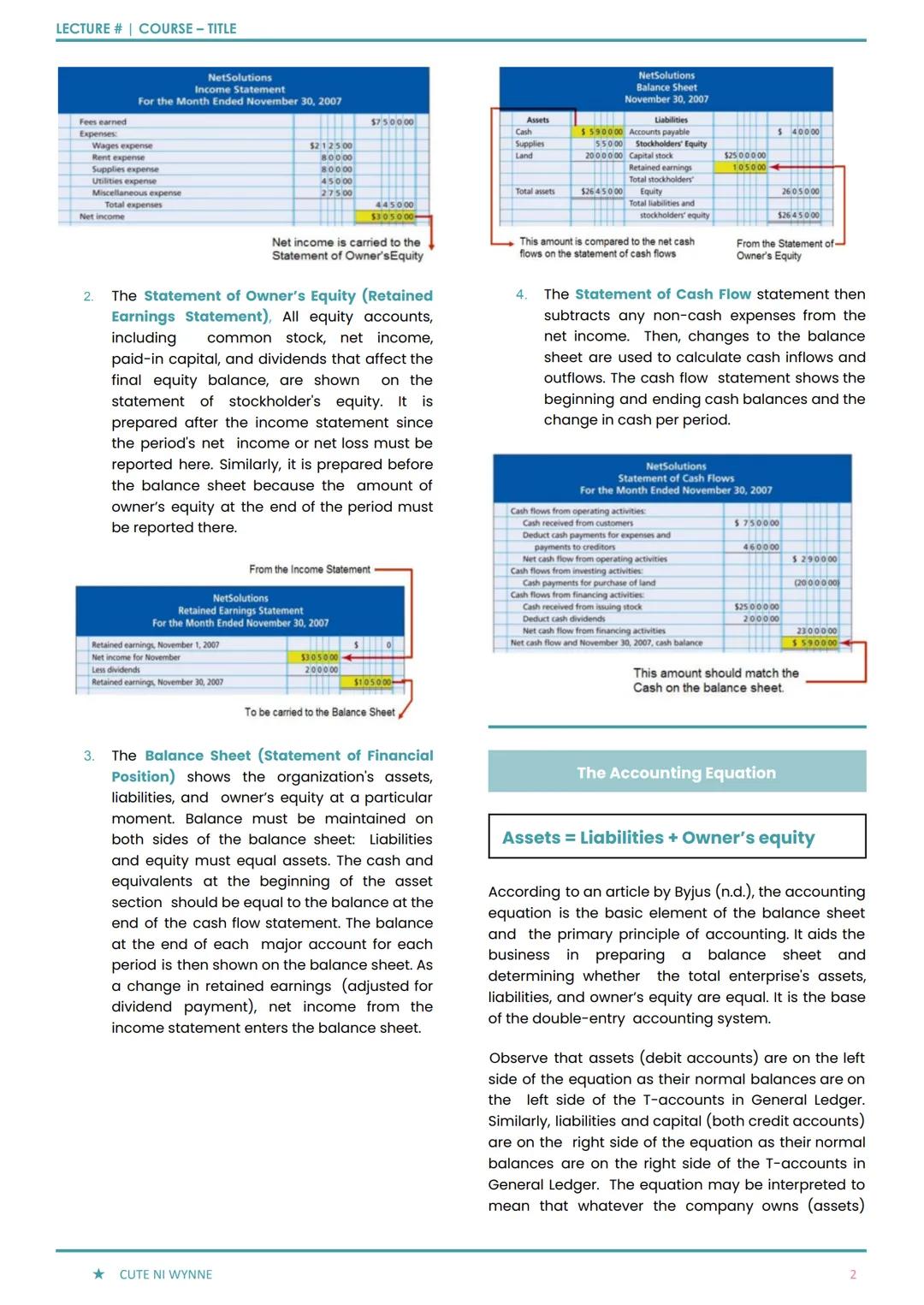
Understanding the four main financial statements is crucial since they work together to tell a complete story about a company's financial health. Each statement serves a specific purpose and connects to the others in important ways.
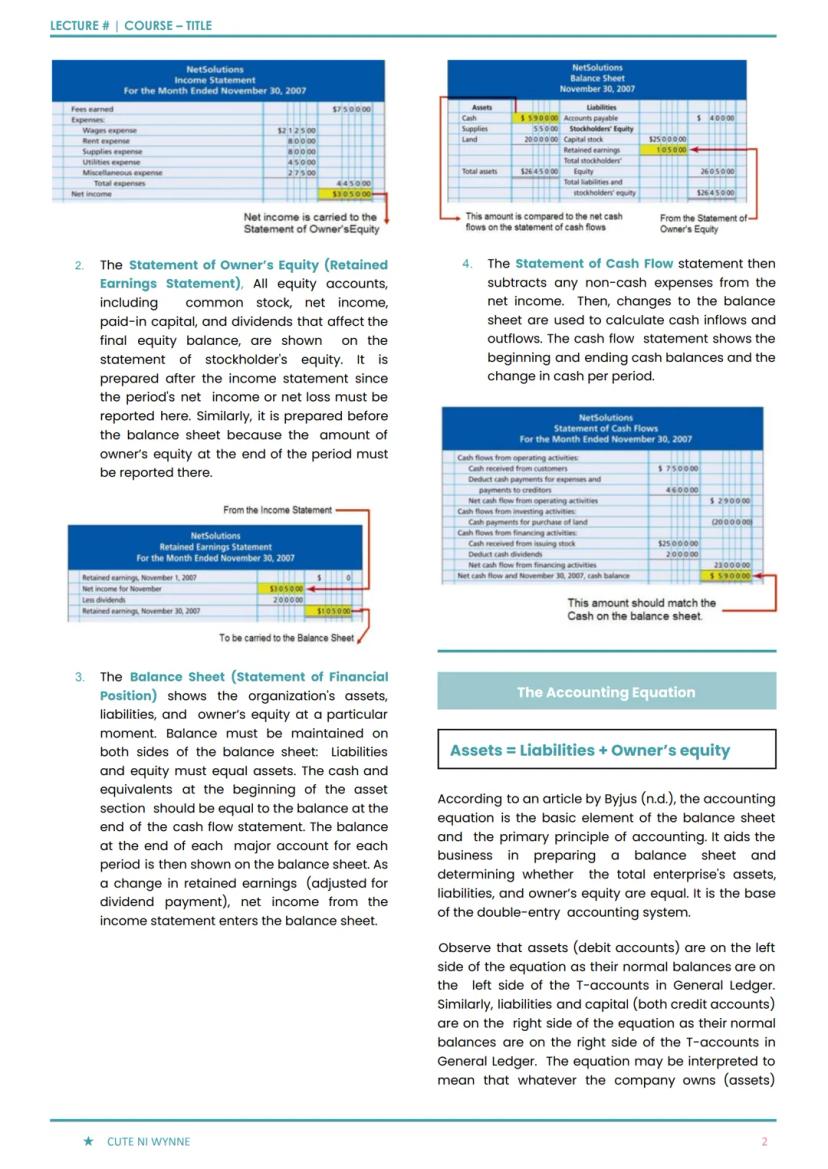
The Income Statement shows a company's performance over a period, starting with sales revenue at the top and ending with net income at the bottom after subtracting all expenses. It's like a summary of how much money came in versus how much went out.
The Statement of Owner's Equity tracks changes in ownership value, including net income from the income statement, investments, and withdrawals. This statement bridges the income statement and balance sheet by showing how profits affect ownership.
The Balance Sheet provides a snapshot of what the company owns (assets), owes (liabilities), and the owner's stake (equity) at a specific moment. The Statement of Cash Flows then shows how cash moved in and out of the business, breaking it down by operating, investing, and financing activities.
Memory Trick: Remember the order - Income Statement first (to get net income), then Owner's Equity (using that net income), then Balance Sheet (using the final equity amount), and finally Cash Flow Statement!
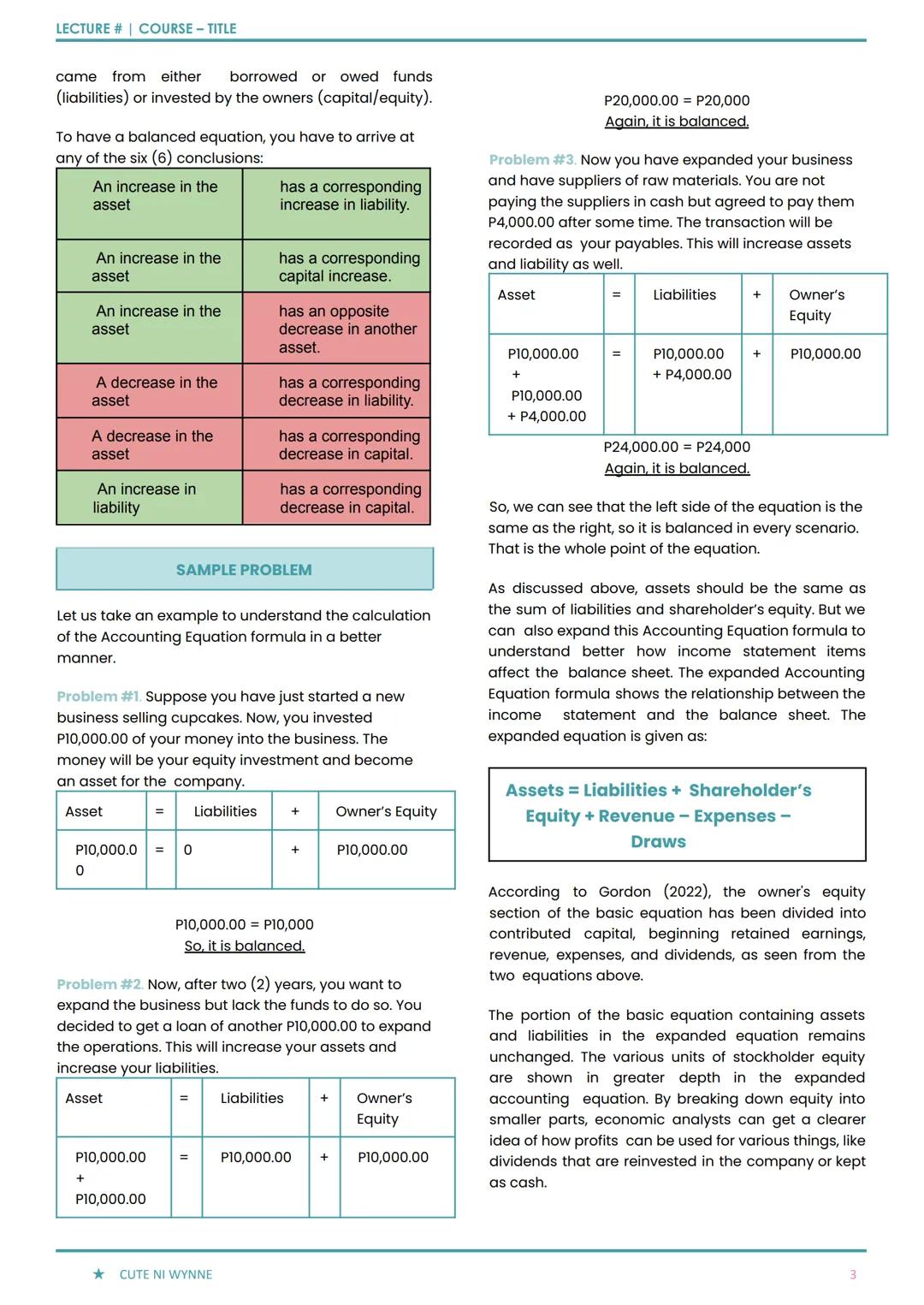
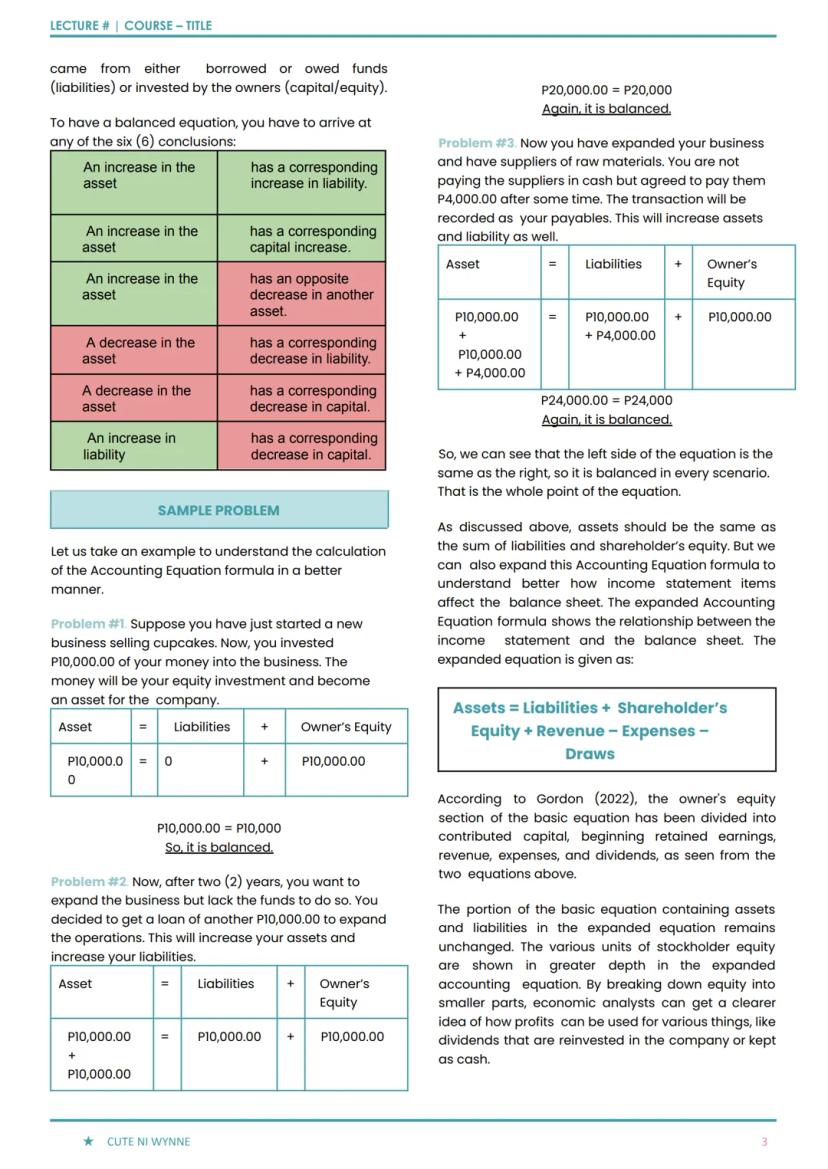
The accounting equation is the foundation of all accounting: Assets = Liabilities + Owner's Equity. This equation must always balance, meaning whatever a company owns must equal what it owes plus what the owners have invested.
Think of it this way - if you have ₱10,000 in cash (asset) and you invested that money yourself, then your equity is ₱10,000. The equation balances: ₱10,000 = ₱0 + ₱10,000. If you later borrow ₱5,000, your assets increase to ₱15,000, but now you owe ₱5,000, so it's still balanced: ₱15,000 = ₱5,000 + ₱10,000.
For the equation to stay balanced, any transaction must follow one of six patterns: increase an asset with a corresponding increase in liability or equity, decrease an asset with a corresponding decrease in liability or equity, or increase one asset while decreasing another.
The expanded accounting equation breaks down owner's equity further: Assets = Liabilities + Owner's Equity + Revenue - Expenses - Draws. This shows how daily business activities (revenues and expenses) affect the basic equation.
Real-World Connection: Every time you buy something, this equation is at work - whether you pay cash (decreasing one asset to increase another) or use credit (increasing assets and liabilities simultaneously)!
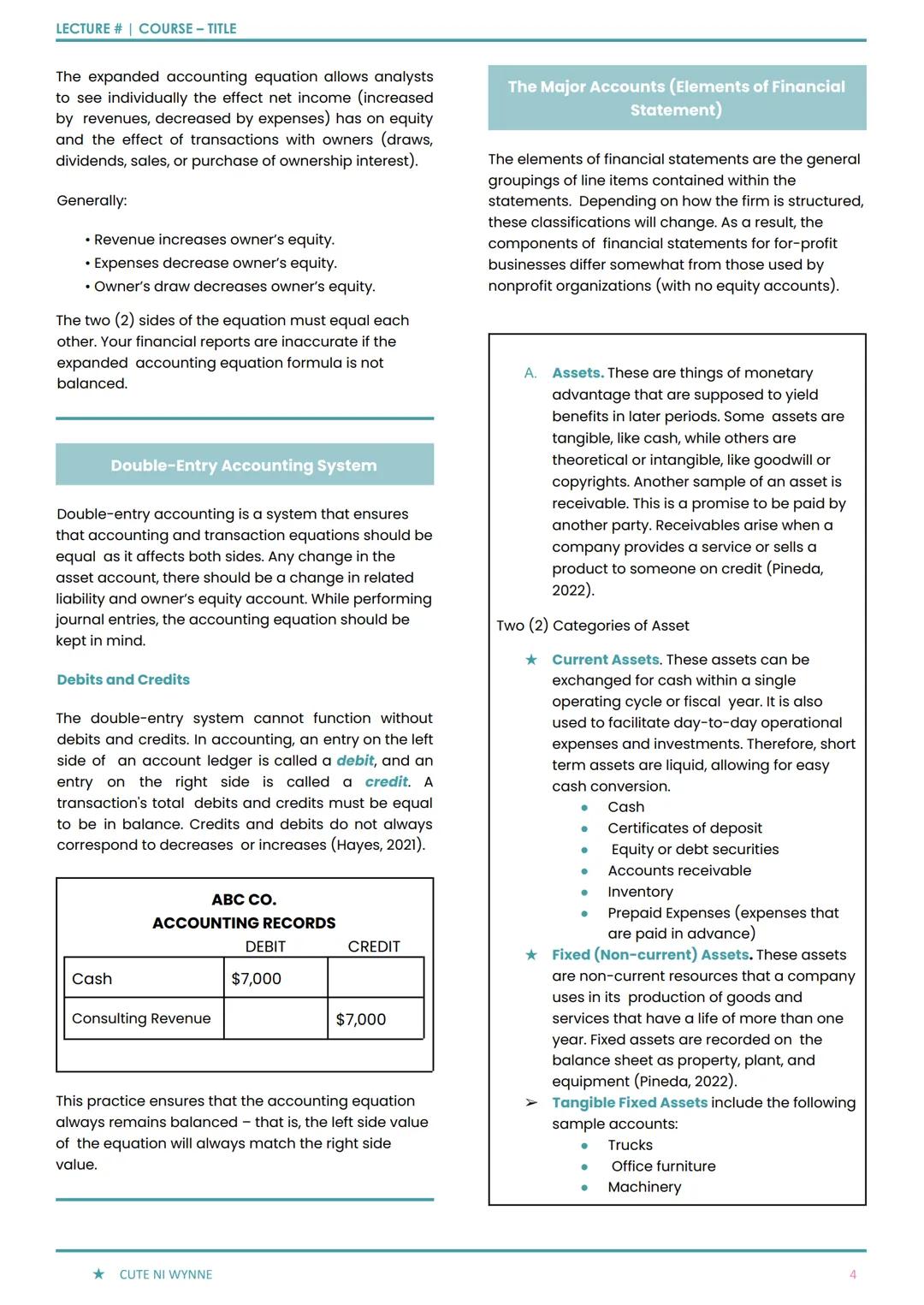
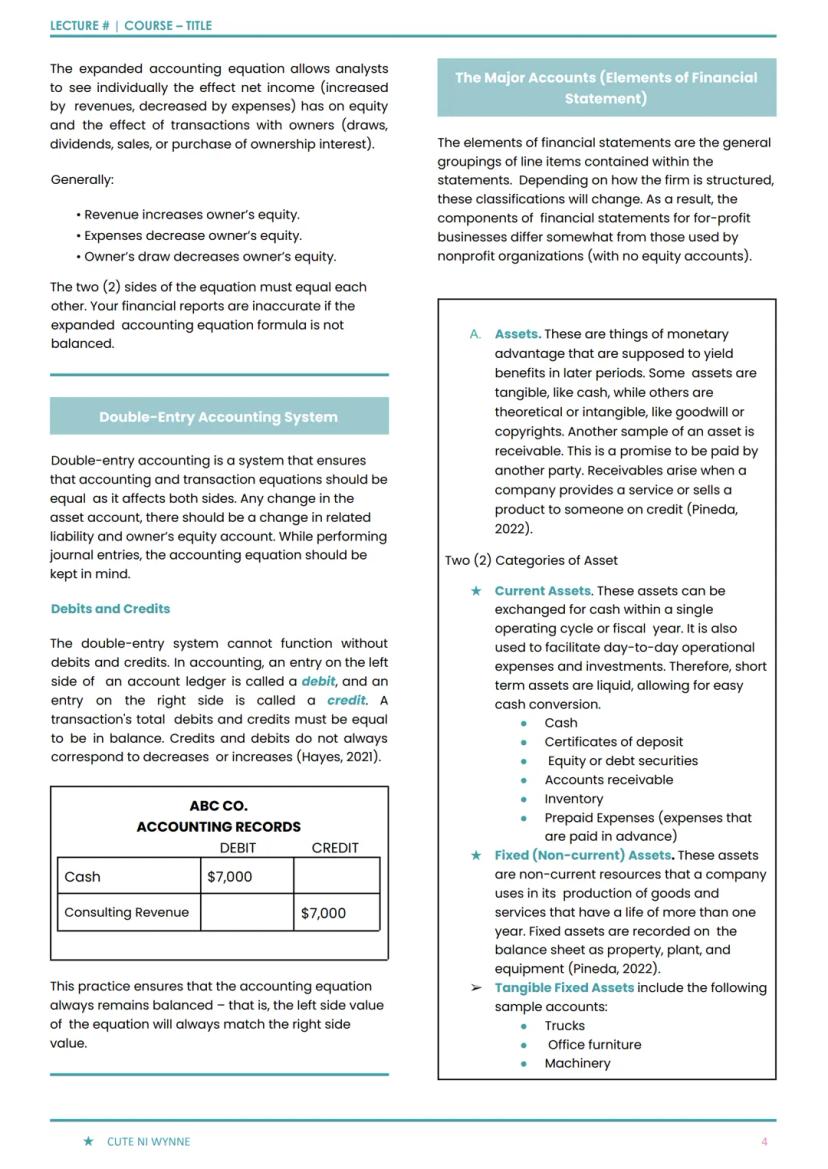
The double-entry accounting system ensures that every transaction affects at least two accounts, keeping the accounting equation balanced. For every debit entry on the left side of an account, there must be an equal credit entry on the right side.
Assets are things of value that provide future economic benefits. Current assets like cash and inventory can be converted to cash within a year, while fixed assets like buildings and equipment last longer than a year. Both tangible assets (you can touch them) and intangible assets (like patents) fall into these categories.
Liabilities are what the company owes to others. Current liabilities must be paid within a year (like accounts payable), while non-current liabilities are due after more than a year .
Equity represents the owners' claim on company assets after all debts are paid. It includes initial investments, retained earnings, and different types of stock if it's a corporation.
Study Hack: Remember that assets are what you OWN, liabilities are what you OWE, and equity is what's LEFT for the owners - it's that simple!

Revenue represents the total income a company generates from its business activities. Operating revenue comes from the main business activities (like sales for a retail store), while non-operating revenue comes from side activities (like earning interest on bank deposits).
The key difference is consistency - operating revenue is what you can count on regularly, while non-operating revenue might be more unpredictable. For example, a restaurant's operating revenue comes from selling food, but non-operating revenue might come from renting out space for events.
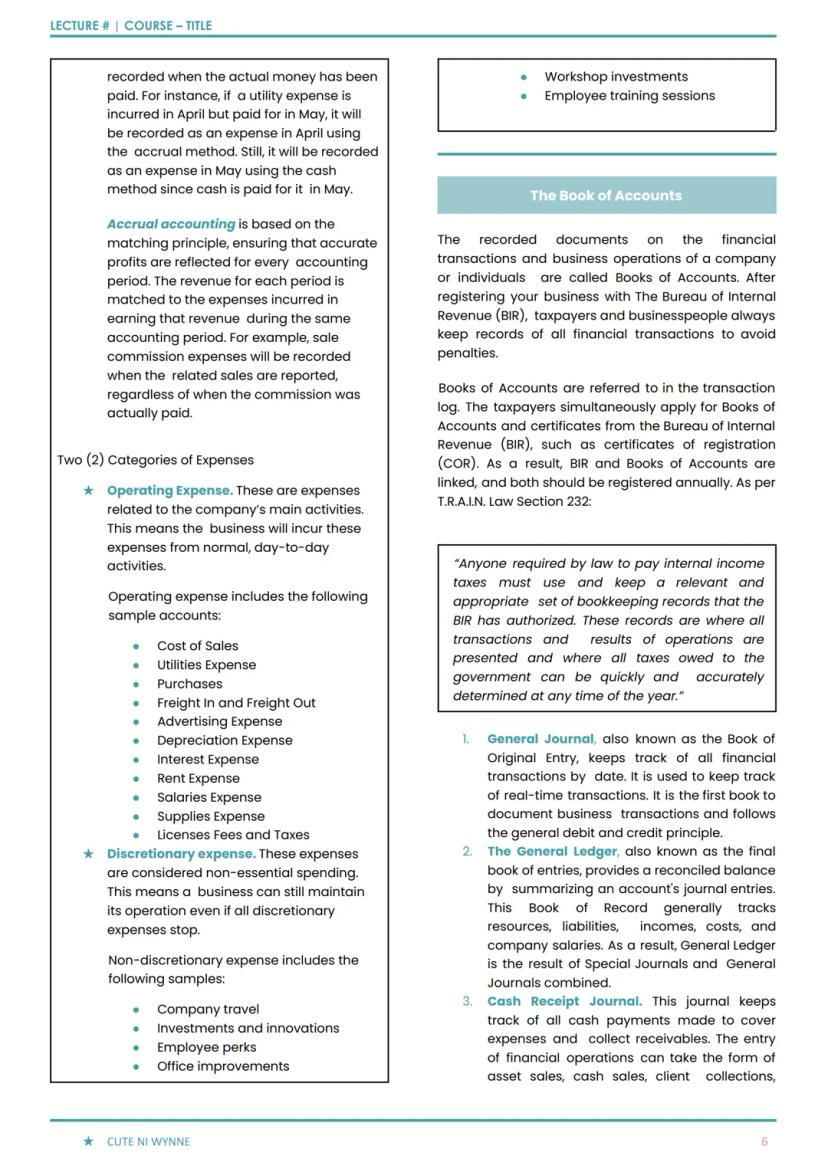
Expenses occur when assets lose value in the process of generating revenue. Operating expenses are necessary for daily business operations (like rent, salaries, and utilities), while discretionary expenses are nice-to-have but not essential (like employee perks or office improvements).
The matching principle in accounting ensures that expenses are recorded in the same period as the revenue they helped generate, regardless of when cash actually changes hands. This gives a more accurate picture of profitability.
Think About It: If you run a sari-sari store, your operating revenue is from selling goods, but if you also rent out a table to someone, that's non-operating revenue!
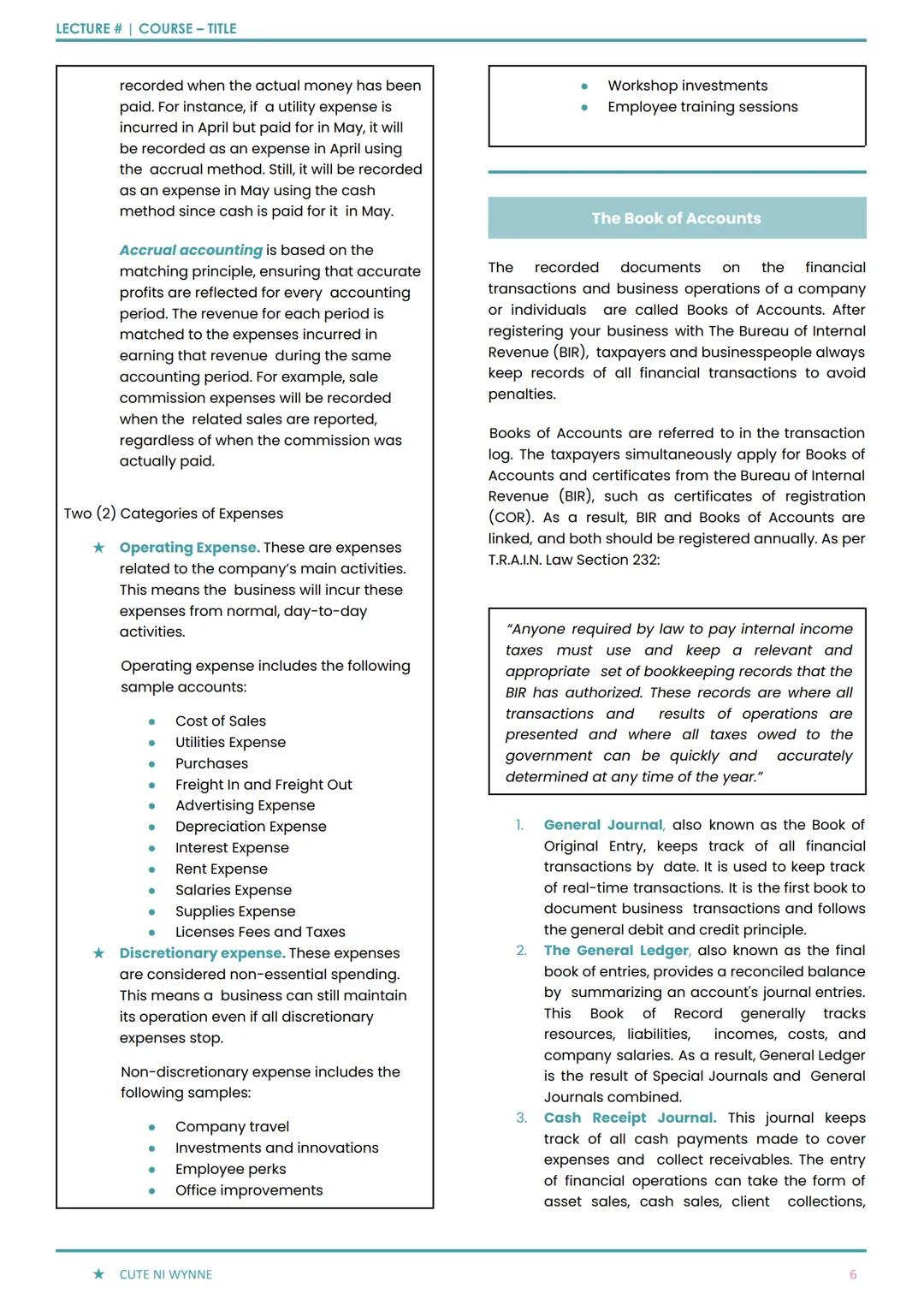
The Books of Accounts are official records that document all financial transactions of a business. In the Philippines, these must be registered with the Bureau of Internal Revenue (BIR) to comply with tax laws and avoid penalties.
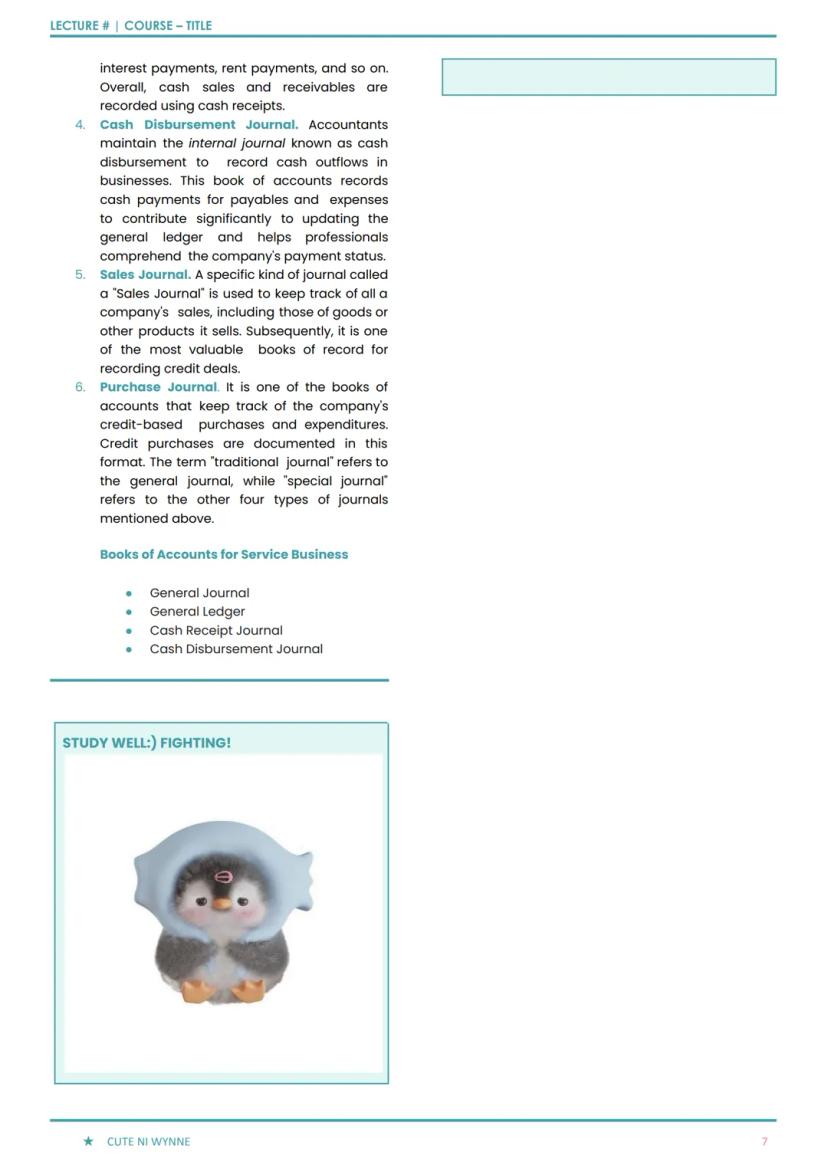
The General Journal (Book of Original Entry) is where all transactions are first recorded chronologically using debits and credits. The General Ledger then summarizes these entries by account type, giving you the final balance for each account.
Special journals handle specific types of transactions more efficiently. The Cash Receipts Journal tracks all money coming in, while the Cash Disbursements Journal records all money going out. The Sales Journal records credit sales, and the Purchase Journal tracks credit purchases.
For service businesses, you typically need four main books: General Journal, General Ledger, Cash Receipts Journal, and Cash Disbursements Journal. These books work together to create a complete record of all business activities.
Legal Reminder: Keep your books updated and registered with BIR - it's not just good business practice, it's the law! Proper record-keeping protects you during tax audits and helps you make better business decisions.

Ang aming AI Companion ay isang AI tool na nakatuon sa mga estudyante na nag-aalok ng higit pa sa mga sagot lang. Binuo mula sa milyong Knowunity resources, nagbibigay ito ng may-kaugnayang impormasyon, personalized na study plans, quizzes, at content direkta sa chat, na umaangkop sa iyong sariling learning journey.
Maaari mong i-download ang app mula sa Google Play Store at Apple App Store.
Tama 'yan! Mag-enjoy sa libreng access sa mga study content, makipag-connect sa kapwa mga estudyante, at kumuha ng instant na tulong – lahat nasa iyong daliri lang.
App Store
Google Play
Napakadaling gamitin at maganda ang disenyo ng app. Nahanap ko lahat ng hinahanap ko hanggang ngayon at natuto ako ng marami mula sa mga presentasyon! Tiyak na gagamitin ko ang app para sa isang takdang-aralin sa klase! At siyempre, nakakatulong din ito bilang inspirasyon.
Stefan S
gumagamit ng iOS
Sobrang ganda talaga ng app na ito. Maraming mga study notes at tulong [...]. Ang problemang subject ko ay Pranses, halimbawa, at ang app ay may maraming options para tumulong. Salamat sa app na ito, bumuti ang Pranses ko. Irerekumenda ko ito sa lahat.
Samantha Klich
Android user
Wow, talagang namangha ako. Sinubukan ko lang ang app dahil nakita ko itong ina-advertise nang maraming beses at sobrang nagulat ako. Ang app na ito ang TULONG na gusto mo para sa paaralan at higit sa lahat, nag-aalok ito ng maraming bagay, tulad ng workouts at fact sheets, na SOBRANG nakatulong sa akin.
Anna
iOS user
Pinakamagandang app sa mundo! walang masabi dahil sobrang ganda nito
Thomas R
iOS user
Napakaganda talaga. Nakakapag-review ako ng 10x mas mabuti, itong app ay mabilis na 10/10. Lubos kong inirerekomenda ito sa lahat. Pwede akong manood at maghanap ng notes. Pwede kong i-save ang mga ito sa subject folder. Pwede kong i-review anumang oras kapag bumalik ako. Kung hindi mo pa nasubukan ang app na ito, marami kang nawawala.
Basil
Android user
Ang app na ito ay nagpapalakas ng loob ko sa paghahanda sa exams, hindi lang dahil sa pagpapataas ng aking kumpiyansa sa sarili sa pamamagitan ng mga feature na nagpapahintulot sa iyo na makipag-connect sa iba at mabawasan ang pakiramdam na nag-iisa, kundi pati na rin sa paraan na nakatuon ang app sa pagpapagaan ng iyong pakiramdam. Madali itong i-navigate, masaya gamitin, at nakakatulong sa sinumang nahihirapan sa kahit anong paraan.
David K
iOS user
Sobrang galing ng app! Ilalagay ko lang ang paksa sa search bar at makakakuha na ako ng sagot kaagad. Hindi ko kailangang manood ng 10 YouTube videos para maintindihan ang isang bagay, kaya nakakatipid ako ng oras. Lubos na inirerekomenda!
Sudenaz Ocak
Android user
Sa paaralan, napakahina ko sa math pero salamat sa app, mas mahusay na ako ngayon. Lubos akong nagpapasalamat na ginawa niyo ang app na ito.
Greenlight Bonnie
Android user
napakareliable na app para tumulong at palawakin ang iyong mga ideya sa Math, English at iba pang mga related na paksa sa iyong mga gawain. gamitin mo ang app na ito kung nahihirapan ka sa mga area, susi ito para diyan. sana nag-review na ako dati. at libre rin ito kaya huwag mag-alala tungkol diyan.
Rohan U
Android user
Alam kong maraming apps gumagamit ng fake accounts para mapataas ang kanilang reviews pero ang app na ito ay deserve lahat ng papuri. Dati nakakakuha ako ng 4 sa aking English exams at ngayon nakakuha ako ng grade 7. Hindi ko pa alam ang app na ito tatlong araw bago ang exam at nakatulong ito ng SOBRA. Pakisuyong maniwala sa akin at gamitin ito dahil sigurado akong makikita mo rin ang mga pagbabago.
Xander S
iOS user
ANG MGA quiz AT flashcard SOBRANG HELPFUL AT I LOVE TALAGA SI Knowunity AI. PARANG CHATGPT LANG PERO MAS MATALINO!! NAKATULONG DIN SA MGA MASCARA PROBLEMS KO!! PATI NA RIN SA MGA TUNAY KONG subject! SYEMPRE 😍😁😲🤑💗✨🎀😮
Elisha
iOS user
Grabe talaga ang app na to. Sobrang nakakaboring sakin ang pagreview pero ginagawa ng app na to na sobrang dali mag-organize ng lahat at pwede mong tanungin ang libreng ai para subukin ang sarili mo kaya sobrang buti at madali mong ma-upload ang sarili mong mga bagay. highly recommend bilang isang taong nagte-take ng mocks ngayon
Paul T
iOS user
Napakadaling gamitin at maganda ang disenyo ng app. Nahanap ko lahat ng hinahanap ko hanggang ngayon at natuto ako ng marami mula sa mga presentasyon! Tiyak na gagamitin ko ang app para sa isang takdang-aralin sa klase! At siyempre, nakakatulong din ito bilang inspirasyon.
Stefan S
gumagamit ng iOS
Sobrang ganda talaga ng app na ito. Maraming mga study notes at tulong [...]. Ang problemang subject ko ay Pranses, halimbawa, at ang app ay may maraming options para tumulong. Salamat sa app na ito, bumuti ang Pranses ko. Irerekumenda ko ito sa lahat.
Samantha Klich
Android user
Wow, talagang namangha ako. Sinubukan ko lang ang app dahil nakita ko itong ina-advertise nang maraming beses at sobrang nagulat ako. Ang app na ito ang TULONG na gusto mo para sa paaralan at higit sa lahat, nag-aalok ito ng maraming bagay, tulad ng workouts at fact sheets, na SOBRANG nakatulong sa akin.
Anna
iOS user
Pinakamagandang app sa mundo! walang masabi dahil sobrang ganda nito
Thomas R
iOS user
Napakaganda talaga. Nakakapag-review ako ng 10x mas mabuti, itong app ay mabilis na 10/10. Lubos kong inirerekomenda ito sa lahat. Pwede akong manood at maghanap ng notes. Pwede kong i-save ang mga ito sa subject folder. Pwede kong i-review anumang oras kapag bumalik ako. Kung hindi mo pa nasubukan ang app na ito, marami kang nawawala.
Basil
Android user
Ang app na ito ay nagpapalakas ng loob ko sa paghahanda sa exams, hindi lang dahil sa pagpapataas ng aking kumpiyansa sa sarili sa pamamagitan ng mga feature na nagpapahintulot sa iyo na makipag-connect sa iba at mabawasan ang pakiramdam na nag-iisa, kundi pati na rin sa paraan na nakatuon ang app sa pagpapagaan ng iyong pakiramdam. Madali itong i-navigate, masaya gamitin, at nakakatulong sa sinumang nahihirapan sa kahit anong paraan.
David K
iOS user
Sobrang galing ng app! Ilalagay ko lang ang paksa sa search bar at makakakuha na ako ng sagot kaagad. Hindi ko kailangang manood ng 10 YouTube videos para maintindihan ang isang bagay, kaya nakakatipid ako ng oras. Lubos na inirerekomenda!
Sudenaz Ocak
Android user
Sa paaralan, napakahina ko sa math pero salamat sa app, mas mahusay na ako ngayon. Lubos akong nagpapasalamat na ginawa niyo ang app na ito.
Greenlight Bonnie
Android user
napakareliable na app para tumulong at palawakin ang iyong mga ideya sa Math, English at iba pang mga related na paksa sa iyong mga gawain. gamitin mo ang app na ito kung nahihirapan ka sa mga area, susi ito para diyan. sana nag-review na ako dati. at libre rin ito kaya huwag mag-alala tungkol diyan.
Rohan U
Android user
Alam kong maraming apps gumagamit ng fake accounts para mapataas ang kanilang reviews pero ang app na ito ay deserve lahat ng papuri. Dati nakakakuha ako ng 4 sa aking English exams at ngayon nakakuha ako ng grade 7. Hindi ko pa alam ang app na ito tatlong araw bago ang exam at nakatulong ito ng SOBRA. Pakisuyong maniwala sa akin at gamitin ito dahil sigurado akong makikita mo rin ang mga pagbabago.
Xander S
iOS user
ANG MGA quiz AT flashcard SOBRANG HELPFUL AT I LOVE TALAGA SI Knowunity AI. PARANG CHATGPT LANG PERO MAS MATALINO!! NAKATULONG DIN SA MGA MASCARA PROBLEMS KO!! PATI NA RIN SA MGA TUNAY KONG subject! SYEMPRE 😍😁😲🤑💗✨🎀😮
Elisha
iOS user
Grabe talaga ang app na to. Sobrang nakakaboring sakin ang pagreview pero ginagawa ng app na to na sobrang dali mag-organize ng lahat at pwede mong tanungin ang libreng ai para subukin ang sarili mo kaya sobrang buti at madali mong ma-upload ang sarili mong mga bagay. highly recommend bilang isang taong nagte-take ng mocks ngayon
Paul T
iOS user
Lily Learns
@accountingwithlily
Financial accounting is like the language of business - it's how companies communicate their financial health to the world. Think of financial statements as a company's report card that shows how well it's performing financially, just like your grades show... Ipakita pa
Access sa lahat ng dokumento
Pagbutihin ang iyong mga grado
Sumali sa milyong mga estudyante
Financial statements are basically a company's report cards that show their financial condition over specific periods like quarterly or yearly. These standardized documents help investors, lenders, and other stakeholders understand how well a business is doing financially.
The main benefits of financial statements include helping people figure out if a company can generate cash, repay its debts, and maintain profitability over time. They're also used to create financial ratios and serve as the foundation for annual reports given to investors.
However, financial statements aren't perfect. They can be manipulated to make a company look better than it actually is, which can trick investors into making bad decisions. Plus, they're entirely historical - they tell you what already happened, not what will happen in the future.
Quick Tip: Think of financial statements like looking in your rearview mirror while driving - they show you where you've been, but you still need to look ahead to see where you're going!
Access sa lahat ng dokumento
Pagbutihin ang iyong mga grado
Sumali sa milyong mga estudyante
Understanding the four main financial statements is crucial since they work together to tell a complete story about a company's financial health. Each statement serves a specific purpose and connects to the others in important ways.
The Income Statement shows a company's performance over a period, starting with sales revenue at the top and ending with net income at the bottom after subtracting all expenses. It's like a summary of how much money came in versus how much went out.
The Statement of Owner's Equity tracks changes in ownership value, including net income from the income statement, investments, and withdrawals. This statement bridges the income statement and balance sheet by showing how profits affect ownership.
The Balance Sheet provides a snapshot of what the company owns (assets), owes (liabilities), and the owner's stake (equity) at a specific moment. The Statement of Cash Flows then shows how cash moved in and out of the business, breaking it down by operating, investing, and financing activities.
Memory Trick: Remember the order - Income Statement first (to get net income), then Owner's Equity (using that net income), then Balance Sheet (using the final equity amount), and finally Cash Flow Statement!
Access sa lahat ng dokumento
Pagbutihin ang iyong mga grado
Sumali sa milyong mga estudyante
The accounting equation is the foundation of all accounting: Assets = Liabilities + Owner's Equity. This equation must always balance, meaning whatever a company owns must equal what it owes plus what the owners have invested.
Think of it this way - if you have ₱10,000 in cash (asset) and you invested that money yourself, then your equity is ₱10,000. The equation balances: ₱10,000 = ₱0 + ₱10,000. If you later borrow ₱5,000, your assets increase to ₱15,000, but now you owe ₱5,000, so it's still balanced: ₱15,000 = ₱5,000 + ₱10,000.
For the equation to stay balanced, any transaction must follow one of six patterns: increase an asset with a corresponding increase in liability or equity, decrease an asset with a corresponding decrease in liability or equity, or increase one asset while decreasing another.
The expanded accounting equation breaks down owner's equity further: Assets = Liabilities + Owner's Equity + Revenue - Expenses - Draws. This shows how daily business activities (revenues and expenses) affect the basic equation.
Real-World Connection: Every time you buy something, this equation is at work - whether you pay cash (decreasing one asset to increase another) or use credit (increasing assets and liabilities simultaneously)!
Access sa lahat ng dokumento
Pagbutihin ang iyong mga grado
Sumali sa milyong mga estudyante
The double-entry accounting system ensures that every transaction affects at least two accounts, keeping the accounting equation balanced. For every debit entry on the left side of an account, there must be an equal credit entry on the right side.
Assets are things of value that provide future economic benefits. Current assets like cash and inventory can be converted to cash within a year, while fixed assets like buildings and equipment last longer than a year. Both tangible assets (you can touch them) and intangible assets (like patents) fall into these categories.
Liabilities are what the company owes to others. Current liabilities must be paid within a year (like accounts payable), while non-current liabilities are due after more than a year .
Equity represents the owners' claim on company assets after all debts are paid. It includes initial investments, retained earnings, and different types of stock if it's a corporation.
Study Hack: Remember that assets are what you OWN, liabilities are what you OWE, and equity is what's LEFT for the owners - it's that simple!
Access sa lahat ng dokumento
Pagbutihin ang iyong mga grado
Sumali sa milyong mga estudyante
Revenue represents the total income a company generates from its business activities. Operating revenue comes from the main business activities (like sales for a retail store), while non-operating revenue comes from side activities (like earning interest on bank deposits).
The key difference is consistency - operating revenue is what you can count on regularly, while non-operating revenue might be more unpredictable. For example, a restaurant's operating revenue comes from selling food, but non-operating revenue might come from renting out space for events.
Expenses occur when assets lose value in the process of generating revenue. Operating expenses are necessary for daily business operations (like rent, salaries, and utilities), while discretionary expenses are nice-to-have but not essential (like employee perks or office improvements).
The matching principle in accounting ensures that expenses are recorded in the same period as the revenue they helped generate, regardless of when cash actually changes hands. This gives a more accurate picture of profitability.
Think About It: If you run a sari-sari store, your operating revenue is from selling goods, but if you also rent out a table to someone, that's non-operating revenue!
Access sa lahat ng dokumento
Pagbutihin ang iyong mga grado
Sumali sa milyong mga estudyante
The Books of Accounts are official records that document all financial transactions of a business. In the Philippines, these must be registered with the Bureau of Internal Revenue (BIR) to comply with tax laws and avoid penalties.
The General Journal (Book of Original Entry) is where all transactions are first recorded chronologically using debits and credits. The General Ledger then summarizes these entries by account type, giving you the final balance for each account.
Special journals handle specific types of transactions more efficiently. The Cash Receipts Journal tracks all money coming in, while the Cash Disbursements Journal records all money going out. The Sales Journal records credit sales, and the Purchase Journal tracks credit purchases.
For service businesses, you typically need four main books: General Journal, General Ledger, Cash Receipts Journal, and Cash Disbursements Journal. These books work together to create a complete record of all business activities.
Legal Reminder: Keep your books updated and registered with BIR - it's not just good business practice, it's the law! Proper record-keeping protects you during tax audits and helps you make better business decisions.
Access sa lahat ng dokumento
Pagbutihin ang iyong mga grado
Sumali sa milyong mga estudyante
Access sa lahat ng dokumento
Pagbutihin ang iyong mga grado
Sumali sa milyong mga estudyante
Ang aming AI Companion ay isang AI tool na nakatuon sa mga estudyante na nag-aalok ng higit pa sa mga sagot lang. Binuo mula sa milyong Knowunity resources, nagbibigay ito ng may-kaugnayang impormasyon, personalized na study plans, quizzes, at content direkta sa chat, na umaangkop sa iyong sariling learning journey.
Maaari mong i-download ang app mula sa Google Play Store at Apple App Store.
Tama 'yan! Mag-enjoy sa libreng access sa mga study content, makipag-connect sa kapwa mga estudyante, at kumuha ng instant na tulong – lahat nasa iyong daliri lang.
8
Smart Tools NEW
I-transform ang note na ito sa: ✓ 50+ Practice Questions ✓ Interactive Flashcards ✓ Full Mock Exam ✓ Essay Outlines
App Store
Google Play
Napakadaling gamitin at maganda ang disenyo ng app. Nahanap ko lahat ng hinahanap ko hanggang ngayon at natuto ako ng marami mula sa mga presentasyon! Tiyak na gagamitin ko ang app para sa isang takdang-aralin sa klase! At siyempre, nakakatulong din ito bilang inspirasyon.
Stefan S
gumagamit ng iOS
Sobrang ganda talaga ng app na ito. Maraming mga study notes at tulong [...]. Ang problemang subject ko ay Pranses, halimbawa, at ang app ay may maraming options para tumulong. Salamat sa app na ito, bumuti ang Pranses ko. Irerekumenda ko ito sa lahat.
Samantha Klich
Android user
Wow, talagang namangha ako. Sinubukan ko lang ang app dahil nakita ko itong ina-advertise nang maraming beses at sobrang nagulat ako. Ang app na ito ang TULONG na gusto mo para sa paaralan at higit sa lahat, nag-aalok ito ng maraming bagay, tulad ng workouts at fact sheets, na SOBRANG nakatulong sa akin.
Anna
iOS user
Pinakamagandang app sa mundo! walang masabi dahil sobrang ganda nito
Thomas R
iOS user
Napakaganda talaga. Nakakapag-review ako ng 10x mas mabuti, itong app ay mabilis na 10/10. Lubos kong inirerekomenda ito sa lahat. Pwede akong manood at maghanap ng notes. Pwede kong i-save ang mga ito sa subject folder. Pwede kong i-review anumang oras kapag bumalik ako. Kung hindi mo pa nasubukan ang app na ito, marami kang nawawala.
Basil
Android user
Ang app na ito ay nagpapalakas ng loob ko sa paghahanda sa exams, hindi lang dahil sa pagpapataas ng aking kumpiyansa sa sarili sa pamamagitan ng mga feature na nagpapahintulot sa iyo na makipag-connect sa iba at mabawasan ang pakiramdam na nag-iisa, kundi pati na rin sa paraan na nakatuon ang app sa pagpapagaan ng iyong pakiramdam. Madali itong i-navigate, masaya gamitin, at nakakatulong sa sinumang nahihirapan sa kahit anong paraan.
David K
iOS user
Sobrang galing ng app! Ilalagay ko lang ang paksa sa search bar at makakakuha na ako ng sagot kaagad. Hindi ko kailangang manood ng 10 YouTube videos para maintindihan ang isang bagay, kaya nakakatipid ako ng oras. Lubos na inirerekomenda!
Sudenaz Ocak
Android user
Sa paaralan, napakahina ko sa math pero salamat sa app, mas mahusay na ako ngayon. Lubos akong nagpapasalamat na ginawa niyo ang app na ito.
Greenlight Bonnie
Android user
napakareliable na app para tumulong at palawakin ang iyong mga ideya sa Math, English at iba pang mga related na paksa sa iyong mga gawain. gamitin mo ang app na ito kung nahihirapan ka sa mga area, susi ito para diyan. sana nag-review na ako dati. at libre rin ito kaya huwag mag-alala tungkol diyan.
Rohan U
Android user
Alam kong maraming apps gumagamit ng fake accounts para mapataas ang kanilang reviews pero ang app na ito ay deserve lahat ng papuri. Dati nakakakuha ako ng 4 sa aking English exams at ngayon nakakuha ako ng grade 7. Hindi ko pa alam ang app na ito tatlong araw bago ang exam at nakatulong ito ng SOBRA. Pakisuyong maniwala sa akin at gamitin ito dahil sigurado akong makikita mo rin ang mga pagbabago.
Xander S
iOS user
ANG MGA quiz AT flashcard SOBRANG HELPFUL AT I LOVE TALAGA SI Knowunity AI. PARANG CHATGPT LANG PERO MAS MATALINO!! NAKATULONG DIN SA MGA MASCARA PROBLEMS KO!! PATI NA RIN SA MGA TUNAY KONG subject! SYEMPRE 😍😁😲🤑💗✨🎀😮
Elisha
iOS user
Grabe talaga ang app na to. Sobrang nakakaboring sakin ang pagreview pero ginagawa ng app na to na sobrang dali mag-organize ng lahat at pwede mong tanungin ang libreng ai para subukin ang sarili mo kaya sobrang buti at madali mong ma-upload ang sarili mong mga bagay. highly recommend bilang isang taong nagte-take ng mocks ngayon
Paul T
iOS user
Napakadaling gamitin at maganda ang disenyo ng app. Nahanap ko lahat ng hinahanap ko hanggang ngayon at natuto ako ng marami mula sa mga presentasyon! Tiyak na gagamitin ko ang app para sa isang takdang-aralin sa klase! At siyempre, nakakatulong din ito bilang inspirasyon.
Stefan S
gumagamit ng iOS
Sobrang ganda talaga ng app na ito. Maraming mga study notes at tulong [...]. Ang problemang subject ko ay Pranses, halimbawa, at ang app ay may maraming options para tumulong. Salamat sa app na ito, bumuti ang Pranses ko. Irerekumenda ko ito sa lahat.
Samantha Klich
Android user
Wow, talagang namangha ako. Sinubukan ko lang ang app dahil nakita ko itong ina-advertise nang maraming beses at sobrang nagulat ako. Ang app na ito ang TULONG na gusto mo para sa paaralan at higit sa lahat, nag-aalok ito ng maraming bagay, tulad ng workouts at fact sheets, na SOBRANG nakatulong sa akin.
Anna
iOS user
Pinakamagandang app sa mundo! walang masabi dahil sobrang ganda nito
Thomas R
iOS user
Napakaganda talaga. Nakakapag-review ako ng 10x mas mabuti, itong app ay mabilis na 10/10. Lubos kong inirerekomenda ito sa lahat. Pwede akong manood at maghanap ng notes. Pwede kong i-save ang mga ito sa subject folder. Pwede kong i-review anumang oras kapag bumalik ako. Kung hindi mo pa nasubukan ang app na ito, marami kang nawawala.
Basil
Android user
Ang app na ito ay nagpapalakas ng loob ko sa paghahanda sa exams, hindi lang dahil sa pagpapataas ng aking kumpiyansa sa sarili sa pamamagitan ng mga feature na nagpapahintulot sa iyo na makipag-connect sa iba at mabawasan ang pakiramdam na nag-iisa, kundi pati na rin sa paraan na nakatuon ang app sa pagpapagaan ng iyong pakiramdam. Madali itong i-navigate, masaya gamitin, at nakakatulong sa sinumang nahihirapan sa kahit anong paraan.
David K
iOS user
Sobrang galing ng app! Ilalagay ko lang ang paksa sa search bar at makakakuha na ako ng sagot kaagad. Hindi ko kailangang manood ng 10 YouTube videos para maintindihan ang isang bagay, kaya nakakatipid ako ng oras. Lubos na inirerekomenda!
Sudenaz Ocak
Android user
Sa paaralan, napakahina ko sa math pero salamat sa app, mas mahusay na ako ngayon. Lubos akong nagpapasalamat na ginawa niyo ang app na ito.
Greenlight Bonnie
Android user
napakareliable na app para tumulong at palawakin ang iyong mga ideya sa Math, English at iba pang mga related na paksa sa iyong mga gawain. gamitin mo ang app na ito kung nahihirapan ka sa mga area, susi ito para diyan. sana nag-review na ako dati. at libre rin ito kaya huwag mag-alala tungkol diyan.
Rohan U
Android user
Alam kong maraming apps gumagamit ng fake accounts para mapataas ang kanilang reviews pero ang app na ito ay deserve lahat ng papuri. Dati nakakakuha ako ng 4 sa aking English exams at ngayon nakakuha ako ng grade 7. Hindi ko pa alam ang app na ito tatlong araw bago ang exam at nakatulong ito ng SOBRA. Pakisuyong maniwala sa akin at gamitin ito dahil sigurado akong makikita mo rin ang mga pagbabago.
Xander S
iOS user
ANG MGA quiz AT flashcard SOBRANG HELPFUL AT I LOVE TALAGA SI Knowunity AI. PARANG CHATGPT LANG PERO MAS MATALINO!! NAKATULONG DIN SA MGA MASCARA PROBLEMS KO!! PATI NA RIN SA MGA TUNAY KONG subject! SYEMPRE 😍😁😲🤑💗✨🎀😮
Elisha
iOS user
Grabe talaga ang app na to. Sobrang nakakaboring sakin ang pagreview pero ginagawa ng app na to na sobrang dali mag-organize ng lahat at pwede mong tanungin ang libreng ai para subukin ang sarili mo kaya sobrang buti at madali mong ma-upload ang sarili mong mga bagay. highly recommend bilang isang taong nagte-take ng mocks ngayon
Paul T
iOS user