Research Instruments and Data Collection Methods
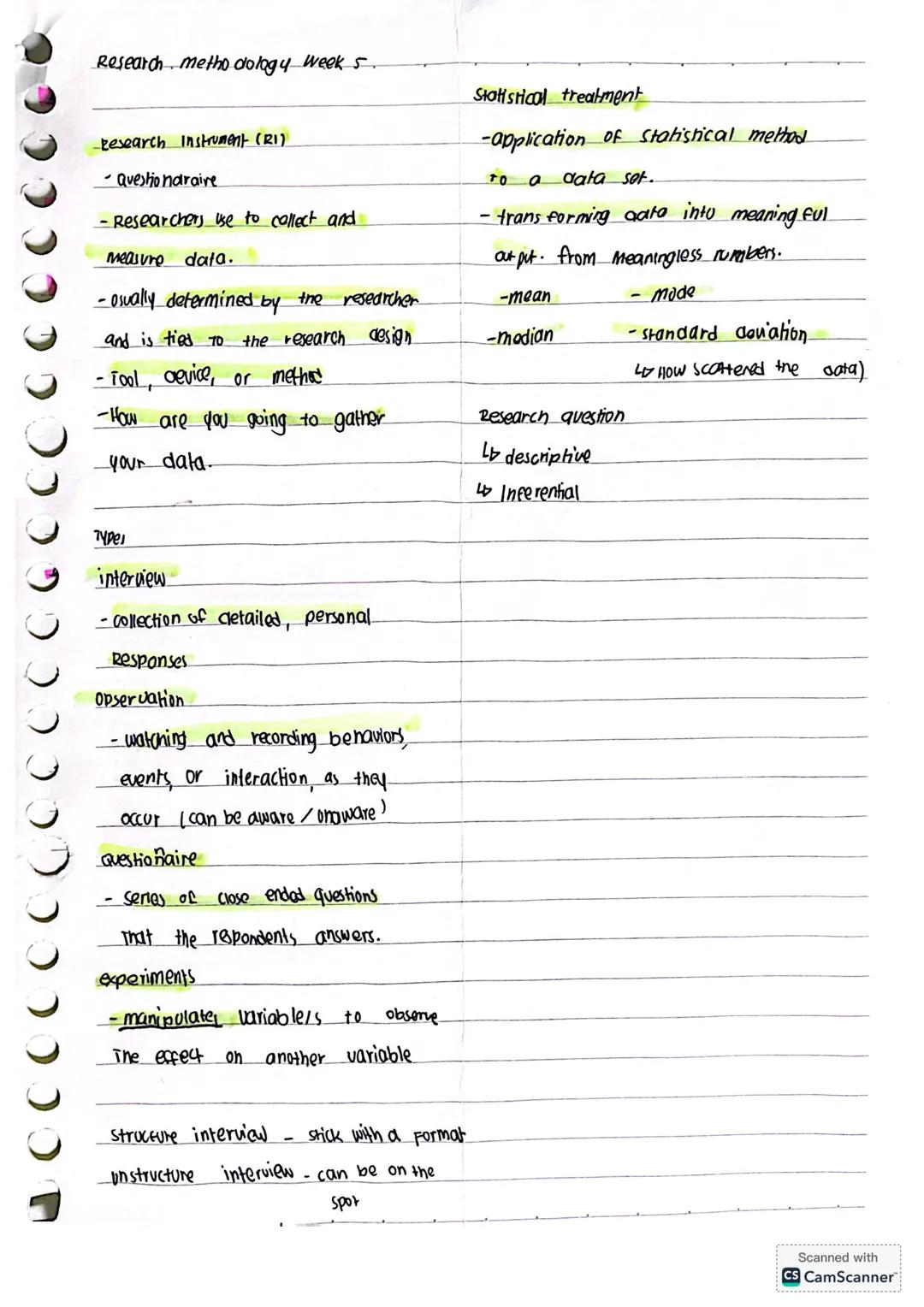
Ever wondered how researchers actually gather information? Research instruments are basically the tools scientists use to collect and measure data - kind of like how you'd use different apps to get different types of information.
There are four main types you should know. Interviews let you get detailed, personal responses from people thinkofitlikeanin−depthconversation. Observation means watching and recording what actually happens - people might or might not know they're being watched. Questionnaires are those surveys with multiple choice or yes/no questions that are easy to answer quickly.
Experiments are when researchers actually change something (called manipulating variables) to see what happens next. It's like testing what happens when you change one ingredient in a recipe.
Quick Tip: Remember that interviews can be structured (following a script) or unstructured (more like a natural conversation). Choose based on what kind of answers you need!
Making Sense of Your Data
Once you've collected all your information, you need statistical treatment to turn those meaningless numbers into actual insights. Think of it like translating a foreign language into something you can understand.
The most common tools include mean (average), median (middle number), and mode (most common answer). Standard deviation tells you how spread out or scattered your data is - basically whether your results are all similar or all over the place.
Your research questions will usually fall into two categories: descriptive (what's happening?) or inferential (why is this happening or what does it mean?). Getting this right from the start makes everything else much easier!

 Science
 Other
Other English
 Araling Panlipunan (AP)
 Practical Research
 DISS
DISS