Metamorphic Rocks
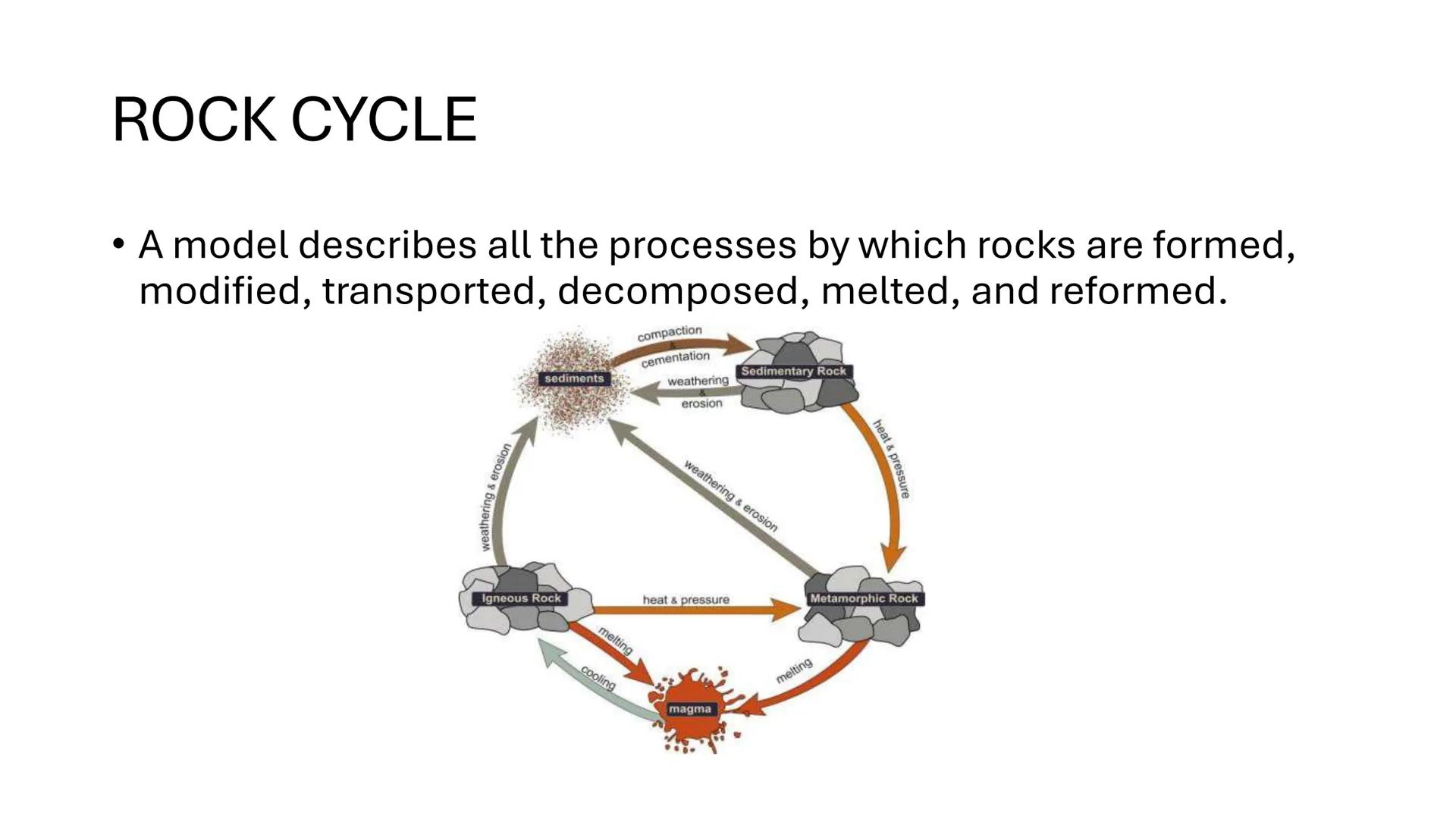
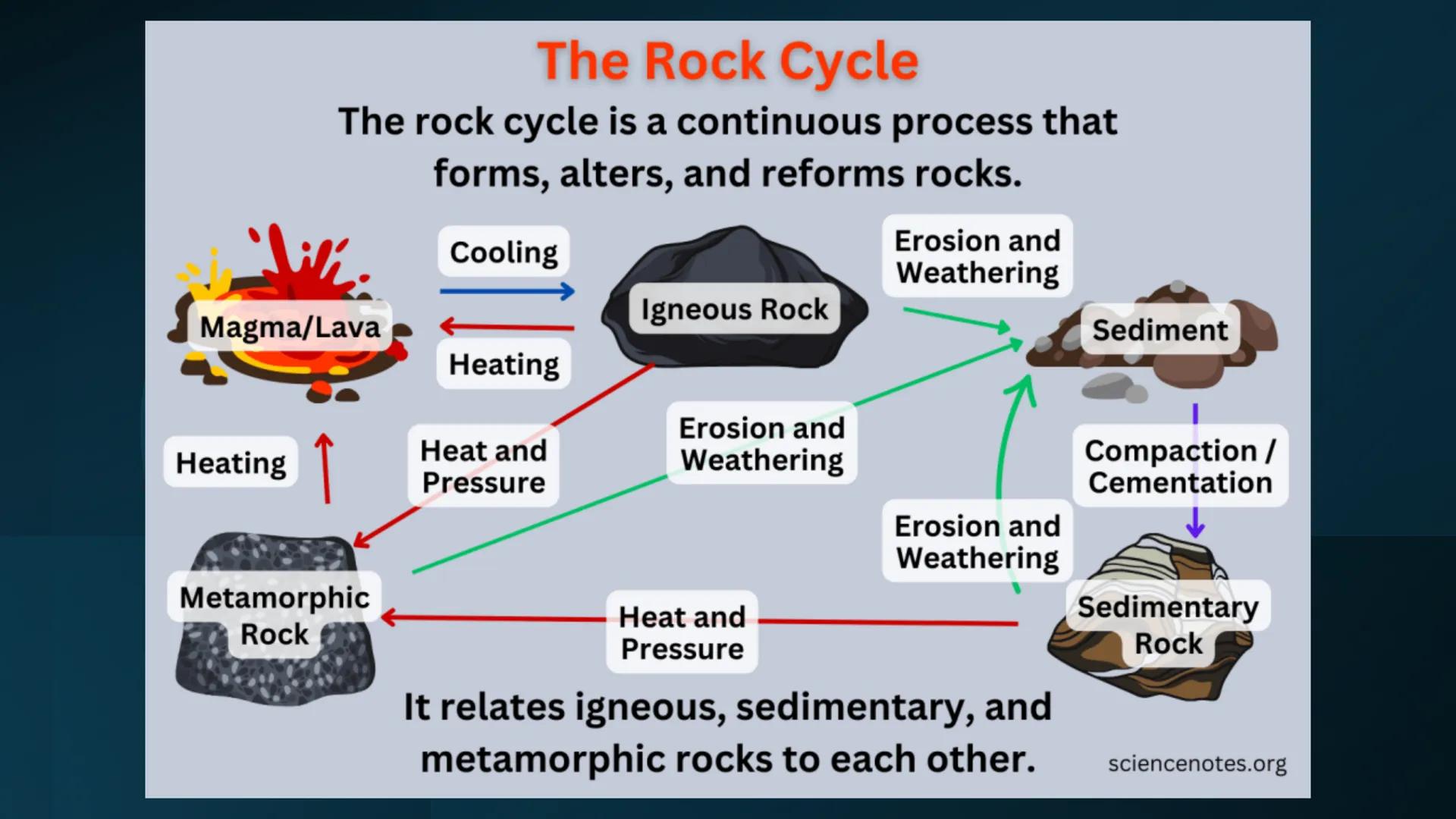
Metamorphic rocks form when existing rocks undergo metamorphism—transformation of mineralogy and physical characteristics due to heat, pressure, or chemical fluids without melting. The name comes from "meta" (change) and "morph" (form).
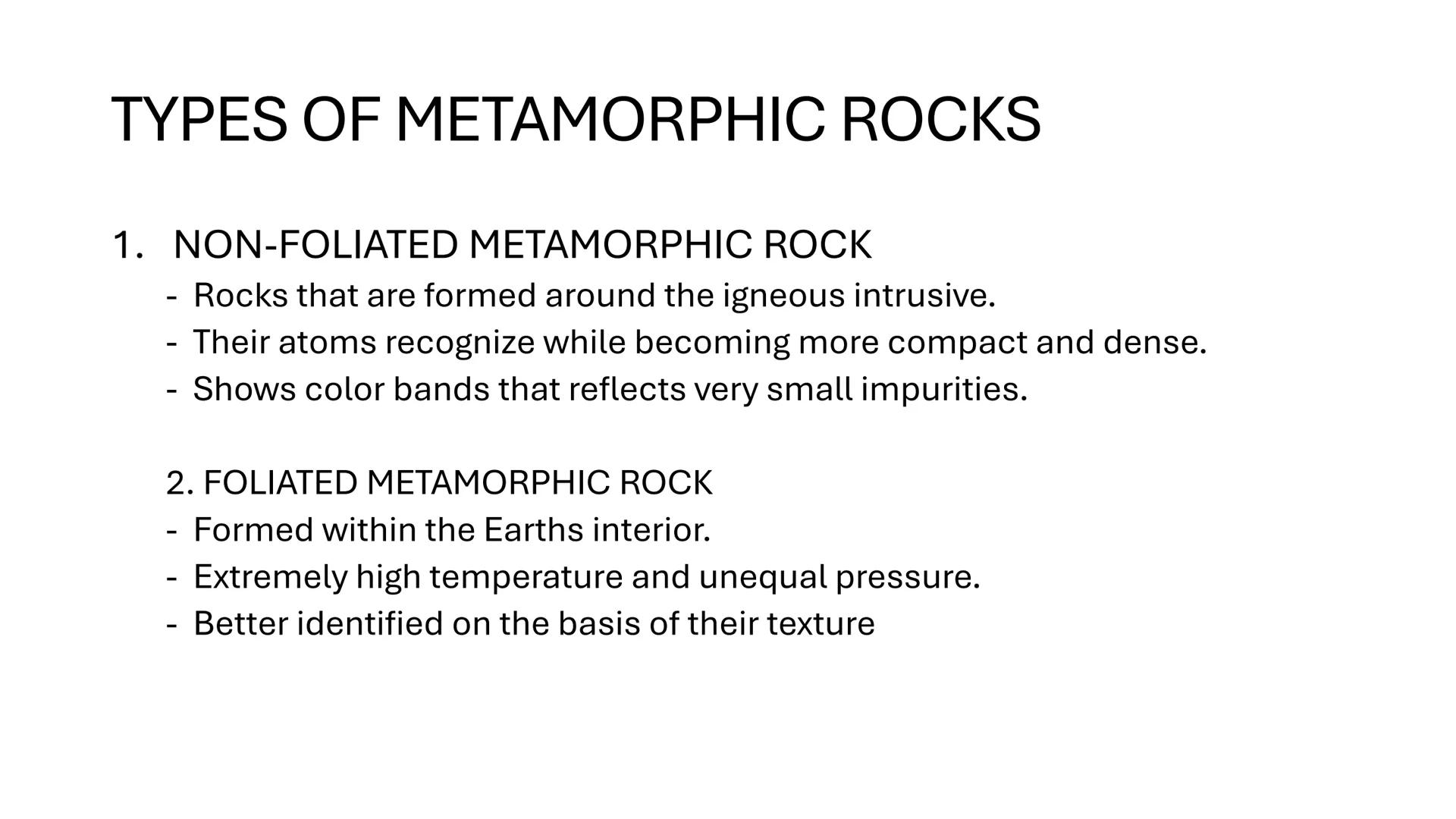
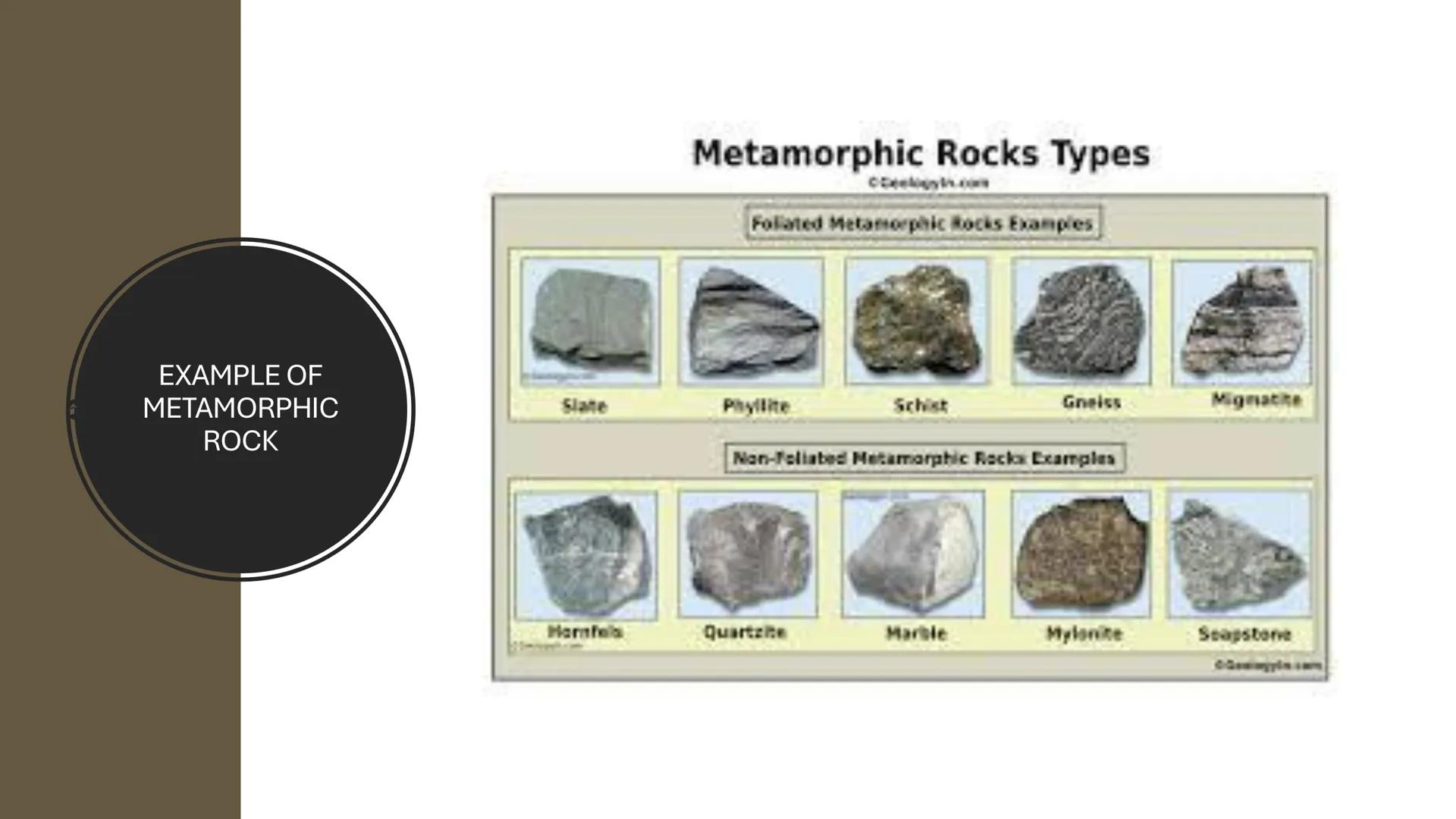
These rocks are classified as either foliated or non-foliated. Foliated metamorphic rocks, like slate, phyllite, schist, and gneiss, form under unequal pressure and exhibit distinctive layered appearances. Non-foliated rocks, such as marble, quartzite, and hornfels, form under more uniform conditions and lack this layered structure.
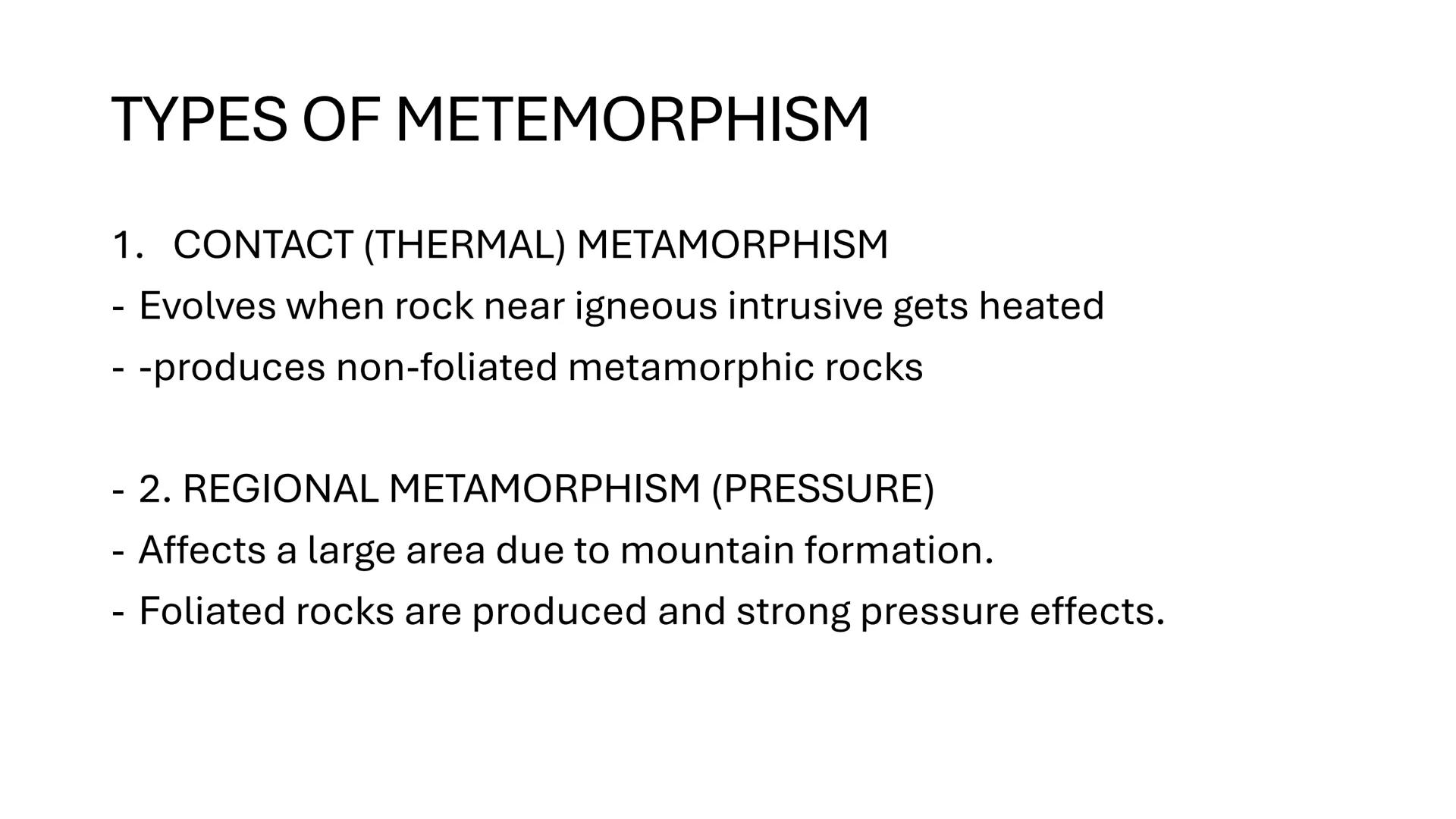
There are two primary types of metamorphism: contact metamorphism, which occurs near igneous intrusions and produces non-foliated rocks, and regional metamorphism, which affects large areas during mountain formation and typically creates foliated rocks.
Think about it: The beautiful marble used in sculptures and buildings was once limestone that transformed under intense heat and pressure!



 Araling Panlipunan (AP)
 Iba pa
 Practical Research
 DISS
DISS