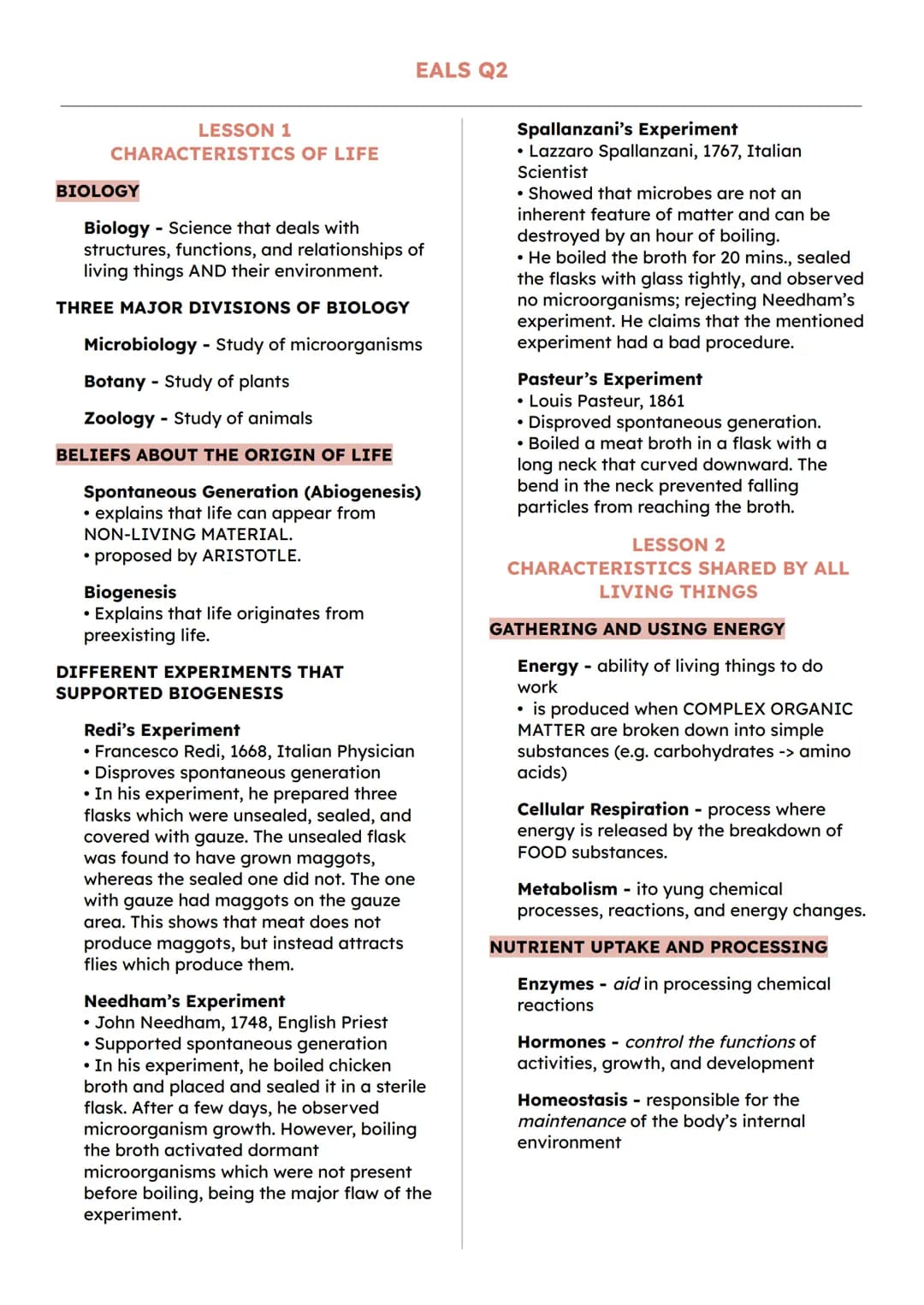
How Life Adapts, Reproduces, and Organizes
Living things respond to their environment in amazing ways. Mobility lets animals move around, while irritability (or sensitivity) helps organisms react appropriately to stimuli - like plants growing toward sunlight or you pulling your hand away from something hot.
Reproduction ensures life continues from generation to generation. Sexual reproduction involves two organisms combining genetic material, while asexual reproduction requires just one organism. DNA carries all the genetic instructions needed for these processes.
Life follows an incredible organizational hierarchy: atoms → molecules → organelles → cells → tissues → organs → organ systems → organisms → population → community → ecosystem → biosphere. Each level builds on the previous one, creating the complexity of life we see today.
Remember: Growth means getting bigger, while development refers to the different life stages from birth to death!
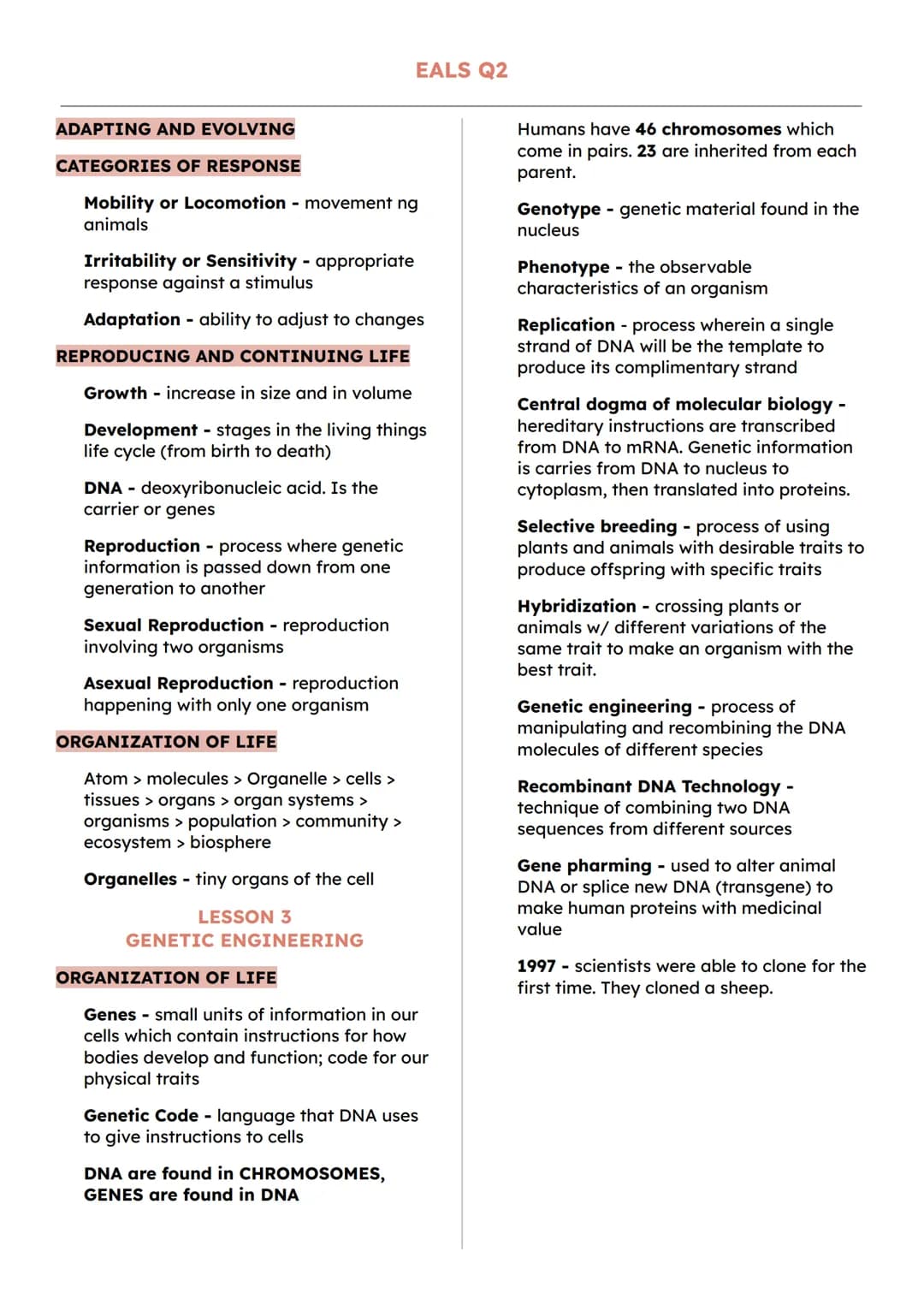
Genetic Engineering and Modern Biology
Genes are like instruction manuals stored in your cells' chromosomes - humans have 46 chromosomes (23 from each parent). Your genotype is your genetic blueprint, while your phenotype is what people actually see (like your eye color or height).
The central dogma of molecular biology explains how genetic information flows from DNA to mRNA to proteins - it's like a biological assembly line creating everything your body needs.
Scientists now use genetic engineering to manipulate DNA from different species, creating recombinant DNA technology. Selective breeding and hybridization help produce organisms with desired traits, while gene pharming creates medicines using modified animal DNA. In 1997, scientists even cloned the first sheep, opening new frontiers in biological research!
Fun Fact: Your genetic code is like a universal language that all living things share - pretty amazing that bacteria and humans use the same basic system!


 Earth Science
 Araling Panlipunan (AP)
 Iba pa
 Practical Research
 DISS
DISS