Key Features That Make Academic Texts Unique
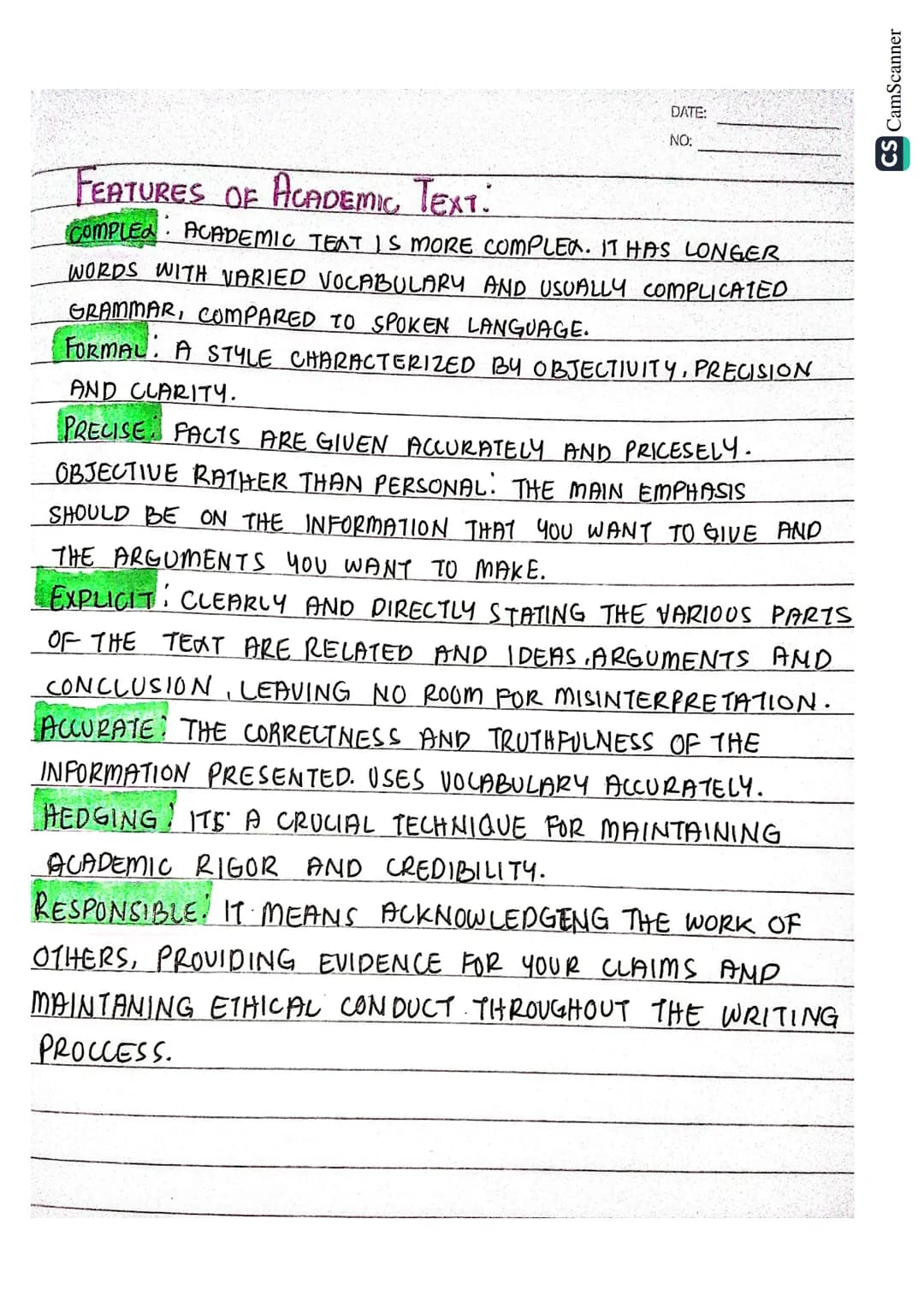
Academic writing has eight distinct characteristics that separate it from casual writing. Understanding these features will help you read more effectively and write better academic papers yourself.
Complex language is the first thing you'll notice - academic texts use longer words, varied vocabulary, and more complicated grammar than everyday speech. Formal style means the writing is objective, precise, and clear rather than chatty or personal.
Precise and accurate information is non-negotiable in academic writing. Facts must be given exactly as they are, and vocabulary must be used correctly. The writing should be explicit, meaning everything is stated clearly with no room for misinterpretation.
Academic texts prioritize being objective rather than personal - the focus stays on information and arguments rather than the writer's personal feelings. Hedging is a technique writers use to maintain credibility by not making claims that are too absolute.
Finally, responsible writing means acknowledging other people's work, providing evidence for claims, and maintaining ethical standards throughout the writing process.
Remember: These features might seem intimidating at first, but they're actually designed to make information as clear and reliable as possible. Once you get used to the style, you'll appreciate how organized and trustworthy academic writing can be!