
Social sciences help us understand how people, communities, and societies... Ipakita pa
 DIASS
DIASS Science
 Iba pa
 Filipino
 Econ
EconMag-sign up para makita ang contentLibre ito!
Access sa lahat ng dokumento
Pagbutihin ang iyong mga grado
Sumali sa milyong mga estudyante
Knowunity AI
Higit pa
Mga Asignatura
Triangle Congruence and Similarity Theorems
Triangle Properties and Classification
Linear Equations and Graphs
Geometric Angle Relationships
Trigonometric Functions and Identities
Equation Solving Techniques
Circle Geometry Fundamentals
Division Operations and Methods
Basic Differentiation Rules
Exponent and Logarithm Properties
Ipakita lahat ng paksa
Human Organ Systems
Reproductive Cell Cycles
Biological Sciences Subdisciplines
Cellular Energy Metabolism
Autotrophic Energy Processes
Inheritance Patterns and Principles
Biomolecular Structure and Organization
Cell Cycle and Division Mechanics
Cellular Organization and Development
Biological Structural Organization
Ipakita lahat ng paksa
Chemical Sciences and Applications
Atomic Structure and Composition
Molecular Electron Structure Representation
Atomic Electron Behavior
Matter Properties and Water
Mole Concept and Calculations
Gas Laws and Behavior
Periodic Table Organization
Chemical Thermodynamics Fundamentals
Chemical Bond Types and Properties
Ipakita lahat ng paksa
European Renaissance and Enlightenment
European Cultural Movements 800-1920
American Revolution Era 1763-1797
American Civil War 1861-1865
Global Imperial Systems
Mongol and Chinese Dynasties
U.S. Presidents and World Leaders
Historical Sources and Documentation
World Wars Era and Impact
World Religious Systems
Ipakita lahat ng paksa
Classic and Contemporary Novels
Literary Character Analysis
Rhetorical Theory and Practice
Classic Literary Narratives
Reading Analysis and Interpretation
Narrative Structure and Techniques
English Language Components
Influential English-Language Authors
Basic Sentence Structure
Narrative Voice and Perspective
Ipakita lahat ng paksa
207
•
Na-update Mar 7, 2026
•

Danielle Marie Ubay
@daniellemarieub
Social sciences help us understand how people, communities, and societies... Ipakita pa
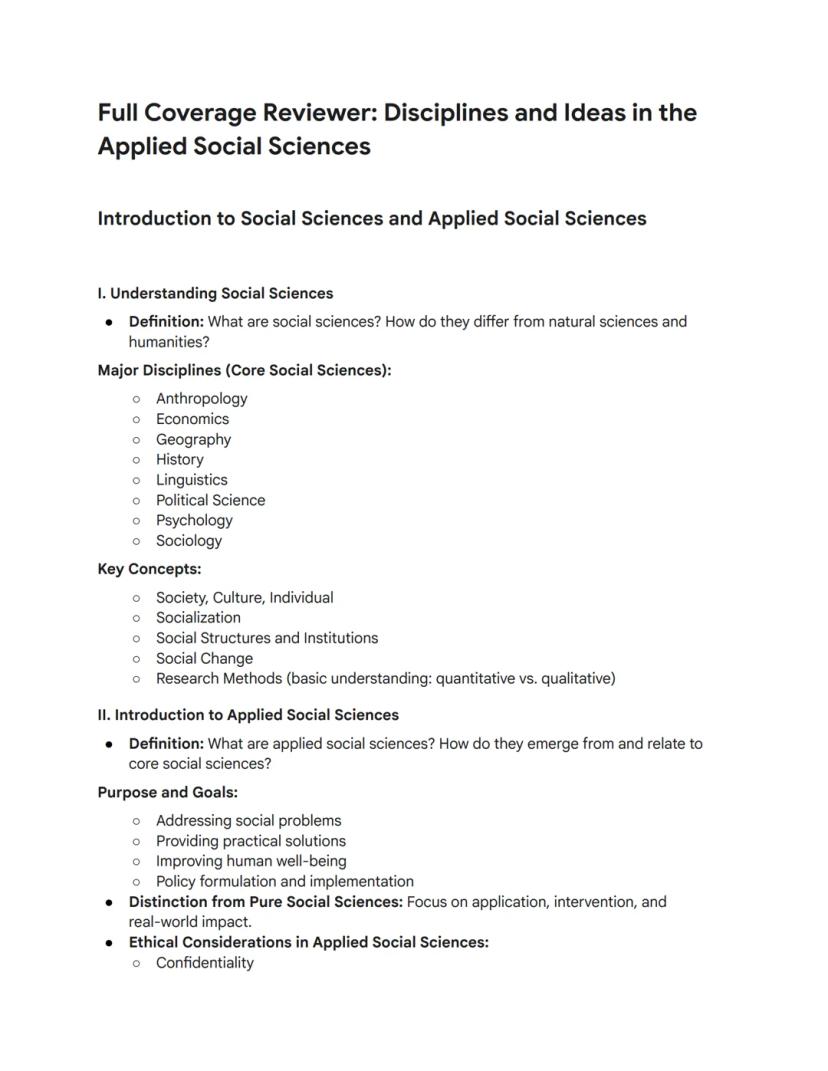
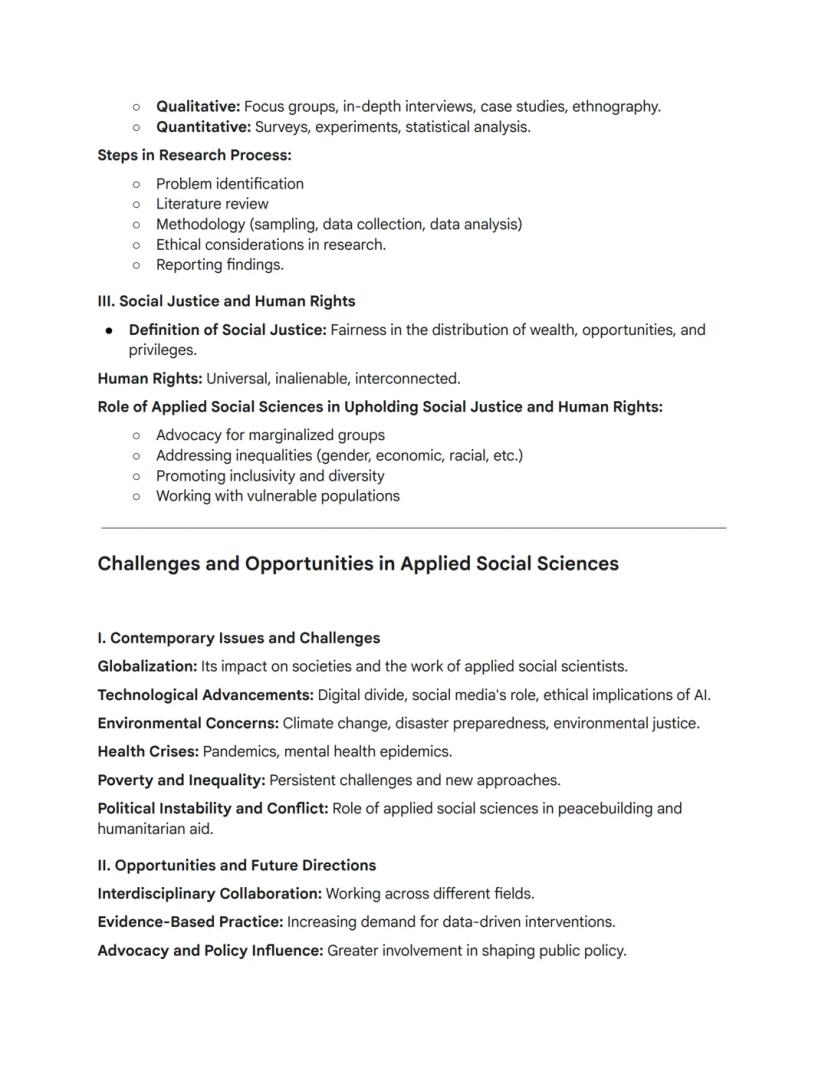
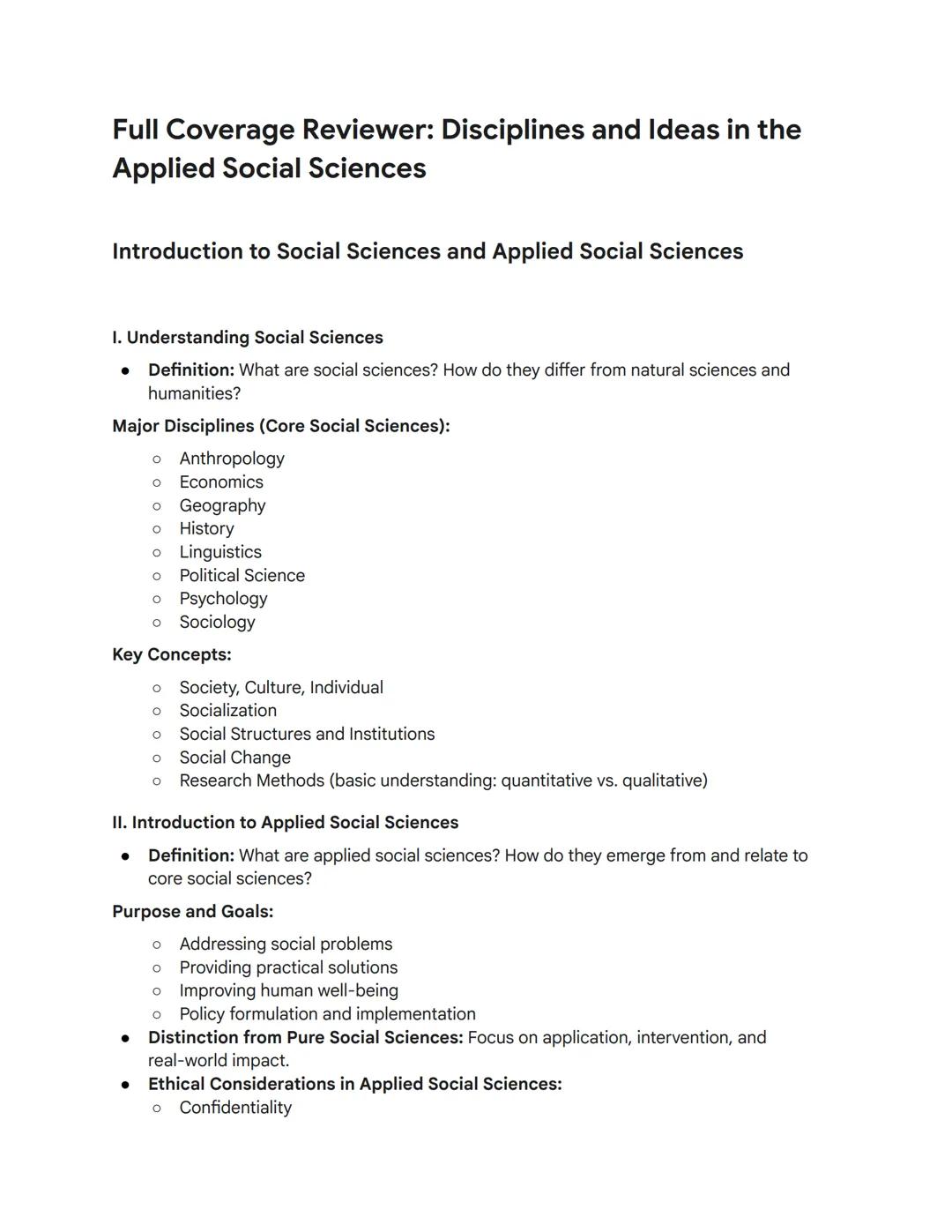
Ever wondered why people act the way they do or how societies function? Social sciences are academic fields that study human behavior, relationships, and social structures. The major disciplines include anthropology, economics, geography, history, psychology, and sociology - each looking at different aspects of human life.
Applied social sciences take this knowledge one step further. Instead of just studying society, they focus on using research to solve actual problems and improve people's lives. Think of counselors helping students with anxiety, social workers supporting families in crisis, or communication specialists creating campaigns to promote public health.
The key difference is practical application. While pure social sciences ask "What's happening and why?", applied social sciences ask "How can we make things better?" Both fields share important ethical principles like maintaining confidentiality, getting informed consent, and ensuring their work actually helps rather than harms people.
Quick Tip: Remember that social sciences study human behavior, while applied social sciences use that knowledge to create positive change in communities.
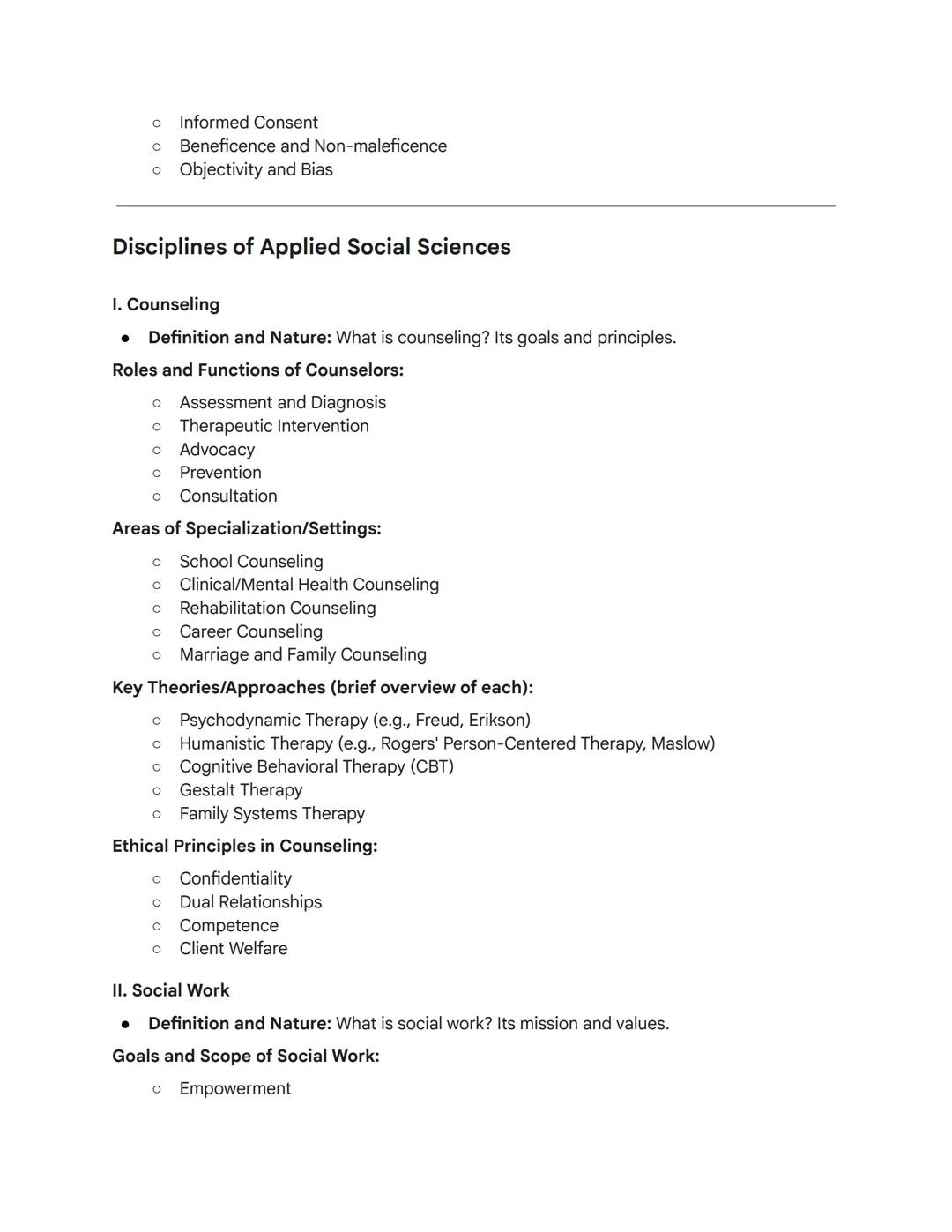
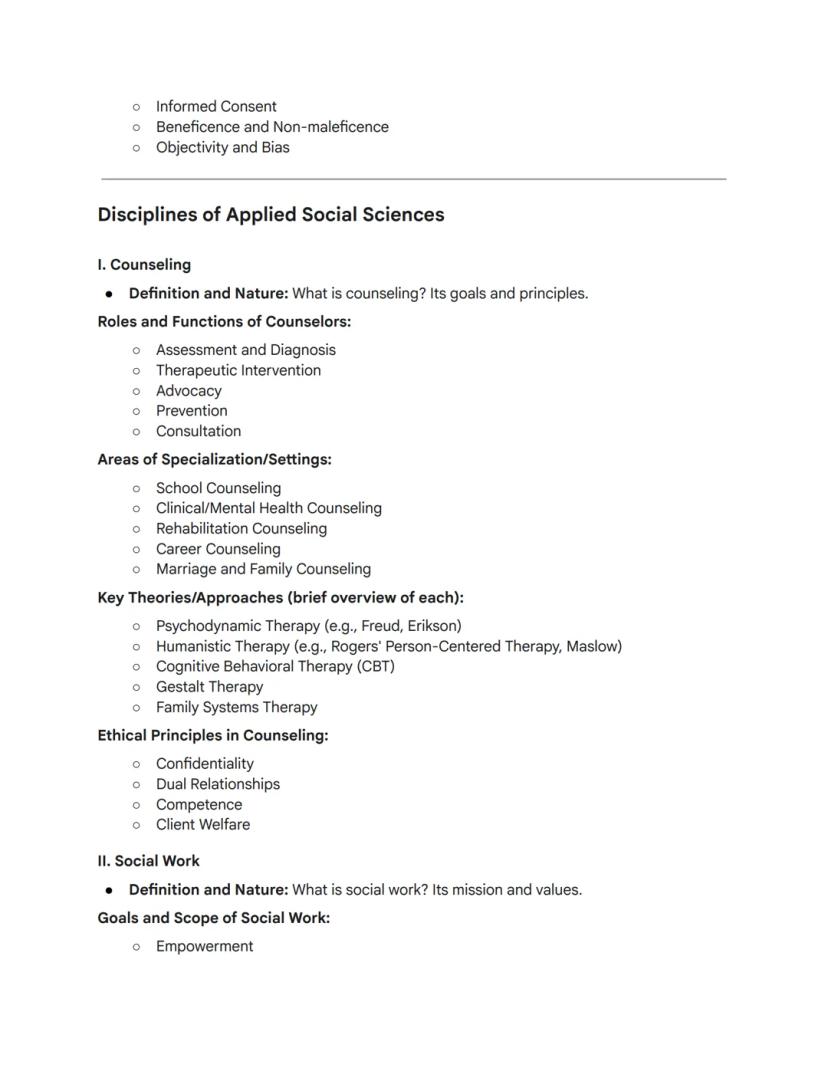
When you're stressed about college applications or dealing with family issues, counseling provides the professional support you need. Counselors don't just listen - they use scientific approaches to help people overcome challenges and improve their mental health.
Counselors wear many hats: they assess problems, provide therapy, advocate for clients, and work on prevention. You'll find them in schools helping students with academic stress, in clinics treating mental health conditions, or in rehabilitation centers supporting people recovering from addiction.
Different therapeutic approaches work for different people. Some counselors use cognitive behavioral therapy (CBT) to help change negative thought patterns, while others might use person-centered therapy that focuses on the client's own ability to find solutions. Family systems therapy looks at how family dynamics affect individual behavior.
Ethical principles are super important in counseling. Counselors must keep client information confidential, avoid dual relationships (like being both your counselor and your friend), and always prioritize their client's well-being above everything else.
Remember: Seeking counseling is a sign of strength, not weakness - it shows you're taking charge of your mental health!
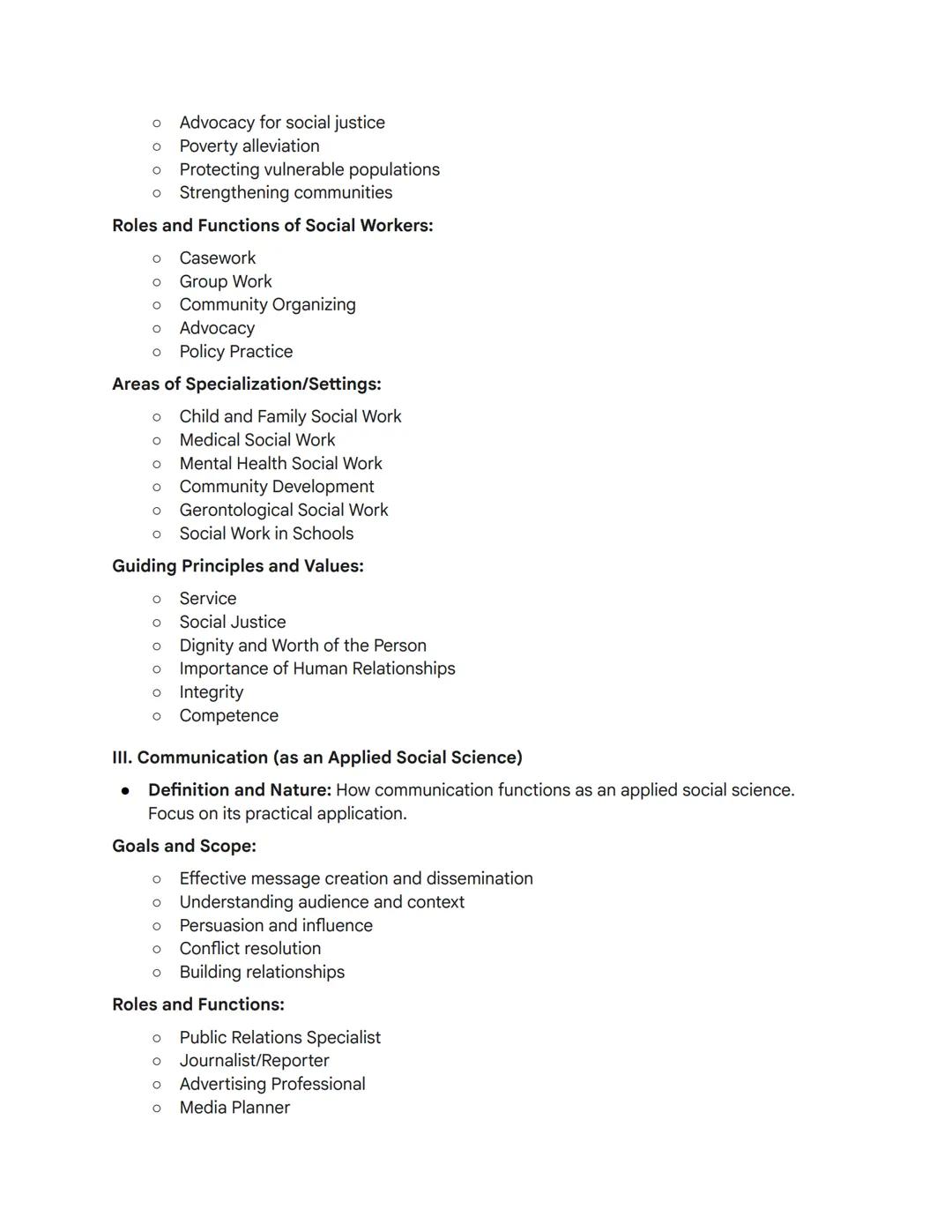
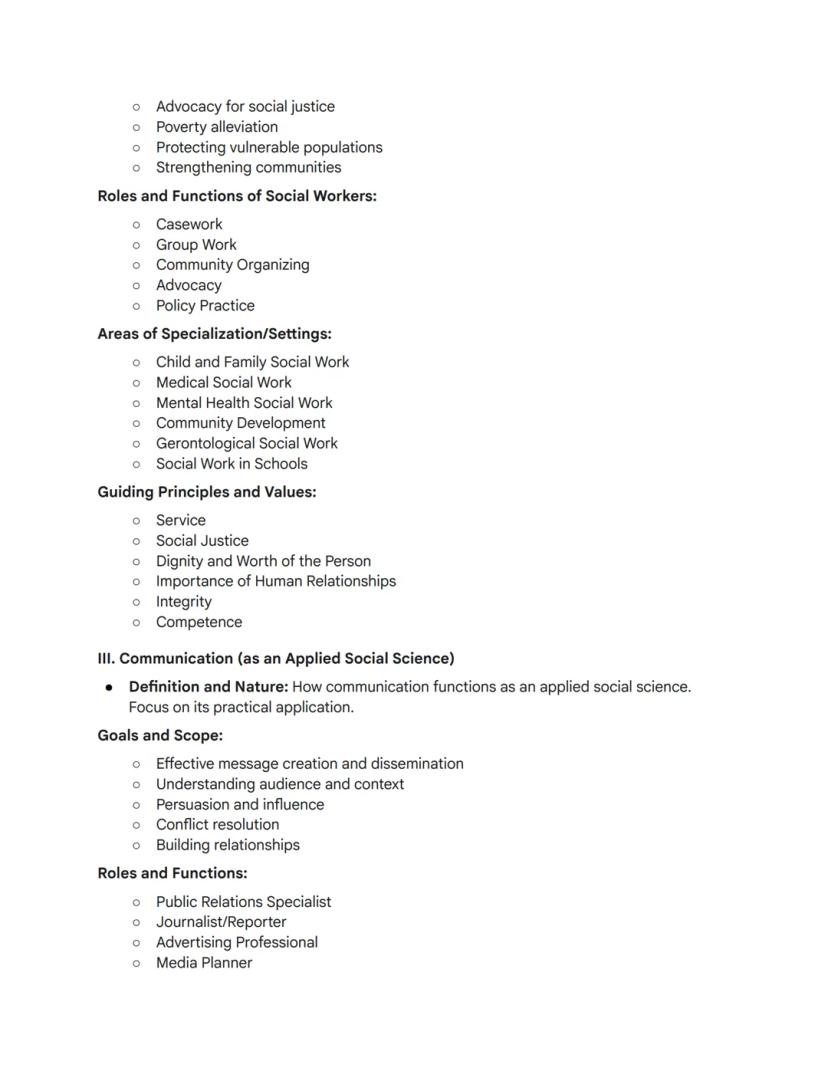
Social work is all about fighting for social justice and helping vulnerable populations. Social workers tackle big issues like poverty, child abuse, and community problems while empowering people to improve their own situations.
Social workers take on various roles depending on where they work. In casework, they might help individual families access government benefits. Through community organizing, they bring people together to address neighborhood issues. In hospitals, medical social workers help patients navigate healthcare systems and cope with illness.
Communication as an applied social science focuses on creating effective messages that reach and influence audiences. Whether it's journalists reporting important news, PR specialists managing a company's reputation, or development communication specialists promoting health campaigns, they all use research-based strategies.
Key communication concepts include understanding your audience, choosing the right media channels, and crafting messages that persuade without manipulating. Non-verbal communication - like body language and tone - often matters just as much as the words you choose.
Career Insight: Both social work and communication offer diverse career paths where you can make a real difference in people's lives!
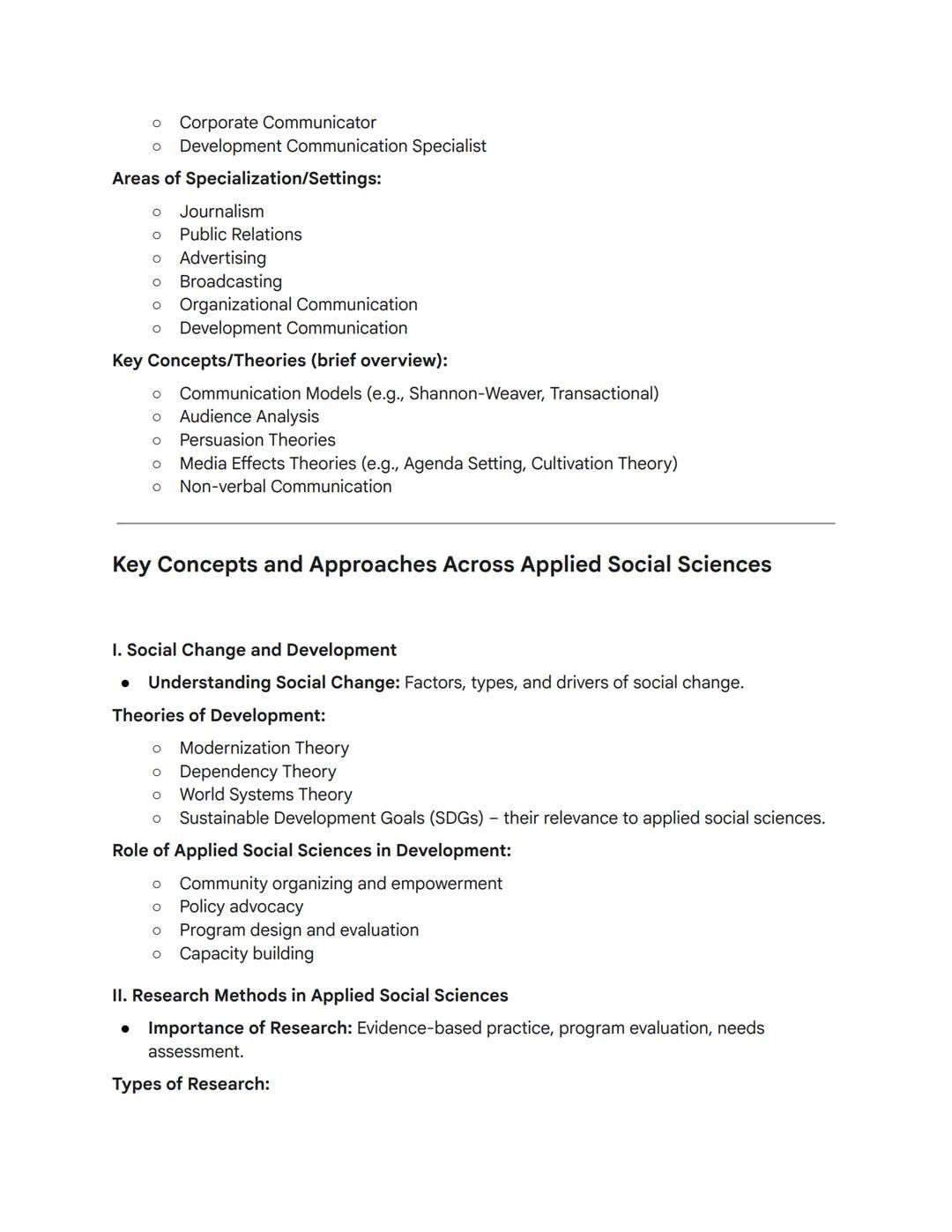
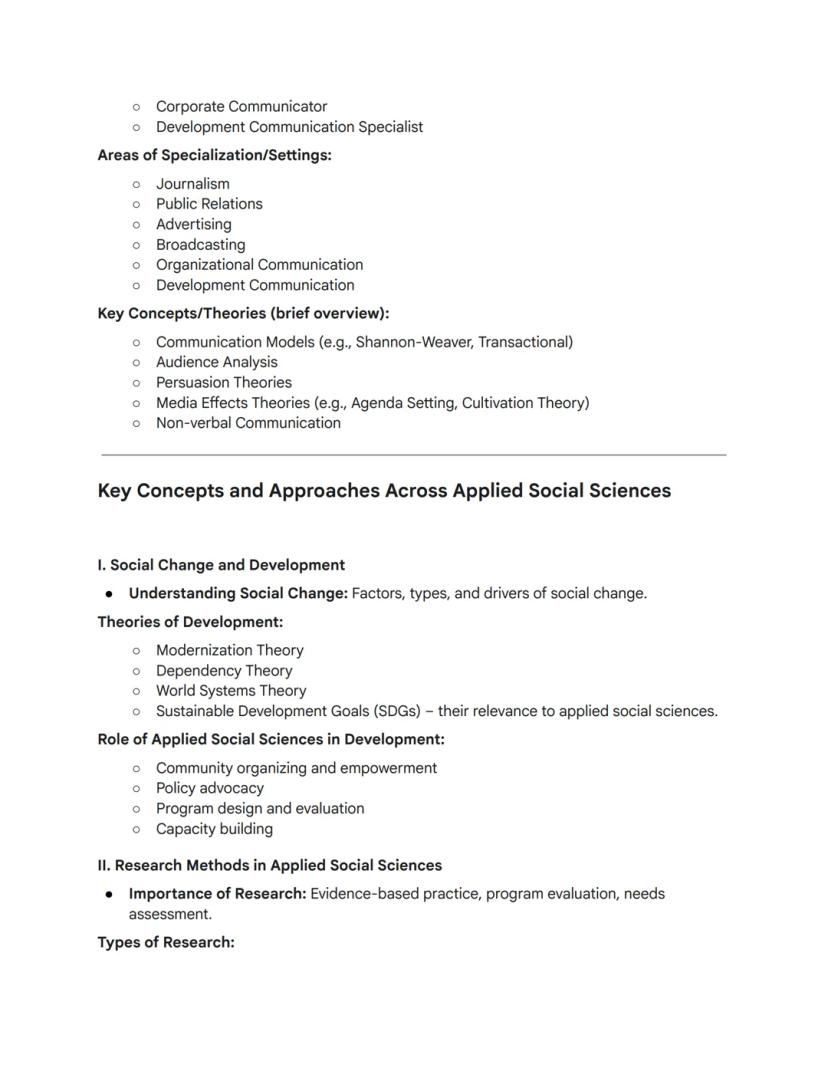
Understanding social change helps us see how societies evolve and develop over time. Different theories explain this process - modernization theory suggests societies progress through similar stages, while dependency theory argues that wealthy nations often exploit poorer ones.
The Sustainable Development Goals (SDGs) provide a global framework for addressing issues like poverty, education, and climate change. Applied social sciences play a crucial role by designing programs, evaluating their effectiveness, and building community capacity to create lasting change.
Research methods are the backbone of applied social sciences because they ensure interventions actually work. Qualitative research uses interviews and focus groups to understand people's experiences deeply, while quantitative research uses surveys and statistics to measure outcomes across large populations.
The research process follows logical steps: identifying problems, reviewing existing literature, collecting data ethically, analyzing findings, and reporting results. This evidence-based approach ensures that programs and policies are grounded in solid research rather than just good intentions.
Study Tip: Remember that good research combines both qualitative insights (the "why") with quantitative data (the "how much") for complete understanding.
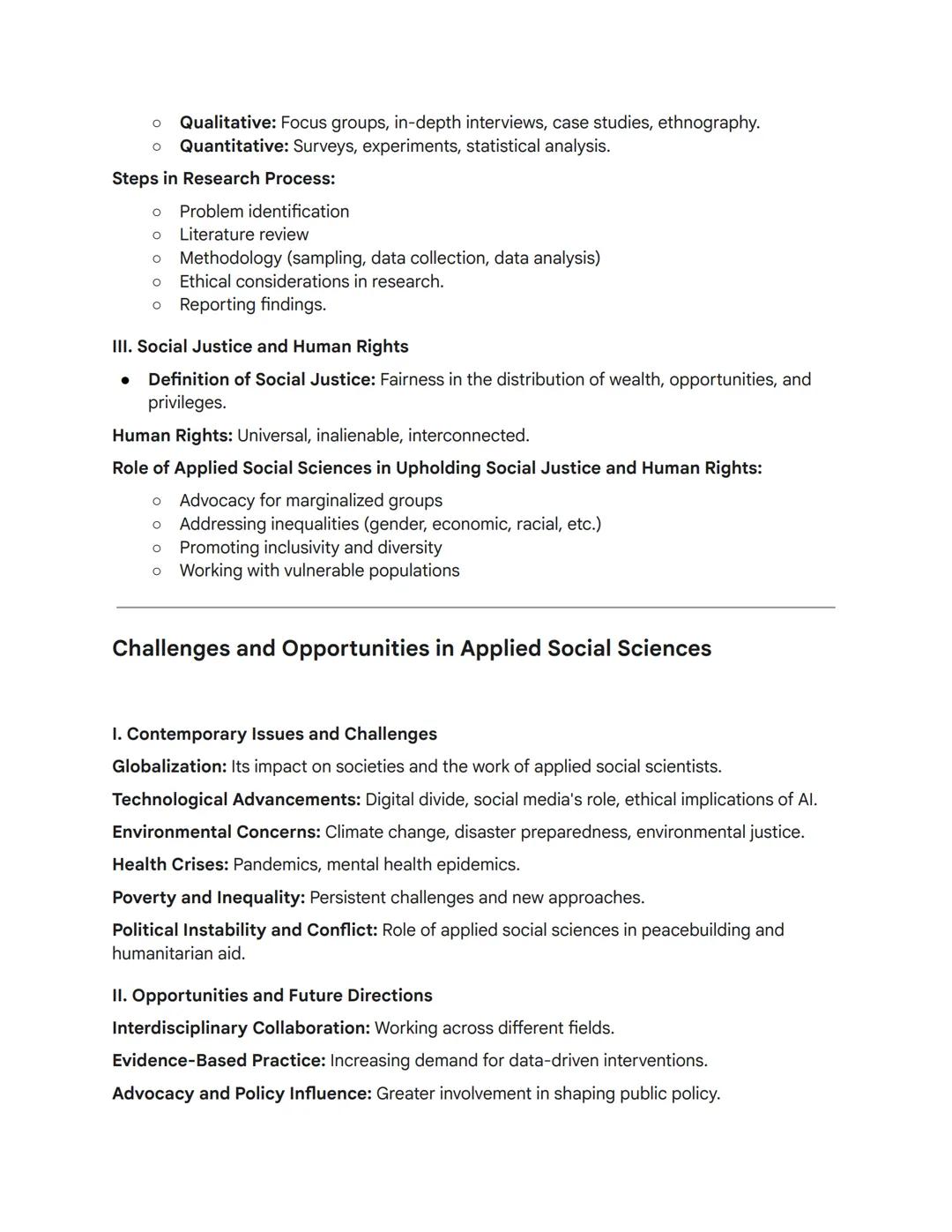
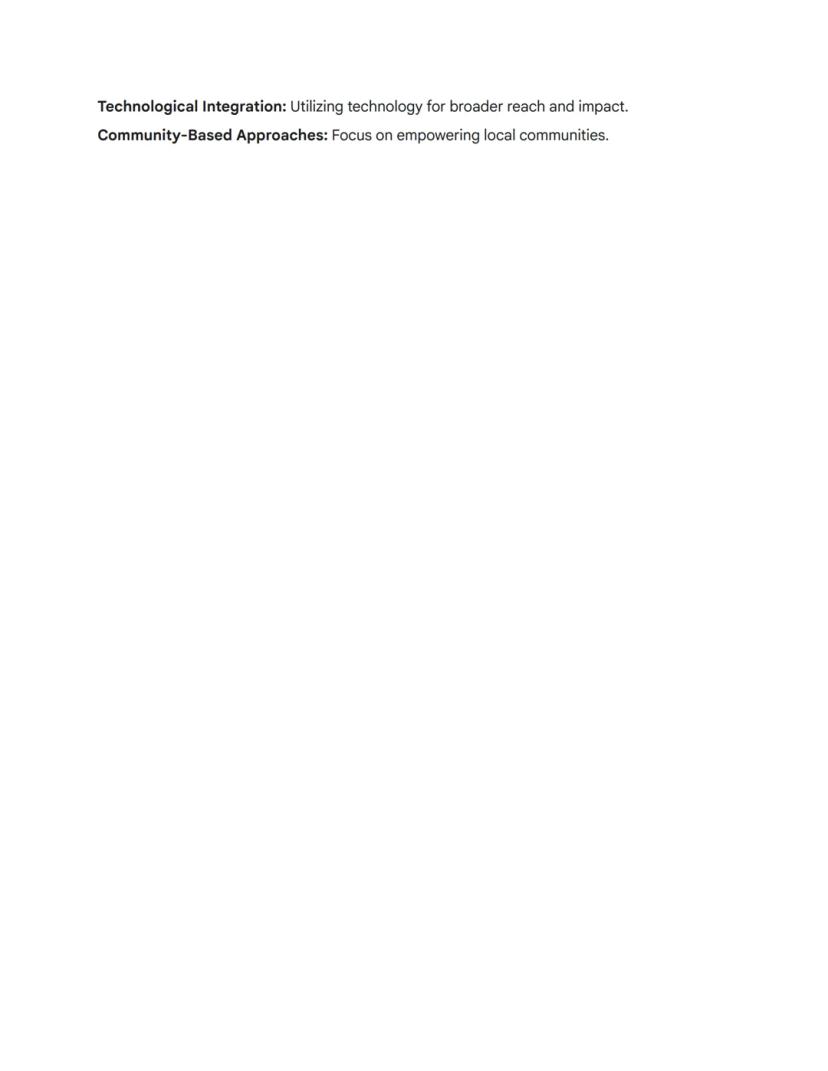
Social justice means ensuring fair access to opportunities, resources, and rights for everyone, regardless of background. Applied social sciences actively work to address inequalities based on gender, race, economic status, and other factors that shouldn't determine someone's life chances.
Today's world presents unique challenges that require innovative solutions. Globalization connects us but also creates new forms of inequality. Technology offers amazing tools but also creates digital divides. Climate change, health crises like pandemics, and political instability all demand responses from applied social scientists.
The future looks bright for these fields though! There's growing emphasis on interdisciplinary collaboration - combining expertise from different fields to tackle complex problems. Evidence-based practice is becoming the standard, meaning programs must prove they work before getting funding.
Community-based approaches are gaining popularity because they recognize that local people often know their problems and solutions best. Technology integration allows social scientists to reach more people and create bigger impact than ever before.
Future Focus: The next generation of social scientists (that could be you!) will likely work across disciplines and use technology creatively to solve humanity's biggest challenges.
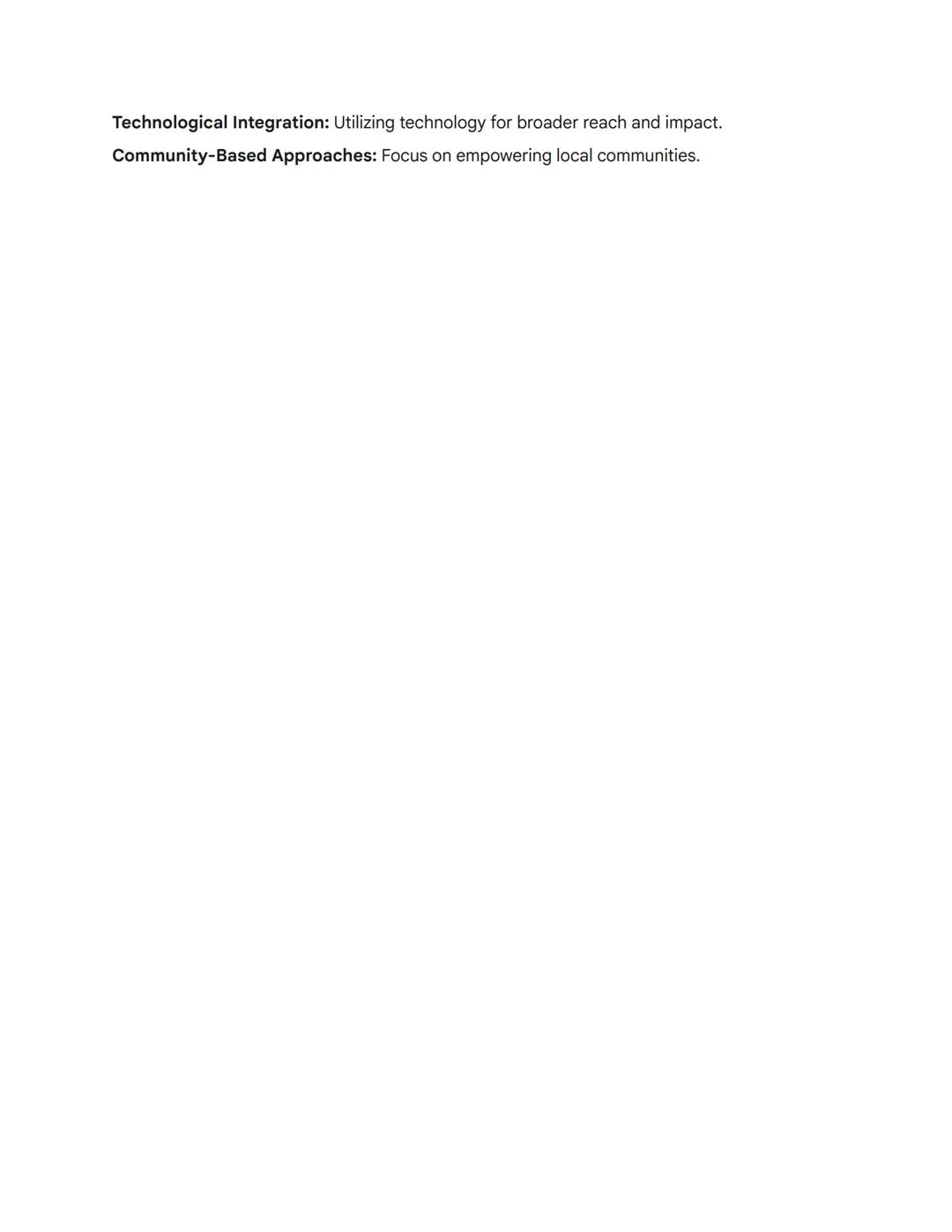
Technology integration and community-based approaches represent the future direction of applied social sciences. These fields offer meaningful careers where you can combine scientific knowledge with practical action to create positive change in the world.
Whether you're interested in counseling, social work, communication, or another applied social science, remember that these professions are constantly evolving to meet society's changing needs. Your generation will likely develop new approaches we haven't even imagined yet!
Ang aming AI Companion ay isang AI tool na nakatuon sa mga estudyante na nag-aalok ng higit pa sa mga sagot lang. Binuo mula sa milyong Knowunity resources, nagbibigay ito ng may-kaugnayang impormasyon, personalized na study plans, quizzes, at content direkta sa chat, na umaangkop sa iyong sariling learning journey.
Maaari mong i-download ang app mula sa Google Play Store at Apple App Store.
Tama 'yan! Mag-enjoy sa libreng access sa mga study content, makipag-connect sa kapwa mga estudyante, at kumuha ng instant na tulong – lahat nasa iyong daliri lang.
App Store
Google Play
Napakadaling gamitin at maganda ang disenyo ng app. Nahanap ko lahat ng hinahanap ko hanggang ngayon at natuto ako ng marami mula sa mga presentasyon! Tiyak na gagamitin ko ang app para sa isang takdang-aralin sa klase! At siyempre, nakakatulong din ito bilang inspirasyon.
Stefan S
gumagamit ng iOS
Sobrang ganda talaga ng app na ito. Maraming mga study notes at tulong [...]. Ang problemang subject ko ay Pranses, halimbawa, at ang app ay may maraming options para tumulong. Salamat sa app na ito, bumuti ang Pranses ko. Irerekumenda ko ito sa lahat.
Samantha Klich
Android user
Wow, talagang namangha ako. Sinubukan ko lang ang app dahil nakita ko itong ina-advertise nang maraming beses at sobrang nagulat ako. Ang app na ito ang TULONG na gusto mo para sa paaralan at higit sa lahat, nag-aalok ito ng maraming bagay, tulad ng workouts at fact sheets, na SOBRANG nakatulong sa akin.
Anna
iOS user
Pinakamagandang app sa mundo! walang masabi dahil sobrang ganda nito
Thomas R
iOS user
Napakaganda talaga. Nakakapag-review ako ng 10x mas mabuti, itong app ay mabilis na 10/10. Lubos kong inirerekomenda ito sa lahat. Pwede akong manood at maghanap ng notes. Pwede kong i-save ang mga ito sa subject folder. Pwede kong i-review anumang oras kapag bumalik ako. Kung hindi mo pa nasubukan ang app na ito, marami kang nawawala.
Basil
Android user
Ang app na ito ay nagpapalakas ng loob ko sa paghahanda sa exams, hindi lang dahil sa pagpapataas ng aking kumpiyansa sa sarili sa pamamagitan ng mga feature na nagpapahintulot sa iyo na makipag-connect sa iba at mabawasan ang pakiramdam na nag-iisa, kundi pati na rin sa paraan na nakatuon ang app sa pagpapagaan ng iyong pakiramdam. Madali itong i-navigate, masaya gamitin, at nakakatulong sa sinumang nahihirapan sa kahit anong paraan.
David K
iOS user
Sobrang galing ng app! Ilalagay ko lang ang paksa sa search bar at makakakuha na ako ng sagot kaagad. Hindi ko kailangang manood ng 10 YouTube videos para maintindihan ang isang bagay, kaya nakakatipid ako ng oras. Lubos na inirerekomenda!
Sudenaz Ocak
Android user
Sa paaralan, napakahina ko sa math pero salamat sa app, mas mahusay na ako ngayon. Lubos akong nagpapasalamat na ginawa niyo ang app na ito.
Greenlight Bonnie
Android user
napakareliable na app para tumulong at palawakin ang iyong mga ideya sa Math, English at iba pang mga related na paksa sa iyong mga gawain. gamitin mo ang app na ito kung nahihirapan ka sa mga area, susi ito para diyan. sana nag-review na ako dati. at libre rin ito kaya huwag mag-alala tungkol diyan.
Rohan U
Android user
Alam kong maraming apps gumagamit ng fake accounts para mapataas ang kanilang reviews pero ang app na ito ay deserve lahat ng papuri. Dati nakakakuha ako ng 4 sa aking English exams at ngayon nakakuha ako ng grade 7. Hindi ko pa alam ang app na ito tatlong araw bago ang exam at nakatulong ito ng SOBRA. Pakisuyong maniwala sa akin at gamitin ito dahil sigurado akong makikita mo rin ang mga pagbabago.
Xander S
iOS user
ANG MGA quiz AT flashcard SOBRANG HELPFUL AT I LOVE TALAGA SI Knowunity AI. PARANG CHATGPT LANG PERO MAS MATALINO!! NAKATULONG DIN SA MGA MASCARA PROBLEMS KO!! PATI NA RIN SA MGA TUNAY KONG subject! SYEMPRE 😍😁😲🤑💗✨🎀😮
Elisha
iOS user
Grabe talaga ang app na to. Sobrang nakakaboring sakin ang pagreview pero ginagawa ng app na to na sobrang dali mag-organize ng lahat at pwede mong tanungin ang libreng ai para subukin ang sarili mo kaya sobrang buti at madali mong ma-upload ang sarili mong mga bagay. highly recommend bilang isang taong nagte-take ng mocks ngayon
Paul T
iOS user
Napakadaling gamitin at maganda ang disenyo ng app. Nahanap ko lahat ng hinahanap ko hanggang ngayon at natuto ako ng marami mula sa mga presentasyon! Tiyak na gagamitin ko ang app para sa isang takdang-aralin sa klase! At siyempre, nakakatulong din ito bilang inspirasyon.
Stefan S
gumagamit ng iOS
Sobrang ganda talaga ng app na ito. Maraming mga study notes at tulong [...]. Ang problemang subject ko ay Pranses, halimbawa, at ang app ay may maraming options para tumulong. Salamat sa app na ito, bumuti ang Pranses ko. Irerekumenda ko ito sa lahat.
Samantha Klich
Android user
Wow, talagang namangha ako. Sinubukan ko lang ang app dahil nakita ko itong ina-advertise nang maraming beses at sobrang nagulat ako. Ang app na ito ang TULONG na gusto mo para sa paaralan at higit sa lahat, nag-aalok ito ng maraming bagay, tulad ng workouts at fact sheets, na SOBRANG nakatulong sa akin.
Anna
iOS user
Pinakamagandang app sa mundo! walang masabi dahil sobrang ganda nito
Thomas R
iOS user
Napakaganda talaga. Nakakapag-review ako ng 10x mas mabuti, itong app ay mabilis na 10/10. Lubos kong inirerekomenda ito sa lahat. Pwede akong manood at maghanap ng notes. Pwede kong i-save ang mga ito sa subject folder. Pwede kong i-review anumang oras kapag bumalik ako. Kung hindi mo pa nasubukan ang app na ito, marami kang nawawala.
Basil
Android user
Ang app na ito ay nagpapalakas ng loob ko sa paghahanda sa exams, hindi lang dahil sa pagpapataas ng aking kumpiyansa sa sarili sa pamamagitan ng mga feature na nagpapahintulot sa iyo na makipag-connect sa iba at mabawasan ang pakiramdam na nag-iisa, kundi pati na rin sa paraan na nakatuon ang app sa pagpapagaan ng iyong pakiramdam. Madali itong i-navigate, masaya gamitin, at nakakatulong sa sinumang nahihirapan sa kahit anong paraan.
David K
iOS user
Sobrang galing ng app! Ilalagay ko lang ang paksa sa search bar at makakakuha na ako ng sagot kaagad. Hindi ko kailangang manood ng 10 YouTube videos para maintindihan ang isang bagay, kaya nakakatipid ako ng oras. Lubos na inirerekomenda!
Sudenaz Ocak
Android user
Sa paaralan, napakahina ko sa math pero salamat sa app, mas mahusay na ako ngayon. Lubos akong nagpapasalamat na ginawa niyo ang app na ito.
Greenlight Bonnie
Android user
napakareliable na app para tumulong at palawakin ang iyong mga ideya sa Math, English at iba pang mga related na paksa sa iyong mga gawain. gamitin mo ang app na ito kung nahihirapan ka sa mga area, susi ito para diyan. sana nag-review na ako dati. at libre rin ito kaya huwag mag-alala tungkol diyan.
Rohan U
Android user
Alam kong maraming apps gumagamit ng fake accounts para mapataas ang kanilang reviews pero ang app na ito ay deserve lahat ng papuri. Dati nakakakuha ako ng 4 sa aking English exams at ngayon nakakuha ako ng grade 7. Hindi ko pa alam ang app na ito tatlong araw bago ang exam at nakatulong ito ng SOBRA. Pakisuyong maniwala sa akin at gamitin ito dahil sigurado akong makikita mo rin ang mga pagbabago.
Xander S
iOS user
ANG MGA quiz AT flashcard SOBRANG HELPFUL AT I LOVE TALAGA SI Knowunity AI. PARANG CHATGPT LANG PERO MAS MATALINO!! NAKATULONG DIN SA MGA MASCARA PROBLEMS KO!! PATI NA RIN SA MGA TUNAY KONG subject! SYEMPRE 😍😁😲🤑💗✨🎀😮
Elisha
iOS user
Grabe talaga ang app na to. Sobrang nakakaboring sakin ang pagreview pero ginagawa ng app na to na sobrang dali mag-organize ng lahat at pwede mong tanungin ang libreng ai para subukin ang sarili mo kaya sobrang buti at madali mong ma-upload ang sarili mong mga bagay. highly recommend bilang isang taong nagte-take ng mocks ngayon
Paul T
iOS user
Danielle Marie Ubay
@daniellemarieub
Social sciences help us understand how people, communities, and societies work, while applied social sciences take that knowledge and use it to solve real-world problems. Think of it as the difference between studying why people behave a certain way versus... Ipakita pa
Access sa lahat ng dokumento
Pagbutihin ang iyong mga grado
Sumali sa milyong mga estudyante
Ever wondered why people act the way they do or how societies function? Social sciences are academic fields that study human behavior, relationships, and social structures. The major disciplines include anthropology, economics, geography, history, psychology, and sociology - each looking at different aspects of human life.
Applied social sciences take this knowledge one step further. Instead of just studying society, they focus on using research to solve actual problems and improve people's lives. Think of counselors helping students with anxiety, social workers supporting families in crisis, or communication specialists creating campaigns to promote public health.
The key difference is practical application. While pure social sciences ask "What's happening and why?", applied social sciences ask "How can we make things better?" Both fields share important ethical principles like maintaining confidentiality, getting informed consent, and ensuring their work actually helps rather than harms people.
Quick Tip: Remember that social sciences study human behavior, while applied social sciences use that knowledge to create positive change in communities.
Access sa lahat ng dokumento
Pagbutihin ang iyong mga grado
Sumali sa milyong mga estudyante
When you're stressed about college applications or dealing with family issues, counseling provides the professional support you need. Counselors don't just listen - they use scientific approaches to help people overcome challenges and improve their mental health.
Counselors wear many hats: they assess problems, provide therapy, advocate for clients, and work on prevention. You'll find them in schools helping students with academic stress, in clinics treating mental health conditions, or in rehabilitation centers supporting people recovering from addiction.
Different therapeutic approaches work for different people. Some counselors use cognitive behavioral therapy (CBT) to help change negative thought patterns, while others might use person-centered therapy that focuses on the client's own ability to find solutions. Family systems therapy looks at how family dynamics affect individual behavior.
Ethical principles are super important in counseling. Counselors must keep client information confidential, avoid dual relationships (like being both your counselor and your friend), and always prioritize their client's well-being above everything else.
Remember: Seeking counseling is a sign of strength, not weakness - it shows you're taking charge of your mental health!
Access sa lahat ng dokumento
Pagbutihin ang iyong mga grado
Sumali sa milyong mga estudyante
Social work is all about fighting for social justice and helping vulnerable populations. Social workers tackle big issues like poverty, child abuse, and community problems while empowering people to improve their own situations.
Social workers take on various roles depending on where they work. In casework, they might help individual families access government benefits. Through community organizing, they bring people together to address neighborhood issues. In hospitals, medical social workers help patients navigate healthcare systems and cope with illness.
Communication as an applied social science focuses on creating effective messages that reach and influence audiences. Whether it's journalists reporting important news, PR specialists managing a company's reputation, or development communication specialists promoting health campaigns, they all use research-based strategies.
Key communication concepts include understanding your audience, choosing the right media channels, and crafting messages that persuade without manipulating. Non-verbal communication - like body language and tone - often matters just as much as the words you choose.
Career Insight: Both social work and communication offer diverse career paths where you can make a real difference in people's lives!
Access sa lahat ng dokumento
Pagbutihin ang iyong mga grado
Sumali sa milyong mga estudyante
Understanding social change helps us see how societies evolve and develop over time. Different theories explain this process - modernization theory suggests societies progress through similar stages, while dependency theory argues that wealthy nations often exploit poorer ones.
The Sustainable Development Goals (SDGs) provide a global framework for addressing issues like poverty, education, and climate change. Applied social sciences play a crucial role by designing programs, evaluating their effectiveness, and building community capacity to create lasting change.
Research methods are the backbone of applied social sciences because they ensure interventions actually work. Qualitative research uses interviews and focus groups to understand people's experiences deeply, while quantitative research uses surveys and statistics to measure outcomes across large populations.
The research process follows logical steps: identifying problems, reviewing existing literature, collecting data ethically, analyzing findings, and reporting results. This evidence-based approach ensures that programs and policies are grounded in solid research rather than just good intentions.
Study Tip: Remember that good research combines both qualitative insights (the "why") with quantitative data (the "how much") for complete understanding.
Access sa lahat ng dokumento
Pagbutihin ang iyong mga grado
Sumali sa milyong mga estudyante
Social justice means ensuring fair access to opportunities, resources, and rights for everyone, regardless of background. Applied social sciences actively work to address inequalities based on gender, race, economic status, and other factors that shouldn't determine someone's life chances.
Today's world presents unique challenges that require innovative solutions. Globalization connects us but also creates new forms of inequality. Technology offers amazing tools but also creates digital divides. Climate change, health crises like pandemics, and political instability all demand responses from applied social scientists.
The future looks bright for these fields though! There's growing emphasis on interdisciplinary collaboration - combining expertise from different fields to tackle complex problems. Evidence-based practice is becoming the standard, meaning programs must prove they work before getting funding.
Community-based approaches are gaining popularity because they recognize that local people often know their problems and solutions best. Technology integration allows social scientists to reach more people and create bigger impact than ever before.
Future Focus: The next generation of social scientists (that could be you!) will likely work across disciplines and use technology creatively to solve humanity's biggest challenges.
Access sa lahat ng dokumento
Pagbutihin ang iyong mga grado
Sumali sa milyong mga estudyante
Technology integration and community-based approaches represent the future direction of applied social sciences. These fields offer meaningful careers where you can combine scientific knowledge with practical action to create positive change in the world.
Whether you're interested in counseling, social work, communication, or another applied social science, remember that these professions are constantly evolving to meet society's changing needs. Your generation will likely develop new approaches we haven't even imagined yet!
Ang aming AI Companion ay isang AI tool na nakatuon sa mga estudyante na nag-aalok ng higit pa sa mga sagot lang. Binuo mula sa milyong Knowunity resources, nagbibigay ito ng may-kaugnayang impormasyon, personalized na study plans, quizzes, at content direkta sa chat, na umaangkop sa iyong sariling learning journey.
Maaari mong i-download ang app mula sa Google Play Store at Apple App Store.
Tama 'yan! Mag-enjoy sa libreng access sa mga study content, makipag-connect sa kapwa mga estudyante, at kumuha ng instant na tulong – lahat nasa iyong daliri lang.
1
Smart Tools NEW
I-transform ang note na ito sa: ✓ 50+ Practice Questions ✓ Interactive Flashcards ✓ Full Mock Exam ✓ Essay Outlines
App Store
Google Play
Napakadaling gamitin at maganda ang disenyo ng app. Nahanap ko lahat ng hinahanap ko hanggang ngayon at natuto ako ng marami mula sa mga presentasyon! Tiyak na gagamitin ko ang app para sa isang takdang-aralin sa klase! At siyempre, nakakatulong din ito bilang inspirasyon.
Stefan S
gumagamit ng iOS
Sobrang ganda talaga ng app na ito. Maraming mga study notes at tulong [...]. Ang problemang subject ko ay Pranses, halimbawa, at ang app ay may maraming options para tumulong. Salamat sa app na ito, bumuti ang Pranses ko. Irerekumenda ko ito sa lahat.
Samantha Klich
Android user
Wow, talagang namangha ako. Sinubukan ko lang ang app dahil nakita ko itong ina-advertise nang maraming beses at sobrang nagulat ako. Ang app na ito ang TULONG na gusto mo para sa paaralan at higit sa lahat, nag-aalok ito ng maraming bagay, tulad ng workouts at fact sheets, na SOBRANG nakatulong sa akin.
Anna
iOS user
Pinakamagandang app sa mundo! walang masabi dahil sobrang ganda nito
Thomas R
iOS user
Napakaganda talaga. Nakakapag-review ako ng 10x mas mabuti, itong app ay mabilis na 10/10. Lubos kong inirerekomenda ito sa lahat. Pwede akong manood at maghanap ng notes. Pwede kong i-save ang mga ito sa subject folder. Pwede kong i-review anumang oras kapag bumalik ako. Kung hindi mo pa nasubukan ang app na ito, marami kang nawawala.
Basil
Android user
Ang app na ito ay nagpapalakas ng loob ko sa paghahanda sa exams, hindi lang dahil sa pagpapataas ng aking kumpiyansa sa sarili sa pamamagitan ng mga feature na nagpapahintulot sa iyo na makipag-connect sa iba at mabawasan ang pakiramdam na nag-iisa, kundi pati na rin sa paraan na nakatuon ang app sa pagpapagaan ng iyong pakiramdam. Madali itong i-navigate, masaya gamitin, at nakakatulong sa sinumang nahihirapan sa kahit anong paraan.
David K
iOS user
Sobrang galing ng app! Ilalagay ko lang ang paksa sa search bar at makakakuha na ako ng sagot kaagad. Hindi ko kailangang manood ng 10 YouTube videos para maintindihan ang isang bagay, kaya nakakatipid ako ng oras. Lubos na inirerekomenda!
Sudenaz Ocak
Android user
Sa paaralan, napakahina ko sa math pero salamat sa app, mas mahusay na ako ngayon. Lubos akong nagpapasalamat na ginawa niyo ang app na ito.
Greenlight Bonnie
Android user
napakareliable na app para tumulong at palawakin ang iyong mga ideya sa Math, English at iba pang mga related na paksa sa iyong mga gawain. gamitin mo ang app na ito kung nahihirapan ka sa mga area, susi ito para diyan. sana nag-review na ako dati. at libre rin ito kaya huwag mag-alala tungkol diyan.
Rohan U
Android user
Alam kong maraming apps gumagamit ng fake accounts para mapataas ang kanilang reviews pero ang app na ito ay deserve lahat ng papuri. Dati nakakakuha ako ng 4 sa aking English exams at ngayon nakakuha ako ng grade 7. Hindi ko pa alam ang app na ito tatlong araw bago ang exam at nakatulong ito ng SOBRA. Pakisuyong maniwala sa akin at gamitin ito dahil sigurado akong makikita mo rin ang mga pagbabago.
Xander S
iOS user
ANG MGA quiz AT flashcard SOBRANG HELPFUL AT I LOVE TALAGA SI Knowunity AI. PARANG CHATGPT LANG PERO MAS MATALINO!! NAKATULONG DIN SA MGA MASCARA PROBLEMS KO!! PATI NA RIN SA MGA TUNAY KONG subject! SYEMPRE 😍😁😲🤑💗✨🎀😮
Elisha
iOS user
Grabe talaga ang app na to. Sobrang nakakaboring sakin ang pagreview pero ginagawa ng app na to na sobrang dali mag-organize ng lahat at pwede mong tanungin ang libreng ai para subukin ang sarili mo kaya sobrang buti at madali mong ma-upload ang sarili mong mga bagay. highly recommend bilang isang taong nagte-take ng mocks ngayon
Paul T
iOS user
Napakadaling gamitin at maganda ang disenyo ng app. Nahanap ko lahat ng hinahanap ko hanggang ngayon at natuto ako ng marami mula sa mga presentasyon! Tiyak na gagamitin ko ang app para sa isang takdang-aralin sa klase! At siyempre, nakakatulong din ito bilang inspirasyon.
Stefan S
gumagamit ng iOS
Sobrang ganda talaga ng app na ito. Maraming mga study notes at tulong [...]. Ang problemang subject ko ay Pranses, halimbawa, at ang app ay may maraming options para tumulong. Salamat sa app na ito, bumuti ang Pranses ko. Irerekumenda ko ito sa lahat.
Samantha Klich
Android user
Wow, talagang namangha ako. Sinubukan ko lang ang app dahil nakita ko itong ina-advertise nang maraming beses at sobrang nagulat ako. Ang app na ito ang TULONG na gusto mo para sa paaralan at higit sa lahat, nag-aalok ito ng maraming bagay, tulad ng workouts at fact sheets, na SOBRANG nakatulong sa akin.
Anna
iOS user
Pinakamagandang app sa mundo! walang masabi dahil sobrang ganda nito
Thomas R
iOS user
Napakaganda talaga. Nakakapag-review ako ng 10x mas mabuti, itong app ay mabilis na 10/10. Lubos kong inirerekomenda ito sa lahat. Pwede akong manood at maghanap ng notes. Pwede kong i-save ang mga ito sa subject folder. Pwede kong i-review anumang oras kapag bumalik ako. Kung hindi mo pa nasubukan ang app na ito, marami kang nawawala.
Basil
Android user
Ang app na ito ay nagpapalakas ng loob ko sa paghahanda sa exams, hindi lang dahil sa pagpapataas ng aking kumpiyansa sa sarili sa pamamagitan ng mga feature na nagpapahintulot sa iyo na makipag-connect sa iba at mabawasan ang pakiramdam na nag-iisa, kundi pati na rin sa paraan na nakatuon ang app sa pagpapagaan ng iyong pakiramdam. Madali itong i-navigate, masaya gamitin, at nakakatulong sa sinumang nahihirapan sa kahit anong paraan.
David K
iOS user
Sobrang galing ng app! Ilalagay ko lang ang paksa sa search bar at makakakuha na ako ng sagot kaagad. Hindi ko kailangang manood ng 10 YouTube videos para maintindihan ang isang bagay, kaya nakakatipid ako ng oras. Lubos na inirerekomenda!
Sudenaz Ocak
Android user
Sa paaralan, napakahina ko sa math pero salamat sa app, mas mahusay na ako ngayon. Lubos akong nagpapasalamat na ginawa niyo ang app na ito.
Greenlight Bonnie
Android user
napakareliable na app para tumulong at palawakin ang iyong mga ideya sa Math, English at iba pang mga related na paksa sa iyong mga gawain. gamitin mo ang app na ito kung nahihirapan ka sa mga area, susi ito para diyan. sana nag-review na ako dati. at libre rin ito kaya huwag mag-alala tungkol diyan.
Rohan U
Android user
Alam kong maraming apps gumagamit ng fake accounts para mapataas ang kanilang reviews pero ang app na ito ay deserve lahat ng papuri. Dati nakakakuha ako ng 4 sa aking English exams at ngayon nakakuha ako ng grade 7. Hindi ko pa alam ang app na ito tatlong araw bago ang exam at nakatulong ito ng SOBRA. Pakisuyong maniwala sa akin at gamitin ito dahil sigurado akong makikita mo rin ang mga pagbabago.
Xander S
iOS user
ANG MGA quiz AT flashcard SOBRANG HELPFUL AT I LOVE TALAGA SI Knowunity AI. PARANG CHATGPT LANG PERO MAS MATALINO!! NAKATULONG DIN SA MGA MASCARA PROBLEMS KO!! PATI NA RIN SA MGA TUNAY KONG subject! SYEMPRE 😍😁😲🤑💗✨🎀😮
Elisha
iOS user
Grabe talaga ang app na to. Sobrang nakakaboring sakin ang pagreview pero ginagawa ng app na to na sobrang dali mag-organize ng lahat at pwede mong tanungin ang libreng ai para subukin ang sarili mo kaya sobrang buti at madali mong ma-upload ang sarili mong mga bagay. highly recommend bilang isang taong nagte-take ng mocks ngayon
Paul T
iOS user